Every Member Ministry Means No Christian Soldiers

Only a few neo-Confederates and Covenanters may disagree, but most Reformed Protestants assume that men ordained to the ministry of the word may not serve in capacities that involve the use of the physical sword (police, military, and even civil magistrate). The logic goes something like this:

Civil magistrates may not assume to themselves the administration of the Word and sacraments; or the power of the keys of the kingdom of heaven; or, in the least, interfere in matters of faith. (Confession of Faith, 23.3)

One could well suppose that if magistrates (who hold the civil sword) can’t have the keys of the kingdom, those who do have the power of the keys shall not assume the power of the civil magistrate. That fits with what the Form of Government says about ecclesiastical power:

All church power is wholly moral or spiritual. No church officers or judicatories possess any civil jurisdiction; they may not inflict any civil penalties nor may they seek the aid of the civil power in the exercise of their jurisdiction further than may be necessary for civil protection and security.(3.4)

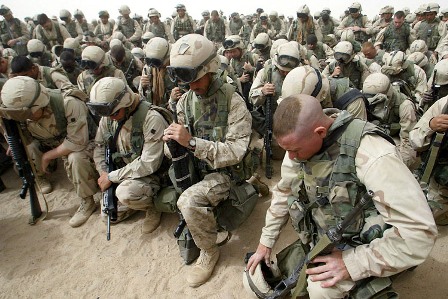
So imagine what happens to this delicate balance between civil and ecclesiastical power when all of a sudden every Christian is a minister. How could we ever allow a minister to fight in a war, to operate under the authority of the Department of Defense, to bring criminals to justice?

Pope Francis may have the solution — to turn Christianity into a pacifist religion by opposing capital punishment and abandoning just war theory.

If Christians may not serve as soldiers or as executioners, then we need to revise assertions like this:

Public life is not just about politics but all the areas of human activity — thefamily, the workplace, shops and restaurants, leisure and the arts. It is the specific role of lay people to sanctify each and every environment of the world.

Sometimes “every” and “all” make you wish for dualism.
Why I Love the Modern State

It helps me keep straight the difference between the city of God and the city of man, at a time when so many Christians want Christianity to define “ALL of me.”

Mark Oppenheimer thinks it possible to distinguish Christian as a noun and adjective:

And Jews and Christians alike have internalized these different connotations. Most Jews, if asked about their religion, say not, “I’m a Jew” but the softer, more acceptable, “I’m Jewish.” With Christians, the answer will vary depending on the kind of Christian you’re talking to. Liberal Protestants may say, “I’m Christian,” using the adjective, but many evangelicals, born-again Christians, and other passionate believers will say, “I’m a Christian.” It sounds a little jarring to more secular or liberal types, but not in a bad way. It just sounds hard-core, like the person is planting a flag and standing by it.

For Christians, the difference between “Christian” the adjective and “Christian” the noun is one of both degree and kind. We are all described by many adjectives, but we select very few nouns to sum up who we are. The nouns require a bit more commitment. It’s the difference between “I’m liberal” and “I’m a liberal”—the man or woman willing to own the noun is more committed, for sure. The adjective is what you are like; the noun is who you are.

And what about James Bratt’s suggestion that politicized evangelicals should own the moniker, “Christianist“?

Whatever the label, believers have trouble (without the help of modern politics) sorting out their Christian and non-Christian aspects. Just consider the confusion in this response to yesterday’s bombings in Belgium:

I’ll leave it to people who know what they’re talking about to expound further on the radical nature of what Christ is demanding of us when he says this. Suffice it to say for now that it’s clear and direct and we don’t have any choice if we call ourselves Christians: we have to forgive our enemies.

And that includes the terrorists who killed 34 people in Brussels on Tuesday. We have to forgive them.

BUT…But…but it is also written, “thou shalt not kill.” And that means that we need to kill all the other terrorists who are still out there.

Why? Because justice and reason and the teaching of the Church. The Fifth Commandment (don’t kill) imparts on Christians a duty to protect and defend innocent human life. Sooooo…it is morally just to use lethal force to prevent the killing of innocent people. Self-defense, just war, etc. etc. etc.

So kill ISIS.

First, I thought God through the ministry of the church forgives sins. It’s not up to me to forgive people who have not wronged me. Do I even have authority as an elder to forgive sins that are crimes against humanity? The Book of Church Order doesn’t say so.

Second, I don’t have the power to kill anyone legally unless I become part of the executive branch of our constitutional order. As a policeman, executioner, or soldier I could legitimately kill someone. As a policeman, executioner, or soldier I am also carrying out orders of someone else. As a Christian policeman, executioner, or solder I am carrying out the duties of my vocation. But I am not acting “merely” as a Christian since non-Christian police and soldiers carry out similar orders.

So as a 2k Christian I don’t have to forgive or kill. I defer to those with higher pay grades, which includes — piety alert! — praying, “Thy kingdom come, Thy will be done.”

NSA, Homeland, and God

Why should I be worried about the government monitoring my emails or how I surf the web? As someone who is a registered Libertarian (and never voted for a Libertarian candidate) I get it partly. The scale of government is mind-numbing and sometimes frightening, especially in its intelligence and military aspects. Can any regular American aspire to the presidency who has no experience with foreign policy and sensitive intelligence operations? Who can stand in that great day, indeed.

But when I read people who think the world is changing — not to mention ideas about human nature — because of the access now available to government officials through computing and phones, I wonder:

Will you really pay higher insurance rates to escape tracking, or will you swallow the pill of microscopic sensors that watch everything you eat and do—and secure your insurance discount?

The point is not that some simple tweak—making data on us available to us, making it easier to opt out (as if our absence would not be noticed)—would solve the matter. Rather, the point is that a certain view of freedom and a certain view of power are creating a world in which human faculties are superfluous because they are limited and inaccurate compared to scientific measurement.

The tracking revolution is the replacement of, not the extension of a human faculty. Because every advance it offers is a marginal improvement, it proceeds in rational steps toward a goal whose reasons are opaque. Like the division of labor which it imitates, the tracking revolution simplifies knowledge of human beings by breaking us down into our component parts.

For instance, one of the delights (all about me) I take from spy movies or television series like Homeland is a sense that someone is out there monitoring all this stuff, keeping the world safe from bad guys. The same goes for crime shows and murder mysteries (having finished Broadchurch‘s first season last night, I yet again marvel at the Brits capacity to entertain through narratives of justice). It is truly marvelous that any agency can possibly monitor all that stuff, intervene when necessary, and keep the world from careening out of control.

The powers of intelligence agencies and police monitors are of course akin to an all seeing God. If some Christians walk around thinking that certain saints are watching them, most Christians likely live with the scary and comforting thought that God is monitoring everything they do. What is the problem with a few more sets of eyes?

Meanwhile, what possibly could the government find out of interest about me? What Muether and I are planning for the next issue of the Nicotine Theological Journal? Granted, if I were doing something costly to me, something that could get me in trouble in those relationships that most matter — wife, session, department chair — I wouldn’t like the idea that some folks out there know the dirt. But it’s not as if staff at NSA or agents in the CIA are going to give a large rodent’s rear end about activities that might compromise my marriage, church membership, or job. In fact, I can’t imagine anyone wading through all the cookies I use in a day or phone calls I make or email messages I write — along with the rest of America — and finding anything of interest. Average life is so ordinary.

It also helps knowing that my favorite libertarian, J. Gresham Machen, is not looking down reading this.

From "The Wire" to Ferguson

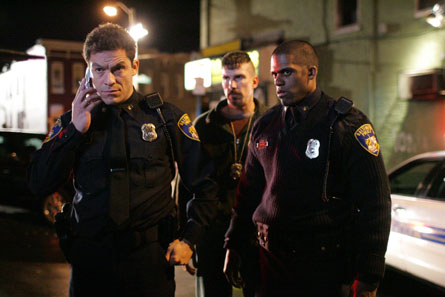
David Simon, the creator of The Wire (say that in hushed tones), wrote this before Missouri authorities revealed the identity of the officer who shot and killed Michael Brown. It reinforces the point that police and law enforcement professionals bear an enormous responsibility for the health of race relations in the U.S. But Simon also displays a healthy regard for the work of police, the burdens they bear, and the value to a democratic society. For the full letter go here (which is the most recent of three missives — thanks to our Hillsdale correspondent):

Understand that I am someone with a high regard for good police work. I covered a large municipal department for a dozen years and spent that time writing in detail on extraordinary efforts by professional detectives and officers, and, too, on systemic and individual failures within that same agency. I am not unsympathetic to the complex truths of practical policing.

To that effect, I’m offering no judgment as to the legitimacy of the police action in the death of Mr. Brown, nor am I critiquing your department’s militarized performance with regard to the resulting civil disturbances in your municipality. I leave the former for the more careful assessments of prosecutors and, presumably, a grand jury; the latter, I am sure, will be a subject of continued discussion within your community, in Missouri as a whole, and elsewhere in the country.

But for now, let’s simply focus on the notion that you, as head of a police department accountable to the citizens of your jurisdiction, actually seem to believe — along with local prosecutors — that it is plausible for a sworn and armed officer to kill a citizen and do so in anonymity.

Regrettably, I know that you are not alone in this astonishing breach of trust. More than a decade ago, some of our most authoritative federal agencies began a tragic retreat from basic accountability, shielding their agents from any scrutiny for their use of the most signficant power that a law officer can possess — the taking of a human life as an act of personal deliberation. Following the lead of the FBI, other large urban departments have since followed suit, or attempted to do so at points.

But the cost to our society is not abstract — and the currency in which that cost is paid is trust. Your department has shown that you do not trust the public with the basic information about who specifically has, in the performance of his or her duties, been required to take a human life in Ferguson. And that same public is now in the street demonstrating that they do not believe that Ferguson law enforcement can therefore be relied upon for anything remotely resembling justice. How could it be otherwise?

If you cannot see the contempt inherent in your policy, then you, sir, may need to reconsider both your own role and the premise of law enforcement in a democratic society. You may need to yield your position to someone who retains the basic notion that your officers, armed with the extraordinary authority of using state-sanctioned lethal force on fellow citizens, are equally burdened by a responsibility for standing by their actions in full. You, your department, and the prosecutors in your jurisdiction are now running from that responsibility. In doing so, you lose the trust and respect of your citizens, your state and the nation.