This Is Embarrassing

The Protestants who I enjoy criticizing are clear at the same time that Roman Catholics are not. And the editors at First Things are caught.

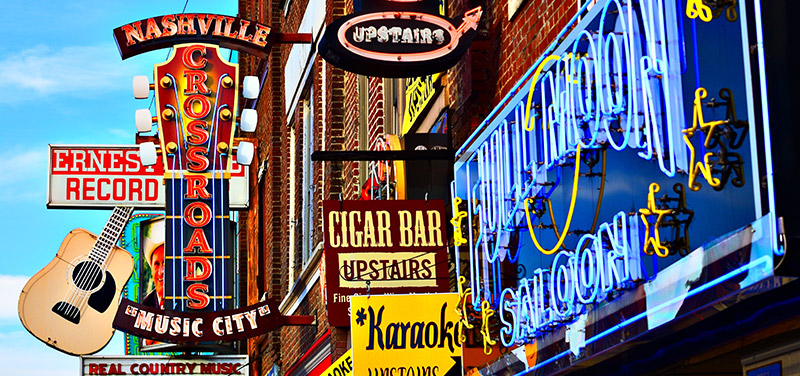
First, a recommendation of the evangelicals who produced the Nashville Statement:

[Several] critiques have merit, and are especially significant since they come from within the evangelical movement. But in our era of theological mushiness and cultural transformation, even the most imperfect attempt at clarity and doctrinal solidarity is better than soft-spoken obfuscation. Christians committed to historic, biblical doctrine on sexuality should be disposed to approve of efforts to make orthodoxy clear, unequivocal, and pastoral.

Perhaps, as many have said, the timing of the Nashville Statement was insensitive. Waiting a couple weeks after the initial images from Houston had appeared might have muted this criticism. But can we foresee a season when such a clear statement of traditional doctrine would not offend, alienate, or divide?

I suspect that what has turned off many people to the Nashville Statement is its clarity. The document’s fourteen affirmations and denials are short, unequivocal, and to the point.

But Roman Catholics, not so much. Aside from the ongoing dilemma of marriage and divorce that Pope Francis and his synods introduced into the magisterium, individual priests, like James Martin, are signaling virtue but in a very sensitive way:

Fr. Martin notably seeks peace. He speaks reassuring phrases in soothing tones. He prefers the familiarity of a sweater vest and dad jeans to the strangeness of the soutane. In ways superficial and profound, he seeks to render Christianity inoffensive. At a certain level, I understand this desire. The Church may be a sign of contradiction, but it is also a source of consolation. Sometimes we need a Church built on sharp, gothic lines, and at other moments we seek the calm harmony of the classical.

But Fr. Martin’s proposed renovation goes beyond mere ornament, to require the restructuring of the whole Christian edifice. Fr. Martin never says this outright, but the logic of what he does say demands it. Approval of homosexuality is now considered the bare minimum of politeness in the world’s respectable precincts (where one hundred years ago, it would have been thought intolerably rude). If Christianity is to have the manners Fr. Martin values—if is to exhibit perfect “respect, compassion, and sensitivity” in the eyes of world—it must not only change its phrasing but reverse its teaching on sex.

Fr. Martin is no idle vandal of the Church, even if his critics often take him for one. Though I disagree with his conclusions, I believe that Catholics have something to learn from his argument that the Church treats homosexuality unfairly.

Catholic teaching has not changed, but at the practical level the Church today has made peace with heterosexual desire. Praise of virginity and warnings against lust in the marriage bed have given way to anxious reassurances that Catholics do not hate and fear sex. The Church has largely ceased to speak of sex as dangerous and requiring restraint, even where it is licit. We hear of the dangers of pre-marital sex, of extramarital sex, sometimes even of homosexual sex—but very rarely of sex simply.

Of course, doctrine hasn’t changed. You hear that a lot from those who have to live with modernists — those who won’t live by, defend, or recommend the doctrine that hasn’t changed. But something has.

And I suspect some converts to Rome are having trouble arguing for Rome’s superiority to Nashville.

You Can Make This Up

Father Z explains the old and new rules for becoming a saint after the Vatican’s recent expansion of the categories of beatification:

In the Church we have had the ancient teaching and tradition of “red” or bloody martyrdom for the sake of charity whereby the martyr dies giving witness in the face of hatred for Christ, the Church, the Faith or some aspect of the Christian life that is inseparable from our Christian identity. There is also a long tradition of identifying “white” martyrdom, coined by St. Jerome, whereby a person gives witness through an ascetic life, withdrawal from the world, pilgrimages involving great sacrifice, or who suffer greatly for the Faith but who do not die in bearing witness. Coming from another tradition there is a kind of “blue” (or “green”) martyrdom, involving great penance and mortifications without necessarily the sort of withdrawal from life that a hermit or a cenobite might live. Gregory the Great in his Dialogues, writes of different kinds of martyrdom, bloody, public martyrdom in time of persecution and secret martyrdom, not in time of persecution. He wrote that secret martyrs are no less worthy of honor, because they also endured sufferings and the attacks of hidden enemies, but they persevered in charity.

In principle I think that this is a good move… if we are going to stay on the course of so many causes for beatification, that is. Once upon a time, it was an extremely difficult process to investigate a life, gather proofs and organize all the documentation properly, and then study it thoroughly, etc. Now, with the modern means of travel and communication, that process is easier. Many more causes have resulted and, because they in fact corresponded to the criteria established, more causes have been successful. Also, it was the clear desire of John Paul II that there be more examples of Christians “raised to the altar” for our edification and imitation, so as to say, “Yes, it IS possible to be a saint!” I think that results have varied in that project. In a way, it is good to encourage people to aspire to sainthood. However, once the number of beatifications and canonizations multiplied, they seems less “special”.

Whatever happened to faith in Christ (doesn’t look like that Joint Declaration with the Lutherans on justification changed all that much the sufficiency of Christ)?

Meanwhile, for the rest of the church, beatification is not the end but purgatory:

Let’s start by reviewing what the Catechism of the Catholic Church (1030-1032) teaches about Purgatory:

“All who die in God’s grace and friendship, but still imperfectly purified, are indeed assured of their eternal salvation; but after death they undergo purification, so as to achieve the holiness necessary to enter the joy of heaven.”

“The Church gives the name Purgatory to this final purification of the elect, which is entirely different from the punishment of the damned. … The tradition of the Church, by reference to certain texts of Scripture, speaks of a cleansing fire…”

“This teaching is also based on the practice of prayer for the dead, already mentioned in Sacred Scripture…”

“From the beginning the Church has honored the memory of the dead and offered prayers in suffrage for them, above all the Eucharistic sacrifice, so that, thus purified, they may attain the beatific vision of God…”

“The Church also commends almsgiving, indulgences, and works of penance undertaken on behalf of the dead…”

Is the lesson then that a hierarchical church produces a hierarchical plan of salvation? The saints and the rest?

In Protestantism, all believers are saints. Even Paul knew that:

Paul, an apostle of Christ Jesus by the will of God, and Timothy our brother, To the church of God that is at Corinth, with all the saints who are in the whole of Achaia: Grace to you and peace from God our Father and the Lord Jesus Christ. (2 Cor:
1-2)

Every Member Ministry

Remember how the Second Vatican Council affirmed the priesthood of believers?

The baptized, by regeneration and the anointing of the Holy Spirit, are consecrated as a spiritual house and a holy priesthood, in order that through all those works which are those of the Christian man they may offer spiritual sacrifices and proclaim the power of Him who has called them out of darkness into His marvelous light. (Lumen Gentium 2.10)

Look where it leads:

Here is part of what the pope said:

And today Lutherans and Catholics, Protestants, all of us agree on the doctrine of justification. On this point, which is very important, he did not err.

No, no, no. Now see, this infuriates me as an apologist (and former Protestant). It is one thing to have to correct this nonsense when it comes from the late Anglican bishop Tony Palmer. But from the pope? I defend the poor man, but at times he exasperates me.

Turns out Lutherans and Roman Catholics don’t agree:

Now, it is true, that some consensus has been reached between Catholics and Lutherans on justification. But it is not at all true to say, as Pope Francis does, that we all “agree” now, as though there are no differences to speak of. And for him to say that Luther “did not err” on justification is just flat baloney.

I mean, for heaven’s sake, Luther taught justification by faith alone. The Council of Trent condemned this error. Was Trent wrong? Or was Pope Leo X wrong in Exsurge Domine?

Leo X condemned Martin Luther’s view that the sacraments give pardoning grace

Leo X condemned Martin Luther’s teaching that sin remains after baptism

Leo X condemned Martin Luther’s view that a just man sins in doing a good work

And in its Canons on Justification, the Council of Trent pronounced an anathema on the following views of Luther:

Canon 5 anathematized the view that Adam’s sin destroyed free will

Canon 7 anathematized the view that good works before justification are sinful

Canon 9 anathematized justification by faith alone

Canon 11 anathematized imputed righteousness

Canon 25 anathematized the view that good works are venial sins even for the just man

There are important differences between Protestants and Catholics, and ecumenism is of no use if we don’t treat them honestly. We can’t just pretend they are not there and wish them away. If Luther “did not err,” did the Church err? Should we all become Protestants?

Trent was right; Leo X was right. Luther did indeed err; and in this particular statement, so did Pope Francis. I love Pope Francis; he’s my Father; but no, no, no. He was wrong.

Move over papal audacity. Say hello to lay audacity.

When Did Sex Become Orthodoxy?

This is how you know when the Church of England goes over the cliff:

I left the Church of England when, in 2008, it became clear what the inexorable trajectory had become. Wherever it leads, it doesn’t lead to orthodoxy and will always be shipwrecked on the rocks of secular liberalism and cultural Marxism. Secular liberalism rejects the Church’s notion of the complementarity of the sexes – male and female having separate and distinct roles within the economy of salvation – and cultural Marxism would do away entirely with the biblical teaching on marriage and the family. Both liberalism and Marxism reject the sanctity of life from conception to natural death.

Aside from the difficulties that Rome is not enduring with debates about marriage, divorce, and homosexuality (not to mention the sex scandal), why is sex such an indicator of sound doctrine? The only reproduction mentioned in the creed is the divine conception of the incarnate Christ.

But if you want to be on the Christian side of the culture wars, avoiding churches that ordain women and that prohibit abortion is apparently the preferred strategy for those who either have never heard of the NAPARC churches or who think evangelicalism is tacky.

Why Protestantism Matters

Things you may hear in Rome during holy week:

“It is more important that men and women become holy,” Cantalamessa said, “than that they know the name of the one Savior.”

“Without the Madonna, we can’t go forward in our priesthood!” Francis said.

“Each one of us has entered into our own personal tomb,” Francis said, in the one extemporaneous addition to his homily. “I’m inviting you to come out.”

“God loves like this: Until the end, giving his life for each one of us,” Francis said in his homily. “It’s not easy, because all of us are sinners, we have limits, flaws. Yes, we all know how to love, but not like God loves, without looking at the consequences, until the end.”

Could this kind of teaching be the reason the Roman church is facing a shortage of priests?

Father Douglas Grandon is one of those rare exceptions – a married Roman Catholic priest. He was a married Episcopalian priest when he and his family decided to enter the Catholic Church 14 years ago, and received permission from Benedict XVI to become a Catholic priest.

Even though Grandon recognizes the priest shortage, he said opening the doors to the married priesthood would not solve the root issue of that shortage.

“In my opinion, the key to solving the priest shortage is more commitment to what George Weigel calls evangelical Catholicism,” Grandon told CNA.

“Whether you’re Protestant or Catholic, vocations come from a very strong commitment to the basic commands of Jesus to preach the Gospel and make disciples. Wherever there’s this strong evangelical commitment, wherever priests are committed to deepening people’s faith and making them serious disciples, you have vocations. That is really the key.”

If it’s broke, why convert?

It Takes a Populist to Know a Populist

Boniface notices another wrinkle of papal audacity:

The poor of the world oppressed by corrupt elites. The downtrodden encouraged to rise up and take their destiny into their own hands. The great leader, the pope, urging them on and joining his voices with those of the oppressed. A call to translate the popular emotional anxiety and social angst of the poor into community action. Is this language not dripping with populist rhetoric? And this speech is just one example; these types of statements from Pope Francis are legion.

The point is not whether Pope Francis is correct or not. In much of this, he certainly is. The poor of Latin America are oppressed. There is an elitist global cabal that would like nothing more than the economic enslavement of the downtrodden. That’s not the issue. The issue is that Pope Francis’ appeal is absolutely, definitively, without a doubt populist in nature.

Pope Francis is fundamentally a populist. It’s so intrinsic to his worldview he doesn’t even realize it. He recognizes demagoguery and populist appeals in leaders whose agenda is in conflict with his own, but fails to identify populist rhetoric in his own appeals. Steeped in the neo-Marxian populism of Latin America, his brand of Argentine populism does not seem like populism to him – to him it’s just, well, it’s just the way leaders speak.

Again, this is not a critique of the pope’s ideas or his initiatives. But it does demonstrate that his assertion that “populism” is essentially evil is untenable, for he himself is a populist, and populism cannot be “evil” when used by one’s opponents but Christlike when done by the pope – and Pope Francis is the world’s most prominent populist.

How to Observe Reformation

If you are Roman Catholic, forget Martin Luther and remember Thomas More:

We should not celebrate the Reformation, because we cannot celebrate the defense of erroneous conscience held up against the authority of the Church. As St. Thomas More rightly said in his “Dialogue on Conscience,” taken down by his daughter Meg: “But indeed, if on the other side a man would in a matter take away by himself upon his own mind alone, or with some few, or with never so many, against an evident truth appearing by the common faith of Christendom, this conscience is very damnable.” He may have had Luther in mind.

More did not stand on his own private interpretation of the faith, but rested firmly on the authority of Christendom and, as Chesterton put it, the democracy of the dead: “But go we now to them that are dead before, and that are I trust in heaven, I am sure that it is not the fewer part of them that all the time while they lived, thought in some of the things, the way that I think now.”

More is a crucial example of standing firm in a rightly formed conscience. We should remember why he died and not let his witness remain in vain. He stood on the ground of the Church’s timeless teaching, anchored in Scripture and the witness of the saints. If we divorce conscience from authority, we will end in moral chaos. As Cardinal Ratzinger asked in his lucid work, On Conscience: “Does God speak to men in a contradictory manner? Does He contradict Himself? Does He forbid one person, even to the point of martyrdom, to do something that He allows or even requires of another?” These are crucial questions we must face.

Rather than celebrating the defender of erroneous conscience, let’s remember and invoke the true martyr of conscience, who died upholding the unity of the faith.

But, if you’re Roman Catholic, you follow the pope, right?

In light of the current controversy on conscience, it is troubling that Luther is now upheld as genuine reformer. The most troubling is from the Pontifical Council for Promoting Christian Unity in its Resources for the Week of Prayer for Christian Unity and throughout the year 2017: “Separating that which is polemical from the theological insights of the Reformation, Catholics are now able to hear Luther’s challenge for the Church of today, recognising him as a ‘witness to the gospel’ (From Conflict to Communion 29). And so after centuries of mutual condemnations and vilification, in 2017 Lutheran and Catholic Christians will for the first time commemorate together the beginning of the Reformation.” The Vatican also announced a commemorative stamp (which to me sounds like the United States issuing a stamp commemorating the burning the White House by British troops).

Pope Francis has spoken of Luther several times in the past year, including in an inflight press conference returning from Armenia: “I think that the intentions of Martin Luther were not mistaken. He was a reformer. Perhaps some methods were not correct.” In response I ask, what did Luther reform? Francis pointed to two things in his journey to Sweden. The Reformation “helped give greater centrality to sacred scripture in the Church’s life,” but it did so by advocating the flawed notion of sola scriptura. Francis also pointed to Luther’s concept of sola gratia, which “reminds us that God always takes the initiative, prior to any human response, even as he seeks to awaken that response.” While the priority of God’s initiative is true and there are similarities to Catholic teaching in this teaching (that faith is a free gift that cannot be merited), Luther denied our cooperation with grace, our ability to grow in sanctification and merit, and that we fall from grace through mortal sin. Francis also noted, while speaking to an ecumenical delegation from Finland: “In this spirit, we recalled in Lund that the intention of Martin Luther 500 years ago was to renew the Church, not divide Her.” Most recently he spoke of how we now know “how to appreciate the spiritual and theological gifts that we have received from the Reformation.”

Doesn’t the magisterium know more and better than Dr. R. Jared Staudt?

Does POTUS Define US?

Of course, not. The federal government has two other branches and the United States is way more than its government. McDonalds? Hollywood? Caitlyn? Harvard? The military? Heck, we don’t even pledge allegiance to the White House.

But what’s true for a nation is not true for a church like Roman Catholicism. There the papacy does define Roman Catholicism. And Ross Douthat explains why investing all that power and identity in a single office is a mistake, or why Pope Francis is more of a threat than President Trump:

Friendly media coverage casts the pontiff as a man of the center, an ecclesiastical equivalent of Angela Merkel or Barack Obama or David Cameron, menaced by authoritarians to his right. But he is no such thing, and not only because his politics are much more radical and apocalyptic than any Western technocrat. In the context of the papacy, in his style as a ruler of the church, Francis is flagrantly Trumpian: a shatterer of norms, a disregarder of traditions, an insult-heavy rhetorician, a pontiff impatient with the strictures of church law and inclined to govern by decree when existing rules and structures resist his will.

His admirers believe that all these aggressive moves, from his high-stakes push to change church discipline on remarriage and divorce to his recent annexation of the Knights of Malta, are justified by the ossification of the church and the need for rapid change. Which is to say, they regard the unhappiness of Vatican bureaucrats, the doubts of theologians, the confusion of bishops and the despair of canon lawyers the way Trump supporters regard the anxiety of D.C. insiders and policy experts and journalists — as a sign that their hero’s moves are working, that he’s finally draining the Roman swamp.

Meanwhile the church’s institutionalists are divided along roughly the same lines as mainstream politicians in the face of Trump’s ascent.

There is a faction that has thrown in with Francis completely, some out of theological conviction, some out of opportunism, some out of simple loyalty to the papal office. (The analogy would be to the mix of populists, opportunists and institutionalists who smoothed Trump’s progress to the Republican nomination.)

There is a group that is simply silent or deeply cautious — note how few of the world’s bishops have taken any position on the controversy over divorce and remarriage — in the hopes that things will simply return to normal without their having to put anything at risk. (The analogy would be to most Republican elected officials, and a few red-state Democrats as well.)

There is a group that is relatively open in criticism of the pope’s agenda but also unwilling to cross the line into norm-smashing of its own. (The analogy would be to the American center-right and center-left, from John McCain to Hillary Clinton.)

This last group’s sheer diversity is one reason the Bannon-versus-Francis theory fails. The ranks of papal skeptics are filled with Africans and Latin Americans as well as North Americans and Europeans, with prelates and theologians and laypeople of diverse economic and political perspectives. Most are not traditionalists like Burke; they are simply conservatives, comfortable with the Pope John Paul II model of Catholicism, with its fusion of the traditional and modern, its attempt to maintain doctrinal conservatism while embracing the Second Vatican Council’s reforms.

But because this larger group is cautious, its members have been overshadowed by the more forthright, combative and, yes, reactionary Cardinal Burke, whose interventions might as well come with the hashtag #TheResistance.

Which places him in the same position, relative to Francis, that a Bernie Sanders occupies relative to Trump — or that Jeremy Corbyn occupies relative to Brexit. He’s a figure from the fringe whose ideas gain influence because the other fringe is suddenly in power; a reactionary critic of a radical pope just as Sanders or Corbyn are radical critics of a suddenly empowered spirit of reaction.

So the story of Catholicism right now has less to do with reaction alone and more to do with what happens generally when an institution’s center doesn’t hold.

You don’t hear Bryan and the Jasons saying much about church politics. It’s like reading the Federalist Papers and ignoring the 2016 presidential campaign. And yet, ideas do have consequences and the theory of chief and infallible interpreter of the faith is not simply an idea. It is a way of life. At least the federalists left behind a Constitution. What enumerated powers did papal supremacists leave behind?

Just In Time for the 500th Anniversary of the Reformation

A papal crackdown:

For most of us, who are not Knights of Malta, the resignation of the group’s grand master will have little immediate impact. But the unprecedented papal intervention into the affairs of that venerable body fits into a pattern that should, at this point, worry all faithful Catholics. Under Pope Francis, the Vatican is systematically silencing, eliminating, and replacing critics of the Pope’s views.

During the reigns of Popes John Paul II and Benedict XVI, “progressive” Catholics frequently complained about a crackdown on theological dissent. On the rare occasions when the Congregation for the Doctrine of the Faith issued a warning about a wayward theologian’s published works, there were anguished warnings about a reign of terror at the Vatican. Now a crackdown really is occurring—instigated by the Pontiff who famously asked, “Who am I to judge?” And the objects of the current crackdown are not theologians who question established doctrines, but Catholics who uphold the traditional teachings of the Church.

The first and most prominent victim of the purge was Cardinal Raymond Burke, who was exiled from the Roman Curia soon after Pope Francis took office, and given a mostly ceremonial post as patron of the Knights of Malta. It is ironic—and perhaps not coincidental—that the latest incident involves his new charge.

As much as I admire and sympathize with conservative Roman Catholics (like Ross Douthat and the author of this piece, Phil Lawler), can such folks really complain about papal supremacy? Isn’t this what rule by one is supposed to look like (and why Americans love to talk about checks and balances)? In fact, as long as Rome depends on the Bishop of Rome to support its claims of superiority — unity, authority, antiquity — can devout Roman Catholics really object to popes who use their authority to enforce unity?

Fundamentalist Controversy Redux

John Allen explains how Roman Catholicism has come along side Protestantism. The Left and Right aren’t even on the same page of what constitutes truth:

… at this point most defenders of Pope Francis haven’t accused critics of being dissenters, nor have they suggested that people who uphold contrary positions on the substantive positions associated with the pontiff, such as opening Communion to divorced and civilly remarried Catholics, are thereby committing heresy.

The implication seems to be that fans of the pope are more generous, less vicious, and less inclined to question people’s bona fides as Catholics. There is, in other words, often a presumption of moral superiority in the observation that “we don’t talk that way.”

Simply as a descriptive matter, that proposition seems a bit disingenuous. Many in the pro-Francis camp don’t invoke concepts such as “heresy” and “dissent,” because frankly, it’s not the worst insult they can think of with which to slur an opponent.

Instead, they use terms that Francis himself also regards as abhorrent, such as “rigid,” “inflexible,” “legalistic,” “clerical,” and, of course, worst of all, “anti-Vatican II.”

In effect, what’s on display here is one of the defining differences between the Catholic left and the Catholic right over the last fifty years.

For the right, “heresy” and “dissent” are about the worst things imaginable, so when they want to say “x is terrible,” that’s the language that comes naturally. For the left, the equivalent horror is “rolling back the clock” on the Second Vatican Council, so when they want to call something or someone awful, that tends to be the verbal packaging in which the complaint comes wrapped.

Someone trying to remain objective about today’s debates would probably have a hard time concluding that either side has a claim on the moral high ground, since both are charging the other with virtually the vilest crime in their respective vocabularies.

At the same time, gatekeepers like John Allen don’t see when modernism is part of the warp and woof of church life:

Despite challenges intolerance brings, Camilleri stressed that religion, Christianity included, has an endless capacity for good, not only for individuals and communities, but for society as a whole.

The Church, he said, “does not pretend…to substitute for politics. Nor does the Church claim to offer technical solutions to the world’s problems since the responsibility of doing that belongs elsewhere.”

What religion does, then, is offer specific guidelines to both the community of believers, and to society as a whole.

Religion by its nature “is open to a larger reality and thus it can lead people and institutions toward a more universal vision” and a “horizon of fraternity” capable of enriching humanity, Camilleri said.

The Holy See, then, “is convinced that for both individuals and communities the dimension of belief can foster respect for fundamental freedoms and human rights, support democracy and rule of law and contribute to the quest for truth and justice.”

Dialogue and partnerships between religions and with religions, he said, “are an important means to promote confidence, trust, reconciliation, mutual respect and understanding as well as to foster peace.”

If religion did all that, I’m sure President Obama would have gotten on board. Wait. He did:

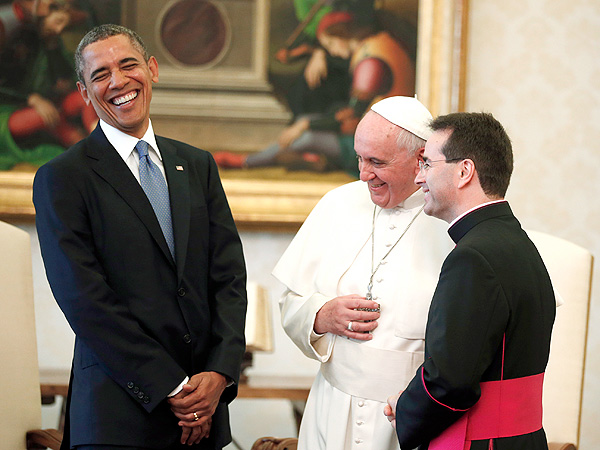
Holy Father, your visit not only allows us, in some small way, to reciprocate the extraordinary hospitality that you extended to me at the Vatican last year. It also reveals how much all Americans, from every background and every faith, value the role that the Catholic Church plays in strengthening America. (Applause.) From my time working in impoverished neighborhoods with the Catholic Church in Chicago, to my travels as President, I’ve seen firsthand how, every single day, Catholic communities, priests, nuns, laity are feeding the hungry, healing the sick, sheltering the homeless, educating our children, and fortifying the faith that sustains so many.

And what is true in America is true around the world. From the busy streets of Buenos Aires to the remote villages in Kenya, Catholic organizations serve the poor, minister to prisoners, build schools, build homes, operate orphanages and hospitals. And just as the Church has stood with those struggling to break the chains of poverty, the Church so often has given voice and hope to those seeking to break the chains of violence and oppression.

And yet, I believe the excitement around your visit, Holy Father, must be attributed not only to your role as Pope, but to your unique qualities as a person. (Applause.) In your humility, your embrace of simplicity, in the gentleness of your words and the generosity of your spirit, we see a living example of Jesus’ teachings, a leader whose moral authority comes not just through words but also through deeds. (Applause.)

You call on all of us, Catholic and non-Catholic alike, to put the “least of these” at the center of our concerns. You remind us that in the eyes of God our measure as individuals, and our measure as a society, is not determined by wealth or power or station or celebrity, but by how well we hew to Scripture’s call to lift up the poor and the marginalized — (applause) — to stand up for justice and against inequality, and to ensure that every human being is able to live in dignity –- because we are all made in the image of God. (Applause.)

You remind us that “the Lord’s most powerful message” is mercy. And that means welcoming the stranger with empathy and a truly open heart –- (applause) — from the refugee who flees war-torn lands to the immigrant who leaves home in search of a better life. (Applause.) It means showing compassion and love for the marginalized and the outcast, to those who have suffered, and those who have caused suffering and seek redemption. You remind us of the costs of war, particularly on the powerless and defenseless, and urge us toward the imperative of peace. (Applause.)

Holy Father, we are grateful for your invaluable support of our new beginning with the Cuban people — (applause) — which holds out the promise of better relations between our countries, greater cooperation across our hemisphere, and a better life for the Cuban people. We thank you for your passionate voice against the deadly conflicts that ravage the lives of so many men, women and children, and your call for nations to resist the sirens of war and resolve disputes through diplomacy.

You remind us that people are only truly free when they can practice their faith freely. (Applause.) Here in the United States, we cherish religious liberty. It was the basis for so much of what brought us together. And here in the United States, we cherish our religious liberty, but around the world, at this very moment, children of God, including Christians, are targeted and even killed because of their faith. Believers are prevented from gathering at their places of worship. The faithful are imprisoned, and churches are destroyed. So we stand with you in defense of religious freedom and interfaith dialogue, knowing that people everywhere must be able to live out their faith free from fear and free from intimidation. (Applause.)

And, Holy Father, you remind us that we have a sacred obligation to protect our planet, God’s magnificent gift to us. (Applause.) We support your call to all world leaders to support the communities most vulnerable to changing climate, and to come together to preserve our precious world for future generations. (Applause.)

Your Holiness, in your words and deeds, you set a profound moral example. And in these gentle but firm reminders of our obligations to God and to one another, you are shaking us out of complacency. All of us may, at times, experience discomfort when we contemplate the distance between how we lead our daily lives and what we know to be true, what we know to be right. But I believe such discomfort is a blessing, for it points to something better. You shake our conscience from slumber; you call on us to rejoice in Good News, and give us confidence that we can come together in humility and service, and pursue a world that is more loving, more just, and more free. Here at home and around the world, may our generation heed your call to “never remain on the sidelines of this march of living hope.”

For that great gift of hope, Holy Father, we thank you, and welcome you, with joy and gratitude, to the United States of America. (Applause.)