Was Francis Schaeffer an Intellectual?

The latest comment in the very Protestant discussion of why we don’t have Christian intellectuals anymore like Reinhold Niebuhr and John Courtney Murray comes from Jake Meador on the merits of Francis Schaeffer who even attracted a story from Time magazine (though he did not make it on to the cover).

Time‘s description of Schaeffer, however, tells us something about how things had changed during the 12 years between Niebuhr’s cover and Schaeffer’s. In 1960, Time presents Schaeffer as a missionary to the intellectuals, which he no doubt was. But this assumes that Christianity needs missionaries to the intellectuals because the intellectuals are no longer Christian. What had been conflict within the intellectual community 13 years before when they reported on CS Lewis has become an attempt to witness to the intellectual community by 1960. This suggests, in one sense, that Jacobs is right—the Christian public intellectual is dead by 1960, which is why Schaeffer was needed.

I wasn’t reading Time in 1960 but fifteen years later I was reading Schaeffer and the better description of the apologist is not as missionary to intellectuals but missionary to would-be intellectuals. That is, Schaeffer was great for kids who had lost their faith and wanted to talk about the films of Bergman or the novels of Camus. Schaeffer was even more effective for young believers like me for taking the lid off subjects not so much forbidden as ignored. All of a sudden, Schaeffer seemed to make it possible for evangelicals who were so culturally marginal never to have heard of C.S. Lewis to entertain ideas about the arts and sciences, movies and trees, and even politics (DOH! That’s where it all breaks down). In other words, Schaeffer inspired as neo-Calvinists so often do. But when it came to the contents of his arguments, chances are that intellectuals weren’t impressed because Christian professors (who might qualify as intellectuals), the ones who grew up inspired by Schaeffer (like mmmeeeEEEE) weren’t so impressed with the scholarship that underwrote Schaeffer’s arguments.

I myself am not so troubled by the loss of Christian intellectuals because having read Niebuhr and Murray (for a current project) I can’t say that their arguments stand up so well. Whose do? Not many. But what Niebuhr and Murray may have gained in public recognition, they may have lost in faithfulness to their traditions. Niebuhr was by many confessional Protestants’ lights a liberal Protestant. And Roman Catholics today still wonder if Murray sold out Roman Catholic teaching to American political norms. And for what it’s worth, a 2k Protestant is happy to take guidance from non-Christian intellectuals on public life. To insist that public life needs Christian input is a soft, even fluffy, version of a theonomic desire for Christians running things, or at least a Eusebian desire to be part of the establishment.

Meador ends by likening Schaeffer to Tim Keller:

Of course, it’s not all so bleak as that. If we wish to go in the direction Jacobs is outlining and try to identify publicly recognized Christians translating the faith into terms the public square can understand while remaining orthodox, there are some examples.

You could easily argue that both Tim Keller and Russell Moore are doing that well in their own ways. Keller’s Reason for God was a best-seller and he lives in and pastors a church in Manhattan. Moore, meanwhile, has been in the New York Times, the Atlantic, and the Washington Post and is deeply engaged in many of the pressing social questions of the day, particularly on issues of racism and sexuality. . . .

Valuable as their work is (and I have enormous respect and gratitude for both men!), the best either can hope to achieve on a cultural level is helping to move us away from apocalypse and toward cultural dhimmitude. That isn’t meant as a criticism of either man, to be clear, nor is it to underscore the work they are doing. There are many people who have met Jesus thanks to the ministry of Keller and we should never forget how significant that is.

Bringing people to Christ is not the same as being a missionary to intellectuals. For that reason it may be useful to remember the review that Bruce Kuklick, an accomplished intellectual historian of Protestant background but agnostic outlook, wrote on Tim Keller’s The Reason for God in the Fall 2008 edition of the Nicotine Theological Journal:

The editors of the NTJ asked me to review this book. Readers have heralded it, he said, as a sophisticated body blow to secularism, but maybe the author is only talking to the already converted. What did I think?

Keller serves as the astoundingly successful pastor of Redeemer Presbyterian Church in Manhattan, New York. Presbyterian readers of NTJ will forgive me if I say he reminds me of a latter-day Henry Ward Beecher, an effective exponent of Christian ideas to a prosperous northeastern urban audience looking for guidance in the modern world. The book exemplifies the more or less systematic exposition of Reformed Protestantism that Keller’s sermons present, and that he promotes in his ministry.

But no matter what the blurbs from Publishers Weekly and New York magazine tell us, Keller writes not as a thinker but as a clergyman. The book is not designed for careful, logical scrutiny, and going to church differs from sitting in a philosophy seminar. As Keller describes his parishioners, they are good people, sometimes in some mild distress, most often decayed Protestants looking for counsel. But they are not interested in honing their cognitive skills by taking a course in The Critique of Pure Reason or reading David Hume on religion, or even emotionally mastering Kierkegaard on faith or Karl Barth on Pauline Christianity. Their frequent social locus in the American Christian tradition means that Keller does not have to start from scratch with them. The book supposes a basic familiarity with Protestant ideas and the notion that western Christianity has something exceptional going for it. Keller is not exactly preaching to the choir, but he is not lecturing in an international classroom to people with serious intellectual doubts, nor is he straining for truth. Keep Beecher front and center.

Let me give one extended example, which is to me is decisive, and decisive about a fundamental issue. Toward the end of the volume Keller takes up the question of miracles, and in particular the miracle of Jesus’ resurrection from the dead. For Keller, and I think for any good Christian, Jesus had really to have been dead and to have come back to life. What is it to believe such a thing? Keller, it seems to me, simply does not deliberate perceptively here. He begins by telling us what he thinks stands in the way of such belief: the presumption that miracles never happen, an outlook that “short circuits” our investigation. But, he argues next, we can’t elucidate everything else that took place later after the resurrection unless we acknowledge the miracle of the resurrection itself. How do we account for all the witnesses? How do we explain the entirely unexpected series of events? How do we come to grips with a brand new set of commitments and a hitherto unthinkable point of view – not foretold or expected by any ancient culture – except on the hypothesis that the resurrection is true? Perhaps more important, how are we to understand the explosive expansion of this new Christian world view? It only could have triumphed if people were transformed by their engagement with some extraordinary truths. Big things, Keller concludes, can only be caused by big things.

Can we accept this approach? In considering whether we are to believe in a miraculous event, we need to recall two factors. First we look at the evidence in favor of an event’s occurring, usually the credibility of testimony. Second we consider the unusualness of the event that the evidence requires us to accept as occurring. The stranger the event, the stronger must be the evidence that it has occurred. A miracle overthrows what I call “laws of nature.” They are propositions about our universal experience, the regularity of our sense perception, that enable us to predict with confidence the occurrence of one event after the occurrence of another. People don’t walk on water, change water to wine, or rise from the dead. If you jump off a bridge, you fall into water; if you have club soda in a can, the twelve ounces of it will come out into a cup; if someone dies, the body decays. We must weigh what is more likely to be false when it is said that a miracle has occurred. Is the testimony mistaken or has a law of nature been abrogated?

To allow for the possibility of miracles, we need only be open to experience. A law of nature cannot proscribe miracles; all it need do is to warn us of their rarity and of what is involved in asserting that they have come about. That is, sufficient testimony might overthrow a prima facie overriding adherence to a law of nature, and the regularity of experience. We can imagine scenarios where we would be obliged to believe that laws of nature have been violated, that something inexplicable in ordinary natural terms has occurred.

But reports of religious miracles have a notorious unreliability – even the Roman Catholic Church tells us that. In all times and places, we have had interested and credulous observers eager to persuade others of the veracity of their peculiar convictions. Provincial self-serving witnesses have repeatedly tried to impose ridiculous stories on our stock of ideas. Over and over religious miracles have come to be rejected. Again and again we find the quality of testimony suspect and never near to meeting the standards of credibility needed to overthrow a natural law. In fact, uniformity exists in the failings themselves: when someone proclaims a religious miracle, we regularly find biased testifiers, a lack of subsidiary evidence, suspicious circumstances. We have available far simpler explanations, and so on.

Put it another way: if we accept the miracles of Jesus, we have good reason to accept others that have more or less indistinguishable support. For example, Keller needs to think about how his privileged supernatural events compare with those promoted by the Mormons. If you already believe Jesus is a special guy, the resurrection is easy to swallow. But if you don’t have that belief in the first place, I don’t see how you make Jesus’ supernatural doings unique. I have two choices: between rejecting religious miracles and accepting the legitimacy of laws of nature; or accepting a lot of the miracles and rejecting laws of nature. We have Jesus arising from the dead, Muhammad touring heaven and hell with Gabriel, and Moroni delivering the golden tablets.

You pay a high price by believing in the Christian miraculous, and are on a slippery slope. You can’t rule out the miracles of any of the “major” religions. You also give license to the existence of zombies and vampires, who are after all, let us remember, first cousins to the resurrection. You are on your way to an environment populated by demons, ghosts, and weird apparitions; bleeding statues, the blind seeing, pictures flying from walls, and devils being exorcised; oracles, dreams with the force of predictions, the dead walking, or talking to us; dolls with pins stuck in them. And god knows what else. You give credence to a world where any sort of unnaturally caused events might occur. Our experience then does not much guide us. We can’t reason much about matters of fact, since we would have a universe in which at any moment we could not rely on the evidence of our senses and not have much of an inkling of how events hooked up.

I don’t expect Keller to deal with this sort of complicated chain of reasoning in his sermons, or even in The Reason for God. Nor do I expect him to be convinced by this group of arguments, however telling they are once one has discarded the veil of conventional respect for our regional Protestant traditions. But in writing his book, he is trying to do more than offer comfort — he is supposed to be sketching a rational account of matters, and his chapter on miracles should not convince anyone who is perplexed by fundamentals. He never takes a hard look at this issue, or others like it.

Undoubtedly I am making too heavy a demand on this volume. But Presbyterians who want to go after skeptics need to keep in mind the different social roles of the Beechers and Kellers of this world and a Machen.

That doesn’t undermine the value of Keller’s work. But intellectual life is a whole lot more demanding than getting noticed by Time magazine or the New York Times.
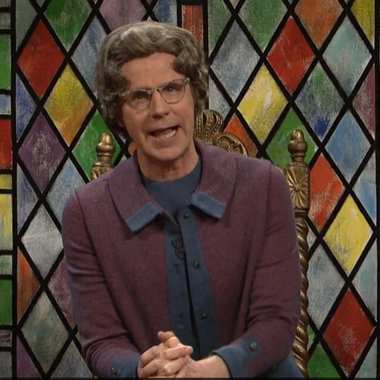
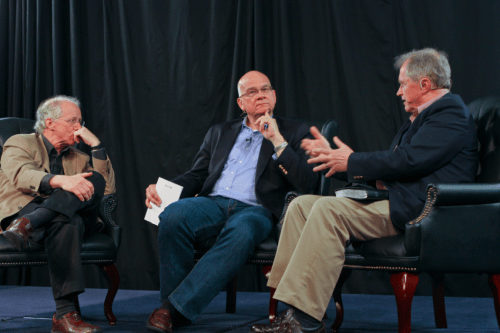
Tim Keller with Hair (and coiffed to boot)?

Let this be a lesson to the PCA where some want women to do the same things that men already do (sometimes poorly):

Since the 1990s women have found plentiful opportunities to fill positions in the upper echelons of the national security apparatus. Although we have not yet had a female commander-in-chief, three women have served as secretary of state and two as national security adviser. Several have filled Adlai Stevenson’s old post at the United Nations. Undersecretaries, deputy undersecretaries, and assistant secretaries of like gender abound, along with a passel of female admirals and generals.

So the question needs be asked: Has the quality of national security policy improved compared to the bad old days when men exclusively called the shots? Using as criteria the promotion of stability and the avoidance of armed conflict (along with the successful prosecution of wars deemed unavoidable), the answer would, of course, have to be no. Although Madeleine Albright, Condoleezza Rice, Susan Rice, Samantha Power, and Clinton herself might entertain a different view, actually existing conditions in Afghanistan, Iraq, Libya, Syria, Somalia, Sudan, Yemen, and other countries across the Greater Middle East and significant parts of Africa tell a different story.

The abysmal record of American statecraft in recent years is not remotely the fault of women; yet neither have women made a perceptibly positive difference.

If You Want to Engage the Culture, Don’t Publish with Crossway

Isn’t this the flip side of Tim Challies’ advice about reading the “right” books?

If you are an academic and you publish with a famous university press, that is wonderful for your career. If you go with a vanity press, that can sink your career. That division of presses also matters in defining whether a particular issue is part of mainstream debate, or way off on the disreputable fringe.

The problem in all this, though, is that some presses are very strong and reputable within particular fields, but that fact need not be known to university authorities. I can imagine a junior professor trying to argue to a department head or dean that a title with such a firm should be counted as equal in prestige to a leading university press, and struggling to make the case. Please understand, that would not be a fair situation, but I could see it happening.

Let me take a specific example. I am currently using a book that came out from Inter-Varsity Press some fifteen years ago. It is a really excellent piece of work, scholarly and well written, and IVP is a very strong and well known publisher from the evangelical point of view. Hence my surprise, recently, when I tried unsuccessfully to find a copy in the very large and wide-ranging library at Penn State University. They had other works by this author, but not that particular title. Like many major university libraries, Penn State has standing orders with certain mainstream publishers, and acquires pretty much everything they put out. That principle does not extend to well known evangelical presses like IVP, Eerdmans, Baker, Thomas Nelson, and so on. The more library budgets shrink, the harder they cut back on any presses they don’t see as absolutely core and necessary.

In itself, that decision is not disastrous for me, because if I want a copy of the book in question I can get it through inter-library loan. But the underlying attitude demands attention. These libraries are assuming that the presses in question are not fully respectable houses for academic work, they are partisan or denominational, and therefore they do not demand the same credibility as even minor university presses.

Maybe that explains why TKNY doesn’t publish with the company that subsidized the gospel allies.

UPDATE: a multi-author 16-page tract is not a book, and I’m guessing Ross Douthat hasn’t read it.

If Only the Orthodox Presbyterian Church Would Join

This Day in Presbyterian History has the remarks of Richard Gray in 1965 at the merger of the Evangelical Presbyterian Church and the Reformed Presbyterian Church General Synod which became Reformed Presbyterian Church Evangelical Synod (the tree that bore the fruit of TKNY). Several themes stand out.

First, the trauma of 1937 was not the death of J. Gresham Machen:

I sat on that day in June in the New Century Club in Philadelphia with a group of people known as the Presbyterian Constitutional Covenant Union. There the constituting act for the Presbyterian Church of America was adopted. There stepped to the platform the young professor of philosophy from the University of Pennsylvania, Gordon H. Clark, and in “Clarkian” style he took from his pocket two 8 1/2 x 11 pages and delivered a terse but brilliant nominating speech which made J. Gresham Machen moderator of the First General Assembly of the Presbyterian Church of America.

It was like standing upon a tower. There was a great vista before us. I felt as though I was a part of church history and in my bones were some of the great convictions of the Reformers and of the early Christians. But within one year I was to know something of the disillusionment and the discouragement that causes the Psalmist to cry out in the first three verses of Psalm 60. This initial group split and each side tagged the other with labels which it has taken about 25 years to wash off.

Second, Dutch-American Calvinists did not own w-w rhetoric:

I believe we are still in the warfare and we still have the same banner. The banner raised in the cause of truth was raised for the turth against compromise inecclesiastical matters. We were standing for the purity of the visible church. We felt that the organized church had been instituted by our Lord Jesus Christ and it was not simply an association of convenience, or an organization that one joined because he wanted to get ahead, or even merely to give one the opportunity of preaching the gospel.

Also the banner of truth was raised against compromise culturally. We believed that Christianity was not only a fire escape from hell, so to speak, but it was a life-and-world view. We still believe this. We held this against the encroaching secularism of the day, against the deadening formalism of the church, and against the contaminating worldliness with which the church had become tainted.

Third, the OPC needed to join the RPCES to add forces to the culture war:

“There is a great need on the American scene for a sturdy, conservative Presbyterian denomination. The union of the EPC and the RPC is an important step in achieving this. If next the OPC can be brought to join forces, a truly impressive denomination would resutl. Numerically they would form a pretty good network of churches across the country. Separatist movements usually carry in themselves the seeds of further division as shown again in the days of 1936. The new denomination has learned these lessons it may be hoped.

“If the OPC should come along, too, there would be adequate number of experienced men with balanced judgment to keep the denomination on a sound course, one to encourage steady growth by local progress in attracting to the new church our Presbyterian groups seeking a happy spiritual home.

“To assist” (and I think this is a very important paragraph) “this last suggested development to occur the new denomination should follow a statesman-like policy toward the USA and the Southern church. They might well feel that their role in the south should be to testify without derogating. Criticisms that have to be made in faithfulness to Scripture could be offered in an evident spirit of loving concern, in sorrow not condemnation. It might be indicated that the line of separation that sometimes has to be drawn is often very difficult to decide upon, one man’s conscience not having received the same education as another’s, and Biblical interpretation on the issue of separation not standing out sharply and obviously clearly.”

The OPC is still on the outside looking in. Will the PCA show the same respect for conscience among “southerners” as Gray mentioned?

What’s To Prevent the Nationality of the Church?

I have already wondered where the PCA’s corporate confession of the sin of racism will lead. Sean Lucas’ article on the spirituality of the church in the freshly e-minted theological journal, Reformed Faith and Practice, makes me wonder more.

One of the takeaways of Lucas’ article is the fair point that Southern Presbyterian ministers and assemblies used the spirituality of the church to avoid speaking out about Jim Crow or even to defend white supremacy. Lucas makes that point stick when he observes the way that Presbyterians ignored the spirituality of the church when it came to alcohol or evolution:

And southern Presbyterians had a difficult time knowing where the line was between spiritual and secular realms. One example of this was the church’s long-standing support and advocacy of abstinence from alcohol. From 1862 on, the southern Presbyterian General Assembly repeatedly advocated teetotalism, reprobated the sale of beverage alcohol, and urged people to “use all legitimate means for its banishment from the land.” Finally, in 1914, as the political process began that would produce the Volstead Act, the General Assembly declared, “We are in hearty favor of National Constitutional Prohibition, and will do all properly within our power to secure the adoption of an amendment to the Constitution forever prohibiting the sale, manufacture for sale, transportation for sale, importation for sale, and exportation for sale of intoxicating liquors for beverage purposes in the United States.” Notably, there was no hue and cry in the Presbyterian papers by conservatives about this action as a violation of the spiritual mission of the church.[11]

Another example of blurring the lines between the so-called spiritual and secular realms occurred in the 1920s over the teaching of evolution in the public schools. In North Carolina, the key leaders who opposed evolution both in the public schools and at the University of North Carolina were Presbyterian ministers, Albert Sidney Johnson and William P. McCorkle. In 1925, the Synod of North Carolina adopted resolutions that called for “a closer supervision to prevent teaching anything [in the public schools]…[that contradicted] Christian truths as revealed in the Word of God.” They also “demanded the removal of teachers found guilty of teaching evolution ‘as a fact.’” Again, beyond the rightness or wrongness of the action, the main point here is that the spirituality of the church doctrine did not prevent these Presbyterians from intermeddling in civil affairs outside the “spiritual” realm of the church.[12]

But does inconsistency really invalidate the principle? Political conservatives argue for U.S. independence in foreign affairs and then turn around and support a big military and wars of intervention in the Middle East. So we forget the policy and just send more troops to Syria? Or do you perhaps think about reaffirming the wisdom of the policy in the face of the inconsistency and ask for practice to reflect doctrine?

The problem is that Lucas is not merely calling for the PCA to be consistent. He wants the church to bring transformational grace to the world:

. . . the way forward for all of us will be our common commitment to what the church as church should be and should be doing. Central to that life together will be the ministry of the Word, the administration of the sacraments, and prayer. And as we use these effectual means of our salvation, what we will find is that the grace that comes to us through them will transform us. It will drive us out into our world to share the Good News of Jesus, but also to live that transforming Gospel in tangible ways, as we love justice and mercy, as we extend ourselves in risky ways into the lives of our neighbors. This Gospel will not leave us alone and cannot leave us the same. After all, King Jesus is making his world new now through you and me—his grace transforms everything.

That sounds pretty good, as if the world will be better when we stop erecting boundaries that cut “off the ‘spiritual’ from the rest of life.” But surely, Lucas recognizes the value of making distinctions between the civil and ecclesiastical realms. I mean, would he want the PCA to affirm a motion that called for the United States to make Christianity the official religion? Or would he want the PCA to endorse a roster of political candidates — Clinton over Trump? Or how about the PCA being salt and light with the State Department and opening diplomatic talks with North Korea? Does the ministry of the word, administration of baptism and the Lord’s Supper, or church discipline give the PCA leverage to apply its spiritual insights to the secular and temporal affairs of U.S. politics? Why stop with national borders? Why not Europe? Why not the world? I can’t believe Lucas favors that kind of mission creep. But from the Baylys in the Rust Belt to Tim Keller in NYC, many in the PCA want the communion to be transformational. Is race really the way to do this?

This is an odd development since the point of the spirituality of the church seems evident to many who are not even Machen groupies. Paul Helm once again contrasts favorably two-kingdom theology to the medieval one-kingdom approach among those nostalgic for Christendom:

The current focus on the Two Kingdoms has been on secular society and the fact that it is distinct from the church. That’s freedom, we rightly think, to be free from such things as the obligation to transform culture in the name of Christ. But actually it is only one side of freedom. Christian freedom has not only to do what we are commanded to do or to abstain from doing by the government of the day, but also from what some church or sect, or social group or cultural mood, may try to require of us, or do require of us, that would be sinful. Not permitted by the Word of God, but forbidden by it.

Meanwhile, Carl Trueman comes out for the Benedict Option precisely because of the inherent problems of ecclesiastical overreach:

Maybe the Benedict Option and my own proposed Calvary Option are really two ways of saying the same thing—that the church needs to be the church and Christians need first and foremost to be Christians before they engage the civic sphere. Maybe our current problem is therefore not that society is secularizing but rather the opposite—that the American church is finally being forced to desecularize. This will be painful. It will involve hard choices. It will involve increasingly obvious differences between the church and the world.

I doubt either Helm or Trueman would disapprove of efforts to acknowledge the racism that sometimes lurked among the proponents of the spirituality of the church. But does that acknowledgment necessarily involve abandoning a distinction between the kingdom of grace and the civil kingdom, between grace and the world, between redemption and external justice?

Why you can’t apologize for racism (in other ways) and continue to support the spirituality of the church is beyond me.

Another Solution to Celebrity Pastors — Modesty

I’m betting (if I were a gambling man) that celebrity pastors are a bigger problem for God’s people than transgender bathrooms. At least, Denny Burk Jared Wilson concedes that famous ministers are a problem, though he writes at the website that would not have a following if not for — wait for it — celebrity pastors. Here’s how celebrity happens:

. . . we participate in the highest elevation of a pastor’s platform as we can manage and then load him up with all the expectation we can muster. The result, naturally, is that he is top-heavy and prone to toppling.

BurkWilson adds that “pastoral smallness and obscurity” have their own problems, but “the most prominent dangerous temptations in pastoral bigness are these idolatries — worship of the celebrity pastor by his fans and himself.”

The possible fix for the celebrity pastor include:

1. Transition your “video venue” satellite campuses to church plants or at the very least install live preaching.

2. No more book deals for gifted preachers who are not gifted writers.

3. Discerning the credibility of our experts.

4. Actual parity among elders.

What about recognizing that celebrity pastor is an oxymoron?

1. Celebrity pastors are not really celebrities. Bruce Springsteen and Scarlett Johansson are celebrities. D. A. Carson and John Piper are not. And if Protestants long for pastors with celebrity appeal, they may show a greater degree of worldliness than they should. What it says about an organization — Gospel Coalition — that thrives on celebrity is something that the celebrity pastors and professors may want to consider the next time their schedules permit them to meet.

2. Pastors are not celebrities. First, they are undershepherds. They serve their lord and master, and are mere stewards of the mysteries of God (1 Cor. 4:1) — sort of like butlers. Unlike celebrities who avoid rubbing shoulders with the people and who hire servants to do work beneath them, pastors need to live and move and have their livelihood among smelly sheep (at least they’re not goats).

Second, real pastors serve a local congregation. That means real pastors have much more the fame footprint of a local television news show anchor than they do a Hollywood, NBA, or network star. Who outside eastern Michigan knows the NBC anchor for the 5:00 news show? I don’t. In other words, the genuine audience for a pastor is the local congregation, the one who called him. Fame outside the congregation is an indication that something is wrong.

What if the pastor writes books? Depends on whether the books are good, pretty good, or great. Great books won’t be so until they stand the test of time. Will Tim Keller’s books still be in print in fifty years? That’s one test of greatness. Simply having someone with fame write a book is no indication of merit. The bookshelves are full of promotional materials designed to feed off and enhance celebrity.

3. Celebrities can’t pastor. This may go without saying since celebrity is something that increases fame but decreases access. A pastor has to be available to his people almost 24/7. But imagine a celebrity pastor like Tim Keller paying a family visit. If he does, great. Chances are, with celebrity come handlers, schedules, and limitations to access. A celebrity is remote, a pastor is accessible.

What about recognizing that celebrity is unbecoming sanctification (where are the obedience boys now that we need them?)?

This is where the New Calvinists may want to take a little instruction from the original Calvinist (and notice the connections between 2k and piety that is modest in its affects and aspirations). Here is John Calvin’s commentary on the sons of Zebedee’s exchange with Christ about greatness (celebrity?) in the savior’s kingdom:

Their ignorance was worthy of blame on two accounts; first, because their ambition led them to desire more than was proper; and, secondly, because, instead of the heavenly kingdom of Christ, they had formed the idea of a phantom in the air. As to the first of those reasons, whoever is not satisfied with the free adoption of God, and desires to raise himself, such a person wanders beyond his limits, and, by unseasonably pressing himself forward beyond what was proper for him to do, is ungrateful to God. Now to estimate the spiritual kingdom of Christ according to the feeling of our flesh is highly perverse. And, indeed, the greater the delight which the mind of man takes in idle speculations, the more carefully ought we to guard against them; as we see that the books of the sophists are stuffed with useless notions of this sort.

Can you drink the cup which I shall drink? To correct their ambition, and to withdraw them from this wicked desire, he holds out to them the cross, and all the annoyances which the children of God must endure. As if he had said, “Does your present warfare allow you so much leisure, that you are now making arrangements for a triumphal procession?” For if they had been earnestly employed in the duties of their calling, they would never have given way to this wicked imagination. In these words, therefore, those who are desirous to obtain the prize before the proper time are enjoined by Christ to employ themselves in attending to the duties of piety. And certainly this is an excellent bridle for restraining ambition; for, so long as we are pilgrims in this world, our condition is such as ought to banish vain luxuries. We are surrounded by a thousand dangers. Sometimes the enemy assails us by ambush, and that in a variety of ways; and sometimes he attacks us by open violence. Is he not worse than stupid who, amidst so many deaths, entertains himself at his ease by drawing pictures of a triumph?

Our Lord enjoins his followers, indeed, to feel assured of victory, and to sing a triumphal song in the midst of death; for otherwise they would not have courage to fight valiantly. But it is one thing to advance manfully to the battle, in reliance on the reward which God has promised to them, and to labor with their whole might for this object; and it is another thing to forget the contest, to turn aside from the enemy, to lose sight of dangers, and to rush forward to triumph, for which they ought to wait till the proper time.

The advance of the kingdom of grace does not come from great awakenings or grand gestures or bestsellers or big conferences. It comes through Gideon’s small band, an obscure Palestinian kingdom, a suffering savior, and apostles who died as martyrs. It is time more than ever for New Calvinists to get over George Whitefield.

The Bible Thumper in MmmmmeeeeeeEEEE

So it turns out that Tim Keller has recommended to his pastors in the Big Apple that they use a Canadian Roman Catholic philosopher as part of their preparation for reaching Manhattanites:

Dr. Keller of Redeemer Presbyterian has built his ministry very much on confronting the challenge. His books include “The Reason for God: Belief in an Age of Skepticism.” He periodically teaches an adult-ed class titled “Questioning Christianity” and sometimes holds question-and-answer sessions with attendees after Redeemer’s Sunday worship services.

His decision to open a branch of Redeemer on West 83rd Street in 2012 — the first new church built in the neighborhood in decades — was a brick-and-mortar way of meeting nonbelievers where they live. And he prepared his young ministers and staff members for the Upper West Side by studying together such books as the philosopher Charles Taylor’s “A Secular Age.”

Imagine how hard it would have been to plant a church in Ephesus. Imagine also if Paul had recommended Lucretius to Timothy:

Teach and urge these things. If anyone teaches a different doctrine and does not agree with the sound words of our Lord Jesus Christ and the teaching that accords with godliness, he is puffed up with conceit and understands nothing. He has an unhealthy craving for controversy and for quarrels about words, which produce envy, dissension, slander, evil suspicions, and constant friction among people who are depraved in mind and deprived of the truth, imagining that godliness is a means of gain. (1 Timothy 6:2-5 ESV)

As wise as 700-page tomes may be, sometimes you need to dance with the date that brought you. That goes double for Protestants who minister God’s word.

Kevin Swanson is not Tim Keller

Some critics of the OPC and 2k wonder why Old Life has been silent about Kevin Swanson, the Generations with Vision Director who pastors and OPC congregation in Elizabeth, CO.

A simple reason is that Pastor Swanson has no following (to my knowledge) in the OPC say the way Lig Duncan, or Harry Reeder, or Tim Keller do in the PCA.

It’s also the case that Swanson almost never refers to the OPC in his self-identifications. At Generations with Vision:

Homeschooled himself in the 1960’s and 70’s, Kevin Swanson and his wife, Brenda, are now homeschooling their five children. Since graduating from his homeschool and then serving as student body president of a large west coast university, he has gone on to other leadership positions in corporate management, church, and other non-profits. Kevin has 43 years of experience in the homeschooling movement and serves as the Director of Generations – a ministry he founded to strengthen homeschool families around the country. As a father who wants to leave a godly heritage for his own five children, Kevin’s passion is to strengthen and encourage the homeschooling movement all over the world, and to cast a vision for generations to come. For the last 10 years Kevin has hosted a daily radio program – Generations Radio – the world’s largest homeschooling and Biblical worldview program that reaches families across the US and in over 100 countries.

Kevin has also served as the Executive Director of Christian Home Educators of Colorado for the last nine years. He has also authored several popular books for homeschoolers, including Freedom, Apostate, Upgrade-10 Secrets to the Best Education for Your Child, the Family Bible Study Guide Series, and others.

Kevin Swanson also serves as a teaching elder at Reformation Church of Elizabeth (reformationchurch.com).

The Speaker Lineup for Freedom 2015 listed Swanson as director of — yet again — Generations with Vision and the author of more than 10 books.

I’ve never talked to an OPC officer who has read a book by Swanson.

At Amazon:

Homeschooled himself in the 1960s and 70s, Kevin Swanson and his wife, Brenda, are now homeschooling their five children. Kevin has 43 years of experience in the homeschooling movement and serves as the director of Generations With Vision—a ministry he founded to strengthen homeschool families. Kevin’s passion is to strengthen and encourage the homeschooling movement all over the world, and to cast a vision for generations to come. For the last 4 years Kevin has hosted a daily radio program, Generations Radio, the world’s largest homeschooling and biblical worldview program that reaches families across the US and in over 100 countries. Kevin has also served as the executive director of Christian Home Educators of Colorado for the last nine years. He has authored several popular books for homeschoolers, including Apostate, Upgrade: 10 Secrets to the Best Education for Your Child, The Second Mayflower, the Family Bible Study Guide Series, and others.

So far Pastor Swanson does not seem eager to put his stamp on the OPC the way TKNY has on the PCA.

So for now, paying attention to Pope Francis seems a little more reasonable than to Pastor Swanson.

Identity Economics

I thought that neo-Calvinism was supposed to do away with the sacred-secular distinction that led fundamentalists to produce the Christian Yellow Pages — you know, the phone book that allowed Christian consumers to buy goods and services from Christian providers of goods and services. Well, even in the hipster land of urban Protestantism, the logic of every square inch only extends to redeemed businesses. Bethany explains:

But we also believe that God is working in areas beyond literature, academia, and journalism. In fact, as our Theological Vision for Ministry makes clear, we have a vision for a church that equips its people to think out the implications of the gospel on how we do everything—from teaching to plumbing to accounting. “Such a church will not only support Christians’ engagement with culture, but will also help them work with distinctiveness, excellence, and accountability in their trades and professions.”

This Christmas, our faith and work channel—Every Square Inch—wants to celebrate products made by companies founded by Christian entrepreneurs. As entrepreneurs, they created something from nothing and, along the way, have given people jobs, contributed to the economy, engaged in ethical business practices, been generous with their neighbors, and expressed the creativity of God.

This guide isn’t comprehensive. There are thousands of outstanding Christian-led companies, and I welcome your suggestions in the comments. Also, each company featured makes many products, not just the ones below, so I encourage you to explore. These items are simply “my favorite things.” I hope you that enjoy the guide and—even if you don’t find anything in it—that you’re encouraged to see God at work.

Aside from projecting a kind of insularity that conflicts with Redeemer NYC’s cosmopolitanism, Bethany fails to explain how exactly non-Christians fail to give people jobs, contribute to the economy, engage in ethical business practices, be generous to neighbors, and express the creativity of God. That sacred-secular distinction might come in handy and let Christians recognize the creational norms that govern not just sanctified but all human existence.

Maybe the explanation for Christians’ superiority is that only Christians can create “something from nothing.” If so, Bethany doesn’t understand ex nihilo or the omnipotence of God (where are TGC’s theological editors?). She also does not seem to agree with President Obama. Bethany appears to have us believe that Christian entrepreneurs “did build that.”

How Red State.

Maybe He Needs MmmeeeeeEEEEEE

Scott Sauls may have spent too much time with Tim Keller, the author of Center Church, because Pastor Sauls seems to think that he is at the center of Presbyterianism. The reason for saying this is that he admits that he needs to hear from those with whom he differs. Here’s his list:

I don’t know where I would be without the influence of others who see certain non-essentials differently than I do. I need the wisdom, reasoning, and apologetics of CS Lewis, though his take on some of the finer points of theology are different than mine. I need the preaching and charisma of Charles Spurgeon, though his view of baptism is different than mine. I need the Kingdom vision of NT Wright and the theology of Jonathan Edwards, though their views on church government are different than mine. I need the passion and prophetic courage of Martin Luther King, Jr., the cultural intelligence of Soong Chan Rah, and the Confessions of Saint Augustine, though their ethnicities are different than mine. I need the reconciliation spirit of Miroslav Volf, though his nationality is different than mine. I need the spiritual thirst and love impulse of Brennan Manning and the prophetic wit of GK Chesterton, though both were Roman Catholics and I am a Protestant. I need the hymns and personal holiness of John and Charles Wesley, though some of our doctrinal distinctives are different. I need the glorious weakness of Joni Eareckson Tada, the spirituality of Marva Dawn, the trusting perseverance of Elisabeth Elliott, the longsuffering of Amy Carmichael, the honesty of Rebekah Lyons, the thankfulness of Anne Voskamp, the theological precision of Kathy Keller, and the integrity of Patti Sauls, though their gender is different than mine.

In the world of hipster Protestantism this is cool but not Snapchattingly trendy. If I were to assemble my own list of those with whom I disagree theologically but who have shaped my thinking in profound ways it would include: Orhan Pamuk, Joel Coen, Tom Stoppard, F. Scott Fitzgerald, H. L. Mencken, Aaron Sorkin, Wendell Berry, Michael Oakeshott, Edward Shils, David Simon, John McWhorter, Andrew Sullivan, Louis Menand, David Hackett Fischer, Henry May, Richard John Neuhaus, Joseph Epstein, and Ethan Coen. See what I did there? I went outside Christian circles with most of that list. Do I get points for being really cool and cosmopolitan?

The thing is, none of those writers really helped me understand the nature of the Christian ministry as Presbyterians understand it. I’ve learned greatly from these figures about being human, which comes in handy for overseeing a congregation or participating in a church assembly. But I don’t look to these people for my life in the church.

But here’s the kicker for Pastor Sauls: what if he learned from those with whom he disagrees about Presbyterianism like Old Schoolers? What might his ministry look like then?

My sense is that because Pastor Sauls via Keller thinks he is in the heart of Presbyterianism or conservative Protestantism or evangelicalism, he already has his Presbyterian bases covered.

And in that case, boy does he need to understand the nature of disagreement.