The Latest Nicotine Theological Journal

The October 2023 issue just went out to “subscribers.” The issue will be posted at this website in three months — but the way the editors keep schedules, don’t hold your breath.

For now, here’s a taste of the really late latest:

Celebrity Pastors Think, We Don’t Have To

Mark Noll’s The Scandal of the Evangelical Mind came out in 1994 about midway in the era of peak evangelical intellectualism. This was a period, 1980 to 2010, when evangelicals embraced the scholarly task with a zeal not before evident among born-again Protestants. The former date – 1980 – marked the founding of the Institute for the Study of American Evangelicals (ISAE) at Wheaton College. Launched by Mark Noll and Nathan Hatch, with inspiration from George Marsden, at the Harvard of the Bible belt, the ISAE sponsored important scholarship from historians who studied American Protestantism. The center of energy at Wheaton became a path for evangelical colleges (most notably Calvin College – now University) to receive grants from foundations in support a variety of research projects from scholars across the disciplines. The year 2010 is notable for the cover story in The Atlantic, “The Opening of the Evangelical Mind,” by the Jewish-American sociologist, Alan Wolfe, that highlighted the strides evangelicals had made in the corridors of American higher education.

Coming mid-way in this golden age of evangelical scholarly output, Noll’s Scandal warned about not going back to old ways of thinking. The old evangelical habits – perhaps characterized as hyper-spiritualized or biblicistic – led to fundamentalist fears of theological compromise, revivalist fixation on soul-winning, and premillennialist obsession with Christ’s immanent return. Each of these intellectual tics and spiritual instincts undermined the mental discipline required for genuine scholarship. At the same time that Noll was warning about the past, he was also cheering on contemporary evangelical scholars and hoping college and seminary administrators would nurture even more scholarship. It did not hurt that this was a period when foundations like Pew and Lilly were bankrolling evangelical institutions. Pew was the most significant and reflected an effort to move beyond theological education into the arts and sciences. The Lilly Endowment’s support, typically reserved for mainline Protestants, was a recognition that evangelical scholars were catching up to scholars within the network of established Protestant institutions.

Since 2010 the evangelical mind has been buffering (like when your web browser has too many cookies). The closing of the ISAE in 2014 was one indication that either evangelicals did not have scholars to carry on what Noll and Hatch had started or that leaders of evangelical colleges no longer thought scholarship was sufficiently important for Christian higher education. Christianity Today’s decision to cease publishing Books & Culture, was another indication of evangelical mental fatigue. The magazine had aspired to be evangelicalism’s New York Review of Books. Even so, Books & Culture had always depended on subsidies from its parent company or from foundations. By 2016 the heads of Christianity Today gave up on the dream of a heady evangelical publication that monitored books and ideas.

After all of this thinking, did evangelical scholarship prevail over the scandal about which Noll warned? Do evangelicals think about the world and their faith better now than they did before the evangelical renaissance? One test is to see whether evangelicals read non-evangelicals for insights into the world. After all, evangelical scholars, if they are doing good scholarship need to keep abreast of the best scholars in their field – most of whom are not Christian. If evangelical scholars know how to use and evaluate the work of non-Christians, can ordinary Protestants in a similar way take counsel and instruction from pundits and observers who make no profession of faith?

Tim Keller may have benefitted as much as any pastor from the flowering of the evangelical mind. His ties to the seminary world (Gordon-Conwell, Westminster, Reformed) prevented his easy circulation among the historians and philosophers at colleges who were at the forefront of the evangelical mind. But Keller’s years of greatest influence coincided with those of peak evangelical mind. The atmosphere of evangelical scholarship made plausible a pastor in the wealthiest and most influential city in the world conducting a ministry that made Christianity seemingly plausible to secular elites. Evangelical minds also encouraged pastors to have a take on contemporary affairs and to do so in a distinctly Christian voice.

In 2020, the most recent Year Zero, Keller wrote a series of articles on the current things that were agitating the American people and the rest of the world (thanks in part to a global obsession with Donald Trump). The topics that absorbed Keller’s attention were Race, Racism, and Justice. The last article in the group – the big finish – was “A Biblical Critique of Secular Justice and Critical Theory.” This was precisely the sort of thinking the evangelical mind was supposed to produce. Keller spent 6,900 words – the average length of the NTJ – showing how he evaluated social justice as a Christian thinker. . . .


David French Rarely Speaks Truth to Evangelical Power

If you recall the controversy over Larycia Hawkins at Wheaton College, when the professor of political science lost her post for among other things saying that Christians and Muslims worshiped the same God, you may also remember that David French came out in defense of the Wheaton College administration:

Terminating a Christian professor — or any other employee of a Christian institution — for expressing beliefs out of line with the organization’s statement of faith is common and should be uncontroversial. Christian organizations have the same right to define their mission and message as any other expressive organization. Does anyone think it’s unjust that the Sierra Club won’t hire fracking advocates or that LGBT activist organizations aren’t open to Christian conservatives?

Why then would he object to Baptists — BAPTISTS — who put the congregation in congregational polity, taking issue with the pastor of their congregation? Can anyone seriously object to a Baptist organization having the right to run its institutions according to Baptist polity? David French can and the reason may be that he is impressed by evangelical celebrity:

David Platt is a bestselling author, the former president of the Southern Baptist Convention’s International Mission Board, and the pastor of McLean Bible Church (MBC), a huge and influential church located outside Washington, D.C.

Although he is an attorney who seems to have a certain expertise about constitutional questions, the plight of Baptists not being able to vote in congregational elections is of no interest to French.

Platt is facing a revolt from self-described “conservative” congregants, a revolt that culminated in a lawsuit filed against the church by a group of its own members, demanding that a Virginia state court intervene in the church’s elder selection process to, among other things, preserve their alleged right to vote in those elections and to mandate a secret ballot.

Turning to the civil courts for protection of ecclesiastical rights may be unusual — but wasn’t a famous letter that Thomas Jefferson sent to Baptists who had certain legal questions — but why isn’t French, the attorney, at all interested?

Why too does he not see that using his platform to make one side in a church dispute look bad does not make him look good? What sort of norms and expectations would I upset if, say, during a trial in a presbytery of the OPC, I wrote an article about it for the wider world and took sides? Whatever influence I may have (or not), the seemingly appropriate thing to do is to stand back and let the process play out. Writing about themes or tensions relevant to such a case may be okay. But outsiders opinions in disputes at which they are not present have no stake are not helpful or welcome. They should but out.

At the same time, when you are a national columnist and need a religious subject for your Lord’s Day column, David Platt makes perfect sense.

SBC Politics beyond Beth Moore (or will Southern Baptists save evangelicalism?)

I was listening to the Quick to Listen interview with Thomas Kidd about his new book, Who is An Evangelical, and heard a startling advertisement. Just about 32 minutes into the discussion, I heard Truett Seminary, the Southern Baptist institution for training ministers at Baylor University, plug its programs. Although the seminary describes itself as “orthodox” and “evangelical,” in that order, it also trains women to be pastors. The advertisement was explicit about that part of Truett’s endeavor. Here‘s an excerpt from a piece on Truett’s female alums:

Another reality for many Baptist women called to preach is whether to remain inside the Baptist denomination or to move to a denomination more open to female pastors. As Lillian enters her final semester at Truett, she is considering another denomination. As the daughter of a Baptist preacher and a Baptist all her life, this is a difficult decision to make. But Lillian is a woman in her fifties who has been divorced and she has to accept the fact that there may not be a place for her in Baptist life. She says, “I have already been turned down by one church as their music minister, because I was divorced. Being a woman and talking about preaching makes most people uncomfortable so I have to be careful what I say.” Lillian believes she is called to preach, not to divide churches. She loves the church and the people of God and believes that she will be a good pastor. Although the future is unclear, she resolves to remain hopeful, positive, and faithful to her call.

Leah also faced changing denominations, but says that she could not move because she is committed to Baptist beliefs and core ideas. She says, “…I see myself committing to this and so at the same time calling churches to committed to calling women, because I am not giving up on the Baptist church and the Baptist church doesn’t not need to be giving up on women either.”

Now, see if you can follow the bouncing balls.

Kidd has written a book about Protestants who have been generally opposed ordaining women. Evangelicals typically affirm traditional family values and roles for women (though that is not a big part of his book). Kidd is also a regular blogger at The Gospel Coalition which is firmly in the complementarian camp. The editors at Christianity Today who interviewed Kidd, at least one of them, is in a mainline Protestant denomination that ordains women. And the podcast is being sponsored by a Southern Baptist seminary that supports the ordination of women.

To add to potential confusion, maybe you younger readers have the visual dexterity, Kidd is going to teach part-time in the graduate programs at Midwestern Baptist Seminary, a school that admits women to the M.Div. but does not train them to preach:

Purpose: The Master of Divinity degree, Women’s Ministry concentration, cultivates a Christian lifestyle, offers instruction in classical theological disciplines, and develops theoretical understanding and practical skill related to women’s ministry.

Objectives: In addition to the Master of Divinity degree objectives, students graduating with the M.Div., Women’s Ministry concentration will be able to do the following:

Demonstrate understanding of the biblical and theological foundations of women’s ministry in the local church.

Demonstrate increased skill in the practice and leadership of women’s ministries in the local church.

In fact, women at MBTS take courses not in preaching but teaching.

If you want an additional shell to follow, consider that Ed Stetzer went from Lifeway Christian Resources to Wheaton College. Lifeway is the publisher for the SBC but also controlled by conservatives, the ones who are inerrantists and generally oppose female pastors. The moderates in the SBC look to Smyth & Helwys as their publisher for theology and biblical commentary. Wheaton College has many faculty in denominations that ordain women and even has had some female professors who are ordained to preach.

So, go ahead, try and correlate Southern Baptist conservatives with evangelicals. I dare you. See if it makes any sense for evangelical (what used to be a Yankee word in the SBC) institutions to establish closer ties with Southern Baptists except for increasing readership, audiences, enrollments, and subscriptions.

It makes you wonder about looking to conservatives in the SBC for leadership in evangelical circles if only because the Convention may be as soupy as evangelicalism. Look at what Trump has done to turn Southern Baptist conservatives from supporting Republicans to dabbling with progressives. Withdrawing support from the GOP is fine. It’s a free country. But it took Trump to do that?

And yet, because of their size and their presence in evangelical institutions like Christianity Today, Wheaton College, and The Gospel Coalition, Southern Baptists, no matter the previous identification with Republicans and their opposition to female preachers, are in a position to dominate an evangelical world that has no obvious successor to Billy Graham and the institutions that grew up around his endeavors.

Maybe the solution is Beth Moore. Maybe she can transcends all the parties and unite moderates and conservatives in the SBC along with evangelicals. Maybe she is the next Billy Graham. That way, if you like her, as George Marsden had it about Graham, you can be an evangelical.

Selective Implicit Bias

The journalistic treatment of the Larycia Hawkins controversy at Wheaton College is out (written by a lapsed Orthodox Presbyterian no less). Once again evidence of academic naivete cloaked in a pose of dissent and asking hard questions emerges.

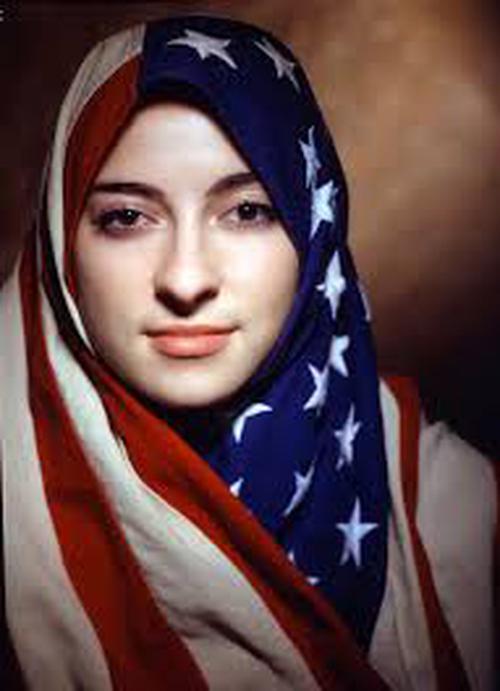
I have no problem with Dr. Hawkins questioning jingoistic American patriotism or American Protestants who wrap themselves in the flag. American civil religion is national patriotism at it worst and Protestants have been especially egregious in their fawning over American greatness (though for the last 30 years they have had lots of help from Neuhaus Roman Catholics). But if you challenge Americanism, don’t you also have to question Islam?

A year or two after arriving on campus, [Hawkins] developed a distaste for performances of patriotism and decided to stop saluting the flag and singing the national anthem. “I feel very strongly that my first allegiance is to a different kingdom than an earthly kingdom,” she told me. “It’s to a heavenly kingdom, and it’s to the principles of that kingdom.” Evangelicals tend to emphasize righteousness on an individual scale, but Hawkins was becoming attracted to theological traditions that emphasize systemic sin and repentance.

In particular, she was reading a lot of black liberation theology, a strain of thinking that emerged from the Black Power movement of the 1960s. Jesus’ central mission was to liberate the oppressed, the philosophy argues, but mainstream American Christianity is beholden to irredeemably corrupt “white theology.” The tone of black liberation is often angry — think of Jeremiah Wright’s infamous “God damn America” sermon — and conservative evangelicals are wary of it because of its theological pessimism and its politically radical roots. But Hawkins was beginning to view many of the Bible’s commands through a lens of race and class. “Theology is always contextual,” she told me, a core idea of black liberation theology. She said that evangelicals have trouble confronting “an ontological blackness of Christ.” Responding to Wheaton’s charge for professors to “integrate faith and learning,” she took these ideas into the classroom.

Fine. But an academic’s job is also to ask hard questions about Islam, liberation theology, and Jeremiah Wright. It’s not fair selecting which ox you gore.

Why Expect Mid-Westerns to Transcend Time and Place?

If other folks are products of their environment, why should the faculty and administration at Wheaton College be any different? Alan Jacobs, though, thinks that Wheaton College is provincial (and implicitly that non-white evangelicals coming through graduate school and advanced degrees hold on to their inherited culture):

I believe — I have good reason to believe — that Wheaton really, truly, seriously wants to have a faculty and student body that is more reflective of the ethnic and cultural range of worldwide evangelical Christianity. But I also saw, during my twenty-nine years on the Wheaton faculty and several years as director of the Faculty Faith and Learning program, far too many situations in which non-white faculty members were treated, if not with outright suspicion, then at least with bemusement and puzzlement, because they did not express themselves in ways that matched the cultural practices of white midwestern evangelicalism.

Heck, if the Vatican curia can’t escape the cultural blinders that come with Rome, why would we expect little old Wheaton to do so much better? I mean, with all the efforts to make Christianity of late into a cultural project, all of a sudden we’re going to expect Christians through regeneration and sanctification to act like this world is not their home, but they’re just a passin’ through? As if that pietist outlook was not the product of time and place?

If Muslims and Christians Worship the Same God, Can't the Forgiven and Unforgiven Too?

The latest from Wheaton College is that Larycia Hawkins and the College have agreed to part ways. In the leaks that led to this apparently amicable determination was an email from Wheaton’s provost, Stan Jones, who apologized for his handling of the incident. According to Alan Jacobs, Jones wrote:

I asked Dr. Hawkins for her forgiveness for the ways I contributed to the fracture of our relationship, and to the fracture of Dr. Hawkins’ relationship with the College…. I apologized for my lack of wisdom and collegiality as I initially approached Dr. Hawkins, and for imposing an administrative leave more precipitously than was necessary.

But according to some of Jones’ critics, this apology doesn’t go far enough, as Jacobs explains, “because it does not acknowledge Wheaton’s history (and present) of structural racism and sexism.”

Jacobs then asks:

What if, when a brother in Christ apologizes and asks for forgiveness, one were to grant that forgiveness — instead of immediately criticizing him for not having provided a fully adequate account of the reasons he went astray?

I’d follow up with another question: doesn’t the spirit of Dr. Hawkins’ show of solidarity with Muslims provide an analogy for how Jones’ critics might reach out to Wheaton’s provost? I mean, if you can overcome the division between Islam and Christianity by donning a hijab during Advent, can’t you go without a latte for the month of February to show solidarity with Wheaton’s administration?

Jacobs concludes:

So to those who say that Provost Jones’ apology is inadequate, my answer would be: of course it is inadequate. Every act of penitence, including yours and mine, is inadequate.

That could also be instructive for those who think Purgatory is going to take care of residual human guilt. Once humans sin — think one little bite of a piece of fruit — can you ever go back to being acceptable inherently?

No hope without alien righteousness.

We're Closer to Turkey than You Think?

This may be the most important context for considering the controversy over Islam at Wheaton College, namely, that Americans themselves are not all that comfortable with secularity and Islam reveals where the lumps in the mattress are. Rod Dreher quoted a poignant part of Ross Douthat’s column on how the West views Islam, as either as conservatives believe “radically incompatible with Western liberal democracy, and can never be reconciled to it; or, as many liberals believe, it is capable of assimilating to become as tame and non-threatening as most forms of Christianity and Judaism in the West.” In the Protestant world, either Larycia Hawkins or Tim Bayly. According to Douthat:

The good news is that there is space between these two ideas. The bad news is that we in the West can’t seem to agree on what that space should be, or how Christianity and Judaism, let alone Islam, should fit into it.

Devout Muslims watching current Western debates, for instance, might notice that some of the same cosmopolitan liberals who think of themselves as Benevolent Foes of Islamophobia are also convinced that many conservative Christians are dangerous crypto-theocrats whose institutions and liberties must give way whenever they conflict with liberalism’s vision of enlightenment.

They also might notice that many of the same conservative Christians who fear that Islam is incompatible with democracy are wrestling with whether their own faith is compatible with the direction of modern liberalism, or whether Christianity needs to enter a kind of internal exile in the West.

It almost sounds like Turkey’s war between Islamic friendly politicians and secularists, from a piece quoted sometime back from Mustafa Akyol:

As you probably well know, Turkey has long been stressed by political tension between religious conservatives and secular nationalists, the latter also known as the Kemalists. However, that main fault line is somewhat passé these days given the emergence of a new kind of tension between the religious conservatives who had triumphed together in (OR: previous) tension from years gone by. This time, it is the AKP (Justice and Development Party) government and the powerful Fethullah Gülen Movement that are at odds with each other. . . .

The term I translated here as “referee” (“hakem”) is a powerful word in Islam, referring to a neutral and fair judge who can settle disputes. And it is interesting that Ms. Eraslan, a pious, headscarf-wearing Muslim, thinks that this “referee” may be none other than secularism. Of course, this would not be the type of secularism that Turkey’s Kemalists have imposed for decades. That peculiar ideology, called “laiklik” (from the French laïcité), was based on the assumption that there was something wrong with religion and therefore it needed to be suppressed by the state.

What Ms. Eraslan probably implied, and what Turkey indeed needs, is a more American-like secularism. In other words, it should be based on the recognition that there is a problem not with religion, but with the concentration of political power.

Unlike Turkey, though, and the conflict between religion and laicite, could the struggle in the U.S. be the one that animated fundamentalists and modernists during the 1920s? The political left in the United States, like modernists, does not advocate the removal of religion from public life. They like religion (think Martin Luther King, Jr.). Jim Wallis is not a threat to them.

So too, the right also likes religion of the right sort (see what I did there?). It used to be Jerry Falwell and James Dobson. Now it’s Rick Santorum and Kim Davis.

The problem is that both left and right embrace a form of American exceptionalism that needs religion to endow the United States with a righteous or holy purpose.

In that case, if we are still living with the dynamics of the fundamentalist controversy, has the United States learned lessons it can pass on to the Muslim world?

Ecumenism vs. Going It Alone

The discussion of Larycia Hawkin’s situation continues.

Rod Dreher thinks Wheaton is right to protect its theological borders since it has refused employment to Roman Catholics:

Wheaton does police its margins carefully. Catholics are not allowed to teach there, not because Wheaton’s leadership think Catholics are bad people, but because they do not believe a faithful Catholic can affirm the institution’s standards. If I were a professor, as an Orthodox Christian, I couldn’t teach there either. Do I think that is excessive? Probably. But I admire Wheaton’s willingness to take a hard stand, even when they are mocked by outsiders. It requires the kind of courage and confidence that one doesn’t often see among Christian churches and institutions these days, and that will be desperately needed in the years to come, by all of us.

But Noah Toly, one of the first Wheaton faculty wonders if the goal posts move when Wheaton talks about theological borders:

The standard to which Dr. Hawkins is being held is that of “theological clarity” in embodying the identity of the college and Statement of Faith. It is immensely important to recognize this. Faculty may hold various controversial positions within the bounds of the Statement of Faith. The more complex those positions, the more they demand a sort of clear articulation – otherwise, they invite misunderstanding. The standard of theological clarity is not, in and of itself, problematic. But the operationalization of that standard is fraught. (Adam Laats’ commentary on this is good, if slightly overstated.) Is the same level of nuance, subtlety, complexity, and elaboration required of everyone? Or, given the insistence that theological clarity is particularly important when we participate in various movements and initiatives, is the same level of nuance, subtlety, complexity, and elaboration required regardless of the political, social, and cultural affinities of those movements? Has the college itself transparently offered faculty and other constituents the same level of nuance, subtlety, complexity, and elaboration that now seems required of us?

Exactly. This is why I hope Wheaton does not eliminate Hawkins from its faculty. The college is mainly “evangelical,” but faculty have hardly agreed on the meaning of the institution’s minimalist statement of faith.

Dreher also invokes a piece by Alan Jacobs written almost a decade ago when Wheaton let go a faculty member who converted to Roman Catholicism. Jacobs wondered if Wheaton was wise to rely on its own brand of conservative Christianity:

…throughout much of American history and late into the twentieth century, evangelicals and Catholics had little to do with one another. They came, by and large, from different ethnic groups; they lived in different neighborhoods and even in different regions of the country; they went to different schools—in short, they were socialized into American culture in dramatically different ways. Throughout much of its history Wheaton College’s leaders would have reacted with horror at the thought of Catholics on the faculty—but they would have been highly unlikely to entertain that thought in the first place. Catholic scholars would have been equally unlikely to think of teaching at Wheaton. Duane Litfin is right to say that Wheaton is getting hammered for taking a position that, as recently as thirty years ago, scarcely anyone on either side of the Reformational divide would have questioned.

But times have changed. And here is where the correctness of Hochschild’s position comes in. He is not the only Catholic to look at Wheaton’s Statement of Faith and think, “Yes, that suits me very well.” Having served on hiring committees a number of times in Wheaton’s English department, I have seen dozens of applications from Catholic scholars who see nothing in Wheaton’s self-description that would rule them out.

But I sure wish Jacobs had considered where Roman Catholics may be coming from when looking at Wheaton’s doctrinal affirmation. After all, their bishops’ ecumenical discussions on justification have been with the most liberal sector of Lutheran communions:

Acting as it does as a summary and analysis of five decades of Lutheran-Catholic dialogue, 2015’s Declaration on the Way: Church, Ministry, and Eucharist will undoubtedly be a helpful touchstone in future ecumenical discussions between the two traditions. For that reason, the representatives of the Evangelical Lutheran Church in America and the Bishop’s Committee for Ecumenical and Interreligious Affairs (United States Conference of Catholic Bishops) who authored the work are to be commended. The document is worthy of careful reading.

Of course, it is also important to note that the synthesis presented here represents an understanding of Lutheranism not necessarily shared by all churches who claim the name. The Lutheran side of these dialogues has been primarily represented by churches of the Lutheran World Federation (LWF). Other Lutheran churches, like those represented by the International Lutheran Council (ILC), may not agree in every respect with the Lutheran position as presented in these past dialogues, even as they praise other elements of the discussions.

Meanwhile, the bishop responsible for identifying doctrine infallibly helped to produce a video that has him walking along side religious expressions far more objectionable than the Evangelical Lutheran Church in America.

Why This Won't End Well For Wheaton

If Bill Smith thinks Michelle Higgins’ endorsement of Black Lives Matter at Urbana won’t end well for the PCA, imagine what will happen when the BLM folks figure out that a black professor may be about to lose her job at a white-dominated college. An African-American tenured professor!!!! HELLO! And students at Princeton think they need to be worried about “safe” spaces.

And if that happens, it is really too bad. I was almost persuaded by Dr. Hawkins’ theological explanation of her remarks. I am convinced that she is trying in thoughtful ways to maintain the College’s standards. When she said, “I understand that Islam (and Judaism) denies the deity of Christ and the Holy Spirit, and leaves no room for the Cross and the Resurrection,” I was encouraged. She seemed to be ready to recognize the particularity of Christianity and the uniqueness of Christ.

But then she added, “my statement is not a statement on soteriology or trinitarian theology, but one of embodied piety. When I say that ‘we worship the same God,’ I am saying what Stackhouse points out, namely that ‘when pious Muslims pray, they are addressing the One True God, and that God is, simply, God.'”

Well, what about a piety that embodies soteriology or the Trinity? How can you have a Christian devotion that only embodies the first article of the Nicene Creed?

Hawkins continued by trying to justify her remarks on the basis of the doctrine of creation: “it is on the basis of our very statement of faith that ‘We believe that God directly created Adam and Eve, the historical parents of the entire human race; and that they were created in His own image, distinct from all other living creatures, and in a state of original righteousness,’ that I am compelled to address all human beings as my ‘brothers and sisters.'”

For nine years I have signed a statement of faith which avers that all human beings originate from the same parents and bear the unalterable imago Dei – though no specific reference is made in the statement as to the process of that historic, original creation. Yes, when we Christians speak of our unity in and as the body of Christ, of course our unity stems from our identification with Christ. But my statement is not a statement of ecclesiology or baptismal regeneration or identification with Christ. It is simply and clearly a statement on the imago Dei, and a reflection of my African-American cultural heritage. It should not be misconstrued as anything different.

So, yes, when I call “fellow humans who happen to be Muslims [or Jews or atheists] my brothers and sisters” I am standing in full agreement with the Wheaton College statement of faith, identifying each person as an image-bearer of God.

Why can’t the distinction between creation and redemption (think 2k) supply the way out here? Why can’t Hawkins recognize the unity of the human race in the ex nihilo creation of the world by the only living and true God? Why isn’t that enough to affirm the worth of Muslims? Why not even appeal to the status of Muslims as citizens of the United States?

But as is so often the case with those who don’t distinguish between the temporal and eternal, the affirmations of unity based on creational norms lose momentum for accomplishing something truly noteworthy. Hawkins wants to seem to say this unity with Muslims goes somewhere special, so the sphere of redemption comes to the rescue. But that is precisely the area — in Christ — where Christian unity excludes Muslims. The former worship on Sunday in a church. The latter on Friday in a mosque.

Why can’t they simply get along on all the other days? Hawkins is right to resist letting redemption separate Muslims and Christians in creation. What she doesn’t seem to recognize is that the unity of creation can’t make up for the antithesis that Christ introduced:

34“Do not think that I have come to bring peace to the earth. I have not come to bring peace, but a sword. 35For I have come to set a man against his father, and a daughter against her mother, and a daughter-in-law against her mother-in-law. 36And a person’s enemies will be those of his own household. 37Whoever loves father or mother more than me is not worthy of me, and whoever loves son or daughter more than me is not worthy of me. 38And whoever does not take his cross and follow me is not worthy of me. (Matt 10)

No matter what Black Lives Matter finds out about Hawkins, Christ’s words don’t encourage me to think this will end well.

Wheaton College: For Christ, His Kingdom, and Islam?

Thanks to John Fea I now know about a graduate of Wheaton College, Aaron Griffith, who thinks that Dr. Larcyia Hawkins is simply doing what the institution’s founder, Charles Blanshard, would do (WWCBD?):

With this history in mind, Hawkins’s activism on behalf of Muslims begins to look a lot less like an aberration and more in keeping with the original vision of the college. The antebellum evangelical tradition Hawkins drew upon was one primarily concerned with upholding human dignity and advocating for those on the margins. Muslims facing discrimination and threats of violence in present-day American life surely fit that description.

In 1842, Jonathan Blanchard preached a sermon on slavery before a church synod in Cincinnati. Over eight pages, he presented forceful arguments against slaveholding Christians, pointing out flaws in their Biblical exegesis and showing how “the property-holding of men is the worst conceivable form, and the last possible degree of oppression.”

During his sermon, Blanchard spent two short paragraphs in the sermon talking about the doctrine of God, where he argued that “Whatever leads men to regard Jehovah as something different from what he is, prevents their acting towards him as they ought.” It was clear from these few lines that Blanchard saw theological precision as an important good.

But Blanchard was not especially worried about muddled theology in and of itself. Instead he argued that slavery corrupted “true religion.” Failure to love one’s neighbor or denounce oppression was the real theological problem.

Hawkins, with her stress on “embodied solidarity” with her Muslim neighbors, would have found herself in good company in 1842. She drew not on liberal theology, secularized notions of human rights or shared American identity, but on a robust evangelical tradition of the biblical call to advocate on behalf of people made in the image of God.

So what happened to Wheaton? According to Griffith who follows John Schmalzbauer, it’s fundamentalism’s fault:

In the early 20th century, dancing, card playing, and theater attendance replaced slavery and mistreatment of Indians as Wheaton’s moral bugaboos. Focus on the fundamentals unfortunately meant that social concerns were often swept aside, and, as religion scholar John Schmalzbauer has shown, fundamentalists tied to Wheaton propounded their own brands of Christian bigotry (in this case anti-Semitism).

Schmalzbauer alleged anti-Semitism was part of Wheaton’s past (even though the dots were pretty disconnected):

In 2010 I returned to campus to deal with some of these ghosts. In a lecture series commemorating Wheaton’s 150th anniversary, I lamented the history of Protestant bigotry in my native Twin Cities, focusing on two fundamentalist firebrands. Together, they led journalist Carey McWilliams to declare Minneapolis the “capital of anti-Semitism in the United States.” Welcoming the paramilitary Silver Shirts to the First Baptist Church (“Why Shiver at the Sight of a Shirt?”), William Bell Riley actively promoted the Protocols of the Elders of Zion throughout the Upper Midwest. Preaching a similar message, Luke Rader’s River-Lake Gospel Tabernacle was deemed “the worst place, barring none in the Twin Cities, as far as anti-Semitic vitriol.” Both men had ties to Wheaton College. While Riley preached the funeral sermon for Wheaton’s second President Charles Blanchard, Rader’s brother Paul was a college trustee.

But what do these Wheaton grads think Wheaton was back in the days of Jonathan Blanchard? Lena Dunham’s Oberlin? George Marsden’s reasons for including Wheaton’s founder and founder’s son in his history of — ahem — fundamentalism were sound, even common sensical:

These fights [against Masonry and Roman Catholicism] were simultaneously conservative and radical. Blannchard, who had by now been joined in his campaigns by his son Charles, believed that America was a “Christian nation” and worked for a Christian amendment to the Constitution. Their concepts of Christian ideals, however, showed little regard for prevailing middle-class stands. The 1874 platform of the National Christian Association included recognition of Christianity in the United States Constitution, Sabbath and prohibition laws, outlawing secret lodges, preservation of the “civil equality secured to all American citizens by articles 13th, 14th, and 15th of our amended Constitution,” international arbitration for peace, that “land and other monopolies be discountenance,” “justice to Indians,” abolition of the Electoral Colleges, and election of the President and Vice President by direct vote of the people….

Jonathan Blanchard’s son Charles, thought deeply dedicated to preserving his father’s views, completed Wheaton’s transition into the new evangelical and eventually fundamentalist outlook. The alliance with the Moody forces was clearly the crucial step…. By the end of his career, Charles was a significant figure in the fundamentalist movement. In 1919 he drafted the doctrinal statement of the Word’s Christian Fundamentals Association and in 1926 arch-fundamentalist William Bell Riley delivered the eulogy at his funeral…. Among [Blanchard’s] favorite texts, recalled from his anti-Masonic forays, were “Have no fellowship with the unfruitful works of darkness” and “Come out from among them and be separate. (Marsden, Fundamentalism and American Culture, 29, 31)

We don’t need selective history to justify cherry-picked theology.

Yes, it’s a shame if Dr. Hawkins loses her position over her remarks. Yes, it’s tough for administrators to protect faculty privileges while also maintaining institutional identity (not to mention satisfying alumni and donors).

But we don’t need to make up theology or history to justify our own rooting interests. The idea that the Blanchards would have been on the side of Muslims is risible, almost as funny as thinking that anyone would want to justify an institutional policy or personal conviction today by appealing to — wait for it — Jonathan and Charles Blanchard. Those guys would chew any contemporary Protestant up and spit us out. If they’d do that to Protestants dot dot dot