The Mystery of Dialogue

Another blog is up and running and it targets yet again Calvinists for ecumenical dialogue with Roman Catholics (most of whom converted from Protestantism to Roman Catholicism). This ecumenical endeavor, however, is different from Bryan and the Jasons Called to Communion. In fact, Bryan Cross would likely be fairly dismissive of “Catholics and Calvinists” (CaC vs. CtC). Cross once identified two kinds of ecumenism, one false, and one true. The former is wrong because it is — well — liberal:

That is because it seems to seek its goal of achieving general agreement about doctrine by way of compromise. So those who think a particular doctrine is essential feel pressured to drop their belief that this doctrine is an essential doctrine in order to attain some unity with those who think that that doctrine is adiaphorous (i.e. indifferent, non-essential). The very nature of the goal of this type of ecumenicism makes this kind of compromise essential to ecumenical progress. As someone said to me a while back, “True ecumenicism means everybody has to compromise.” And the necessary result of such a methodology is a least-common-denominator minimalism regarding doctrine, an acceptance as sufficient of something far short of the unity in communion to which Christ calls all His people.

In contrast for Cross, true ecumenism comes from recognizing the truth and unity of Roman Catholicism:

. . .this ecumenicism has complete agreement on doctrine as its goal, or more precisely, complete agreement on what each person believes to be essential doctrine. Moreover, and perhaps most importantly, it rejects compromise regarding what anyone believes to be truly essential as a means of achieving its goal. As a result, there is no pressure to compromise in order to attain this ecumenicism’s goal. Instead of proposing compromise as a means to reaching a watered-down unity, this type of ecumenicism recognizes that we are not fully united until we are doctrinally united on every doctrine about which anyone believes to be essential. In this ecumenicism we do not sweep our essential doctrinal differences under the rug. We even straightforwardly, and in genuine charity and sincerity, remind each other that the other person’s position, from the point of view of our own tradition, is nothing less than heresy.

That is not exactly a conversation starter and explains why discussions with Bryan and the Jasons generally descend to Dr. Dave Bowman’s conversation with H.A.L. 9000.

How then is CaC different from CtC? Put simply from this observer’s perspective, it’s the difference between the pre- and post-Vatican II church. While Bryan and the Jasons reflect a no-salvation/truth-outside-the-church outlook, CaC seems to embrace Vatican II’s ecumenism:

Our refusal to engage in “sheep stealing” is not merely a rhetorical front, as if that posture itself were a guise under which to carry on a still-deeper project of effecting conversions. It is also not a bracketing of theological questions for the time being, as if we will for a time carry on a project of “ground-clearing” only to then change gears and begin bringing in the sheep. We recognize that this a pervasive – and deeply problematic – style of Catholic and Reformed engagement, and we repudiate it in no uncertain terms.

Rather, our approach is rooted in the ecclesiological vision articulated by the Second Vatican Council and by other leading ecumenists that there are genuine gifts cultivated by the Holy Spirit outside the boundaries of those churches in communion with the Bishop of Rome that are genuinely beneficial to the churches which are in such communion, and which lead these churches into a deeper desire for union. We want to understand those gifts more clearly, and we want to help other Roman Catholics understand the under-appreciated richness of the Reformed tradition more deeply. We do this while seeking, of course, to have our own views as Roman Catholics – devoted first to Scripture and then to the Roman Catholic tradition expressed in such thinkers as St. Augustine, St. Thomas Aquinas, John Henry Cardinal Newman, and the great theologians of the twentieth century – come to be better understood by our brothers and sisters in the Reformed tradition.

An initial observation is this: why don’t CaCers engage in dialogue with CtCers? After all, it sure looks like Roman Catholics are on different pages when it comes to church unity and what to make of Reformed Protestants.

That conversation might then include discussions of Vatican II and the apparent rupture of the church’s understanding of its relationship to those outside the church (both other professing Christians and non-Christians). In fact, since CaC is interested in the shared use of scholasticism by Roman Catholics and Protestants, the dialogue it promotes might include trying to reconcile a church that was for much of its modern intellectual history committed to Thomism and then after 1965 opened itself to non-scholastic methods (and more). In other words, I don’t understand (maybe a dumb Protestant) how you invoke both scholasticism and Vatican II on theological discussion since the former achieved remarkable clarity and the latter was purposefully equivocal.

That difference between Vatican II and scholasticism also brings up the tricky matter of the Council of Trent. Why is it that the church that relied on scholasticism as its method for articulating theological and dogmatic truth did not open dialogue with but condemned Protestantism? Trent was not an invitation to dialogue. It put an end to it. So the challenge for CaCers is how to read 16th- and 17th-century theological sources as a way to pursue what Vatican II had in mind when those old sources drew clear lines between truth and error and pursued ecumenism far more along the lines that Bryan Cross advocates than what Pope Francis embodies.

The larger point here is one about Roman Catholics understanding Roman Catholicism. Instead of trying to understand Calvinism, making sense of Rome’s fits and starts and changes might be much more useful for dialogue (whether ecumenical or academic). For Protestants like mmmmeeeeeeEEEE, Roman Catholicism looks like a moving target. That is a mystery that needs much more attention from Roman Catholics than appreciating Luther or Calvin. In fact, as Mark Massa has argued, it is a mystery up to which the post-Vatican II church is still catching:

. . . the widespread acceptance of the seemingly self-evident truth that things change will make it increasingly difficult to propound or defend Church teaching and practice by appealing to timeless, static categories of propositional truth. This applies most particularly to the intellectual tradition of scholastic natural law, which the Catholic tradition has relied on for presenting its most important teachings since the thirteenth century. The fractious nonrecption of Paul VI’s encyclical on birth control, if nothing else, illustrates this with startling clarity. Whatever the truth of Paul VI’s teaching, the massive noncompliance accorded his encyclical shows that the great majority of American Catholics did not form their consciences along the lines of such moral reasoning, and have not since. There are of course many possible reasons for this lack of compliance on the part of the vast majority of practicing Catholics on an issue that the hierarchical Church has termed “serious matter.” Some of those reasons may indeed involve personal ignorance, sinful willfulness, or just plain selfishness. But an important reason for that noncompliance, what I would label as the main reason, is that the classical unchanging world it presupposes no longer makes sense to the vast majority of the faithful in the United States. What Bernard Lonergan so elegantly called the “transition from a classicist world view to historical mindedness” in fact describes the intellectual revolution that mainstream Catholics underwent during the sixties.

Whatever the strengths of that older classicist worldview — and it served the Catholic Church extraordinarily well for centuries — it can no longer provide plausible explanations for Church teaching . . . . The older intellectual categories of scholastic natural law, first enunciated so brilliantly by St. Thomas Aquinas in the thirteenth century, appear unable to accomplish that now. Perhaps the intellectual justification offered in its place to explain Catholic teaching will represent the most important long-term fruit of the intellectual revolution sponsored by historical consciousness in Catholic Christianity. Time will tell.

Some of us are still waiting for converts to Roman Catholicism to have a conversation with clergy and academics like Massa. It sure doesn’t seem like a meaningful conversation can take place between confessional Protestants and Roman Catholics as long as one side is so uncertain about that for which it stands.

Postscript: Comments should be open at a cite committed to dialogue.
Jimmy and Freamon Never Had It This Good

Back then they needed a search warrant. Not now:

Shemar Taylor was charged with robbing a pizza delivery driver at gunpoint. The police got a warrant to search his home and arrested him after learning that the cell phone used to order the pizza was located in his house. How the police tracked down the location of that cell phone is what Taylor’s attorney wanted to know.

The Baltimore police detective called to the stand in Taylor’s trial was evasive. “There’s equipment we would use that I’m not going to discuss,” he said. When Judge Barry Williams ordered him to discuss it, he still refused, insisting that his department had signed a nondisclosure agreement with the FBI.

“You don’t have a nondisclosure agreement with the court,” replied the judge, threatening to hold the detective in contempt if he did not answer. And yet he refused again. In the end, rather than reveal the technology that had located Taylor’s cell phone to the court, prosecutors decided to withdraw the evidence, jeopardizing their case.

And don’t imagine that this courtroom scene was unique or even out of the ordinary these days. In fact, it was just one sign of a striking nationwide attempt to keep an invasive, constitutionally questionable technology from being scrutinized, whether by courts or communities.

The technology at issue is known as a “Stingray,” a brand name for what’s generically called a cell site simulator or IMSI catcher. By mimicking a cell phone tower, this device, developed for overseas battlefields, gets nearby cell phones to connect to it. It operates a bit like the children’s game Marco Polo. “Marco,” the cell-site simulator shouts out and every cell phone on that network in the vicinity replies, “Polo, and here’s my ID!”

Thanks to this call-and-response process, the Stingray knows both what cell phones are in the area and where they are. In other words, it gathers information not only about a specific suspect, but any bystanders in the area as well.

And they wouldn’t even need Pryzbylewski to break the code.

No peace, no justice.

Blogging is Essential to Being a Christian

That is a conclusion that someone could possible draw from a recent Pew Research Center poll on Christianity in the United States:

The survey shows a clear link between what people see as essential to their faith and their self-reported day-to-day behavior. Simply put, those who believe that behaving in a particular way or performing certain actions are key elements of their faith are much more likely to say they actually perform those actions on a regular basis.

For example, among Christians who say that working to help the poor is essential to what being Christian means to them, about six-in-ten say they donated time, money or goods to help the poor in the past week. By comparison, fewer Christians who do not see helping the poor as central to their religious identity say they worked to help the poor during the previous week (42%).

The same pattern is seen in the survey’s questions about interpersonal interactions, health and social consciousness. Relatively few Christians see living a healthy lifestyle, buying from companies that pay fair wages or protecting the environment as key elements of their faith. But those who do see these things as essential to what it means to be a Christian are more likely than others to say they live a healthy lifestyle (by exercising, for example), consider how a company treats its employees and the environment when making purchasing decisions, or attempt to recycle or reduce waste as much as possible.

Is this circularity (which rivals the motives of credibility) merely a problem of Protestant subjectivity? I don’t think so:

Three-quarters of Catholics say they look to their own conscience “a great deal” for guidance on difficult moral questions. Far fewer Catholics say they look a great deal to the Catholic Church’s teachings (21%), the Bible (15%) or the pope (11%) for guidance on difficult moral questions.

Perhaps most discouraging is how poorly Sabbath observance fares, a weekly activity that winds up ordering all the days so that ceasing from work is possible:

To help explore this question, the survey asked U.S. adults whether each of a series of 16 beliefs and behaviors is “essential,” “important but not essential,” or “not important” to what their religion means to them, personally.

Among Christians, believing in God tops the list, with fully 86% saying belief in God is “essential” to their Christian identity. In addition, roughly seven-in-ten Christians say being grateful for what they have (71%), forgiving those who have wronged them (69%) and always being honest (67%) are essential to being Christian. Far fewer say that attending religious services (35%), dressing modestly (26%), working to protect the environment (22%) or resting on the Sabbath (18%) are essential to what being Christian means to them, personally.

Hearing the Word of God read and preached in the public assembly of the saints? Forget about it.

Converts and Cradles Together?

Part of the trouble that Protestants have in trying to make sense of Roman Catholicism is the bi-polar character of Rome (in the U.S. at least) and its appeal to evangelicals. Damon Linker explains the attraction that Roman Catholicism once had for him:

I became a Catholic (from secular Judaism) in the midst of a personal crisis. I longed to find an absolute moral Truth and craved a sense of belonging with others who recognized and ordered their lives according to that Truth. Catholicism is perfect for people with such yearnings. It tells them that the Roman Catholic Church is the church of Jesus Christ most fully and rightly ordered through time. Its magisterial authority can be traced back to St. Peter and the rest of Christ’s original apostles. It publishes a 900-page Catechism filled with elaborate, absolute rules laying out in minute detail how God wants us to live. It governs itself according to an intricate code of Canon Law that first began to be formulated nearly two millennia ago.

For someone who feels troubled by a culture in a constant state of instability and change, the Catholic Church can feel like a rock in a stormy, windswept sea. Finally, something is steady, permanent, unchangeable, fixed, immobile. The church’s very stability can end up looking like the strongest sign and confirmation of its divinity. Everything changes! But not God and his church.

For someone drawn to Catholicism by the promise of order and stability, any sign of change in the church will be unwelcome, threatening. The fact that social and cultural mores shift and develop around it is an argument for retrenchment and improved outreach to a world tempted by sin in new ways. It certainly isn’t a sign that the church should adjust its teachings on faith and morals, accommodating them to the latest trends. Any such adjustment would risk diluting the Truth, and (perhaps just as bad) serve as a potentially fatal concession that the church’s teachings can be fallible. Once that door has been opened, there may be no way to close it. Remove even a single brick from the foundation, and the whole edifice could come crashing down.

What then does a convert do when she understands that the people who grew up with Rome’s promise of order and stability don’t want to perpetuate that reliability but actually desire change? John Zmirak describes where such desires come from and such aspirations must seem odd to Bryan and the Jasons:

When a large group of highly educated people who have dedicated themselves to an organization with firm doctrines, strict rules, and stern demands — such as the Catholic Church — lose their faith in those doctrines, rules and demands, what do they do with themselves instead? Shrug and join the Unitarians? Leave their rectories or convents and go find apartments, maybe jobs as high school guidance counselors?

What do families like the Pelosis, the Kennedys or the Bidens — and millions of non-famous Irish and Italian-American clans with strong ethnic and historical connections to the Church — do with themselves when they reject its teaching authority?

The history of the Catholic left gives us the answer: Such people focused on the parts of the Church’s mission that still appealed to them, such as looking out for the poor and rebuking unjust discrimination. And of course the Church has an almost 2,000 year tradition of offering the needy education, health care, and a voice in the face of genuine oppression. Many Catholics had joined the Civil Rights movement and marched for integration.

In the 1960s, there were fresh, exciting causes available for Catholics to join which modeled themselves on the Civil Rights movement’s tactics and rhetoric, whose agendas were not so compatible with traditional Christian teaching as the noble fight against institutionalized racism had been. Feminists, homosexuals, and anti-war activists began to throng the streets and demand radical changes in American law and policy, and many Catholics with left-wing sympathies and deep roots in the Democratic Party began to exert their energies on behalf of these new movements — assuring themselves that they were acting as Jesus had when he denounced the scribes and Pharisees.

Many grandchildren of Catholic immigrants to our overwhelmingly Protestant country still clung to the pretense that they were outsiders — excluded and marginalized victims of the existing American establishment. So they felt bound to make common cause with every other “outside” group, regardless of the justice of its claims. This outsider illusion made it easy for them to be right about Civil Rights … and then poisonously wrong about feminism, gay liberation, and socialist economics.

It would be like an avid reader of John Calvin (other than Marilyn Robinson) joining the PCUSA with the expectation that mainline Presbyterians actually care about perpetuating Reformed Protestantism.

While Bryan and the Jasons want Protestants to join the ecumenical discussion, shouldn’t they be having that conversation first with the folks in their own communion?

Why Did Christ Die?

Was it because sin is so heinous or because humans need a cosmic flannel graph to illustrate God’s displeasure over sin (I don’t think he is weeping about it)? Machen thinks the former:

The atoning death of Christ, and that alone, has presented sinners as righteous in God’s sight; the Lord Jesus has paid the full penalty of their sins, and clothed them with His perfect righteousness before the judgment seat of God. But Christ has done for Christians even far more than that. He has given to them not only a new and right relation to God, but a new life in God’s presence for evermore. He has saved them from the power as well as from the guilt of sin. The New Testament does not end with the death of Christ; it does not end with the triumphant words of Jesus on the Cross, “It is finished.” The death was followed by the resurrection, and the resurrection like the death was for our sakes. Jesus rose from the dead into a new life of glory and power, and into that life He brings those for whom He died. The Christian, on the basis of Christ’s redeeming work, not only has died unto sin, but also lives unto God. (Christianity and Liberalism)

But what if God can change you apart from the death and resurrection of Christ?

In the midst of this crisis, (that went on for more than a year,) I came across the teaching of Martin Luther and his followers, who, when confronted with the same apparently insoluble problem, issued a ruling that was, essentially, against God. Human nature was hopelessly corrupt, top to bottom and god Himself has no power to alter it. They described the human soul as a dung heap, over which the grace of God falls like a deep covering of snow, that changes nothing of the underlying corruption.

This nauseating and plainly wicked doctrine – essentially nihilistic – so infuriated me that I realized in a flash that it was an insult, not to me in my failings, but to God’s infinite perfection and power. My very fury at this insult made me understand at last what the Church had always held: that it is not my power, but the power of God that will change me into this “perfect” new thing. This promise was true, and it had much more to do with Him than with me.

If God can change us, why would he need to send his son to die on the cross?

But if Machen and Luther are right about the extent of sin and the irredeemable character of fallen humans apart from an alien righteousness imputed to them and received by faith, then what incentives do people have to be good?

We cannot “earn” God’s love but, alas, too often we reject it. And it is up to us to use the gifts God has given to us—including our inherent rationality as well as the Church and the aids to faith and reason it provides—to orient ourselves to the good. Through hard work we can develop our character (habits of virtue or vice that go far toward determining who we are) such that we will recognize and say “yes” to God’s will. The saint does not achieve salvation through mere right conduct, but the saint’s conduct, both spiritual and physical, help him to surrender fully to God and do His will. In doing the right thing for the right reason we orient ourselves toward what is right and thereby recognize and accept God.

. . . Good works help develop within us habits that enable us to distinguish between good and evil; good works make it more likely that we will choose the good, even when it brings with it pain and death. This, I submit, is not some prideful claim to earning one’s own salvation, but rather a recognition of both the dignity and the weakness of the human person. We have within us an impulse toward the good, which we too often ignore. We have written on our hearts a knowledge of God’s will, which we also too often ignore. By both thinking and doing right we can embrace the good, opening ourselves to the grace offered by God—who is beyond our full knowledge but who has created within us a soul capable of recognizing His will.

If we have goodness, or an openness to the good within us, why exactly did Christ have to die?

Somethings don’t develop or change. Christianity doesn’t make humanism Christian.

What’s In Your Hymnal?

I am generally sheepish about singing Charles Wesley and Isaac Watts since both hymn writers knocked the Psalter off its congregational song pedestal and the former, Wesley, is a — well — Wesleyan. But on Sunday, when we sang, “Arise, My Soul, Arise,” the cold heart in this vinegary Calvinist warmed:

Arise, my soul, arise,
shake off your guilty fears;
The bleeding sacrifice,
in my behalf appears;
Before the throne my Surety stands,
My name is written on His hands.

Chorus: Arise (arise), arise (arise), arise
Arise, my soul, arise.
Arise (arise), arise (arise), arise
Arise, my soul, arise.
Shake off your guilty fears and rise

He ever lives above,
for me to intercede;
His all redeeming love,
His precious blood, to plead;
His blood atoned for every race,
And sprinkles now the throne of grace.

Five bleeding wounds He bears;
received on Calvary;
They pour effectual prayers;
they strongly plead for me:
“Forgive him, O forgive,” they cry,
“Nor let that ransomed sinner die!”

My God is reconciled;
His pardoning voice I hear;
He owns me for His child;
I can no longer fear
With confidence I now draw nigh,
And “Father, Abba, Father,” cry.

After attending a marriage service at a Roman Catholic parish this winter, I was surprised to learn that Christians in fellowship with the Bishop of Rome have Wesley and Watts available to them. But I can’t imagine any Roman Catholic who thinks he or she will wind up in purgatory singing “Arise, My Soul, Arise.” I know for some of the readers here, the sense of guilt and fear of condemnation that gripped Luther is not the sort of angst that full confidence in the magisterium, or papal supremacy, or 2,000 years of uncontested (really?) history yields. At the same time, sentiments like Wesley’s were the target for Trent’s condemnations of Protestant teaching on assurance.

So for those Christians who put so much confidence in the papacy, what kind of hymns would they sing? How about the Pontifical Anthem?

O happy Rome – O happy noble Rome
O happy Rome – O happy Rome, noble Rome
You are the seat of Peter, who shed his blood in Rome,
Peter, to whom the keys of the kingdom of heaven were given.
Pontiff, You are the successor of Peter;
Pontiff, You are the teacher, you confirm your brethren;
Pontiff, You who are the Servant of the servants of God,
and fisher of men, are the shepherd of the flock,
linking heaven and earth.
Pontiff, You are the vicar of Christ on earth,
a rock amidst the waves, You are a beacon in the darkness;
You are the defender of peace, You are the guardian of unity,
watchful defender of liberty; in You is the authority.

Pontiff, you are the unshakable rock, and on this rock
was built the Church of God.
Pontiff, You are the vicar of Christ on earth,
a rock amidst the waves, You are a beacon in the darkness;
You are the defender of peace, You are the guardian of unity,
watchful defender of liberty; in You is the authority.
O happy Rome – O noble Rome.

Or, how about “Long Live the Pope His Praises Sound“:

1. Long live the Pope! His praises sound
Again and yet again:
His rule is over space and time;
His throne the hearts of men:
All hail! the Shepherd King of Rome,
The theme of loving song:
Let all the earth his glory sing,
And heav’n the strain prolong.
Let all the earth his glory sing,
And heav’n the strain prolong.

2. Beleaguered by the foes of earth,
Beset by hosts of hell,
He guards the loyal flock of Christ,
A watchful sentinel:
And yet, amid the din and strife,
The clash of mace and sword,
He bears alone the shepherd staff,
This champion of the Lord.
He bears alone the shepherd staff,
This champion of the Lord.

3. His signet is the Fisherman’s;
No sceptre does he bear;
In meek and lowly majesty
He rules from Peter’s Chair:
And yet from every tribe and tongue,
From every clime and zone,
Three hundred million voices sing,
The glory of his throne.
Three hundred million voices sing,
The glory of his throne.

4. Then raise the chant, with heart and voice,
In church and school and home:
“Long live the Shepherd of the Flock!
Long live the Pope of Rome!”
Almighty Father, bless his work,
Protect him in his ways,
Receive his prayers, fulfill his hopes,
And grant him “length of days.”
Receive his prayers, fulfill his hopes,
And grant him “length of days.”

I’ll stick with the Wesleyan.

Another Solution to Celebrity Pastors — Modesty

I’m betting (if I were a gambling man) that celebrity pastors are a bigger problem for God’s people than transgender bathrooms. At least, Denny Burk Jared Wilson concedes that famous ministers are a problem, though he writes at the website that would not have a following if not for — wait for it — celebrity pastors. Here’s how celebrity happens:

. . . we participate in the highest elevation of a pastor’s platform as we can manage and then load him up with all the expectation we can muster. The result, naturally, is that he is top-heavy and prone to toppling.

BurkWilson adds that “pastoral smallness and obscurity” have their own problems, but “the most prominent dangerous temptations in pastoral bigness are these idolatries — worship of the celebrity pastor by his fans and himself.”

The possible fix for the celebrity pastor include:

1. Transition your “video venue” satellite campuses to church plants or at the very least install live preaching.

2. No more book deals for gifted preachers who are not gifted writers.

3. Discerning the credibility of our experts.

4. Actual parity among elders.

What about recognizing that celebrity pastor is an oxymoron?

1. Celebrity pastors are not really celebrities. Bruce Springsteen and Scarlett Johansson are celebrities. D. A. Carson and John Piper are not. And if Protestants long for pastors with celebrity appeal, they may show a greater degree of worldliness than they should. What it says about an organization — Gospel Coalition — that thrives on celebrity is something that the celebrity pastors and professors may want to consider the next time their schedules permit them to meet.

2. Pastors are not celebrities. First, they are undershepherds. They serve their lord and master, and are mere stewards of the mysteries of God (1 Cor. 4:1) — sort of like butlers. Unlike celebrities who avoid rubbing shoulders with the people and who hire servants to do work beneath them, pastors need to live and move and have their livelihood among smelly sheep (at least they’re not goats).

Second, real pastors serve a local congregation. That means real pastors have much more the fame footprint of a local television news show anchor than they do a Hollywood, NBA, or network star. Who outside eastern Michigan knows the NBC anchor for the 5:00 news show? I don’t. In other words, the genuine audience for a pastor is the local congregation, the one who called him. Fame outside the congregation is an indication that something is wrong.

What if the pastor writes books? Depends on whether the books are good, pretty good, or great. Great books won’t be so until they stand the test of time. Will Tim Keller’s books still be in print in fifty years? That’s one test of greatness. Simply having someone with fame write a book is no indication of merit. The bookshelves are full of promotional materials designed to feed off and enhance celebrity.

3. Celebrities can’t pastor. This may go without saying since celebrity is something that increases fame but decreases access. A pastor has to be available to his people almost 24/7. But imagine a celebrity pastor like Tim Keller paying a family visit. If he does, great. Chances are, with celebrity come handlers, schedules, and limitations to access. A celebrity is remote, a pastor is accessible.

What about recognizing that celebrity is unbecoming sanctification (where are the obedience boys now that we need them?)?

This is where the New Calvinists may want to take a little instruction from the original Calvinist (and notice the connections between 2k and piety that is modest in its affects and aspirations). Here is John Calvin’s commentary on the sons of Zebedee’s exchange with Christ about greatness (celebrity?) in the savior’s kingdom:

Their ignorance was worthy of blame on two accounts; first, because their ambition led them to desire more than was proper; and, secondly, because, instead of the heavenly kingdom of Christ, they had formed the idea of a phantom in the air. As to the first of those reasons, whoever is not satisfied with the free adoption of God, and desires to raise himself, such a person wanders beyond his limits, and, by unseasonably pressing himself forward beyond what was proper for him to do, is ungrateful to God. Now to estimate the spiritual kingdom of Christ according to the feeling of our flesh is highly perverse. And, indeed, the greater the delight which the mind of man takes in idle speculations, the more carefully ought we to guard against them; as we see that the books of the sophists are stuffed with useless notions of this sort.

Can you drink the cup which I shall drink? To correct their ambition, and to withdraw them from this wicked desire, he holds out to them the cross, and all the annoyances which the children of God must endure. As if he had said, “Does your present warfare allow you so much leisure, that you are now making arrangements for a triumphal procession?” For if they had been earnestly employed in the duties of their calling, they would never have given way to this wicked imagination. In these words, therefore, those who are desirous to obtain the prize before the proper time are enjoined by Christ to employ themselves in attending to the duties of piety. And certainly this is an excellent bridle for restraining ambition; for, so long as we are pilgrims in this world, our condition is such as ought to banish vain luxuries. We are surrounded by a thousand dangers. Sometimes the enemy assails us by ambush, and that in a variety of ways; and sometimes he attacks us by open violence. Is he not worse than stupid who, amidst so many deaths, entertains himself at his ease by drawing pictures of a triumph?

Our Lord enjoins his followers, indeed, to feel assured of victory, and to sing a triumphal song in the midst of death; for otherwise they would not have courage to fight valiantly. But it is one thing to advance manfully to the battle, in reliance on the reward which God has promised to them, and to labor with their whole might for this object; and it is another thing to forget the contest, to turn aside from the enemy, to lose sight of dangers, and to rush forward to triumph, for which they ought to wait till the proper time.

The advance of the kingdom of grace does not come from great awakenings or grand gestures or bestsellers or big conferences. It comes through Gideon’s small band, an obscure Palestinian kingdom, a suffering savior, and apostles who died as martyrs. It is time more than ever for New Calvinists to get over George Whitefield.

Don’t Take the Bait

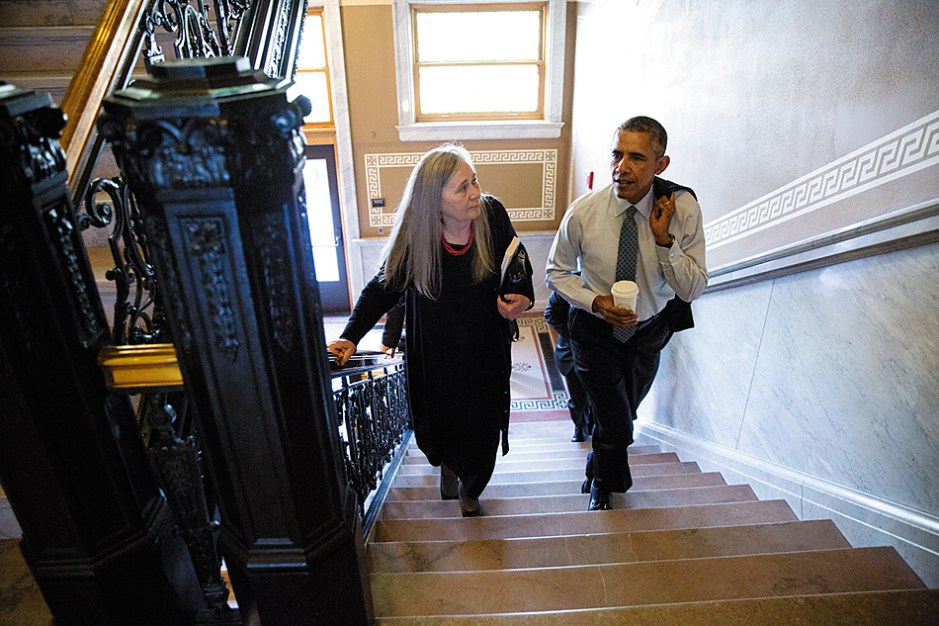
Lots more hue and cry doom and gloom about President Obama’s “letter” (is that have the same authority as an apostolic exhortation?) that instructs all public schools to make bathroom provisions for transgender students. I’m not sure how the president has the stomach for this kind of helicopter presidency when he has time for stop-and-chats with Marc Maron and Marilyn Robinson. Is he really prepared to send federal troops into schools — a la University of Alabama under George Wallace — that don’t comply. If the IRS lets $20 billion get away every year in unclaimed, unpaid, or fake returns (I hear), what’s a bathroom or two to the cause of transgender rights? Heck, is President Obama going to write a letter that specifies the most environmentally friendly way for bathroom users to dry their hands (in the light of climate change; has transclimate as an identity dawned on anyone, a hot planet trapped inside a cold earth?).

But culture warrior Christians feel embattled and are itching for a chance to show the state is tyrannical, wicked, and liberal. Denny Burk’s blood is boiling anyway:

The Obama administration is announcing its intent to coerce through force of law every public school to accept this. He expects your local school to allow boys to use bathroom and shower facilities with girls and vice versa. So long as the child’s parents are willing to go along with their child’s new identity, the school has to let students into the bathroom and locker room of the opposite sex.

This directive is jaw-dropping. The Obama administration doesn’t care whether the local or state school system supports such a move. It doesn’t care whether parents want male students showering with the female students or vice versa. . . .

What is going on here? The answer is very simple. President Obama feels the wind at his back in advocating LGBT rights. Gay marriage is now the law of the land, and gay people are now serving openly in the military. Now President Obama is turning to the “T” in LGBT, and he’s making bathrooms and locker rooms the issue. As the Attorney General has made clear, those who refuse to go along will be treated like Jim Crow bigots.

This radical directive is a heavy-handed, unconstitutional overreach in order to force Americans to pretend that some boys are girls and some girls are boys. It is absurd and wrong. And I wonder if this may not be a bridge too far even for people who are otherwise liberal. Are fathers going to be okay with their daughters undressing in locker rooms where boys can see them? No matter how much one may support President Obama, what dad would go along with this?

Has Prof. Burk considered that a school principal could ignore this letter in much the same way that U.S. drivers ignore speed limits? And what if conservative pundits also decided to ignore the letter and not push the indignant button. After reading recently Andrew Hartman’s book on the culture wars, I tempted to think that conservatives overreacted to matters (like Serano’s Piss Christ) and by protesting gave such transgressive displays more weight than they would have had had no protesters shown up — like millions were going to see Serano’s exhibit without the politics of self-righteousness to motivate them.

If only Kim Davis would come back and lead the charge against bathroom reforms. That’ll work.

Is Neutrality Anti-Religious?

The insightful Bruce Froehnen offers a standard brief against neutrality:

The lie of a neutral public square, in which we can debate important issues on the basis of “public reason,” is at its heart an anti-religious lie. It rests on the notion that we can set aside our faith and discuss important issues on the basis of reason alone. But faith and reason are not distinct categories of thought and action. Faith and reason are intimately bound up with one another and with a more generalized approach to the world—the imagination. Historically, the vast majority of people have seen the world as intrinsically moral, that is as made up of structures and choices that have intrinsic moral importance. Ethics is central to life, on this view, and is bound up with our general approach to both daily and life-changing issues such as whom to marry and what to demand of government, community, local association, family, neighbor, and self. This conception of life is intrinsically religious, for it rests on recognition of a natural order to our being that makes sense, has moral importance, and calls us to virtue, despite our own failings and limitations. It is a vision that has been under attack for more than two centuries, however, as a seemingly secular vision rooted in human emotions and impulses has sought dominance. This latter view, often termed the “idyllic” imagination and ascribed to Rousseau, sees the intrinsic goals of life as bound up with self-expression and self-actualization. It blames the injustices of life on social structures deemed oppressive or unjust and sees duty as something to be imposed on other people and especially on institutions.

But where would Froehnen put Calvinists who have a distinctly different estimate of humans’ moral potential? Is it possible for Protestants who affirm the following to have a place in Froehnen’s dressed public square:

Q. 25. Wherein consisteth the sinfulness of that estate whereinto man fell?
A. The sinfulness of that estate whereinto man fell, consisteth in the guilt of Adam’s first sin, the want of that righteousness wherein he was created, and the corruption of his nature, whereby he is utterly indisposed, disabled, and made opposite unto all that is spiritually good, and wholly inclined to all evil, and that continually; which is commonly called original sin, and from which do proceed all actual transgressions.

Q. 26. How is original sin conveyed from our first parents unto their posterity?
A. Original sin is conveyed from our first parents unto their posterity by natural generation, so as all that proceed from them in that way are conceived and born in sin.

Q. 27. What misery did the fall bring upon mankind?
A. The fall brought upon mankind the loss of communion with God, his displeasure and curse; so as we are by nature children of wrath, bond slaves to Satan, and justly liable to all punishments in this world, and that which is to come.

Such an understanding of human nature post-fall certainly qualifies Froehnen’s sense that ethics are “central to life” or that we all share an understanding of existence that “calls us to virtue.” If neutrality is deceptive, so too is an ethical public square if it leads people to think they can be good “naturally,” apart from grace. And if Froehnen wants to claim that goodness only proceeds from grace, then what does he do in the public square he envisions with people who don’t have grace? Do they need to leave? Or does he expand his understanding of grace — as so many western Christians have done while holding the keys of the establishment — to include everyone as a recipient in some sense of grace? (Say hello to Pope Francis praying with Hindus and Buddhists.)

So maybe a “neutral” public square is not so bad after all. It doesn’t mean having to cut and paste Christian orthodoxy in order to include non-Christians in a common ethical endeavor. Let the civil realm be the civil realm, and the church the church.

Did Humans Flourish Before Modernity?

I hear more doom and gloom assessments that trace our cultural degradation to either to the overreach of the federal government or the egotistical bombast of Donald Trump. Many of these critiques seem to assume modernity (a term that includes everything from pluralism and democracy to capitalism and technology) has produced a set an unprecedented state of affairs that provide no check on human wickedness and offer no protection for the virtuous from the vicious. Today’s roundup:

Too much gubmint:

We must not mistake the sincere agony and lonely battles of the individuals we pastor as they seek to pursue godliness with the political culture that now reigns supreme. The latter seeks nothing less than total and thoroughgoing conformity to its amorality as a price for membership of civil society, no exceptions allowed. We cannot be sentimental about the ideology even as we must have compassion with those who fight their temptations every day. We must also be aware of how fast the law could be changing. In a week when a CNN poll indicated a majority of Americans opposed to the North Carolina ‘bathroom bill,’ we cannot assume that the plausibility framework for legal decisions will be remotely sympathetic to what – to quote Tony Esolen on the same point for the second time this week – ‘everybody believed the day before yesterday.’

Too much Trump:

But previous election cycles gave Catholic voters a prudential choice between candidates who embodied at least some of the major themes of the social doctrine. What is the thoughtful Catholic voter to do when neither of the presidential candidates is even minimally committed to human dignity, the common good, subsidiarity, and solidarity, as the social doctrine understands those concepts? When one party has elevated lifestyle libertinism to the first of constitutional principles (and is prepared to kill unborn children, jettison free speech, and traduce religious freedom in service to hedonism), while the other is prepared to nominate a fantasist who spun grotesque fairy tales about an alleged connection between an opponent’s family and Lee Harvey Oswald shortly before he closed the deal?

That will be a question to ponder carefully in the next six months. The immediate take-away that the American democratic experiment is in deep trouble—and that trouble has something to do with moral judgment.

The perfect storm of Trump and Target:

We are living in a new country. There’s a completely implausible op-ed piece on Ethika Politika today, blaming the Benedict Option for giving us Trump. The idea is that when orthodox Christians vacate the public square, people like Trump triumph. But there’s no evidence that American Christians have by and large vacated the public square. Most churchgoing Christians who are Republican voted for other candidates in the primaries; Trump’s victory showed how little power religious and social conservatives have now. No, most Christians have not left the public square; the public square has left them, so to speak.

That is, Trump is part of what it means to be in a post-Christian nation (and so, by the way, is Hillary, with the platform she’s running on). It is simply an illusion that traditional Christians are a silent majority in this country, and that if we only wake up, we can put matters aright.

So why is it that God was so upset with either humanity or his own people that well before the rise of telephones and open primaries he sent down massive punishments against sin and disobedience? Think of the generation that did not survive the flood:

The LORD saw that the wickedness of man was great in the earth, and that every intention of the thoughts of his heart was only evil continually. And the LORD regretted that he had made man on the earth, and it grieved him to his heart. So the LORD said, “I will blot out man whom I have created from the face of the land, man and animals and creeping things and birds of the heavens, for I am sorry that I have made them.” (Genesis 6:5-7 ESV)

Or what about Jeremiah’s prophecy against Judah?

Because the people have forsaken me and have profaned this place by making offerings in it to other gods whom neither they nor their fathers nor the kings of Judah have known; and because they have filled this place with the blood of innocents, and have built the high places of Baal to burn their sons in the fire as burnt offerings to Baal, which I did not command or decree, nor did it come into my mind—therefore, behold, days are coming, declares the LORD, when this place shall no more be called Topheth, or the Valley of the Son of Hinnom, but the Valley of Slaughter. And in this place I will make void the plans of Judah and Jerusalem, and will cause their people to fall by the sword before their enemies, and by the hand of those who seek their life. I will give their dead bodies for food to the birds of the air and to the beasts of the earth. And I will make this city a horror, a thing to be hissed at. Everyone who passes by it will be horrified and will hiss because of all its wounds. And I will make them eat the flesh of their sons and their daughters, and everyone shall eat the flesh of his neighbor in the siege and in the distress, with which their enemies and those who seek their life afflict them.’ (Jeremiah 19:4-9 ESV)

Yowza!

Shouldn’t Christians who are supposed to be Bible readers act like they’ve seen a wicked world before? Such a recognition doesn’t mean doing nothing. But it should mean not being more outraged than God that humans are fallen.