Communicants, Siblings, Friends, and Others

When you have a comprehensive view (w-w) of the world, when you think that your faith informs (or should) everything you do, hard are those distinctions that 2k so readily supplies, like — this is the church so Christian rules apply, this is not the church so freedom applies.

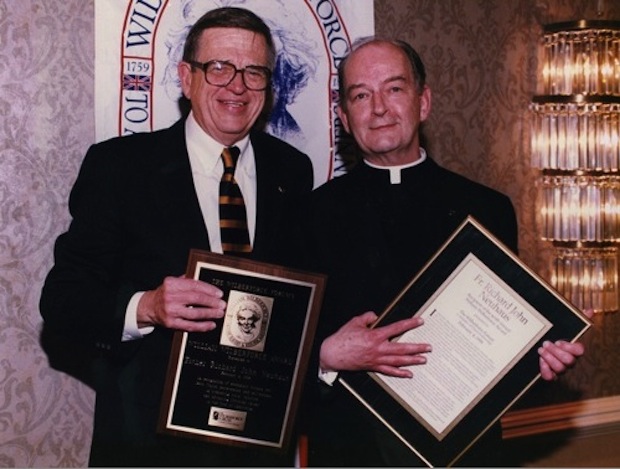
This problem is no less challenging for Roman Catholics than for neo-Calvinists since both are in the comprehensiveness business of showing how faith relates to EVERYthing a Christian does. Cathleen Kaveny took the comprehensiveness and catholicity of Rome in an arresting direction when she accused Richard John Neuhaus and the First Things crowd of partisanship and undermining the bonds of Roman Catholic unity:

Some conservative Catholics have blamed Pope Francis for sowing division among the members of the Body of Christ. But the charge is more properly lodged against one of the heroes of conservative Catholicism: the late Richard John Neuhaus.

It was Neuhaus, after all, who advanced the view that conservative Roman Catholics have more in common with orthodox Jews and Evangelical Protestants than they do with progressive members of their own religious communities. In fact, that view was an operational premise of First Things magazine under his leadership. This approach is based on a thoroughly distorted view of religious realities and commitments.

Does honoring Jesus as the Son of God count as a commonality? Like their conservative counterparts, progressive Roman Catholics acknowledge the divinity of Jesus Christ, and find the interpretive key to the Hebrew Bible in the New Testament. Orthodox Jews do not—indeed, must not—treat Jesus as the Messiah foretold in the Book of Isaiah. It would be blasphemous for them to do so.

Does living in the grace imparted by the sacraments count as a commonality? Both progressive and conservative Roman Catholics believe that God’s grace is channeled through the seven sacraments. Many Evangelical Protestants do not have the same view of grace or the sacraments; they often view the Eucharist as a memorial of a past event, not a way of being present with Christ here and now.

In trying to find common ground with evangelicals, then, Neuhaus was not truly Roman Catholic but actually Protestant:

Ultimately, Neuhaus’s focus was on nurturing these commonalities in the American political context—he was building a political movement. For a variety of partially overlapping reasons, conservative Roman Catholics, Evangelical Protestants, and orthodox Jews were inclined to vote Republican in political elections. Along with George Weigel and Robert George, Neuhaus coached Republican politicians in Catholic-speak to win national elections. . . . But here’s the irony of Neuhaus’s project: in treating theological belief and commitment as mere instruments of political will, Neuhaus’s view of religion resonated more with Feuerbach, Marx, and Leo Strauss than with the church fathers. In separating his own church of the politically pure from the hoi polloi of the body of Christ, his ecclesiology better reflects Protestant sectarianism than Roman Catholicism.

For the record, I too took issue with Evangelicals and Catholics Together for putting politics ahead of theology and for locating Christian unity not in ecclesiastical contexts but in parachurch groupings.

But Rusty Reno didn’t particularly care for Kaveny’s shot at Neuhaus. And so he tried to justify finding fellowship among religious people who were political liberals and then got mugged by reality:

many of the founding figures who played such a prominent role in First Things, as well as early readers like me, came to some shared conclusions. We became less and less impressed with the modern conceit that ours is a time of the unprecedented. We became more and more convinced that our traditions contained an inherited wisdom—a divine revelation—that provides greater insight into the human condition than any modern method, mentality, or revolution. Again, in the magazine’s early years, it was an exciting and invigorating to find others who were coming to the same post-liberal conclusions, whether they were Jewish, Catholic, or Protestant.

That is mainly true but does not represent the nature of Evangelicals and Catholics Together. Otherwise, ECT should have been called Evangelicals and Liberal Protestants and Roman Catholics and Mormons and Jews and Stanley Hauerwas Together. But at least Reno recognizes different layers of commonality:

When it comes to many things that are important to me, I have more in common with friends than with my brother. But my brother’s still my brother. It in no way compromises the truth of our fraternal bond for me to link arms with those with whom I have more in common politically, intellectually, or even theologically. The same goes for the sacramental bond that units us in Christ.

That is more or less a 2k point. But a 2ker would not call a magazine about religion and public life First Things. It’s not elegant but Penultimate Things or Proximate Things or Common Things would work better.

That left Michael Sean Winters to settle the debate and he did so (in neo-Calvinist-friendly ways) by taking issue with Reno’s separation of life into different spheres:

There may be “other dimensions” as Reno notes, but surely, for the Christian, those other dimensions need to be related to “what matters most.” It was this dualism between the Catholic faith and Catholic morality that stalked Neuhaus’s writings and continues to afflict the journal he founded. This dualism not only colored Neuhaus’ judgment, but it kept much of his otherwise enjoyable controversial writings at a fairly superficial level. It also led him to overlook the failings of his own team, both in politics and in religion: His defense of the Iraq War and of Fr. Maciel were stains on Neuhaus’ intellectual project that deserve attention and explanation by those who champion him.

. . . Reno, too, puts his sacramental beliefs in one silo, and his moralizing in another, and never the two need challenge each other. That is not how Catholics think when we are thinking at our best.

Apparently, 2k thinking is a no-no for Roman Catholics as much as it is for neo-Calvinists. Everything belongs to God. Or the papacy has universal jurisdiction (which is a topic for discussion in its own right). Which makes it hard to justify solidarity with people of a different faith.

But if you limit that solidarity to the church and find all sorts of room for cooperation outside the church, problem solved. Why does that solution seem so impious?

What’s Good for Interpreting the Constitution . . .

is good for interpreting the Bible:

Justice Scalia’s determination to take the law as it is earned him many enemies among our progressive elites. The criticism was and remains that Scalia’s textualism prevents the Constitution (and law more generally) from “growing” to meet the changing needs of the people and their government. Scalia was uncaring and a servant of injustice, we have been told, because he was not willing to use the law to do things its often privileged and corrupt authors did not intend it to do. The reprehensible hit piece sent out to faculty and students at Georgetown Law School by Professors Gary Peller and Louis Michael Seidman well illustrates the level of hatred aimed at Justice Scalia on account of his principled approach to law. It was wrong, according to these two professors, both of whom deny the legitimacy of our Constitution, for their law school to mark Justice Scalia’s passing with sympathy and respect because he was, on account of his judicial decisions, a bad man. The virtue progressive lawyers like Mr. Peller and Mr. Seidman demand of judges is quite clear. A good, virtuous judge is one who cares about the oppressed (defined by race, class, and gender), knows that law often is a tool of oppression, and sets himself the task of rewriting the law to make it a tool of justice by serving the interests of oppressed groups, as determined by progressive elites. In rejecting this hubristic model of the judge as savior, Justice Scalia earned endless calumnies, most especially the constant jibe that he was merely a tool of powerful bad actors.

The irony in these charges is thick, for it was precisely Justice Scalia’s refusal to go beyond the text of the Constitution or law that made his jurisprudence by far the most democratic and egalitarian, in the historical American sense, on the Supreme Court of his and perhaps any other time. The Supreme Court Justice who divines “emanations” from “penumbras” of various phrases and ideas in the Constitution and stitches them together into doctrines like the “right to privacy” is serving neither the law nor the people, but his own ideology.

Development of doctrine may allow interpreters of papal instruction to find coherence. But the similarities between development of dogma and a “living, breathing” Constitution are striking.

What Good Do Church Statements Do?

I noticed today at Cardinal Sean Patrick O’Malley’s blog a statement by the Massachusetts’s bishops on opiate abuse:

The abuse and misuse of opioids has become a national and local epidemic that has increasingly been felt in the Commonwealth of Massachusetts in recent years. On average, four people lose their lives each day in this state, due to illegal and legal drug overdoses. It is a disturbing trend that must be stopped. In this year of Divine Mercy in the Catholic Church, we, the four Bishops of Massachusetts join health care professionals, law enforcement, first responders, elected officials and countless others affected by this epidemic in calling for a comprehensive plan to address this growing crisis.

Given the scope of the problem, we feel some degree of urgency to find a solution to this public health and policy crisis that has reached dangerous levels. The lives negatively impacted by this disaster represent all economic, age, gender or racial categories. The impact is far reaching, leading to the eventual breakdown of families, friendships, neighborhoods and communities.

The solution to this tragic problem is not easy to define; it will be even more difficult to implement. The enormity of the problem, however, calls for an immediate and sweeping response. As that response is crafted, we must be mindful that on one hand, medical professionals must continue to care for their patients by prescribing these powerful drugs for long and short term pain management. On the other hand, overuse by the patient, along with access to vast quantities of opioids by unintended users, often leads to abuse, addiction and death. We exhort health care providers to demand improved education within their own professional groups about the appropriate indications, prescriptions and use of opioid medications.

We must offer help, support and comfort to those who have formed an addiction to prescription pain killers, as well as to those individuals who have formed an addiction to illegal drugs. While new legislation alone will not solve the opioid crisis in Massachusetts, it is a critical step that must be taken soon. We urge the Governor and the legislature to continue their work on this legislation and to provide the necessary resources, human and fiscal, to implement comprehensive education and treatment services to address and correct this ever-growing crisis.

We encourage our sisters and brothers who are suffering addiction or the addiction of loved ones to turn to their faith community for support, counsel and compassion, and we pray that those most affected will receive the physical, emotional and spiritual help that they need.

How different is something as unspecified as this call to action from the sorts of complaints that students have been bringing against university administrations, such as the Black Students Union at Johns Hopkins University?

1. We demand a public address to be held by the administration (including but not limited to President Ron Daniels, Provost Lieberman, Provost Shollenberger, and the Board of Trustees) to The Johns Hopkins community in which President Ron Daniels will announce an explicit plan of action detailing how the following demands will be instated.

2. We demand that The Johns Hopkins University creates and enforces mandatory cultural competency in the form of a semester long class requirement for undergraduate students as well as training for faculty and administration.

3. We demand that the Center for Africana Studies be recognized as a Department.

4. We demand an increase in the number of full-time Black faculty members, both in the Center for Africana Studies and throughout other departments within the institution. Moreover, we demands equal representation of self-identifying men, women, and non-binary Black individuals within these positions.

5. We call on The Johns Hopkins University Krieger School of Arts & Sciences to support the hiring of faculty concerned with the history, culture, and political position of peoples of African descent. Calls for diversifying faculty are important, but equally crucial is attracting faculty whose work creates a scholarly community dedicated to Africana studies.

6. We demand accountability for peers, faculty, and staff who target Black students both inside of and outside of the classroom. Attending to such situations must transition from a passive email sent to the student body, to an active stance taken against racial intolerance by the administration. Perpetrators that aim to make Black students uncomfortable or unsafe for racial reasons must complete additional diversity training and face impactful repercussions for their actions.

7. We demand a transparent five year plan from The Johns Hopkins University Office of Undergraduate Admissions regarding the welcoming of and retention of Black students. We demand black bodies be removed from diversity marketing campaigns until Hopkins addresses the low quality of life here that many Black students experience and the problems with retaining Black students all four undergraduate years and then takes the necessary steps to resolve them.

8. We demand more Black professors within the Women, Gender and Sexuality program to add a new dimension to the Department on intersectionality and inclusivity that is currently being neglected and ignored.

Actually, in most cases the students’ demands are much more specific than the bishops’ statement. If Massachusetts were a Roman Catholic state, the call by church officials to governmental officers to look into a certain matter might make sense. Or, if the bishops sent a memo to the administrators and public health officials at Roman Catholic hospitals and medical schools and asked for policy recommendations, they might have more to say even while not exactly ministering God’s word. But at the end of the day is a statement like this from the church anything more than an indication that bishops care? Didn’t church members already know that?

More Burke, Less Locke

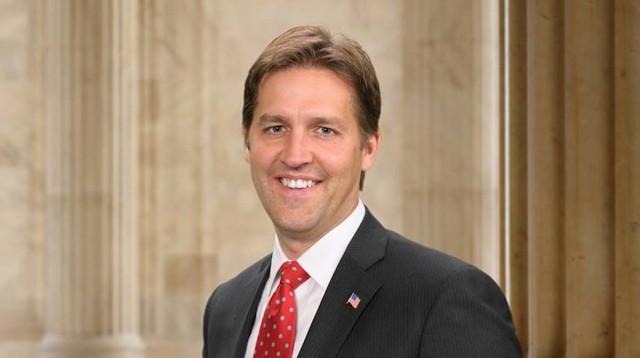
Ben Sasse addressed CPAC yesterday and Scott Clark has the video under the heading, “The Government Exists to Secure Natural Rights.”

I immediately wondered if this commits the federal government to granting amnesty to all the Mexicans living in America, legally or not. If everyone has rights naturally, and the U.S. government is committed to protecting those rights, how could it ever not protect the rights of anyone who winds up American soil?

Here‘s what Senator Sasse may have meant by that line:

Our founding moment is truly extraordinary. Our founders were making a claim about human dignity. Our founders were saying that everybody, everywhere—not just those who have been blessed to be born in this place—but everybody, everywhere is ordained with natural rights. Everyone everywhere is created in the image of God with natural rights, and government is just our shared project to secure those rights.

Again, everyone has rights by virtue of being human (sort of like the French Revolution’s Declaration of the Rights of Man — a universal, abstract ideal).

But another way of thinking about rights is to say they are protected by a constitutional arrangement and in order to receive such protection you need to be a member of a constitutional community. Here’s another statement from Senator Sasse:

People have been wrong about the nature of government and the nature of freedom, and we the people in America believe that our rights come to us via nature, and government is our project to secure them, so we the people give the government enumerated powers. We don’t ever wait for the government to give us an rights. We claim those by nature.

But what if the government has clearly enumerated powers and some of those mean that citizens enjoy the protection of that government. That protection is a form of liberty and rights. Citizens benefit from the government’s protection and the Constitution’s Bill of Rights. But non-citizens don’t. That seems elementary (but I’m only licensed to do history.)

What might Senator Sasse’s remarks have sounded like if he were a reader of American Conservative:

Sasse’s case for classical conservatism was actually a defense of classical liberalism. For the senator, America is an exceptional idea invented by the Founding and “ordained with natural rights”. This Lockean interpretation of the American Revolution is not how classical (or small-c) conservatives understand the Founding. Classical conservatives certainly believe in conserving the achievements of the Founding, but they also know America is not an idea. America is a culture and a nation composed of many regional and local communities. It is from these communities that a sense of self-government is developed and citizens who can underpin limited government are forged.

Sasse also described conservatism as a “set of policy preferences” directed towards the reduction of the size of government. Classical conservatism is not merely a checklist of anti-government policies, regardless of how virtuous those policies might be. It is a philosophical temperament which sees politics as the art of the possible, values prudential reform, and puts concrete institutions before abstract concepts.

He’s Only a Priest and Only Gives Homilies (now)

But Bill Smith still raises good questions for any pastor, priest, bishop, or pope who pretends to think his spiritual jurisdiction gives him credibility in the civil realm. His questions also apply to those w-w advocates who think that Christ’s lordship justifies Christian rule (of course, in a benign way these days unlike those old heretic executing ones) over all things:

a) What would Jesus preach about Black lives matter?

b) What would Jesus preach about the economic system in the United States?

c) What would Jesus preach about Wall Street?

d) What would Jesus preach about healthcare? Would he want to repeal, maintain, or expand the ACA?

e) What would Jesus preach about the upcoming national election? Would he preach that one party serves the interests of righteousness and justice better than the other?

f) What would Jesus preach about Islamist terrorists? the godly U.S. response?

e) What would Jesus preach about voter registration, voter ID, etc.?

g) What would Jesus preach about military readiness, the military budget, and the use of military power?

h) What would Jesus preach about foreign aid?

i) What programs to aid the poor would Jesus endorse in his preaching?

j) What would Jesus preach about immigration? Would he preach in support of a wall? of barring Muslim refugees? Would he preach in favor of deporting, granting citizenship, or granting permanent residence to illegal immigrants?

k) What would Jesus preach about gun control?

l) What would Jesus preach about the vacancy on the Supreme Court?

Our favorite priest puts these questions to Thabiti Anyabwile who said “I don’t think [politics] can be avoided if you’re committed to expositional preaching of the sort that makes contact with contemporary life.”

But isn’t it the case that if you want to connect with contemporary life, you really connect and talk about specifics? Or is the point of bring politics into the pulpit a way for the pastor to seem like he’s not operating in an ivory tower or removed from real life? (At least when Pope Francis comments on contemporary life he doesn’t go to Scripture but to — ahem — the authoritative magisterium of social teaching.)

But what happened to Paul’s preaching which distinguished between contemporary and ephemeral things and those truths and realities that endure?

For who knows a person’s thoughts except the spirit of that person, which is in him? So also no one comprehends the thoughts of God except the Spirit of God. Now we have received not the spirit of the world, but the Spirit who is from God, that we might understand the things freely given us by God. And we impart this in words not taught by human wisdom but taught by the Spirit, interpreting spiritual truths to those who are spiritual.

The natural person does not accept the things of the Spirit of God, for they are folly to him, and he is not able to understand them because they are spiritually discerned. The spiritual person judges all things, but is himself to be judged by no one. “For who has understood the mind of the Lord so as to instruct him?” But we have the mind of Christ. (1 Corinthians 2:11-16 ESV)

The priest’s lesson, then, is that pastor’s need to be wary about appealing to the itching ears of the natural man that still lurks within.

Anti-Gun is Pro-Life, Right?

James Mumford thinks so:

To me, the Planned Parenthood scandal seems the ultimate commodification of the body under the conditions of late capitalism.

Moreover, I agree that in the end it comes down to a trade-off between life and freedom. Pro-lifers often sheepishly downplay what their view entails: radical restrictions to a woman’s autonomy, both in having to undergo pregnancy—a burden I will never experience—and then either embarking on the project of a lifetime in raising a child she didn’t choose or, if she opts for adoption, knowing her child is walking around in the world without her.

So it struck me as all the more strange that, in complete contrast to the abortion debate, when it comes to guns American conservatives reverse their priorities. They rank freedom over life. “I never saw a body with bullet holes that was more devastating than taking the right to arm ourselves away.” Dr. Ben Carson’s response to the Umpqua Community College shooting in Oregon befuddled me.

Presumably, those who own guns for self-defense wouldn’t accept the claim that they rank freedom over life. They would say the freedom to own guns is precisely a freedom to defend life, their own and other people’s. Yet are more lives saved than lost by people having such easy access to lethal weapons? . . .

no possible reading of the Second Amendment can possibly excuse the fundamental hypocrisy here. Just because you’re free to do something doesn’t mean you should do it. Conservatives like me who care deeply about family values typically forego their freedom to sleep around.

Plus, a right is never absolute anyway. In 2008 Justice Scalia, writing the majority opinion in Heller, recognized that even the individual rights reading allows for a raft of gun-control measures—prohibitions on carrying weapons in public, extension of background checks, etc., etc. So there’s a lot for consistent pro-lifers to be campaigning for with as much vigor as they’re trying to defund Planned Parenthood.

Mumford is British. So is it a form of American exceptionalism to make round the square of defending guns and opposing abortion?

Blame Trump on the Mainline

So argues Mark Tooley:

Neither Sanders nor Trump would have been possible or even conceivable as serious presidential candidates during the decades of Mainline Protestant hegemony in American public life.

Excluding JFK, all presidents (including Unitarians) have had ties to Mainline Protestants, who shaped America’s political ethos for most of four centuries. Mainline Protestantism helped create American civil religion, a broad vaguely Protestant view of God that permitted all religious groups, including Catholics and Jews, to fully participate in public life without having to minimize their own religious convictions.

American democracy consequently remained very religious but also non-theocratic, tolerant and diverse, with all sects invested in America’s affirmation of religious liberty.

Through the mid-20th century, Mainline Protestantism provided the political language and ethical tools for governance and accommodation, especially for the great reform movements that expanded human equality. The Civil Rights Movement was perhaps Mainline Protestantism’s last great moral crusade, redeeming its earlier failures to address slavery and segregation.

But the great Mainline Protestant membership and wider cultural collapse began in the early 1960s. Then, one of six Americans belonged to the seven largest Mainline denominations. Today, fewer than one of 16 do.

Tooley fails to ask whether that political hegemony came with the price of theological modernism? After all, to maintain your place in the establishment, you can’t be vigorous about the particulars of your religious communion.

Tooley goes on to observe a certain tackiness among evangelicals:

Evangelicalism, lacking that magisterial heritage, is less self-confident, often uncomfortable with political power, is prone to extremes and often highly individualistic, impatient with human institutions.

These same handicaps plague even more the world of the religiously unaffiliated, who often lack the traditions, formal human communities, ethical tools and moral vocabulary for governance. They are especially vulnerable to the impulse of the moment.

So, if the the downfall of the mainline paved the way for Trump, how much more the corruption of the Roman Catholic Church which paved the way for magisterial reformers?

How To Talk About Sex (in public)

Conor Friedersdorf (via Noah Millman) suggested a way for Christians to talk to non-Christians about the value of sexual restraint:

Let’s imagine a private, residential college in purple America. It was once an explicitly Christian institution, and while now avowedly secular, the faculty still has a few beloved old-timers who retain a sense that part of their job is moral education. There is also a Christian pastor who lives on campus, runs a campus ministry for Christian students, and sits on a collegiate interfaith counsel. Each year, he plays a role in freshmen orientation—initially, to introduce himself to the students and invite any who are interested to join his ministry; and later, as one voice among many in a half-day session on sex and sexuality. He has 15 minutes to share whatever thoughts he has with the freshmen, who’ve already learned where to get free condoms and been counseled in consent and sexual assault. This is the only time he’ll have the whole class as a captive audience until graduation.

What should he say?

Should he say that abstinence is the only acceptable method for preventing unwanted pregnancy, because premarital sex is always wrong and contraception violates natural law by subverting God’s design of the human form? Should he say that while gays and lesbians are as loved by God as anyone and their desires are not themselves sinful, acting on them is immoral? Should he say that gay students should think about a vocation besides marriage, because the institution is inherently procreative and always will be? Or that students who never accept Jesus as their personal savior may be consigning themselves to eternity in hell? Should he say that anyone who aborts a pregnancy is murdering an innocent human? Or that the weight of tradition should cause students to look askance at masturbation? These are all beliefs a particular traditionalist Christian might well hold. You can imagine why he might feel impelled to speak them aloud—to “stay true” to his beliefs, despite their present unpopularity, or to facilitate what he regards as the potential saving of as many student souls as possible.

Should he say that you should imagine your future wife going to one of these parties and thinking of how to encourage men to show her respect?

Here’s part of what Friedersdorf came up with:

Some students will become depressed after hooking up with someone who doesn’t reciprocate the emotional intimacy they sought. Does that fact affect you? How? There’s always a chance that sexual intercourse will result in a sexually transmitted disease or the creation of a new life. What does that imply, if anything, about your own sexual behavior as you try to be good to one another?

There are so many situations you’ll face—so many more questions I could pose.

I don’t pretend that confronting these situations with the question, “How can I be good to others?” will lead all of you to the same answers, let alone to my answers, though I hope that you’ll keep your hearts open to the possibility. But if you really wrestle with that question in every situation that involves sex, romantic intimacy, dating, hooking up, whatever you kids call it these days—instead of thoughtlessly acting in whatever way most people seem to be acting—you’re much more likely to do right by others, much more likely to be proud of yourselves, and much less likely to remember your time here without the regrets that haunt some people, people who look back at their younger selves ashamed of how they hurt others. You’ll also bring about a community with fewer unintended pregnancies, fewer sexual assaults, less depression—just by trying your very hardest to be good to one another!

Can you imagine a chaplain talking like this to students at a Christian college? Of course, not (unless it’s Boston College — ahem).

But can you really imagine Christians talking to other Christians about movies — MOVIES!?! — the way Samuel D. James does (via Tim Challies)?

The first thing I should clarify about my original blog is what I did, and did not, intend to communicate. My aim was to help Christians affirm their conscientious objections to watching simulated sexual acts by offering some substantive reasons why, in my opinion, violence and profanity are not similarly problematic. I was not trying to argue that all sexual content in movies demands the same response from everyone, nor was I making a case that all movies that contain it are equally problematic. There is, of course, a significant difference between talking about the sexuality of a James Bond film and that of 50 Shades of Grey, just like there’s a difference between the violence of The Exorcist and The Human Centipede. My conviction is not that all these films are equivalent or that Christians must treat them as such, but that a consistent ethic of avoiding explicit sexuality in any film is not hypocritical, unrealistic, or even particularly “legalistic.”

The reason I think this is a point worth making is that when most Christians ask about sex in movies, they’re not asking about whether they should walk out of the theater when it comes on, or if they should leave the party or close their eyes or only watch with their spouse and fast forward. Those might be important questions, but in the majority of cases that’s not what is being asked. What is being asked is, “Is it even worth trying to avoid?” And, “Don’t I have Christian freedom to watch if I’m resisting the temptation to lust?” My blog was specifically directed not toward the details but toward the larger point that, yes, for the Christian, avoiding a dramatic encounter with the erotic outside of the marriage covenant IS realistic and IS spiritually wise.

Why can’t Christians talk about sex in public in ways that suggest they’ve read narrative of David and Bathsheba and the Song of Solomon and don’t think those parts of the Bible are dirty?

Lord, I Know Already, Help Me Do

What is the purpose of preaching? Is it to increase knowledge or provoke akSHUN? Randy Nabors thinks the latter:

We don’t need more didactic moments that simply tickle the minds of those who thirst for more information; we need the forming of the heart though great sermons powerfully delivered. People need truth that shapes hearts into the obedience that comes through faith so people can be doers of the Word and not just hearers of it.

But what if the average Christian believer is someone who is prone to think either that sin, temptation, the devil, and the flesh have overwhelmed him the previous week? What sort of sermon does that person need? A call to obedience? Maybe. But can such a call make sense to someone who knows how sinful and weak he is? Might the person in the pew need to hear about God’s work in sanctification even if it is a tad didactic?

Or what about the average believer who lives life like a pilgrim, someone in exile, hardly in command of his affairs, but weak, frail, and in need of a reminder that God has saved him and controls all things?

In other words, Nabors seems to think of Christians as people who are in control of life and need simply to be hectored into living Christian lives. He doesn’t seem to allow that Christians come to church thinking that they believe, but are tempted to unbelief precisely when they take life and its duties into their own hands.

Higher Christian Living

Once a person converts to follow Jesus, he or she confronts a number of options for living at a higher spiritual pitch. For Protestants the options run the gamut from the second helping of grace that comes with Holy Spirit baptism to the comprehensive alertness that w-w Protestants promote. Often overlooked in the devotional plans that take you from Christianity 1.0 to Genuine Christianity 2.0 is the contribution of converts to Roman Catholicism.

Mark Shea shows the way:

I was raised Nothing-in-Particular (with a cloudy pagan regard for “the spiritual” and a deep disdain of “organized religion”). Then, at the age of 20, I had a sort of classic “born again” experience after an encounter with the living God revealed in Jesus Christ. Looking around me, I found that the people who had introduced me to Jesus were the non-denominational Evangelicals and charismatics on my dorm floor at the University of Washington. Therefore, putting two and two together, I concluded that this was the Christian community God had given me and that it was my task to learn from them, love them, and receive the love of God through them.

So learn from them I did. I became a member of this community (which eventually coalesced into a small church in North Seattle) and I learned the basics of the Christian faith-trust, prayer, love, good works, fellowship, discipleship, Scripture study-in this place. I regard this time with them as my personal “Old Testament”: that period of preparation for the full reception of Christ which was to come when I became a Catholic.

I think the “Old Testament” metaphor for my time as an Evangelical is apt because I don’t believe for a moment that it was an accident God introduced me to his Son through Evangelicalism any more than I believe it an accident that the whole history of Israel was the preparation for the Advent of Christ. Again and again, I found that things in my own Evangelical background anticipated the teaching of the Catholic Church and the Christ who is fully revealed there just as the teaching of the Old Testament anticipated the Incarnation, Death and Resurrection of Christ. So I am deeply grateful for my time as an Evangelical and regard the good things God gave me through that Tradition as very properly Catholic.

No mention here of the sins involved in belonging to a church not in fellowship with the Bishop of Rome or the mortal sin of disobeying the magisterium. Shea was a Christian, had gone from darkness to light, and had found Christ among Protestants.

Why on earth would Rome have ever anathematized Protestants or their teaching?