And You Wonder Why Reform Doesn’t Happen

The Vatican has a long tradition of bishops covering for bishops:

Francis was compelled to remove Tebartz-van-Elst in October 2013 due to public backlash against his spending an estimated $42 million on remodeling his diocesan center and residence, including $1.1 million for garden landscaping and even $22,000 for a bathtub.

Originally, the Vatican said the Bling Bishop was being granted a temporary sabbatical outside the diocese. That “temporary” measure became permanent in March 2014, at a time when the Vatican was trying to negotiate an agreement under which Tebartz-van Elst would not be sued by the Limburg diocese in an effort to recoup its losses over the construction projects.

The question then became what to do with him since Tebartz-van-Elst was only 54 at the time of his exile, a full two decades short of the usual retirement age for Catholic bishops of 75.

In the end, Tebartz-van-Elst was brought to Rome and given a new gig as a “delegate for catechesis” in the Council for New Evangelization. Although his appointment is a matter of public record – it’s even on his Wikipedia page – the Vatican understandably made no effort to broadcast it, leaving even seasoned clergy a bit surprised to see him today taking charge of Roman meetings.

Given that the main complaint against Tebartz-van-Elst in Limburg was that his regal spending habits were “unevangelical,” at odds with the witness of Jesus in the Gospels (not to mention Francis in the papacy) and thereby driving people away from the faith, many observers would likely find his present assignment as a top Vatican official for evangelization not just a little bit jarring.

In reality, however, no one probably should be surprised. There’s a long tradition of clerics in disgrace in their homelands ending up in Rome, but in the Francis era they sometimes wind up in jobs that almost seem a private papal satire.

Most famously, there’s the case of Bishop Gustavo Zanchetta of Argentina, who resigned his post heading the Diocese of Oran in August 2017 amid accusations of abuse of power and “strange behavior” (charges of sexual abuse of adult seminarians came later). The rap sheet against Zanchetta also features charges of financial misconduct, including selling a building belonging to the diocese for $800,000 without going through the proper channels and leaving the transaction off the diocesan books.

Despite that, Francis in 2017 not only brought Zanchetta to Rome but named him Assessor to the Administration of the Patrimony of the Apostolic See (APSA), the Vatican’s financial powerhouse which oversees both the Holy See’s investment portfolio and its real estate holdings in Italy and around the world.

Once again, it’s hard to imagine a Vatican gig (other, perhaps, than with the Pontifical Commission for the Protection of Minors) that would seem more ironic given the baggage Zanchetta carried.

Another fitting for-instance is Monsignor Dario Edoardo Viganò, who was forced to resign as the Vatican’s communications czar in March 2018 after attempting to pass off a doctored letter by Pope emeritus Benedict XVI as the real thing and getting caught. For presiding over such a PR fiasco, Francis moved Viganò to a different post – not as prefect of the Dicastery for Communications but its “assessor,” meaning to this day he’s still in a position to shape the communications operation.

Further back in time, there’s Monsignor Mario Salvatore Battista Ricca, who was confirmed by Francis as prelate of the Vatican Bank in 2013 despite revelations in the Italian media that during his previous service as a papal diplomat in Uruguay, he’d been involved in a couple of scandalous situations involving homosexual activity – one in which Battista Ricca was apparently beaten up after leaving a gay bar, and another in which he was trapped in an elevator at the papal embassy in Montevideo with a young man and had to be rescued by the fire department.

Despite that, Francis confirmed Battista Ricca in a sensitive post at an institution which, at the time, was also trying to shake off a well-earned reputation for scandal.

Of course, Francis presumably knows more about these situations than any of the rest of us, and he may well have perfectly valid reasons for appointing or confirming such officials to the posts they currently hold.

However, it’s hard not to wish there was a “Simpsons” for the Vatican – because, let’s face it, the Bling Bishop in charge of evangelization probably would be the basis for one hell of a Halloween episode.

Some aspects of church life don’t change. They develop. (Not even mainline Protestants have this kind of chutzpah.)

Had Hoped to See this in Dallas while at General Assembly

But Rain Bomb 2019 meant we could only circle First Park on its side streets. Here’s why it is intriguing:

The one constant about World’s Fairs and Expositions—from Chicago’s White City to the several Expositions Universelles in Paris to the New York World’s Fair of 1939—is that you cannot in any meaningful sense go to see them. It’s not merely that the midways are empty, Buffalo Bill dead, the dancing girls clothed, and “Forbidden Tibet” forbidden. The physical imprint of almost every single exposition of the golden age from the 1870s to the 1930s has been almost completely effaced, with remnants typically constituting one or two relics and some landscaping.

There are very few exceptions. But your best bet for immersion today is in Dallas’s Fair Park, a stunning time capsule from 1936 with 26 buildings remaining from the Texas Centennial Exhibition. Fair Park has been and remains the host of the Texas State Fair since 1886, so a spectacle persists every fall for three weeks. Many decades later, the difficult problem is what to do with these stellar grounds the other 11 months of the year. And the question is how Dallas can enliven this huge urban monument today—even as there is no question that the 1936 legacy of Texas should be both celebrated and preserved.

Though Fair Park’s landmark exhibition was not technically a “World” exposition, it drew on a very considerable range of national and international talent, and lived up to Texas’s reputation for gigantism in all of the best ways. As Jim Parsons and David Bush write in their book, Fair Park Deco: “In 1936, most of the United States knew little about Texas. If Americans thought of the state at all, they probably imagined it as a vast frontier filled with cowboys and oil wells. Centennial publicists, armed with a $500,000 allocation from Austin, were perfectly happy to use those misconceptions to their advantage, spinning them into decidedly sentimental symbols of the Lone Star State.”

But what if fairs were meant to exist only during the event itself (sort of like General Assembly)?

A majority of the great fairs of yesteryear were intrinsically evanescent, built to be destroyed, with many of the most seemingly opulent sharing a material foundation of staff, a compound containing some cement, but much larger amounts of plaster of Paris, often strengthened by fibers or literal sackcloth. It wouldn’t last, and was torn down before it would decay in Paris in 1878 and 1889, Chicago in 1893, Buffalo in 1901, St. Louis in 1904, and elsewhere. This was relative material luxury; later fairs such as Chicago’s Century of Progress were built largely out of plywood—possibly not much progress!

Fair Park was an exception, building structures out of more durable materials. Some were subsequently demolished and many decayed greatly. Much of the art adorning these buildings was painted over. Despite a number of much larger threats over time, the considerable majority survived and restoration efforts beginning in the early 1980s have restored many of their original 1936 features.

Part of the trouble is that, for all of the varied urban sobriquets applied to large expositions and fairs, from Chicago’s White City to Buffalo’s Rainbow City (a common nickname for The Pan-American Exposition of 1901) and onwards, they’ve more often been a vision of fantasy urbanism than the real thing, even beyond their temporary construction. Sometimes their sites are highly central, such as Paris’s Champ de Mars, but more often they are located in fairgrounds or used as schemes to improve or create parkland on the urban periphery. Flushing Meadows Corona Park in Queens is not exactly well connected to its surroundings. Balboa Park in San Diego, host of the California-Pacific International Exhibition (and the most substantial surviving complex in the U.S. beyond Fair Park), consisted of a simulacrum of a dense urban core in the middle of a park.

Even better connected events, such as the World’s Columbian Exhibition, share a highly anti-urban feature: ticket gates. Walkable and visually appealing urban landscapes behind gates, poorly connected to any street grid, is the story of, well, Disneyland: it’s no surprise that Walt’s father, Elias Disney, worked as a carpenter on the World’s Columbian Exposition. Walt visited others and constructed attractions for the 1964 New York World’s Fair.

Is this part of a by-gone era of urban life and recreation, or will thee Holy Urbanists have a plan to be in the city, for the city?

Other examples of this type of built environment are relatively rare. Balboa Park in San Diego has a more robust set of tenant institutions, including the city’s main art museum, natural history museum, and science center (with a total of 16 museums) but struggles with some similar issues. Exposition Park in Los Angeles, which is a somewhat smaller version of the same with stronger resident institutions, houses Los Angeles’s major league soccer team, their principal Natural History Museum and Science Center, the Los Angeles Memorial Coliseum, and will soon be host to George Lucas’s Museum of Narrative Art.

More recent exposition grounds suffer from fewer preservation burdens but similar difficulties just staying tenanted and busy. Hemisfair Park in San Antonio has a number of unused pavilions and has built a hotel and is adding apartments and commercial space. At the site of the 1962 World’s Fair of Space Needle fame, the Seattle Center grounds are relatively vibrant, but some spaces sit empty and unused.

Many of these spaces are of a scale that echoes Jane Jacobs’s criticism of another megaproject, Lincoln Center, as an unnatural isolation of culture from ordinary activity of the city—though the scale of these fairgrounds can make Lincoln Center look positively modest. In any case, when cultural facilities are spread across the urban fabric, they are obviously more easily integrated with their surroundings or repurposed. There is no arguing with a fundamentally unique treasure such as Fair Park, however, and we can only hope that it devises a formula for success.

Fair Park draws widespread plaudits as an institution not merely academically but personally important to the citizens of North Texas. As Willis Winters observes, the place is “so central to our city. My first college football game, my first professional football game, my first opera, my first symphony visit, my first fair—all were at Fair Park. It’s been so important to my life and so important to many residents of this city.”

(By the way, The American Conservative excels in its reporting on new urbanism, architecture, and localism.)

Fascism and Modern Roman Catholic Societies

Can anyone point to an example of a society that went with the Protestant side of the Reformation producing a fascist government? Donald Trump does not count because the U.S. has yet to adopt a fascist government (that is, if you don’t read the paleo-conservatives on Abraham Lincoln).

This is not meant to tar Rome with the fascist brush (mainly), but it is to ponder what Michael Walzer wrote about liberalism and the “art of separation.” Peter Meilaender summarized it this way (from a golden oldie):

The “separation of civil society and political community creates the sphere of economic competition and free enterprise, the market in commodities, labor, and capital” (Walzer 1984, 316). It is true, of course, that “market freedom entails certain risks for consumers,” but, as Walzer points out, “so does religious freedom” (Walzer 1984, 316). Similarly, the “abolition of dynastic government separates family and state” and in this way creates the possibility for people to pursue careers according to their talents, opening up the “sphere of office and then the freedom to compete for bureaucratic and professional place, to lay claim to a vocation, apply for an appointment, develop a specialty, and so on” (Walzer 1984, 316-17). Finally, Walzer writes, the same process, by separating “public and private life” (Walzer 1984, 317), enables new forms of domestic intimacy that are profoundly important to most of us. In the privacy of our homes we become free to pursue “a very wide range of interests and activities…: reading books, talking politics, keeping a journal, teaching what we know to our children, cultivating (or, for that matter, neglecting) our gardens” (Walzer 1984, 317). Raising our own chickens, we might add, or not raising them! “Our homes are our castles, and there we are free from official surveillance” (Walzer 1984, 317).

The virtue of Walzer’s analysis is to correct the one-sided portrayal of modernity as a story of decay, fragmentation, and alienation, the loss of a pre-modern, pre-liberal Eden. The story of modernity is also one of increasing richness and diversity, of freedom and pluralism, of a world in which, to borrow a line from C. S. Lewis, “Everything is getting more itself and more different from everything else all the time” (Lewis 2003, 281). Lewis was not describing the spheres of society—family, work, church, state, and so on—but his point is analogous to Walzer’s. As he writes in the preface to The Great Divorce, “life is not like a river but like a tree. It does not move towards unity but away from it and the creatures grow further apart as they increase in perfection” (Lewis 2001, viii). A new, richer, and redeemed form of community will one day arise—can arise—only as the outcome of that increasing process of differentiation.

Indeed, Christians are especially well placed to understand the characteristic forms of modernity not simply as examples of fragmentation and loss but rather of differentiation and enrichment, as a process in which the various spheres of society gradually become more and more themselves and less and less something else.

In contrast to differentiation and separation, Roman Catholics — perhaps thanks to the neo-medievalism that lurks in all nostalgia for Christendom — prefer integration, hence the current appeal of integralism. David Frum picked up on this in his poignant piece about D-Day. At the end of the war:

France did enter Germany as a victor. French armies, supplied by the United States, subordinate to U.S. command, were stood up in 1944–45. France was allotted an occupation zone in Germany and awarded a permanent seat on the UN Security Council. (Italy was not even invited to join the United Nations until 1955.) Allied officialdom agreed to believe de Gaulle’s story that the France that fought Nazi Germany was the only real France.

But everyone understood the story was not true. The French military defeat in 1940 had torn apart social wounds dating back decades and longer. Conservative and Catholic France reinterpreted the battles of 1940 as a debacle only of the liberal and secular France that had held the upper hand since the founding of the Third Republic in 1871 and especially since the Dreyfus affair that began in 1894. When the reactionary French writer Charles Maurras was sentenced to life imprisonment for collaboration, he supposedly replied, “It’s the revenge of Dreyfus.”

Most French business leaders and civil servants collaborated out of opportunism or necessity. The Germans held hundreds of thousands of captured French soldiers as hostages for years after 1940. But more than a few leading French people, including many intellectuals and churchmen, collaborated out of a species of conviction. A French cardinal led the recruitment of French volunteers to fight alongside the Germans in Russia in 1941. “How can I, in a moment so decisive, refuse to approve the common noble enterprise directed by Germany, dedicated to liberate Russia from the bonds that have held it for the last twenty-five years, suffocating its old human and Christian traditions, to free France, Europe, and the world from the most pernicious and most sanguinary monster that mankind has ever known, to raise the peoples above their narrow interests, and to establish among them a holy fraternity revived from the time of the Christian Middle Ages?” Cardinal Alfred Baudrillart wrote, in his endorsement of the Anti-Bolshevik Legion.

Frum then notices the anti-liberalism that lurked in those French who wanted a return to throne and altar (some differentiation but not the Anglo-American separation of powers):

The loss of the war against Germany enabled such people to launch a much more congenial culture war at home, to purge France of “liberty, equality, and fraternity,” the slogan of 1789, and establish in its place “work, family, fatherland,” the slogan of Vichy. Since 1905, France had been defined as a secular state. The Catholic Church had been reduced to one sect among others: Protestant, Jewish, even Muslim. (In 1920, the French government had subsidized the building of a grand mosque in thanks for the First World War service of Muslim troops. The great military cemetery near Verdun has a special section for Muslim soldiers, their graves angled away from the others in order to face Mecca.)

Vichy put an end to all that. The defeat of France by Germany was ideologically reinterpreted as a victory of “deep France” over a shallow liberal metropolitan veneer. Subjugation was reinterpreted by Vichy ideologues as redemption. Enmity was shifted from the occupying Germans to the liberal commercial “Anglo-Saxons.” Vichy propagandists produced cartoons in which Mickey Mouse, Donald Duck, and Popeye were depicted dropping bombs on France at the behest of Jewish masters.

The point is not that DeGaulle but that the Roman Catholic urge for order and unity often manifests itself in a certain kind of anti-liberalism.

And so integralism returns (and don’t forget the appeal of integration to those neo-Calvinists who bang the gong hard for the Lordship of Christ over every square inch without thinking very hard about sphere sovereignty.

You Don’t Have to Untuck Your Shirt (partially) to Follow the OPC

First, it was Christianity Today taking a page from the spirituality of the church.

Second, it was the PCA opening the way to be Presbyterian and not evangelical by leaving the National Association of Evangelicals.

Now comes a review of Jake Meador’s new book which seems to stress aspects of Reformed piety that have long been hallmarks of Orthodox Presbyterian expectations. Meador’s case is for ordinary piety (with no reference to shirt-tails apparently):

Meador argues for a Christian culture in which the faithful desire “a simple life of work and prayer in a particular place among a beloved people” (22). They delight in the created gifts of God and the ordinary means of grace in the church, the preached Word of God, and the blessed sacrament. For readers familiar with the arguments for good work, community, and the practice of Sabbath, Meador adds to the conversation a rich archive of Reformed theology, in particular excerpts from John Calvin’s Bible commentaries. According to philosopher Charles Taylor, one of the themes that arose during the Reformation was “the affirmation of ordinary life.” Meador draws from this theme to make his case for ordinary piety.

He even promotes observing the Lord’s Day:

Meador is interested in the teachings and practices that help us journey toward the Eternal City. For example, he suggests we practice Sabbath: on Sunday we can rest from exploitive economies we don’t admire but in which we are inevitably complicit. Preparing for the week ahead, we seek to return to the rhythms of a world sustained by divine love rather than human effort. For Meador, Sabbath also means attending public worship and perhaps going back to the two-service model in which the evening service would function as a time for theological rigor and catechesis. Churches tend to use the morning sermon to invigorate rather than instruct in the faith. The evening service could help Christians recover traditions of theology that would give them the confidence to understand and practice their religion in the world. In this and other instances, Meador strikes a balance between countercultural practices and recovering the traditional patterns of church life.

Holy moly.

The worry from here is an apparently ecumenical approach which could well turn into eclectic piety:

Even among Anabaptists who argue for a strong separation from the state, there is an emphasis on a life shared in common that runs “with the grain of the universe,” the phrase Hauerwas draws from Yoder for the title of his published Gifford lectures. Meador believes that these Protestant sources, coupled with the social ethics of the Catholic church, can help American evangelicals reorient the church: rather than just being an institution for individual fulfillment, the church ought to act as Christ’s body and minister to the wounds in American society at large, including those inflicted by economic inequality and racial injustice.

From my perspective, evangelicals have for so long lacked any rigor or discipline (which usually comes with confessions, church polity, and liturgy) that recommending other sources will only contribute to the phenomenon of boutique congregationalism. Some will be Hybelsian, others Hauerwasian, and still other’s sacramentalian.

Maybe lacking awareness of one’s shirt-tails has its advantages.

Rob Bell as Drag Queen

Talk about click bait. But if a drag queen could provoke Sorhab Ahmari to go digitally postal on David French-ism, the once-upon-a-time emergent church poster boy seems to have prompted Christianity Today’s editor, Mark Galli, to question the logic of the missional church:

I was interviewing Rob Bell for Christianity Today about his book, Jesus Wants to Save Christians. He wrote something in the book that surprised me (imagine that, Rob Bell saying something surprising). So I asked him to clarify himself: “What to you is the purpose of the church?”

“The purpose of the church,” he replied, “is to make the world a better place.” That’s what he had said in the book, and that’s the statement that puzzled me. I frankly couldn’t believe he had said that in front of God and everybody. But as I thought about it, I realized that Bell had expressed precisely the current zeitgeist of the American church. I was less concerned about Bell than I was about the church.

Galli goes on to link Bell’s view first to Walter Rauschenbusch and the Social Gospel (without mentioning cultural Marxism!) and then to Leslie Newbiggin who has inspired a certain Presbyterian church in mid-town Manhattan:

Wilbert Shenk’s summary of Newbigin is what many of his readers have taken away:

… we are being called to reclaim the church for its missionary purpose. … Mission is often treated as a stepchild or, even worse, in some cases an orphan. That is to say, traditional ecclesiology has had no place for mission. Yet the church was instituted by Jesus Christ to be a sign of God’s reign and the means of witnessing to that reign throughout the world. The church that refuses to accept its missionary purpose is a deformed church. … We are being called to reclaim the church for its missionary purpose in relation to modern Western culture.

As I just noted, Newbigin’s theology is larger than this, but this is what has made a great impact on evangelical leaders. Perhaps the prime example is what’s called the missional movement. As with most movements, the very term itself is in dispute and comes to us in many colors. It is often combined with a fresh appreciation of kingdom theology, an attempt to let Jesus’ preaching about the kingdom of God become the hub of the wheel of our theology. We needn’t deny the many flavors of missional, or its obvious strengths, to grasp that for many pastors and theologians, the purpose of the church can be summarized like this (from a church blog I happened upon):

After Jesus was resurrected and after he had spent significant time schooling the nascent church, as He Himself had been sent, He sent His church on a mission, and sent the Holy Spirit to empower them for that task until the end of time, to the very ends of the earth. As Jesus was sent, and as the Spirit was sent, in like manner, the church has been sent. Therefore, the church exists missionally, sent by the triune God to carry out the mission of making disciples of all nations. Wherever the church exists, it exists for the sake of the world, as a sign and proclamation of the kingdom of God.

Given my travels and readings especially in the evangelical subculture, this strikes me as a near-perfect summary of an evangelically orthodox expression of much missional thinking today. For all its inspirational value—and this is not to be denied nor denigrated—in the end, it reduces the purpose of the church in the same way as does Rauschenbusch: “Wherever the church exists, it exists for the sake of the world.”

Let the reader answer: how is this any different from Redeemer’s mission statement?

The Redeemer family of churches and ministries exist to help build a great city for all people through a movement of the gospel that brings personal conversion, community formation, social justice, and cultural renewal to New York City and, through it, the world.

Not that there’s anything wrong with that.

But if the editor of Christianity Today is thinking that missional Protestantism has set priorities for the church that are more transformational (and worldly) than they are doxological and evangelistic, someone in the home office may want to call a meeting.

Meanwhile, confessional Protestants who know how to distinguish between the church and the world (and have been doing so since at least the Second Pretty Good Awakening) did not need Rob Bell to understand what Galli has discovered.

If You Go From Progressive to Backward, Can You Still Be Ahead of Your Time?

The quotation from Francis Schaeffer (from 1968 even!!) has been circulating among those who want to listen to make the world safe for the sorts of discussions that went into the Revoice Conference. Jake Meador invoked Schaeffer four years ago to defend Karen Swallow Prior:

…consider the great American evangelist Francis Schaeffer whose writing on homosexuality (available in his collected letters) anticipated many of today’s debates.

Schaeffer, writing in 1968 (!) made the now-common distinction between what he called “homophiles” and homosexuals, arguing that it is possible to be same-sex attracted without falling into sin and that it is the acting on that attraction which is sinful. (Again, he wrote this in 1968.)

In one of his letters he refers to “the mistake that the orthodox people have made” and defines that as saying that “homophile tendencies are sin in themselves, even if there is no homosexual practice. Therefore the homophile tends to be pushed out of human life (and especially orthodox church life) even if he does not practice homosexuality. This, I believe, is both cruel and wrong.”

Then Scott Sauls chimed in on the eve of the PCA’s General Assembly:

Former PCA minister, Francis Schaeffer, offers a helpful perspective on this. Schaeffer wrote, “The mistake…that the orthodox people have made…is [to say] that homophile tendencies are sin in themselves, even if there is no homosexual practice. Therefore, the homophile tends to be pushed out of human life (and especially orthodox church life) even if he does not practice homosexuality. This, I believe, is both cruel and wrong.”

I read both pieces scratching my head because by 1980 Schaeffer was the inspiration behind the Moral Majority and his critique of American decadence during the so-called culture wars was hardly so polite about challenges to the family and public standards of decency. Take for instance this quotation that Michael Brown used to notice how prophetic Schaeffer was:

Sadly, many did suppose that this trend towards humanism would not affect “our own little projects, lives, and churches.” Now that we are in a pitched battle with the secular gods of the age, we have realized that our complacency is not only threatening our generation but also the generations to come. Is it too late to affect a positive change?

Even in 1984, long before the vast majority of Christian leaders were considering gay and lesbian issues, he asked, “When a San Francisco Orthodox Presbyterian congregation can be dragged into court for breaking the law against discrimination because it dismissed an avowed, practicing homosexual as an organist, can we be so deaf as not to hear all the warning bells?”

Brown also found this, even from as early as 1968:

Consider this insight from his book The God Who Is There, published in 1968.

He wrote, “But much modern homosexuality is an expression of the current denial of antithesis. It has led in this case to an obliteration of the distinction between man and woman. So the male and the female as complementary partners are finished.”

Yes, Schaeffer saw this 50 years ago, one year before the Stonewall Riots and the rise of the militant gay revolution, and long before the push for same-sex “marriage.”

Schaeffer may be wrong. He may be right. But quoting him should not resemble the way Roman Catholics pick and choose among papal assertions. I mean, remember when Barack Obama said he was opposed to gay marriage?

White Supremacy Paves the Way for Asian-Americans (go figure)

While Thabiti Anyabwile claims Bradly Mason as an authority on systemic racism, he might want to pay attention to the situation in New York City public schools (as explained by Andrew Sullivan):

If I were to put a time capsule in the ground to alert future generations what it was like to live in 2019, I think I’d include two simple documents: a video and transcript of one of Donald J. Trump’s deranged and unnerving rallies, and a chart used by the New York City schools system to train all its administrators, principals, and supervisors. The chart’s title is “White Supremacy Culture” and you can take a look at it here.

Back in the day (about five years ago, actually), if you thought of “white supremacy culture” you might have imagined, say, depictions of brutal slavery, crackpot theories of a master race, photographs of burning crosses on lawns, terrifying images of lynchings, or “whites only” signs, or a video of the Charlottesville neo-fascists. You know what I mean. And I think I’d be glad that public schools were educating employees about America’s original sin.

But that, of course, is not what “white supremacy” has come to mean among woke elites in 2019. And the chart, which is taken from a tome called Dismantling Racism: A Resource Book for Social Change Groups, explains what the term now means. Namely: “being results oriented and diminishing an otherwise-sound process which does not produce measurable results”; “seeing things in terms of good or bad, right or wrong, black or white”; “individualism”; “worship of the written word”; an overemphasis on “politeness”; “perfectionism”; “focusing only on the bottom line.” Now, if I were to give this material every benefit of the doubt, I’d note it’s perfectly reasonable to attempt to mitigate some kinds of obsessive conduct, excessive self-criticism, or distorted perspective among kids. We all know that perfectionism can lead to misery (tell me about it), that short-term thinking can be counterproductive, or that students need to have interpersonal skills as well as mastery of the written material. I’ve no doubt principals and administrators get this. But why on earth is this connected in some way to resisting “whiteness”?

But what this document clearly does is much more than that. It seems to me that it finds some essential features of success in America (or anywhere else, for that matter) as somehow racially problematic. And so a major school system is effectively telling principals and administrators not to expect the very best of their mainly minority students, not to reward individual effort, or mastery of written English, to instruct students that there are no binary choices between right or wrong, and to banish from their minds any notion of objective truth. The problem with objectivity, it seems, is that it “can lead to the belief that there is an ultimate truth, and that alternative viewpoints or emotions are bad. It’s even inherent in ‘the belief that there is an objective truth.’” This is not just bad education, it’s an assault on the very principles that buttress Western civilization.

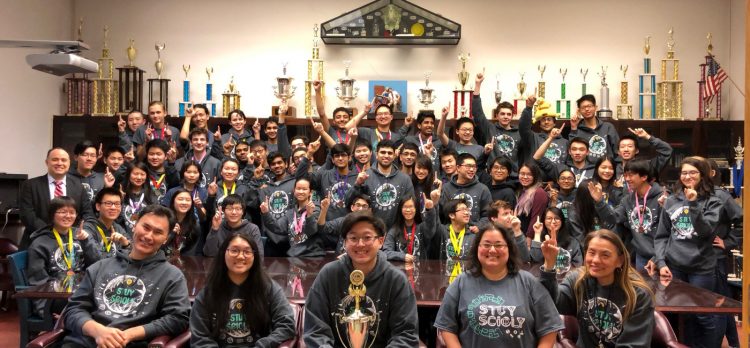
Worse than this, the ideology equates excellence in objective tests with not just whiteness (whatever that is) but white supremacy. And it does this in a school district with enormous racial diversity. It’s hard not to infer that it is an official endorsement — by the schools chancellor no less — of the damaging canard that studying hard in school, doing your homework, and striving for excellence is “acting white.” And this is despite the fact that the ethnic group that is succeeding the most by traditional standards of excellence in New York City’s schools are Asian-Americans. (They comprise 74 percent of students at Stuyvesant High School, because Stuyvesant doesn’t admit students on any other metric than test scores.) Funny, isn’t it, how “white supremacy culture” ends up empowering nonwhites. I’m not sure real white supremacists would be down with that.

I’m often told that the social-justice left’s assault on individuality, meritocracy, and achievement is a figment of my imagination, or only true in isolated pockets of super-woke academia. But here is one of the largest school systems in the country imposing this ideology on its most important employees, mandating lessons in “whiteness,” allegedly firing women solely because they are white, and indoctrinating an entire generation into associating the virtues of objective truth, academic excellence, and reason with the worst kind of bigotry.

Notice that we have elites in Reformedish evangelical circles, those who want to do for Protestant churches what public school officials are doing in New York’s school systems.

How did it possibly happen that in the microscopic world of conservative Presbyterian and Reformed churches we could have our very own elites?

Be Careful What You Post or Tweet

I’m in a Wendell Berry frame of mind and here’s something worth considering about ecclesiastical communions as communities and about the effects of social media on trust:

The health of a community depends absolutely on trust. A community knows itself and knows its place in a way that is impossible for a public (a nation, say, or a state). A community does not come together by a covenant, by a conscientious granting of trust. It exists by proximity, by neighborhood; it knows face to face, and it trusts as it knows. It learns, in the course of time and experience what and who can be trusted. It knows that some of its members are untrustworthy, and it can be tolerant, because to know in this matter is to be safe. A community member can be trusted to be untrustworthy and so can be included. (A community can trust its liars to be liars, for example, and so enjoy them.) But if a community withholds trust, it withholds membership. If it cannot trust, it cannot exist.

One of the essential trusts of community life is that which holds marriages and families together. Another trust is that neighbors will help one another. Another is that privacy will be respected, especially the privacy of personal feeling and the privacy of relationships. All these trusts are absolutely essential, and all are somewhat fragile. But the most fragile, the most vulnerable to public invasion, it the trust that protects privacy. And in our time privacy has been the trust that has been most subjected to public invasion. (Sex, Economy, Freedom, and Community, 161-62)

Sanctification Signaling

Big Green Letters is piling on with niceness. Not only has Jared Wilson repeated the charge that Calvinists are mean, but Ray Ortlund re-quotes John Newton’s oft-cited comments about how to pursue controversy with love. (Justin Taylor may be the first Green Letter to appeal to Newton.)

But here’s the thing that Big Green Letters don’t seem to consider — that the pursuit of nice often ignores both sides of a disagreement. It opts for the third way without really sorting out what’s right and wrong in the controverted issues. Which means, that love or nice is its own sort of polemical meanness because in taking no side and offering no alternative except to say “love” or “be nice,” it ignores the people and principles in view. Imagine doing that in a dispute between a wife and a teenage son over mowing the grass. The dad says, “love each other.”

Sure.

This side of Big Green Letters, this religious affectionism, is what makes evangelicals (even those who think they are Calvinist) so unreliable either in ecclesiastical or civil matters. Liel Liebovitz picked up on this in the spat between Sohrab Ahmari and David French over virtue and the current POTUS:

To put it briefly, the Never Trump argument is that they should be greatly approved of, while Donald Trump should rightly be scorned, because—while they agree with Trump on most things, politically—they are devoted to virtue, while Trump is uniquely despicable. The proofs of Trump’s singular loathsomeness are many, but if you strip him of all the vices he shares with others who had recently held positions of power—a deeply problematic attitude towards women (see under: Clinton, William Jefferson), shady business dealings (see under: Clinton, Hillary Rodham), a problematic attitude towards the free press (see under: Obama, Barack)—you remain with one ur-narrative, the terrifying folk tale that casts Trump as a nefarious troll dispatched by his paymasters in the Kremlin to set American democracy ablaze.

By analogy, The Big Green Letters supposedly agree with “mean” Calvinists about Christianity and church ministry (actually they don’t but go along, please), but want to hold themselves up as the party of sanctification because they don’t fight the way “mean” Calvinists do. But what if Big Green Letters had had a little more fight or agreed more with “mean” Calvinists when deliberating about whether to grant a Big Letter to Mark Driscoll, C. J. Mahaney, and James MacDonald?

It gets worse (thanks to Liebovitz) and points to the follow-the-money argument that Carl Trueman has made:

French and the other self-appointed guardians of civility, then, should do us all a favor and drop the civic virtue act. They’re not disinterested guardians of our public institutions; they are actors, working in an industry that rewards them for dressing up in Roman Republican drag and reciting Cicero for the yokels. This is why Bill Kristol, another of the Never Trumpers, could raise money for his vanity website, The Bulwark, and why he could expect his new creation be lauded on CNN as “a conservative site unafraid to take on Trump,” even as the site was staffed by leftist millennials and dutifully followed progressive propaganda lines. Like anyone whose living depends on keeping on the right side of a leftist industry, they understood that there’s only so much you can say if you care about cashing a paycheck—especially when the president and leader of your own party won’t take your phone calls.

The Never Trumpers, of course, aren’t the first Americans to hide cold careerism behind a wall of virtue-signaling. It’s why so many in the professional punditry went the way of Never Trump: More than anything else, the decision to align oneself with a movement that, ontologically, vows to reject the president a priori, no matter what he might say or do, regardless of your own supposed political beliefs, is a way of affirming one’s professional class loyalties, thus ensuring that your progeny will still be accepted and acceptable at Yale.

A YUGE part of Big Green Letters’ brand is nice. It increases hits at the website, registrations at conferences, sales of books, size of celebrity. In which case, if the New Calvinists really want to follow John Newton’s example and practice their niceness within the boundaries of a Christian communion like the Church of England rather than turning nice Calvinism into a movement.

Fake News, Climate Change, and Testosterone

Remember when some clever analysts of evangelicals attributed their blindness about Donald Trump’s immorality to presuppositionalism and a biblical w-w that grants power to the mind in determining truth? Well, Andrew Sullivan comes through with a healthy reminder that residents and citizens of the United States may have bigger worries than Jerry Falwell, Jr., Liberty University, David Barton, and Shane Claiborne:

The deeper question for me is why anyone would try to insist that biology is largely irrelevant in, of all arenas, sports. I can see trying to minimize biological sex differences in many, many areas where the distinction is trivial — but something as obviously physically rooted as athletics? It’s almost perverse. An ACLU blog post defending the participation of trans girls in school sports states that there is “ample evidence that girls can compete and win against boys,” but somehow avoids the conclusion that there should therefore be all-sexes leagues or contests, where men, women, and intersex people can all compete together. Or you can have an article in Deadspinwhich ridicules any idea of a testosterone advantage for trans women:

The thing about all this talk equating hormone replacement therapy to doping, and the threat to “biological females,” and the “unfair advantages” of “male puberty,” is that it’s based entirely on social perceptions of gender. “There’s absolutely no scientific evidence at all that supports their position,” said Rachel McKinnon.

McKinnon is a philosophy professor. The idea that there is “absolutely no scientific evidence” that male puberty dramatically increases the physical strength of boys compared with girls is, well, unhinged. It’s the left’s version of climate change denial.

And for what? Why are the differences between men and women on average so offensive? Why is it problematic that men are physically stronger on average than women? Why should strength have some kind of normative value? I honestly cannot understand.

I suspect it’s related to postmodernism’s attempt to turn everything in the world into something humans have created and can therefore control. “Nature” is outside that rubric and so must be interrogated and deconstructed until it has been whittled away to nothing. Even science is a social construction, the argument goes, and so any advantage conferred by testosterone must be entirely a function of patriarchy. “Gender” absorbs “sex” altogether. But even if you end patriarchy, you are never going to end sex difference.

Then there’s the well-intentioned pursuit of equality. All inequalities, we are told, are socially created and need to be eradicated for full human freedom to flourish. Accepting natural differences seems like a backdoor to bigotry. And, yes, discrimination is often rooted in a crude idea of “nature.” That’s why making such distinctions requires nuance and exactitude.

There is a distinction between equality and sameness, just as there is a crucial distinction between inequality and difference. If the social-justice ideologues attempted to make all sports coed, there would be a universal outcry. Outside a few pockets of wokeness, it would seem absurd. And yet we are stuck in a discourse that presents this unreality as if it has some kind of science behind it. It doesn’t. We should be able to accept our inequalities as part of human diversity, and celebrate them, while treating each other as political and moral equals. The deeper laws of nature establishing this core human equality are enshrined in America’s Declaration of Independence. They do not mean we are all substantively the same, or will all end up in the same place. We are just morally and politically equal.

Who, after all, would want to live in a world like this — where we are all interchangeable, where nature is irrelevant, where men are the same as women, and where acknowledging the variations of humanity is relegated to the precincts of bigotry? How much drearier than the actual, diverse, fascinating natural world we live in.

Surely this is a point upon which Sohrab Ahmari and David French would agree and by uniting with Andrew Sullivan make liberalism great again.