Gospelllll!!!!!!!!!!!!!!!!!!!!!!!!!!!!!!!!!!!!

Glad to see John Fea stand up for evangelism (in response to the news of John Allen Chau’s death) as something distinct from social justice:

The Great Commission is one of the reasons I remain an evangelical. If you are a Christian and do not believe in evangelism, missions, or “making disciples” in the world then you need to explain to me why you take Jesus’s words seriously in some places of the Gospels (love your neighbor, caring for the poor, etc.) and not in Matthew 28:16-20. It seems to me that the Great Commission of Matthew 28 is something more than simply, “go into the world and do acts of social justice.” If this is what the Great Commission means, then I am not sure how Christianity is any different than the Peace Corps or some other non-religious agency. It seems to me that the requirement to “make disciples” and “baptize them in the name of the Father and the Son and of the Holy Spirit” requires something more. Chau took this call seriously.

But for some proponents of social justice, John crossed a line:

In fact, John’s position is in the ballpark of the spirituality of the church since he implies that salvation is something more (and more profound) than rearranging equitably the chairs on the deck of Good Ship Society.

I sometimes wonder if John follows the news more than he should. But so far, he’s still reading the Bible along with his headlines.

Evangelicals Have Been At This Longer than Woke Millennials

Eric Weinstein, of Intellectual Dark Web fame (Bret’s brother), recently tweeted how novel the ideas and language of social justice warriors are:

But for evangelicals, “social concern” has been around for almost forty-five years:

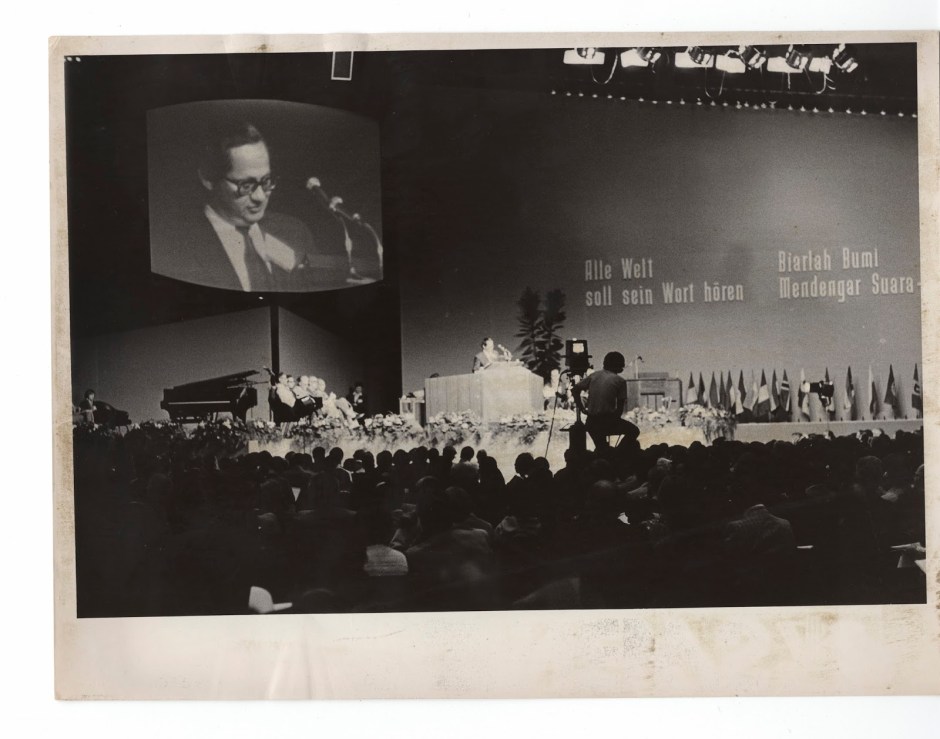
The Lausanne Congress, sponsored by the Billy Graham Evangelistic Association, drew 2,700 peopple from around the globe — at the time the largest-ever gathering of evangelical Christian leaders.  The Assembled believers — ministers and lay people, racially diverse, the vast majority of them men — would be part of a singular moment in postwar evangelicalism.

Like all of the major presenters, [Rene] Padilla had pre-circulated a paper, a rather scholarly treatise on the centrality of repentance to Christian ethics. The audience was not surprise, then, to hear Padilla lecture his fellow participants at Lausanne on the sins of the evangelical church, and on its failure — their own failure  — to take seriously Jesus’s call to social action. What was remarkable was the controlled fury emanating from the stage. Padilla challenged the room to remember that Jesus had demanded that his followers confront the “darkness of the world”  But evangelicals, he pronounced, had focused so long on individual sin that they had forgotten that darkness included materialism, racism, class division, political abuses, and, quoting Reinhold Niebuhr, “collective egoism.” (Melani McAlister, The Kingdom of God Has No Borders, 85)

Of course, one way of looking at this is that evangelicals have been ever consistent in their call for social justice or social concern.

Another is that this is something that regularly repeats itself among Christians who want to immanentize the eschaton because they believe the gospel is not really relevant if it prepares someone for not the present but eternity.

And yet, if this social concern regularly repeats itself, from Walter Rauschenbusch to Rachel Held Evans, why has it accomplished so little (especially now that it has support from mainstream journalists, elite universities, and at least one of the major political parties — not to mention Silicon Valley)?

Jewish Americans and Thanksgiving

While some are wondering how to include native Americans in this day’s preparations and festivities, David Swartz reminded readers that Southerners were not so comfortable with a holiday rooted in New England’s heritage:

In his book The First Thanksgiving, he writes, “White southerners associated the holiday with New England, and that made it suspect in their eyes.” If he’s right, sectional rivalry explains why these old articles from Kentucky seem so strange and ahistorical, as if Thanksgiving comes out of nowhere. Southern narratives eliminated Pilgrims from the holiday’s history because they were from the North.

Indeed, northerners often encouraged the association of their region with antislavery. In the decades leading up to the Civil War, politicians endorsed the abolition of slavery in their Thanksgiving proclamations. Antislavery societies sometimes took up collections at Thanksgiving services. Abolitionists from New England connected the “Pilgrim Spirit” to John Brown’s raid in Virginia.

One frustrated writer in Richmond, Virginia, complained that “it is a common notion of New England, that it is the hub of the whole creation, the axis of the entire universe, and that when it thanks God that it is not as other men, everybody else is doing the same. . . . What a race these sycophants are!”

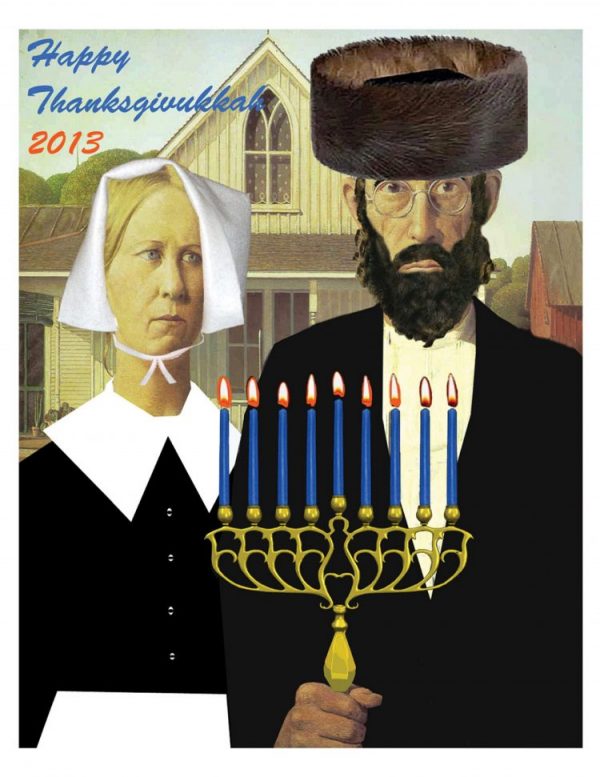
When I think of Americans who are ambivalent about Thanksgiving, my thoughts run to Jewish Americans. Barry Levenson captured the awkwardness in Avalon:

Then Christopher Guest ran into trouble with making a movie called “Home for Purim” that needed to be rebranded as “Home Thanksgiving.”  Why?  Because marketing a Jewish holiday movie is impossible:

Leave it Woody Allen to be the Jewish-American most comfortable with the Yankee holiday in “Hannah and Her Sisters”:

Forget football. See a Jewish-American movie about Thanksgiving.

Luxury Denominations

Paul Helm took time to review/respond to On Being Reformed, the public debate between some Baptists (and others who aspire to be Reformed) Reformed Protestants who still hold either to the Three Forms of Unity or the Westminster Standards (yes, with revisions about the magistrate ALREADY!). Along the way, Helm makes an observation that has something to do with differences between the US and the UK.

This debate has smothered a different approach, that of verstehen, of ‘smelling the coffee’. It is one thing to argue the (false) claim that our confessions of faith have remained unchanged since the Reformation, another wonderful thing to live by their gracious doctrines. With others, to rejoice in the privilege of being ‘in Christ’. As already stated, it is a singular, remarkable providence that three of our English confessions are word for word almost identical in Reformed soteriology, including the classic catholic trinitarian and incarnational positions. We could therefore unite here, and encourage each other thereby, even strengthening our grasp of our respective confessions, like ironing sharpening iron. Is that not a distinctive form of Reformed religion, whether or not we are credobaptist or paedobaptist, even if different in our ecclesiology and in the administration of baptism. At a time when the faith is increasingly under threat, and our family life as Christians is being undermined, and as there are various popular distortions as well as ancient heresies freely peddled, to have the strengthening of distinctive Christian fellowship is a traditional activity that should outweigh our marginal confessional differences. Perhaps fostering such fellowship requires a little more social ostracism, and perhaps that will come.

As I understand it, in the UK, Calvinistic Protestants don’t have the luxury of forming separate denominations the way American Protestants do. Whether it stems from laws having to do with the established church and dissenting groups, or the small number of serious minded Protestants who regard John Calvin, John Knox, and John Owen highly, British Protestantism has fewer possibilities and resources than Protestants in the land of the free and home of the brave. Here, despite the OPC’s tiny size (don’t snicker), the United States has made Christians (and other believers) wealthier and has provided structures (or lack of them) that makes easier the challenge of establishing new institutions (congregations, denominations, schools, colleges, seminaries).

That may not make America great, but it does indicate that the US is different from the UK and the old world.

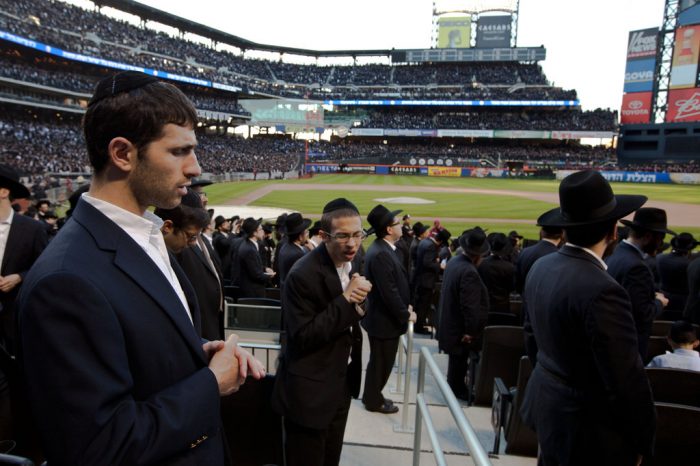
The difference that the United States makes for religion is even evident among American Jews. The Pew Research Forum conducted a survey of Jews in the US and Israel that indicates some of the differences that place and nation make for religion. Consider the following:

American Jews are a highly educated and, on the whole, warmly regarded religious minority in a very large, Christian-majority country. Jews represent about 2% of the U.S. adult population of roughly 300 million people. Only about one-third of American Jews say that either “all” (5%) or “most” (27%) of their close friends are Jewish. A substantial proportion (44%) of U.S. Jews who are married say their spouse is not Jewish – including a majority of those who have gotten married since 2000.

By contrast, Jews make up about 80% of Israel’s adult population of 8 million. The vast majority of Israeli Jews say that either all (67%) or most (31%) of their close friends are Jewish, and nearly all married Jews in Israel have Jewish spouses. There’s also very little conversion between major religious groups in Israel, while in the United States, religious switching is remarkably common, including many U.S. adults who have drifted away from organized religion altogether. In our 2013 survey, one out of every five Jewish Americans said they do not identify with any religion, even though they also said they had at least one Jewish parent or were raised Jewish, and they consider themselves Jewish in other ways aside from religion (such as culturally or ethnically). In Israel, by contrast, nearly all Jews say their religion is Judaism.

Or this:

Most American Jews are part of organized Jewish denominations or “streams,” which include the relatively large Reform and Conservative movements as well as Orthodox Judaism. In Israel, only about 5% of Jews identify as either Reform or Conservative. Instead, Jews in Israel generally place themselves into one of four informal categories of Jewish religious identity. These labels – Haredi (ultra-Orthodox), Dati (religious), Masorti (traditional) and Hiloni (secular) – are not connected to formal Jewish organizations or denominations, but instead are loose identity groups (similar, for example, to an American Christian calling herself an “evangelical” rather than a “Southern Baptist”).

Even better, watch part of the short interview with the Israeli woman who married an American Orthodox rabbi.

America is weird and that means we have the luxury of reading the confessions in ways that other Protestants do not or cannot.

Psalm 23 for Social Justice Warriors

Perhaps inspired by an earlier rephrasing of Jesus. Or not:

The LORD is my standard, I shall not relent.

He makes me lie down outside court houses.

He leads me to trending hashtags.

He agitates my soul.

He leads me in paths of righteousness for humanity’s sake.

Because I live in systemic injustice, I will fear, for you may be with me;

but your rod and your staff, must punish oppressors.

You prepare a table before me in the presence of my enemies;

what’s up with that?

Surely righteous indignation shall follow me all the days of my life,

and I shall remain on social media forever.

How Did the Laity React to the Council of Nicea?

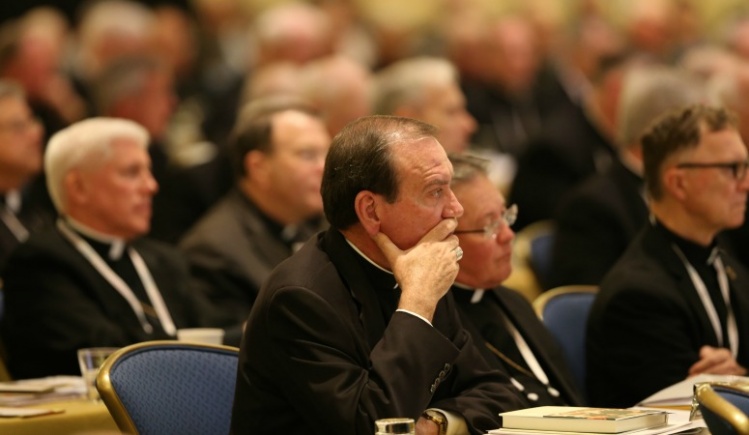
Surrounding the news and criticism of Roman Catholic bishops in their responses to instances of sexual abuse by priests (and other officials) are calls for the bishops to be as holy as they should be and for the laity to be included in some mechanisms of accountability. What is strange about these arguments — especially by Roman Catholic laity — is what questioning of the bishops does to the entire justification for Roman Catholicism. Critics of the bishops seem to assume that in the case of the current scandal, the bishops have behaved badly and acted unwisely. But if bishops can show such deficiency now, couldn’t they also have been unwise, acted out of self-preservation, or outright erred when deliberating about liturgy, the creed, or the beatification of exceptional believers? I mean, once you start to question the bishops’ judgment on this one matter, you can question almost any part of Roman Catholic history going all the way back to the church that Jesus founded (not in Rome but in Jerusalem).

Michael Sean Winters does not seem to be aware of how his reaction to the recent meeting of the U.S. bishops in Baltimore could also be applied to the gathering of bishops at Nicea almost 1800 years ago:

On Nov. 12, Cardinal Daniel DiNardo, the president of the conference, expressed his disappointment when he announced the Vatican’s decision to delay any votes on concrete proposals to confront the clergy sex abuse crisis. At the coffee break, bishops were fuming, complaining that Rome had pulled the rug out from under them. Even those bishops who are most enthusiastic about Pope Francis were distressed, worried that he did not understand the media spotlight under which the bishops were laboring.

But, when the bishops began discussing the proposals on Nov. 13, it quickly became obvious that the proposals were ill-conceived and would have fallen apart on their own, without any help from Rome. Erecting a national oversight commission, at considerable expense and with additional bureaucracy, to monitor 200 bishops, very few of them likely to have broken their vows of celibacy, didn’t seem very practical once they began discussing it. The proposed commission would report allegations to the nuncio but that happens now and no one had bothered to ask the nuncio if he wanted a commission to help him in his work. The Standards of Conduct seemed poorly framed and vague. The whole thing seemed amateurish.

Were the proposals at Nicea ill-conceived? Was the use of Greek philosophical terminology to explain the relations of Father, Son, and Holy Spirit amateurish?

By the way, who is a Michael Sean Winters to judge his bishops? After all, even when Vatican II affirmed the laity as the “people of God” in Lumen Gentium, the bishops were quick to remind readers who remained in charge of the church (Jesus founded):

27. Bishops, as vicars and ambassadors of Christ, govern the particular churches entrusted to them by their counsel, exhortations, example, and even by their authority and sacred power, which indeed they use only for the edification of their flock in truth and holiness, remembering that he who is greater should become as the lesser and he who is the chief become as the servant. This power, which they personally exercise in Christ’s name, is proper, ordinary and immediate, although its exercise is ultimately regulated by the supreme authority of the Church, and can be circumscribed by certain limits, for the advantage of the Church or of the faithful. In virtue of this power, bishops have the sacred right and the duty before the Lord to make laws for their subjects, to pass judgment on them and to moderate everything pertaining to the ordering of worship and the apostolate.

The pastoral office or the habitual and daily care of their sheep is entrusted to them completely; nor are they to be regarded as vicars of the Roman Pontiffs, for they exercise an authority that is proper to them, and are quite correctly called “prelates,” heads of the people whom they govern. Their power, therefore, is not destroyed by the supreme and universal power, but on the contrary it is affirmed, strengthened and vindicated by it, since the Holy Spirit unfailingly preserves the form of government established by Christ the Lord in His Church.

If Winters is within his rights as a church member to take swings at the bishops or if he is right about the lack of discernment by the bishops themselves, the Roman Catholic Church is in a crisis of jaw dropping proportions.

Birthright Sport

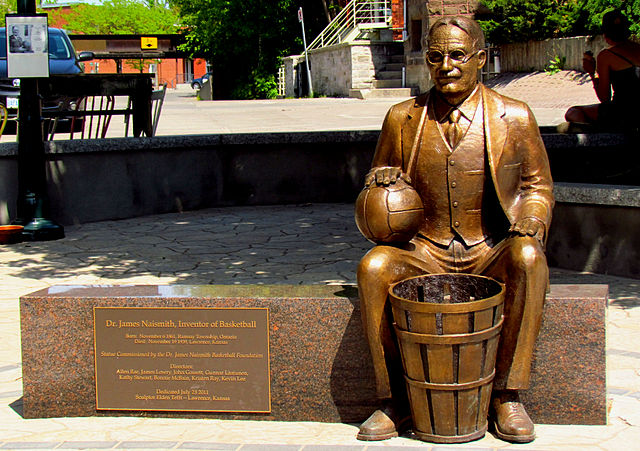
With all the recent talk about birthright citizenship, one that has bearings on infant baptism, I am at a loss about basketball. Is it Canadian, Presbyterian, or American? It depends on how we categorize the game’s creator.

But do you know that the inventor of basketball was a Presbyterian?

His name was James Naismith. Born in Canada on November 6, 1861 in a town no longer in existence, James and his four brothers and sisters grew up in difficult circumstances. His Scotch parents had emigrated from Scotland to Canada, but died after a few years in their new country, leaving James and his brothers and sisters to be reared by a strict uncle. They moved a few times, with James always being involved in sports, like rugby, soccer, football, lacrosse and gymnastics. He would graduate from McGill University in Montreal as well as earning a diploma from the Presbyterian seminary in Montreal in 1890. While never did he become ordained, he did minister in the pulpits of Canadian Presbyterian Churches.

It was while he was working at the YMCA International Training School in Springfield, Massachusetts that James Naismith was given the task by his employer to “come up with” an indoor game which would help the youths of the district to mature into young adults. The assignment, which was given a fourteen day limit, resulted in what we know as basketball.

Granted the ten rules which he wrote down were changed as the new sport developed. For example, the first basket at either end was a peach basket! When the soccer ball, which was first used, would be shot into it, it stayed there until someone climber a ladder at either end of the court to remove it. Time was lost in that exercise until a net and a “basketball” was used.

James and his wife moved to the United States and became citizens. Eventually, he was hired by the University of Kansas to be its basketball coach. Interestingly, he had more losses than wins in the university at Lawrence, Kansas. But others, including some he had trained, became more proficient in the sport, and today . . . it is found the world over.

Here’s the problem. Naismith invented the game when he was 30 years old. He did not become a citizen of the U.S. until he was 55.

That means basketball started on U.S. soil — good news for the birthright folks. But the man inventing the game was still Canadian.

If citizenship matters, basketball is Canadian.

If You Add to Scripture, How Do you Stop?

Here’s what Jesus said:

Woe to you, scribes and Pharisees, hypocrites! For you build the tombs of the prophets and decorate the monuments of the righteous, saying, ‘If we had lived in the days of our fathers, we would not have taken part with them in shedding the blood of the prophets.’ Thus you witness against yourselves that you are sons of those who murdered the prophets. Fill up, then, the measure of your fathers. You serpents, you brood of vipers, how are you to escape being sentenced to hell? Therefore I send you prophets and wise men and scribes, some of whom you will kill and crucify, and some you will flog in your synagogues and persecute from town to town, so that on you may come all the righteous blood shed on earth, from the blood of righteous Abel to the blood of Zechariah the son of Barachiah, whom you murdered between the sanctuary and the altar. Truly, I say to you, all these things will come upon this generation.

Here’s how you update Jesus for contemporary America:

Woe to you, racists and racial moderates, hypocrites! For you hold events to commemorate Civil Rights activists and read books about the martyrs of anti-racism, saying “if we had lived during the Civil Rights movement we would not have taken part with the racists in shedding the blood of the protesters.” Thus you witness against yourselves that you are sons and daughters of those who murdered Martin Luther King, Jr. Fill up then the measure of your slave holding and segregationist fathers and mothers. You racists and racial moderates, how are you to escape being sentenced to hell? Therefore I send you social justice warriors and community organizers and activists, some of whom you will put in jail and some you will call Marxist in your churches and troll on social media so that on you may come all the righteous blood shed on earth from the blood of the righteous Medgar Evers to the blood of Emmett Till who you lynched in Mississippi. Truly, I say to you, all these things will come upon Millennial and GenZ generations.

What if non-Christians wanted (trigger warning) to appropriate Jesus?

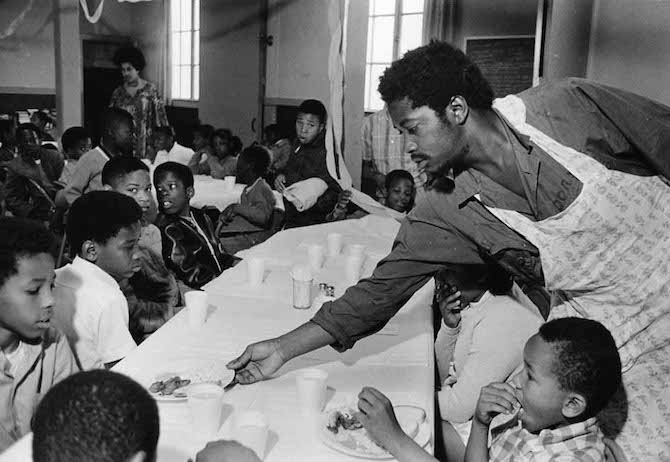
Woe to you, black and white Christians and Americans, hypocrites! For you don’t even hold events to commemorate Black Muslims or Black Panthers, and you refuse to read books about black nationalism, saying “if we had lived during the 1960s Rights movement we would not have taken part with the criminal justice system that sent Huey Newton and Angela Davis to jail.” Thus you witness against yourselves that you are sons and daughters of those who murdered Malcolm X. Fill up then the measure of your nationalist and Christian fathers and mothers. You black and white Christians and Americans, how are you to escape being sentenced to hell? Therefore I send you Ta-Nehisi Coates and Michael Eric Dyson, some of whom you will mock and some you will call anti-American in your churches and troll on social media so that on you may come all the righteous blood shed on earth from the righteous Fred Hampton to John Africa whom you burned in Philadelphia. I say to you, all these things will come upon Baby Boomer and Millennial generations.

Or is the idea that only Christians get to add to Scripture?

Confessional Lutherans Don’t Try So Hard

This story caught my eye because of a recent speaking engagement — a Reformation Day observance — at an LCMS church in Fort Wayne.  For this ELCA church plant in Orlando, the church is both brewery and church:

The high-pitched sounds of children playing kazoos echoed off the walls of the indoor beer garden at Castle Church Brewing as Pastor Jared Witt began the blessing ceremony for the new 20,000-square-foot establishment in Orlando.

“And that is how you scare the demons out of a brand new brewery church,” Witt told a crowd of about 175 on Sunday including visitors from the Florida-Bahamas Synod of the Evangelical Lutheran Church in America.

Plans for the nontraditional church have been fermenting for five years. What began with Witt and a few others bonding over a love of home brewing and fellowship in Aaron Schmalzle’s Kissimmee garage has evolved into a church community whose members gather every Sunday at 11:11 a.m. for worship services.

Early on, members of the fledgling church met in small groups in homes, then graduated to outdoor services at the site of the future church-brewery when it was picked about a year ago. Now, with construction complete on the church’s home, members have a roof over their heads while they celebrate Jesus with a frosty cold beverage.

But at the Reformation Day event in Fort Wayne, we heard (and I gave one of the) lectures on the Christian in the public square from both sides of the Tiber, sang hymns from the marvelous Lutheran Service Book (2006), punctuated by Scripture readings, and then adjourned to the fellowship hall where we drank beer (or cider) while eating snacks.

You tell me which is more organic — church as brewery or beer as beverage.

Baseball for Sabbatarians

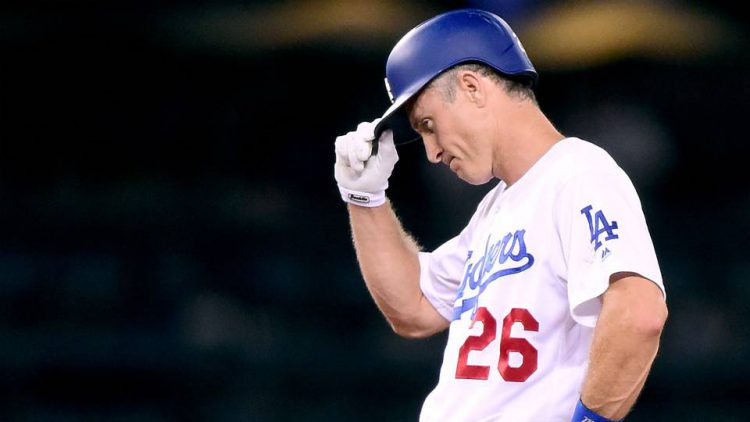
With the completion of the 2018 season, an old article from the Nicotine Theological Journal (October 2007) on fans, pennant races, and keeping the Lord’s Day holy (and an excuse for an image of Mr. Utley):

NTJ Diarist: Day of Stress and Worry

It seems a distant memory now. But the last Lord’s Day of the 2007 Major League Baseball season created great conflict for the NTJ’s editors. Each of us grew up rooting for either the Mets or the Phillies. We are also committed to sanctifying the Sabbath. Consequently, the prospects of the Eastern Division’s title being settled on a day reserved for rest and worship generated considerable soul searching and much distraction by earthly and perishable things.

What follows is a confession of the editors’ unsuccessful efforts to keep September 30th holy. (The Phillies’ fan’s account is in bold for the victor’s emphasis.)

September 29, 4:35 pm: I was prepared to give up on the Metropolitans the night before. As their home losing streak extended to five games, they surrendered first place at last to the Phillies. Still I followed this afternoon’s game on the Internet, and, remarkably, John Maine came within a few outs of the first no-hitter in Mets history. The 13-0 shellacking of the hapless Marlins, combined with the Phillies loss, virtually wiped clean weeks of futility. We were tied again, and the Mets had their mojo back.

6:45 pm: I have a bad feeling of foreboding as I go out for the annual progressive supper on our block in Philadelphia. Could it be that the Phillies’ rise to first place yesterday is only setting us up for an even more depressing defeat tomorrow, the perfect way to cap a season in which they achieved 10,000 losses? The team looked bad today in their 4-2 loss to Washington. Thankfully, the neighbors bring lots of wine and don’t talk much about sports. Avoidance mixed with a buzz is bliss.

September 30, 8:30 am: Does God hear the prayers of the not-so-righteous? I am hoping and praying for discipline to concentrate on today’s services and sermons. But I can’t help think how great it will be if the Phillies actually surpass the Mets and win the division. I am also hoping that the season ends today. A playoff game tomorrow will be agonizing.

10:30 am: A sermon on Christ the resurrected King prompts my mind to drift. Is it impious to employ the resurrection as a metaphor for this horrible month? Will the Mets’ September humiliation yield to their October exaltation? That’s an inviting way to frame the narrative, and it pleases me to imagine how it will silence the obnoxious swagger of Phillies fans.

11:40 am: The pastor is preaching from the Beatitudes and I am doing my best not to think about the game this afternoon. But the notion that those who mourn are blessed gives me a perfect retort to gloating Mets fans should they win. The mourning Phillies fans would seem to qualify as those deserving of the Lord’s blessing. Even so, such a benediction doesn’t bring needed consolation.

2:30 pm: Before an afternoon nap I need to return an email about an ecclesiastical matter, surely a work of necessity. The problem is that I must get to my webmail via my homepage, which is the web page of Sports Illustrated. I am careful to pass over it quickly with barely a glance. All I remember seeing is a reference to the “Miracle Mets.” Oh yeah. 1969 . . . 1986 . . . and now, 2007.

3:05 pm: It suddenly dawns on me: si.com did not refer to the “Miracle Mets.” It said something like, “Mets need a Miracle at Shea.” Hmm. That’s a strange way to overstate the challenge. All we need today is the ordinary providence of Beltran’s bat, Glavine’s arm, and Reyes’ speed. So why the miracle talk?

3:20 pm: Overcome with confusion, I go back to si.com, which now features a photo of a forlorn Tom Glavine. I read where the Marlins scored seven runs off the future Hall-of-Famer in the first inning. SEVEN: the number of fullness and completeness and, well, Sabbath. It’s over. There will be no miracle today. I sense no impulse to check the Phillies score.

4:20 pm: My wife and I are out on our Sabbath stroll through the neighborhood and I am searching for signs of the outcome of the game at Citizens Bank Park. I am worried. I see no little pennants mounted on cars to show allegiance to the victors. I also hear no shouts or honking of horns. The town is way too quiet. I am preparing to find another team for which to root – too bad the Eagles only play on the Lord’s Day.

5:25 pm: I am tempted to check the score at one of the baseball websites so that I can concentrate better during the evening service. I resist temptation.

6:40 pm: Godliness, the seminary intern instructs the flock in the evening sermon, is manifested in obedience to God’s command. I suppose that includes the fourth commandment. I fall under conviction and take at least a measure of comfort in considering that I will not face a trial like this next week. Not with the way the Jets are playing.

7:10 pm: I stand with the pastor at the back door to greet exiting worshipers. While talking to the pastor I learn that one of the families in the church was celebrating the Phillies’ win in such a lively manner that the pastor and his wife heard the revelry from a few doors down the street. I am stunned. The Phillies have at least tied for the division.

8:15 pm: I begin to pack for a trip, oddly enough, to Philadelphia. I cringe at the satisfaction my friends will enact. I flee, where I have in the past, to the Psalms: “You have made us the taunt of our neighbors, the derision and scorn of those around us – a laughing stock among the peoples. All day long my disgrace is before me, and shame has covered my face at the sight of the enemy and the avenger.”

8:45 pm: I finally give in to temptation and check the Internet for scores. I justify this by observing that the sun is officially and Pharisaically down. There I read the staggering news that the Mets also lost. I can barely believe the results. The Phillies were 7 games out with two weeks to go. They did not merely make the playoffs as the wild card team, but won the division outright. Praise God from whom all blessings flow.