Thread 1.2

(A series on the history of Calvinism)

Reformed Christianity existed before Calvin became a Protestant and so calling the churches Calvinist to which he belonged is anachronistic. Before Geneva became a home for Protestantism, several cities in the Swiss Confederation, Zurich chief among them, had initiated reform. At the same time, Geneva was a late addition to the Swiss Confederation and always dependent on stronger Swiss cities. This meant that in addition to the struggles Calvin faced in his adopted city, he also encountered resistance and sporadic opposition from the other Reformed churches in Switzerland. His difficult dealings with the other pastors make all the more ironic the later identification of Reformed Protestantism with Calvinism. For instance, in 1554 around the time that Calvin was facing stiff opposition in Geneva from old-time aristocrats who fought the new spiritually inspired regulations of city life, the government of Bern banned Calvin=s writings from the lands under its authority and ordered that they be burned. Burning books was what Roman Catholics were supposed to do with Protestant texts but here was a Reformed city judging Calvin=s teaching beyond the pale. In point of fact, the opposition to Calvin from the Bernese officials had less to do with theology than politics; Geneva was an upstart city that seemed to be acting independently of Bern and so the Bernese wanted to teach the Genevans a lesson. As one biographer argues, this treatment of Calvin=s writings said more about the personalities involved than the intricacies of double predestination or any other contested point of doctrine. Still, the incident is instructive for remembering Calvin=s status among the Reformers and their civic patrons in Switzerland. (p.21)

Thread 1.1

(A series on the history of Calvinism)

Fourteen years after the sausage-eating incident in Zurich, on May 25, 1535, the citizens of Geneva pledged to Alive according to the Law of the Gospel and the Word of God, and to abolish all Papal abuses. The apparent orderliness and consensus of that expression of popular sovereignty in Geneva could not hide the turmoil by which the Reformation had come to a city that, although not part of the Swiss confederacy, would soon rival Zurich for leadership among Reformed Protestants. For the better part of a decade, the citizens of Geneva had been trying to gain independence from the House of Savoy. To do this Geneva needed the support of nearby Swiss cities, Fribourg and Bern. When political autonomy of the 1520s led to religious reforms in the 1530s, political rivalries turned ugly. Fribourg officials, who were Roman Catholic, used the death of one of their citizens during a religious riot in Geneva in 1533 to pressure the Genevans back into the fold of Rome. But thanks to friendly relations with the Protestant Bern, Geneva resisted Fribourg=s intimidation. In turn, Geneva sponsored two public debates between Protestant and Roman Catholic representatives, one in January, 1534, the second in June, 1535. Both led to riots. They also increased Geneva=s resolve for political independence and the prerogative to establish the city’s religious identity. By the time that Geneva=s citizens vowed to submit to the word of God in the spring of 1535, the city had withstood intimidation from both Fribourg and Bern, and had informed its Roman Catholic clergy that they either needed to convert to Protestantism or leave.

Old Lifey

In my (all about mmmmmeeeeEEE) estimation, the Coen brothers worst movies were Intolerable Cruelty and The Ladykillers. I have seen each only once and the thought of re-viewing does not generate the pheromones that their other movies do. (Recently watched Hail, Caesar! and experienced much mirth.) I am not sure what happened on these movies, but I’ve always felt Intolerable Cruelty and The Ladykillers were the kind of productions the Hollywood system would yield if trying to be Coenesque. It’s like Hollywood trying to give that Coen Brothers’ feel (and remember what Hollywood did when it tried to bring to the screen that Barton Fink feeling.)

All of which is to say that when Justin Taylor praises cynicism (granted in the voice of Carl Trueman), you begin to wonder if The Gospel Coalition is trying to produce something not quite so pietistic.

Here’s Trueman:

And that is why church historians play such an important role and our cynicism is such a boon. Church history keeps things in perspective. Through reading the texts and studying the actions and events of the past we can truly say that we have seen it all before. Thus, whatever it is that the latest guru is suggesting, it definitely will not work as well as expected, probably will not work at all, and anyway it will be a hundred years or more before we can say whether it made a real difference or not.

Here’s Taylor:

Of course, cynicism is not the only thing a historian offers to the church, and cynicism by itself can be a vice and not a virtue. Neverthless, Trueman is right. We should listen to those who have a built-in skepticism about the latest hype because they know enough to have a proper perspective.

Seriously? Has anyone at TGC listened to any of the skepticism about the hype of celebrity pastors and the alliances they form?

It’s not history that teaches you to take the Allies of the gospel with a grain of salt, it’s doctrine of the church. Don’t do ministry without one.

Do Muslims and Jews Have This Problem?

In the mood of the season, I found a Youtu.be video with Frank Sinatra’s rendition of Hark, The Herald Angels Sing.

Maybe yours doesn’t but my mind boggled (again). Frank Sinatra, the singer alluded to in The Godfather, with real ties to the Rat Pack, and no model of family mores, is singing Charles Wesley (one of the original Methodists’ better verses). Again, the mind boggles.

This is how familiar Christmas is for Americans (and people in the West more generally). Not only did Sinatra sing Wesley. But producers in the recording industry believed that Frank singing a batch of Christmas songs would be a revenue enhancer. And these entertainment geniuses decided not only to include some of the secular and corny songs, like Jingle Bells, but also the sorts of material that Anglican cathedral choirs include in Lessons and Carols services.

Is your mind boggling yet?

Do Muslims have songs to sing about the birth of Muhammad? Do Jews sing about the birth of Abraham? One way to tell is to live in a Muslim or Jewish society during the holy days? How much religious music seeps out into the larger commercial world?

I don’t know (and am willing to learn from readers).

But one of the things that makes Christmas great (in all senses of the word) is that recording celebrities have put out so many albums and cds devoted to the birth of Jesus.

For the New Schoolers out there who like to chalk such cultural expressions up to the church’s (which one?) transformatalistizational powers, the pervasiveness of Christmas cheer is a sign of the longing that many people have the good news that the nativity narratives begin. Yes, we need more Christ and less Frank in Christmas, but for Americans to devote the better part of six weeks every year to the celebration of Christmas is an indication of Christianity’s abiding appeal.

For Old Schoolers, though, the relentless persistence of Christmas in all its schmaltz and devotion is an indication of how little discomfort Christians feel about making their own holiday an affair for Muslims, Jews, and secularists to enjoy or endure. Imagine thinking that Frank Sinatra’s Christmas albums would sell in Istanbul.

At the same time, Old Schoolers who know the history of the church calendar should not blame Roman Catholics for the ubiquity of Christmas sales and music. Protestants in the United States did not observe Christmas (minus some Episcopalians and Lutherans) until the late nineteenth century when department store entrepreneurs like New School Presbyterian, John Wanamaker, connected the dots between God’s gift to man in sending his son, and the gifts that Americans could give to friends and family to participate in that incarnational spirit.

Protestants made the world safe for Frank Sinatra singing Wesley, not the bishops.

Beware Medical Missions

Frederick Lugard, a British colonial administrator and Governor at distinct times of Hong Kong and Nigeria, included this estimate of medicine and preaching in his report on the “Rise of our East African Empire” (1893):

I think the most useful missions are the medical and the industrial, in the initial stages of savage development. A combination of the two is, in my opinion, an ideal mission. Such is the work of the Scotch Free Church on Lake Nyasa. The medical missionary begins work with every advantage. Throughout Africa the ideas of the cure of the body and of the soul are closely allied. The “medicine man” is credited not only with a knowledge of the simples and drugs which may avert or cure disease, but owing to the superstitions of the people, he is also supposed to have a knowledge of the charms and dawa which will invoke the aid of the Deity or appease His wrath, and of the witchcraft and magic (ulu) by which success in war, immunity from danger, or a supply of rain may be obtained. As the skill of the European in medicine asserts its superiority over the crude methods of the medicine man, so does he in proportion gain an influence in his teaching of the great truths of Christianity. He teaches the savage where knowledge and art cease, how far natural remedies produce their effects, independent of charms or supernatural agencies, and where divine power overrules all human efforts. Such demonstration from a medicine man, whose skill they cannot fail to recognize as superior to their own, has naturally more weight than any mere preaching. A mere preacher is discounted and his zeal is not understood. The medical missionary, moreover, gains an admission to the houses and homes of the 10 natives by virtue of his art which would not be so readily accorded to another. He becomes their adviser and referee, and his counsels are substituted for the magic and witchcraft which retard development.

Meredith Kline had a point.

Ecumenism is Radical (and that’s not good)

If conservatives value variety, why do conservative Roman Catholics insist on church unity? Russell Kirk said that true conservatives actually appreciate difference and pluriformity:

[C]onservatives pay attention to the principle of variety. They feel affection for the proliferating intricacy of long-established social institutions and modes of life, as distinguished from the narrowing uniformity and deadening egalitarianism of radical systems. For the preservation of a healthy diversity in any civilization, there must survive orders and classes, differences in material condition, and many sorts of inequality. The only true forms of equality are equality at the Last Judgment and equality before a just court of law; all other attempts at levelling must lead, at best, to social stagnation. Society requires honest and able leadership; and if natural and institutional differences are destroyed, presently some tyrant or host of squalid oligarchs will create new forms of inequality.

Maybe that makes John Turner a conservative who is not going along with the Reformation as tragedy because it divided the church:

First and foremost, there was no good reason for the primacy of the Bishop of Rome in the first place. Jesus bestowed the keys of the kingdom on Peter, but it seems clear from the Book of Acts and the Pauline epistles that Peter hardly exercised anything like papal authority in the early church. The historical evidence for Peter becoming the first bishop of Rome (or even being in the city) is unconvincing to one not already convinced. While Protestants obviously sundered the institutional unity of the Western church, it was a sort of unity unauthorized by scripture and unwarranted by the circumstances of the early church. (It also seems snarky but necessary to mention that Rome bore considerable responsibility for the Great Schism between East and West that preceded the Reformation by a half-millennium).

Second, it is not at all clear to me that Jesus’s prayer for Christian unity means that Jesus wanted his church to have an institutional, hierarchical unity along the lines of either the late-medieval or contemporary Catholic Church. The Book of Acts suggests that the apostles in Jerusalem exercised a measured primacy among early Christians, but for the most part Christianity spread around the Mediterranean world and to the East in a way that fostered local autonomy and diversity. This diversity of theologies and even collections of scripture alarmed many Christians, some of whom identified many strands of Christianity as heresy. By the fourth century, newly tolerated and then established Christianity sought to impose theological order on this chaos. The result was the institutionally useful but not terribly New Testament idea that all Christians had to have essentially the same understanding of Jesus Christ and of the relationship among the members of the Trinity. Getting at least most Christians to assent to the fourth- and fifth-century creeds took a considerable amount of viciousness and sometimes violence.

So it’s the church unitedists who also likely go for the United Nations and the European Union (even while in some parts of the world arguing for a “two-state” solution).

See What Keller Did Now?

Tim Keller has made the history of Presbyterianism obsolete. Look at the way Jake Meador describes the challenges facing young pastors in the PCA:

… young Presbyterian pastors, many of whom are on university campuses with RUF or working in gentrifying urban neighborhoods, face enormous class-based pressure to conform to certain progressive cultural norms. These pressures make themselves felt in a variety of ways.

First, there is a strong and classic American pull toward being dismissive of the past, toward what is established, and to embrace what is new. This temptation exerts an even stronger pull than normal on many young PCA pastors because many younger pastors and RUF guys have strong entrepreneurial tendencies. While this is often a very good thing—indeed, it’s what makes it possible for them to succeed as church planters and RUF pastors—this same trait can make them naturally inclined to be dismissive toward established norms, policies, and beliefs, especially when they are surrounded by other young people with the same entrepreneurial sensibilities. It is probably not a coincidence, in other words, that the most famous “Kellerite” to go progressive is pastoring in San Francisco, the capital of Silicon Valley.

In addition to the disregard for things that are older, established, etc. there is also strong cultural pressure to embrace a kind of bourgeois bohemian lifestyle—buy a cute house in the gentrifying neighborhood, embrace the careerism, food and exercise regimen, lifestyle trends, and broadly progressive ethos of your neighbors. You can even say you’re just being outreach-focused as you do it. While none of these things are bad in isolation, taken together they’re all steps that involve embracing the norms of a younger bobo sub-culture. And if you’re embracing those norms out of a desire to be liked rather than a pure desire to make the Gospel sensible, it will be disastrous.

But, of course, it is all very complicated: Essentially, these are young pastors being handed different cultural scripts and asked to choose which ones to follow. But these clashing scripts cannot be simplistically labeled “good” and “bad” such that we can tell young pastors to follow the “good” script and avoid the “bad.” It is more complicated than that.

This is similar to the point that Ron Belgau made in his response to Rod Dreher earlier this week: It’s not that we have a legacy PCA script that is unambiguously good that we need to cling to. That script has problems—it’s awful on race issues, for starters. So figuring out the cultural scripts question in the PCA is challenging: The young white bobo script you’re pushed toward culturally and according to class is bad, but then you don’t necessarily have a good alternative script, particularly if you’re trying to plant a church or RUF in a more hostile environment. There simply aren’t good evangelical templates for how to do that because we have for the most part been really bad at it.

In such a situation, the draw toward Keller and the ham-handed attempts to mimic him are quite understandable. What other models do these pastors have? Driscollism? Straight-up progressive Episcopalianism?

Certainly, you can argue that there actually are other models out there—Calvin basically turned Geneva into a booming intellectual hub. Someone like Richard Sibbes was a very successful preacher in Cambridge at the university in the 17th century. Richard Baxter could be helpful in that we know more about his routines as a pastor than any other minister of his era. Bucer and his colleagues in Strasbourg did good and faithful work in a major intellectual, cultural, and scholastic hub. But these examples are all either from radically different cultural contexts, much more obscure, or both.

It isn’t unreasonable that these pastors would look to Keller and, being young and failing to understand their context, fail to mimic him well. But that isn’t Keller’s fault and it isn’t entirely the young pastor’s fault either. It’s a predictable outcome given all the factors I have mentioned already.

Whatever happened to vanilla Presbyterianism? A pastor ministers the word, administers the sacraments, catechizes the youth, shepherds the flock, and goes to presbytery. What does all this worry about culture have to do with it? Meador doesn’t think Keller is responsible for leading the PCA down a misguided path of Kellerism. That is mostly true. What happened it seems to meeeeEEEE, is that Keller fulfilled the aspirations of some PCA leaders who wanted to “engage” the culture — marriage is still up for grabs.

What is happening in the PCA is what always happens to denominations that Americanize and try to adapt to the culture. The Presbyterian version of this is not whether to be Baptist or Episcopalian — though why don’t the boho’s seem to notice that Keller’s urban ways draw him to Baptists at TGC and other urban pastors like John Piper and Mark Dever? The Presbyterian version of assimilation is New School and New Life. In the 19th century, those who wanted to Christianize the culture were the New Schoolers (Lyman Beecher and Charles Finney), and their opponents were Old School Presbyterians who tried to maintain creedal theology and presbyterian governance. In the twentieth century (let’s leave aside the modernists for now), the assimilationists were New Lifers (in the OPC mind you) who wanted Orthodox Presbyterians to join with the wider evangelical world and also reach the young people with long hair. In case no one noticed, Tim Keller’s origins are in the New Life wing of the OPC, with Harvie Conn supplying a theology of the city, and Jack Miller providing a relaxed Presbyterianism that could adjust to the culture (Miller’s tastes ran less to ballet and more to Jesus people. Keller went to New Life Glenside while he taught at WTS, if I am not mistaken.) Not to mention that the Reformed Presbyterian Church, Evangelical Synod (which goes back to the Bible Presbyterians) side of the PCA that gave it Covenant College and Covenant Seminary, is not the same slice southern Presbyterianism that produced Reformed Seminary and the original PCA.

In other words, the history is thick behind Keller and simply looking at the PCA from the perspective of Baptists and Episcopalians doesn’t take you very far into the weeds.

Yet, when you apply the categories of Baptist and Episcopalian, you wind up rendering Old School (or vanilla) Presbyterianism as a couple clicks away from strange:

During times when progressivism is ascendant, as it certainly is in our day, there is a natural temptation amongst conservatives to want to double down on their most strident rhetoric, add purity tests to protect their institutions, and to begin attacking people not only for holding wrong ideas, but for holding ideas which they suspect could lead to wrong ideas (even if they won’t inevitably lead to them).

Is this a plea for Erdmanesque tranquility so that the boat won’t rock? Ministry unites, doctrine divides?

Whether Keller is responsible or no, he has not helped to prepare the PCA for the predicament that Meador thinks the denomination faces:

You’re in this weird denomination that aspires to being the church that can reach secular bobo-types in upwardly mobile neighborhoods but that also aspires to be faithful to theological orthodoxy and even to be theologically evangelical, all the way down to not ordaining women. That is an awkward position to be in from the beginning.

If Keller had left the impression that working through presbyterian channels was not weird but normal, and had achieved his fame not as a pastor with one foot in presbyterianism and another in networked Protestantism but as a regular Presbyterian minister, he might have communicated an important lesson to young pastors, namely, that it’s okay to be simply a pastor. But that is not what he did. And his fellow Presbyterian Church in Americans are sorting out what the Age of Keller means.

Does Cultural Christianity Advance the Gospel?

Missionaries tell us no. Convincing indigenous peoples that they don’t need to become western or American in order to trust Christ has been a chief insight of modern missions at least since 1900. But for some of the younger Calvinistically inclined folks, the push back against liberalism also now includes a defense of cultural Christianity.

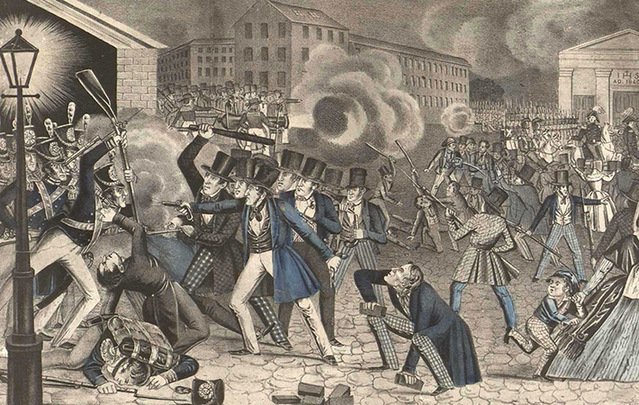
Picking your spots for such a faith surely requires discretion since the riots in Philadelphia between nativist Protestants and Irish Roman Catholics had all the earmarks of cultural Christianity. Protestants expected the public schools to use the Bible to reinforce republican norms but Roman Catholics objected that the Protestant Bible was not neutral — it was not even the right one — the Douay version. Those riots were far more about politics and culture, but defenses of cultural Christianity tread gingerly around such episodes.

What is especially perplexing about Stephen Wolfe’s defense of cultural Christianity is not simply how he might make sense of its darker moments in the past, but even how it measures up to the New Testament. For instance, he starts with this assumption:

We should first acknowledge that the civil recognition, establishment, and privileging of Christianity was the received and standard view for most of Christian history, amongst most major Christian traditions, including many Protestants, and only recently has it been rejected by a majority of western Christians.

That may be true after 350 AD, but imagine Peter and Paul thinking the privileging of Christianity was the air they breathed when they were receiving inspired and infallible revelations from the Holy Spirit.

Wolfe later asserts in a way that would have left Paul scratching his head:

Put differently, the civil and ecclesiastical are the twin species of the same genus, Christian communion. The people of God submit to these mutually supporting, separate and independent administrations because Christ is both the Creator and Ruler of creation and the Mediator of eternal life. The Christian communion is not coterminous with ecclesiastical membership, but is rather the same people submitted to both the civil and ecclesiastical.

Again, that might describe Christendom at some point, but how does it make sense of the apostle’s warning to Corinthians against going to court:

If any of you has a dispute with another, do you dare to take it before the ungodly for judgment instead of before the Lord’s people? 2 Or do you not know that the Lord’s people will judge the world? And if you are to judge the world, are you not competent to judge trivial cases? 3 Do you not know that we will judge angels? How much more the things of this life! 4 Therefore, if you have disputes about such matters, do you ask for a ruling from those whose way of life is scorned in the church? 5 I say this to shame you. Is it possible that there is nobody among you wise enough to judge a dispute between believers? 6 But instead, one brother takes another to court—and this in front of unbelievers! 7 The very fact that you have lawsuits among you means you have been completely defeated already. (1 Cor. 6)

If the civil and ecclesiastical are mutually supporting, why is Paul so incensed with the Corinthians for going to court? Might it be that Paul and the early church had no idea about the state reinforcing Christian norms? That’s what persecution means, I believe.

Calvin’s commentary on this epistle also suggests that he, even though living at a time before 1789 when expectations for Christendom were still in place for all Christians except the Anabaptists, was not as convinced of the easy harmony between church and state. The reason is that the magistrate is an avenger and the church is an instrument of God’s love and mercy:

Those who aim at greater clearness in their statements tell us that we must distinguish between public and private revenge; for while the magistrate’s vengeance is appointed by God, those who have recourse to it do not rashly take vengeance at their own hand, but have recourse to God as an Avenger. This, it is true, is said judiciously and appropriately; but we must go a step farther; for if it be not allowable even to desire vengeance from God, then, on the same principle, it were not allowable to have recourse to the magistrate for vengeance.

I acknowledge, then, that a Christian man is altogether prohibited from revenge, so that he must not exercise it, either by himself, or by means of the magistrate, nor even desire it. If, therefore, a Christian man wishes to prosecute his rights at law, so as not to offend God, he must, above all things, take heed that he does not bring into court any desire of revenge, any corrupt affection of the mind, or anger, or, in fine, any other poison. In this matter love will be the best regulator.

Of course, Calvin is no Anabaptist. He knows the legitimacy of the magistrate and even the competency of unbelieving civil authorities. But he also senses in ways that critics of modern secular liberalism do not seem to that the purposes of church and state are distinct. One implication is that they are not necessarily harmonious. Especially if upholding the Christian ideal of love.

Perhaps cultural Christianity aspires to such an ideal. But chances are what Christian societies produce when the church is established is more on the order of manners or politeness than the spiritual fruit that comes with sanctification.

(more of) Show Me Jesus

To hear some of the recent commentary about Rome’s relationship to modern society, you might wonder about the significance of Jesus. The young journalist, Elizabeth Bruenig, whom Presbyterians baptized, Methodists discipled, and Jews educated (at Brandeis), explained her conversion as finding a refuge from modernity:

Yet the church remains firm, unmoved by this current in modernity. And while it is impossible to speak for all Protestants—and important to note there exists a vast array of opinions on property ownership within the Protestant tradition, some hewing close to the Catholic view—the Catholic Church, at least, bases its position on property in a moral universe far more stable than that which has been constructed since the Reformation. And by the time I neared the end of my time in college, I had become convinced it was the only firm ground from which a Christian could fight back against the domination of the poor by the rich, against poverty, against the destruction of families and communities at the hands of businesses and their political lackeys, against a world stripped of meaning.

I don’t know. To say that the church remains unmoved while failing to mention the about-face involved in the 1864 Syllabus of Errors when Piux IX sneered at the church making any adjustment to modernity (does she really want that?) and the 1962 Second Vatican Council where John XXIII called the church to update its relationship to modern society is quite the claim. You might think a journalist would look a little more carefully at her sources.

Then there is praise from Anthony Annett at Commonweal for the Jesuit article that condemned U.S. evangelicals and Roman Catholics together for an “ecumenism of hate”:

the basic thesis is certainly correct—that a small but vocal and influential segment of American Catholicism is now far more comfortable with the world of right-wing political evangelicalism than with global Catholicism. (Commonweal’s editors commented on it here, and contributing editor Massimo Faggioli wrote on it here.) This world is a Calvinist world, manifesting politically in the twin ideas that the United States is God’s chosen country with a unique destiny in the world’s history, which gives rise to a dualistic outlook, and that God bestows material rewards on his favored, which leads to a full-throttled embrace of capitalism. This latter pathology comes in different levels, of course, the nadir being the appalling “prosperity gospel.”

Annett too fails to mention how a church that so resolutely opposes modernity (according to Bruenig) is so susceptible to its members doing back flips to join Calvinists in the public square. If you have all that history, authority, and tradition, what happened?

For example, at the church frequented by my in-laws in New Jersey, I’ve heard homilies glorifying the military, calling for higher military spending, criticizing Muslim immigrants, and comparing the hill of Calvary with the hill of Iwo Jima. Seriously. This is horrific, but the overwhelmingly white middle-class Mass-goers seem to lap it up. It’s no wonder that they find no contradiction between Catholicism and Trumpism. It’s no wonder that Donald Trump enjoys their support while the rest of the Catholic world views with him with askance and horror.

Clearly, episcopacy has some bugs that not even papal infallibility (determined just on the heels of the Syllabus of Errors) cannot fix.

In fact, as much as Annett and Bruenig believe that real Roman Catholicism is on the side of left-of-center politics, Matthew Schmitz agrees but also notices how out of step Rome’s liberalism is with Rome’s history. The ultramontanism that sustained Pius IX’s quest for papal infallibility also supported integralism, a form of church-state relations that conservatives and liberals in the United States might find a tad overwrought:

Integralism was the system in which church and state collaborated to secure man’s peace on this world and salvation in the next. Joseph de Maistre defended it with a formula binding pope to king: “No public morals nor national character without religion, no European religion without Christianity, no true Christianity without Catholicism, no Catholicism without the Pope, no Pope without the supremacy that belongs to him.” Essential to this arrangement was the idea that the state must be subordinate to the Church.

With Francis has come a different kind of integralism:

Today a new kind of integralism operates, in which the Church is subordinated to the state as the two conspire to uphold liberal values. If one were to update de Maistre’s syllogism, it would go something like: No cheap consumer goods or avoidance of genocide without liberalism, no liberalism without true Christianity, no true Christianity without an undogmatic Church, no undogmatic Church without a liberalising Pope, no liberalising Pope without accountability to the age and freedom from tradition.

It is in this context that one must understand the Vatican’s recent sally against America in the unofficial papal organ La Civiltà Cattolica. Written by Fr Spadaro and Marcelo Figueroa, another papal confidant, the article is not merely an expression of anti-American spite or an attack on ecclesial enemies. It is an attempt to defend the liberal order against what is perceived, rightly or wrongly, as an existential threat.

Sorry, but I’m just not seeing the unity or the authority that wow converts. Plus, did you notice that all of these opinions come from the laity. What would make Roman Catholicism from Protestantism is if lay members kept quiet and deferred to their ecclesiastical superiors. I wonder what that kind of pre-modern ecclesiastical order would do to those converts who find in Rome a horse that rides even higher than the Bible or the Holy Spirit.

Meanwhile, do Roman Catholics actually worry about personal sins, God’s judgment, and whether they are going to purgatory?

Professional Historians Don’t Do Religion

That is one way to explain why the editors of the American Historical Review, the flagship journal for professional historians in the United States published by the American Historical Association, let Randall Balmer, a long time student of American evangelicalism, open his book review of Darren E. Grem, The Blessings of Business — when will this sentence end!?! — this way:

On the face of it, the evangelical embrace of capitalism and free enterprise should be a tough sell. Jesus himself warned that rich men face long odds against entering the kingdom of heaven and that it is impossible to serve both God and Mammon. First-century Christians, as recorded in the Acts of the Apostles, held goods in common, a nascent form of socialism. So how is it that many contemporary evangelicals who trumpet their fidelity to the Bible have become such ardent evangelists for affluence and free-market capitalism? How could Jerry Falwell plausibly argue that “God is in favor of freedom, property, diligence, work, and acquisition”? (AHR, June 2017)

Does this mean that the AHA favors socialism even though it requires members to pay upwards of $200 to attend annual conferences where hotel rooms often go for at least $150 per night? Are we supposed to believe that in a socialist world the workers would unite to underwrite historians gathering annually to hear and present papers, meet with editors, and wine and dine with old colleagues?

Or could it be that Balmer thinks the Bible, which talks about the sin of stealing in pretty big letters, favors “a nascent form of socialism,” one without Gulags or walled cities?

And how is it that Balmer, historian of the United States, is such an expert about religion and society in first-century Palestine? “On the face of it” is not the kind of intellectual muscle needed to master the kinds of research techniques that antiquity requires.

And does Balmer actually believe that Jesus is opposed to property but favors freedom, especially liberty for consenting adults to experience sexual pleasure?

My sense is that the editors understood they had no dog in this hunt — the evangelical left versus the evangelical right — and let Balmer take his swipes.

I do wonder though how Balmer gets up in the morning and goes to lecture in classrooms at Dartmouth College, an institution which boasts an endowment of $4.5 BILLION (according to Google). That, my friends, is a lot of property that resulted from a lot of acquisition. Does Balmer ever trumpet Jesus’ teaching about rich men and serving Mammon with Dartmouth’s administration?