
How would Tyler and Jemar sound
if they listened to Glenn and John?
I’m all for conversation.


Do you remember a fragrance girls acquire in autumn? As you walk beside them after school, they tighten their arms about their books and bend their heads forward to give a more flattering attention to your words, and in the little intimate area thus formed, carved into the clear air by an implicit crescent, there is a complex fragrance woven of tobacco, powder, lipstick, rinsed hair, and that perhaps imaginary and certainly elusive scent that wool, whether in the lapels of a jacket or the nap of a sweater, seems to yield when the cloudless fall sky, like the blue bell of a vacuum, lifts toward itself the glad exhalations of all things. This fragrance, so faint and flirtatious on those afternoon walks through the dry leaves, would be banked a thousandfold on the dark slope of the stadium when, Friday nights, we played football in the city. (John Updike, “In Football Season” from Olinger Stories)
While recent discussions of police brutality have brought attention to the so-called racial empathy gap, other research suggests that empathy can create as much harm as good. First, racial empathy gap:
For many people, race does matter, even if they don’t know it. They feel more empathy when they see white skin pierced than black. This is known as the racial empathy gap. To study it, researchers at the University of Milano-Bicocca showed participants (all of whom were white) video clips of a needle or an eraser touching someone’s skin. They measured participants’ reactions through skin conductance tests—basically whether their hands got sweaty—which reflect activity in the pain matrix of the brain. If we see someone in pain, it triggers the same network in our brains that’s activated when we are hurt. But people do not respond to the pain of others equally. In this experiment, when viewers saw white people receiving a painful stimulus, they responded more dramatically than they did for black people.
The racial empathy gap helps explain disparities in everything from pain management to the criminal justice system. But the problem isn’t just that people disregard the pain of black people. It’s somehow even worse. The problem is that the pain isn’t even felt.
On the other hand:
Paul Bloom, professor of psychology and cognitive sciences at Yale, has written a thoughtful criticism of the widespread assumption that we can improve the world by increasing our empathy. In his farewell address, for example, President Barack Obama said that empathy for those who are different is an essential pillar of democracy. Political polarization could be reduced if Republicans and Democrats had more empathy for one another. Teachers, psychologists, and politicians suggest that lack of empathy lies behind complacency toward Native Americans, judgmentalism toward opioid addicts, and hostility toward immigrants. If we felt the pain of the afflicted, it is often assumed, we would want to take proactive steps to help them.
Bloom doubts it. He rejects the assumption that empathy is either a strong motivator of moral goodness or a proper guide to moral decision making. One can identify emotionally with the suffering of others but not do anything about it; conversely, one can offer effective assistance to another person without echoing his or her internal states.
Bloom goes even further in arguing that empathy is actually responsible for more harm than good. A wide array of studies in social psychology and neuroscience show that empathy is highly context sensitive, shortsighted, mood dependent, narrowly focused, biased, and parochial.
Turns out that moral reflection (not moral outrage) may be better than empathy:
The good Samaritan was moved by the victim’s sorry state, but there is no reason to think he felt anything like what the victim would have felt lying on the side of the road. What was important was the Samaritan’s good will and good judgment about how to help the poor man. More generally, the point is that we do not have to feel any particular way in order to do what is right in any given situation. What is essential, as Thomas Aquinas put it, is a “constant and firm will to give each his or her due.”
Once again, the value of emotions, experience, and authenticity may be way less important than pietists (among others) think.
He has read much more John Owen than I and in the introduction to his recent book, John Owen and English Puritanism, he explains that one of the ways to mortify sin is to read Owen:
My own sense in preparing this book is that biography is an especially demanding medium that continually refuses to permit intellectual shortcuts: at times, when I was overwhelmed by the demands of reading Owen’s millions of words in their very different contexts, I felt that he could not die soon enough. (20)
Sometimes when I read Owen, I think I can’t die soon enough.
So Owen’s affect on Gribben and me is opposite, either to wish the Puritan or the reader dead.
Wait, doesn’t that make me holier?
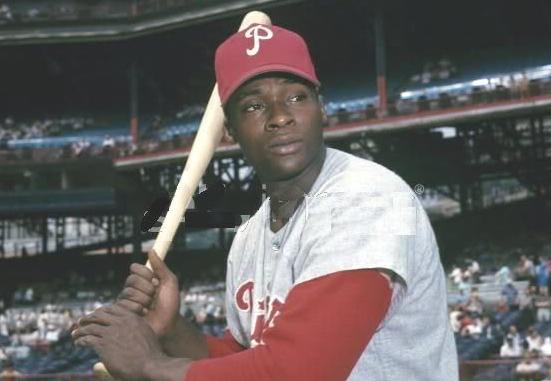
I think I listened to this game on a transistor (not transformationalist) radio:
After Bunning set the Giants down 1-2-3 in the seventh, Philadelphia took the lead in the eighth on an unearned run. Gonzalez led off with a single. Richie Allen walked with one out. Marichal induced a ground ball from Johnny Callison that might have ended the inning. However, reserve infielder Bob Schroder failed to handle it, and a run scored.
Bunning failed to hold the lead in the bottom of eighth. He retired Alou to begin the inning, but Haller homered for the second time to tie the game.
With the two Willies, Mays and McCovey, up next, a modern manager would likely have pulled Bunning. The Phillies had a strong bullpen, anchored by the two Dicks, Hall and Farrell. But manager Gene Mauch stayed with his ace.
Bunning got Mays on a pop-up, walked McCovey (pitching very carefully, I assume), and then retired Jim Davenport.
Marichal had allowed four runs, eight hits, and two walks through eight innings. Giants manager Herman Franks had good relievers available — Ron Herbal, Bill Henry, and Frank Linzy (ERA 0.60). Yet, like Mauch, Franks stayed with his ace.
Marichal retired Tony Taylor, who led off the inning. Bunning was the next scheduled batter. Surely, Mauch would send up a pinch hitter to bat for his tiring pitcher.
But Bunning stayed in. He wasn’t a bad hitting pitcher. Early in his career, he was a .200 hitter. But by 1967, he had fallen off at the plate. Coming into this game, he was batting .125.
Bunning did have one home run, though. It came at the expense of Atlanta’s Ken Johnson, and was the fifth of his long career.
On this day, he hit his sixth. How embarrassed must the prideful Marichal must have been!
Bunning had given the Phils a 5-4 lead. Now he had to be his own closer.
No problem. In the bottom of the ninth, he set down the Giants in order — Brown on a fly ball, Schroder on a ground ball, and pinch hitter Norm Siebern, an old American League adversary, on another grounder.

So warns Jacques Berlinerblau:
Professorial prestige, I contend, is an awfully arbitrary thing.
Among professors, where one works is a marker of status. Thus, the assistant professor employed by an Ivy League college accrues greater glory than her counterpart at a midsize regional university. The latter, in turn, is more esteemed than an assistant professor laboring at some far-flung small liberal-arts college. The same hierarchies prevail, I guess, among high-school seniors comparing their college-acceptance letters as they hotbox their parents’ Toyota Priuses.
The juveniles and, distressingly, the professors are just following the logic of popular college-ranking systems. They are assuming that the greater the renown of an institution as measured by U.S. News & World Report, the greater will be the quantity and quality of research produced by scholars in its employ. Is this assumption accurate?
If it were, it would follow that an assistant professor in anthropology at Princeton University (U.S. News 2016 rank No. 1) publishes more and better work than her exact counterpart at the University of Southern California (U.S. News 2016 rank No. 23). The USC savant, in turn, outperforms the identically ranked anthropologist at Clark University (U.S. News 2016 rank No. 75). The Clark ethnographer has a heftier CV than a comparable scholar employed at Oklahoma State University (U.S. News 2016 rank No. 149). The better the institution, the better the research its tenure-line professors produce. Right?
Well, practice has a habit of trolling theory. Let’s imagine an experiment. All four of our hypothetical tenure-track anthropologists are asked to submit an updated CV and all of their relevant publications. Upon their arrival, these materials are scrubbed of any identifying markers. The anonymous files are then forwarded to a panel of experienced academicians, no-nonsense types who understand how the game is played. Their task: Figure out which CV corresponds to which sage employed at colleges ranked 1, 23, 75, and 149.
Our arbiters, I’m convinced, would fail this blind test. They would fail even if we asked them not to look at mere quantity of publications but quality as well. That’s because the contestants would all look puzzlingly similar. The judges might assume that the assistant professor at Clark worked at Southern California. And, yes, it is not unthinkable that they would place the Oklahoma State ethnographer in New Jersey. The problem is not that the Princeton person is a slouch. The problem is that all four are publishing a lot and all are very impressive on paper. Ergo, it would be impossible for the judges to distinguish between scholarly Coke and Pepsi.
Does this apply to New York City pastors?
What about U.S. Senators?
What about platforms makes an author more of an authority than another author?
Here is what one of the apostles’ successors says makes Roman Catholicism “cool”:
Guilt. Pundits and comedians make fun of “Catholic guilt,” often described as an overactive conscience that makes us think everything is a sin. For example, when forgetting to floss, or not finishing all the food on your plate becomes confession material. But while people make fun of Catholics for their scrupulosity, in fact, having a little guilt is a healthy habit. It keeps us from getting into trouble and inspires us to do the right thing. Our world today would benefit from a little “Catholic guilt.”
What happened to that sense of the penalty for sin that Paul agonized in Romans 7?
21 So I find it to be a law that when I want to do right, evil lies close at hand. 22 For I delight in the law of God, in my inner being, 23 but I see in my members another law waging war against the law of my mind and making me captive to the law of sin that dwells in my members. 24 Wretched man that I am! Who will deliver me from this body of death? 25 Thanks be to God through Jesus Christ our Lord! So then, I myself serve the law of God with my mind, but with my flesh I serve the law of sin.
Funny how a little bit of guilt goes a long way — all the way to the cross.
How can you be scrupulous and turn guilt into something by which to appeal to youth?

Old neighbors in Philadelphia are objecting to a business that is expanding its hours and footprint:
Past residents of Chestnut Hill, through great effort, created a vision for the neighborhood. We owe them a great debt and we believe that we have a duty to be just as vigilant and visionary as our forebears.
Nearly 40 years ago, under the auspices of the Chestnut Hill Community Association, and well covered by this newspaper, a covenant was hammered out between the owners of the Chestnut Hill Hotel and its near neighbors on Ardleigh Street. This was no easy task. It took the efforts of hundreds of Chestnut Hill residents, city politicians, and the CHCA. The covenant runs in perpetuity with the property.
Such covenants are extremely important and should not be discarded or ignored in a willy-nilly fashion. Certainly, any attempt to supersede or challenge the covenant should be presented and discussed with the parties involved. Such was never done with the neighbors on Ardleigh Street. Only the heavy construction work we heard coming over the fence in the dead of night alerted us that something was happening. Now we are faced with a fait accompli, and our only recourse seems to spend thousands of dollars in legal fees to have our living covenant recognized. How is this at all neighborly?
As development proceeds in Chestnut Hill, all of us should be concerned about the abrogation of covenants. Ours is not the only such covenant here, and by acceding to the development whims at the Chestnut Hill Hotel property without any review, all such covenants are mocked and threatened. I appeal to the CHCA to take careful note.
Finally, the system set up to monitor local development, which includes building codes, zoning and the associated permits, are not to be ignored. All those seemingly petty requirements – the posting of permits, height restrictions, propinquity to elementary schools – are important. And again, the wider community should take note because what is scoffed at and ignored in our neighborhood is coming your way sooner or later. There is and will continue to be voracious demand for development in Chestnut Hill.
Given the demographics of the place, I assume many of these concerned residents are liberal politically and supported Hillary Clinton in last year’s election for POTUS. But imagine if these same people thought about the United States, its borders, and the expectations underwritten by the Constitution the same way that they think about their neighborhood and what threatens their way of life.
If they did that, would they really have trouble understanding people who voted for a president who campaigned to take borders seriously, to put national interests first, and who annoyed a lot of citizens who disdained rather than cared for Americans living in fly-over country?
Deep inside every American, conservative or liberal, beats a Not In My Back Yard heart. Why the outrage when the wrong side shows it has a pulse?

I think I have the way to form a more perfect union in this place we call the USA. It is to recognize that all Americans share a sense of fear. Anxiety is what unites us in the U.S. Consider the following.
Andrew Sullivan writes respectfully about reactionary conservatism and even grants its plausibility:
Certain truths about human beings have never changed. We are tribal creatures in our very DNA; we have an instinctive preference for our own over others, for “in-groups” over “out-groups”; for hunter-gatherers, recognizing strangers as threats was a matter of life and death. We also invent myths and stories to give meaning to our common lives. Among those myths is the nation — stretching from the past into the future, providing meaning to our common lives in a way nothing else can. Strip those narratives away, or transform them too quickly, and humans will become disoriented. Most of us respond to radical changes in our lives, especially changes we haven’t chosen, with more fear than hope. We can numb the pain with legal cannabis or opioids, but it is pain nonetheless.
If we ignore these deeper facts about ourselves, we run the risk of fatal errors. It’s vital to remember that multicultural, multiracial, post-national societies are extremely new for the human species, and keeping them viable and stable is a massive challenge. Globally, social trust is highest in the homogeneous Nordic countries, and in America, Pew has found it higher in rural areas than cities. The political scientist Robert Putnam has found that “people living in ethnically diverse settings appear to ‘hunker down,’ that is, to pull in like a turtle.” Not very encouraging about human nature — but something we can’t wish away, either. In fact, the American elite’s dismissal of these truths, its reduction of all resistance to cultural and demographic change as crude “racism” or “xenophobia,” only deepens the sense of siege many other Americans feel.
And is it any wonder that reactionaries are gaining strength? Within the space of 50 years, America has gone from segregation to dizzying multiculturalism; from traditional family structures to widespread divorce, cohabitation, and sexual liberty; from a few respected sources of information to an endless stream of peer-to-peer media; from careers in one company for life to an ever-accelerating need to retrain and regroup; from a patriarchy to (incomplete) gender equality; from homosexuality as a sin to homophobia as a taboo; from Christianity being the common culture to a secularism no society has ever sustained before ours.
Notice too that conservatives are not the only ones who are very, very afraid. It’s also feminist philosophers. But even they can’t claim privilege for their phobia:
I want to explore a much more general issue raised by this whole affair. This has to do with concept of harm, which keeps being raised. The main charge against Tuvel is that the very existence and availability of her paper causes harm to various groups, most specifically to members of the transgender community. This is a puzzling and contentious claim that deserves serious reflection.
The editorial board statement specifically refers to “the harm caused by the fact of the article’s publication.” As the concept of harm is standardly used in legal contexts, this would be a tough claim to defend. It is certainly possible for someone to suffer material or tangible loss, injury, or damage as a consequence of a 15-page article being published in an academic journal. The article might be libelous, for example. But there is no such charge here. The only individual mentioned by name besides Rachel Dolezal is Caitlyn Jenner, and it seems implausible to say that Tuvel has harmed Jenner by “deadnaming” her (i.e., using her birth name), given how public Jenner has been about her personal history.
The authors of the editorial board statement have nothing to say about how they understand harm. This already should give pause for thought. Philosophers, whatever their methodological orientation or training, usually pride themselves on sensitivity to how words and concepts are used. This makes it odd to see no attention being paid to how they are understanding this key concept of harm, which is central to many areas in legal and moral philosophy.
But the statement does clarify what the authors believe has caused the harm: “Perhaps most fundamentally, to compare ethically the lived experience of trans people (from a distinctly external perspective) primarily to a single example of a white person claiming to have adopted a black identity creates an equivalency that fails to recognize the history of racial appropriation, while also associating trans people with racial appropriation.”
And here I thought we were supposed to be afraid of Trump. Imagine the harm a POTUS can do. But in the United States of Fear, an academic paper poses a threat capable of generating the kind of fear that many endure with our incautious and vicious president.
The question is whether those with fears can recognize fear as a basis for personal identity. Can we go from the specific to the general and recognize fear is something that every American experiences? If so, then we may finally have a common point of reference for a shared existence. We are united in fear.

They don’t attract people like this:
The FBI closely monitors online communities that discuss ISIS, at times running so many undercover accounts that agents end up investigating one another: An FBI policy guide, obtained and published by The Intercept, notes that online investigations have “previously resulted in resources being wasted by investigating or collecting on FBI online identities,” or employees working undercover. The Bureau also takes tips from a network of sources—from security firms to random vigilantes—who monitor these communities.
The small group of people who have been arrested on ISIS-related charges are an idiosyncratic bunch—they come from a range of socioeconomic backgrounds, and each case is distinctive. But many do share important traits with Moe and Jaelyn. According to the Center on National Security at Fordham University’s School of Law, their median age is 25. Three-quarters are American citizens. Nine out of 10 are male. Over one-third are converts to Islam. Although roughly a quarter of cases have involved people of Arab descent like Moe, whose father is Palestinian, most come from other ethnic backgrounds, including African Americans like Jaelyn. Few have criminal backgrounds. Many live with their parents. And roughly 90 percent of cases involve social media, sometimes including online conversation with a recruiter, either real or undercover.
So why is voting for Trump so scary? Have Americans really lost the capacity to discern different kinds of threats? Even words that trigger PTSD don’t have the same effect as a guillotine.
But the biggest problem with the jeremiads against the new P.C. is that they treat the so-called politically correct as radical freaks who are outside of mainstream American society—opposing the common sense free-speech position held by wholesome liberals and conservatives. Yet far from outlier ideas, trigger warnings and safe spaces grow out of impulses that are broadly shared. For many decades, the United States has been the home to a thriving vernacular therapeutic culture, where ordinary citizens borrow concepts from psychology and use them as tools of self-improvement, often, in the process, forming distinct political and social identities. In a society where Oprah Winfrey is a guru to millions and self-help books are perennial best-sellers, the adoption of folk therapy is hardly the mark of eccentricity. Moreover, trigger warnings and safe spaces echo the larger jitteriness that has marked American culture for many decades, gaining special salience after September 11, 2001.
Imagine that kind of understanding for white evangelicals.
And then duck.
 Old Life