Goooooooooooooooooalllll!!!!!

When John Fea gets it right, he gets it (mainly). He recently reflected on life in a small town:

Messiah is located in Mechanicsburg, Pennsylvania. Mechanicsburg is not a very cosmopolitan place. Many of my neighbors have lived in the town for multiple generations. Some young people get out of town after graduation and never come back, but many never leave. We have all the usual problems associated with small towns. Race-relations could be better. Drug deals go down in the convenience store parking lots. The wealthy members of our town cloister in their gated communities. But this is where we decided to raise our family.

When we arrived in Mechanicsburg our daughters–Allyson and Caroline– were ages four and one. They attended kindergarten through high school in Mechanicsburg Area School District. We chose to live in the Mechanicsburg School District as opposed to the larger regional Cumberland Valley School District (with more opportunities) because we wanted a smaller, more intimate community for our kids. Both of them have thrived in this district and we have never regretted our choice.

Some folks in town who know me may think it is odd that I am writing about the sense of community I feel in Mechanicsburg. As an introvert, I tend to keep to myself. I would rather watch my kids play sports seated alone than join a crowd of cheering fans. I am not very good at small talk. I coached my girls in basketball when they were in elementary school, but I got disgusted with the politics, the ambitious parents, and the way many of those parents treated the selfless staff of our town’s recreation department, so I stopped. I have not participated as much in the local life of my community largely because of the time I spend investing in the life of Messiah College. But I have tried to serve when asked. I could do better.

Then he mixes in Friday Night Lights for fathers without sons (with apologies to Texans):

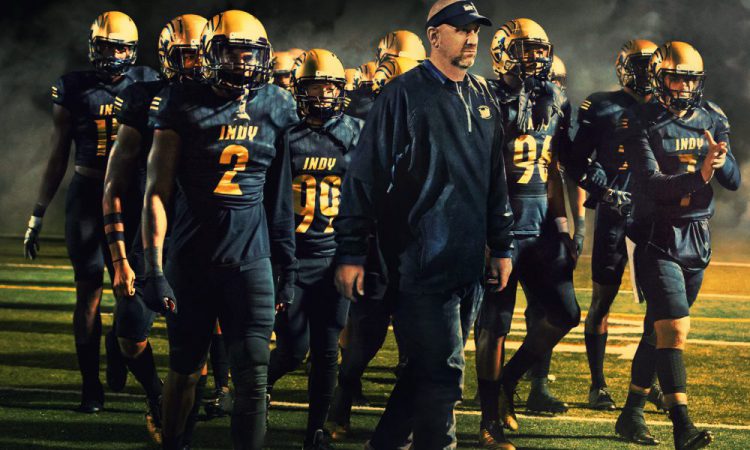
I thought about my relationship with this community again as I sat in the cold last night and watched the Mechanicsburg Girls Soccer team play their final home game of the season. It was the second round of the Pennsylvania Interscholastic Athletic Association’s District 3 playoffs. The girls won 4-0 over a team from Berks County and advanced to the District semifinals on Monday night at Hershey Park Stadium. They are now 20-0 and ranked 21st in the nation. A great story is developing here in small-town Mechanicsburg. My daughter Caroline plays a minimum number of minutes each game, but she has been an intricate part of a team that is making local history. She has been playing soccer with many of the seniors on this team since she was eight-years-old. Some of these girls are her best friends. Mechanicsburg is Caroline’s community. This place has shaped her life in so many good ways.

Caroline had mixed emotions last night. Her team will play again next week and, if things go well, will try to make a run in the state tournament. Yet the sadness of playing her last game on her home field with her friends was palpable as she walked across the field to meet us. Her tears were a mixture of joy for the blessing of an undefeated season (so far) and sadness that it was all nearing an end. I fought them back as well.

From Hillsdale, Mechanicsburg looks like it’s on the grid. It’s a suburb of Harrisburg (the state capital for the geographically challenged) and only 40 minutes from Lancaster, and 90 from Baltimore. In Hillsdale you are 90 minutes from Ann Arbor, 2 hours from Birmingham (there is one in Michigan and it is spectacular!), and 4 hours from Chicago.

The irony is that I started my college career at Messiah. The college was about half the size that it is now. And the name of our dorm floor, for inter-mural athletics, was The American House. That sounded patriotic but was actually the name of a bar in Mechanicsburg where some of the lads went to drink PBR (on tap!!). At the time, 18-year olds could drink (Kavanaugh-like), though that was not exactly how Messiah’s dean of students understood it. But apparently no one in the administration knew the reference or they simply thought our joke was silly and ignored it. Over time I found the college so far removed from urban life that I transferred to Temple in my sophomore year (after doing one semester at Messiah’s center city campus). Now I teach at a college 2/3 the size of Messiah and am even farther from the East Coast than I was in the remote setting of south central Pennsylvania.

The Lord works in mysterious ways.

I have no regrets about Hillsdale. It is the best job of my career and a wonderful school. But sometimes I wonder what it would be like to teach somewhere like Messiah, where access to the Northeast corridor is much easier.

All of which may explain why Fea and I have different reactions to Americans and evangelicals who voted for Trump. John concedes that he was somewhat sympathetic to anti-elitism in America after hearing graduate students at a recent conference:

There was a sense of confidence in their speech as they talked about their prestigious advisers and the quality of the graduate programs where they earned their Ph.Ds. They did not seem overly worried about landing a job. Rather, their complaints focused more on the fact that so many jobs were located in rural communities in so-called “Red States” where they did not want to live. Their conversation was infused with the kind of cosmopolitan snobbishness that I often hear in academic circles. As I listened to them talk, I thought that maybe all those Trump voters and Fox News watchers are correct about the “coastal elites.”

Yet, that disdain for coastal snobbishness has not stopped Fea from sounding like the Never Trumpers who live and work on the coasts (with the exception of Austin or St. Louis thrown in). If he lived in rural Michigan would he see through Michael Gerson’s coastal elitism?

A Different Kind of Social Justice (or African Theology)

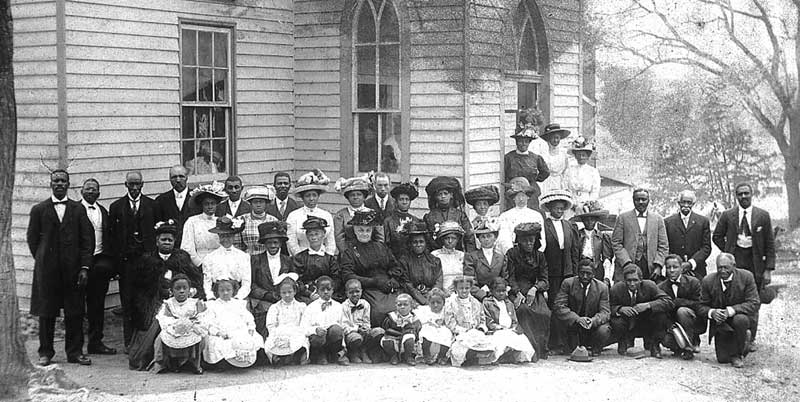
In today’s class on religion in the U.S., students and I discussed Mary Beth Swetnam Matthews’ book Doctrine and Race. Aside from lots of evidence of how pervasive racism was among the leaders of the fundamentalist movement (William Bell Riley, John Roach Straton, and J. Frank Norris — no mention of Machen), Matthews’ book is very illuminating about how conservative and conventional African-American Baptists and Methodists were. Consider the following:

Those loose morals had many causes, including dances, movies, and gambling, all of which shared a common denominator — they were usually performed outside of churches and thus away from the moral guidance of pastors, elders, and other God-fearing people…. “What is the danger of these [non-church activities]?” Baptist J. C. Austin asked the assembled National Sunday School and Baptist Young Peoples Union Congress in Dayton, Ohio, in 1935. His response was simple: “It is cheating, lying, gambling, a loss of temper, a waste of time, being eaten up with a seal for [worldly pastimes], and the disposition to fight and murder about them. (100)

[W. J. Walls} carefully noted that “we do not hold that dancing itself sends anybody’s soul to hell, but we do know from all observation (for we have never danced), that it is one of the contributing causes to the weakness of the race, the dissipation of religious influence, and therefore the downfall of character. . . We must preach a whole gospel for the salvation of the individual: — body, mind, and soul. There is no perfect character that is not built upon this basis.” (104)

[According to Cameron C. Alleyne] divorces “rob so many children of complete parent bond. Something must be balanced in this parenthood. The mother is given to pampering. It is hers to comfort the child with tender words. The father is given to the sterner qualities of discipline now”. . . Divorce mean “substituting calories for character and vitamins for virtue,” with women supplying the calories and vitamins and men the character and virtue. (108)

[William H. Davenport wrote] “nowhere in Holy Writ is there a hint or suggestion about birth control, or regulating the size of families.” For him, the doctrine of sola scriptura had primacy. argued that to “put the imprimatur of the Church upon the immoral practice of arresting the orderly process of nature is hostile to Christian doctrine, and subversive of the welfare of society”(110)

The lesson: some social gospels are more social than others.

What Brett Kavanaugh Could Learn from the Holy Father

The asymmetry between the press’ coverage of the Roman Catholic church’s scandal and the allegations against Brett Kavanaugh are remarkable. Whistle-blowers in the church receive a level of scrutiny that the judge’s accusers do not.

But not to worry. If the press is as favorably inclined to Pope Francis as it seems, the Vicar of Christ may have just supplied one of his flock with the rationale he needs to defend himself tomorrow:

I take the Pennsylvania report, for example, and we see that the first 70 years there were so many priests that fell into this corruption, then in more recent times it has diminished, because the Church noticed that it needed to fight it in another way. In the old times these things were covered up, they even covered them up at home, when the uncle was molesting the niece, when the dad was molesting his sons, they covered it up because it was a very big disgrace… it was the way of thinking in previous times or of the past time. It is a principle that helps me to interpret history a lot.

A historic event is interpreted with the hermeneutic of the time period in which it took place, not as a hermeneutic of today passed on. For example, the example of indigenous people, that there were so many injustices, so much brutality, but it cannot be interpreted with the hermeneutic of today [now] that we have another conscience. A last example, the death penalty. The Vatican, when it was a State, a pontifical State, had the death penalty. In the end the state decapitations were 1870 more or less, a guy, [sic] but then the moral conscience grew, it is true that always there were loopholes and there were hidden death sentences. You are old, you are an inconvenience, I do not give you the medicine, it went so… it is a condemnation to social death. And about today… I believe with this I have responded.

Boys were boys at Georgetown Prep, and priests were priests in Pennsylvania.

Actually, in the case of Kavanaugh, Francis’ point has merit since movies like Animal House indicate what American society could bear back then about young men’s antics.

But can the pope really be serious that priests’ abuse of children or adolescents was part of the church’s outlook before 2002? Was it even acceptable for men called to celibacy to have sex, consensual or not?

Pope Francis may have said more than even Rod Dreher thinks.

Fear’s Double Standard

A prominent theme in John Fea’s book, Believe Me, is that fear drives evangelical politics. The word “white” should go before evangelical because Fea also contrasts white and black evangelicals’ politics. He writes:

Even the most cursory reading of the Old and New Testament reveals that, ultimately, Christians have nothing to fear. Scripture reminds us that we already have a strong protector in times of need. . . . In the Gospel of Luke, Jesus says, “Fear not, little flock, for it is your Father Good pleasure to give you the kingdoms.”

But of course, evangelicals did not believe this when the voted for Donald Trump:

While many of Trump’s evangelical opponents said that they could not tell their children or grandchildren that they voted for such a moral monster, other evangelicals were saying exactly the same thing about voting for Hillary Clinton. On Election Day, long-held fears or threats whose specter had been stoked for decades simply could not be overcome.

Recently, Mike Horton echoed Fea when he wrote under the title, “What Are Evangelicals Afraid of Losing?”:

In a Monday meeting with evangelical leaders at the White House, President Trump reportedly warned of violence against conservative Christians if the GOP loses in November. Evangelicals, he said, were “one election away from losing everything.”

As evangelicals, we would do well to correct the president on this point. If an election can cause us to lose everything, what is it exactly that we have in the first place?

What I don’t understand is why the evangelical voters for Trump, why their fears are a sign of infidelity. We have heard a lot about how evangelicals fear the Trump administration’s immigrant policy, the Southern Baptist Convention’s pastors’ treatment of women and sexual abuse, and the racial bias of police and related shootings.

Someone could argue that these fears about the plight of immigrants, women, and African-Americans are legitimate fears while the socio-economic concerns that motivated evangelicals to vote for Trump were illegitimate.

That may be, but that would also undermine the point that Christians should not be afraid, unless it is that white Christians don’t need to fear but Christian people of color do. Either way, a Christian no matter what his or her race or ethnicity is supposed to trust a sovereign God. If Psalm 23 is true, “Even though I walk through the valley of the shadow of death, I will fear no evil,” then it is true for all people who trust God.

Mencken Day 2018

From Happy Days:

I was on the fattish side as an infant, with a scow-lie beam and noticeable jowls. Dr. C. L. Buddenbohn, who fetched me into sentience at 9 p.m., precisely, of Sunday, September 12, 1880, apparently made a good (though, as I hear, somewhat rough) job of it, despite the fact that his surviving bill, dated October 2, shows that all he charged “to one confinement” was ten dollars. The science of infant feeding in those days, was as rudimentary as bacteriology or social justice, but there can be no doubt that I got plenty of calories and vitamins, and probably even an overdose. There is a photograph of me at eighteen months which looks like the pictures the milk companies print in the rotogravure sections of the Sunday papers, whooping up the zeal of their cows. If cannibalism had not been abolished in Maryland some years before my birth I’d have butchered beautifully.

A Wrestling Match Over the Resurrection

Chris Gehrz thinks a belief in the resurrection will produce activist evangelicals (maybe even social justice types):

What would happen if evangelicals let the reality of the resurrection penetrate into our hearts and give us the vitality and power of Christ’s victory over death?

First, it would cause us to value life all the more. Yet many “pro-life” evangelicals seem to care little when their preferred presidential administration closes this country to those seeking refuge from war and gang violence. Or when it ignores the deaths of thousands of Americans in Puerto Rico. Or when it leaves unaddressed (or worsens) problems with health care, drug abuse, poverty, and climate change that threaten the lives of millions.

Second, a living orthodoxy of resurrection would leave us evangelicals more hopeful and less fearful. Instead, as I observed in our book, “The same people who argue most strenuously for the historicity of the resurrection can seem the least likely to live as if Jesus Christ has actually conquered the grave.”

The resurrection as the basis for social policy and legislation — I have not seen that one before. But Gehrz thinks this corresponds with what Paul says in 1 Cor 15:58: “Therefore, my beloved brothers, be steadfast, immovable, always abounding in the work of the Lord, knowing that in the Lord your labor is not in vain.”

That is not the way I typically think about the resurrection, especially after what Paul writes just before that verse:

… flesh and blood cannot inherit the kingdom of God, nor does the perishable inherit the imperishable. 51 Behold! I tell you a mystery. We shall not all sleep, but we shall all be changed, 52 in a moment, in the twinkling of an eye, at the last trumpet. For the trumpet will sound, and the dead will be raised imperishable, and we shall be changed. 53 For this perishable body must put on the imperishable, and this mortal body must put on immortality. 54 When the perishable puts on the imperishable, and the mortal puts on immortality, then shall come to pass the saying that is written:

“Death is swallowed up in victory.”
55 “O death, where is your victory?
O death, where is your sting?”

Instead of turning Christians into transformationalistizationers of culture, the reality of death and the hope of the resurrection would seem to teach believers that this world is inconsequential to the world to come, that as Paul writes elsewhere, “to live is Christ, to die is gain.” We may not labor in vain. But we die and we receive glory, and that puts the affairs of this life in a different perspective, as it seemed to for Paul:

16 So we do not lose heart. Though our outer self is wasting away, our inner self is being renewed day by day. 17 For this light momentary affliction is preparing for us an eternal weight of glory beyond all comparison, 18 as we look not to the things that are seen but to the things that are unseen. For the things that are seen are transient, but the things that are unseen are eternal. (2 Cor 4)

Gerhz even seems to agree with this when he writes, “a lived belief in literal resurrection should lessen our fear of both literal and metaphorical death.” If true, then it would less our fears of inequality and injustice since Christians will have a life to come.

But by trying to appropriate the resurrection for social justice, Gehrz seems to be guilty of what Paul warned against:

20 Where is the one who is wise? Where is the scribe? Where is the debater of this age? Has not God made foolish the wisdom of the world? 21 For since, in the wisdom of God, the world did not know God through wisdom, it pleased God through the folly of what we preach to save those who believe. 22 For Jews demand signs and Greeks seek wisdom, 23 but we preach Christ crucified, a stumbling block to Jews and folly to Gentiles, 24 but to those who are called, both Jews and Greeks, Christ the power of God and the wisdom of God. 25 For the foolishness of God is wiser than men, and the weakness of God is stronger than men.

Christian teaching on salvation transcends the politics and economics, which likely explains why Paul had so little to say about the social injustice of the Roman Empire. Christianity is an otherworldly faith because Christians await the resurrection of the dead when Christ returns.

Does this mean Christians should eschew politics of only vote for Republicans? Probably not on politics, it’s a free church when it comes to the ballot box. Which is to say that Christians have all sorts of material for sorting out the social and political problems that come with a fallen world.

We don’t need to baptize them in the miracles of redemption.

Thank You, Lord, I’m Not a Christian-Identity Christian

Can the social justice warriors tell the difference between John MacArthur and Louis Beam? I was not aware of Mr. Beam until I listened to a remarkable discussion of Katherine Belew’s book, Bring the War Home at bloggingheadstv. Nor was I aware of a statement about social justice from Founders Ministries until I saw Ryan Burton King’s explanation of why he could not sign it (which I saw somehow through the blur of retweets).

Beam was a Vietnam veteran who became a prominent figure, so I’ve learned, in paramilitary, Christian identity, and the Klan. Belew makes the point about a fairly large — between 5,000 and 250,000 — network of white nationalists that connected people like Beam to Timothy McVeigh, the Oklahoma City bomber.

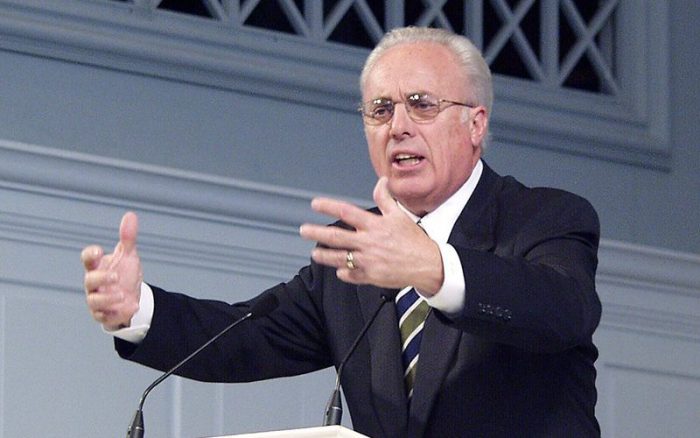
MacArthur, of course, is that famous pastor who is the Jerry Falwell of California minus the politics. In fact, MacArthur is taking heat for not calling the church to get behind movements and networks that resist the intersectional dynamics of racism, sexism, economic exploitation, heteronormativity — I’m tapped out — and a whole lot more.

Listening to the podcast which I highly recommend, I couldn’t help but wonder if the folks who accuse the United States of harboring white nationalism can actually tell the difference (or make distinctions) between the KKK and the OPC, or if it is a case of either you’er for us or you’re against us and if you’re against us then you are antithetically (thank you Abraham Kuyper) on the side, intentionally opposed to us? I for one would think that anyone with antennae for social justice who owns a home would rather have John MacArthur as a neighbor than a guy like Beam who stockpiled guns, trained terrorists, and who did not exactly respect the rule of law.

I also wonder if those alarmed by the direction in the United States since the presidential election of 2016 can do the math and recognize that 81% of evangelicals (maybe 60 million) is a lot larger than the 250,000 who may traffic in Christian Identity networks. That might sound scary except when your remember that if — and I say if though apocalypticism seems to be one potential tie — if the two groups overlap, then 59,750,000 evangelicals are not part of white nationalist organizations. (Thank the Lord for Geerhardus Vos and amillennialism.)

One last thought, around the 31 minute mark, Robert Wright wondered how such a small group of terrorists could ever think they would take down the most powerful nation on God’s green earth. That made me wonder how Christian transformationalists could ever think they could redeem New York City. Is there a connection between transformationalism and Christian Identity?

Nah.

Have You Considered Working in a Qualification?

I haven’t listened to either Truth’s Table or Pass the Mic for a while because the impression I generally took away when I listened was that I am guilty of something on the border of racism if not the genuine article. I did not see myself in some of the specific complaints about white people or white Christians in the U.S. But then came the invocation of systemic racism that left me wondering (as with climate change and the wealthy 1%) what was I supposed to do. If I didn’t have to work, perform house and yard maintenance, and be a somewhat normal partner in a marriage, perhaps I could devote my time to reducing racism both in aspects of my personal affairs (by implication, I think) and in the wider society. But even if I did that, what possible difference would it make? If Dr. King did all that he did and racism is still as prevalent as it was in the 1960s, I find it hard to fathom that I could possibly make a difference.

Hint for justice warriors: the need to escalate rhetoric is understandable if you want to move people to see the dangers of which you complain; but if you portray the enormity in catastrophic categories, you may leave the awakened feeling powerless in the face of such overwhelming force.

Part of the problem, then, is rhetoric. Here are some recent examples available without having to download an mp3 file:

There are several reasons why white evangelicals are reluctant to denounce racism, but for the sake of brevity, I will name one: power. Racism is ultimately about power. The power to subjugate, influence legislation, oppress, exclude, marginalize, and lord said power over the powerless. White evangelicals are reluctant to denounce racism because of the benefits that accrue to them as a result of said power. The benefits of being at the head of the table, being the standard by which everything and everyone else is measured against, the benefits of having all of the course curriculum center white authors and viewpoints exclusively from elementary school through graduate school including seminary.

Here the assertion involves apparently all white evangelicals. Since I am a Presbyterian, I guess I’m off the hook. But I wonder if the person who said this would apply it to Ligon Duncan?

Here’s another broad claim:

we live in a patriarchal society that benefits men over against women. Nevertheless, men are definitely harmed by cultural expectations of biblical masculinity. It infantilizes men, by painting them as these warriors and outdoorsmen who are hunters who know nothing about domesticity: cooking food, cleaning the house, caring for their children. In this way, the message that is communicated is that a “biblical man doesn’t need to know those things because that’s the woman’s job.” He can’t even be trusted to stay home with the kids while his wife goes away for a weekend. Additionally, men are confined to these rigid categories that revolve around sports and machismo. Toxic masculinity must be dismantled in order to give men the liberty to express themselves in other ways, through the arts, the sciences, literature, and a host of other ways. We are embodied souls; not droids.

Since I do the shopping, cooking, cleaning (bathrooms and kitchen sink), in addition to the manly work of grass cutting, snow shoveling, and wood hauling, I don’t entirely agree about the patriarchal point, though the missus will chalk up my endeavors to wanting to control everything. But again I wonder if this applies to David Platt?

Here’s one more:

The gospel of male dominance, like that of white supremacy, is a poison dispensed through cultural diffusers. Today’s good Christian man is far too charming for misogyny. But since he is often ignorant to the narratives of oppressed people (including those in the Bible), he does not know he’s being discipled into the role of benevolent master. Like most categories of dehumanization, the misogynist interpretation of Scripture which gave us the “biblical manhood and womanhood” movement (correction: issa dead horse debate), places both subhuman and superhuman categories on women and men, and ignores non-binary identity altogether.

Yes, that is straightforward and the female interlocutors may have a point. But this is so fraught with binary categories as to make me suspect that even Brad Mason is guilty of white supremacy. Can that be?

My sense is that the hosts at Truth’s Table (and Pass the Mic) have a lot of allies in the church and secular society. That reality suggests that racism and misogyny are not as pronounced as they allege, especially since their views are readily available in the mainstream press, universities, and Hollywood. Indeed, another reason for giving up downloading and listening was that I hear these arguments in lots of other forums.

They all are, of course, right about misogyny and racism which are forms of hatred that Christians should fight in themselves and discourage in others. But I have a hard time thinking these assertions about the quantity or pervasiveness of such attitudes are correct. I deem the ladies’ and the men’s depictions of the United States and the “white church” rhetorically excessive.

Occupy National Football League

Where are those who protest the inequality of the 1% now that Aaron Rodgers landed this week?

Aaron Rodgers is the highest-paid player in the National Football League for a second time in his career, and if he plays at the same kind of level Tom Brady is pioneering at 41 years old, it won’t be the last time he gets a big payday.

Rodgers and the Packers agreed to a four-year, $134-million contract extension that can be worth up to $180 million if he hits all his incentives, per ESPN. Rodgers gets $67 million in guaranteed money by the end of this calendar year, and he’ll eventually make $80 million total by the start of the new league year on March 17, 2019.

That would seem to put him securely in the 1%. That should mean that a lot of Americans should be very resentful of Mr. Rodgers. (I am but on the grounds of rooting for the Eagles.)

When some Christians write about wealth and poverty, they think taxes and usury, not professional football:

When it comes to the details of how magistrates should succor the poor, of course, Calvin gives few details (he did not preach political sermons per say), but the details he does give are significant. He indicates at one point that magistrates should provide for the poor by building poor-houses, hospitals, and even schools (Comm. Is 49:23). He is harshly critical of forms of usury in which the poor are taken advantage of, and yet he insists that the alternative to usury is not refusing to lend to the poor, but ensuring that the needs of the poor are met (Serm. Deut 23:18-20). In his sermon on Deuteronomy 15:11-15 he defended a prohibition of begging for the sake of “common order and honesty” and on the basis of “nature”, but then insisted that such a prohibition is only just if the government ensures that the poor do not need to beg. Part of “keep[ing] order and policy,” he suggests, is establishing “hospitals … for such needs.”

But why no commentary on the way Americans spend on all the goods and services that pay for the broadcasts, advertising, and salaries of the people who wind up on television? Wealth of the kind that professional athletes have is akin to global warming. If I recycle will that possibly stop rising temperatures? If I don’t watch football on Sunday, will it possibly make a dent in Rodgers’ salary?

And why pick on the bankers if you object to wealth? (Why not protest President Obama also?) I am no fan of the financial sector in part because I lost a job in 2008 and mainly because I believe the story told in The Big Short. At the same time, as an athlete growing up and a big sports fan, I am loathe to criticize sports and the industries that get rich around it. Plus, if media companies are going to make lots of money from sports, so should the folks who perform on the field.

But still, the inequalities inherent in professional sports are staggering. The kids who play JuCo football for Jason Brown go to college mainly to play for the NFL and not to learn something that might help them with the life they are going to have because they won’t make a squad. Professional football is almost a winner-take-all (especailly for quarterbacks) where the folks who get in make huge sums and the folks who don’t and spent almost as much time trying to qualify, receive nothing.

It’s unequal.

And some folks object to “Jacob I loved, Esau I hated.”

Monuments in Heaven

This story reminds me of a thought that occurred while singing a hymn on Sunday: will #woke Christians let David’s throne stand in the new heavens and new earth? (The story is about the toppling of a Confederate monument, Silent Sam, at the University of North Carolina, Chapel Hill.)

“Jerusalem the Golden”‘s third stanza in the old Trinity Hymnal goes like this:

There is the throne of David;
And there, from care released,
The song of them that triumph,
The shout of them that feast;
And they who with their Leader
Have conquered in the fight,
For ever and for ever
Are clad in robes of white.

So we may have a throne that commemorates an adulterer, a man who plotted the death of his lover’s husband, and a king who could not manage his own household. Not to mention that he purged the holy land of pagan dwellers. Yes, the Lord commanded it but in these times of social righteousness, such aggression is not just macro but cosmic.

Even so, Bernard of Cluny and John Mason Neale seemed to think Christians could draw comfort and inspiration from the thought of a throne in the new Jerusalem that commemorated the very flawed King David. Which makes you wonder if the pursuit of righteousness here (by some Christians) is going to be sufficient preparation for the righteousness to come.