Why You Don’t Need the Westminster Confession (or Calvin or Winthrop) to do Protestant Politics?

One of the tendencies in the critics of Kevin DeYoung’s defense of John Witherspoon and the American revision of the Westminster Confession (not mentioned here) is a need to base contemporary political reflection and action – even – on past Protestant models. The critics of DeYoung did this by reference to the meaning of the Westminster Confession. Others at American Reformer have also argued for a recovery of early modern Protestant politics. The advantage of this argument is that it paints Witherspoon, American Presbyterians, and always 2k advocates in the corner of departing from Reformed orthodoxy.

But what if you don’t need pre-Lockean understandings of politics and the good society to have a Protestant voice in liberal political structures? What if today’s Protestants who want to advocate for Christian norms looked to Presbyterians who both accepted the terms of liberal democracy and free markets and advocated Protestant-friendly positions on matters of political debate? What if you could be a kind of Christian nationalist without needing to read all of the pre- or early-modern Protestant theologians on the divine mandate for the Christian magistrate and a godly commonwealth?

That is what happened in the 19th century in England, Scotland, Ireland, Canada, and the United States. Presbyterianism began in 16th century England and Scotland as a force of opposition to rule by bishops and continued as a form of checks upon elites in both government and the church, Presbyterians saw overcoming injustices of the past with improvements that led to a fairer future. Such a disposition almost always places Presbyterians on the side of freedom and limited government whether in the form of freedom of conscience or ecclesiastical autonomy from meddling magistrates. This cast of mind nurtured in Presbyterians at least sympathy if not outright support for political and economic reforms that reduced the authority and wealth of the few and expanded society’s benefits as broadly as possible. Such an outlook, as in the case of the United States, could lend support for small government and reliance on voluntary associations for improving social conditions. But even where the state’s footprint in managing the forces of modernization was larger than the American form of government, Presbyterians generally supported those “good” governments whose rule extended the blessings of modern society as widely as possible.

For this reason, increase in suffrage, more extensive representation in government, free trade and better distribution of goods for more affordable prices, higher rates of literacy and advanced learning, and greater suppression of vices, not to mention the separation of church and state were all policies on Presbyterians’ horizon on the phase of their particular nation’s evolution.

Among the proponents of these views were Charles Hodge in the United States, William McKerrow in England, Thomas Chalmers in Scotland, Henry Cooke in Ireland, George Monro Grant in Canada, and James McCosh – can you believe it – in Scotland, Ireland, and the United States. These Presbyterians may have been on different places on the page of Reformed theology and Presbyterian worship, but their outlook on government and society stemmed from their understanding of Presbyterianism in its modern, liberal, political version. Advocates of the spirituality of the church or its 2k nomenclature may take issue with these Presbyterians, but they show you don’t need to turn the clock back before 1789 to have Presbyterian politics.

It goes without saying that the constellation of political and economic positions adopted by these Presbyterians was a long way from the godly commonwealth of the Scottish Reformation or England’s Second Reformation. But after the Glorious Revolution (1689), Presbyterians learned by experience and reflection that the same political arrangements that lightened the church’s burden from an overreaching magistrate were also among the tools by which modern nations could fashion a generically Christian society.

Christian Church (not Christian Nation) even in the Psalms?

After listening to Chris Gordon and Brad Isbell talk about Christian nationalism and two-kingdoms theology (where it did sound like Chris said “R two Gay” instead of “R two K”), I was surprised to read Martin Luther this morning on Psalm 87. That Psalm reads:

1 On the holy mount stands the city he founded;
    the Lord loves the gates of Zion
    more than all the dwelling places of Jacob.
Glorious things of you are spoken,
    O city of God. Selah

Among those who know me I mention Rahab and Babylon;
    behold, Philistia and Tyre, with Cush
    “This one was born there,” they say.
And of Zion it shall be said,
    “This one and that one were born in her”;
    for the Most High himself will establish her.
The Lord records as he registers the peoples,
    “This one was born there.” Selah

Singers and dancers alike say,
    “All my springs are in you.”

Here is how the two-kingdom Luther introduced the Psalm:

The 87th psalm is a prophecy of the Holy Christian Church, that it shall be a city as wide as the earth is, and in it shall be born Ethiopians, Egyptians, Babylonians, Philistines, residents of Tyre, and people of other lands and tongues. This shall all happen through the Gospel, which shall preach marvelous things of God, namely the knowledge of God, how one may come to God, be freed from sin, and be saved from death, through Christ. And the worship of God in this city shall also be singing and dancing, that is, they will proclaim, praise, and thank God’s grace with joy. In that city, no Moses shall plague and torment us with his Law.

Here is a sixteenth-century two-kingdom advocate, not someone from the 1990s reacting to theonomy, reading the city of God in the Old Testament and identifying it not with empire, kingdom, or nation but with the church. Of course, Luther needed a Christian magistrate (a Roman Catholic one, to boot). Without one he would have been executed. But his thoughts were on matters other than a Christian politics when looking for the kingdom of God.

What may be especially upsetting to those who subscribe recent versions of Christian nationalism is Luther’s throwing down a welcome mat at the door of the church to all tribes and ethnicities. It sure must seem odd to think of the Christian church as multi-ethnic and multi-racial when some insist that ethnic homogeneity is necessary for a Christian nation.

The jab at Moses’ law could, however, confirm the anti-nominan reputation of two-kingdom proponents. No one’s perfect.

After All These Years It’s Still Theonomy vs. 2K

From David VanDrunen’s review of Brad Littlejohn’s Called to Freedom: Retrieving Christian Liberty in an Age of License.

On a general level, Littlejohn at times seems to jump from the observation that without certain virtues, people won’t use their outward freedoms well the conclusion that civil officials may therefore legitimately restrict these freedoms. But although the observation is valid, the conclusion doesn’t necessarily follow. On what basis do civil officials have authority, for example, to restrict market transactions or prohibit non-Christian religions for the “common good” when no force or fraud is involved?

Perhaps instructive is Littlejohn’s understanding of civil authorities as “fathers of their people” who ought to “exercise paternal care” for them. There is some similarity between fathers and civil magistrates, but there are also so many differences that it seems dangerous to invoke this analogy as grounds for specific government regulations. For one thing, fathers have extensive authority over even minute details of their children’s lives. On that analogy, civil officials could regulate almost anything. Perhaps even worse, the analogy presumes that citizens are children. This seems to work at cross-purposes to Littlejohn’s oft-stated ideal that citizens be morally mature and self-governing.

We see another reason for Littlejohn’s openness to extensive government authority in his support for the “classical Protestant theory of religious liberty.” He explains this theory as follows: In Romans 13 and 1 Peter 2, God calls civil authorities to punish evil and praise the good (although not, contra Littlejohn, to “reward” or “promote” the good). The natural moral law defines what is evil and good. The Ten Commandments summarize the natural moral law. This means, in Littlejohn’s telling, that civil officials have authority to enforce the “full scope” of the Ten Commandments.

But there’s a problem with this reasoning. The fact that civil officials punish evil and praise the good doesn’t entail giving them jurisdiction over all that is evil and good. What’s more, the natural moral law—what we know about right and wrong from the testimony of nature—doesn’t provide nearly enough guidance for civil authorities on which religion to promote or restrain. The testimony of nature itself doesn’t reveal truths about the Trinity, atonement for sin, the church, and other core matters.

At best, Littlejohn’s belief that civil magistrates may restrain non-Christian worship and proselytizing needs more extensive argument. Could Scripture provide it? One might appeal to the precedent of Old Testament kings under the Mosaic theocracy, which is exactly what many pre-modern Christian theologians did. But since contemporary political communities are not God’s holy people, in redemptive covenant with God, such appeals are highly problematic. Littlejohn briefly glances at these issues but doesn’t really discuss them.

At one point, Littlejohn states that Christians can disregard ungodly rulers when they issue clear commands to transgress Scripture. Yet in other cases, he argues, we can cheerfully tolerate them. Are there really no other instances when Christians might justly disregard such rulers? When rulers act contrary to the laws of their own community, for example, shouldn’t citizens commit to following the law instead?

Littlejohn himself, when discussing political freedom as liberty under law, appeals to the classical notion that law should be consensual. In other words, it ought to emerge from “time-tested customs and communal practices, unwritten laws that written laws should respect.” This is indeed a noble idea. But if we take it seriously, it requires the people to have a great deal of independence to forge their own ways of life, which entails corresponding limitations on civil authority. It would have been interesting to see Littlejohn develop this theme and reflect more on its implications.

Even if Littlejohn’s conception of the extent of civil authority needs further defense, his larger perspective on Christian liberty is solid, insightful, and sometimes eloquent. Called to Freedom usefully clarifies the issues at stake, even if it doesn’t settle all of them. It should stimulate, but not end, important discussions on what it means to be free.

Gemini AI is More Reliable than Chat GPT: Here’s Why

Looks like the folks at Google have a better read on two-kingdoms theology and Christian nationalism than those at Microsoft. When you ask Chat GPT “which is a greater threat to American society Christian nationalism or two kingdom theology? here’s what you get.

ChatGPT

Determining which is a greater threat to American society, Christian nationalism or two kingdom theology, is a nuanced question as it involves various perspectives and considerations.

  1. Christian Nationalism: This ideology intertwines Christianity with patriotism, often asserting that the United States is a “Christian nation” and advocating for policies and laws based on Christian principles. Critics argue that it can lead to exclusionary practices, discrimination against minority religions, and a blurring of the lines between church and state, potentially undermining religious freedom and social cohesion.
  2. Two Kingdom Theology: This theological perspective emphasizes a separation between the kingdom of God (spiritual matters) and the earthly kingdom (secular matters). Proponents argue that it helps maintain religious integrity while engaging in societal affairs. However, critics suggest that it may lead to disengagement from social issues and a lack of accountability for addressing societal injustices.

The assessment of which is a greater threat depends on various factors such as how these ideologies are interpreted and practiced, their influence on policies and actions, and their impact on social harmony and justice. Christian nationalism, with its potential for exclusionary practices and erosion of secular principles, may be viewed by some as posing a more immediate threat to pluralistic societies like the United States. However, two kingdom theology’s potential for disengagement from societal issues could also be seen as a challenge, particularly in addressing pressing social injustices.

Ultimately, both ideologies have their risks and potential impacts, and the assessment of their relative threat to American society may vary depending on one’s perspective and values. It’s essential to engage in critical dialogue and evaluation of these ideologies’ implications to foster a more inclusive and just society.

At Gemini this is the answer your receive:

Two Kingdom Theology is generally not considered a threat to American society. In fact, it’s a concept used by some Christians to navigate the relationship between their faith and civil authority.

Christian nationalism, on the other hand, can be seen as a threat because it blends Christian identity with American national identity. This can lead to policies that favor one religion over others, or a belief that America is inherently superior to other nations.

Here’s a breakdown of why Christian nationalism is considered more concerning:

  • Exclusionary: It can lead to discrimination against those who don’t adhere to a specific Christian belief system.
  • Erosion of Democracy: It can lead to a push for policies that reflect a specific religious view, rather than the will of the people.
  • National Chauvinism: It can breed a sense of American superiority that can be harmful to international relations.

Two Kingdom Theology, while it might be debated in its theological applications, focuses on maintaining separate spheres of influence for the Church and the State. This can promote a peaceful coexistence between religion and government.

It’s important to note that these are generalizations. There are variations within both Christian nationalism and Two Kingdom Theology.

David French Rarely Speaks Truth to Evangelical Power

If you recall the controversy over Larycia Hawkins at Wheaton College, when the professor of political science lost her post for among other things saying that Christians and Muslims worshiped the same God, you may also remember that David French came out in defense of the Wheaton College administration:

Terminating a Christian professor — or any other employee of a Christian institution — for expressing beliefs out of line with the organization’s statement of faith is common and should be uncontroversial. Christian organizations have the same right to define their mission and message as any other expressive organization. Does anyone think it’s unjust that the Sierra Club won’t hire fracking advocates or that LGBT activist organizations aren’t open to Christian conservatives?

Why then would he object to Baptists — BAPTISTS — who put the congregation in congregational polity, taking issue with the pastor of their congregation? Can anyone seriously object to a Baptist organization having the right to run its institutions according to Baptist polity? David French can and the reason may be that he is impressed by evangelical celebrity:

David Platt is a bestselling author, the former president of the Southern Baptist Convention’s International Mission Board, and the pastor of McLean Bible Church (MBC), a huge and influential church located outside Washington, D.C.

Although he is an attorney who seems to have a certain expertise about constitutional questions, the plight of Baptists not being able to vote in congregational elections is of no interest to French.

Platt is facing a revolt from self-described “conservative” congregants, a revolt that culminated in a lawsuit filed against the church by a group of its own members, demanding that a Virginia state court intervene in the church’s elder selection process to, among other things, preserve their alleged right to vote in those elections and to mandate a secret ballot.

Turning to the civil courts for protection of ecclesiastical rights may be unusual — but wasn’t a famous letter that Thomas Jefferson sent to Baptists who had certain legal questions — but why isn’t French, the attorney, at all interested?

Why too does he not see that using his platform to make one side in a church dispute look bad does not make him look good? What sort of norms and expectations would I upset if, say, during a trial in a presbytery of the OPC, I wrote an article about it for the wider world and took sides? Whatever influence I may have (or not), the seemingly appropriate thing to do is to stand back and let the process play out. Writing about themes or tensions relevant to such a case may be okay. But outsiders opinions in disputes at which they are not present have no stake are not helpful or welcome. They should but out.

At the same time, when you are a national columnist and need a religious subject for your Lord’s Day column, David Platt makes perfect sense.

Why Do Christians Hate on Christians (the preposition takes the edge off sin)

It was striking to see the difference between the initial Christian interpretation of the riot at the Capitol on January 6th.

David French called it a Christian insurrection. He had to be honest.

Michael Gerson specifically identified evangelicals as Trump’s chief supporters in his column about the riot:  “It was their malignant approach to politics that forced our country into its current nightmare. As white nationalists, conspiracy theorists, misogynists, anarchists, criminals and terrorists took hold of the Republican Party, many evangelicals blessed it under the banner ‘Jesus Saves.'”

In a tweet he added: “Trump evangelicals have tightly connected their movement to insurrectionists and domestic terrorists. They have done massive damage to the reputation of Christians in politics.”

Odd to worry more about evangelicals’ reputation than the damage done to the nation’s political system.

John Fea analyzed the prayer of the QAnon Shamon and decided that it used the basic cadences and tropes of evangelical prayers.

You might think then that the New York Times’ story about the protestors so far arrested would indicate the religious background of these people. But they mention evangelicalism zero times.

At least 21 of those charged so far had ties to militant groups and militias, according to court documents and other records. At least 22 said they were current or former members of the military. More than a dozen were clear supporters of the conspiracy theory QAnon. But a majority expressed few organizing principles, outside a fervent belief in the false assertion that President Donald J. Trump had won re-election.

The accused came from at least 39 states, as far away as Hawaii. At least three were state or local officials, and three were police officers. Some were business owners; others were unemployed or made their living as conservative social media personalities. Many made comments alluding to revolution and violence, while others said the protests had been largely peaceful.

A New York Times review of federal cases through the end of January suggests that many of those in the horde were likely disorganized, but some groups and individuals came to the events of Jan. 6 trained and prepared for battle. The early charges set the stage for those to come as the Justice Department promises to prosecute even those accused of misdemeanor trespass and also devotes resources to more serious crimes, like conspiracy and homicide.

This is even more surprising since one of the Times’ original stories about the January 6 events, written by two graduates of Wheaton College, were quick to link the protests to evangelicals:

The fruits of the alliance between far-right groups — Christian and otherwise — were clear on Wednesday, before the rioting began, as thousands of Trump supporters gathered to protest the certification of the presidential election results, with Joseph R. Biden Jr. definitively defeating Mr. Trump, even after attempts to discredit the election. Many in attendance were white evangelicals who felt called to travel hundreds of miles from home to Washington.

All the more reason to raise questions about the way evangelicals regard evangelicals. It doesn’t feel loving.

How Broad Can Confessional Presbyterians Be?

The subject of confessionalism in relation to the Gospel Coalition has again come up, this time with a charitable defense of the organization from Ligon Duncan. The article that elicited this response is not at issue here.  I have not read it nor is that as pertinent as what Duncan says about confessionalism:

None of us are a part of TGC because we don’t care about our ministerial vows or because we don’t really believe our Confession.

We are a part of TGC because TGC beautifully promotes certain important things in the wider Christian and evangelical world that are needed, vital, true, good, right, timely, healthful, and which are also perfectly consistent with our own confessional theological commitments, so we want to be a part and a help. We also think that we have a thing or two to learn from our non-Presbyterian friends in TGC that “sweetly comport” with our vows and our church’s doctrine and practice. And we love the friendship and fellowship we enjoy with like-minded brethren from and ministering in settings denominationally different from our own, but committed to the same big things.

Just as Charles Hodge of Princeton (not one shy of his confessional Presbyterian commitments), for similar reasons, was happy to participate in the Evangelical Alliance in the nineteenth century, so also I am happy to participate in TGC.

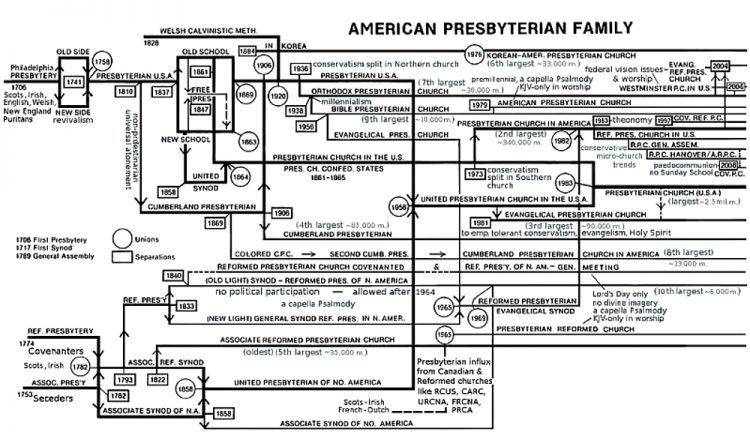
This is an important historical matter that deserves more attention. What was the relationship of Hodge’s Old School Presbyterianism to interdenominational endeavors like the Evangelical Alliance? And how did Hodge’s own opposition to the 1869 reunion of the Old and New School churches relate to endeavors like the Evangelical Alliance?

One way of answering that question is to notice that the sorts of cooperation in which mainline Protestants engaged after the Civil War, with the 1869 Presbyterian reunion paving the way, fueled ecumenical and social gospel endeavors that produced conservative opposition in the 1920s and 1930s. The Evangelical Alliance was the Moral Majority of its day, wanting immigrants to conform to Protestant norms, opposed to Romanism and communism (for starters), and it provided the vehicle for Protestants to unite to defend a Christian America. Those ecumenical impulses eventually produced the Federal Council of Churches in 1908 and the Plan for Organic Union in 1920, a proposal that would have united all mainline Protestants into one national church — the way Canadian Protestants at roughly the same time formed the United Church of Canada (1925).

What the period of interdenominational cooperation meant for Presbyterians was a 1903 revision of the Confession of Faith. That revision enabled the PCUSA to receive the Cumberland Presbyterians. Revision softened the Confession’s Calvinism to make room for a body that had left the church almost one hundred years earlier over objections to election and limited atonement. Presbyterians going along for the ecumenical ride included the president of Princeton Theological Seminary, J. Ross Stevenson, who presented the Plan for Organic Union to the 1920 General Assembly. J. Gresham Machen was a first-time commissioner to that Assembly and Princeton’s faculty’s opposition to that plan was start of a denomination wide controversy that forced the 1929 reorganization of Princeton Seminary (to make it tolerant of diversity) and the simultaneous founding of Westminster Seminary.

According to Lefferts Loetscher, who wrote a book with a title that frightened conservatives in the PCUSA and the PCUS, The Broadening Church (1954), the reunion of Old and New School in 1869 touched off developments that saw the PCUSA recover its historic breadth:

Once again in 1869, as in 1758, the Presbyterian Church was restoring unity not by resolving its differences, but by ignoring and absorbing them. Men who had been denounced as “heretics” in 1837 and who had professed no change of theological viewpoint in the interim were welcomed in 1869 as honored brethren. The result was, of course, that the theological base of the Church (especially of the former Old School branch of the Church) was broadened and the meaning of its subscription formula further relaxed. The gentlemen’s agreement of 1869 to tolerate divergent types of Calvinism meant that clear-cut definitions of Calvinism would not be enforceable in the reunited Church, and that it would be increasingly difficult to protect historic Calvinism against variations that might undermine its essential character. (8)

No one actually doubts whether the Old and New Schools were liberal. By almost every measure, both sides would come out as evangelical today (especially if you don’t apply the category of confessionalism). And yet, the breadth necessary for combining both sides also made room for a range of theological ideas that spawned liberalism.

In other words, breadth is not a good thing. Broadening churches are usually ones that become liberal.

So why is an organization that tolerates a diversity of “evangelical” convictions going to avoid that problems that usually surface when you recognize you need to be broader than your own communion is? The answer is not that the Gospel Coalition is going liberal. But an objection to the Gospel Coalition is that it does not have built in transparent mechanisms for identifying and disciplining liberalism.

And here are a couple ways that the Coalition’s breadth could collide with my own Presbyterian confessionalism. If I am a member of the Council and an officer in a confessional Presbyterian church, and my communion has a controversy over someone ordained who does not affirm the doctrine of limited atonement, will I receive support for my opposition to this erroneous officer from my friends and colleagues at TGC? Or what about the Federal Vision? If my church decides that Federal Vision is a dangerous set of teachings that need to be opposed, will my friends and colleagues at TGC support my church in its decision? Will people who write for Gospel Coalition even be clear about the covenant theology that is clearly taught in the Confession of Faith? Or will some of them think that my communion is too narrow in its understanding of Reformed Protestantism? Will they think that the proper response should be one to include a breadth of views in denominations because that is the norm for the Coalition? I could well imagine feeling some pressure to weigh matters before a presbytery or Assembly with my peers in the Coalition in mind? Will I disappoint them? Maybe that’s the wrong way of asking the question. What if they don’t care about the affairs of my communion the way I do? (Why should they care since they are not members or officers of my denomination?)

These are real dilemmas for anyone who has subscribed the Confession and Catechisms and been ordained in a Presbyterian communion while also belonging to an evangelical organization with standards different from the church. They are concerns that have been around for almost 160 years. The Gospel Coalition has not brought an end to church history.

How Did it Become So Easy to Get Out of a United Church?

In the United States, we put “the union” in USA. We are as much a republic as France, though we are still in our first iteration (some say Lincoln started our second republic) and the French are up to five. But in a few weeks, POTUS will deliver not “The State of the Republic” but “The State of the Union.” Union matters in part because the Civil War was so traumatic (and deadly). To consider separating from the U.S. is tantamount to the sin of schism. And yet Scotland can hold a referendum on leaving the UK or Britain can do the same to vote on leaving the European UNION! and no one fights a war to protect such unions, maybe because no one like an Abraham Lincoln was around to call these political arrangements “perpetual.”

The effects of political union on Christianity in the United States has been huge. Soon after the Civil War the Old and New School Presbyterian churches in the north reunited, with a large part of the rationale coming from imitating the Union. That merger launched a wave of ecumenical affiliations and networks that resulted in the Federal Council of Churches (1908) and a proposal to unite all Protestant communions in one United Church of the United States (comparable to the United Church of Canada). “United” has been a common part of Protestant church names, Presbyterian Church in the United States of America, Presbyterian Church in the United States, United Presbyterian Church in the United States of America, the United Churches of Christ, the United Reformed Churches, and the United Methodist Church.

Now comes word that the Methodists are about to break apart into two denominations, one traditionalist (at least about marriage and sex) and one progressive (at least about marriage and sex). All it takes these days is a vote. No theological battles, no warring pamphlets. No one has even mentioned the s-word of schism. Although, Episcopalians still do not look favorably on leaving the Anglican communion.

If J. Gresham Machen had tried that back in the 1920s, he would (and did) have faced charges of disloyalty, unfaithfulness, and disobedience. In fact, when he called for a separation of conservatives and liberals, it was as if he had suggested Social Security should be privatized:

whether or not liberals are Christians, it is at any rate perfectly clear that liberalism is not Christianity. And that being the case, it is highly undesirable that liberalism and Christianity should continue to be propagated within the bounds of the same organization. A separation between the two parties in the Church is the crying need of the hour.

Many indeed are seeking to avoid the separation. Why, they say, may not brethren dwell together in unity? The Church, we are told, has room both for liberals and for conservatives. The conservatives may be allowed to remain if they will keep trifling matters in the background and attend chiefly to “the weightier matters of the law.” And among the things thus designated as “trifling” is found the Cross of Christ, as a really vicarious atonement for sin.

Such obscuration of the issue attests a really astonishing narrowness on the part of the liberal preacher. (Christianity and Liberalism)

Something is changing out there. The old liberal internationalist order is breaking up. The election of Donald Trump was one sign, Brexit was another. The change also is having effects on the ecclesiastical world.

Doing Politics as a Presbyterian Has Always been Rough

From Michael Winship’s Hot Protestants (on the Presbyterian predicament after regicide and at the beginning of Oliver Cromwell’s government):

Some Presbyterians . . . focused their hope for reformation on their beheaded king’s nineteen-yer-old son Charles, in exile in the Netherlands. It was true that young Charles was a carousing, womanizing, anti-puritan, but to Presbyterians viewing him through rose-tinted glasses, all that this ungodliness meant was that their uncrowned but lawful sovereign was in the hands of evil counselors, like his father Charles I, his grandfather James I, and Elizabeth I had been. It was these counselors who kept him from recognizing puritanism’s truth. Presbyterians regarded themselves as bound by the Solemn League and Covenant to try to separate their prince from these wicked influences and get him into the safe hands of the covenanted Scots. More realistic Presbyterians recognized that this sow’s ear of a teenaged reprobate could not be transformed into a godly silk purse and that to think otherwise was in itself ungodly. The Scots, meanwhile, were horrified at the execution of their monarch Charles I by an army of English lawless heretics. The Scottish government immediately recognized this son as Charles II, king of Great Britain, Ireland, and France. But the Scots told him they would let him return to his kingdom of Scotland only on one heavy condition: Charles would have to sear to the Solemn League and Covenant. (141)

Makes President Trump look like a piece of cake.

When Congregationalists Were Woke (150 years ago)

Observations about the Boston Council of Congregationalists in 1865:

Even mild and bespectacled Alonzo Quint, who had just returned from service as a Union army chaplain, burst out in protest during a discussion of the civil rights of rebels, declaring them “uncommonly stupid and ignorant” and “unfit to come back and be trusted with a vote.” Quint let fly again at the delegation from Great Britain, who were present at the council. Still deeply angry over British support for the Confederacy, and egged on by hisses from other delegates, he denounced them as “always ready to follow the powerful, and always read to crush the weak,” “robbing in India [and] plundering in Ireland.”

Sometimes bitterness boiled over. A report on evangelization in the South prompted Samuel Pomeroy, who was both a Republican senator from Kansas and president of the Atchison, Topeka, and Santa Fe Railroad, to declare that it would suit him better “if we spoke out a little more plainly about hanging somebody.” When the delegates responded with applause, Pomeroy pressed on: “I am very willing to mingle our justice with mercy to the common people of the South . . . but it does seem to me it is time somebody was hung.” Pausing for yet another round of applause, he further advised that “some wholesome hanging, I think, would have settled this question in the minds of the American people long ago; and I do not believe that a convention, even of this character, composed largely of clergymen, — men who love forgiveness and mercy, — would not be harmed if it adopted a little stiffer resolution on this question.” (Margaret Bendroth, The Last Puritans, 55)

This makes Thabiti Anyabwile look restrained.