The Spirituality of the Church Means No Need for a White Paper on Israel

If you wonder why Roman Catholics in the public eye are a little sensitive about the review of the Edgardo Mortara memoir, it may have something do with the Vatican’s not-so-great history with European Jews or the state of Israel. Massimo Faggioli reminded readers of Commonweal of that vexed past:

Rome looks at the anniversary of the State of Israel with a complex perspective very different from that of Evangelical Protestants in the United States. In less than fifty years, the Vatican has moved from opposing the Zionist movement, to a de facto recognition of the State of Israel, to a de iure recognition. In 1947, the Vatican supported UN Resolution 181, which called for the “internationalization” of Jerusalem. In the encyclicals In multiplicibus curis (1948) and Redemptoris nostra (1949), Pius XII expressed his wish that the holy places have “an international character” and appealed for justice for the Palestinian refugees. In its May 15, 1948 issue, the official newspaper of the Holy See, L’Osservatore Romano, wrote that “modern Zionism is not the true heir to the Israel of the Bible, but a secular state…. Therefore the Holy Land and its sacred places belong to Christianity, which is the true Israel.” The description of Christianity as the “true Israel” (verus Israel) is a reminder that it wasn’t until decades after the Shoah that the church fully recognized the connections between supersessionism, theological anti-Judaism, and anti-Semitism.

Vatican II helped reconcile Catholicism and Judaism. But the relationship between the Vatican and the State of Israel remained complicated. During his trip to the Holy Land in Jordan and Israel in January 1964, Paul VI was very careful never to utter the word “Israel,” thus avoiding even the suggestion of recognition. The questions of who should control the Holy Land and whether to recognize the State of Israel were not addressed by Vatican II’s Nostra aetate, whose drafting was closely scrutinized not only by bishops, theologians, and the Vatican Secretariat of State, but also by diplomats, spies, and Arab and Jewish observers. Vatican II ended before the Six Day War of 1967 and the subsequent occupation of Palestinian territories, which permanently changed the geo-political situation in the Middle East. From then on, Israel was in firm possession of the whole of the Holy Land west of the Jordan River, including all the Christian holy places. This led the Vatican to modify its position in a pragmatic way. In an address to cardinals in December 1967, Paul VI called for a “special statute, internationally guaranteed” for Jerusalem and the Holy Places (rather than internationalization). We cannot know what Vatican II would have said if the occupation of the Palestinian territories and the capture of Jordanian-controlled East Jerusalem (and the Old City) had taken place before or during the council. But we do know that Arab states and Arab Catholic bishops and patriarchs at Vatican II were strongly opposed to anything that sounded like a recognition of the State of Israel.

Yowza!

But that is the sort of corner into which you can paint yourself when you are a church with temporal power (that is, the Papal States) and with assumptions that you should be at the “running things” table.

A spiritual as opposed to a political church doesn’t have such worries. Add some amillennialism and you can even free yourself from the evangelical Protestant habit of trying to determine the date of the Lord’s return by monitoring developments in the Middle East. Like the Confession of Faith says (chapter seven):

5. This covenant was differently administered in the time of the law, and in the time of the gospel: under the law, it was administered by promises, prophecies, sacrifices, circumcision, the paschal lamb, and other types and ordinances delivered to the people of the Jews, all foresignifying Christ to come; which were, for that time, sufficient and efficacious, through the operation of the Spirit, to instruct and build up the elect in faith in the promised Messiah, by whom they had full remission of sins, and eternal salvation; and is called the old testament.

6. Under the gospel, when Christ, the substance, was exhibited, the ordinances in which this covenant is dispensed are the preaching of the Word, and the administration of the sacraments of baptism and the Lord’s Supper: which, though fewer in number, and administered with more simplicity, and less outward glory, yet, in them, it is held forth in more fullness, evidence and spiritual efficacy, to all nations, both Jews and Gentiles; and is called the new testament. There are not therefore two covenants of grace, differing in substance, but one and the same, under various dispensations.

Now that the coming of the kingdom of grace is no longer bound up with a Jewish state, people are free to support Israel as an outpost of democracy without a whiff of immanentizing the eschaton.

If Gospel Coalitions Can’t Unite, What about Social Gospels?

Paul Carter is worried about factionalism dividing the unity of young Calvinists (largely identified with the Gospel Coalition). He’s also worried that the young Calvinists are in over the heads on politics:

The YRR movement has been fueled by some very admirable concerns: the desire to trust in Scripture, the desire to worship God as he is and not as culture dictates, the desire to reach the nations with the saving Gospel of Jesus Christ – these are noble and appropriate motivations. But mixed in with these there were no doubt some motivations of lesser quality.

There was a desire, for example, to be different than the generation that went before.

The Baby Boomers were indifferent to doctrine – by and large – and in bed with the Republican Party – metaphorically speaking. The YRR crowd wanted to make it clear that they were different. For the first 10 years or so of the movement this meant largely avoiding the political implications of the Gospel.

At T4G 18 that all began to change.

Politics was back on the table.

To a certain extent this was inevitable – the Gospel has social and political consequences. But the YRR movement does not appear prepared to facilitate that conversation. The movement appears poised to fracture under the pressure posed by long neglected issues and implications.

If Jesus taught his disciples to turn the other cheek, what need has a Christian to own a handgun?

If the Gospel has broken down the wall of hostility and made of us one new people – then why are we still talking about black and white?

If the mission of the church is to take the Gospel to the nations, then why are so many Christians opposed to immigration?

I’m not telling you what the answers are I’m just telling you what the questions are. Questions are being asked that for over a decade were not being asked and the weight of those questions threatens to derail the movement.

Here’s why the young Calvinists can’t avoid talking about race, immigration, and guns. Not only does The Gospel Coalition feed a steady diet of gospelly reflections about the latest headlines at Fox or MSNBC, but these people actually believe that the Bible speaks to government policies on race, immigration, and guns. They have a comprehensive w-w that requires the Bible to speak – period – totally – period – to all of life – period (thanks Aaron Sorkin). The spirituality of the church is not an option.

As much as critics might want to accuse defenders of the spirituality of the church of racism, they should actually consider that a reduced scope for Scripture and the church is much like classical liberalism. Government is supposed to be limited in its operations; in the case of the United States the Constitution was supposed to inform that limitation. But for Fascists, Communists, and some aspects of Progressivism, a limited government won’t get done all you want government to do. Plus, a government that provides mere basic services won’t generate the aspirations that people need to make a nation great or exceptional.

The same goes for the transformationalizationalists. A reduced footprint for Christianity is not good enough. The church needs to do more than proclaim the gospel, conduct faithful worship, provide discipline, and care for widows and orphans (with 1 Tim. 5 scrutiny). How could Christianity ever make people go “wow” if the church restricted what it did to word, sacrament, and discipline (and let all the other agencies of a civil society pitch in on the aspirational stuff)?

In the heart of most people beats the pulse of a Yankee fan, which helps to explain Kuyperianism, Youthful Calvinism, and Roman Catholicism. Comprehensivalists all.

Anabaptist Roman Catholics

Roman Catholic apologists are currently leaving a lot out of their presentation of Christianity. Here’s another where the author seems to imagine a Roman Catholicism that transcends the fall of Rome, the rise of the Holy Roman Empire, and Christendom. Is Roman Catholicism just simple Christians trying to follow Jesus?

Why are self-described “trad” Catholics prone to nostalgia? The typical mistake is to conflate the traditions of the Church with the traditions of the broader society. These are very different things; the Church is an ark afloat on a dangerous sea, which preserves its own internal traditions in part with walls that prevent it from being deluged by secular practices and mores. 1 Peter thus connects Catholic rootlessness and homelessness with a rejection of human political traditions, enjoining Catholics to “live out the time of your exile here in reverent awe, for you know that the price of your ransom from the futile way of life handed down from your ancestors was paid, not in anything perishable like silver or gold, but in precious blood …” Catholicism is not Burkeanism. Because Catholics are exiled in the world, they can ultimately have no attachment to man’s places and traditions, including political traditions. They can have no final affection for the misty English landscape that always stands just behind Scruton’s prose, for Reno’s polite distinction of liberal tradition and liberal creed, for the bipartisan fedora-hatted governance of Douthat’s postwar golden age, or even for Ahmari’s era of the triumph (albeit short-lived) of liberal democratic freedom after 1989.

Ahmari acidly mocks a certain strand of Catholic integralism as “hobbit village” nostalgia. In this Ahmari is partly unfair (the rural village and the integral City are very different ideals) but partly correct. After the collapse of the postwar rapprochement with liberalism, integral Catholicism can only go forward, with the hope of translating the old principles into new settings and institutional forms, creating an altogether new order. But Ahmari, like Douthat, Reno, Scruton and the authors of the Paris Statement, ought to apply that same acid-wash to his own nostalgic views as well.

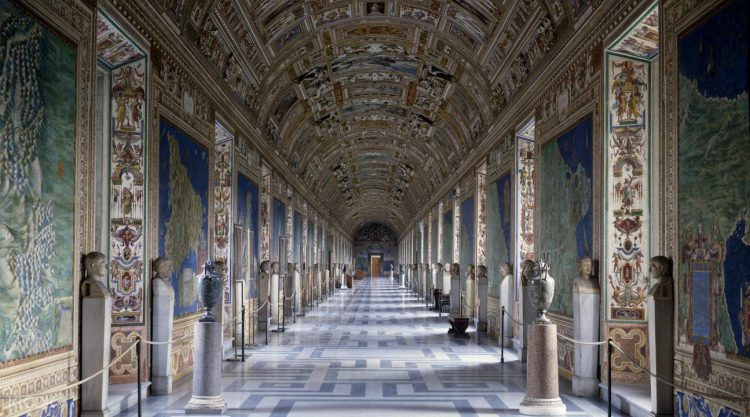
Roman Catholics in exile with all that stuff in Rome (and all those museums)?

Wow!

I’ll See Your World Order and Raise You One Principality and Two Powers

Isn’t this what caused mainline Protestantism to go south, namely, identifying the church with the work of building human civilization? George Weigel explains:

If there’s anything Catholics in the United States should have learned over the past two decades, it’s that order—in the world, the republic, and the Church—is a fragile thing. And by “order,” I don’t mean the same old same old. Rather, I mean the dynamic development of world politics, our national life, and the Church within stable reference points that guide us into the future.

Didn’t the apostle Paul (saint if you will) think the church had/has bigger fish to fry?

11 Put on the whole armor of God, that you may be able to stand against the schemes of the devil. 12 For we do not wrestle against flesh and blood, but against the rulers, against the authorities, against the cosmic powers over this present darkness, against the spiritual forces of evil in the heavenly places. 13 Therefore take up the whole armor of God, that you may be able to withstand in the evil day, and having done all, to stand firm. (Ephesians 6)

Russia, neo-liberalism, social justice warriors have nothing on sin, the flesh, and the Devil.

Of course, political order is a good thing, so good that churches need it to function — it may actually be that political order precedes church order rather than the other way around. But if the church sees its mission as supporting political order, it may seriously underestimate the amazing work God called ministers of the word to do. And that perspective might prevent a reviewer from writing this about a book on the nineteenth-century papacy:

Whatever misgivings one may have about the First Vatican Council, one does not need to squint to see a providential hand in Pastor Aeternus. As secular governments continue to chip away at different forms of civil society, especially religious forms, a strong papacy can serve as a powerful counterweight.

Counter-weights to secular governments chipping away at civil society? Isn’t that why we have The New York Times?

If God So Loved the World, Why is The West So Special?

In his review of Ross Douthat’s new book, Rod Dreher makes his bracing claim:

any Christian or secular conservative who cares about the stability of Western civilization cannot be indifferent to the fate of the institution that, more than any other, created it. The Orthodox Church is alien to the West, and Protestantism has become far too fragmented and rootless to hold things together.

That is a big burden for Rome to bear. But it also represents a much bigger problem. For a church that ministers a gospel based on a person (and God) who never set foot in the West, your identification with the West may be the hugest (thanks Bernie!!) version of cultural Christianity eh-veh. (Imagine Mormonism without upstate New York and you have a speck of Rome’s burden.) I understand that many Protestants envy Rome’s cultural and historical footprint. Some even become Roman Catholic for the wide swath the communion appears to give.

But, non-Western lives matter too.

On the flip side, when you have your religious identity so bound up with a culture or civilization, you set yourself up for the kind of inevitable cultural adaptation that Protestant modernists created and embraced. You need to do this to keep up with the culture of which you are part since civilizations have never been one-way, top-down endeavors. Today it’s emperors, tomorrow it will be senates and republics. Today it’s Thomism, tomorrow its Kantianism. Today it’s Baroque, tomorrow it’s Bauhaus.

Even more of a problem: today it’s hell, tomorrow its annihilationism. So when Pope Francis flirts with denying the existence of hell, Michael Brendan Dougherty notices about today’s Vatican what fundamentalists used to observe about Protestant modernists:

Because, as I write on Maundy Thursday, his favorite Italian journalist, Eugenio Scalfari, is reporting his latest conversation with Francis. In his reconstruction of their conversation, Scalfari has the pope saying that souls who have not repented and therefore have not received God’s pardon simply scomparire — disappear, in English. In other words, there is no hell. The souls of the damned aren’t damned, they just are no more.

The Vatican promptly put out a statement that the interview is a reconstruction of their conversation, not a series of direct quotes. But the Vatican also pointedly issued no specific denial of any of the pope’s words. Amazing to say it, but that’s typical. In essence this constitutes an invitation to disbelieve whatever you want. Predictably, Catholic media who rely on the pope’s star power and the appearance of impeccability put out stories noting that the pope has often talked about hell in the past and that, by the way, Scalfari is an atheist and unreliable narrator. Frankly, I find the Vatican’s position revoltingly underhanded. It refuses to tell us whether the pope said these things, and encourages us to believe what we want. It incentivizes the pope’s defenders to defame Scalfari as a fraud and an underhanded atheist. What kind of game is this? It shouldn’t be hard to just tell the truth about this, yet it is.

This is the fifth interview the pope has done with Scalfari, and far from the first scandal to come out of it. It is impossible to believe that someone as earthy as Francis is still innocent of what’s happening here. Yes, he’s talked about hell as a reality before. But the whole intellectual culture of Catholic seminaries and formation is filled with doublespeak. Doctrines are proclaimed in creedal statements, and then their contents are emptied in theological essays, or given a completely opposite interpretation in “practical” application. I can’t possibly pretend any longer that Francis is immune from this culture of deception, including self-deception.

Do Muslims and Jews Have This Problem?

In the mood of the season, I found a Youtu.be video with Frank Sinatra’s rendition of Hark, The Herald Angels Sing.

Maybe yours doesn’t but my mind boggled (again). Frank Sinatra, the singer alluded to in The Godfather, with real ties to the Rat Pack, and no model of family mores, is singing Charles Wesley (one of the original Methodists’ better verses). Again, the mind boggles.

This is how familiar Christmas is for Americans (and people in the West more generally). Not only did Sinatra sing Wesley. But producers in the recording industry believed that Frank singing a batch of Christmas songs would be a revenue enhancer. And these entertainment geniuses decided not only to include some of the secular and corny songs, like Jingle Bells, but also the sorts of material that Anglican cathedral choirs include in Lessons and Carols services.

Is your mind boggling yet?

Do Muslims have songs to sing about the birth of Muhammad? Do Jews sing about the birth of Abraham? One way to tell is to live in a Muslim or Jewish society during the holy days? How much religious music seeps out into the larger commercial world?

I don’t know (and am willing to learn from readers).

But one of the things that makes Christmas great (in all senses of the word) is that recording celebrities have put out so many albums and cds devoted to the birth of Jesus.

For the New Schoolers out there who like to chalk such cultural expressions up to the church’s (which one?) transformatalistizational powers, the pervasiveness of Christmas cheer is a sign of the longing that many people have the good news that the nativity narratives begin. Yes, we need more Christ and less Frank in Christmas, but for Americans to devote the better part of six weeks every year to the celebration of Christmas is an indication of Christianity’s abiding appeal.

For Old Schoolers, though, the relentless persistence of Christmas in all its schmaltz and devotion is an indication of how little discomfort Christians feel about making their own holiday an affair for Muslims, Jews, and secularists to enjoy or endure. Imagine thinking that Frank Sinatra’s Christmas albums would sell in Istanbul.

At the same time, Old Schoolers who know the history of the church calendar should not blame Roman Catholics for the ubiquity of Christmas sales and music. Protestants in the United States did not observe Christmas (minus some Episcopalians and Lutherans) until the late nineteenth century when department store entrepreneurs like New School Presbyterian, John Wanamaker, connected the dots between God’s gift to man in sending his son, and the gifts that Americans could give to friends and family to participate in that incarnational spirit.

Protestants made the world safe for Frank Sinatra singing Wesley, not the bishops.

If Daniel Could Serve a Pagan King, Why Can’t Old School Presbyterians vote for Bill Clinton?

Kevin DeYoung offers some perspective for Alabama voters (though he never mentions Roy Moore):

9. Am I casting my vote for someone who will damage the reputation of Christ and may harm the cause of Christ in the world? While it is often good to vote for other Christians, we have to consider how someone conducts himself in public as a representative of Christian convictions, ethics, and character.

10. Am I willing to consider that thoughtful Christians may answer some of these questions differently than I would? I certainly have my opinions about how these questions might apply in specific instances, but more than a particular vote, I want to encourage Christians to think critically and strategically about their civic participation. There is more to consider than majorities for our side and defeat for theirs.

I am glad he follows point 9 with point 10 because Daniel, the prophet, would have had a hard time answering the ninth question. Not only could Daniel not vote, but he served a King who worshiped and served false gods. Sure, Daniel resisted the king in some ways, but he also excelled in pagan learning (and so distinguished himself for public service):

17 As for these four youths, God gave them learning and skill in all literature and wisdom, and Daniel had understanding in all visions and dreams. 18 At the end of the time, when the king had commanded that they should be brought in, the chief of the eunuchs brought them in before Nebuchadnezzar. 19 And the king spoke with them, and among all of them none was found like Daniel, Hananiah, Mishael, and Azariah. Therefore they stood before the king. 20 And in every matter of wisdom and understanding about which the king inquired of them, he found them ten times better than all the magicians and enchanters that were in all his kingdom.

If not obeying the first table of the law is a big deal — and we’re not simply talking about images of Christ — how could a faithful believer excel in pagan literature and wisdom (which by Neo-Calvinist standards had to be worse than public schools) and then also serve a king whose cult involved idolatry?

I get it, Daniel did eventually disobey, which is music to the socially righteous warriors ears (thanks to one of our Southern correspondents):

We might hide our motives or blanket them in a veil we call authority or expertise. We will always become like the things we worship. Daniel writes about three men who stood in bold ambivalence to the foolishness of a conqueror king, because he was not their true king. They knew who they worshipped, and the more they lived like Him the closer they came to His presence.

Resist!

But that perspective on Daniel entirely misses the prophet’s assimilation to a regime tainted throughout by blasphemy and idolatry. Again, if 1789 affected all of European society, imagine the intersectionality of Babylonian gods and society. What did Daniel do? He cooperated as much as possible.

Don’t resist!

Honor (even the pagan megalomaniac)!

13 Be subject for the Lord’s sake to every human institution, whether it be to the emperor as supreme, 14 or to governors as sent by him to punish those who do evil and to praise those who do good. 15 For this is the will of God, that by doing good you should put to silence the ignorance of foolish people. 16 Live as people who are free, not using your freedom as a cover-up for evil, but living as servants of God. 17 Honor everyone. Love the brotherhood. Fear God. Honor the emperor.

In which case, the lesson is that as long as a Christian does not worship the senator, create statues of him for worship, pray to the senator, hand out the senator’s voting guide on Sunday, still honors his parents while working or voting for the senator, is not the senator’s hit-man, doesn’t lust after the senator’s wife, doesn’t embezzle for the senator, doesn’t lie to or for the senator, and doesn’t envy the senator, or his wife, or servants, or property, the a Christian can vote for the senator.

But if you want to be a pietist about it and consider primarily what a vote says (all) about you, then chances are you have the makings for being an Anabaptist.

Rod Reading Tim

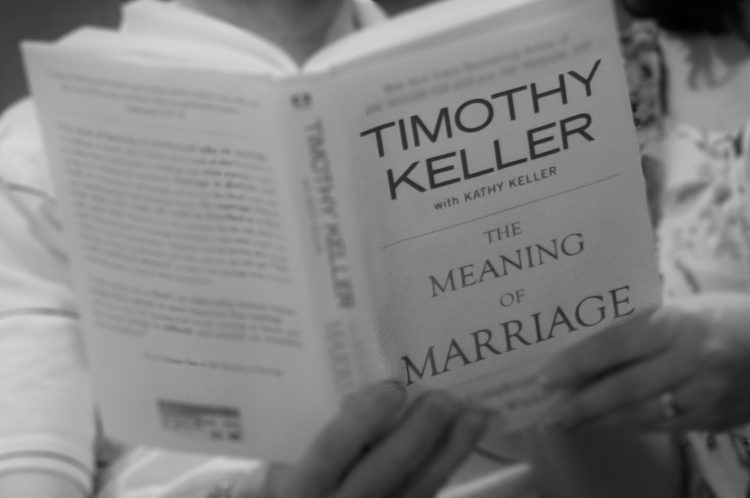
Rod Dreher doesn’t detect much daylight between the Benedict Option and Tim Keller even though I’ve tried to describe it. Here’s Keller (from Rod) on the West:

The crazy Christian gospel, so sneered at by the cultural elites that day, eventually showed forth its spiritual power to change lives and its cultural power to shape societies. Christianity met the populace’s needs and answered their questions. The dominant culture could not. And so the gospel multiplied.

Do we have Paul’s courage, wisdom, skill, balance, and love to do the same thing today in the face of many sneering cultural leaders? It won’t be the same journey, because we live in a post-Christian Western society that has smuggled in many values gotten from the Bible but now unacknowledged as such. Late modern culture is not nearly as brutal as pagan culture. So the challenges are different, but we must still, I think, plunge into the agora as Paul did.

Here’s Rod’s rendering:

Does it surprise you that I agree with this? I’m still looking for ways in which Tim Keller and I substantively disagree on cultural engagement. If you know of any, please let me know — I’m serious about that. What I emphasize in The Benedict Option is that if we Christians are going to do that in a hostile, post-Christian public square, we have no choice but to take a step back from the public square to deepen our knowledge of the faith, our prayer lives, and our moral and spiritual discipline.

One difference right off the bat is that Keller is not pessimistic about the contemporary world, the way Rod is. That’s why it had to come as a surprise when Princeton Seminary thought Keller was too conservative and should not receive the Kuyper Prize.

Yet, Keller has other readers. Rod quotes one:

I’m somewhat favorably disposed to Tim Keller’s ministry, and even attended his church for a season. But that movement is likely to head off in its own direction. The current alliances that make up evangelicalism were forged in an era before liquid modernity. There is no reason why we should expect those alliances to continue to make sense in the very different social context that we face today. And we have to avoid the trap of conflating Christian orthodoxy with practical Christian wisdom. Families raising kids need something very different from a church community than what I need, as a 30-something professional who travels 50% of the time, usually in Asia….

Liquid modernity poses a certain challenge to Western rules-based cultures. Things change faster than our ability to develop rules to address certain situations. And that places a degree of stress on existing institutions, requiring them to be thicker than they were in the past. But it’s hard for institutions to be both thick and broad. For thickness to work, there has to be a high degree of overlap in people’s life situations. Demographic differences matter more.

I’m actually an advocate of an evangelical break-up. I believe that the Benedict Option is necessary. But the Benedict Option is going to look very different for different people. My fear is that evangelicalism ends up targeting the largest market, middle-class white suburbanites with kids, and castigated everyone else as a sinner. One need not look to hard for criticisms of Tim Keller’s efforts to reach out to people like me. And it disappoints me that Keller is largely silent in the face of those criticisms. If Christianity is to survive in an age of liquid modernity, it’s going to take more than suburban mega-churches.

Another difference then is that Rod thinks modernity is a force that hurts Christianity while Keller, like Pope Francis, tries to come along side moderns.

Still one more reader of Keller that Rod should enter into his Redeemer NYC spreadsheet:

Over the past decade or so, evangelical millennials like myself and my peers (and possibly even you), could be found across the country, repenting of our former fundamentalist ways.

We’ve put away our moralistic understanding of Christianity. We’ve reclaimed what is essential: Jesus, and his gospel. We’ve tossed aside our simplistic, and less than nuanced answers to those who criticize our faith and worldview.

Aided by an Internet-powered, Information Age, we have set out to re-engage culture in a fresh new way, following Tim Keller and Russell Moore on one end of the spectrum, or Rob Bell and Rachel Held Evans on the other.

As those who will soon lead the church, we are convinced that we are called to a new vision of cultural engagement and mission. . . .

Therefore, we’ve raised our sensitivity to xenophobic nationalism, misogyny, gay-bashing, microaggressions, and anti-intellectualism. For us, being uninformed and un-’woke’ is shameful and most harmful to our Christian witness.

Instead, we have taken up the mission to winsomely engage the brightest of thinkers in order that they might believe, and to prophetically rebuke the most narrow-minded of evangelicals in order that they might think.

We see far too little cultural influencers operating out of a biblical framework. And we’ve seen too many of our friends leave the faith due to overly simplistic, unsatisfying, and stale apologetic answers to their genuine contemporary questions.

We want to articulate, in a Keller-esque fashion, an attractive “third way,” between the liberals and the conservatives, between the irreligious and the religious. And in doing so, we hope to find a better place to stand, where we are neither apostates nor anti-intellectuals, neither prodigals nor older brothers.

So we continue to study Scripture and affirm its absolute authority, while still paying close attention to contemporary culture, the media, and the academy, seeking common grace insights from them, and wrestling with how to interpret and make sense of their findings.

We heed Peter’s exhortation that we be prepared to make a defense to all, while reminding ourselves of James’ admonition to be quick to listen, and slow to speak, even when it comes to a secular culture such as ours.

We don’t settle for just being Christians, but we seek to be informed, knowledgeable, and sensitive Christians. And by God’s grace, we sometimes do find a way forward, a third way, in which we actually become “believers who think,” equipped to interact with “thinkers” who don’t believe.

And discovering a “third way” feels good. It’s the rewarding feeling of progress, and confidence — confidence in the fact that we’ve found more thoughtful and persuasive answers than the ones our Sunday School teachers gave us 20 years ago. But it’s also the feeling of transcendence, and if we’re not careful, arrogant superiority.

Thinking Christians engaged with the world. That may not have been Paul’s advice to Timothy but it’s a page right out of Harry Emerson Fosdick:

Already all of us must have heard about the people who call themselves the Fundamentalists. Their apparent intention is to drive out of the evangelical churches men and women of liberal opinions. I speak of them the more freely because there are no two denominations more affected by them than the Baptist and the Presbyterian. We should not identify the Fundamentalists with the conservatives. All Fundamentalists are conservatives, but not all conservatives are Fundamentalists. The best conservatives can often give lessons to the liberals in true liberality of spirit, but the Fundamentalist program is essentially illiberal and intolerant.

The Fundamentalists see, and they see truly, that in this last generation there have been strange new movements in Christian thought. A great mass of new knowledge has come into man’s possession—new knowledge about the physical universe, its origin, its forces, its laws; new knowledge about human history and in particular about the ways in which the ancient peoples used to think in matters of religion and the methods by which they phrased and explained their spiritual experiences; and new knowledge, also, about other religions and the strangely similar ways in which men’s faiths and religious practices have developed everywhere. . . .

Now, there are multitudes of reverent Christians who have been unable to keep this new knowledge in one compartment of their minds and the Christian faith in another. They have been sure that all truth comes from the one God and is His revelation. Not, therefore, from irreverence or caprice or destructive zeal but for the sake of intellectual and spiritual integrity, that they might really love the Lord their God, not only with all their heart and soul and strength but with all their mind, they have been trying to see this new knowledge in terms of the Christian faith and to see the Christian faith in terms of this new knowledge.

For anyone who detects an example of the genetic fallacy, please write a note to Pastor Tim and ask him to explain how he avoids the errors that modernists like Fosdick committed.

Roman Catholics at Plymouth Rock?

In the department of strange bedfellows comes George Weigel’s praise for the Museum of the Bible:

On September 29, 1952, the publication of the complete Revised Standard Version of the Bible was celebrated at the National Guard Armory in Washington, D.C., and the principal speaker was the U.S. Secretary of State, Dean Acheson. The son of the Episcopal bishop of Connecticut, Acheson movingly described the ways in which the King James Bible, which the new RSV was to supplant, had once shaped American culture and our national life:

In the earliest days in the Northeast, the Book was All. The settlers came here to live their own reading of it. It was the spiritual guide, the moral and legal code, the political system, the sustenance of life, whether that meant endurance of hardship, the endless struggle against nature, battle with enemies, or the inevitable processes of life and death. And it meant to those who cast the mold of this country something very specific and very clear. It meant that the purpose of man’s journey through this life was to learn and identify his life and effort with the purpose and will of God.

That biblical vision helped form the bedrock convictions of the American idea: that government stood under the judgment of divine and natural law; that government was limited in its reach into human affairs, especially the realm of conscience; that national greatness was measured by fidelity to the moral truths taught by revelation and inscribed in the world by a demanding yet merciful God; that only a virtuous people could be truly free.

Of course, the U.S. is a free country and anyone can assemble the past in ways consoling.

But does anyone else feel a certain discomfort with a Roman Catholic recommending the Bible without also mentioning the objections that sometimes Bishops registered against Bible readings in public schools without comment? The United States would not have as many parochial schools as it does if not for Bishops who worried about sending children to public schools where teachers read the Protestant version of the Bible.

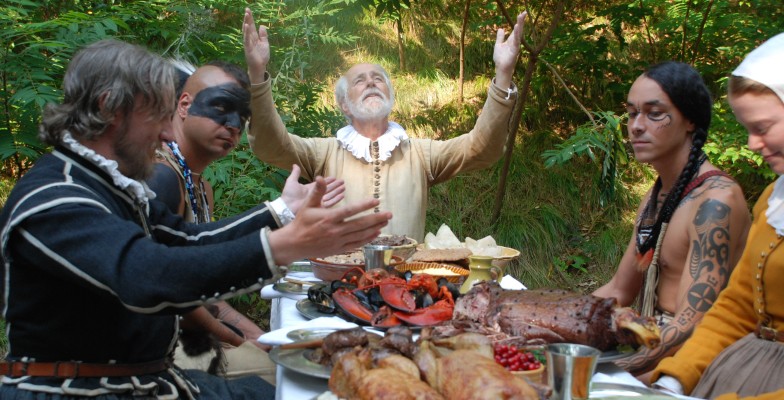
Not to be missed is the odd relationship between the Bible and the founding. If the settlers who came to America and launched the tradition of Thanksgiving wanted a society with a biblical vision at its bedrock, don’t you also have to mention that those same Bible-only Christians were a tad jittery about including Roman Catholics in the nation that emerged from their colonial enterprises?

This may be why some Roman Catholic political theorists are uncomfortable with Roman Catholics getting comfortable with the founding.

Before Calvin

What would happen if critics of 2k had to think about the relationship between the church and magistrates before emperors got religion (and who knows if they grasped Christianity for the right reasons)?

In the current issue of New Horizons, David VanDrunen explains where 2k reflection on the state starts — not in 1536 but in 33.

The apostolic church lived under civil magistrates who did not confess Christ and sometimes persecuted people who did. Yet New Testament texts such as Romans 13:1–7 and 1 Peter 2:13–17 taught that God had ordained civil magistrates and that believers ought to honor and submit to them.

Following the Roman emperor Constantine’s conversion to Christianity in the early fourth century, the status of Christians in society changed. The contemporary church historian Eusebius, in his Ecclesiastical History, described the Roman Empire under Constantine as the fulfillment of Old Testament texts prophesying that war would cease and the wicked would be cut off: Constantine was realizing Christ’s kingdom on earth. Shortly thereafter, Augustine (354–430) provided a much more modest view. In his City of God, Augustine described Christians as sojourners, on a pilgrimage in this world toward the heavenly city. He acknowledged that Christians should participate in their political communities, but he taught that all earthly rulers and empires are provisional, not to be confused with Christians’ eschatological hope.

In the fifth century, the “Christendom” model emerged. As described by Pope Gelasius I, there are “two powers” that exercise authority under God in this world: the emperor has authority over “temporal affairs” for the sake of “public order,” and the priest controls the sacraments and “spiritual activities,” toward the goal of “eternal life.” Priest and emperor should submit to one another in their proper spheres.

This model was helpful in important respects. It affirmed that civil governments are legitimate, ordained by God. It also taught that their jurisdiction is limited and subject to God’s authority.

But notice the problems:

First, it essentially wed the church to the state in a confessionally unified Christian society. The New Testament, however, never suggests that Christians should expect or seek such a society.

Second, the state was expected to enforce the church’s claims about doctrine and worship by punishing dissenters with the sword. This reality sat uncomfortably beside New Testament teaching that Christ’s gospel and kingdom do not advance by the weapons of this world. Many who sought to reform the church—such as John Hus in the fifteenth century—would meet untimely ends as victims of this church-state alliance.

So long as a Protestant city council supports our guy, John Calvin, we forget about the problems of a religious magistrate? It’s our civil government.

And so long as that Cadillac CTS that only gets 13.8 mpg is a comfortable ride to church, we forget about the price of gas or limits on fossil fuels? It’s our gas guzzler.