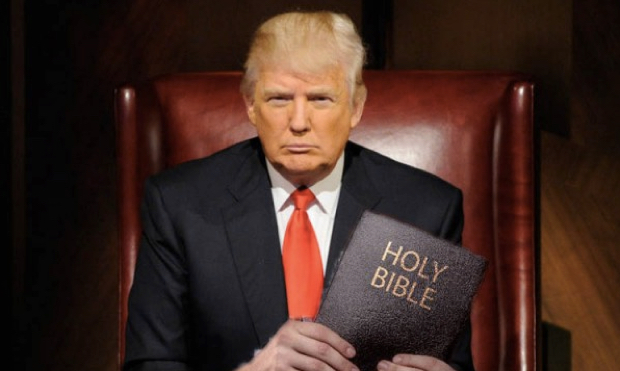
Is Donald Trump Mainstreaming Apostasy?

While Mike Horton zeroes in on the personalities associated with Word of Faith who will be speaking or praying (or speaking in tongues) and the presidential inaugural, not to be missed is the rest of the clergy assembled. Among them, Cardinal Timothy Dolan:

Dolan will be the first Catholic to take part in a presidential inauguration in 40 years, since President Jimmy Carter’s in 1977, the Religion News Service reports. Rabbi Marvin Hier will be the first Jewish clergy involved since Ronald Reagan’s in 1985.

His inclusion “may reflect, in part, homage to the Jewish faith of Trump’s daughter and son-in-law,” Black said. Eldest daughter Ivanka Trump, a convert to Orthodox Judaism, is moving to Washington and expected to serve as a stand-in to the First Lady.

The broad faith representation may also reveal a desire to please the American electorate, more pessimistic about the president-elect than any of his recent predecessors. According to the Pew Research Center, Trump’s overall campaign grade is the lowest among any presidential candidate—winning or losing—since it began collecting data in 1988.

White is the only pastor from Trump’s group of evangelical faith advisors scheduled to speak at the inauguration. The Mormon Tabernacle choir is slated to perform. Trump has downplayed the celebrity factor in his confirmed guest list. So far, Carter is the only former president expected to attend.

Horton puts his objection this way:

Thanks to the First Amendment, Christian orthodoxy has never been a test for public office. But it is striking that Trump has surrounded himself with cadre of prosperity evangelists who cheerfully attack basic Christian doctrines. The focus of this unity is a gospel that is about as diametrically opposed to the biblical one as you can imagine.

But is it fair to say “surrounded”? Kevin Kruse, who teaches at Princeton puts it this way:

“The traditional tasks of an inaugural—bringing the country together and setting an uplifting and unifying agenda for the future—are even more pressing for president-elect Trump,” said Kruse. “And that, I suspect, is why he’s enlisted a much larger lineup of clergy to speak at the inauguration than his predecessors. He knows he needs their help in elevating the tone and, in turn, elevating his presidency as well.”

Either way, a confessional Protestant could object to every religious figure scheduled for the inauguration. Especially in the year that Protestants commemorate the Reformation, shouldn’t Calvinists be up in arms about a Roman Catholic bishop at the event? Why single out Paula White? Looks too much like Megyn Kelly?

Which Bible, Whose Public School?

Are U.S. Christians really comfortable with bringing prayer and Bible reading back to public schools? If so, what do they do with this passage (which was part of yesterday’s Scripture readings)?

As they were making their hearts merry, behold, the men of the city, worthless fellows, surrounded the house, beating on the door. And they said to the old man, the master of the house, “Bring out the man who came into your house, that we may know him.” And the man, the master of the house, went out to them and said to them, “No, my brothers, do not act so wickedly; since this man has come into my house, do not do this vile thing. Behold, here are my virgin daughter and his concubine. Let me bring them out now. Violate them and do with them what seems good to you, but against this man do not do this outrageous thing.” But the men would not listen to him. So the man seized his concubine and made her go out to them. And they knew her and abused her all night until the morning. And as the dawn began to break, they let her go. And as morning appeared, the woman came and fell down at the door of the man’s house where her master was, until it was light.

And her master rose up in the morning, and when he opened the doors of the house and went out to go on his way, behold, there was his concubine lying at the door of the house, with her hands on the threshold. He said to her, “Get up, let us be going.” But there was no answer. Then he put her on the donkey, and the man rose up and went away to his home. And when he entered his house, he took a knife, and taking hold of his concubine he divided her, limb by limb, into twelve pieces, and sent her throughout all the territory of Israel. And all who saw it said, “Such a thing has never happened or been seen from the day that the people of Israel came up out of the land of Egypt until this day; consider it, take counsel, and speak.” (Judges 19:22-30 ESV)

Or are those who want more Christianity in the public sector more comfortable with Mr. Jefferson’s Bible, the one that leaves parts like Gibeah’s crimes on the editing room floor?

Total Lordship of Christ = Christ Tells Us Everything

Thanks to another of our southern correspondent comes Doug Wilson’s latest sovereignty-of-God brag. He faults Russell Moore for only wanting a Christian public square about race but not about sex:

The theological problem has to do with how we define righteousness for the public square. Russell Moore doesn’t want to build a Christian nation except on racial issues, which is like wanting a nation to be Christian every day between 9:45 am and 11:12 am. If Jesus is Lord of all, we must listen to Him on racial issues in the public square. If He isn’t, then we don’t have to. What we don’t get to do is pick and choose. Under the new covenant there is no unique chosen nation, of course. In the new covenant, every nation must be discipled, and there is no exceptionalism there. But whether you want righteousness in tiny slivers, or righteousness across the board, you still have to define it.

Sorry, Pastor Wilson, but you are picking and choosing all the time. Welcome to the novos ordo seclorum; find your inner 2k self. What is Christ’s will about the military? Read the Old Testament for “holy” war and invade Mexico? What does Christ reveal about idolatry and blasphemy? Send Jews and Muslims packing (the way King Ferdinand and Queen Isabella did)?

Theonomists are all bluff. They don’t virtue-signal. They obedience-signal. Worse, they know they’ll never have to live with their braggadocio.

Jesus for President

He’s about the only one left when it comes to a presidential candidate with character. Alan Noble laments:

In just five years, white evangelicals went from overwhelmingly denying a division between private and public character to overwhelmingly embracing the division. It is very difficult for me to imagine an explanation of this shift other than the candidacy of Donald Trump.

I do not want to speculate here on what exactly in Trump’s candidacy caused this shift in white evangelicals. Most of the possibilities are grim and warrant their own thorough exploration. But right now evangelicals can turn back to our traditional teaching that character matters and correct the mistake of supporting Donald Trump.

He concedes that Hillary has issues (which is why Jesus is left standing in that great day):

Some evangelical leaders have claimed that we just have two morally flawed candidates. They point to Hillary Clinton’s flawed character and her sins and conclude that since they are both sinners, we have to simply judge them on their policies. But that does not reflect a Christian conception of character and behavior.

Like many evangelicals, I cannot vote for Clinton because I do not believe she would be a good president for my neighbor. Since I believe that life begins at conception, Clinton’s intention to repeal the Hyde Amendment so that federal funds can be spent on abortions reveals a profound flaw in her character.

But her flaw does not magically make Trump’s flaws any less grievous.

What I enjoy about Trump’s candidacy as someone with a seat in the theater of American electoral politics, is how fundamentalists are now in fashion for both evangelicals and Democrats:

Having grown up as a conservative evangelical during Bill Clinton’s administration, I believe that character matters. This is what leaders on the religious right taught me when Clinton was caught in his affair with Monica Lewinsky. At the time, some people tried to shrug off Clinton’s infidelity as a private matter: Of course he shouldn’t have done it, but this didn’t affect his ability to be president. But conservative evangelicals rejected this logic, and they were right.

In response to President Clinton’s infidelity, the Southern Baptist Convention passed a “Resolution on the Moral Character of Public Officials”:

Therefore, be it RESOLVED, That we, the messengers to the Southern Baptist Convention, meeting June 9-11, 1998, in Salt Lake City, Utah, affirm that moral character matters to God and should matter to all citizens, especially God’s people, when choosing public leaders; and

Be it further RESOLVED, That we implore our government leaders to live by the highest standards of morality both in their private actions and in their public duties, and thereby serve as models of moral excellence and character; and

Be it finally RESOLVED, That we urge all Americans to embrace and act on the conviction that character does count in public office, and to elect those officials and candidates who, although imperfect, demonstrate consistent honesty, moral purity and the highest character.

So is Noble ready for the isolation that always comes to evangelicals who scold modern America for its sins? I thought evangelicals wanted a seat at the table, and fashioned a kinder, gentler Protestantism (than fundamentalism) to get there.

Now Falwell and Co. were right? Who knew?

Selective Implicit Bias

The journalistic treatment of the Larycia Hawkins controversy at Wheaton College is out (written by a lapsed Orthodox Presbyterian no less). Once again evidence of academic naivete cloaked in a pose of dissent and asking hard questions emerges.

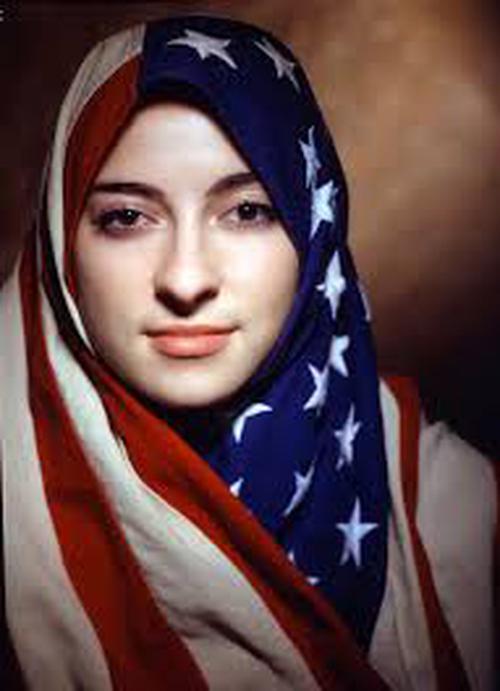
I have no problem with Dr. Hawkins questioning jingoistic American patriotism or American Protestants who wrap themselves in the flag. American civil religion is national patriotism at it worst and Protestants have been especially egregious in their fawning over American greatness (though for the last 30 years they have had lots of help from Neuhaus Roman Catholics). But if you challenge Americanism, don’t you also have to question Islam?

A year or two after arriving on campus, [Hawkins] developed a distaste for performances of patriotism and decided to stop saluting the flag and singing the national anthem. “I feel very strongly that my first allegiance is to a different kingdom than an earthly kingdom,” she told me. “It’s to a heavenly kingdom, and it’s to the principles of that kingdom.” Evangelicals tend to emphasize righteousness on an individual scale, but Hawkins was becoming attracted to theological traditions that emphasize systemic sin and repentance.

In particular, she was reading a lot of black liberation theology, a strain of thinking that emerged from the Black Power movement of the 1960s. Jesus’ central mission was to liberate the oppressed, the philosophy argues, but mainstream American Christianity is beholden to irredeemably corrupt “white theology.” The tone of black liberation is often angry — think of Jeremiah Wright’s infamous “God damn America” sermon — and conservative evangelicals are wary of it because of its theological pessimism and its politically radical roots. But Hawkins was beginning to view many of the Bible’s commands through a lens of race and class. “Theology is always contextual,” she told me, a core idea of black liberation theology. She said that evangelicals have trouble confronting “an ontological blackness of Christ.” Responding to Wheaton’s charge for professors to “integrate faith and learning,” she took these ideas into the classroom.

Fine. But an academic’s job is also to ask hard questions about Islam, liberation theology, and Jeremiah Wright. It’s not fair selecting which ox you gore.

When the Election is not about the Nation but MmmmeeeeEEEEE

Why do Christians on both sides of the Tiber frame the current presidential contest in a secular republic no less in terms of what a believer’s vote says about his or her devotion or virtue? Here are a few samples.

First, how the character of a candidate may affect the character of the voter:

Christians can, morally, either support Trump over Hillary or not support either. Nearly all Christians who support Trump over Hillary do so without adopting strong-man messianism. Being clear that one is not endorsing specific moral flaws, and having one’s eyes wide open about the calculation, is not an internal threat to the Church. It’s not even a problem unique to this election cycle.

Whew. If I vote for Hillary I won’t stain my soul.

But morality won’t resolve my dilemma of for whom to vote (if I’m Roman Catholic):

. . . it’s plain to see that Catholic moral reasoning does not map on to the current American political grid. What then should Catholics do? What should be the final thought of the undecided American Catholic voter, behind the sacred veil of the voting booth?

Some Catholics react to their complicated political instincts by isolating one issue about which to make an electoral decision. At the national level, we find many “single-issue voters” on the topic of abortion. As a fundamental matter of life and death, one of the non-negotiables of Catholic moral teaching, it makes sense why many Catholics highlight abortion as a way to clear a path toward a conscience-protecting vote. But there are other non-negotiables in Faithful Citizenship too, such as torture and racism. And some Catholics also believe that recent uses of American military power, especially targeted killings through drone strikes or accidental bombings of allies, have crossed the line of non-negotiable moral teaching about the dignity of human life and the protection of noncombatants during war.

Uh oh.

For Protestants, voting winds up functioning as a part of self-disclosure:

A vote for Trump is a vote signifying that evangelicals are owned by the GOP. Part of the tragedy here is that evangelicals are still a big enough voting bloc that we could prevent either candidate from winning the election.

Let that sink in. If evangelicals just said, “No, I refuse to be coerced into supporting candidates who do not meet a very basic standard,” we could swing the election. You probably read that sentence and immediately dismissed it, thinking something like, “That is a fantasy. The reality is people are going to vote for one of the two major candidates.”

People won’t vote for a third party candidate because third party candidates don’t win because people won’t vote for a third party candidate—which is great for the two major parties because they don’t really have to even try to address the concerns of voters.

A vote for Trump also communicates to our neighbors that we believe he would be an acceptable leader for our country. Sure, you can qualify your Trump support by saying you have reservations but you believe he’s better than Clinton; however, by casting a ballot for him you are fundamentally claiming that it would be good for Trump to govern you and your neighbor.

How would anyone actually know how I vote? Isn’t the ballot supposed to be private? If so, then maybe ordinary Christians should not be so glib about how they are going to vote. Propriety, people!

But no. For some this election season is so wicked and Trump so depraved that the only response is revulsion (which it seems you should display so that people know you are not so morally compromised):

I believe that the proper response of the well-former mind and heart to the very idea of Donald Trump as President of the United States is, to put it bluntly, revulsion. . . .

What concerns me far more deeply is the ordinary, everyday Christian — the person who claims to be an evangelical Christian — who is not revolted by Trump, who lacks the requisite “wisdom of repugnance.” I think, for instance, of the people who have compared Trump to King David, presumably because both are guilty of sexual sin. But those who make this comparison have failed to recognize the difference between one who says “For I know my transgressions, / And my sin is ever before me” and one who says that he doesn’t “bring God into that picture” when he does something wrong and follows up by saying “I am good. I don’t do a lot of things that are bad.” And if you don’t understand that distinction — and equally if you understand it but for political reasons pretend not to — there is very little about the Christian message that you truly grasp.

By the way, I’m not talking about Hillary Clinton here because there is so little evangelical support for Hillary Clinton. She also offers much for us to be appalled by.

And I’m not even making the argument that an evangelical Christian should never in any circumstances vote for Trump. (Not today, anyway.) I am simply saying this: the fact that so many American Christians feel no revulsion at the thought of electing Donald Trump — this man so palpably “unsound, uninformed, unhinged and unfit” — as the leader of this or for that matter any other nation, but rather express great enthusiasm at the prospect, indicates not just a lack of knowledge but also, and more important, a lack of moral training. The immediate responses are missing or wrong.

Voting as fruit of the Spirit. Politics as sanctification.

It seems to this 2ker that investing voting with such moral and spiritual significance is to overestimate (way way so) the United States or a Christian’s place in the nation. Everyone has ideas about American government, what would be good for the nation, which candidate may offer a corrective to certain trends, which figure symbolizes a part of the nation’s worthwhile qualities. Of course, Americans could be more informed about policies and how government works, though if members of Congress can’t parse the Affordable Care Act which of us can stand in that pretty good day of national or state debate? Chances are that after this election, even if Congress impeaches the next president (which could happen to either major candidate), the republic will go on and the forces of consolidation and centralization will also remain thanks to the United States’ standing as a global hegemon.

Life will go on.

Sanctification for the saints will continue.

Christians will more or less throw themselves into policy, activism, party politics.

CNN and Fox will sensationalize.

Large sums of money — almost as much as professional athletes make — will go to politicians in hopes of access.

It’s all bigger than mmmmeeeeeeEEEE.

So it’s time to switch from the summer cocktail of choice — the gin and tonic — to the one for cooler temperatures — the whiskey sour. Somewhere in the world it’s 5:00.

Lordship of Christ Over Every Spiritual Inch

Joseph Moore has a new book out on the Covenanters that argues in part that these radical Scottish Presbyterians make the proponents of Christian America look like posers. Covenanters, for instance, refused to take oaths that included an acceptance of the Constitution because the United States’ legal provisions failed to acknowledge the Lordship of Christ:

Many hard-liners, imitating their Anti-Burgher ancestors, refused to swear an oath implying support of an ungodly government. . . . Founding the nation on the authority of “We the People” represented, the RP’s maintained, a flaw in Revolutionary logic: it removed Christ from his rightful place about the state. The US Constitution was a “manifest dethroning of the Lord and his Anointed from the government. As mediator between God and all humankind, Jesus gave legitimacy to civil governments. Governments, in turn, acted to bring people to knowledge of God’s Goodness and law. Law, then, should be based on God’s word even when that law seemed to harsh for liberal American sentiments. (Founding Sins, 62-63)

For a 2k Protestant, US government poses no such difficulty. Christ is king as both mediator and creator. His creational rule over secular government doesn’t now require the ruler to acknowledge Christ’s rule as mediator. But for comprehensive Christians, making the distinction between redemption and providence is a high wire act forbidden to anyone who wants a safe earthly existence.

For that reason, the comprehensive Christian, if the Covenanters are right, could never serve as an attorney in the United States. How, for instance, could a Christian take the oath required of attorneys in Michigan?

I will support the Constitution of the United States and the Constitution of the State of Michigan;

I will maintain the respect due to courts of justice and judicial officers;

I will not counsel or maintain any suit or proceeding which shall appear to me to be unjust, nor any defense except such as I believe to be honestly debatable under the law of the land;

I will employ for the purpose of maintaining the causes confided to me such means only as are consistent with truth and honor, and will never seek to mislead the judge or jury by any artifice or false statement of fact or law;

I will maintain the confidence and preserve inviolate the secrets of my client, and will accept no compensation in connection with my client’s business except with my client’s knowledge and approval;

I will abstain from all offensive personality, and advance no fact prejudicial to the honor or reputation of a party or witness, unless required by the justice of the cause with which I am charged;

I will never reject, from any consideration personal to myself, the cause of the defenseless or oppressed, or delay any cause for lucre or malice;

I will in all other respects conduct myself personally and professionally in conformity with the high standards of conduct imposed upon members of the bar as conditions for the privilege to practice law in this State.

No mention of God, no Lordship of Christ.

This means that Moore’s point about David Barton may be as relevant for those critics of 2k who jeer from the cheap seats of neo-Calvinism.

America’s original religious Right, the Covenanters’ . . . centuries-long struggle contradicts suggests that the Constitution hallowed Christianity or allowed for the church to influence the state. European nations before and after the founding claimed their nationhood in part from their religious identity. America did not. The implication was clear. Its failure to honor God in the Constitution made the United States the first government in Western history to disassociate itself from Christianity. The Covenanters created the most thorough, logical, and sustained critique of the Christian America thesis in history by assaulting the Constitution on its own terms. Taken as a whole, this logic challenges the religious Right from its own right flank.

The expensive seats are those occupied by the Covenanters. Every other Christian nation advocate is faking.

How the World Might Have Changed if the Apostles Had Religious Liberty

I don’t want to deny that it’s a tough world out there for believers. Have to worry about the flesh, the devil, and the world. So having also to keep an eye on California state legislators can make Christian piety a real challenge.

Still, the U.S. Christian tendency to play the persecution card doesn’t make sense of the greatness of American society (no need for Trump). In case Old Life readers did not know, the California legislature was proposing to expand the rights of LBGT students in ways that would have compromised restrictions that Christian institutions placed on their students, faculty, and staff.

And now the good great news. Enough people in California and elsewhere lobbied the California legislature to remove the controversial provisions of the bill:

Sen. Ricardo Lara (D-Bell Gardens) is removing a provision of his bill that sought to take away the exemption of religious schools to anti-discrimination laws. Instead, he will press forward with the amended bill that would still require such schools to disclose if they have an exemption and report to the state when students are expelled for violating morality codes.

“The goal for me has always been to shed the light on the appalling and unacceptable discrimination against LGBT students at these private religious institutions throughout California,” Lara said.

“I don’t want to just rush a bill that’s going to have unintended consequences so I want to take a break to really study this issue further,” the senator said. He said the requirement for schools to report expulsions based on morality codes to the state Commission on Student Aid will give him information on how common such cases are.

The senator said he will pursue other legislation next year, possibly including the provision dropped Wednesday.

Lara’s decision came after a half-dozen universities formed a new committee called the Assn. of Faith Based Institutions and contributed $350,000.

The group has flooded the districts of members of the Assembly Appropriations Committee, including Chairwoman Lorena S. Gonzalez (D-San Diego), with mailers saying the bill violates religious freedoms and urging voters to contact their Assembly person.

“Stop state control of private education,” says one mailer to Gonzalez’s constituents. Her committee is scheduled to vote on the bill Thursday.

The institutions include Azusa Pacific University, Point Loma Nazarene University and William Jessup University.

After Lara’s announcement, the universities released a letter to the Senator that said “Pending review of this new language, we are pleased to change our position on this legislation from “oppose unless amended” to `support.’ “

What makes democracy great is that it can reverse falling sky.

As White and Christian As Ever

Some think the United States is becoming less white and less Christian:

These racial and ethnic changes are dramatic, but they only partially account for the sense of dislocation many whites feel. In order to understand the magnitude of the shift, it’s important to also assess white Christian America’s waning cultural influence. It’s impossible to grasp the depth of many white Americans’ anxieties and fears—or comprehend recent phenomena like the rise of the Tea Party or Donald Trump in American politics, the zealous tone of the final battles over gay rights, or the racial tensions that have spiked over the last few years—without understanding that, along with its population, America’s religious and cultural landscape is being fundamentally altered. . . .

It’s true that mainline numbers dropped earlier and more sharply—from 24 percent of the population in 1988 to 14 percent in 2012, at which time their numbers stabilized. But beginning in 2008, white evangelical Protestant numbers began to falter as well. White evangelical Protestants comprised 22 percent of the population in 1988 and still commanded 21 percent of the population in 2008, but their share of religious America has now slipped to 18 percent.

Meanwhile, some can’t help but notice that the Democrats and Republicans have nominated white Protestants:

Too little noted, Protestant America has managed to nominate two Protestant candidates for president. As Clausewitz famously observed, “war is simply a continuation of political intercourse, with the addition of other means.” My corollary, from which most Americans might prefer to avert their eyes: “Politics is simply a continuation of religious intercourse, with the addition of other means.”

While almost ignored it is a telling and, perhaps, a defining aspect of the 2016 election. In his imperfect but authentic way, Donald Trump is reflecting certain of the Calvinist values underlying his beautiful Presbyterian faith. Hillary Clinton is reflecting, in her own imperfect but authentic way, the values of her beautiful Methodist faith.

If you’re not convinced that America is still white and Christian, then you haven’t tried out the apologists’ argument that Roman Catholicism hasn’t changed.

Imagine This Much Concern About Joel Osteen

When faith is so important to social order and national identity, political woes become spiritual crises:

Many of the evangelical leaders who have endorsed Trump have done so due to fears about what the American church’s future will be in a post-Obergefell America. Will religious liberty for Christian business owners be protected? Will state-level abortion restrictions be done away with? Will Christian universities and seminaries continue to exist? Will Christian parents have the freedom to give their children a Christian education?

All of these concerns are completely valid. Both Matt and myself have been abundantly clear on that point for some time now. We really are facing something of a doomsday scenario in American Christianity.

But freedom to worship or preach the Bible is chopped liver? Even freedom to stigmatize bad preachers?

I could turn out to be wrong and even more foolish than I already appear, but Christians really need to show their faith and take a breath about this election. I remember while studying at L’Abri during the 1976 presidential contest Francis Schaeffer talking about the choice between Jimmy Carter (bad) and Gerald Ford (good) in Manichean terms. I also remember not being convinced.

But the land of the free and home of the brave has a way of turning believers apocalyptic.