Will A Revival Save Us?

In hopes of understanding my own blindness about race relations in America and what I (me me I I me me) might do to make the nation and me less racist, I listened to Thabiti Anyabwile’s discussion with Carmen Fowler LaBerge. Here’s what I learned. First, I need to acknowledge that whites have treated blacks badly:

We need to acknowledge the ways in which the church has intentionally, historically refused to be the Body of God along the lines of race. Whether it from Virginia’s enactment of laws that if a slave became a Christian did not mean they would be freed from slavery, to the segregation of congregations in the 1800s and into the 1900s, to the Evangelical church just missing the ball in the Civil Rights Movement and other areas. We have to tell the truth- the bone deep truth- about our complicity if we will ever be free from it.

When I taught colonial America last fall, I ended with the point that race is one of the lasting and darkest legacies of colonial slavery. I may need to do more in class. But I think I’ve got this part of it. I understand in part if not in full.

Second, I need to do something:

Pastor T says one tangible step is to pray for revival. Pray that God pours out his Spirit on His church, and that His spirit would graciously bring conviction of sin. That He would quicken His church in repentance and holiness. Pray that God would subdue the hearts of those hearts in rebellion against God and turn to Him.

Pastor T hopes the Lord would use the grief and mourning that has gripped the nation to break our hearts in repentance and so we would draw near to Him in revival.

Here I’m scratching my head. Does Pastor Anyabwile (and Carmen) not know that revivals were incredibly divisive throughout U.S. history? Revivals don’t unify. They divide churches between pro- and anti-revivalists.

If Pastor Anyabwile means that revival might bring sanctification, I appreciate the point. But in the case of cop shootings, does that mean city governments should only hire applicants who have made a profession of faith? If revival saves America, aren’t we still thinking about politics the way Constantinians, neo-Calvinists, Covenanters, and theonomists do? Can we only trust officials who are saved?

So what do we do if we are to live with non-Christians? Any policies? Interestingly enough, Pastor Anyabwile faulted Ta-Nehisi Coates in the latter’s piece on mass incarcerations for not recommending any policies:

Coates repeats the significant failure he recognizes in an earlier Moynihan. Coates tells us that the fatal flaw in Moynihan’s infamous report was Moynihan’s decision to omit specific policy solutions. Having seen that so clearly, it’s odd that Coates should repeat that failure so often in the important writing he now undertakes. A mind as formidable as Coates’s ought not stop with descriptive analysis, however compelling its portrayal of the problem. It should push itself to hazard a prescription, to call for some specific redress.

Pastor Anyabwile is of course right. He should also know that revival is not policy.

So what policy is out there? Maybe Peter Moskos is on to something about what California and Chicago police can learn from New York City’s patrol people and their supervisors:

Last year in California, police shot and killed 188 people. That’s a rate of 4.8 per million. New York, Michigan, and Pennsylvania collectively have 3.4 million more people than California (and 3.85 million more African Americans). In these three states, police shot and killed (just?) 53 people. That’s a rate of 1.2 per million. That’s a big difference.

Were police in California able to lower their rate of lethal force to the level of New York, Michigan, and Pennsylvania — and that doesn’t seem too much to ask for — 139 fewer people would be killed by police. And this is just in California! (And California isn’t even the worst state; I’m picking on California because it’s large and very much on the high end.)

Now keep in mind most police-involved shootings are not only legally justifiable, they are necessary and good at the moment the cop pulls the trigger. But that doesn’t mean that the entire situation was inevitable. Cops don’t want to shoot people. They want to stay alive. You give cops a safe way to reduce the chance they have to pull the trigger, and they’ll certainly take it.

I really don’t know what some departments and states are doing right and others wrong. But it’s hard for me to believe that the residents of California are so much more violent and threatening to cops than the good people of New York or Pennsylvania. I suspect lower rates of lethal force has a lot to do with recruitment, training, verbal skills, deescalation techniques, not policing alone, and more restrictive gun laws. (I do not include Tasers on this list.)

If we could bring the national rate of people shot and killed by police (3 per million) down to the level found in, say, New York City (The big bad NYPD shoots and kills just 0.7 per million) we’d reduce the total number of people killed by police 77 percent, from 990 to 231!

The thing is, we don’t need the Holy Spirit’s miraculous powers for this. Providential control is always appreciated.

#NeverNebuchadnezzar

Have those who oppose Trump ever considered Jeremiah’s instructions to the people of God, namely, to submit to the rule of a pagan king?

“‘“But if any nation or kingdom will not serve this Nebuchadnezzar king of Babylon, and put its neck under the yoke of the king of Babylon, I will punish that nation with the sword, with famine, and with pestilence, declares the LORD, until I have consumed it by his hand. So do not listen to your prophets, your diviners, your dreamers, your fortune-tellers, or your sorcerers, who are saying to you, ‘You shall not serve the king of Babylon.’ For it is a lie that they are prophesying to you, with the result that you will be removed far from your land, and I will drive you out, and you will perish. But any nation that will bring its neck under the yoke of the king of Babylon and serve him, I will leave on its own land, to work it and dwell there, declares the LORD.”’” (Jeremiah 27:8-11 ESV)

Wouldn’t that sort of Word of God prompt you to consider revising this?

Note that I didn’t say that Trump definitely is an existential threat. I don’t know that; nobody does. Hitler only rose to power because enough people believed that he wasn’t such a threat. There is no way of predicting in advance just how bad a President Trump would be. But if you’re an evangelical leader, this sets up a version of Pascal’s wager for you. If Trump turns out to be embarrassing but not all that bad, then your pride will suffer a bit, and you’ll have to say you were wrong to support Hillary. You’ll try to be wiser in the next election.

But if Trump turns out to be the “extinction-level event” that Sullivan predicts, and you fail to do everything in your power to stop him, then you will join a long line of evangelical leaders who have been on the wrong side of history – and judged harshly for it – at critical moments ranging from slavery to Jim Crow to abortion (in the early days of that debate). Your witness for Christ – our witness – will be diluted because we didn’t do everything we could to prevent this catastrophe. And there won’t be a next election to get it right.

Isn’t it possible that a politician could be God’s judgment on a nation’s churches (not that any of us has that kind of word from God)? And isn’t it possible that God’s plans go on even when his people and prophets go into exile as part of divine judgment?

That’s not a reason to support Trump the way Jeremiah endorsed Nebuchadnezzar. But it is a reason to be cautious as a minister of God’s word when talking about magistrates.

BenOp There, Done That

Alan Jacobs explains why Rod Dreher’s Benedict Option is unobjectionable:

The Benedict Option, as I understand it, is based on three premises.

1. The dominant media of our technological society are powerful forces for socializing people into modes of thought and action that are often inconsistent with, if not absolutely hostile to, Christian faith and practice.

2. In America today, churches and other Christian institutions (schools at all levels, parachurch organizations with various missions) are comparatively very weak at socializing people, if for no other reason than that they have access to comparatively little mindspace.

3. Healthy Christian communities are made up of people who have been thoroughly grounded in, thoroughly socialized into, the the historic practices and beliefs of the Christian church.

From these three premises proponents of the Benedict Option draw a conclusion: If we are to form strong Christians, people with robust commitment to and robust understanding of the Christian life, then we need to shift the balance of ideological power towards Christian formation, and that means investing more of our time and attention than we have been spending on strengthening our Christian institutions.

Jacobs doesn’t understand why anyone would dissent. I largely agree, though I have to admit I’m not willing to give up on HBO or Phil Hendrie just yet. At the same time, I understand that certain — ahem — television shows and Phil’s humor may not be appropriate for children.

The dissent is not with the specifics of Rod’s BenOp. The dissent is with Dreher’s (and Jacob’s) sense of discovery. Some Christians for a long time have thought about American society, the necessity of alternative institutions, and the problem of passing on the faith in ways that Dreher seems only now (after Obergefell) to have recognized. The dissent also includes some frustration over people like Rod ignoring those earlier forms of opting out of the cultural mainstream. For a long time, the mainline Protestant churches, which is where I believe Rod started his Christian journey, thought the fears of fundamentalists about the wider society were delusional, based on conspiratorial thinking or worse. Only once the good taste of mainline church life needed to reckon with homosexual clergy and marriage did conservatives in mainline churches begin to entertain the sort of thoughts that fundamentalists (and some ethnic Protestants) had sixty years (or more) earlier. Even at Jacobs’ former institution (Wheaton College) and probably at his current one (Baylor), fundamentalism is/was something to be avoided. Why? It was separatist, sometimes even — trigger warning — double separatist. But now, not separating is a bad thing? Hello. The train left the station.

Will naming such cultural segregation after a saint and linking it to a moral philosopher (Alasdair MacIntyre) make fundamentalism look more attractive? Probably. But I’d like Dreher to acknowledge those saints who came in between Monte Cassino and After Virtue. They were ahead of this time even if coming after Benedict.

Only In America

From Julia Ward Howe, back to Jesus, and then forward to the Eucharist:

In the first moments of consciousness, Julia Ward Howe’s creativity penned what we now call “The Battle Hymn of the Republic.” Published in The Atlantic Monthly and sung to the tune of John Brown’s body, the song went viral, as we would say today, changing the war’s narrative from secession rights into a crusade for freedom.

Mine eyes have seen the glory of the coming of the Lord;
He is trampling out the vintage where the grapes of wrath are stored;
He hath loosed the fateful lightning of His terrible swift sword:
His truth is marching on.

I have seen Him in the watch-fires of a hundred circling camps,
They have builded Him an altar in the evening dews and damps;
I can read His righteous sentence by the dim and flaring lamps:
His day is marching on.

I have read a fiery gospel writ in burnished rows of steel:
“As ye deal with my contemners, so with you my grace shall deal”;
Let the Hero, born of woman, crush the serpent with his heel,
Since God is marching on.

In the beauty of the lilies Christ was born across the sea,
With a glory in His bosom that transfigures you and me.
As He died to make men holy, let us die to make men free,
While God is marching on.

Howe claimed that the song came to her on the border of consciousness, linking the Christ of long ago to the future of the war and the freedom of the slaves.

No one who preaches the Gospel can extol war. It is ever a curse and a sorrowful affliction. Yet consider the strength that Union soldiers took from this song, the consolation that Union families found in it. On June 8, 1968, as the train bearing the body of Senator Robert Kennedy rolled through Baltimore on its way to the capitol, the crowd along the tracks broke into the hymn’s refrain. I remember the song on the night of Sept. 11, in New York City. It wasn’t sung against someone; it was sung for those who had suffered a terrible injustice.

As America observes Memorial Day Weekend, the church celebrates Corpus Christi, the Solemnity of the Most Holy Body and Blood of Christ. The feast exists to foster devotion to the presence of Christ in the Eucharist. Paradoxically, pondering the humanity of our Savior is one way to see the extraordinary divine gift, which is the Eucharist.

The church professes that Christ was always “true God and true man” but that declaration doesn’t address the nature of his consciousness, his creativity. We have no interior access to the mind of Jesus, no way to watch how his divine and human natures interacted with one another. We do know that Christ possessed faith, which suggests that his incarnation represented some emptying of his divine consciousness. So our Lord would have come to that supper, the night before he died, a true man, one who had even reason for fear for his future, knowing that death was nigh.

That night Jesus did something similar to Julia Ward Howe. Seeking solace and strength in the past, he immersed himself in the faith of his people, reciting the promises made to Israel. And with radical hope for the future, the Son of Man gave himself over to the God of Israel, calling him “Father.”

When the church prays in that same voice and measure, expressing the very same surrender to the Father, we believe that Christ is truly present among us, in the mystery of his Body and his Blood, a sacramental splice between the ancient past and the, yet distant, future. By the power of the Holy Spirit, the church stands with the Son, giving herself completely into the hands of the Father.

Americanism lives. Sloppiness beats scholasticism again.

Did Memorial Day Give Us the Confederate Flag?

What’s the difference between Memorial Day and Veterans Day? The straight answer is that the former commemorates soldiers who died in battle, the latter honors all soldiers (even Bowe Bergdahl?). The funny answer is we get Memorial Day off as part of a three-day weekend to kick-off summer. On Veterans day we work in preparation for Thanksgiving and the big holiday season (some call Advent).

The difficult answer is that Memorial Day started to remember soldiers who died in the Civil War, Veterans Day for troops in The Great (Pretty Good?) War. Now, just like with three-day weekends for Presidents, Labor, and Columbus, we lump all soldiers into holidays that originally referred to specific wars.

You have to wonder if this is the best way to remember veterans or deceased soldiers when you get one day for all of those soldiers. David Rieff has a new book out arguing that remembering the past can actually be harmful:

What I’m saying is, there are examples—not a few, but quite a number of examples—where remembering, far from leading to truth, justice, and reconciliation, has led to more war. Three obvious examples of that are the Balkans in the 1990s, where I was a correspondent; Northern Ireland, for 30 years and, some people would say, for 800 years; and the Middle East. And in all three of those cases it seems to me that invoking history, invoking the wounds of the past, the crimes of the past, the conflict of the past, has led to more bloodshed.

In the case of the United States, our memories of the past don’t necessarily lead to bloodshed, but they do make us uncomfortable. Memories of slavery and segregation put whites and blacks in awkward relations that leave persons with no experience of owning slaves or Jim Crow feeling the legacy of racism should all inform interactions between whites and black, from chance encounters on the subway to public school hiring practices.

But how much is our own government to blame for the way some southerners keep the memory of the Confederacy alive? Memorial Day originally was all about remembering the Civil War, with blacks, Yankees, and Southerners all vying to honor their side:

COLUMBUS, Ga. — Right on either side of Alabama, there are two places with the same name.

Like the one over in Mississippi, this Columbus was founded in the 1820s and sits just a few minutes from countryside in almost any way you drive.

Residents say it was here, in the years after the Civil War, that Memorial Day was born.

They say that in the other Columbus, too.

It does not take much for the historically curious in either town — like Richard Gardiner, a professor of teacher education at Columbus State University here — to explain why theirs is the true originator of a revered American holiday and why the other is well-meaning but simply misguided. . . .

Waterloo, N.Y., was designated the official birthplace of Memorial Day by presidential proclamation in 1966, and indeed, beginning in May 1866, Waterloo held an annual townwide commemoration.

But women in Boalsburg, Pa., which has a claim as the holiday’s birthplace, began decorating graves each year as early as October 1864. In and around Carbondale, Ill., according to the Jackson County Historical Society, there are two markers making such an assertion in two different cemeteries. James H. Ryan, a retired Army colonel, has descended into the Logan archives and come out with a strong case for the town where he lives, Petersburg, Va.

This — readers, please take note — is just a partial and by no means definitive list.

But the claims of the two Columbuses, eyeing each other across Alabama, are among the more nuanced and possibly the most intertwined.

Maybe the solution is Rieff’s distinction between memory and history:

History is really about the past. There’s the great English novelist L.P. Hartley, who wrote a book called The Go-Between. And the first line of that book is “The past is another country. They do things differently there.” History is about the difference between the past and the present. Memory is about using the past for the purposes of the present, or for some group in the present. History is critical history … Memory serves the present. History is the material out of which this collective memory is made. But collective memory, commemoration, is not history. If it is history, it’s so simplified and reduced to be, as I say, to be closer to myth than to history in any usable sense.

That distinction may explain why this Old Life historian gets the last Monday of May 2016 off from research to do yard work.

If To Die is Gain, Is Climate Change Loss?

Here‘s an old-fashioned Christian way of viewing death:

For the faithful—and Mother Mary Angelica was surely that—the day we die is the greatest day of our life on this earth. And even if some final purifications await us, the beatific vision for which we long lies just ahead; the exile in this valley of tears is ended.

Is calling the day we die the greatest day of our life too strong a statement? I have seen some fellow Christians wince when I say this. But in this age of emphasis on worldly comforts, medicine, and the secular, this age in which we rarely speak of Heaven (or Hell), I wonder if we have lost some of our longing for Heaven and cling too strongly to the trinkets of this life.

So do those Christians who advocate care for the creation take proper note of the impermanence of this world compared to the “solid joys and lasting treasures” that await believers in glory (and we know which ones go straight there)?

Or do Christian environmentalists wind up turning creation care into a gospel endeavor to make up for what the Bible teaches about the death of saints?

The former National Association of Evangelicals (NAE) official stated that some on the Left believe it is “our job, our calling” to restore the goodness to creation and that “ours is the work of being good people”.

Recalling a visit with an environmentalist from Maine who claimed the trees sent him, Cizik replied, “For me, it is the salvific work of Christ” that drove special concern for the environment.

Cizik compared climate change skeptics to the biblical persecutor Saul, who in the book of Acts sees Jesus and is blinded.

“Human beings are in rebellion against God and suppress the truth – faith comes by the supernatural work of God’s spirit in regenerating a person – given that they are our friends then (many of whom do follow Jesus) and yet do not see any responsibility to address the care of creation or the coming catastrophe called climate disruption – what gives?” Cizik asked. “What is this blindness?”

I wonder if Mr. Cizik should be more careful throwing around “blindness.”

Would Russell Moore Argue This Way about Cocaine Possession?

I understand why pro-life groups want to disassociate themselves from Donald Trump’s convoluted thoughts about women who seek abortions needing to be penalized. But doesn’t Russell Moore go too far when he says these women are victims of a culture and industry that is pro-choice?

One of the worst misconceptions about pro-life Americans is that we are pro-baby and anti-women. Unfortunately, the pro-life movement hasn’t always done a good job of defeating this notion. It’s true that some rhetoric on our side has lacked compassion and holistic concern for the well-being of mothers, especially unwed moms. But despite our imperfections, the pro-life movement has indeed been remarkably consistent about our desire not only to tear down abortion culture but to build a culture of life and human flourishing in its stead. This is the conviction that has built thousands of crisis pregnancy centers, funded hundreds of adoptions., and come alongside countless numbers of women, and men, with practical acts of mercy and love.

If abortion were illegal, if it were a form of murder, why does Moore assume the mother is innocent or not responsible for her involvement in the procedure? Does Moore think this is true for wealthy professional women as much as it may be for the poor mothers who can’t afford to have a child? And would he be so forgiving of any number of harmful activities that take place in poor urban neighborhoods?

I get it that the public relations of the pro-life movement needs to avoid looking punitive. But think about it. If a woman in a Southern Baptist Convention congregation had an abortion procedure, would her deacons come along side her and grant forgiveness and offer consolation apart from an admission of guilt and an expression of repentance?

This is not 2k. Two kingdoms theology recognizes that the church’s role is forgiveness (in response to faith and repentance) and that the state’s role is to punish the wicked and reward the good. But a blanket public policy that says mothers walk away scot-free from an activity that has drawn and quartered the United States for the last four decades seems a tad cynical. If something is illegal and someone engages in an activity that breaks the law, law enforcement doesn’t assume that law breakers are victims.

Do the Vice President and Larycia Hawkins Worship the Same God?

The answer appears to be “yes”:

And I know there’s a lot of fear and unease around the world. The President and I travel around the world a lot, and all you got to do is just look at the recent attacks in Belgium and Turkey and Pakistan. And while fear is understandable, exploiting that fear is absolutely unacceptable. When innocent people are ostracized simply because of their faith, when we turn our backs on the victims of evil and persecution, it’s just wrong.

So it’s up to us — and you’ve been the leaders in this country — to recognize that fear, but also try to allay that fear, and to help people understand that what unites us is a lot more than what divides us. And it’s embodied in just not what we believe but what we say.

We all practice the same basic faith but different faiths. I happen to be a practicing Catholic, and I grew up learning from the nuns and the priests who taught me what we used to call Catholic social doctrine. But it’s not fundamentally different than a doctrine of any of the great confessional faiths. It’s what you do to the least among us that you do unto me. It’s we have an obligation to one another. It’s we cannot serve ourselves at the expense of others, and that we have a responsibility to future generations.

All faiths have a version of these teachings, and we all practice and preach that we should practice what we say. Opening doors to the victims of war, as the President has been trying to do — a war of terrorism and oppression. Accepting people of all faiths and respecting their right to practice their religion as they choose, or choose not to practice any religion. Resisting the urge to let our fears overcome what we value most — our openness, our freedom, and our freedom to practice our faith.

And a faith that sees and shines light in dark moments is what you’ve preached. And my favorite hymn in my church is based on the 91st Psalm, Mr. President — it’s “On Eagle’s Wings.” And it’s my wish for all of you. You may remember the refrain. It says: He will raise you up on eagle’s wings, and bear you on the breath of dawn. Make you to shine like the sun, and hold you in the palm of His hand.

Why doesn’t Vice President Biden even consider that this view of faith might be scary from the perspective of the pre-Vatican II Roman Catholicism on which he was reared (I suppose)?

From Goldwater to Trump

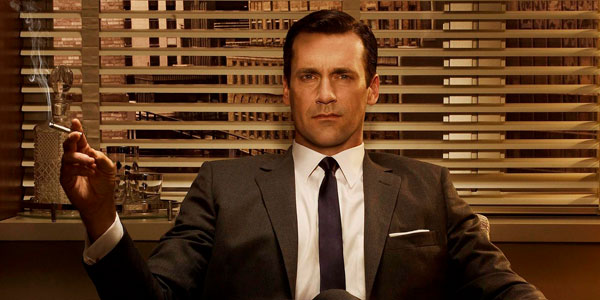
John Fea found an old LBJ ad that shows moderate Republican discomfort over ideological conservatives like Barry Goldwater, the 1964 Republican presidential nominee. If Don Draper had worked for the Democrats, this is how it would have looked:

Drawing parallels between Trump and Goldwater are somewhat overdone since the Arizona Senator had a distinguished record of public service and even vowed to support Nixon in 1960 to the dismay of political conservatives. But the parallels do contain an element of truth in the sense that since the 1950s conservatives (and I count myself as one) have stressed ideological purity over political pragmatism. Maybe it’s the effect of turning 39, or maybe it’s the Trump phenomenon, but compromise for the sake of not blowing things up looks a lot more appealing these days than fidelity to “the movement.”

And here’s the kicker for Roman Catholics reading, some of the most articulate and intellectually rigorous supporters of Goldwater were Roman Catholics like Brent Bozell and William F. Buckley, Jr. (the latter of whom during the 1964 campaign had to distance himself from Robert Welch, the leader of the John Birch Society). In fact, Brent Bozell was the man who put Barry Goldwater’s political convictions into words — The Conscience of a Conservative (as I understand it, the book was entirely Bozell’s effort — see below).

All of this to say, Trump may be much more the fruit of the conservative movement and its anti-establishment ways than conservatives are wont to admit.

Postscript: a little background on Goldwater, Bozell and the conservative conscience:

Goldwater and Bozell were incongruous collaborators: The easygoing Westerner and the intense Midwesterner; the college dropout and the Yale law graduate; the Jewish Episcopalian and the Roman Catholic convert; the principled politician and the activist intellectual (Bozell had run for public office in Mary-land). But they shared a Jeffersonian conviction that that government is best which governs least. They looked to the Constitution as their political North Star. And they were agreed that communism was a clear and present danger.

Goldwater gave his final approval of the manuscript in late December, and Clarence B. Manion, the moderator of a highly popular weekly radio program “The Manion Forum” and the former dean of the Notre Dame Law School, undertook the publication and promotion of a book he was convinced would “cause a sensation.” Indeed it did. Before The Conscience of a Conservative appeared, Barry Goldwater was an attractive but controversial senator from a small Western state who was at best a long-shot vice presidential possibility. After the publication of The Conscience of a Conservative, Goldwater became the political heir to Robert Taft, the hope of disgruntled Republicans, partyless Independents, and despairing Democrats, and the spokesman of a new national political movement—conservatism.

What had Goldwater—and Bozell—wrought? The Conscience of a Conservative was an original work of politics and philosophy, a vision of the nation and the world as it should be, not a compromise with the world as it was. It was a fusion of the three major strains of conservatism in 1960—traditional conservatism, classical liberalism or libertarianism, and anti-communism. It was a book by a conservative for conservatives at a time when conservatives were beginning to realize the potential of their political power.

Trumpsformational

One of the advantages of falling behind on reading is that the distance of several months adds the perspective of Monday morning’s quarterback to what at least in a magazine looked relatively reliable. For instance, while reading the October 2015 issue of First Things yesterday, I saw a review of Robert Putnam’s Our Kids: The American Dream in Crisis (Simon & Schuster) which sounded not nearly so smart now that we’ve had seven months of Donald Trump:

Well-designed policies supposedly can make up for the family’s collapse and set young people on the right course. Putnam recommends beefed-up tax credits, monetary transfers, benefits programs, better-trained and better-paid teachers, vocational education and apprenticeships, community college aid, widely available preschools, and free after-school sports programs. These lavishly funded initiatives will enable teachers and bureaucrats to substitute for parents from birth to adulthood, returning us to a previous idyll of mobility and equality. There is nothing really new here, and Putnam’s exposition seems half-hearted, as if he doesn’t really believe this laundry list will do the trick, even with renewed effort and much more money.

There’s also a call for a massive mentoring program for lower-class children, with the well-educated acting as surrogate parents and advisors on a wide scale. The goal is to socialize poor children to upper-class norms, thereby equipping them to attend and get through college. ­Putnam’s mentoring idea is a ­variant of the pet elite project of college-for-all, which looks to education as the force of salvation and rescues working-­class children by transforming them into upper-class kids.

This pie-in-the-sky dream reflects the deep logic of our post-1960s world, which offers the good life to the knowledge class, but lacks any approved or positive vision for others. On this view, careerism, “creativity,” ­consumerism, lifestyle cultivation, expressive ­individualism, and sexual adventure are fulfilling and prestigious, while civility, duty, ordinary work, and ­fealty to conventional social roles are exploitative and oppressive. ­Given this outlook, college for all makes perfect sense and anything else looks unjust.

In fact, the project is unrealistic and thus ultimately pernicious. Not everyone is able to join the knowledge elite, nor does everyone want to. Our society will always need basic low-skilled labor, from serving meals to caring for dependents to cleaning toilets. The working class cannot be phased out or made to disappear. Economic improvement for workers is an important goal, although difficult to achieve. But it cannot be enough. What is needed is a viable and vibrant culture that maintains the meaning of working-class life and recognizes its dignity. On this, ­Putnam has virtually nothing to say and little to offer.

Except that now, as opposed to last summer when this review was likely written, it turns out that Donald Trump is the one responding to the division between American elites and workers in an electorally successful way. Instead of a culture what the disenfranchised want is a reality show candidate. Did the Trump campaign actually read Putnam?

In that same issue, Russell Moore wrote a spokesmanish piece that put its foot squarely down on the conviction that evangelicals would not be cowed by same-sex marriage:

…the Evangelical cave-in on sexual ethics is just not going to happen. There is no evidence for it, and no push among Evangelicals to start it. In order to understand this, one has to know two things about Evangelicals. One, Evangelical Protestants are “catholic” in their connection to the broader, global Body of Christ and to two millennia of creedal teaching; and two, Evangelicals are defined by distinctive markers of doctrine and practice. The factors that make Evangelicals the same as all other Christians, as well as the distinctive doctrines and practices that set us apart, both work against an Evangelical accommodation to the sexual revolution.

And then came Donald Trump who apparently has shown that evangelicals (at least some of them), are far more interested in economic than social issues, thus making attractive a candidate who will if elected likely not do a thing to oppose same sex marriage. Could it be that evangelical spokesmen don’t really speak for evangelicals, that evangelical is too crude a religious identity to be useful for social analysis, that evangelicals are not all their cracked up to be (as in conservative)? Michelle Boorstein thinks so:

The divisions have led to a range of viewpoints about what is happening in American evangelicalism and whether the splits will endure after the fall election. Some, like Galli, see a new breakdown based on attitudes towards race and ethnicity. Others see an intensifying split between those who prioritize personal morality and those who emphasize free markets and capitalism as a route to power and freedom. Some frame the split as Christian pragmatists vs. Christian idealists.

“There was in the past a very large camp of evangelicals who were primarily interested in electing the most Christian kind of candidate. And then over time bigger doses of pragmatism set in,” said DeMoss, who was a top advisor to Mitt Romney’s two campaigns. “Evangelicals got splintered between the religious litmus test folks and the pragmatists.”

The Trump phenomenon has some leading evangelicals looking more closely at their label. Russell Moore, a Southern Baptist leader, wrote last month that he is so disgusted with being lumped in with Trump supporters that “at least until this crazy campaign year is over, I choose just to say that I’m a gospel Christian” instead of an evangelical.

Some pollsters say “evangelicals” have been way over-counted – or seen as a huge block — because the definition is so hazy. As a result, they say, practicing Christians who reflect traditional evangelical beliefs like the necessity of a born-again experience and a requirement to evangelize are being lumped in with people who are more nominally connected to Christian practice.

Perhaps the most lasting lesson of Donald Trump’s appeal to evangelicals is that no one has transformationalized the religious landscape the way the leading Republican presidential candidate has. If the comprehensive Christian crowd really wants to transform society — from neo-Calvinists and Kellerites to Roman Catholics and those nostalgic for Christendom — they may want to take a page from Donald Trump.