When You Think Billy Graham You don’t Think Lent

But such are the fortunes of evangelicalism that the people running the magazine that Billy Graham (trans-denominational) helped to found with Carl Henry (Baptist), and J. Howard Pew (anti-Communist Presbyterian) are fully comfortable with Anglicanism, and so have posted another article recommending Lent. In this case, telling points mount to show how poorly Lent fits with Christian piety:

heightened devotion is fruitful for a season, but cannot be sustained indefinitely. The Christian calendar offers a sustainable rhythm of which Lent is a part, and the fasting of Lent gives way to the feasting of Easter. Fasting and feasting are interconnected disciplines that teach us to love the King and his coming kingdom. In Lent, we learn to confess our sins, practice self-denial, and take on the humility of Christ. In Easter, we learn to rejoice, exult, and feast in Christ’s victory. As historian William Harmless explains, “In these two liturgical seasons Christians drank in, by turns, the ‘not yet’ and ‘already’ of New Testament eschatology.”

Repentance is fruitful for only part of the year? Moderation is something to observe but only for a time? Imagine if American Christians were moderate and humble the entire year. They wouldn’t binge or purge on American greatness or heinousness depending on which of their favorite presidential candidates was in the White House. Indeed, encouraging the idea that restraint and repentance are only for a while and not for all of life nurtures antinomianism: “I wouldn’t do this during Lent, but the other 325 days I will.”

If Lent is not supposed to lead to those thoughts (which I assume it’s not), then why not make Lenten practices year round? Because repentance and moderation can’t be “sustained indefinitely”? So people practicing Lent are Snowflake Christians? They don’t have the stomach for life-long dying to sin and living to Christ?

Aaron Damiani concedes that “Many Christians choose to keep or modify their Lenten disciplines for the rest of the year, as they have established helpful routines.” So now you have churches divided between full-time Lenten Christians, and ones who only observe Lent in late Winter and early Spring? Christians who truly sanctified and some who aren’t? Not only does this allow a culture of spiritual superiority to gain traction, but it also violates the rules of the liturgical calendar. Who sings Lenten hymns during Advent (oh, the hay that evangelicals make of tradition)?

Then there is the argument that Lent and the church calendar evoke the Jewish liturgical calendar (have you heard that Jesus fulfilled all of the law?):

It’s important to remember that the Christian liturgical calendar developed in part out of the rhythms of Jewish practice. The Old Testament indicates seasons of both heightened devotion and celebration, including Levitically led “sabbaths, new moons, and feast days” (1 Chron. 23:31) and “seasons of joy and gladness and cheerful feasts” (Zech. 8:19). Fasting and feasting were part of the “architecture of time,” in which Jesus participated as an observant Jew.

So what does Father Damiani do with Apostle Paul:

So let no one judge you in food or in drink, or regarding a festival or a new moon or sabbaths, which are a shadow of things to come, but the substance is of Christ. (Col 2:16-17)

Here‘s what Calvin did:

The reason why he frees Christians from the observance of them is, that they were shadows at a time when Christ was still, in a manner, absent. For he contrasts shadows with revelation, and absence with manifestation. Those, therefore, who still adhere to those shadows, act like one who should judge of a man’s appearance from his shadow, while in the mean time he had himself personally before his eyes. For Christ is now manifested to us, and hence we enjoy him as being present. The body, says he, is of Christ, that is, IN Christ. For the substance of those things which the ceremonies anciently prefigured is now presented before our eyes in Christ, inasmuch as he contains in himself everything that they marked out as future. Hence, the man that calls back the ceremonies into use, either buries the manifestation of Christ, or robs Christ of his excellence, and makes him in a manner void.

In other words, Lenten Christians are still holding on to a piety that clings to outward and physical attributes of unseen realities (heard of faith vs. sight?). They are incomplete Christians. They demand outward expressions of spiritual realities. They forget that Paul also wrote:

Jews demand signs and Greeks look for wisdom, but we preach Christ crucified: a stumbling block to Jews and foolishness to Gentiles, but to those whom God has called, both Jews and Greeks, Christ the power of God and the wisdom of God. For the foolishness of God is wiser than human wisdom, and the weakness of God is stronger than human strength. (1 Cor 1:22-25)

Oh by the way, Paul’s contrast between the visible and invisible, between the external and internal, is why the Confession of faith contrasts Old Testament and New Testament worship this way:

Under the gospel, when Christ, the substance, was exhibited, the ordinances in which this covenant is dispensed are the preaching of the Word, and the administration of the sacraments of baptism and the Lord’s Supper: which, though fewer in number, and administered with more simplicity, and less outward glory, yet, in them, it is held forth in more fullness, evidence and spiritual efficacy, to all nations, both Jews and Gentiles; and is called the new testament. There are not therefore two covenants of grace, differing in substance, but one and the same, under various dispensations. (7.6)

The comparison of Lent to the Old Testament is epic fail.

But remember what Calvin went on to say about Colossians 2. The rejection of the church calendar and other external ways of commemorating salvation doesn’t mean that Protestants throw out the sacraments:

Should any one ask, “What view, then, is to be taken of our sacraments? Do they not also represent Christ to us as absent?” I answer, that they differ widely from the ancient ceremonies. For as painters do not in the first draught bring out a likeness in vivid colors, and (eikonikos) expressively, but in the first instance draw rude and obscure lines with charcoal, so the representation of Christ under the law was unpolished, and was, as it were, a first sketch, but in our sacraments it is seen drawn out to the life. Paul, however, had something farther in view, for he contrasts the bare aspect of the shadow with the solidity of the body, and admonishes them, that it is the part of a madman to take hold of empty shadows, when it is in his power to handle the solid substance. Farther, while our sacraments represent Christ as absent as to view and distance of place, it is in such a manner as to testify that he has been once manifested, and they now also present him to us to be enjoyed. They are not, therefore, bare shadows, but on the contrary symbols of Christ’s presence, for they contain that Yea and Amen of all the promises of God, (2 Corinthians 1:20,) which has been once manifested to us in Christ.

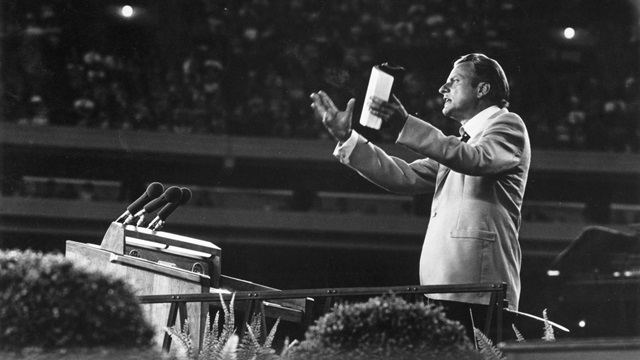
I understand the appeal of Lent over the Anxious Bench. The followers of Billy Graham needed to graduate to something more meaningful, something more historical. How about the Reformation? How about the Bible? It replaces the altar call with the Lord’s Supper and gives us fifty-two Easters a year, fifty-two feast days with six days every week to prepare.
Remember When Being Nice Would Win the Day?

How a little reminder of 1929 clears the cobwebs.

Once upon a time, the Gospel Allies scored points against Reformed confessionalists by claiming the high ground of nice. Remember when Jared Wilson wrote this?

Cold-hearted rigidity is not limited to those of the Reformed persuasion, of course. You can find it in Christian churches and traditions and cultures of all kinds. In fact, to be fair, I have found that those most enthralled with the idea of gospel-wakefulness, those who seem most prone to champion the centrality of the gospel for life and ministry, happen to be of the Reformed persuasion. So there’s that. But gracelessness is never as big a disappointment, to me anyway, as when it’s found among those who call themselves Calvinists, because it’s such a big waste of Calvinism.

Or how about when Justin Taylor chimed in?

Angry Calvinists are not like unicorns, dreamed up in some fantasy. They really do exist. And the stereotype exists for a reason. I remember (with shame) answering a question during college from a girl who was crying about the doctrine of election and what it might mean for a relative and my response was to ask everyone in the room turn to Romans 9. Right text, but it was the wrong time.

This raises an important qualifier. The “angry” adjective might apply to some folks, but it can also obscure the problem. In the example above, I wasn’t angry with that girl. I wasn’t trying to be a jerk. But I failed to recognize what is “fitting” or necessary (cf. Eph. 4:29) in the moment. This is the sort of thing that tends to be “caught” rather than “taught” and can be difficult to explain. But there’s a way to be uncompromising with truth and to be winsome, humble, meek, wise, sensitive, gracious. There’s a way of “speaking the truth in love” (Eph. 4:15) such that our doctrines are “adorned” (Titus 2:10) and our words are “seasoned” with salt and grace (Col. 4:6). To repeat, the category of “anger” is often too broad and can miss the mark. As Kevin DeYoung pointed out to me, “Some Calvinists are angry, proud, belligerent people who find Calvinism to be a very good way to be angry, proud, and belligerent. Other Calvinists are immature—they don’t understand other people’s struggles, they haven’t been mellowed by life in a good way, they can only see arguments and not people. The two groups can be the same, but not always.”

So when Tim Keller advocated women’s subordination, he did so in precisely the categories that elicit New Calvinist religious affections (thanks to our southern correspondent):

We feel that there is a deep inconsistency in the phrase “evangelical feminism”. The feminists who are consistent recognize the Bible as a sexist book throughout. They reject it. The feminists who try to hold to complete Biblical authority have, really, an impossible balancing act to conduct. . . .

We know from experience that our position on women-in-ministry dissatisfies many people. Many friends from the traditional evangelical church find it far too “liberal” and “permissive”, while many other friends on the other side still feel it is oppressive. Our position is not totally unique. See J. Hurley’s book, Man and Women in Biblical Perspective or Susan Foh’s book, Women and the Word of God. They come close to where we are.

The fact remains that nearly everyone we meet is more “conservative” or else more “liberal” than we are. Thus we appeal to our friends to work with us on this. We do not to make this issue a cause of division, as we said above. We see no reason why friends with the same view of the Bible cannot work together, all the while influencing each other and refining one another’s viewpoint in order to become truly Biblical. Please be partners with us.

Balance, moderation, partnership — these were the calling cards of the New Calvinists. And for them, it was the Old Schoolers and Truly Reformed who were poorly positioned to represent Calvinism to the contemporary urban and global world. Some of us tried to explain that disagreement was not anger, and that standing in a specific tradition might cut down on “partnership.” We even thought that the medium of the World Wide Interweb thrived better on provocation than moderation. But for almost fifteen years the New Calvinists thought they had squared the circle, and Keller was proof positive at ground zero of global urban life in the United States.

What went wrong? One problem may have been living in a Gospel Coalition bubble and not engaging the concerns of “angry Calvinists.” But even more harmful was forgetting the antithesis and misreading the culture. Keller’s “success” in New York suggested (and sometimes actually asserted) that a new day had dawned for conservative evangelicalism. Modern Americans were truly willing to hear a kinder, gentler Protestantism. How could you deny that if the most secular and most urban place in the United States had received Keller the way New York City did? You certainly had to think that modern America was much more hospitable to faith if Keller was a best-selling author and the darling of religion journalists? Keller himself told lots of Presbyterians how the direction of the modern world was heading in a faith-friendly direction. I still remember the Power Point presentations I witnessed while on the faculty at WTS about the church in the city’s future.

What if while considering those trends predicted by economists and futurologists, New Calvinists had pondered the Bible more?

3 Above all, you must understand that in the last days scoffers will come, scoffing and following their own evil desires. 4 They will say, “Where is this ‘coming’ he promised? Ever since our ancestors died, everything goes on as it has since the beginning of creation.” 5 But they deliberately forget that long ago by God’s word the heavens came into being and the earth was formed out of water and by water. 6 By these waters also the world of that time was deluged and destroyed. 7 By the same word the present heavens and earth are reserved for fire, being kept for the day of judgment and destruction of the ungodly. (2 Peter 3)

That may tilt more Rod Dreher than Jamie Smith. But if you’re going to minister the word and teach in a seminary, doesn’t the apostle Peter count more than Peter Drucker?

You Gotta Serve Somebody

Will it be the Bible or the magisterium? Massimo Faggioli worries that papal audacialists are turning into magisterial fundamentalists:

Now, four years into the pontificate of Francis, only the traditionalist wing still uses the hermeneutics of “continuity and reform” versus “discontinuity and rupture” in interpreting Vatican II; Francis has never used it. But the damage is done, and not just in Rome or in the Vatican. For while on one side there is the minimizing of the role of critical thinking about Church history, on the other there is the cultural turn to an emphasis on identity studies. Even at those universities where a historical-critical approach to Church institutions and magisterial texts persists, things tend to gravitate around “religious studies” instead of theology.

This poses a problem for history and religious studies as disciplines: trying to understand the past lives of Christians without a theological line of credit open toward the faith of those Christians limits the ability of the historians to understand the lives of those Christians. But it’s an even bigger problem for theology. The historical-critical method is facing some pushback today even when it comes to biblical studies, as seen recently in overblown reactions to what the new general of the Jesuits said about the interpretation of the Gospel a few weeks ago. Paradoxically it seems more acceptable in today’s Catholic Church to bring the historical-critical method to bear on Scripture than to documents of the magisterium; it’s become more acceptable to critique divinely inspired authors of Scripture than a pope writing on sexual morality. A creeping magisterial fundamentalism toward the encyclicals of this last century is part of the “biopolitical” problem of Catholicism. This is clearly visible in the debate over Amoris Laetitia. But it would also be worth exploring how naively and uncritically Leo XIII’s Rerum Novarum is sometimes used (or misused) in the U.S. church to make arguments about Catholic social teaching.

But with a reduced papacy, what separates Roman Catholicism from Anglicanism? And without the audacity of the papacy, how do you argue for Rome’s superiority to Geneva?

Perspective on Tim’s Toxic Teaching

W-w will not help you sort this out. Carol Howard Merritt cannot tell the difference between Tim Keller and Tim Bayly:

I know that people are angry that Tim Keller doesn’t believe in women in the pastorate. But, my friends, this goes much, much deeper than women not being able to be ordained as Pastors, Elders, and Deacons. Complementarianism means married women have no choice over their lives at all.

So as Princeton Theological Seminary celebrates Tim Keller’s theology, I will be mourning. As he presents his lecture and receives his $10,000 award, I will lament for my sisters who have been maligned and abused. So much of my ministry has been dedicated to aiding the victims of these poisonous beliefs. In these difficult days, when our president says that women’s genetalia is up for grabs by any man with power and influence, I hoped that my denomination would stand up for women, loud and clear. Instead we are honoring and celebrating a man who has championed toxic theology for decades.

God, help us.

Meanwhile, Justin Taylor can’t tell the difference between Old Life and Carol Howard Merritt.

What help would confessional Presbyterianism give? It could provide a standard for teaching that cuts through male headship, or women’s liberation, or macho heterosexuality as the bright lines of Christian identity.

And notice this. Tim Keller was riding the wave of progressivism that swept through America post-Bush II. The world was getting better, conversations about race were ongoing, the economy was sluggish but improving, tolerance was increasing, cities were becoming more the sites of church life, and Christian apologists were gaining a hearing in the outlets of the mainstream media. Christians really could make a difference. A moderate, New School Presbyterianism with ties to Baptistic Calvinists could recover the cooperative endeavors that fueled Carl Henry, Harold John Ockenga, and Billy Graham. These sensible and extremes-avoiding Protestants could fill the vacuum created by the mainline.

Except that mainstream world, as Merritt indicates, has its own orthodoxy. You can be sensible, moderate, hip — heck, you can even like The Wire and channel Machen — and not measure up.

Maybe it turns out that Keller reached more Christians to think that the skeptics were really friendly rather than reaching the skeptics. Maybe it turns out that New School Presbyterians have more in common with Old School Presbyterians. What if they acted like it?

Spring Break with Tim

I did not plan it this way, but Tim Keller winds up being the subject this week. Reasons for further reflection on the oh so successful Manhattan pastor arise from the missus and my visit to Chicago, which has become a tradition. Truth be told, we are urbanists. We met in Philadelphia, knew something was going to knit us together after concluding that Woody Allen’s Annie Hall and Manhattan were about two of the best American movies ever made, and then found that life in the city was simply more intriguing (for us) than the suburbs in which we had both been reared (Levittown, PA and Levittown, NY — the odds?). Even living in Chestnut Hill, Philadelphia’s suburb in the city, for almost 15 years, we drew energy and — dare I say — inspiration from residing in the city. Going to Chicago is a way to recharge the urban batteries (though one-day trips to Ann Arbor have to tide us over).

I hope I’m proving my urban bona fides, and in so doing suggesting that Keller’s awareness of the city’s appeal is plausible (though I still don’t see much appreciation for Woody Allen in TKNY).

My criticisms of Keller, then, are two-fold. I object to his failure to carry out his duties as a Presbyterian church officer. He may be a good evangelical, even an urban one, but I don’t sense a minister who willingly conforms and belongs to the limits that come with belonging to a Reformed communion. Keller is not alone in that. Lot’s of Presbyterian pastors don’t conform to communion expectations. But as celebrity-Presbyterian-pastor-in-chief, Keller makes the way straight for coloring outside the lines.

The other objection is the way Keller benefits from being pro-urban New York City. As I indicated earlier this week, if you put Keller in Chicago or Seattle would his following be as large as it is? I doubt it. Along with this goes a sense that Keller doesn’t tell the whole truth about the city. Even as he seems to think he knows how to educate future urban pastors about how to do city ministry, I don’t think he acknowledges one simple reality — the city is gosh darn expensive. And that means you have trouble keeping families in cities once couples start rearing children. In Philadelphia, you may be able to commute relatively easily from the suburbs to Tenth Presbyterian Church. But once you leave New York’s five boroughs, you are a long way from Manhattan.

Now notice this: families are important to covenant religion.

Marriage was ordained for the mutual help of husband and wife, for the increase of mankind with legitimate issue, and of the church with an holy seed; and for preventing of uncleanness. (Confession of Faith, 24.2)

Families are the only good way of socializing the young. Yes, they have lots of problems. But would you rather the state through its foster system rear children or take your chances with a man and woman who don’t have the true, good, and beautiful figured out? Or how about the church? Is the church better equipped to rear children than parents? I don’t think so.

Why is it then that Keller has so little to say about families? The index to Center Church gives the family only three entries. Google searches reveal only a few sources. Here’s one right from Keller:

Why bring children into such a bleak world? Religious persons, however, have a profound assurance that in the future is final justice, or paradise, or union with God in some form. They have an over-arching hope that makes them more optimistic about bearing and raising children.

At this point you might think I would simply say “Yay for religion, it is the friend of the family!” It is not that simple. While secularism in the West tends to make an idol out of the individual and his or her needs, traditional religion has often made an idol out of the family. According to theologian Stanley Hauerwas of Duke University, Christianity was the very first religion or world-view that held up single adulthood as a viable way of life. Jesus himself and St. Paul were single. “One…clear difference between Christianity and Judaism [and all other traditional religions] is the former’s entertainment of the idea of singleness as the paradigm way of life for its followers.” (Stanley Hauerwas, A Community of Character, p.174.) Nearly all religions and cultures made an absolute value of the family and of the bearing of children. There was no honor without family honor, and there was no real lasting significance or “legacy” without leaving heirs. By contrast, the early church not only did not pressure women to marry but it institutionally supported poor widows so they were not forced to remarry as they were out in the culture at large.

Notice the standard third-way positioning. I’m not for singles, nor for families, but here is the via media. Great. But tell me how families are going to afford to live in Manhattan. And also why not tell parents how important they are for rearing children, catechizing, setting examples in the home? Any reflection also on if you can afford to live in Manhattan and both parents need to work, what do you do with a hiring a Christian nanny? Family in this Keller post is an abstraction (that does not dent his larger abstraction of the city).

I also found this, the urban pastor who came around to Keller’s idea that it takes a city to raise rear a child:

[Keller] acknowledges that three factors make it a hard place to raise kids. First, because of the prohibitive cost of everything you’ve got less disposable income to invest in your family. Secondly, he talks about the ‘physical logistics on the front nine’ make it harder to get round the city with small kids. In others words transporting small kids in the city can be a real pain. But after that, the ‘back nine’ is a real joy. Thirdly, the educational terrain is complex and hard to navigate since there are so many options and so little cash!

That is the problem. The solution? Kids turn out hip, believers, and real (really!?!).

That said he then lists eight counterbalancing factors that sway the pendulum in favour of staying put and not giving flight.

1. The kids will grow up thinking that they live in the real world rather than growing up in the suburbs and straining at the leash to get to the real world. Of course everywhere is the real world but they don’t think like that. The city is where it’s at and they know that. That’s why they want to escape surburbia or the regions as soon as they can. But if they grow up in the city they know that they live in the ‘real’ world.

2. The kids grow up knowing that you have a real faith. They want to believe that their parents’ faith is disconnected to reality. It gives them permission to be disparaging about Christianity. But they can’t do that if they know that you’ve had to work out your Christian discipleship in the real world. It undermines their desire for unbelief.

3. The kids will grow up and become self reliant, independent and confident because nothing freaks them out. As a country boy who went to sixth form with mates from the city who then moved to the ‘big smoke’ in his mid twenties, I’ve got to say he’s absolutely right on that one.

4. The kids grow up being adept at handling diversity. Most surbuban white kids don’t grow up with Muslim neighbours and Afro-Caribbean mates. But you do in the city. Their breadth of cultural engagement will far outweigh the kids who grow up out of town.

5. The kids grow up being pushed into family. The city is a relationally intense environment. It ‘forces’ families to spend lots of time together. The commute is less, the house is smaller, there aren’t any fields to escape to. It all adds up to lots of ‘face time’. If you’re into relating with your kids, that’s a good thing.

6. The kids grow up with Christian role models. In the suburbs kids grow up with a peer group. But do you really want them learning about the faith from their teenage mates? On reflection, not really. In the city they get to their teenage years and they see the Christian life being modelled by credible ‘trendy twenties’ whom they respect. In the suburbs they get to see the Christian life being lived out by guys with kids. But who grows up wanting to be like their Dad! In the city they don’t have to.

7. The kids grow up facing the issues. They’ll be exposed to a whole range of ethical issues a long time before the suburban or rural kids. Because London is like a massive University Campus we get to go to College with them before they’re even old enough to apply! They’ll come across homosexuality, drugs, alcohol, crime, sex and so on and we’ll be with them when they do. Unlike the parents in the suburbs who live out there to escape from it we have to confront it and get to help them deal with it.

8. The kids grow up without the pressure to conform. The city is so accommodating of diversity that it’s hard to think of a fad, fashion or obsession that it wouldn’t tolerate. And so the kids get to grow up being themselves, without having to become a carbon copy of others.

This is frankly a bizarre recommendation of the city. Great! Let’s rear kids so they don’t want to be like their dads #6.

Great! Billy and Susie grow up surrounded by sex, drugs, and crime #7. Retreating to the suburbs is so squaresville.

Sheesh.

What about kids who grow up without a smartphone because parents can’t afford one because rents are so high? Does Redeemer have a diaconate that helps families with the costs of living in the most expensive place in the United States?

And then I also saw this from Christopher Lasch:

If conservatism is understood to imply a respect for limits, it is clearly incompatible with modern capitalism or with the liberal ideology of unlimited economic growth. Historically, economic liberalism rested on the belief that man’s insatiable appetites, formerly condemned as a source of social instability and personal unhappiness, could drive the economic machine—just as man’s insatiable curiosity drove the scientific project—and thus ensure a never-ending expansion of productive forces. For the eighteenth-century founders of political economy, the self-generating character of rising expectations, newly acquired needs and tastes, and new standards of personal comfort gave rise to a form of society capable of indefinite expansion. Their break with older ways of thinking lay in the assertion that human needs should he regarded not as natural but as historical, hence insatiable. As the supply of material comforts increased, standards of comfort increased as well, and the category of necessities came to include goods formerly regarded as luxuries. Envy, pride, and ambition made human beings want more than they needed, but these “private vices” became “public virtues” by stimulating industry and invention. Thrift and self-denial, on the other hand, meant economic stagnation. “We shall find innocence and honesty no more general,” wrote Bernard Mandeville, “than among the most illiterate, the poor silly country people.” The “pleasures of luxury and the profit of commerce,” according to David Hume, “roused men from their indolence” and led to “further improvements in every branch of domestic as well as foreign trade.” Both Hume and Adam Smith argued that a growing desire for material comforts, wrongly taken by republican critics of commerce as a sign of decadence and impending social collapse, generated new employments, new wealth, and a constantly rising level of productivity.

Does living in New York City encourage its people to think about living within limits, to regard progress as folly, to be content with less? Is Keller for the city and all its unlimited possibilities? Or does he encourage self-restraint and find ways for his hearers to resist all of the conveniences and temptations of modern urban life? Isn’t he really in favor of a suburban existence #5 — responsible parents, respectful kids, not going into debt, refusing hedonism (except when recommended by co-ally John Piper) — in an environment that as Lasch indicates pushes residents to want to see material comforts increased. Of course, all of America encourages an identification with progress (unless you live in Hillsdale, Michigan). But in NYC this outlook is on steroids (see Lena Dunham).

What if the dangers of urban life are real?

Thanks to President Lyndon Johnson’s so-called “Great Society,” a buffet of new federal programs were established that have been pouring federal dollars into Philadelphia since the mid-1960s. How have those countless billions of tax dollars been spent? In the inner city where the federal dollars were spent by our Democratic politicians, public education is far worse than it was in the mid-’60s; violent crime is far worse; more children are living in poverty; more single-mother families, more homelessness, more hard drug use, more fear, etc. There is not one single criterion under the quality-of-life rubric that has improved in Philadelphia’s inner city since all those billions were brought into the city along with politicians’ photo-ops since the mid-’60s.

But Keller remains optimistic:

Keller believes Christians in New York cannot retreat into homogeneity. They’ll be regularly faced with people who fervently disagree with them. Keller’s church is a multi-ethnic one and even if the believers have a similar religious outlook, they hail from a variety of different backgrounds.

Keller believes serious Christians still belong in cities in general and New York in particular. But it’s a project that will take many more Tim Kellers and much more time. The results, says Keller, are “hard to see except in hindsight, with the perspective of several decades.”

Speaking of retreating into homogeneity, does Keller look at the church as a place of disagreement and diversity? Or has he led modern church planting into a homogeneous place where disagreement goes unanswered and unacknowledged? Can we have a discussion about Presbyterianism in the city? Can we talk about dying to sin and living to Christ in the city? Can we talk about family visitation and catechesis in the city? Or how about the regulative principle in the city?

I wish Tim Keller would think harder about cities and think about them in the light of critics of modernity like Lasch or Wendell Berry. That doesn’t fit with his ministry paradigm. Not reading those critics or interacting with them does not fit the pastor-who-answers-skeptics paradigm.

Postscript: I’d be glad to offer my services as an urban church consultant. I’m a trained social scientist, I like cities, and I’m even a church officer.

You Can Take the Curmudgeon out of Presbyterianism . . .

But you can’t take Presbyterianism out of the Curmudgeon.

The best priest we know serves up even more reasons for thinking New Calvinism is a sham:

Drs. Moore and Mohler have also been involved in another SBC fight. They are Calvinists in a denomination that has embraced evangelism and church growth of first of the Second Great Awakening sort (100 verses of “Just As I Am” waiting for one more sinner to be converted or one more backslider rededicate) and then of the church growth/contemporary church sort (rock bands, smoke machines, and preachers sitting on stools). But large number of Southern Baptists have embraced what they call “Calvinism” (How is a credo-baptist really a Calvinist?), or “the doctrines of grace” (“soteriological Calvinism, though one must also ask what kind of soteriological Calvinism denies a means of grace, baptism, to children?). The tension between traditional Baptists and the so-called Calvinistic Baptists is another fault line in the Convention, though a piece of plywood has been put over crack.

To keep it straight, the Gospel Coalition attracts and promotes Calvinists (think Tim Keller and the PCA) who do not minister as Calvinists, that is, Calvinists who look the other way when it comes to worship and the ministry of the word. To be sure, New Calvinists care about ministry, but their concern is for relevance, influence, size (matters). Their concern is not like Calvin’s or Bucer’s or Ursinus’ to make ministry conform to Scripture — Reformed according to the Word.

That is where tranformationalism goes. It sups with practices designed to be strategic, to win a hearing, to sit at the table. And all along, the freedom to minister word and sacrament, follow the regulative principle, administer church discipline is still overwhelmingly available. The problem is that the traditional means of grace and serious worship won’t rise above the hum drum of congregational life to amount to a movement, a following. Shouldn’t New Calvinists trust the God-ordained means of grace? Or do they know something God’s word doesn’t?

It reminds me of Hughes Oliphint Old’s point about contemporary worship:

In our evangelistic zeal we are looking for programs that will attract people. We think we have put honey on the lip of the bitter cup of salvation. It is the story of the wedding of Cana all over again but with this difference. At the crucial moment when the wine failed, we took matters into our own hands and used those five stone jars to mix up a batch of Kool-Aid instead. It seemed like a good solution in terms of our American culture. Unfortunately, all too soon the guests discovered the fraud. Alas! What are we to do now? How can we possible minister to those who thirst for the real thing? There is but one thing to do, as Mary the mother of Jesus, understood so very well. You remember how the story goes. After presenting the problem to Jesus, Mary turned to the servants and said to them, “Do whatever he tells you.” The servants did just that and the water was turned to wine, wine rich and mellow beyond anything they had ever tasted before.

Why Moderation and Charity Are Overrated

In Jake Meador’s review of Rod Dreher’s BenOp, he makes this passing observation of the NAPARC landscape:

A desire to preserve unity at the cost of clarity and an unwillingness to take a stance is not a solution and, in fact, will probably cause as many to drift as will a lack of charity and restraint in our rhetoric. Being in the PCA, this is the concern that occupies my mind more as it seems the greater danger in my immediate ecclesial context. I suspect that it is also the greater danger in most Catholic dioceses and many non-denominational evangelical churches.

Even so, a lack of charity and restraint in our rhetoric will lead some who might otherwise be persuadable to dismiss us. That seems the greater danger in the Southern Baptist Convention, if my read of things is accurate. It is also the greater danger in many reformed microdenominations such as the OPC and CREC, I strongly suspect.

For the record, the books that came out recently about the contemporary cultural bankruptcy had no ties to the micro Reformed denominations. They came from an Eastern Orthodox layman (Dreher), a Roman Catholic archbishop (Chaput), and a Roman Catholic layman (Esolen). Those are churches that have labored under the Christ and culture burden, have tried to make society Christian, and are now showing the effects of that weight.

What has the little old OPC produced about the current crisis (a conference on gay marriage that technical glitches prevented from being recorded?)? Nothing. It is still more or less wedded to J. Gresham Machen’s assessment of the Protestant mainstream and is more or less committed to passing on the faith without the assistance of America’s cultural or political institutions. But when a church simply tries to do what a church is called to do (see 25.3 of the Confession of Faith), it is in danger of showing a lack of restraint and charity?

Not to be missed is the kind of transformationalist vision that has become the PCA’s calling card of late. Perhaps the idea of being a church to the big city is charitable and restrained (though to anyone with half a brain it sure looks delusional to think you can teach Woody Allen’s New Yorkers to become Wheaton’s evangelicals). But from the perspective of the Protestant mainline, the PCA looks downright sectarian.

That may be the single recommendation for Rod Dreher’s book — to provoke those who want a seat at the table (or a mouthful of the Big Apple) to consider what it means to be a stranger and alien. I know Jake Meador already knows this. But sometimes his PCA identity gets in the way of his inner Stanley Hauerwas and he never says “boo” about PCA exceptionalism in the era of Tim Keller.

Why Isn’t Jamie Smith Alarmed?

Alarm sells more books (and Rod Dreher sells more books than Jamie Smith).

Jamie has a point that Rod Dreher’s Benedict Option traffics in alarmism (does that mean alarm is okay):

And in his much-anticipated book, “The Benedict Option,” blogger Rod Dreher has seen the apocalypse: “There are people alive today who may live to see the effective death of Christianity within our civilization. By God’s mercy, the faith may continue to flourish in the Global South and China, but barring a dramatic reversal of current trends, it will all but disappear entirely from Europe and North America. This may not be the end of the world, but it is the end of a world, and only the willfully blind would deny it.” Note, again: if you’re not alarmed, you’re not seeing things, a circular reasoning to help work yourself into a froth of fear.

But Rod is right that Jamie goes too far and virtue signals to elite journalists in the nation’s capital who may not view Calvin College in high regard these days (think Calvin alum, Betsy De Vos) when Smith trots out the standard Never Trump meme that alarmism is a version of white backlash. Jamie, who promotes charity, really did go here:

But the new alarmism is something different. It is tinged with a bitterness and resentment and sense of loss that carries a whiff of privilege threatened rather than witness compromised. When Dreher, for example, laments the “loss of a world,” several people notice that world tends to be white. And what seems to be lost is a certain default power and privilege. When Dreher imagines “vibrant Christianity,” it is on the other side of the globe. He doesn’t see the explosion of African churches in the heart of New York City or the remarkable growth of Latino Protestantism. The fear seems suspiciously tied to white erosion.

Jamie may work in Dutch-American country, but he’s no provincial.

So Rod feels betrayed:

I cite the research of Notre Dame sociologist Christian Smith, who documents the stark decline of American Christian belief, compared to historical doctrinal norms. I cite the more recent findings, by Pew, by Jean Twenge, and by others, showing the unprecedented falloff of religious identification and practice among Millennials. And I cite the recent study by two eminent sociologists of religion who found that the United States is now on the same secularizing track as Europe (I wrote about that also here, on this blog.)

If you are a believing Christian who is not alarmed by this, you have your head in the sand. On his blog the other day, Alan Jacobs observed that some public critics of the Benedict Option seem to be operating from a position of “motivated reasoning” — that is, that they are reacting less about what’s actually in the book than in how the book’s premises, if true, threaten their own biases and interests. In other words, they may be motivated to react with hostility to it, beyond legitimate criticism. To put it more uncharitably, as the saying goes, it is hard to get a man to see something when his paycheck depends on him not seeing it.

Is that happening here? I don’t know. I can’t read James K.A. Smith’s mind. I do know that I find it awfully strange that he turned so sharply on the Benedict Option, in the time he did. And I find it especially dishonest — and, frankly, morally and intellectually discreditable — that he would impute racist motivations to me when the book I wrote, which he has in hand, makes a very different claim.

As I have indicated many times, what bothers me about the BenOp is that Rod only seems to understand a cultural crisis now when some Christians (the mainstream calls them fundamentalists) saw it at least a century ago. My sense is that Rod grew up fairly comfortable in mainline Protestant America and only when the mainline churches went really flaky did he look for Christian sustenance elsewhere — first Rome, then Constantinople. But he seems to have no awareness that Protestants circa 1900 saw trends in the mainline world that plausibly predicted what would happen to the Protestant mainline in the Angela Davis era.

One of those Protestants from the turn of the twentieth century who saw the crisis of modern society was a man who has inspired many of the faculty and administrators at the college where Jamie Smith teaches. The college is Calvin and the old Protestant is Abraham Kuyper. The Dutch pastor, university founder, politician and theologian knew alarm and encouraged it among his followers. Kuyper put the antithesis this way:

Not faith and science, therefore, but two scientific systems or, if you choose, two scientific elaborations, are opposed to each other, each having its own faith. Nor may it be said that it is here science which opposes theology, for we have to do with two absolute forms of science, both of which claim the whole domain of human knowledge…. [They dispute] with one another the whole domain of life.

Jacob Klapwijk explains that antithetical vision this way:

Throughout human society, in church, state, and community, the believer is called pro Rege, that is, he is called to follow King Jesus. Pro Rege means mobilizing Christian forces for the battle against idolatrous and anti-Christian powers at work in culture. To build science on Christian principles is part of that calling. The other side of the coin is that every form of s science based on, say, humanistic principles is to be opposed; demanded is a thoroughgoing antithetical attitude toward non-Christian thought.

That is part of the rationale that inspires the institution where Jamie Smith works. It’s the reason why parents send their children not to University of Michigan but to Calvin College. For Smith to act like alarmism is only a card that Rod Dreher plays is to be as historically unaware as Rod himself.

Alarmism happens. It’s even biblical:

For we do not wrestle against flesh and blood, but against the rulers, against the authorities, against the cosmic powers over this present darkness, against the spiritual forces of evil in the heavenly places. (Eph. 6:12)

I do wish critics of modernity like Dreher and Smith would remember that the world went south well before Alasdair MacIntyre or Charles Taylor started writing books. It happened when God barred Adam and Eve from Eden.

How to Observe Reformation

If you are Roman Catholic, forget Martin Luther and remember Thomas More:

We should not celebrate the Reformation, because we cannot celebrate the defense of erroneous conscience held up against the authority of the Church. As St. Thomas More rightly said in his “Dialogue on Conscience,” taken down by his daughter Meg: “But indeed, if on the other side a man would in a matter take away by himself upon his own mind alone, or with some few, or with never so many, against an evident truth appearing by the common faith of Christendom, this conscience is very damnable.” He may have had Luther in mind.

More did not stand on his own private interpretation of the faith, but rested firmly on the authority of Christendom and, as Chesterton put it, the democracy of the dead: “But go we now to them that are dead before, and that are I trust in heaven, I am sure that it is not the fewer part of them that all the time while they lived, thought in some of the things, the way that I think now.”

More is a crucial example of standing firm in a rightly formed conscience. We should remember why he died and not let his witness remain in vain. He stood on the ground of the Church’s timeless teaching, anchored in Scripture and the witness of the saints. If we divorce conscience from authority, we will end in moral chaos. As Cardinal Ratzinger asked in his lucid work, On Conscience: “Does God speak to men in a contradictory manner? Does He contradict Himself? Does He forbid one person, even to the point of martyrdom, to do something that He allows or even requires of another?” These are crucial questions we must face.

Rather than celebrating the defender of erroneous conscience, let’s remember and invoke the true martyr of conscience, who died upholding the unity of the faith.

But, if you’re Roman Catholic, you follow the pope, right?

In light of the current controversy on conscience, it is troubling that Luther is now upheld as genuine reformer. The most troubling is from the Pontifical Council for Promoting Christian Unity in its Resources for the Week of Prayer for Christian Unity and throughout the year 2017: “Separating that which is polemical from the theological insights of the Reformation, Catholics are now able to hear Luther’s challenge for the Church of today, recognising him as a ‘witness to the gospel’ (From Conflict to Communion 29). And so after centuries of mutual condemnations and vilification, in 2017 Lutheran and Catholic Christians will for the first time commemorate together the beginning of the Reformation.” The Vatican also announced a commemorative stamp (which to me sounds like the United States issuing a stamp commemorating the burning the White House by British troops).

Pope Francis has spoken of Luther several times in the past year, including in an inflight press conference returning from Armenia: “I think that the intentions of Martin Luther were not mistaken. He was a reformer. Perhaps some methods were not correct.” In response I ask, what did Luther reform? Francis pointed to two things in his journey to Sweden. The Reformation “helped give greater centrality to sacred scripture in the Church’s life,” but it did so by advocating the flawed notion of sola scriptura. Francis also pointed to Luther’s concept of sola gratia, which “reminds us that God always takes the initiative, prior to any human response, even as he seeks to awaken that response.” While the priority of God’s initiative is true and there are similarities to Catholic teaching in this teaching (that faith is a free gift that cannot be merited), Luther denied our cooperation with grace, our ability to grow in sanctification and merit, and that we fall from grace through mortal sin. Francis also noted, while speaking to an ecumenical delegation from Finland: “In this spirit, we recalled in Lund that the intention of Martin Luther 500 years ago was to renew the Church, not divide Her.” Most recently he spoke of how we now know “how to appreciate the spiritual and theological gifts that we have received from the Reformation.”

Doesn’t the magisterium know more and better than Dr. R. Jared Staudt?

Does POTUS Define US?

Of course, not. The federal government has two other branches and the United States is way more than its government. McDonalds? Hollywood? Caitlyn? Harvard? The military? Heck, we don’t even pledge allegiance to the White House.

But what’s true for a nation is not true for a church like Roman Catholicism. There the papacy does define Roman Catholicism. And Ross Douthat explains why investing all that power and identity in a single office is a mistake, or why Pope Francis is more of a threat than President Trump:

Friendly media coverage casts the pontiff as a man of the center, an ecclesiastical equivalent of Angela Merkel or Barack Obama or David Cameron, menaced by authoritarians to his right. But he is no such thing, and not only because his politics are much more radical and apocalyptic than any Western technocrat. In the context of the papacy, in his style as a ruler of the church, Francis is flagrantly Trumpian: a shatterer of norms, a disregarder of traditions, an insult-heavy rhetorician, a pontiff impatient with the strictures of church law and inclined to govern by decree when existing rules and structures resist his will.

His admirers believe that all these aggressive moves, from his high-stakes push to change church discipline on remarriage and divorce to his recent annexation of the Knights of Malta, are justified by the ossification of the church and the need for rapid change. Which is to say, they regard the unhappiness of Vatican bureaucrats, the doubts of theologians, the confusion of bishops and the despair of canon lawyers the way Trump supporters regard the anxiety of D.C. insiders and policy experts and journalists — as a sign that their hero’s moves are working, that he’s finally draining the Roman swamp.

Meanwhile the church’s institutionalists are divided along roughly the same lines as mainstream politicians in the face of Trump’s ascent.

There is a faction that has thrown in with Francis completely, some out of theological conviction, some out of opportunism, some out of simple loyalty to the papal office. (The analogy would be to the mix of populists, opportunists and institutionalists who smoothed Trump’s progress to the Republican nomination.)

There is a group that is simply silent or deeply cautious — note how few of the world’s bishops have taken any position on the controversy over divorce and remarriage — in the hopes that things will simply return to normal without their having to put anything at risk. (The analogy would be to most Republican elected officials, and a few red-state Democrats as well.)

There is a group that is relatively open in criticism of the pope’s agenda but also unwilling to cross the line into norm-smashing of its own. (The analogy would be to the American center-right and center-left, from John McCain to Hillary Clinton.)

This last group’s sheer diversity is one reason the Bannon-versus-Francis theory fails. The ranks of papal skeptics are filled with Africans and Latin Americans as well as North Americans and Europeans, with prelates and theologians and laypeople of diverse economic and political perspectives. Most are not traditionalists like Burke; they are simply conservatives, comfortable with the Pope John Paul II model of Catholicism, with its fusion of the traditional and modern, its attempt to maintain doctrinal conservatism while embracing the Second Vatican Council’s reforms.

But because this larger group is cautious, its members have been overshadowed by the more forthright, combative and, yes, reactionary Cardinal Burke, whose interventions might as well come with the hashtag #TheResistance.

Which places him in the same position, relative to Francis, that a Bernie Sanders occupies relative to Trump — or that Jeremy Corbyn occupies relative to Brexit. He’s a figure from the fringe whose ideas gain influence because the other fringe is suddenly in power; a reactionary critic of a radical pope just as Sanders or Corbyn are radical critics of a suddenly empowered spirit of reaction.

So the story of Catholicism right now has less to do with reaction alone and more to do with what happens generally when an institution’s center doesn’t hold.

You don’t hear Bryan and the Jasons saying much about church politics. It’s like reading the Federalist Papers and ignoring the 2016 presidential campaign. And yet, ideas do have consequences and the theory of chief and infallible interpreter of the faith is not simply an idea. It is a way of life. At least the federalists left behind a Constitution. What enumerated powers did papal supremacists leave behind?