High Octane CCT (Calvinists and Catholics Together)

Peter Leithart has discovered David L. Schindler and it makes sense since both men don’t like liberal modernity and do like comprehensive explanations of all things. One could call that integralism (or w-wism). It is the meeting of every square inch Calvinism with papal claims to universality. All audacity all the time.

The object of CCT’s scorn is any claim of neutrality:

The liberal state claims to be a referee, but has to decide the limits of the playing field, and in practice has to determine what does and doesn’t count as an acceptable religious contribution to the public realm.

As a result, the liberal state institutionalizes and establishes its own theology. Even the decision to remain publicly neutral about an issue like transubstantiation reflects theological opinion, the theological (or anti-theological) opinion that the real presence is irrelevant to public life. Many Christians would beg to differ.

As is the case with many comprehensivalists, the rhetorical engine always runs in overdrive. Hundreds of court cases show that “liberal” courts that have no metaphysical grounding, from the Massachusetts Supreme Court that ruled against the merger of Andover Seminary and Harvard Divinity School on the grounds that one was Trinitarian and the other Unitarian, to the Supreme Court’s ruling in Hosanna-Tabor in favor of an LCMS school’s definition of a minister, the “neutral” state can sometimes make rulings based on the writings of churches. To act like state officials are stupid because they try to be umpires to contested religious claims is not fair or accurate.

And to allege that the real presence of Christ is relevant to public life because — wink, wink — some beg to differ is to avoid a chance for instruction in comprehensive metaphysics. For shame.

That doesn’t stop Leithart:

The liberal state tilts the playing field in favor of certain kinds of churches; “sacramental” churches have to betray themselves when they enter the public arena and act as if they are no more than voluntary societies. Self-denial is the ticket price for playing on the field of public opinion.

This might seem like sour grapes: The ref is biased against us, and he should be biased in our favor. It might even be taken as good news to voluntarist churches, who might conclude, The ref is on our side. As has become evident in recent years, though, orthodox believers of all sorts are being and will continue to be pressured to conform to the dictates of liberal order. All churches, not only the sacramental ones, are being squeezed into shape. That is not an aberration. Liberalism has a totalizing impulse that erodes religious liberty.

The easiest way to demonstrate that point is this: By definition, liberal order cannot be accountable to any metaphysical or theological framework beyond itself. To do so, it would cease to be a liberal state. That means that the liberal order itself is the all-embracing framework for political and social life. All other conceptions of common good, all other metaphysical or theological positions, are “private,” and only liberalism is allowed to function as public theology. All other metaphysical or theological opinions will be judged by whether or not they conform to and promote, or inhibit, the aims of liberal order. Churches that adjust to the public theology of liberalism are tolerable. Churches that do not are penalized in various ways.

So if liberalism is totalizing, won’t Christianity be as well? Where will Mormons, Jews, and unbelievers go? And will Calvinists and Roman Catholics rule together? Or will they have to carve up North America the way Germany and Japan did in The Man in the High Castle? One of the troubles that comprehensivalists have is explaining details.

Another defender of Schindler says that we will have our cake (liberal arrangements) and eat it too (metaphysical foundation):

The American Jesuit John Courtney Murray famously argued that this arrangement constitutes America’s signal contribution to the world. The First Amendment of the Constitution, in offering not “articles of faith” but rather “articles of peace,” secured religious freedom for Christians (and for others) while also respecting the rightful integrity of the secular. The American liberal order of limited government and the separation of church and state provides neutral public space while also providing freedom in the form of basic rights that provide “immunity from coercion.” Christianity and liberalism, in this narrative, are not only compatible but utterly harmonious.

Now, the first thing to note is that Schindler believes that limited government, the separation of church and state, human rights, and religious freedom are legitimate achievements that ought to be preserved. But he simply does not believe (1) that liberalism, or any other conception of order, can successfully prescind from metaphysics (he quotes philosopher Etienne Gilson: “metaphysics always buries its undertakers”), or (2) that these achievements can be preserved if they are grounded in the unwitting metaphysics of liberalism rather than in the metaphysics of love. …

The question therefore becomes which truth best secures the ends of civil society, including the noble achievements that have been realized (at least in certain senses) in liberal modernity—religious freedom, human rights, separation of church and state, and so on. Based on his metaphysics of love, Schindler suggests that the first truth that government ought to appropriate is “the truth of freedom as an essential inner feature of love.”

Maybe.

But what metaphysical construction did Paul need to say this?

Let every person be subject to the governing authorities. For there is no authority except from God, and those that exist have been instituted by God. Therefore whoever resists the authorities resists what God has appointed, and those who resist will incur judgment. For rulers are not a terror to good conduct, but to bad. Would you have no fear of the one who is in authority? Then do what is good, and you will receive his approval, for he is God’s servant for your good. But if you do wrong, be afraid, for he does not bear the sword in vain. For he is the servant of God, an avenger who carries out God’s wrath on the wrongdoer. Therefore one must be in subjection, not only to avoid God’s wrath but also for the sake of conscience. For because of this you also pay taxes, for the authorities are ministers of God, attending to this very thing. Pay to all what is owed to them: taxes to whom taxes are owed, revenue to whom revenue is owed, respect to whom respect is owed, honor to whom honor is owed. (Romans 13:1-7 ESV)

I get it. Paul appealed to God (not to the inner dynamics of the Trinity, though). But his application applies as much to liberal states like the U.S.A. as it does to Nero’s Rome.
When It Was Unthinkable that the State Would Affirm God

Thanks to his typing skills, Mark Van Der Molen reproduces a remark that Alan Strange made in his discussion at Reformed Forum on the spirituality of the church:

The separation of church and state, the distinction of church and state is something entirely different from the separation of faith from politics, or even God from State. None of those men believed in the separation of God from State. Even in public ways, all of them believed….basically Thornwell argued and so did Robinson, that it is immoral. Any state that is atheistic is immoral. They both argued that. If you read Robinson and Thornwell, and particularly Hodge, I think you will see they have clear points of integration. They have them in any number of ways, they all believed that it was immoral and unthinkable that the State would deny God or Christ in a general way.

(Alan, if you’re reading, I’m not picking on you. I am using your remarks to clarify, in which case disagreement may be beneficial.)

First, I do wonder about the difference between an atheistic and an idolatrous state. If the false gods are no gods, isn’t then every state without the Triune God revealed in Holy Writ an atheistic state. Is Turkey any better than the Soviet Union if the former acknowledges Allah in some way but the Soviets denied God? What about a Jewish state like Israel? Or how about a Mormon state like Utah? If states become immoral by virtue of atheism, aren’t they also immoral by denying the true God?

That puts Alan and Van Der Molen, perhaps, closer to the Puritans and a confessional state than to Robinson and Hodge who seemingly welcomed a secular government like the United States but rejected an atheistic state.

But keep in mind the progression of states that include God in their operations:

Puritans — they admitted only Puritans and excluded Baptists, Quakers, and Lutherans (for starters)

1820s U.S. — was friendly primarily to Protestants though all faiths could worship, which was a decisive break from 1640 Boston and 1550 Geneva

1950s U.S. — American society recognized a tri-faith monotheism informally of Protestants, Roman Catholics, Jews while also putting God on coins and in the Pledge of Allegiance, which was a break from 1820s Protestant dominated America

2010s U.S. — American society apparently has no religious standards and may even give sectarian faiths a hard time, which is a break from 1950s tri-faith America

The trend here is toward greater diversity and toleration. 2kers are trying to stop the bleeding by reconfiguring what God requires. The 2k conclusion, tentatively, is that God does not reveal a definite pattern for politics. The church is one thing, the state another. 2kers also try to learn lessons from the past and how earlier efforts to establish religious standards could not compete with the movement of peoples or the growing authority of the nation-state to regulate its citizens affairs in a way that achieved a measure of social unity.

What critics of 2k need to do is stop showing how 2k departs from the past. We get that. What critics need to do is not foment fear for disagreeing with Calvin or Winthrop — as if Protestants have post-canonical authorities whom we must follow. Critics need to propose an equation for God-and-state that is either required by God’s word (especially the part where Paul recommends submission to Nero) or that does justice to the lives that Christians now lead and somewhat enjoy.

2k is not novel in one sense. It advocates the spirituality of the church which is a part of the Western Christian tradition going back to Augustine, Paul, and Jesus. In another sense it is new — in the novos ordo seclorum way. 2k proposes a re-consideration of political theology in the light of modern social arrangements that is still true to Scripture and Reformed theology.

Is that any more scary than suggesting that the United States ban idolatry?

Buyer Beware

A common refrain among converts to Roman Catholicism is a lament about the sorry state of Protestantism, especially the mainline Protestant churches. Betsy Fox Genevose spoke for many when she described the lack of Christianity she had experienced while growing up a Protestant:

Throughout my non-churchgoing, non-believing adult years, I had always considered myself a Christian in the amorphous cultural sense of the world. Having been reared on the Bible and Protestant hymns, I was conversant with the language and basic tenets of Christianity. I had, moreover, been reared with a deep respect for the great Hebrew prophets, assorted Protestant leaders and Catholic saints, and even the unique value of Jesus Christ as the preeminent exemplar of loving self“sacrifice. Never, I am grateful to say, did I, like too many secular intellectuals, denigrate or disdain believing Christians, whom I had always been inclined to regard with respect. But for long years, I did not give much thought to joining their number.

So why is it that the communion that was supposed to elevate former Protestants and give them a better grade of faith is entering into ecumenical discussions with one of the churches, mainline Lutherans, that sent Protestants in search of witness firm on sex and the body?

Nearly 500 years after Martin Luther nailed his 95 theses to the Castle Church door, the largest Lutheran denomination in the U.S. has approved a declaration recognizing “there are no longer church-dividing issues” on many points with the Roman Catholic church.
The “Declaration on the Way” was approved 931-9 by the 2016 Evangelical Lutheran Church in America Churchwide Assembly held last week at the Ernest N. Morial Convention Center in New Orleans.

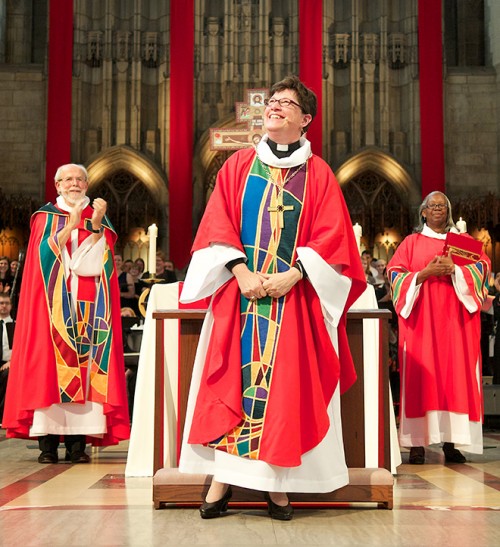
ELCA Presiding Bishop Elizabeth A. Eaton called the declaration “historic” in a statement released by the denomination following the Wednesday vote.

That’s right. A female bishop welcomed the news of entering into closer relations with church that will not ever ordain women.

But some Roman Catholics are not happy (the unhappy Lutherans are already in a different synod — LCMS):

The ecumenical drive has been part of the check-list of popes before the current pontiff. The joint worship service has been described by both the Vatican and the Lutheran World Federation as a “commemoration” rather than a “celebration” in order to avoid further controversy. Some Catholics, especially traditionalists, have criticized the prospect of a pope celebrating a schism. Another issue that has traditionalist Catholics and some clerics baleful is the issue of the differing theologies held by the Catholic Church and Lutherans regard the nature and the confection of the Eucharist.

On the upside, Betsy Fox Genovese, who died in 2003, will not have to witness her church’s pursuit of unity with her former church.

The Patron Saint of Calvinist 2k?

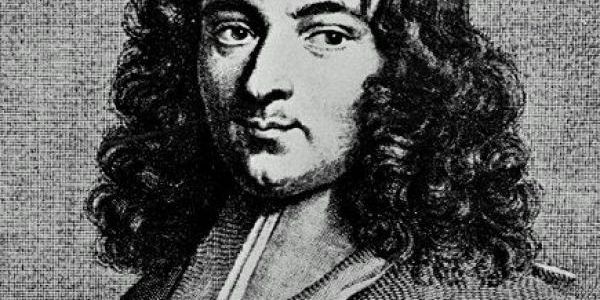
The Anabaptists may have seen the problems with Constantinianism, but they weren’t fans of religious tolerance the way Pierre Bayle was:

Bayle’s passion for religious liberty reflected his circumstances. Unlike better-known champions of tolerance such as Voltaire or John Locke, he had first-hand experience of persecution. He was the son of a poor Calvinist pastor in a small French town near the Spanish border. Protestants such as the Bayles were a harassed minority in France, where roughly 95 per cent of the population was Catholic.

Thousands of Bayle’s co-religionists had been massacred in the late 16th century, and even though Protestants won some freedoms at the end of the French wars of religion in 1598, their position worsened during Bayle’s lifetime. He fled to the Netherlands in 1681, when he was in his early thirties. A few years later, one of his brothers was arrested and died in a French prison. If he had converted to Catholicism, he would have been released. Bayle never got over his brother’s death.

Bayle had the misfortune to be not only a heretic in Catholic eyes, but also an apostate, for which the punishments were still worse. In his youth, he had briefly been convinced by the intellectual case for Catholicism and had converted. After about a year and a half as a Catholic, however, he decided that he had been mistaken and switched back. He followed his conscience, and this became the linchpin of his case against persecution. Why would God have given us a conscience if He did not mean us to use it?

Even if an alleged heretic, such as Bayle, was in error and was worshipping the wrong God, or worshipping Him in the wrong way, might this not be an honest mistake? He used a well-known example of mistaken identity to make his point. The wife of the peasant Martin Guerre sincerely believed an impostor to be her long-lost husband. When the real Martin Guerre returned to his village, the impostor confessed and was executed for adultery and fraud. But Guerre’s wife went unpunished, because her error had been made in good faith. Bayle reasoned that “heretics” should be treated in the same way. If they had searched diligently for the truth and acted conscientiously, they were guilty of no sin. Nobody should punish them or try to compel them to act against their honest beliefs.

Do we need religion to prop up morality? Bayle didn’t think so (and he hadn’t even listened to Angelo Cataldi):

Nor was Bayle much troubled by the notion of atheism, either, which is perhaps the most modern thing about him. Locke maintained that unbelief cannot be tolerated, because it is bound to lead to the moral collapse of any society foolish enough to allow it. Voltaire thought the same. Bayle seems to have been the first person in the Christian world to deny this conventional opinion. Morality, he reasoned, can exist perfectly well without religion.

Bayle was also unimpressed by contemporary apologists:

When an exceptionally bright comet was spotted by a German astronomer in late 1680, it caused a panic. Comets had presaged countless disasters, from the fall of Carthage to the Norman invasion of Britain, or so it was widely believed. Hundreds of alarmist pamphlets were published across Europe and in North America, announcing that the new comet was a dire warning from God to repent immediately.

Bayle set out to show that it would be against God’s nature to use celestial phenomena to send messages to mankind. With typical thoroughness, he offered eight main arguments for this conclusion, supported them with several hundred texts, ancient, medieval and modern, and made sideswipes at dozens of other superstitions along the way.

The argument of which he was most proud was original, effective and simple. It was that any such divine warnings would be bound to backfire and achieve the opposite of what God supposedly intended.

It was easy to show from scripture that God abhorred the worship of false gods. ­According to the prophets, idolatry seemed to rile Him even more than murder, theft or adultery. Yet most people on the planet are not Christians. As Bayle put it, the majority of human beings “remain idolators or have become Mohammedans”. So, if God put awe-inspiring warnings in the sky, most people would just embrace their false religions even more fervently. Why would He send harbingers of doom that could only “reanimate false and sacrilegious devotion almost everywhere on Earth” and “increase the number of pilgrims to Mecca”?

Bayle didn’t try to play God (which should be obvious to Reformed Protestants):

Why is there so much wickedness and suffering in the world? Bayle went through the standard theological answers to this question and knocked down each one, often with a vivid analogy. Is God absolved of man’s evil by His gift of free will – which makes everything man’s fault? No, Bayle answered: that would be like giving a knife to a man when you know he will use it to commit murder. The gift does not absolve the giver. Did God permit man to rebel so that He could send Jesus as a redeemer? That, Bayle replied, would make God “like a father who allows his children to break their legs so that he can show everyone his great skill in mending their broken bones”.

The real answer, he insisted, is that we cannot comprehend why God allows evil. A true Christian must simply accept that He does.

I can’t vouch for Bayle’s personal devotion, but he may be one of those many bridges between Protestantism and Enlightenment.

Those Were the Days (again)

What a church with discipline (and even a little 2k) looks like:

[The] argument for Trump recalls an earlier episode in Catholicism and political theology, the condemnation of L’Action française (AF) by Pope Pius XI in 1927. AF was an anti-liberal political movement in early twentieth-century France. It was a monarchist and nationalist movement centering on the French literary figure Charles Maurras, who held that in order for France to become great again, she must exhibit a national, religious, and political unity that could only be achieved by sloughing off liberal republicanism and embracing “integral nationalism.”

Maurras himself had lost his Catholic faith and was an agnostic, but his “throne and altar” politics appealed to many Catholic clergy and laity. Maurras saw the Catholic Church as a French institution capable of uniting Frenchmen politically. The Church was basically an instrument for implementing Maurras’s cry of “la politique d’abord,” or “politics first!” (Compare this with Trump’s recent appeal to evangelical Christians.) Maurras was also politically anti-Semitic, for Judaism was not French and not a religion capable of uniting the French. Maurras later obtained the sixteenth seat in L’Academie française, the same seat occupied by Cardinal Dupanloup in the nineteenth century. He supported the Vichy regime and spent five years in prison after World War II for doing so. He died with little support, even though he had influenced an entire generation of French politicians and intellectuals, Charles de Gaulle among them.

In spite of Maurras’s anti-Semitism and because his movement promised restitution and renewed privilege for a beleaguered Church, many Catholics supported AF. The waves of the French Revolution had continued to break over the Church in France, with the most recent assault at the time being the 1905 Law of Separation, which finally separated the Church from the Republic, except that all Church property was placed under state ownership and under the management of government-supervised lay committees. To many French Catholics, the Law of Separation showed the futility of Leo XIII’s ralliement policy of trying to find a modus vivendi for French Catholics in the Third Republic’s secular democracy. Hence the swing to anti-liberal, monarchist, restorationist movements like AF, movements generally labeled “integralist.”

One of the Catholics supporting AF was Jacques Maritain, who had affiliated himself with AF on the advice of his spiritual director, Fr. Clérissac. Maritain hoped that he could temper the components of integral nationalism incompatible with Catholicism through his association with Maurras in their joint publication Revue Universelle, for which Maritain wrote for seven years.

The Vatican had contemplated a condemnation of AF for some time, and the Holy Office’s desire to place Maurras’s writings on the Index was checked only by the outbreak of World War I. But late in 1926 after hearing of more French Catholic youth joining AF, Pius XI prohibited Catholic membership in AF’s “school” and Catholic support for AF’s publications. In early 1927, the official condemnation and excommunications began, shocking many French Catholics. Two French bishops lost their sees for failing to comply with the condemnation, and the great ecclesiologist Billot lost his cardinal’s hat. Papal ralliement was here to stay, and any party spirit suffused with pagan attitudes was deemed incompatible with Catholic political involvement. The condemnations were a watershed moment for Maritain, who quickly began to reevaluate his political and social commitments in light of his ultimate commitment to the Catholic faith. His apology for the condemnation of AF, Primauté du spirituel (1927), set the trajectory for his most famous political works, Humanisme intégral (1936) and Man and the State (1951). These works later influenced the Fathers of Vatican II, including Pope Paul VI.

It is possible for popes to act even when they are not temporal princes.

The Vatican wanted Catholics to refuse an attractive but ultimately self-defeating choice in supporting AF, and today American Catholics face a similar sort of choice. Now Trump is dissimilar to Maurras in many ways. The latter was revered for his intellectual and literary ability and had coherent and firm philosophico-political commitments, while Trump has demonstrated a shocking ignorance of Christianity and malleable, opportunistic political positions. Although both in a sense promoted the “liberty of the Church,” Maurras did so through throne and altar restorationism while Trump does so through an appeal to religious liberty.

So what’s the lesson?

The lesson from the AF crisis bears mentioning today. The Church, both her teaching office and her living members, constantly must discern whether new means for political action are compatible with a genuine concern for the common good and the integrity of Catholics involved in politics.

Is such discernment the consequence of losing confidence in the bishops?

Who is going to save our Church? Do not look to the priests. Do not look to the bishops. It’s up to you, the laity, to remind our priests to be priests and our bishops to be bishops. Archbishop Fulton Sheen

But I thought episcopacy and apostolic succession was what made Protestantism look like such a poor alternative for western Christians.

Do Historians Do This?

Last night’s conversation at Presbycast about a lot of things Presbyterian, together with current research on Roman Catholic debates during the 1980s about the church and American identity, got me thinking about whether I, as a historian of J. Gresham Machen and the OPC get away with writing this kind of evaluation of the PCUSA. What follows is from Jay Dolan’s The American Catholic Experience (1985) [Dolan taught history for many years at Notre Dame]. Here’s his description of what happened in the United States after Vatican II:

Another change that transformed the religious world of Catholics was a new understanding of sin. The traditional concept of sin was grounded in a system of laws, some of which were rooted in Scripture or the natural law, while others were promulgated by the church. The new Catholic morality argued for a more personal, less legalistic, approach to sin. The virtue of love became primary, together with the individual conscience. The implications of this shift, publicized in both scholarly and popular works, was tremendous. Perhaps most dramatic was the decline in confession. A 1974 study found that only 17 percent of the Catholics surveyed went to confession monthly, compared to 37 percent in 1963. Soon form followed function, and reconciliation rooms, where priest and penitent could interact face to face, replaced the dark confessional box. Penitential services became popular, and on some occasions a public general absolution replaced private confessions. (434).

For those who say nothing changed after Vatican II, Dolan is a contrary voice and a recognized authority on Roman Catholicism in the United States to boot (not a blogger or apologist).

But that’s not the primary reason for unearthing this quote. The point is this: what if I wrote this about the PCUSA after the OPC’s formation? What if I asserted in a book published by a trade press (Doubleday) that the PCUSA had become liberal, that it changed its theology on sin and salvation, and that these departures from historic Presbyterian practices constituted a “new” Presbyterianism, or Protestantism for a “new age.”

Of course, while wearing my OPC hat, I think that about the PCUSA. But I can’t get away with that in the mainstream publishing world without running the risk of being ostracized from the profession as the Gary North of American historians. Call me a coward. But historians of American religion cannot make certain claims about communions everyone knows to be theologically accurate because they don’t want to admit that the fundamentalists had a point.

It could also be a function of 2k. What is acceptable for churchmen’s judgments is not so for professional historical scholarship. We don’t always succeed but we do try to keep theological judgments from informing historical analysis. Sometimes that’s artificial. But it’s also the case that professional academics is not the place to settle ecclesiastical conflicts.

Still, why do those academic calculations not apply to Jay Dolan, the history of Roman Catholicism in the United States, or Doubleday? Is it a function of academic seniority? Once you acquire tenure you can write whatever you want?

Or is it that what Dolan said is actually good history and that converts and apologists have yet to catch up with the church they’ve joined and celebrated?

As White and Christian As Ever

Some think the United States is becoming less white and less Christian:

These racial and ethnic changes are dramatic, but they only partially account for the sense of dislocation many whites feel. In order to understand the magnitude of the shift, it’s important to also assess white Christian America’s waning cultural influence. It’s impossible to grasp the depth of many white Americans’ anxieties and fears—or comprehend recent phenomena like the rise of the Tea Party or Donald Trump in American politics, the zealous tone of the final battles over gay rights, or the racial tensions that have spiked over the last few years—without understanding that, along with its population, America’s religious and cultural landscape is being fundamentally altered. . . .

It’s true that mainline numbers dropped earlier and more sharply—from 24 percent of the population in 1988 to 14 percent in 2012, at which time their numbers stabilized. But beginning in 2008, white evangelical Protestant numbers began to falter as well. White evangelical Protestants comprised 22 percent of the population in 1988 and still commanded 21 percent of the population in 2008, but their share of religious America has now slipped to 18 percent.

Meanwhile, some can’t help but notice that the Democrats and Republicans have nominated white Protestants:

Too little noted, Protestant America has managed to nominate two Protestant candidates for president. As Clausewitz famously observed, “war is simply a continuation of political intercourse, with the addition of other means.” My corollary, from which most Americans might prefer to avert their eyes: “Politics is simply a continuation of religious intercourse, with the addition of other means.”

While almost ignored it is a telling and, perhaps, a defining aspect of the 2016 election. In his imperfect but authentic way, Donald Trump is reflecting certain of the Calvinist values underlying his beautiful Presbyterian faith. Hillary Clinton is reflecting, in her own imperfect but authentic way, the values of her beautiful Methodist faith.

If you’re not convinced that America is still white and Christian, then you haven’t tried out the apologists’ argument that Roman Catholicism hasn’t changed.

Tim Keller with Hair (and coiffed to boot)?

Let this be a lesson to the PCA where some want women to do the same things that men already do (sometimes poorly):

Since the 1990s women have found plentiful opportunities to fill positions in the upper echelons of the national security apparatus. Although we have not yet had a female commander-in-chief, three women have served as secretary of state and two as national security adviser. Several have filled Adlai Stevenson’s old post at the United Nations. Undersecretaries, deputy undersecretaries, and assistant secretaries of like gender abound, along with a passel of female admirals and generals.

So the question needs be asked: Has the quality of national security policy improved compared to the bad old days when men exclusively called the shots? Using as criteria the promotion of stability and the avoidance of armed conflict (along with the successful prosecution of wars deemed unavoidable), the answer would, of course, have to be no. Although Madeleine Albright, Condoleezza Rice, Susan Rice, Samantha Power, and Clinton herself might entertain a different view, actually existing conditions in Afghanistan, Iraq, Libya, Syria, Somalia, Sudan, Yemen, and other countries across the Greater Middle East and significant parts of Africa tell a different story.

The abysmal record of American statecraft in recent years is not remotely the fault of women; yet neither have women made a perceptibly positive difference.

Is It the Economy or Social Media?

I (all about me) like it when discussions of spiritual matters include material causes. Calvinism isn’t just an idea (or five of them), but it is a form of western Christian that emerged at a specific time and place and its social location is part of Reformed Protestantism’s DNA (ever heard someone complain that Calvinism is too white, male, and suburban?). George Whitefield was not merely an evangelist but a person who had theatrical training and could really punch “Mesopotamia” so that the women fainted (which made the children cry).

So when Carl Trueman complained about the economic factors that contribute to the creation of an elite group of pastors and theologians who have an outsized influence in Protestant circles thanks to finances, I liked the point. If you can show that someone’s authority has at least something to do with their material standing rather than divine unction, then you have reason to follow your gut and take them with less seriousness.

But here’s the thing: if you look at the finances, the influence is disproportionate. Here are some sample numbers (gleaned primarily from the Evangelical Council for Financial Accountability and Guidestar):

2015 Mission to the World (PCA): $65 million+ revenues; $54 million+ expenses

2014 Council on Biblical Manhood and Womanhood: $287k+ revenues; $187k+ expenses

2015 Gospel Coalition: $2.6 million+ revenues; $2.2 million+ expenses

2015 Good News Publishing (Crossway, parent company [?] of Gospel Coalition): $17 million+ revenues; $15 million+ expenses

2014 Committee on Foreign Missions (OPC) budget: $1.6 million+

Judging by the wealth, CBMW’s influence is breathtaking (if you follow that sort of thing).

Also, judging by the numbers, the PCA’s foreign missionaries should be the topic of every other blog post by the folks who spin mortification.

I agree with Carl when he says:

My earlier questions — ‘How did these men get to such positions of far-reaching influence? Who appointed them to speak for me? How do we get rid of them if they go astray?’ – are the pertinent ones.

But since social media is cheap and the way these days to create a brand and gain a following, perhaps the better question is why Mission to the World and the OPC’s Committee on Foreign Missions aren’t creating a blog with regular contributions from their personnel.

Confused but Not Dazed

Father Dwight has counsel for discouraged Roman Catholics:

4. Regarding Pope Francis – Many conservative Catholics are troubled by Pope Francis. They think he is a textbook 1970s liberal. He’s not. Take time to understand his context and background from Argentina. Read this post to put things into perspective. Get to know the man and pray for him. It is ok to disagree with him and question his judgement. He’s not infallible all the time you know, but you can do so with an open heart and a desire to understand and be with him and learn from him. What’s the alternative? You set yourself up as the judge of the Holy Father? Hmmm. There’s not much mileage in that now is there?

Once upon a time the western church had councils because Rome had three popes.

Also, it’s a free country, right? So separated siblinghood is an alternative. But being Roman Catholic means you have to accept whatever the bishops do? Fr. Dwight might make sense in a pay-pray-obey environment. But the world of immigrant parishes is long gone. Root-root-root for the Fightin’ Irish.

5. Regarding Cafeteria Catholics – Are you maddened by so called “devout Catholics” who openly endorse same sex marriage, women priests and are “pro choice”? Join the club. They annoy me too. Are you also annoyed by the bishops and priests who take the same view? I’m with you. However, remember that the Catholic Church is universal. We’re not a sect where everyone agrees. We’re inclusive and that’s why we’re Catholic. The Church has always had dissidents, rebels and downright bad Catholics. Have you ever read the Old Testament or taken a close look at the twelve apostles? The saints and sinners are all in together. The weeds and the wheat, the goat and the sheep are mixed. Jesus will sort it out one day, and stop for a moment and ask yourself, are you a perfect saint yet? I’m not. I’m still learning and growing and repenting. So I guess we must offer the mercy (and benefit of the doubt) to others that we would wish to receive.

Isn’t the church supposed to stand for the truth? And if observers of Pope Francis need context to understand him and his unwillingness to do something about dissent and error in the church, has not Fr. Dwight entered the cafeteria of choosing what he wants to believe? Why does he get to have perspective on the church’s problems that Pope Francis doesn’t because of his Argentinian background?

6. Regarding You and the Church – I’ve heard some Catholics grumble that the church has let them down. But what did you expect of the church in the first place? The church is divine, but she is also human. The church is a work in progress, an ark of wounded warriors, a tribe of troubled pilgrims, a family of lost children looking and longing for home. When you see the church like this, instead of hoping that the church will be the instant answer to all your problems you will be more content. Our role in the church is to be faithful, prayerful, hard working and stable in our love for Christ and his people.

But Roman Catholicism was supposed to be an upgrade, better than Protestantism. Isn’t that why Fr. Dwight left fundamentalism for Anglicanism and then left Anglicanism for Rome? So shouldn’t the standards for the bearer of the truth, the only true church, be higher? If converts knew that Rome was going to be as incoherent and liberal as the PCUSA or the Church of England, why leave Tim Keller? Or is it that this is godly mess and Protestants only have ungodly messes (and of course, having ONE mess is better than having many).

7. Regarding Priorities – The main thing is to stay close to Jesus and Mary. How do you do this? The Catechism says we experience Christ in five specific ways: 1) in the Sacred Scriptures 2) in the person of the priest 3) in the person of the poor 4) in the fellowship of believers 5) in the Eucharist. I can guarantee you, if you make these five things your priorities, then you will have a solid, sure and secure relationship with Jesus Christ. These five meeting places of Christ assume that your life is bathed in prayer and that you have as your main priority being with Jesus and Mary in these ways. If you get this right the other worries fall away.

Jesus is good and having his Spirit is really good. Mary is good but she is not exactly going to save. But is Fr. Dwight suggesting we can have Mary or Jesus apart from the Bishop of Rome?

Lots of sorting to do. Sure would be nice to have a hierarchy to do this for the faithful.