The Dilemma

On the one hand, Roman Catholicism is nothing without the papacy:

There is nothing more distinctly Catholic than the papacy. While just about every other Catholic belief can be found in at least some other Christian denominations, our beliefs about the papacy are unique. Nobody else believes that the bishop of Rome has jurisdiction over the entire Church or that he can infallibly define dogmas; only we do. As a result, these doctrines are essentially what make us Catholic rather than Protestant or Orthodox, so they are extremely important for us.

In addition to the papacy, you need the magisterium:

There is agreement among all Christians that Holy Scripture is the Word of God. But since this Word is conveyed in human language, it does not have the evidence (quoad se—in itself) that the Protestants want to attribute to it. Rather, there is need for a human interpretation on the part of the teachers of the faith whose authority comes from the Holy Spirit. Toward those who hear the Word of God, these teachers represent God’s own authority, making use of human words and decisions (quoad nos—to us). The task of authoritative teaching and governing cannot be left solely to the individual believer who in his or her conscience comes to accept a certain truth. After all, revelation has been entrusted to the Church as a whole. Therefore, the Magisterium is an essential part of the Church’s mission. Only with the help of the living magisterium of the pope and the bishops can the Word of God be passed on in its integrity to the faithful and to all the people of all times and places.

On the other hand, you endure clericalism:

Clericalism affects the whole church. It has been accepted and even lauded by clergy as if it is an anticipation of the Kingdom yet to come. Its hold on us rests comfortably in the symbolic imagination of Roman Catholicism and the Orthodox churches of the East, at once their charm and their curse. That structure must be radically reviewed and reformed if the faith and hope and healthy life of the church are to be revived. As a Quaker colleague once put it to me: “What American adult wants to belong to a church in which he is treated as a child?” Clericalism infects the other Christian churches to a lesser degree and variously, but the Roman Church has simply collapsed under its weight.

According to some, there is nothing to be done about the crisis because the clergy-lay distinction is a matter of the divine will; in other words, “It’s Tradition, a very, very, very old Tradition!” Or could it be that there is something that can and ought to be done that is so radical and church-embracing, so chilling, that it is beyond clerical contemplation? If indeed clericalism is the problem, then the solution is the elimination of that division between clerical and lay Catholics. I am not opposed to leadership, to authority, to structure, to ministry, even to its three-tiered Roman Catholic articulation, but I am opposed to its sacrality and its sanctification. I suppose I am now advocating anti-clericalism, an instinct almost as old as clericalism itself, a historical protest against what the priesthood has done to the church (and a lot for the church, it must be said) through nearly two millennia. Can we count on the clergy to eliminate clericalism? Or the bishops? Or the pope? Not likely! They may badmouth it on occasion, much to their credit. But undo it? Never.

Protestants did not fix this, but they did localize church government. The downside for Protestants is a lack of unity. The upside is not having to act like the apostles’ successors know how to interpret the Bible better than you (as long as you know Greek and Hebrew).

Remember the Paradigm

It feels like Old Life is on the cutting edge of commentary on Roman Catholicism. First, Edgardo Mortara surfaced last week for some at First Things and The American Conservative. Old Life was there and did that four years ago.

Now comes word that the pope’s Secretary of State, Cardinal Pietro Parolin (so much for the spirituality of the church), thinks Pope Francis is tapping a paradigm shift in Roman Catholicism:

“At the end of the day, what resulted from Amoris Laetitia is a new paradigm that Pope Francis is carrying forward with wisdom, with prudence, and also with patience,” said Italian Cardinal Pietro Parolin, the Vatican’s Secretary of State and effectively the most senior figure in the Church after the pope himself.

“Probably, the difficulties that came up [around the document] and that still exist in the Church, beyond certain aspects of its content, are due precisely to this change of attitude that the pope is asking of us,” Parolin said.

“It’s a paradigm change, and the text itself insists on this, that’s what is asked of us – this new spirit, this new approach! … Every change always brings difficulties, but these difficulties have to be dealt with and faced with commitment,” Parolin said.

Old Life was on paradigms a good five years ago.

But the bigger issue is whether Bryan Cross’ paradigm has caught up to his Holy Father.

The 600 Pound Modern Gorilla in the Church

This review of Jamie Smith’s new book, Awaiting the King, got me thinking about Smith’s understanding of cultural liturgies. Here are some quotes from the book in the review:

There is something political at stake in our worship and something religious at stake in our politics. (3)

Implicit in the practices of Christian worship is an economics, a sociology, a politics. (54)

The church’s worship does not “become” political when it is translated into policy or hooked to partisan agendas. The politics of worship is tied to the renewal of moral agency of the people of God, who are formed to be sent. (59–60)

[I]t is equally important that we see Christian worship as political in nature—not in the sense of being “partisan” or tied to “earthly city” special interest groups, but insofar as it is the enactment of a public ritual centered on an ascended King. (53)

Jonathan Leeman rephrases Smith this way:

Your trip to the mall, your Monday Night Football party, your standing for the national anthem both express your worship, identity, and morality and also shape them, for better or worse. You’re not just a “thinking thing,” you’re a desiring and a loving thing, and these various cultural practices shape your desiring and your loving, like the liturgies at church.

What Smith wants us to take away from the book, then, is more awareness concerning how the world’s liturgies affect and shape our worship and politics, and then to center our political life around the church’s liturgies. Doing so will cause us to take a more ambivalent posture toward public engagement.

What I don’t understand is how women’s ordination escapes Smith’s close reading of cultural liturgies. Is the ordination of women a way of resisting modernity or a capitulation to it? If watching football on Sunday afternoons is part of a liturgical tradition that undermines the sanctification of the Lord’s Day, why isn’t the ordination of women a sign of the church’s capitulation to individualism and egalitarianism? In terms of cultural tropes, after all, women’s ordination closer to shopping at Walmart than it is to supporting the mom and pop shop on Main St.

You don’t need to interpret women’s ordination in terms of orthodoxy or heterodoxy as Smith argued:

Now, no one for a second can deny that such views of sexual morality and marriage have been the historic teaching of the church. The weight of Scripture, tradition, and perhaps even “natural law” have sustained these views and beliefs for millennia. And one could argue that the silence on such matters in, say, Machen or The Fundamentals only reflects what was taken for granted, not what was unimportant. Certainly. And just because they are not matters of creedal definition doesn’t mean they are matters of indifference. The creeds don’t say anything about Christian nonviolence, for example, but that hardly means Christians are therefore free to adopt any posture or position they want if they follow the Prince of Peace.

But it is surely also worth pointing out that conciliar standards of orthodoxy do not articulate such standards. If the adjective “orthodox” is untethered from such ecumenical standards, it quickly becomes a cheap epithet we idiosyncratically attach to views and positions in order to write off those we disagree with as “heretics” and unbelievers. If “orthodox” becomes an adjective that is unhooked from these conciliar canons, then it becomes a word we use to make sacrosanct the things that matter to “us” in order to exclude “them.”

Precisely so. So if you depart from the historic position of the church on ordination, how are you sufficiently worried about cultural liturgies that promote ideas and expectations that make God’s people like the larger society? And if you believe that part of Protestant orthodoxy involves the sufficiency of Scripture, how do you go against clear biblical teaching on ordination and say you are committed to conciliar orthodoxy? How for that matter, are you going to be a reliable ally in disputes about matters of conciliar orthodoxy? The CRC may still confess the Canons of Dort, but will it refuse membership in ecumenical organizations that include Arminians?

Rod Reading Tim

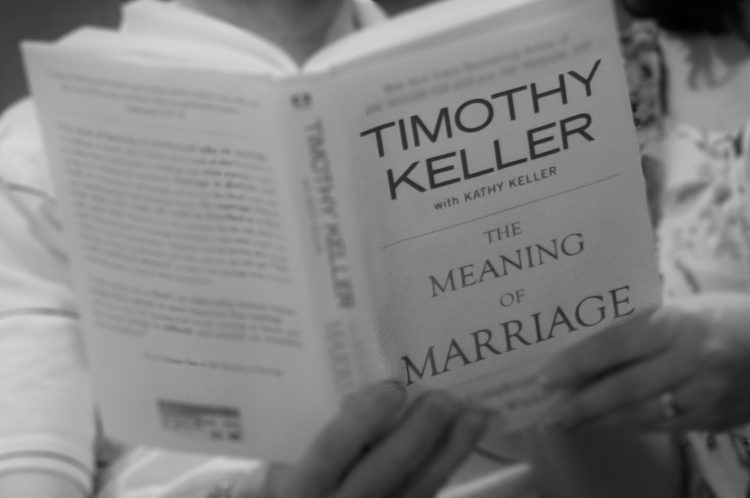
Rod Dreher doesn’t detect much daylight between the Benedict Option and Tim Keller even though I’ve tried to describe it. Here’s Keller (from Rod) on the West:

The crazy Christian gospel, so sneered at by the cultural elites that day, eventually showed forth its spiritual power to change lives and its cultural power to shape societies. Christianity met the populace’s needs and answered their questions. The dominant culture could not. And so the gospel multiplied.

Do we have Paul’s courage, wisdom, skill, balance, and love to do the same thing today in the face of many sneering cultural leaders? It won’t be the same journey, because we live in a post-Christian Western society that has smuggled in many values gotten from the Bible but now unacknowledged as such. Late modern culture is not nearly as brutal as pagan culture. So the challenges are different, but we must still, I think, plunge into the agora as Paul did.

Here’s Rod’s rendering:

Does it surprise you that I agree with this? I’m still looking for ways in which Tim Keller and I substantively disagree on cultural engagement. If you know of any, please let me know — I’m serious about that. What I emphasize in The Benedict Option is that if we Christians are going to do that in a hostile, post-Christian public square, we have no choice but to take a step back from the public square to deepen our knowledge of the faith, our prayer lives, and our moral and spiritual discipline.

One difference right off the bat is that Keller is not pessimistic about the contemporary world, the way Rod is. That’s why it had to come as a surprise when Princeton Seminary thought Keller was too conservative and should not receive the Kuyper Prize.

Yet, Keller has other readers. Rod quotes one:

I’m somewhat favorably disposed to Tim Keller’s ministry, and even attended his church for a season. But that movement is likely to head off in its own direction. The current alliances that make up evangelicalism were forged in an era before liquid modernity. There is no reason why we should expect those alliances to continue to make sense in the very different social context that we face today. And we have to avoid the trap of conflating Christian orthodoxy with practical Christian wisdom. Families raising kids need something very different from a church community than what I need, as a 30-something professional who travels 50% of the time, usually in Asia….

Liquid modernity poses a certain challenge to Western rules-based cultures. Things change faster than our ability to develop rules to address certain situations. And that places a degree of stress on existing institutions, requiring them to be thicker than they were in the past. But it’s hard for institutions to be both thick and broad. For thickness to work, there has to be a high degree of overlap in people’s life situations. Demographic differences matter more.

I’m actually an advocate of an evangelical break-up. I believe that the Benedict Option is necessary. But the Benedict Option is going to look very different for different people. My fear is that evangelicalism ends up targeting the largest market, middle-class white suburbanites with kids, and castigated everyone else as a sinner. One need not look to hard for criticisms of Tim Keller’s efforts to reach out to people like me. And it disappoints me that Keller is largely silent in the face of those criticisms. If Christianity is to survive in an age of liquid modernity, it’s going to take more than suburban mega-churches.

Another difference then is that Rod thinks modernity is a force that hurts Christianity while Keller, like Pope Francis, tries to come along side moderns.

Still one more reader of Keller that Rod should enter into his Redeemer NYC spreadsheet:

Over the past decade or so, evangelical millennials like myself and my peers (and possibly even you), could be found across the country, repenting of our former fundamentalist ways.

We’ve put away our moralistic understanding of Christianity. We’ve reclaimed what is essential: Jesus, and his gospel. We’ve tossed aside our simplistic, and less than nuanced answers to those who criticize our faith and worldview.

Aided by an Internet-powered, Information Age, we have set out to re-engage culture in a fresh new way, following Tim Keller and Russell Moore on one end of the spectrum, or Rob Bell and Rachel Held Evans on the other.

As those who will soon lead the church, we are convinced that we are called to a new vision of cultural engagement and mission. . . .

Therefore, we’ve raised our sensitivity to xenophobic nationalism, misogyny, gay-bashing, microaggressions, and anti-intellectualism. For us, being uninformed and un-’woke’ is shameful and most harmful to our Christian witness.

Instead, we have taken up the mission to winsomely engage the brightest of thinkers in order that they might believe, and to prophetically rebuke the most narrow-minded of evangelicals in order that they might think.

We see far too little cultural influencers operating out of a biblical framework. And we’ve seen too many of our friends leave the faith due to overly simplistic, unsatisfying, and stale apologetic answers to their genuine contemporary questions.

We want to articulate, in a Keller-esque fashion, an attractive “third way,” between the liberals and the conservatives, between the irreligious and the religious. And in doing so, we hope to find a better place to stand, where we are neither apostates nor anti-intellectuals, neither prodigals nor older brothers.

So we continue to study Scripture and affirm its absolute authority, while still paying close attention to contemporary culture, the media, and the academy, seeking common grace insights from them, and wrestling with how to interpret and make sense of their findings.

We heed Peter’s exhortation that we be prepared to make a defense to all, while reminding ourselves of James’ admonition to be quick to listen, and slow to speak, even when it comes to a secular culture such as ours.

We don’t settle for just being Christians, but we seek to be informed, knowledgeable, and sensitive Christians. And by God’s grace, we sometimes do find a way forward, a third way, in which we actually become “believers who think,” equipped to interact with “thinkers” who don’t believe.

And discovering a “third way” feels good. It’s the rewarding feeling of progress, and confidence — confidence in the fact that we’ve found more thoughtful and persuasive answers than the ones our Sunday School teachers gave us 20 years ago. But it’s also the feeling of transcendence, and if we’re not careful, arrogant superiority.

Thinking Christians engaged with the world. That may not have been Paul’s advice to Timothy but it’s a page right out of Harry Emerson Fosdick:

Already all of us must have heard about the people who call themselves the Fundamentalists. Their apparent intention is to drive out of the evangelical churches men and women of liberal opinions. I speak of them the more freely because there are no two denominations more affected by them than the Baptist and the Presbyterian. We should not identify the Fundamentalists with the conservatives. All Fundamentalists are conservatives, but not all conservatives are Fundamentalists. The best conservatives can often give lessons to the liberals in true liberality of spirit, but the Fundamentalist program is essentially illiberal and intolerant.

The Fundamentalists see, and they see truly, that in this last generation there have been strange new movements in Christian thought. A great mass of new knowledge has come into man’s possession—new knowledge about the physical universe, its origin, its forces, its laws; new knowledge about human history and in particular about the ways in which the ancient peoples used to think in matters of religion and the methods by which they phrased and explained their spiritual experiences; and new knowledge, also, about other religions and the strangely similar ways in which men’s faiths and religious practices have developed everywhere. . . .

Now, there are multitudes of reverent Christians who have been unable to keep this new knowledge in one compartment of their minds and the Christian faith in another. They have been sure that all truth comes from the one God and is His revelation. Not, therefore, from irreverence or caprice or destructive zeal but for the sake of intellectual and spiritual integrity, that they might really love the Lord their God, not only with all their heart and soul and strength but with all their mind, they have been trying to see this new knowledge in terms of the Christian faith and to see the Christian faith in terms of this new knowledge.

For anyone who detects an example of the genetic fallacy, please write a note to Pastor Tim and ask him to explain how he avoids the errors that modernists like Fosdick committed.

The Problem with Cessationism

Cessationists apparently have the reputation of not believing in miracles after the apostolic age:

No issue has been more controversial among Protestants in the past 40 years than the charismatic gifts and the role of miracles in the post-apostolic age. The issue was controversial in previous eras of Protestant history, too, although theological lines were not usually drawn as hard and fast as they are between “cessationists” and “continuationists” today.

In the 1700s and 1800s, suspicion of claimed miracles was connected to anti-Catholicism. Protestant critics saw the Catholic tradition as riddled with fake claims of miracles. Ridiculing the fake miracle claims of Catholics (such as icons bleeding a liquid that turned out to be cherry juice) became a staple of Reformed polemics against the Catholic Church. So when seemingly miraculous events happened in Protestant churches, even sympathetic observers warned against the threat of bogus miracles.

Odd, but the cessationists I know all affirm the ongoing reality of miracles. How could you ever believe in people lost in sin becoming regenerate without resorting to the miraculous work of the Holy Spirit?

The real problem comes with the “gift” of speaking in tongues. Why do we need ongoing revelations from God if scripture is sufficient?

1. Although the light of nature, and the works of creation and providence do so far manifest the goodness, wisdom, and power of God, as to leave men unexcusable; yet are they not sufficient to give that knowledge of God, and of his will, which is necessary unto salvation. Therefore it pleased the Lord, at sundry times, and in divers manners, to reveal himself, and to declare that his will unto his church; and afterwards, for the better preserving and propagating of the truth, and for the more sure establishment and comfort of the church against the corruption of the flesh, and the malice of Satan and of the world, to commit the same wholly unto writing: which maketh the Holy Scripture to be most necessary; those former ways of God’s revealing his will unto his people being now ceased. (CofF 1.1 emphasis added)

6. The whole counsel of God concerning all things necessary for his own glory, man’s salvation, faith and life, is either expressly set down in Scripture, or by good and necessary consequence may be deduced from Scripture: unto which nothing at any time is to be added, whether by new revelations of the Spirit, or traditions of men. (CofF 1.6 emphasis added)

Continuationists who want to defend tongues are in the same predicament as Roman Catholics who defend the continuing infallible teaching of the magisterium and the authority of tradition. Does God’s word have all we need for salvation and godliness? Or do we need ongoing revelations for becoming right with God? If you make an infallible pope or a Spirit-filled Christian the arbiter of Christianity, you deny the sufficiency of Scripture.

Selah.

Oh, What a Tangled Apologetic We Weave

When we convert to Roman Catholicism and wind up with Pope Francis.

Consider Fr. Dwight Longenecker’s recent explanation for the pope’s failure to answer those cardinals asking for clarification of Amoris Laetitia:

It is, if you like a religion based in an authoritative book, a creed, a catechism, a dogmatic systematic theology and, by extension a defined religious law. Those who favor a propositional faith like certainty and clarity.
Critics of propositional faith believe that, at best, the propositions are simply a framework or structure of belief, and that the real experience is far more complicated, but also far more exciting and real. They criticize those who like a propositional faith as being rigid, legalistic or Pharisaical. The critics of propositional faith like to emphasize the more subjective “encounter with Christ.” They advocate getting away from all the debates about doctrine or canon law, rolling up one’s sleeves and getting busy doing God’s work in the world.

Critics of propositional faith also believe that it is divisive. If “the encounter with Christ” is emphasized rather than propositional formulas of doctrine and morals, we will connect better with non Catholic Christians and people of faith and goodwill who are outside the boundaries of Christian belief. In other words, “doctrine is divisive” but if we focus on religious experience we are more likely to find common ground.

They also feel that a “propositional faith” is, by its nature, bound to the historical and philosophical constructs of the time and culture in which the propositions were asserted. So, the theology of Thomas Aquinas (they would argue) was fine for Europe of the thirteenth century, but it is rather clunky for the fast moving, fast changing global culture of the twenty first century. A faith that is not so propositional is more adaptable and fluid.

In reading the gospel it is difficult not to sympathize with those who criticize “propositional faith.” After all, Jesus’ main opponents were the religious people who were indeed legalistic, judgmental and bound to their laws and man made traditions. Jesus, on the other hand, waded in and “made a mess” to use Francis’ terminology. He defied the legalistic technicalities, met people where they were and brought healing, compassion and forgiveness.

Why does Pope Francis not answer his critics? I believe it is because he is not in favor of “propositional faith”. He wants Catholics to move beyond the technicalities, the details of doctrine and the constrictions of canon law to live out a Catholic life more like Jesus’–allowing for the complications and ambiguities of real life, meeting real people who face difficult decisions and are trying to be close to God while tiptoeing through the legalities and rules of being a Catholic Christian.

In other words, he does not answer his critics because he does not wish to play their game. He does not wish to be drawn into their legalistic arguments, but instead wants to continue to challenge them.

When you read Fr. Longenecker, though, on why he left Anglicanism for Roman Catholicism you start to wonder if he might have remained in the Church of England had he not been so propositional himself. Consider his lament about modernism which is non-propositional to the max:

Women’s ordination was a problem and the authority of Rome was the answer, but there was a deeper, underlying problem with the Anglican Church as I experienced it. The problem is modernism — a philosophical and theological position which is deeply opposed to historic Christianity.

The foundational problem with modernism is that it is anti-supernaturalist. The most foundational difficulty with the anti supernaturalism of the modernist is that he has an anti-Christian conception of God. For the modernist God is either totally immanent. That is He is ‘down here’ and not transcendent, or he is so totally transcendent as to be a sort of deist God who is ‘out there’ and does not intervene. What the modernist theologian cannot believe in is a God who is both immanent and transcendent–a God who is ‘out there’ but who touches this world and ultimately enters this world through the incarnation.. . .

If this is true–if Jesus’ death is no more than symbolic image, then the entire ecclesiological structure and sacramental system is no more than an archaic symbolical structure. It is a historic mythology that, at best, unlocks something within the human subconscious. It is a human construct that helps people to transition through their lives. . . .

So when they said they believed in the Incarnation they actually believed that “Jesus Christ was the most fulfilled human who ever lived. He was so self actualized that he achieved a kind of divine status. He, more than anyone else, was one with the god within.” When they ‘affirmed’ the Virgin Birth they really meant that Mary was an especially pure young woman before she had intercourse with Joseph or a Roman soldier. When they proclaimed from their pulpit on Easter Day, “Christ is Risen! He is risen indeed!” what they meant was, “In some sort of wonderful way I would want to say that Jesus Christ continued to inspire his followers after his tragic death.”

I used to think that his lie was simply being told in the halls of academia, that the rot was really only in the universities, but of course it was not only there. It had been disseminated throughout the Anglican Church through the education of the clergy for the last fifty or sixty years. Of course there were pockets of true belief and there are still. In making this critique of Anglicanism I am not damning all Anglicans.

Now that the pope doesn’t respond to his critics, Fr. Dwight gets non-propositional.

No wonder converts are always winning.

Why Did Jesus Even Need to Die?

The incarnation accomplished what can only a cosmic Mack Truck could do:

“The Word became flesh.” By his Incarnation Jesus restored in himself God’s creation of man and woman at the beginning of human history in his own image. Jesus is the perfect image of the Father and thus becomes the source of restoring all of humanity as the image of God. Jesus renews the original dignity of the human being, indeed now raising it to a still higher status. Recall what the priest prays during the Preparation of the Gifts at Mass when he pours a little water into the chalice of wine: “By the mystery of this water and wine may we come to share in the divinity of Christ who humbled himself to share in our humanity.” Humanity is called now to deeper share in the life of God and this intensifies the regard that men and women have for one another. Because of the Incarnation all human beings are connected to Christ and destined to find eternal fulfillment in him. In his Encyclical Letter Redemptoris Missio St. John Paul II wrote: “Jesus came to bring integral salvation, one which embraces the whole person and all mankind, and opens up the wondrous prospect of divine filiation.”

The Church’s defense and protection of all human beings and human rights flows not simply from a philosophical principle, or from the natural law, but even more profoundly from its belief in the connection of all human beings to Christ and their destiny in him because of the Incarnation. This connectedness and destiny of all humanity to and in Christ is also the foundation of the Church’s solidarity with all peoples. Respect for the dignity and rights of others entails more than just the observance of the Ten Commandments. In the Sermon on the Mount Jesus commands the cultivation of virtues which ennoble not only one’s own self but, even more, enhance the well-being of others. Thus, for example, we are commanded not only not to kill another, but also not to be angry at someone or call a person a “fool” (cf. Mt. 5:21-22).

You’d never know that Jesus condemned the Pharisees, wasn’t particularly concerned to see Judas restored, or prophesied doom on Jerusalem. That’s okay. We can find a text in the Bible to support whatever virtue we like.

By the way, those Reformed Protestants inclined to the cosmic significance of the gospel should pay attention and make better arguments.

Diversity

I do wonder what it is like to be in fellowship with the Bishop of Rome. It cannot be easy.

First you have the challenge of interpreting Vatican II (and lots of different interpretations):

Sammons and Mosebach see three standard interpretations of Vatican II:

The “liberal” or “progressive” interpretation sees the Council as a decisive break with Catholic tradition, and welcomes it. Citing the “spirit of Vatican II,” proponents of this interpretation have implemented radical changes in the Church, and push for more.

The “official” interpretation sees Vatican II as a great success, and denies that any serious problems arose in the Council’s aftermath. There was some understandable friction as changes were implemented, the partisans of this theory will concede. But ultimately the changes are proving successful and all is well.

The “conservative” or “orthodox” interpretation cherishes the documents of Vatican II, but believes the implementation of the Council was generally hijacked by the “progressive” party within the Church. If only we would adhere to the true teachings of the Council, this party says, the Church would thrive once again.

According to this “conservative” or “orthodox” interpretation, the hijacking of the Council created the incorrect impression that the Church had repudiated past teachings. My favorite quick exposition of this view was made by Philip Trower in his excellent book, Turmoil and Truth, in which he formed a vivid image to explain what happened:

Six men are pushing a heavily loaded car which has run out of fuel. Three of them, who have been riding in the car, want to push it 20 yards to get it into a lay-by. The other three, who have offered to help, mean to push the car 50 yards and shove it over a cliff followed by the car owner and his two friends. Once the pushing begins and the car starts moving it is probable the car is going to come to rest more than 20 yards from the starting point even if it does not end up at the cliff’s foot.

Now let us imagine what a group of people watching from a nearby hilltop will make of the incident. They will start by assuming that all six men have the same intentions. The car is moving steadily forward. Then they see three of the men detach themselves from the back of the car, run around to the front and try to stop it. Which are the troublemakers? Those surely who are now opposing the process that has been started.

Once you get your mind around the magisterium since 1960, try calculating your afterlife:

But “temporary” can mean a long, long time. Based on reports from visions of saints (see the quotation from St. Francis of Rome in this more recent vision), it has been widely taught that each sin must be punished by seven years of purgatorial fire. This is what Tetzel refers to, below, but I recall hearing it from Mother Angelica of EWTN and other conservative Catholics today. The Church has never officially specified a set time, as far as I know. I have heard contemporary Catholics say that since we will be outside of time after death, the experience of Purgatory will seem as if it is over in an instant. But the theology of Purgatory requires a temporal punishment. Some conservative Catholics say it might be more like an hour for each sin, but they agree that this will amount to many years, even centuries in the fire. (See this and this.)

So if Tetzel and St. Francis of Rome are right–as many if not most Christians believed in the medieval church–let’s do the math. Assume that seven years in purgatory are required for each sin. Say you are a very good person and only commit one sin per day. That comes to 2,555 years in purgatory for one year of sinning. If you live to be 70, you would be facing 178,850 years of suffering.

This would be for sins that are forgiven!

Protestantism has its problems. It also has its advantages.

Dissecting Signers (cont.)

I wonder why John Fea and other signers of the “Open Letter” about racism and Confederate Monuments did not feel the pinch of Matthew Lee Anderson’s criticism of the Nashville Statement. Anderson wrote again:

While forming God’s people is a thoroughly laudable aim, I wonder: why then the website, the press release, and the signatories? The means of communication are not neutral, after all. They deliberately invite attention not just from evangelicals, but the world. If the form of such statements is part of catechesis, then why were Bible verses left off? And why were reasons for each of the affirmations and denials not given, or definitions of terms not supplied? Such additions would dramatically expand the statement’s length. But what does that matter, if the purpose is catechism and not the culture war?

And why is there not more attention to the pastoral dynamics of how these affirmations and denials are to be worked out in the context of local communities? For a statement signed by a heavy concentration of Baptists, its form and substance have little to do with congregational life. It is a “statement” by an evangelicalism that has left ecclesial communities behind in favor of trans-denominational, parachurch partnerships.

That could equally be said of the Christian scholars who signed the letter opposing Neo-Nazis. What about the means of communication? Where are the biblical citations? Why isn’t the “Open Letter” taking a side in the culture wars? One answer could be that the sins are so obvious. So why isn’t it possible to see the self-evident character of the sins enumerated in the Nashville Statement? Only some evangelical scholars are allowed to pontificate, only the smart ones?

When Fea writes that Anderson is observing what evangelical historians are seeing — “Anderson and Gerhz seem to be in agreement that the Nashville Statement reflects what we (and now many others) have been calling ‘The Age of Trump'” — that avoids partisanship?

You could even argue that Anderson’s diagnosis of the subtext and optics of the Nashville Statement apply across the board, even to celebrity Christian intellectuals, like Rod Dreher who is excited about the release of the French translation of Benedict Option. If the means of communication and the publicity machines are not neutral, if they capitulate to the economic structures, inequalities of late modernity, and the desires of consumers, then why not apply that to individuals as much as statements?

But when it comes to Tim Keller, nothing to see (not even the publicity machine, fundraising, digital networks, and fame trafficking that has attended the New York City star):

it isn’t fair to assign blame to a teacher when students do not live up to his standard, particularly in a case like this one where the “teacher” had virtually no personal contact with most of the students and has instead simply attracted a crowd of admirers via publications.

Indeed, if anything I think we should commend Keller for his stewarding of his position at Redeemer. They were very selective in what sermons they made freely available online, he waited a long time to start writing books, and he has put a far greater emphasis on church planting in NYC rather than simply growing his brand as a celebrity pastor. Given what has happened to Mark Driscoll and now Darrin Patrick, we should be profoundly grateful for men like Keller (and John Piper) who manage to be in the spotlight for so long and to do so with relatively little scandal.

I thought Anderson said that publications, lack of personal contact, and crowds of followers were not “neutral.”

The lesson is that the means of production behind the Nashville Statement are flawed. But the means of production behind Keller — well, he arrived ex nihilo.

If You’re Wrong about War, then Maybe Sex Also

Alan Jacobs picks up slack for Jamie Smith’s argument that modern Christians should not reduce orthodoxy to heterosexual sex (about which I tend to agree). But he loses me when he seems to agree with the analogy between sex and pacifism:

the grammar of credal orthodoxy is a generative one, from which the whole of Christian ethics emerges. But it does not inevitably do this in obvious ways, ways that Christians are generally agreed about. Smith’s example of pacifism is a telling one. For the Christian pacifist, the very heart of the credal grammar is that in Christ God is at work reconciling the world to himself, and that therefore the whole life of the Church is to participate in that reconciliation, which enjoins a steadfast refusal of armed conflict. For the Christian pacifist, the Christian who believes that wars can be just has simply failed to grasp that credal grammar. And yet most Christian pacifists do not say that just-war Christians fall outside the scope of orthodoxy. And I think they don’t say this because they recognize the difference between grammatical rules that are explicitly stated and the consequences that implicitly follow from those rules.

What Bible (or Christian tradition — think popes reigning over Papal States and emperors executing justice in Caesaro-Papist manner) are these guys reading?

Since when does the religion of the Bible oppose armed conflict? Redemption in the OT sure seemed to rely on a fair amount not merely of just war but jihad. Jesus redeemed his people by shedding his blood to the emperor’s sword. Jesus will return in judgment and from reading Revelation it does not look like Quakers will be in charge. And then there is Paul’s instruction that God ordains the emperor’s use of the sword.

With friends of pacifism like this, I’m not confident orthodoxy — even limited to Nicea — has a chance.