The World Is Turning Rod and Leaving Tim Behind

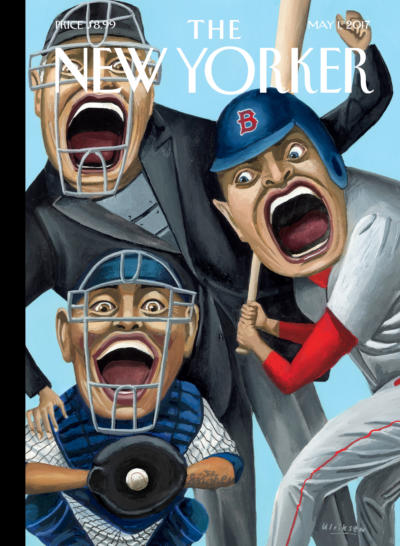
The piece on Rod Dreher and the Benedict Option in the New Yorker was remarkable on several levels. It was generally positive, respectful, and long. This was the case despite Dreher’s tendency to sound a tad hysterical about sexual irregularities and deviance. This quote by Andrew Sullivan, a gay man who has gone head to head with Rod over the years, was telling:

Sullivan has a long-standing disagreement with Dreher over same-sex marriage, but he believes that the religiously devout should be permitted their dissent. “There is simply no way for an orthodox Catholic to embrace same-sex marriage,” he said. “The attempt to conflate that with homophobia is a sign of the unthinking nature of some liberal responses to religion. I really don’t think that florists who don’t want to contaminate themselves with a gay wedding should in any way be compelled to do so. I think any gay person that wants them to do that is being an asshole, to be honest—an intolerant asshole. Rod forces you to understand what real pluralism is: actually accepting people with completely different world views than your own.”

In “The Benedict Option,” Dreher writes that “the angry vehemence with which many gay activists condemn Christianity” is the understandable result of a history of “rejection and hatred by the church.” Orthodox Christians need to acknowledge this history, he continues, and “repent of it.” He has assured his children that, if they are gay, he will still love them; he is almost—but not quite—apologetic about his views, which he presents as a theological obligation. He sees orthodox Christians as powerless against the forces of liquidly modern progressivism; on his blog, he argues that “the question is not really ‘What are you conservative Christians prepared to tolerate?’ but actually ‘What are LGBTs and progressive allies prepared to tolerate?’ ” He wants them to be magnanimous in victory; to refrain from pressing their advantage. Essentially, he says to progressives: You’ve won. You wouldn’t sue Orthodox Jews or observant Muslims. Please don’t sue us, either.

“What I really love about Rod is that, even as he’s insisting upon certain truths, he’s obviously completely conflicted,” Sullivan said. “And he’s a mess! I don’t think he’d disagree with that. But he’s a mess in the best possible way, because he hasn’t anesthetized himself. He’s honest about a lot of the questions that many liberal and conservative Christians aren’t really addressing.”

Notice that Dreher, who is outspokenly anti-gay marriage, did not receive the chorus of criticism that Tim Keller did at Princeton Seminary even from such mainstream organs and figures as the New Yorker and Andrew Sullivan.

To be sure, the PCUSA is not the New Yorker, but at a time when the magazine has identified President Trump and his supporters as an alien force in national life, a fair piece about Dreher is not what readers would have expected.

So why does Dreher receive more acclaim than Keller? The reason could be that the former promotes a thick (as he understands it) Christian identity, complete with communitarian obligations, while Keller stands for a Christianity that is chiefly reasonable and appeals to the mind. In other words, Dreher is appealing to a larger conception of Christianity that encompasses more of one’s identity than intellect while Keller is largely about defending the Apostles’ Creed (as he explained a while back in an interview at First Things) — or a Christian minimum. Rod is maximalist where Tim is a minimalist.

Naomi Schaeffer Riley picked up on this difference when she contrasted Dreher and Keller:

Keller sees an integral part of the church’s mission as being present in the big cities — no matter how culturally degraded they may seem. “Christians ought to be present and engaged everywhere that there are people. But across the world people are flocking to cities at the rate of millions per year.

“Christians don’t all need to live in cities, but they should at least be moving there in the same proportions as the people whom they want to serve.”

His approach may be falling out of favor among some more orthodox believers. Last month, the Wall Street Journal reported on a small but growing number of Christians who, “feeling besieged by secular society . . . are taking refuge” in small, often isolated communities away from negative cultural influences and surrounded by other believers.

This “Benedict Option” was named in honor of St. Benedict, who fled the moral degradation of Rome. It’s also the title of a new book by Rod Dreher, who, writing in Christianity Today, calls it a “strategic withdrawal” by “serious Christian Conservatives [who] could no longer live business-as-usual lives in America.”

Though Dreher doesn’t say Christians should all flee to isolated enclaves, those are where such withdrawal would be easiest.

Keller believes Christians in New York cannot retreat into homogeneity. They’ll be regularly faced with people who fervently disagree with them. Keller’s church is a multi-ethnic one and even if the believers have a similar religious outlook, they hail from a variety of different backgrounds.

That fear of homogeneity and retreat also explains, by the way, while Keller is somewhat uncomfortable with going all in on Presbyterianism (from his interview at First Things):

I don’t believe you can reach New York with the gospel if you only plant Presbyterian churches. There are all kinds of people who’ll never be Presbyterians. It just doesn’t appeal to them. Some people are going to be Pentecostals, some people are going to be Catholics. I mean, I know that sounds¯I’m not talking about that certain cultures reach certain people. It’s much more complicated than that. Even though there’s something to that. We all know that certain cultures seem to have more of an affinity toward a certain kind of Christian tradition than others, but I wouldn’t want to reduce it to that at all. I would just say that I only know that God seems to use all these kinds of churches to reach the whole breadth of humanity, and so that’s why we give money to start churches of other denominations, and give free training to it. And we’ve done about a hundred in the New York area, where we’ve helped people. It’s very important to us.

For Keller, apparently, Christianity resists taking overly specific and particular forms (think ecclesiology, liturgy, even creed). His ministry can transcend different cultures and expressions of Christianity. That comes up short against those Christians that Schaeffer identifies as wanting a more than “business-as-usual” faith.

But the Allies at Gospel Coalition back Keller over Dreher when they say they want both a Christianity that is meaty and one that is mainstream:

The Benedict Option is named for Benedict of Nursia, a 4th century monk who launched a monastic movement that preserved Western civilization. Today, writers like Rod Dreher enjoin Christian​s​ to take similar steps to “develop communities based on a shared sense of orthodoxy (right belief) and orthopraxy (right practice), for the sake of forming ourselves and the next generation in the Christian faith.”

The New York Times columnist Ross Douthat has called Redeemer Presbyterian Church in New York City, where Tim Keller serves as senior pastor, an effective example of the Benedict Option for our twenty-first century, post-Christian context. Like other TGC-inspired communities, Redeemer aims to blend countercultural biblical faithfulness with a Christ-exalting, city-embracing vision.

That dual commitment to faithfulness and cultural affirmation did work for the post-World War II world. It was precisely the vision of the Neo-Evangelicals who formed the National Association of Evangelicals, founded Christianity Today, and cheered and prayed for Billy Graham. It was and is a faith that harmonizes well with a nationalism confident of its role in the world, and generally progressive in its estimate of where history is going or at least who the good guys are in that narrative.

But at a time when that post-war internationalist order is under serious strain (think Brexit, Scottish Independence, Trumpian nationalism), the appeal of a rational, enlightened Christianity may have hit a wall. What Christians seem to understand is that they need a faith little more “deep-down diving and mud upbringing,” that can withstand a social order that is not congenial to their religious convictions. It is a faith that bears more resemblance to the politics of identity than to United Statesist Christianity. This faith does not go along but separates. It makes more claims on adherents than a faith that primarily relies on mental exercises demanded by w-w. It recognizes that the world is more hostile than previous generations supposed and that Christians need to be more intentional about their convictions.

Why someone living in New York City, the place that cultivated the boorish Donald Trump, doesn’t see that cities (from culture to economics) may be a problem for the practice of demanding Christianity is a real mystery.
What Princeton Seminary Could Learn from the Pentagon

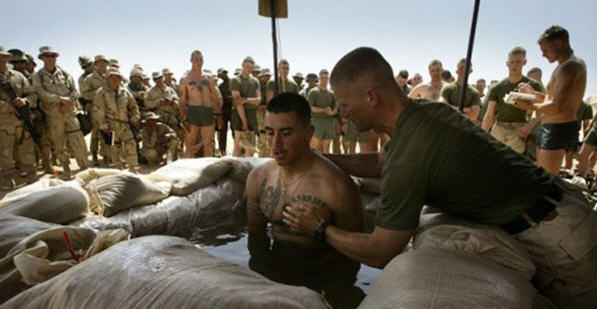
Peter Berger notices a sector of American religiosity where true inclusion and diversity reigns — the military chaplaincy:

One particularly interesting development is that the military chaplaincy, in its Protestant group, is increasingly filled with Evangelicals, who feel more at home in the military than among largely liberal mainline clergy, whose concerns over gender and multiculturalism Evangelicals don’t resonate with. Some years ago I presided over a seminar dealing with whatever issues members of the seminar were concerned about. One of the seminar students was an Evangelical Air Force chaplain. This was the issue she wanted to think through: She served on a small base in the Arctic where she was the only Protestant chaplain. Of course she was not expected to perform religious services that did not agree with her own beliefs. But she was expected to facilitate services for any group of Air Force personnel. A group of Air Force women wanted to perform the rituals of Wicca, which defines itself as a modernized version of the old witches’ Sabbath. How, she asked, could she help organize a worship service of the devil without betraying the core of her Christian faith? I tried to convince her that the devil part was not to be taken seriously, that Wicca was a rather harmless form of nature worship—dancing naked in the moonlight and showing respect for menstrual blood. She said that the way I spoke about this showed I did not take the religious beliefs of this group seriously. I’m afraid she was quite right. In the end she had no choice unless she wanted to resign from the chaplaincy—so the would-be witches did their thing as facilitated by a nonsectarian Evangelical minister. (Religious freedom bears strange fruit, including the struggle of conscience of an Evangelical pastor ordered to go against her conscience by her commanding officer.)

Here’s the thing: if NAPARC communions and the PCUSA wonder about the fit between Tim Keller and a liberal Presbyterian seminary, why are those same NAPARC communions willing to send their pastors off to work not only with ordained women but even witches? I keep asking. I’m still not hearing many answers.

Curmudgeonly Evangelicals?

Old Life is not the only place where the dissatisfied express their dissatisfaction. Evangelical scholars are weighing in on Francis Fitzgerald’s new book, The Evangelicals: The Struggle to Shape America. If Barry Hankins thinks Fitzgerald neglects evangelicalism’s religious character, Randy Balmer faults her for not noticing evangelicals’ progressive politics:

FitzGerald recounts the drafting of the Chicago Declaration of Evangelical Social Con­cern in November 1973, but then progressive evangelicals drop almost entirely from the narrative until the waning years of the George W. Bush administration. Jimmy Carter, a Southern Baptist deacon and Sunday school teacher, the nation’s first avowed born-again president and a progressive evangelical, receives only scattered mention—far less, for example, than Phyllis Schlafly or even Herb Titus, a truly fringe figure. The chapter on George W. Bush, the nation’s second born-again president, by contrast, consumes more than a hundred pages.

FitzGerald renders the inner workings of the religious right in granular detail. We hear, for example, about James Dob­son’s tantrums and Richard Land’s partisan harangues, but only brief and belated reference to Sojourners magazine’s Call to Renewal or the effort of Red Letter Christians to emphasize the social teachings of Jesus. The author commendably plunges into the works of Rousas John Rushdoony and Francis Schaeffer, but the writings of Jim Wallis receive no comparable midrash. Shane Claiborne, a “rock star” among younger evangelicals and a radical (not progressive) evangelical, merits only a single reference.

The problem that Balmer fails to notice is that Christian progressives (evangelical or not) are in decline:

If the religious right has a single lesson to offer the left, it’s that churches make excellent incubators for political movements. With the decline of unions, progressive organizing has been left with a vacuum to fill. Left-leaning congregations could provide much-needed organizational apparatus that would be particularly important in local and off-year elections — the type of contests Democrats have struggled with in recent years.

Yet the the religious left has never faced more serious challenges. Religious progressives are fighting for relevance at a time when secular voters are becoming an increasingly crucial part of the Democratic coalition, and their political clout is only going to grow. Recent work suggests that secular voters are often uncomfortable with religiously infused political appeals, which could hurt the prospects of creating a secular-religious coalition. Progressives have always celebrated the big-tent nature of their movement, but religious liberals who once operated in the center ring may now have to come to terms with working outside the spotlight.

Since we live in a democracy, numbers matter? If we want an aristocracy of the few, the virtuous, the woke, fine. But that means giving up all that idealism about the equality of all people.

Don’t forget to notice also that the problem for Balmer with evangelicals is not Hankin’s complaint — that they are too political. Instead, the evangelical error is having the wrong politics. That would be an amusing exegetical show to find the Democratic (or Republican) platform in the pages of Holy Writ.

Who Paved the Way for Trump?

It was not Jerry Falwell (or his son).

It was the gatekeepers who decided gates were simply mental constructions and who celebrated those who ran with the new freedom.

Want to know where fake news came from? Looks like it was Harvard not Liberty University (thanks to one of our many southern correspondents):

Trump’s playbook should be familiar to any student of critical theory and philosophy. It often feels like Trump has stolen our ideas and weaponized them.

For decades, critical social scientists and humanists have chipped away at the idea of truth. We’ve deconstructed facts, insisted that knowledge is situated and denied the existence of objectivity. The bedrock claim of critical philosophy, going back to Kant, is simple: We can never have certain knowledge about the world in its entirety. Claiming to know the truth is therefore a kind of assertion of power.

These ideas animate the work of influential thinkers like Nietzsche, Foucault and Derrida, and they’ve become axiomatic for many scholars in literary studies, cultural anthropology and sociology.

From these premises, philosophers and theorists have derived a number of related insights. One is that facts are socially constructed. People who produce facts — scientists, reporters, witnesses — do so from a particular social position (maybe they’re white, male and live in America) that influences how they perceive, interpret and judge the world. They rely on non-neutral methods (microscopes, cameras, eyeballs) and use non-neutral symbols (words, numbers, images) to communicate facts to people who receive, interpret and deploy them from their own social positions.

Call it what you want: relativism, constructivism, deconstruction, postmodernism, critique. The idea is the same: Truth is not found, but made, and making truth means exercising power.

Casey Williams argues that the populist right has abused postmodernism.

The reductive version is simpler and easier to abuse: Fact is fiction, and anything goes. It’s this version of critical social theory that the populist right has seized on and that Trump has made into a powerful weapon.

One might object that Trump’s disregard for the truth is nothing new. American presidents have always twisted facts to fit their agenda and have always dismissed truths that threatened to sink them. Even George Washington’s great claim to honesty — that he ’fessed up to felling a cherry tree — was a deception. One could also argue that Trump is more Machiavellian than Foucauldian and that he doesn’t actually believe what he says: He propagates misinformation strategically, to excite his base and smear his opponents.

Not to be missed is what happens when other celebrities flout conventions. Then it becomes art and poignant. And so Lena Dunham is prescient (while Trump is so ordinary when he is not despicable):

The romance between this newspaper and the HBO show “Girls” is somewhat legendary. Between its debut in 2012 and its finale last Sunday, according to some exhaustive data journalism from The Awl, The New York Times published 37 articles about the show, its fans, its creator and star, Lena Dunham, plus her co-stars’ clothes and paintings and workout routines and exotic pets.

Except, fact-check: I made up the exotic pets, and The Awl’s list unaccountably failed to include my own contribution to The Times’s Dunham-mania, a love letter to the show’s flirtations with cultural reaction.

Was some of this coverage excessive? Well, let’s concede that the ratio of thinkpieces (all over the web, not just in this newspaper) to actual viewers was considerably higher for “Girls” than for, say, “Game of Thrones.” Let’s concede that the media loved to talk about the show in part because it was set among young white people in Brooklyn, a demographic just possibly overrepresented among the people who write about pop culture for a living. Let’s concede that Dunham’s peculiar role in electoral politics, as one of the most visible and, um, creative millennial-generation surrogates for Barack Obama and then Hillary Clinton, played some role in the press’s fascination with her show.

But now that we have the show in full, I think the scale of coverage actually holds up quite well — my own small part in it very much included. Indeed, I suspect that “Girls” will be remembered as the most interesting and important television show of the years in which it ran, to which cultural critics will inevitably return when they argue about art and society in the now-vanished era of Obama.

I know it’s hard to seem to be upholding the status quo. Baby boomers would rather have an edge, be a little deviant, and resist being part of the establishment.

But at some point you grow up, or you find no rationale for opposing a man (now president) who has been simply floating along with the decline of standards.

United Statesist Christianity

We need a new name for Christianity in the United States. The contributors to this podcast at Christianity Today are still lamenting the turnout of white evangelicals for Donald Trump and so one of them called for more attention to what it means to be evangelical. Are you kidding? We’ve had almost four decades of scholarship on evangelicalism, and at least three of chanting the integration of faith and learning, and we still don’t know what evangelical is? Please.

Then comes the objection to calling Lee Stroebel, whose new film is drawing attention to the Bill Hybels-spawned apologist, a fundamentalist.

A note or two about Strobel, the legal-affairs journalist. He did his undergraduate degree at a top j-school, the University of Missouri, and then went to Yale University to get his law degree. That gives some clues as to his approach to research and writing.

Strobel converted to Christianity in 1981 and, after a few years, went into ministry – becoming a “teaching pastor” at the world famous Willow Creek Community Church in the Chicago suburbs.

Now, WIllow Creek – led by the Rev. Bill Hybels – has for decades been known as, literally, a globel hub for the “seeker friendly” school of mainstream (some would say somewhat “progressive”) evangelicalism. Hybels, of course, became a major news-media figure in the 1990s through his writings and his role as one of the “spiritual advisors” and private pastors to President Bill Clinton.

Willow Creek is not a fundamentalist church.

From there, Strobel went west and for several years served as a writer in residence and teaching pastor at Saddleback Community Church, founded and led by the Rev. Rick “The Purpose Driven Life” Warren. In addition to writing one of the bestselling books in the history of Planet Earth, Warren has also received quite a bit of news-media attention through his high-profile dialogues with President Barack Obama, both during Obama’s first White House campaign and in the years afterwards.

Saddleback is not a fundamentalist church.

Fair points. I don’t think Stroebel is a fundamentalist either. But evangelical is increasingly meaningless even among Protestants who haven’t read (hades!, heard of) Deconstructing Evangelicalism.

So why not simply identify Christianity in the United States according to the degree to which its adherents adapt their faith (or pick and choose) to national norms? (Do remember that in 1899 Leo XIII identified Americanism as a heresy.) Once upon a time, Protestants came to North American and tried to transmit the version of Protestantism (works for Roman Catholics and Jews also) they brought to a New World setting. Some confessional Protestants still do this and triangulate their ministry in the U.S. according to precedents set in Europe whether at the time of the Reformation or when specific episodes upset national churches (think Scotland, England, Netherlands, Germany). Presbyterians in NAPARC still live with a foot (or – ahem – toe nail) in Old World Protestantism even as they have repudiated (except for the Covenanters) the political structures that animated their European predecessors.

But then along came awakenings and parachurch associations and increasingly Protestantism in the U.S. was known less for the fingerprints of its European origins than for those innovators (Whitefield and Moody) or structures (American Bible Society or National Association of Evangelicals) who were as independent of Old World Protestantism as their nation was of the United Kingdom. Once freed from European constraints, American Christianity used markets, earnestness, activism, and relevance as the basis for Christian identity. Evangelicalism was the kinder gentler version of fundamentalism. But neither showed the slightest bit of deference to the churches that came out of the Reformation.

Now, even the labels fundamentalist and evangelical make little difference. The gatekeepers won’t stand at the gate and even if they did the gateway has no wall to make the gate functional. Anyone can be a Christian on their own terms, with celebrities and parachurch agencies gaining the most imitators. But those instances of fame collect no dues, make no demands, and provide no institutional support. It’s like belonging to Red Sox Nation. Wear your bumper sticker. Listen to your Tim Keller sermon (now on sale for $1,500). Got to the next Gospel Coalition conference. You have Jesus in your heart and United Statesist Christianity has lots of proprietors to make your heart burn.

The good thing about United Statesist Christianity is that it allows its adherents to revel in exceptionalism. If America is a great nation, United Statesist Christianity is no less exceptional. Instead of a Pretty Good Awakening, United Statesist Christianity puts the Great back in Great Awakening.

Christendom Exceptionalism

Not sure what Peter Leithart is working on, but recent posts on medieval and early modern Europe have shed new light on the claims that exalt Christendom and blame Protestantism for ushering in a disordered, licentious modernity.

Just how united was Christendom, you ask? Not much:

In a 1971 essay, H.G. Koenigsberger challenged the notion that the Reformation broke up a unified Europe. He criticizes historians and social scientists for assuming a norm of unity: “We have assumed that the theological and ecclesiastical unity of Catholic Christendom was its natural condition and that, in consequence, the Reformation was a dramatic break in this condition which ran counter to all previous Christian experience and which, in a sense, destroyed the natural order of things.”

Much of the essay presents an analysis of the kind of unity that existed in pre-Reformation Europe. Koenigsberger poses the question this way: “For the thousand years of the Middle Ages, Christendom and its institutions remained obstinately divided, and Christians remained distressingly prone to engage in deadly wars with each other. Why was it that only the Church survived as a unified institution?”

His first answer is sardonic: “it did not do so. Throughout the Middle Ages there existed Christian churches in Africa and Asia which were never in communion with Rome at all.”

The more elaborate answer answer is that “medieval unity, insofar as it existed, was a function of an economically poor society. The small surpluses of production of any given area would not be wanted in the adjoining area, which was probably producing the same commodities, but rather in much more distant areas. Medieval trade was, therefore, small in volume but covered large distances.”

Craft skills were specialized and scarce, and thus craftsmen had to be mobile: “Bell founding was a highly skilled and specialized craft. After a master founder had cast the three or four, or even six or eight, bells for the church of a small town, he would have to move on, for there would be no further work for him in this town nor, very likely, in the neighbouring towns. It was the same with all other skills, from the cathedral builder to the learned scholar, from the forger of fine weapons . . . . Different areas of Europe might advance in certain skills, as Flanders did in the weaving of fine cloth; but no single area of Europe could support all of the skills which European society required. Only the whole of Europe could do this.”

Cultural unity thus depended on a “thin crust of men highly skilled in the production of sophisticated commodities or in the performance of complex services. This upper crust was international in education, attitudes, and often, physical mobility; for this was the only way it could function.” Cultural unity depended on a low rate of entry into this upper crust. European unity was a unity of the “1%.”

Sounds like modern America. Substitute media elites, policy wonks, federal government workers, Ivy League professors, and Hollywood types for “thin crust of men highly skilled in the production of sophisticated commodities or in the performance of complex services” and you an American exceptionalist unity that rivals Christendom’s.

That means, the Reformation was not a break with the past but a fulfillment of medieval Europe:

Signs of centrifugal forces are evident throughout the centuries leading up to the Reformation – reforming movements within the church, sometimes breaking free into independent movements; rival papacies, with kings taking sides, anticipating the anti-papalism of their sixteenth-century Protestant counterparts. The conciliar movement tried to arrest this process but “the defeat of this movement, and the subsequent concentration of papal energies on Italian power politics made it virtually impossible for the Church to adapt itself to the changing conditions of European Society.”

Koenigsberger acknowledges that the Reformation broke the camel’s back, but sees it as the culmination of several centuries of mounting instability. He identifies two factors that made the sixteenth century decisive in this process: “the increasing political tension between the monarchies and the papacy over the question of the control of the institution of the Church and its personnel in the different countries of Europe; and the spread of the printing presses, which made the Bible available to the Christian laity and thus undermined the claim of the Church to act as the indispensable intermediary between God and man.”

Now if we reboot those arguments about the Reformation as the forerunner of 1776, we have lines of continuity between Roman Catholicism and Americanism.

The Whig historians will set us free!

Obedience Boys, Say Hello to Law Enforcement Boys

Courtesy of John Fea:

The Alabama Senate has voted to allow a church to form its own police force.

Lawmakers on Tuesday voted 24-4 to allow Briarwood Presbyterian Church in Birmingham to establish a law enforcement department.

The church says it needs its own police officers to keep its school as well as its more than 4,000 person congregation safe.

Critics of the bill argue that a police department that reports to church officials could be used to cover up crimes.

The state has given a few private universities the authority to have a police force, but never a church or non-school entity.

Police experts have said such a police department would be unprecedented in the U.S.

A similar bill is also scheduled to be debated in the House on Tuesday.

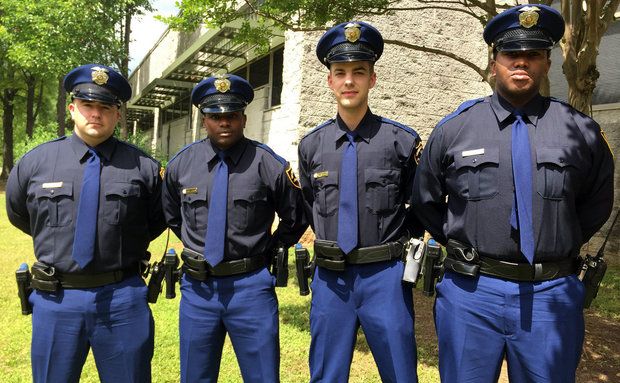
The big question: if women may not serve in combat, how about law enforcement?

So You Want the Magistrate to Enforce both Tables of the Law?

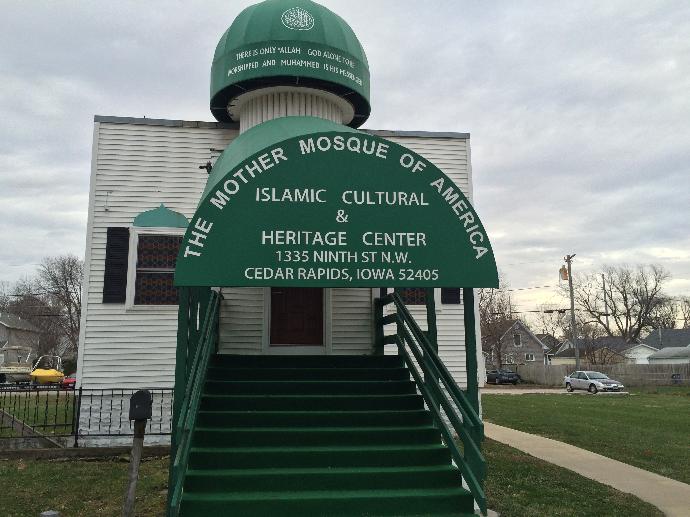
Does that make you more extreme than a Muslim? It very well may, according to Aaron Rock-Singer (you can’t make up a name like that).

On the one hand, Shari’a law admitted a diversity of mechanisms for enforcement:

Historically, Muslims understood the Shariʿa as a broad framework within which one could live a proper Islamic life. The Shariʿa represented a comprehensive ethical system, the bulk of which was not understood as law in the sense of regulations that state authorities must enforce. Instead, acts were divided into five categories: obligatory, recommended, neutral, disapproved, and forbidden. Crucially, it was only those acts that fell into the category of “forbidden” that were to be enforced by the state. Put differently, prior to the last 200 years, the obligations set forth by the Shariʿa, though they were obligatory for Muslims, neither assumed nor depended on enforcement by state authorities.

That’s an intriguing point if only because ecclesiastical authorities won’t enforce the Fourth Commandment (Third for the Roman Catholic slackers).

On the other hand, the insistence that civil authorities enforce Shari’a was a function of the West’s brilliant diplomatic hegemony:

With the onset of colonial rule, British and French officials made a momentous decision to implement foreign legal codes while limiting religious law to questions of personal status such as marriage and divorce. While Islamists today recall this moment as decisive because it limited the role of Shariʿa, just as important is the shift that they do not mention: that it codified the Shariʿa. In the place of the relative flexibility and accommodation to local diversity exercised by judges who were tied to local communities, state-appointed graduates of modern law schools, with little knowledge of over a millennium of Islamic legal scholarship, now interpreted a code of Islamic law. Crucially, however, legal codes were not solely a colonial imposition: in the late 19th century, the Ottoman Empire introduced a legal code, based on the dominant Sunni legal school in that area (Hanafism) in an attempt to formalize and define a civil legal code throughout the empire.

As Middle Eastern states gained independence over the first half of the 20th century, new secularist elites, like colonial officials, restricted the Shariʿa to family law. Notwithstanding their opposition to colonial rule, they were no more interested than their colonial predecessors in empowering Muslim scholars to interpret the Shariʿa. Instead, these new elites wanted to reshape the legal system to their own liking and in terms that they understood. Looking abroad, they saw the combination of military, political, and economic power that had enabled colonial rulers to take control of their countries, and sought to use law as a tool to expand the reach of their newly independent states. The appeal of a powerfully interventionist state would only grow as the United States and Soviet Union vied for Cold War supremacy.

In the shadow of a codified family law, powerful post-colonial states, and Cold War ideological contestation, Islamists began to argue that Shariʿa was central to state power.

The good news for folks worried that behind every Muslim is the Islamic equivalent of [insert name of favorite theonomist here], most Muslims are content with a separation of civil and religious law (in good 2k fashion, mind you):

A community whose roots go back to early migration between 1875 and 1912 from Greater Syria (an area that included what is now Syria, Lebanon, Jordan, Israel, and Palestine), Muslim American ranks grew following World War I following the fall of the Ottoman Empire. Between 1947 and 1960, Muslims increasingly arrived not only from the Middle East, but also from Eastern Europe, South Asia, and the Soviet Union. The past 40 years, in turn, have seen, once again, substantial immigration from the Middle East.

The American Muslim community is, as a 2007 Pew survey puts it, “Middle Class and Mostly Mainstream.” In this vein, American Muslims have, by and large, sought to live according to their religious obligations through a set of daily practices that bear little resemblance to the specter of “Creeping Shariʿazation.” Whether by securing permits to build mosques, observing dietary laws through Halal butcheries and restaurants, or buying shares in Islamic finance companies that allow them to purchase homes or pay for higher education while avoiding interest-bearing loans, American Muslims today work within the American legal system and live devout lives. And like members of so many other religious and ethnic minorities, Muslims have set up a number of political advocacy organizations. There is no evidence, however, that American Muslim organizations have ever attempted to replace the American constitution with an Islamic legal code.

America, the beautiful.

What Kind of Art Will American Greatness Leave Behind?

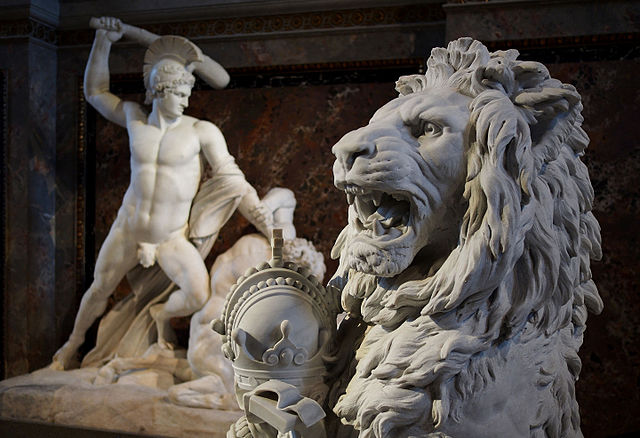
Talk about greatness after you watch The Great Museum, a documentary about The Kunsthistorisches Museum in Vienna:

The museum was the creation of Emperor Franz Joseph I of Austria-Hungary. Opened in 1891, the museum (a combination of two) holds the Habsburgs’ formidable art collection and makes many of the effects of the Holy Roman Emperor accessible to the general public. As much as the Protestant and republican in me wonders about that kind of wealth, concentration of power, and even accumulation of relics, it doesn’t take a high school diploma to understand that The Great Museum should be on my bucket list and should likely have been higher than the Louvre or London’s National Gallery. Say what you will about the Habsburgs, they acquired lots of stuff that people interested in history and art want to see.

(Although, I could not fight the impression that the art world, even as accessible as it is now compared to when it fenced in for only the aristocracy and friends to enjoy, has become one big commodity to be bought and sold. The documentary has one auction scene that took the missus and me back to The Red Violin, arguably the best historical treatment on film of the changing value of a musical instrument. Let’s just say, moderns know monetary value better than artistic achievement. I’ll confirm that by noticing that even though the Republic of Austria subsidizes the Great Museum with significant Euro’s, admission in 2013 to the Great Museum was almost 34 Euros — $37. Ouch!)

Meanwhile, back in the greatest nation on God’s green earth, the feds debate whether to cut funding for the National Endowment for the Arts. Stephen Limbaugh keeps it real when he warns about the NEA’s ideological outlook:

Be it the misuse of funds, waste, or deleterious governing philosophy, the National Endowment for the Arts has proven to be a recidivistic cultural butcher.

The NEA’s process for cultivating art is informed by standards set by universities and critical theorists. Those standards of what qualify as “acceptable” contemporary art seem to be any phenomena that offends an individual’s inherent aesthetic disposition. Preferential treatment is given to those works that 1) are able to evoke the most unpleasant reaction and 2) are created with the least amount of discernible purpose. This destructive artistic praxis is thoroughly documented, and there are few examples of NEA-backed art that does not adhere to it.

Be that as it may, so what? Even if the NEA retains their funding, will the artists they subsidize produce anything that will command attention in three centuries? Anything like Peter Brueghel’s Tower of Babel (the film’s closing image)? Can a top hat worn by President Wilson really compare with the Bratina of King Ladislaus IV of Poland?

I don’t think so.

Why I Wouldn’t Sign (if I were evangelical)

Would you sign this expression of empathy with people who are not citizens of the United States? Here is how it begins:

The United States has experienced a contentious election and post-election season marked by fear, polarization, and violence. The current political climate reveals longstanding national sins of racism, misogyny, nativism, and great economic disparity. As faculty members of Christian institutions of higher education who represent varying degrees of privilege and power (but who are not representing those institutions in this document), we, the undersigned, join our voices with those who are most vulnerable.

We affirm the dignity of every human being as created in God’s image (Gen. 1:27). We submit to the sovereignty of Christ who humbled himself unto death. As members of his body, we strive to consider others above ourselves (Phil. 2:2–8); to speak the truth in love (Eph. 4:15); to serve one another in humility (Matt. 20:26–28); and to honor and steward God’s good creation (Gen. 1:28). As one body, if one member suffers, all suffer (1 Cor. 12:26); if one weeps, the body laments with them (Rom. 12:15); even creation groans in bondage to decay (Rom. 8:19-23).

I wonder if these Christian faculty would be inclined to sign a man-made creed, say like the Westminster Confession or the Book of Concord? I thought evangelicals were supposed to be anti-creedal.

Oh well.

Here‘s why Chris Gehrz signed (even though he admits he hesitated):

Indeed, I think most Christians would affirm them, whatever their theological, political, or other differences. While hardly an exhaustive list of Christian beliefs, these convictions are nevertheless foundational to Christian faith, community, and mission. And, as the statement goes on to explain, such commitments need to be restated and acted upon in a time when there is “falsehood that seeks to undermine truth and any propaganda intended to obscure it,” when a “large portion of our communities is weeping” and there is genuine anxiety and fear among many of our neighbors.

A concern for truth is obviously important for academics, whatever their religious beliefs and doubts. Why our role as Christian educators would compel us to acknowledge “pain and woundedness” and then “entreat Christian communities to seek healing, reconciliation, and justice” may be less evident.

Here‘s why his colleague, Ray VanArragon (what a Dutch-American name), wouldn’t sign:

First, the petition is unduly expansive, covering a range of topics that include racism, economic disparity, the environment, and our lack of neighborliness. At the same time it does not offer any recommendations for concrete responsive action.

Second, it employs language that tends to put off people who live outside of academic circles. It speaks vaguely about “structural injustice” and “degrees of privilege and power,” without explaining what those terms mean. It slyly suggests that Christians ought to share the priorities of the political left – a suggestion reinforced by the fact that, expansive as it is, it makes no mention of abortion. Right-of-center Christians, even well-meaning ones, may be inclined to dismiss the petition as pompous, disingenuous, and one-sided.

Here’s why I’m not.

This statement:

The current political climate reveals longstanding national sins of racism, misogyny, nativism, and great economic disparity.

Does not go with this statement:

we affirm our deep resolve to pursue truth, to reason carefully, and to rely on sound evidence.

Outrage is easy. So is moral posturing. Thinking carefully so that you don’t exhibit moral overreach is a challenge. I’d have thought educators would know this.