Why I Wouldn’t Sign (if I were evangelical)

Would you sign this expression of empathy with people who are not citizens of the United States? Here is how it begins:

The United States has experienced a contentious election and post-election season marked by fear, polarization, and violence. The current political climate reveals longstanding national sins of racism, misogyny, nativism, and great economic disparity. As faculty members of Christian institutions of higher education who represent varying degrees of privilege and power (but who are not representing those institutions in this document), we, the undersigned, join our voices with those who are most vulnerable.

We affirm the dignity of every human being as created in God’s image (Gen. 1:27). We submit to the sovereignty of Christ who humbled himself unto death. As members of his body, we strive to consider others above ourselves (Phil. 2:2–8); to speak the truth in love (Eph. 4:15); to serve one another in humility (Matt. 20:26–28); and to honor and steward God’s good creation (Gen. 1:28). As one body, if one member suffers, all suffer (1 Cor. 12:26); if one weeps, the body laments with them (Rom. 12:15); even creation groans in bondage to decay (Rom. 8:19-23).

I wonder if these Christian faculty would be inclined to sign a man-made creed, say like the Westminster Confession or the Book of Concord? I thought evangelicals were supposed to be anti-creedal.

Oh well.

Here‘s why Chris Gehrz signed (even though he admits he hesitated):

Indeed, I think most Christians would affirm them, whatever their theological, political, or other differences. While hardly an exhaustive list of Christian beliefs, these convictions are nevertheless foundational to Christian faith, community, and mission. And, as the statement goes on to explain, such commitments need to be restated and acted upon in a time when there is “falsehood that seeks to undermine truth and any propaganda intended to obscure it,” when a “large portion of our communities is weeping” and there is genuine anxiety and fear among many of our neighbors.

A concern for truth is obviously important for academics, whatever their religious beliefs and doubts. Why our role as Christian educators would compel us to acknowledge “pain and woundedness” and then “entreat Christian communities to seek healing, reconciliation, and justice” may be less evident.

Here‘s why his colleague, Ray VanArragon (what a Dutch-American name), wouldn’t sign:

First, the petition is unduly expansive, covering a range of topics that include racism, economic disparity, the environment, and our lack of neighborliness. At the same time it does not offer any recommendations for concrete responsive action.

Second, it employs language that tends to put off people who live outside of academic circles. It speaks vaguely about “structural injustice” and “degrees of privilege and power,” without explaining what those terms mean. It slyly suggests that Christians ought to share the priorities of the political left – a suggestion reinforced by the fact that, expansive as it is, it makes no mention of abortion. Right-of-center Christians, even well-meaning ones, may be inclined to dismiss the petition as pompous, disingenuous, and one-sided.

Here’s why I’m not.

This statement:

The current political climate reveals longstanding national sins of racism, misogyny, nativism, and great economic disparity.

Does not go with this statement:

we affirm our deep resolve to pursue truth, to reason carefully, and to rely on sound evidence.

Outrage is easy. So is moral posturing. Thinking carefully so that you don’t exhibit moral overreach is a challenge. I’d have thought educators would know this.


1776 and 1861

Brexit is more or less hardwired into the American outlook. But somehow we fought a war that cost close to 700,000 lives to preserve not a federation but a union, not a republic but a nation. That’s what makes America great (many suppose).

But H. L. Mencken thought otherwise. He saw that the Brexit of 1776 also implied the Secexit of 1861:

But let us not forget that it is oratory, not logic; beauty, not sense. Think of the argument in it! Put it into the cold words of everyday! The doctrine is simply this: that the Union soldiers who died at Gettysburg sacrificed their lives to the cause of self-determination — “that government of the people, by the people, for the people,” should not perish from the earth. It is difficult to imagine anything more untrue. The Union soldiers in that battle actually fought against self-determination; it was the Confederates who fought for the right of their people to govern themselves. What was the practical effect of the battle of Gettysburg? What else than the destruction of the old sovereignty of the States, i. e., of the people of the States? The Confederates went into battle an absolutely free people; they came out with their freedom subject to the supervision and vote of the rest of the country—and for nearly twenty years that vote was so effective that they enjoyed scarcely any freedom at all. Am I the first American to note the fundamental nonsensicality of the Gettysburg address? If so, I plead my aesthetic joy in it in amelioration of the sacrilege. H. L. Mencken, “Five Men at Random” 1922

Sacrilege? If you think the U.S. is holy. If it’s just one more liberal society, on the order of Canada or Switzerland, you might agree with Mencken.

Who’s Afraid of NSA?

What with the news and controversy surrounding Edward Snowden and Wikileaks an average American might think his privacy no longer exists. Everything we do on-line or by phone is closely monitored by people who work deed deep in the federal government’s deep state.

Have I got good news for libertarians. On the way to the airport this morning I learned thanks to the Federalist Radio Hour that the reason the Affordable Care Act rolled out so poorly was that feds could not verify personal incomes of people signing up for the new health care plan. Enrollees entered their digits and the government had to go through too many layers of records, and even then could not tell how much someone made.

Imagine that. NSA and Homeland Security and the Defense Intelligence Agency may know your caloric intake thanks to the Fitbit you are wearing, but they can’t even tell how much you make.

Is this a great country, or what?

Those Also Were the Days

Damon Linker remembers those crazies times under President Obama:

As Delmore Schwartz once joked, sometimes paranoids have real enemies, and the paranoid-in-chief occupying the Oval Office has some very real and very powerful enemies.

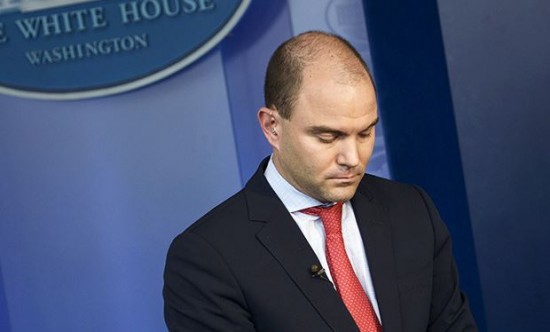
Anyone who denies this needs to go back and reread the most important (and unfairly maligned) magazine feature written last year: David Samuels’ 9,500-word New York Times Magazine profile of Obama administration senior staffer Ben Rhodes. Journalists hated the piece, but for reasons so self-serving that it’s hard to believe anyone took the objections seriously. (My colleague Noah Millman noted as much shortly after the essay appeared.)

Samuels portrays (and quotes) Rhodes as someone who views both reporters (“they literally know nothing”) and Washington’s foreign policy establishment (Rhodes calls it “The Blob”) with utter contempt. It’s that contempt that Rhodes uses to justify the propaganda shop he ran out of the Obama White House, subtly but significantly manipulating the story that the mainstream media told about the Iran nuclear deal by selectively and repeatedly leaking tiny bits of information to dozens of journalists who wove those bits of micro-spin into countless tweets and stories over the course of many months. The end result was a pro-Iran deal conventional wisdom — a pointillistic picture of reality composed entirely of colorful dots painted by Rhodes and his staff with the knowledge and support of the president.

While trying to get the Iran deal approved, Rhodes was in the position of needing to use journalists to defeat The Blob, which viewed with extreme skepticism (if not outright hostility) the Obama administration’s efforts to reach a nuclear accord with Tehran. But once Donald Trump won the presidency, old opponents found themselves firmly on the same side. Rhodes and his former boss, the bipartisan foreign policy establishment, and the nameless and faceless bureaucrats who staff the executive branch agencies and departments that make up the “intelligence community.” All of them were now united in standing against a president who had vowed to break far more radically from the established Washington consensus than Obama ever dreamed of doing.

What makes America great? Remembering sometime.

Rules for Who Gets In Are Complicated

Imagine if the U.S. government used for immigration policy Notre Dame’s reasons for not inviting President Trump:

The decision by the University of Notre Dame to invite Vice President Mike Pence to be this year’s graduation speaker and recipient of an honorary degree was surely not made lightly. The last six presidents have all been invited to the school’s commencement exercises, so the decision to invite someone other than President Donald Trump represents a change from the norm. And that is precisely why it was the correct decision.

The first thing to remember about the decision is that it affects not only the Indiana university’s standing, but the actual students whose families and friends will be gathering that day. There were some protests eight years ago, when newly inaugurated President Barack Obama attended the commencement exercises, but those protests were mostly on the internet and at the margins. The day itself was not ruined for the graduates.

Can anyone really think that Trump’s presence would not elicit a different kind of protest? Is it not likely that the protests would be so vociferous and widespread that the day would be marred for the students who should be the focus of the day?

I am sure that consideration weighed heavily on the decision-making process, which is not to say Notre Dame is likely to award a heckler’s veto to anyone. It is a mere acknowledgement that a man for whom a central campaign theme was the demonization of other people elicits a kind of visceral response, not because some people are too politically correct or thin-skinned, but because that visceral response is what Trump was after. He stoked the flames and cannot now wonder that people recoiled from the prospect of being burned.

Lots can go wrong if you invite POTUS. Nothing can go wrong with open borders?

But don’t forget welcoming the stranger.

Welcome the stranger.

Trump is strange.

Welcome Trump.

How to Tell the Difference between Turkey and the U.S.

You don’t read about President Erdogan in the pages of Washington Post, New York Times, or New Yorker:

As Turkey heads toward a constitutional referendum designed to grant its leader Recep Tayyip Erdoğan even greater powers, the polls predict a neck-and-neck race.

That doesn’t mean their chances are equal. While the April vote is likely to be free, whether it will be fair — given rising repression of political dissent and the ongoing state of emergency — is another question.

Take the case of İrfan Değirmenci, a well-known news anchor for Kanal D, who explained his opposition to the proposed changes in a series of tweets earlier this month. “No to the one who views scientists, artists, writers, cartoonists, students, workers, farmers, miners, journalists and all who do not obey as the enemy,” he wrote.

He was promptly fired.

Değirmenci’s dismissal has heightened fears among No campaigners that those who oppose the new constitution will be subject to threats and intimidation ahead of the referendum on April 16.

“A lot of people are risking their careers and their future by openly and publicly campaigning for No,” said İlhan Tanir, a Turkish columnist and analyst based in Washington. “There is nothing fair about this.”

Government supporters face no such risk: While Kanal D claimed Değirmenci had been let go for violating the media group’s neutrality rule, Yes supporters have been free to air their views in the pages of Hürriyet, which belongs to the same group.

Hurriyet itself — a newspaper that positions itself as neutral — has muted critical voices: Its editors last week scrapped an interview with Orhan Pamuk, in which the Nobel Prize-winning Turkish novelist explained his reasons for voting No.

So why do elite journalists cover the Trump administration as if we’re living in the television series, Man in the High Castle. Perhaps because they believe in American innocence as much as Jerry Falwell, Jr.

What’s the Difference between a Pro-Refugee Evangelical (Tim Keller) and a Democrat (Dianne Feinstein)?

Short answer: neither quotes the Bible.

Notice for instance the parallels among the National Association of Evangelicals, Ed Stetzer, Evangelical leaders (among them Tim Keller), and the Democrats.

The NAE:

“Christians and churches have been welcoming refugees for 2,000 years, and evangelicals are committed to continue this biblical mission. Thousands of U.S. evangelicals and their churches have welcomed hundreds of thousands of refugees over the past 40 years through World Relief and other federally approved resettlement agencies. We don’t want to stop now,” NAE President Leith Anderson said.

The Trump administration’s plans to make severe cuts to the admission of refugees are alarming. We call on President Trump to declare his support for the continuation of the U.S. refugee resettlement program, which is critical at a time when the world faces a significant refugee crisis.

Ed Stetzer:

Scott Arbeiter, president of World Relief, says it this way: “The decision to restrict all entry of refugees and other immigrants … contradicts the American tradition of welcoming families who come to the United States to start their lives again in safety and dignity. The American people — most of whom can trace their own families’ stories through a similar immigrant journey in search of freedom — are a hospitable people.”

He’s right. But, it’s not just because we are Americans. It’s because we are Christians.

God’s people should be the first ones to open their arms to refugees. We should welcome them and do what Christians, in your church and mine, have been doing a long time — showing and sharing the love of Jesus with them.

Tim Keller et al:

As Christians, we have a historic call expressed over two thousand years, to serve the suffering. We cannot abandon this call now. We live in a dangerous world and affirm the crucial role of government in protecting us from harm and in setting the terms on refugee admissions. However, compassion and security can coexist, as they have for decades. For the persecuted and suffering, every day matters; every delay is a crushing blow to hope.

Since the inception of the refugee resettlement program, thousands of local churches throughout the country have played a role in welcoming refugees of all religious backgrounds. Ministries to newly arrived refugees are ready, and desire to receive many thousands more people than would be allowed under the new executive order.

The Democratic Party (according to Damon Linker):

Many liberals argue that refugees are among the most vulnerable people on Earth and so must be welcomed with open arms. That forcing undocumented immigrants to leave the country is gratuitously cruel, violates their rights, and so justifies municipalities flouting federal law by turning themselves into “sanctuary cities.” That banning entry to refugees or immigrants not yet within the United States can violate their due process rights under the U.S. Constitution. And that the desire to restrict immigration is invariably an expression of xenophobia, racism, and other forms of irrational animus and so morally (and perhaps constitutionally) indefensible.

All of these claims are, at bottom, expressions of a fundamentally anti-political humanitarian ideology that is unlikely to fare well in the next presidential election. Democrats desperately need to confront the vulnerabilities of this position and stake out a more defensible and pragmatic one if they hope to push back against Trump’s populist-nationalist message in upcoming years.

Of course, evangelicals don’t need to worry about running for election (though the likes of Russell Moore does need to worry about ministry dollars going somewhere other than the Southern Baptist cooperative program). But evangelicals who live in the United States may want to think (with help from Linker) about how to love their actual neighbors who live within U.S. borders (Walter didn’t see his buddies die face down in ‘Nam for open borders):

Many Americans believe that their constitution presumes or appeals to certain timeless, universal moral truths that apply to all human beings. But the U.S. Constitution itself — like the constitutions, fundamental laws, and commonly affirmed norms and rules of all political communities — is nonetheless instantiated in a particular place, rooted in a particular tradition. It also pertains and applies only to people who are members of the political community known as the United States of America.

Those who are members of this community are known as American citizens. They get a say in what laws get passed and how they get enforced. Those who are not members of this community — who are not citizens — don’t get such a say. The community is perfectly within its rights to decide which and how many of these outsiders will be allowed to visit the country, how long they will be allowed to stay, when they will need to go, and how many, if any, will be permitted to join the community permanently by becoming citizens.

This is one of the most elemental acts of politics: the community deciding who to admit and on what terms. To treat this act as somehow morally illegitimate is to treat politics as such as morally illegitimate.

In other words, evangelicals think like 1kers, as if the U.S. is a Christian community. Imagine welcoming non-Christians into fellowship in a Christian congregation. What sense does that make? So why should citizens of the United States act as if they are the United Nations of the World. As Linker says, it’s a complicated question how Americans decide what to do with outsiders:

Note that nothing I’ve said tells us anything about how many immigrants or refugees the political community of the United States should welcome at any given moment of history, or what criteria should be used to make this determination. I generally favor liberal immigration policies; many Trump voters take a very different view. The point, as Josh Barro recently argued in an important column, is that the policy debate needs to be made in terms of the good of the political community as a whole and in its parts, not in terms of abstract, extra-political moral duties owed to prospective newcomers. A political community exists in large part to benefit itself — to advance the common good of its citizens. There’s nothing shameful in that. It’s to a considerable extent what politics is.

And don’t forget, if godless Democrats and progressive evangelicals agree that Jesus is on the side of refugees, w-w has failed.

It’s Not Salvation, It’s Politics

Christians who look to discern religious significance in the United States have only two options. The first is to sacralize the nation:

By conflating a certain understanding of American history with scriptural revelation, proponents of “Christian America” risked idolizing the nation and succumbing to an “irresistible temptation to national self-righteousness.” They also sacrificed any ability to offer a scriptural critique of the cultural values they themselves embraced.

A second should be to secularize the nation — look at it simply as part of God’s providential care which is almost impossible to discern. But that’s not the way it goes because the search for a Christian American usually results in seeing how un-Christian America is. That leads to sacralizing anti-Americanism:

What, then, might a Christian understanding of the nation look like?

To begin with, it would reject any notion that the United States, or any other nation since the coming of Christ, occupies a unique position as God’s chosen people. It would recall that God’s people, wherever they find themselves, were to be “strangers and pilgrims”—good citizens, yes, but always remembering that their real home lies elsewhere. And Christians must also remember that they will be judged not according to what they profess, but rather according to how they act. Thus, the righteousness of any society should be judged “not merely by the religious professions that people make, but also by the extent to which Christian principles concerning personal morality and justice for the oppressed are realized in the society.”

And that leads to the demonization of Trump’s America (thanks to Chris Gerhz):

I didn’t actually want a Trump sign, but one of the volunteers had shoved it into my hands as I walked through the door earlier; “Make America Great Again!” That sign probably saved someone from getting hurt. I held the sign close to my chest as I positioned myself between the chanting protesters and the angry mob. My 11-year-old daughter was clinging to my arm, sobbing in fear.

The two angry, screaming ladies looked at me, both of them raised their middle finger at me in my face and repeatedly yelled, “F*#% YOU!” Repeatedly.

I calmly responded, “No thank you, I’m happily married.” Their faces and their voices were filled with demonic anger.

I have been in places and experiences before where demonic activity was palpable. The power of the Holy Spirit of God was protecting me in those moments and was once again protecting me and my daughter in this moment.

This is what happens when people try to find religious significance in every nook and cranny. Sometimes a cigar is a cigar. Sometimes a nation is simply a nation. But when you’re in the habit of using religious categories to justify national greatness, it’s only natural to use the same outlook to conclude national turpitude.

You Don’t Need to Believe in God to thank God for the ACLU

Do civil liberties in the United States really depend on non-Quakers having access to self-uniting marriages (amazing what you find when you go to Philadelphia’s municipal offices‘ webpages):

What is a self-uniting marriage, you ask? No, it doesn’t mean you fulfill your self-love:

For couples who want to skip a formal marriage ceremony, usually their first thought is to just get a marriage license, go to city hall and get married by a judge, magistrate or mayor. But in Pennsylvania, getting married doesn’t even have to be that formal.

Pennsylvania is one of the few states that offers couples the option of a self-uniting marriage license.

The custom is rooted in the Quaker faith and is actually part of a formal wedding ceremony. According to the book Quakerism: A Religion Meaningful for Today’s World, the couple walks into the ceremony together and later rises and states their vows to each other. At the conclusion of the event, all of the witnesses sign the marriage certificate.

But the ACLU became alarmed when some residents of Pennsylvania did not have access to a self-uniting marriage (civil libertarians don’t seem to care that residents of Ohio don’t have access to this kind of union):

Because Pennsylvania has a large Quaker population, the license is available in most counties. But you don’t have to be a Quaker to take advantage of the service; the state American Civil Liberties Union took care of that in 2007.

An Allegheny County couple had been denied the self-uniting license because they told the Register of Wills that they weren’t part of the Quaker faith. With the help of the ACLU, the couple sued, and the court ruled that the license cannot be denied to anyone.

That’s a relief.

But it wasn’t enough to keep Donald Trump from becoming POTUS. Never forget, never Trump.

Social Justice Warriors Then

Mencken explains how to pursue social reform without eschatology or sanctity:

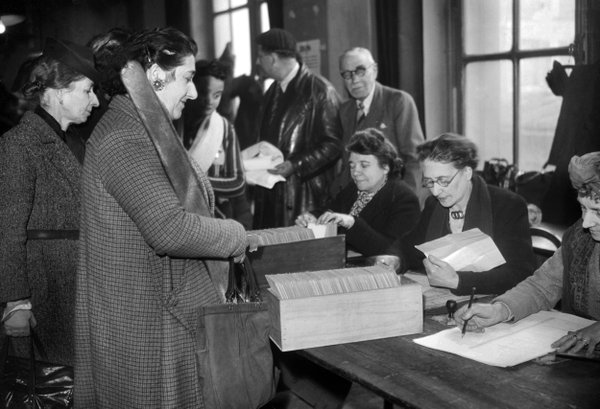
I do not hold, with the suffragettes, that the extension of the suffrage would bring the millennium, that the will to power would become the will to kiss, that sin would perish from the earth. Far from it. But I do hold that the dear girls could do no worse with the vote than men have done, that the present discrimination against them is unjust and absurd, that they ought to have their equal chance to inject their favorite antitoxins into the body politic and perform their pet mazurkas.

The common theory that women would not vote as intelligently as men is one that doesn’t appeal to me. I see no evidence in support of it. Women, in general, are certainly not less intelligent than men. On the contrary, they are probably more intelligent. That is to say, they keep in closer contact with reality, they are less romantic, they yield less to emotion. A woman’s eye is always upon the immediate certainty, not upon the remote possibility. She is not an idealist; she seldom dreams great dreams. But in the everyday, commonplace business of living she renders inestimable services to the human race. She keeps it upon the track; she sees that it gets three meals a day; she darns its socks and bathes its fevered brow; she assiduously counts its change.

In the great business of marriage, for example, the attitude of women is far less sentimental than that of men. A man usually marries romantically: he is full of magnificent visions of incredible bliss. Many men, indeed, are so romantic that they never marry at all—the true explanation of 90 per cent. of all masculine celibacy. But women marry with an eye to the main chance. They seldom allow romance to obliterate worldly prudence. In the whole history of England, I am told, no woman has ever actually refused a Duke. And here in free America it is not often, I venture, that a sane woman ever refuses a man who is her social equal and of good repute and able to support her. She may do it if she has a free choice between two such men, but such opportunities, it must be plain, are rare, and even when they occur there is commonly a Palpable difference between the two men, and so the woman’s choice is not free. She picks the better, not the worse. Her eye is on her number.

Such instinctive sagacity, I believe, would have a good influence upon politics. The woman voter would decide public questions, not from the idealistic standpoint, but from the standpoint of bread and butter. She would regard all political wizards and windjammers with distrust and aversion, just as she regards them now. She would bring to the business of government that salubrious cynicism which she now brings to the business of ensnaring and managing her husband. In brief, she would introduce a sharp common sense into political controversy and combat—a quality now almost wholly lacking.

But the suffragettes! The suffragettes! What of them? Isn’t it a fact that their present propaganda is utterly without sense, that their panaceas are all bosh, that their arguments and claims are romantic and nonsensical? Maybe it is. But don’t make the mistake, beloved, of confusing suffragettes with women in general. The suffragettes, by the irony of fate, are the worst of all imaginable specimens of their sex—not in the sense that they are evil, but in the sense that they are untypical. They no more represent the normal habits and mental processes of women than the fantastic Ibsenites of yesterday represented old Henrik, or than the S. P. C. A. of today represents that kindly and lovable creature, the Canis familiaris.

No; the suffragettes are not typical women, and so it would be absurd to charge their extravagances to the normal feminine character. On the contrary, they are untypical women, romantic women, women without womanly common sense. The thing that attracts thern to the suffrage cause is not the cause itself, but the excitement of the campaign. In brief, they are emotionalists—which is exactly what normal women are not. This explains their eager adoption of such ludicrous jehads as the vice crusade. This explains, too, their willing alliances with prima donna preachers, Chautauqua “sociologists,” Socialists, play censors and other such bogus “thinkers” and laryngeal bravos. And this explains, finally, the curious fact that many of them also belong to other windy lodges—of anti-vivisectionism, of anti-vaccinationists, of medical freedomists, of initiators and referendors, of deep breathers, of eugenists.