Against Religious Liberty, for the Freedom of the Church

Yuval Levin, arguably the most Burkean of commentators in conservative circles these days, recognizes what many who oppose modern secularism fail to see — namely, that a defense of religious liberty for persons actually increases the power of the state. He is evoking an older case for mediating institutions, like families, schools, community organizations, and churches. These institutions should retain authority over members and government should not seek to overthrow the powers of “lesser authorities.” In the case of Christianity, faith is corporate not individual. But when government does intervene for the sake of a person’s freedom — a son against his parents, a church member against her church officers — the government gains more authority (less for the lesser authorities) by liberating the individual. In effect, libertarianism and big government go hand in hand.

Here’s how Levin describes the dangers of protecting the liberties of religious persons over against the freedoms of religious communities:

The legal arena is where the case for religious liberty seems most straightforward and securely rooted. The First Amendment to the Constitution declares that “Congress shall make no law respecting an establishment of religion, or prohibiting the free exercise thereof.” These sixteen glorious words make for a sword, a shield, and a banner for today’s beleaguered believers. They seem to safeguard the right of every American to live by his convictions. But let us consider what they really demand, and on what grounds.

Our first instinct in the legal battles spawned by the progressive excesses of the last few years is to reach for the free exercise clause, which after all exists to protect religious people’s ability to live out their faiths in practice. It is easy to see why that seems like the right tool: Free exercise jurisprudence has frequently involved the crafting of prudential exemptions and accommodations—precisely the carving out of ­spaces—that could allow religious believers to act on their convictions even in the face of contrary public sentiments or (up to a point) public laws. In their present circumstances, many religious traditionalists would surely benefit from such prudence and protection.

But the logic of free exercise is, at the same time, highly individualistic, while the problems traditionalists now confront are frequently communal or (in the deepest sense) corporate problems.

What Levin proposes instead is for conservatives to defend the freedoms of association that come to communities of believers:

This means we need to see that we are defending more than religious liberty: We are defending the very idea that our government exists to protect the space in which various institutions of civil society do the work that enables Americans to thrive, and we are defending the proposition that this work involves moral formation and not just liberation from constraint. That is an entire conception of the meaning of a free society that goes well beyond toleration and freedom of religion. It is ultimately about the proper shape and structure of American life.

Making that clear—to ourselves and to others—will require an emphasis not just on the principles involved (be they religious liberty or subsidiarity or the freedom of association), but also on the actual lives of our actual, concrete communities. It will require that we turn more of our attention homeward, away from raging national controversies and toward the everyday lives of our living moral communities—toward family, school, and congregation; toward civic ­priorities and local commitments; toward neighbors in need and friends in crisis. It will require us to see that we need to build more than protective walls; we need to build strong, thriving, attractive ­communities.

The way I (mmmeeeEEEE) interpret this is to say that the baker who does not want to bake and decorate a wedding cake (why not an inferior one?) for a gay couple should not base her appeal on her own conscience but the teaching of her church. As a Free Methodist, not as Susan Eddy, she objects to being forced by civil rights legislation to bake a cake for a gay couple.

The downsides of this: first, what if the Free Methodists haven’t taken a stand on gay weddings? Second, what happens when Susan Eddy disagrees with the teachings of her church? Will she come around and submit?

Was Francis Schaeffer an Intellectual?

The latest comment in the very Protestant discussion of why we don’t have Christian intellectuals anymore like Reinhold Niebuhr and John Courtney Murray comes from Jake Meador on the merits of Francis Schaeffer who even attracted a story from Time magazine (though he did not make it on to the cover).

Time‘s description of Schaeffer, however, tells us something about how things had changed during the 12 years between Niebuhr’s cover and Schaeffer’s. In 1960, Time presents Schaeffer as a missionary to the intellectuals, which he no doubt was. But this assumes that Christianity needs missionaries to the intellectuals because the intellectuals are no longer Christian. What had been conflict within the intellectual community 13 years before when they reported on CS Lewis has become an attempt to witness to the intellectual community by 1960. This suggests, in one sense, that Jacobs is right—the Christian public intellectual is dead by 1960, which is why Schaeffer was needed.

I wasn’t reading Time in 1960 but fifteen years later I was reading Schaeffer and the better description of the apologist is not as missionary to intellectuals but missionary to would-be intellectuals. That is, Schaeffer was great for kids who had lost their faith and wanted to talk about the films of Bergman or the novels of Camus. Schaeffer was even more effective for young believers like me for taking the lid off subjects not so much forbidden as ignored. All of a sudden, Schaeffer seemed to make it possible for evangelicals who were so culturally marginal never to have heard of C.S. Lewis to entertain ideas about the arts and sciences, movies and trees, and even politics (DOH! That’s where it all breaks down). In other words, Schaeffer inspired as neo-Calvinists so often do. But when it came to the contents of his arguments, chances are that intellectuals weren’t impressed because Christian professors (who might qualify as intellectuals), the ones who grew up inspired by Schaeffer (like mmmeeeEEEE) weren’t so impressed with the scholarship that underwrote Schaeffer’s arguments.

I myself am not so troubled by the loss of Christian intellectuals because having read Niebuhr and Murray (for a current project) I can’t say that their arguments stand up so well. Whose do? Not many. But what Niebuhr and Murray may have gained in public recognition, they may have lost in faithfulness to their traditions. Niebuhr was by many confessional Protestants’ lights a liberal Protestant. And Roman Catholics today still wonder if Murray sold out Roman Catholic teaching to American political norms. And for what it’s worth, a 2k Protestant is happy to take guidance from non-Christian intellectuals on public life. To insist that public life needs Christian input is a soft, even fluffy, version of a theonomic desire for Christians running things, or at least a Eusebian desire to be part of the establishment.

Meador ends by likening Schaeffer to Tim Keller:

Of course, it’s not all so bleak as that. If we wish to go in the direction Jacobs is outlining and try to identify publicly recognized Christians translating the faith into terms the public square can understand while remaining orthodox, there are some examples.

You could easily argue that both Tim Keller and Russell Moore are doing that well in their own ways. Keller’s Reason for God was a best-seller and he lives in and pastors a church in Manhattan. Moore, meanwhile, has been in the New York Times, the Atlantic, and the Washington Post and is deeply engaged in many of the pressing social questions of the day, particularly on issues of racism and sexuality. . . .

Valuable as their work is (and I have enormous respect and gratitude for both men!), the best either can hope to achieve on a cultural level is helping to move us away from apocalypse and toward cultural dhimmitude. That isn’t meant as a criticism of either man, to be clear, nor is it to underscore the work they are doing. There are many people who have met Jesus thanks to the ministry of Keller and we should never forget how significant that is.

Bringing people to Christ is not the same as being a missionary to intellectuals. For that reason it may be useful to remember the review that Bruce Kuklick, an accomplished intellectual historian of Protestant background but agnostic outlook, wrote on Tim Keller’s The Reason for God in the Fall 2008 edition of the Nicotine Theological Journal:

The editors of the NTJ asked me to review this book. Readers have heralded it, he said, as a sophisticated body blow to secularism, but maybe the author is only talking to the already converted. What did I think?

Keller serves as the astoundingly successful pastor of Redeemer Presbyterian Church in Manhattan, New York. Presbyterian readers of NTJ will forgive me if I say he reminds me of a latter-day Henry Ward Beecher, an effective exponent of Christian ideas to a prosperous northeastern urban audience looking for guidance in the modern world. The book exemplifies the more or less systematic exposition of Reformed Protestantism that Keller’s sermons present, and that he promotes in his ministry.

But no matter what the blurbs from Publishers Weekly and New York magazine tell us, Keller writes not as a thinker but as a clergyman. The book is not designed for careful, logical scrutiny, and going to church differs from sitting in a philosophy seminar. As Keller describes his parishioners, they are good people, sometimes in some mild distress, most often decayed Protestants looking for counsel. But they are not interested in honing their cognitive skills by taking a course in The Critique of Pure Reason or reading David Hume on religion, or even emotionally mastering Kierkegaard on faith or Karl Barth on Pauline Christianity. Their frequent social locus in the American Christian tradition means that Keller does not have to start from scratch with them. The book supposes a basic familiarity with Protestant ideas and the notion that western Christianity has something exceptional going for it. Keller is not exactly preaching to the choir, but he is not lecturing in an international classroom to people with serious intellectual doubts, nor is he straining for truth. Keep Beecher front and center.

Let me give one extended example, which is to me is decisive, and decisive about a fundamental issue. Toward the end of the volume Keller takes up the question of miracles, and in particular the miracle of Jesus’ resurrection from the dead. For Keller, and I think for any good Christian, Jesus had really to have been dead and to have come back to life. What is it to believe such a thing? Keller, it seems to me, simply does not deliberate perceptively here. He begins by telling us what he thinks stands in the way of such belief: the presumption that miracles never happen, an outlook that “short circuits” our investigation. But, he argues next, we can’t elucidate everything else that took place later after the resurrection unless we acknowledge the miracle of the resurrection itself. How do we account for all the witnesses? How do we explain the entirely unexpected series of events? How do we come to grips with a brand new set of commitments and a hitherto unthinkable point of view – not foretold or expected by any ancient culture – except on the hypothesis that the resurrection is true? Perhaps more important, how are we to understand the explosive expansion of this new Christian world view? It only could have triumphed if people were transformed by their engagement with some extraordinary truths. Big things, Keller concludes, can only be caused by big things.

Can we accept this approach? In considering whether we are to believe in a miraculous event, we need to recall two factors. First we look at the evidence in favor of an event’s occurring, usually the credibility of testimony. Second we consider the unusualness of the event that the evidence requires us to accept as occurring. The stranger the event, the stronger must be the evidence that it has occurred. A miracle overthrows what I call “laws of nature.” They are propositions about our universal experience, the regularity of our sense perception, that enable us to predict with confidence the occurrence of one event after the occurrence of another. People don’t walk on water, change water to wine, or rise from the dead. If you jump off a bridge, you fall into water; if you have club soda in a can, the twelve ounces of it will come out into a cup; if someone dies, the body decays. We must weigh what is more likely to be false when it is said that a miracle has occurred. Is the testimony mistaken or has a law of nature been abrogated?

To allow for the possibility of miracles, we need only be open to experience. A law of nature cannot proscribe miracles; all it need do is to warn us of their rarity and of what is involved in asserting that they have come about. That is, sufficient testimony might overthrow a prima facie overriding adherence to a law of nature, and the regularity of experience. We can imagine scenarios where we would be obliged to believe that laws of nature have been violated, that something inexplicable in ordinary natural terms has occurred.

But reports of religious miracles have a notorious unreliability – even the Roman Catholic Church tells us that. In all times and places, we have had interested and credulous observers eager to persuade others of the veracity of their peculiar convictions. Provincial self-serving witnesses have repeatedly tried to impose ridiculous stories on our stock of ideas. Over and over religious miracles have come to be rejected. Again and again we find the quality of testimony suspect and never near to meeting the standards of credibility needed to overthrow a natural law. In fact, uniformity exists in the failings themselves: when someone proclaims a religious miracle, we regularly find biased testifiers, a lack of subsidiary evidence, suspicious circumstances. We have available far simpler explanations, and so on.

Put it another way: if we accept the miracles of Jesus, we have good reason to accept others that have more or less indistinguishable support. For example, Keller needs to think about how his privileged supernatural events compare with those promoted by the Mormons. If you already believe Jesus is a special guy, the resurrection is easy to swallow. But if you don’t have that belief in the first place, I don’t see how you make Jesus’ supernatural doings unique. I have two choices: between rejecting religious miracles and accepting the legitimacy of laws of nature; or accepting a lot of the miracles and rejecting laws of nature. We have Jesus arising from the dead, Muhammad touring heaven and hell with Gabriel, and Moroni delivering the golden tablets.

You pay a high price by believing in the Christian miraculous, and are on a slippery slope. You can’t rule out the miracles of any of the “major” religions. You also give license to the existence of zombies and vampires, who are after all, let us remember, first cousins to the resurrection. You are on your way to an environment populated by demons, ghosts, and weird apparitions; bleeding statues, the blind seeing, pictures flying from walls, and devils being exorcised; oracles, dreams with the force of predictions, the dead walking, or talking to us; dolls with pins stuck in them. And god knows what else. You give credence to a world where any sort of unnaturally caused events might occur. Our experience then does not much guide us. We can’t reason much about matters of fact, since we would have a universe in which at any moment we could not rely on the evidence of our senses and not have much of an inkling of how events hooked up.

I don’t expect Keller to deal with this sort of complicated chain of reasoning in his sermons, or even in The Reason for God. Nor do I expect him to be convinced by this group of arguments, however telling they are once one has discarded the veil of conventional respect for our regional Protestant traditions. But in writing his book, he is trying to do more than offer comfort — he is supposed to be sketching a rational account of matters, and his chapter on miracles should not convince anyone who is perplexed by fundamentals. He never takes a hard look at this issue, or others like it.

Undoubtedly I am making too heavy a demand on this volume. But Presbyterians who want to go after skeptics need to keep in mind the different social roles of the Beechers and Kellers of this world and a Machen.

That doesn’t undermine the value of Keller’s work. But intellectual life is a whole lot more demanding than getting noticed by Time magazine or the New York Times.

Is Piper Reading Coates?

John Piper tells us never to give up in the pursuit of improved race relations:

No lesson in the pursuit of racial and ethnic diversity and harmony has been more forceful than the lesson that it is easy to get so wounded and so tired that you decide to quit. This is true of every race and every ethnicity in whatever struggle they face. The most hopeless temptation is to give up—to say that there are other important things to work on (which is true), and I will let someone else worry about racial issues.

The main reason for the temptation to quit pursuing is that whatever strategy you try, you will be criticized by somebody. You didn’t say the right thing, or you didn’t say it in the right way, or you should have said it a long time ago, or you shouldn’t say anything but get off your backside and do something, or, or, or. Just when you think you have made your best effort to do something healing, someone will point out the flaw in it. And when you try to talk about doing better, there are few things more maddening than to be told, “You just don’t get it.” Oh, how our back gets up, and we feel the power of self-pity rising in our hearts and want to say, “Okay, I’ve tried. I’ve done my best. See you later.” And there ends our foray into racial harmony.

My plea is: never quit. Change. Step back. Get another strategy. Start over. But never quit.

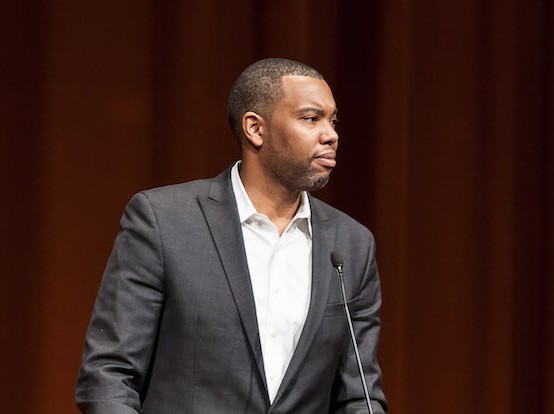
While Piper thinks there’s hope, Ta-Nehisi Coates doesn’t (as summarized by Thomas Chatterton Williams):

It’s not just black kids in tough neighbourhoods who are hapless automatons. In Coates’s view, no one has agency. The young black shooter doesn’t have to think too hard about what he might do because ‘the galaxy was playing with loaded dice.’ What’s alarming, though no doubt comforting to his white readership, is that in this analysis whites aren’t individual actors either. When an irritable white woman leaving an Upper West Side cinema pushes the young, ‘dawdling’ Samori and impatiently screams, ‘Come on!’ Coates, who is a tall, imposingly built man, erupts:

There was the reaction of any parent when a stranger lays a hand on the body of his or her child. And there was my own insecurity in my ability to protect your black body … I was only aware that someone had invoked their right over the body of my son. I turned and spoke to this woman, and my words were hot with all of the moment and all of my history. She shrunk back, shocked. A white man standing nearby spoke up in her defence. I experienced this as his attempt to rescue the damsel from the beast. He had made no such attempt on behalf of my son. And he was now supported by other white people in the assembling crowd. The man came closer. He grew louder. I pushed him away. He said: ‘I could have you arrested!’ I did not care. I told him this, and the desire to do much more was hot in my throat.

Coates sees this woman not as a morally fallible person with her own neuroses, but as a force of nature, she is ‘the comet’ in his scheme. It doesn’t occur to him that she may not be an avatar of white supremacy but just a nasty person who would have been as likely to push a blonde child or a Chinese one. Coates doesn’t realise that his disproportionate reaction – ‘my words were hot with all of the moment and all of my history’ – is bound to be seen as objectionable to those ‘standing nearby’. And it doesn’t strike him that as long as black people have to be handled with infantilising care – for fear of dredging up barely submerged ancestral pain – we’ll never be equal or free.

Whom do you believe? The white pastor or the black author? The earnest New Calvinist or the recipient of the MacArthur genius award? (Odd how Coates sounds far more deterministic than the Calvinist pastor? But just because it’s depressing doesn’t mean it’s false.)

Mitt ’16

Trigger warning: what follows is a post on a series with lots of profanity and — get this — lots of prayer. If you want to contemplate the disparity between profaning and praising God’s name, see what Curmudgeon has to say.

Like Curmudgeon, I agree that Last Chance U. is a terrific series. It even evokes aspects of — watch out — The Wire since it explores the way college sports functions in African-American boys’ lives and possibly offers a way out of the hood.

The series is so good that the missus did a little research on the director, Greg Whiteley, which took us to his 2014 documentary about Mitt Romney, with the title (of all things) Mitt.

Some think that if this movie had come out during the campaign, Romney might have won. Since the movie ends with the 2012 election returns and Romney’s concession, it’s hard to imagine how the movie might have come out during the campaign. But the movie does humanize Romney in ways that once again raise questions about media coverage of the contest and the mileage anti-GOP folks obtained from Mitt’s 47% remark.

The movie also makes you wish Romney were running now. He seems so much more impressive than either Trump or Clinton. No one has any trouble reminding you what a buffoon the Republican candidate is. Just listen to a ward leader in Philadelphia:

I am writing this letter primarily to the Republicans and Independents of the Ninth Ward (Chestnut Hill and a little bit of Mount Airy). Normally I write to Democratic voters to motivate them to get out and vote in the election. But in this unusual election cycle I think it is important that we talk.

The issue, of course, is Donald Trump. He is a candidate unlike any other that we have seen and, frankly, someone who deeply concerns me and I suspect also concerns many of you. In brief, he is not fit to be President. I say this after a few months of appalling behavior that reveals much about his character.

It is not a question of slips of the tongue or being politically correct. Rather his behavior reveals much about him. These statements show he is not fit and should not be President / Commander in Chief. From the sexist insults of Megan Kelly and many other women, to ridiculing a disabled New York Times reporter, to calling out the Mexican American federal judge as unfit to judge him, to attacking the gold star parents of Captain Kahn, he has revealed his character.

So you vote for Hillary and look the other way when someone asks about character? Where on the spectrum of bad character does a candidate become acceptable, even fit for office? Hillary’s at the good spot on the bad character spectrum? And was this Democratic official standing by Hillary’s man when the president seemed to reveal a few flaws of his own? Now some people know what it feels like to be Jerry Falwell.

Of course, Mitt may overdo Romney’s character. Maybe he’s not that wholesome and easy going. Maybe his family is not so pleasant when the camera is off. Maybe the candidate praying with his family on their knees — in Christ’s name, no less — was phony.

But if Trump could be this year’s candidate, why not Romney? At one point Romney says he is everything the Republican Party is not — he’s northern, rich, and Mormon while the party is southern, populist, and evangelical. Well, what is Donald Trump? Southern? Populist? Christian?

What he is is anti-elite and anti-PC. J.D. Vance explained it to Terry Gross (via Rod Dreher):

… so my dad is a Trump supporter, and I love my dad, and I always say, Dad, you know, Trump is not going to actually make any of these problems better. And he says, well, that’s probably true, but at least he’s talking about them and nobody else is and at least he’s not Mitt Romney. At least he’s not George W. Bush. He’s at least trying to talk about these problems.

Romney was far more regular than the press or his campaign made him seem. But he was too much part of the establishment — though not enough to get the blessing of the mainstream media — (Harvard, governor of Massachusetts) to attract “poor white trash.”

That’s too bad.

How the World Might Have Changed if the Apostles Had Religious Liberty

I don’t want to deny that it’s a tough world out there for believers. Have to worry about the flesh, the devil, and the world. So having also to keep an eye on California state legislators can make Christian piety a real challenge.

Still, the U.S. Christian tendency to play the persecution card doesn’t make sense of the greatness of American society (no need for Trump). In case Old Life readers did not know, the California legislature was proposing to expand the rights of LBGT students in ways that would have compromised restrictions that Christian institutions placed on their students, faculty, and staff.

And now the good great news. Enough people in California and elsewhere lobbied the California legislature to remove the controversial provisions of the bill:

Sen. Ricardo Lara (D-Bell Gardens) is removing a provision of his bill that sought to take away the exemption of religious schools to anti-discrimination laws. Instead, he will press forward with the amended bill that would still require such schools to disclose if they have an exemption and report to the state when students are expelled for violating morality codes.

“The goal for me has always been to shed the light on the appalling and unacceptable discrimination against LGBT students at these private religious institutions throughout California,” Lara said.

“I don’t want to just rush a bill that’s going to have unintended consequences so I want to take a break to really study this issue further,” the senator said. He said the requirement for schools to report expulsions based on morality codes to the state Commission on Student Aid will give him information on how common such cases are.

The senator said he will pursue other legislation next year, possibly including the provision dropped Wednesday.

Lara’s decision came after a half-dozen universities formed a new committee called the Assn. of Faith Based Institutions and contributed $350,000.

The group has flooded the districts of members of the Assembly Appropriations Committee, including Chairwoman Lorena S. Gonzalez (D-San Diego), with mailers saying the bill violates religious freedoms and urging voters to contact their Assembly person.

“Stop state control of private education,” says one mailer to Gonzalez’s constituents. Her committee is scheduled to vote on the bill Thursday.

The institutions include Azusa Pacific University, Point Loma Nazarene University and William Jessup University.

After Lara’s announcement, the universities released a letter to the Senator that said “Pending review of this new language, we are pleased to change our position on this legislation from “oppose unless amended” to `support.’ “

What makes democracy great is that it can reverse falling sky.

As White and Christian As Ever

Some think the United States is becoming less white and less Christian:

These racial and ethnic changes are dramatic, but they only partially account for the sense of dislocation many whites feel. In order to understand the magnitude of the shift, it’s important to also assess white Christian America’s waning cultural influence. It’s impossible to grasp the depth of many white Americans’ anxieties and fears—or comprehend recent phenomena like the rise of the Tea Party or Donald Trump in American politics, the zealous tone of the final battles over gay rights, or the racial tensions that have spiked over the last few years—without understanding that, along with its population, America’s religious and cultural landscape is being fundamentally altered. . . .

It’s true that mainline numbers dropped earlier and more sharply—from 24 percent of the population in 1988 to 14 percent in 2012, at which time their numbers stabilized. But beginning in 2008, white evangelical Protestant numbers began to falter as well. White evangelical Protestants comprised 22 percent of the population in 1988 and still commanded 21 percent of the population in 2008, but their share of religious America has now slipped to 18 percent.

Meanwhile, some can’t help but notice that the Democrats and Republicans have nominated white Protestants:

Too little noted, Protestant America has managed to nominate two Protestant candidates for president. As Clausewitz famously observed, “war is simply a continuation of political intercourse, with the addition of other means.” My corollary, from which most Americans might prefer to avert their eyes: “Politics is simply a continuation of religious intercourse, with the addition of other means.”

While almost ignored it is a telling and, perhaps, a defining aspect of the 2016 election. In his imperfect but authentic way, Donald Trump is reflecting certain of the Calvinist values underlying his beautiful Presbyterian faith. Hillary Clinton is reflecting, in her own imperfect but authentic way, the values of her beautiful Methodist faith.

If you’re not convinced that America is still white and Christian, then you haven’t tried out the apologists’ argument that Roman Catholicism hasn’t changed.

Imagine This Much Concern About Joel Osteen

When faith is so important to social order and national identity, political woes become spiritual crises:

Many of the evangelical leaders who have endorsed Trump have done so due to fears about what the American church’s future will be in a post-Obergefell America. Will religious liberty for Christian business owners be protected? Will state-level abortion restrictions be done away with? Will Christian universities and seminaries continue to exist? Will Christian parents have the freedom to give their children a Christian education?

All of these concerns are completely valid. Both Matt and myself have been abundantly clear on that point for some time now. We really are facing something of a doomsday scenario in American Christianity.

But freedom to worship or preach the Bible is chopped liver? Even freedom to stigmatize bad preachers?

I could turn out to be wrong and even more foolish than I already appear, but Christians really need to show their faith and take a breath about this election. I remember while studying at L’Abri during the 1976 presidential contest Francis Schaeffer talking about the choice between Jimmy Carter (bad) and Gerald Ford (good) in Manichean terms. I also remember not being convinced.

But the land of the free and home of the brave has a way of turning believers apocalyptic.

We’ll Surrender if You Let Us Keep Our Emperor

Noah Millman explains why Christians may need to work out a truce with the Democrats:

Suppose that you look out a couple of decades, and you see, as Dreher does, an America in which traditional Christians are a dwindling minority ever more clearly out of step with American culture, to the point of mutual incomprehension and even loathing. In that world, a polarized party system in which one party is resolutely determined to circumscribe the freedom of that dwindling minority while the other party pays lip service to its defense is a world in which that minority’s life gets progressively worse and worse year after year. One can dispute the probability of that world coming to pass, but I believe that’s what Dreher believes is coming.

If it is, my question is: what’s the political strategy for heading it off? Voting over and over again for a party that pays less and less attention to your concerns is clearly a losing strategy — for obvious reasons. So what’s the alternative?

It seems to me, clearly, that the alternative is making an overture to the enemy party. After all, as Yitzhak Rabin famously said, you don’t make peace with your friends — you make peace with your enemies. And you cannot make peace with your enemies if you decide, from the start, that your enemies will never make peace, on any terms. It seems to me that if Dreher really believes the Democratic Party is moving in the direction of outright persecution of traditional Christians, then it is a moral and practical imperative for traditional Christians to engage in outreach to the Democratic Party to try to change their course, and to keep trying if the first efforts bear no fruit.

But suppose the enemy really is as implacable as you imagine. If the correlation of forces is similarly dire, then what we’re talking about isn’t making peace but negotiating the terms of surrender. Even then, terms have to actually be offered. And it’s the people seeking an end to hostilities who have to offer them.

If that is the case, then — and I know this is a very ugly way of putting it, and I apologize in advance, but Dreher himself is the one who brought up “Japanese-soldier Religious Rightists hiding out on a desert island in the South Pacific” — my question is: what is the traditional Christian version of “we’ll surrender if you let us keep our Emperor?”

The Limits of W-w

Like I say, transformationalism is good on inspiration but not so good on transformation. Jim Bratt gave a peak behind the curtain of neo-Calvinist culture in the U.S. in his last post before heading to China on a Fulbright (happy trails, Jim):

Boy, do we need that now. I’m thinking of the death this past week of Tim LaHaye. The span of tomfoolery he pumped out in the name of Christianity has created lasting disrepute for the faith. The creation “science.” The “end-times” irresponsibility, compounded of self-pity, blaming others, and a certain cultural idolatry. All of it redolent of the John Birch Society swamp from which he first slithered. Still, it’s the sort of religious fantasy you can expect to hit the American best-seller list. The death that really strikes home for me is the moral nadir of Mr. Family Values, “Dr.” James Dobson. His endorsement of Donald Trump puts paid to any pretense that the ethics and politics he pushed, lo, these many years have come to anything but authoritarian nationalism with a particular macho strut. For that is Trump. Dobson’s worse for covering it with smarmy God-talk.

I say this hits home for me because back when I was on a denominational committee studying the future of the CRC’s magazine, The Banner, we were given some research stats of readership habits and opinion. James Dobson turned out to be the CRC’s #1 rated authority on current events. Charles Colson was its #1 theologian. The Fraud and the Felon atop the Calvinist hit parade. Two minor sins in that revelation somehow stuck out for me. Dobson, a member of the Church of the Nazarene. Read rank Armininian. Colson, invoking the name of Kuyper as he bullied along.

All this, I mused, was the price of that “Americanization” to which the CRC, as an immigrant church, had been long pushed to accede. Well, nationalist mush compounded by militancy turns out to be the bitter fruit of that process. And so it is today.

I don’t pretend that Kuyper ever represented more than a small fraction of Dutch people claiming a Reformed commitment. Ditto, in Dutch-American Reformed circles, for The Forum, The Journal, or Perspectives. But these magazines have fought hard and punched way above their weight because of that magic formula that Kuyper caught, and taught. And it’s worth carrying on their mission, worth trying to maintain cultural, political, and theological integrity above the open sewer into which white-American Christianism has descended.

I bring this up not to delight in the sufferings of neo-Calvinists, nor to take a shot at Jim on his way out of the blogosphere. Bratt, it must be said, is honest about the state of neo-Calvinism and properly annoyed at its abuses.

I do refer to this to remind those would-be Kuyperians that the neo-Calvinist project is a lot harder than it sounds. Take every thought captive. Christ is Lord of every square inch. Television (and plumbing) redeemed. Integration of faith and learning. New York City as a tipping point for global revival. Bratt’s own account of the CRC is a ready warning that even with all the infrastructure of neo-Calvinist culture — church, school, catechesis, denominational magazine, world-and-life bleep, you are a poor match for mass culture in a liberal capitalist democracy.

Take every though captive? More like, kid yourself that you are large and in charge.

I truly admire the grit and determination of Dutch-American Calvinists. They are one of the true success stories of transplanting a distinct form of Old World Calvinism to the New World. They were BenOp Calvinists before the Benedict Option became hip.

But as all immigrant groups know, leaving the ghetto for the suburbs is part of the American dream. So for w-w to happen you may need to hunker down in the ghetto (or if Amish on the farm or if Benedictine in the monastery). But if you are going to live and move and have your being as a citizen of a modern nation state, chances are many of your square inches will be taken captive.

And if you want a theological rationale or explanation for that, for being part of the mainstream society but not, learn, live, and love 2k. The water’s warm.

Beaver Cleaver Was Lost in His Trespasses and Sins

Trigger warning to self: you’ve engaged Carl Trueman critically before and it did not go well. So be careful, be very careful.

The reason for bringing up Dr. Trueman again, even if ever so gingerly, has to do with his recent evaluation of Rusty Reno’s new book about prospect for a Christian society. Trueman writes:

I simply am not convinced that change can be achieved on any significant scale. The causes of the modern malaise are complicated, and their solution must be equally elaborate. For example, as George Grant and David Schindler have shown, technology brings with it a different view of reality from that of traditional Christianity. This mindset is now deeply embedded in our world. The entertainment industry mediates much of what is taken for reality and grips the moral imagination of the masses. The globalized economy has transformed communities and community expectations in ways we have yet to fathom. To borrow that hackneyed but poetic phrase from Marx, all that is solid melts into air. Zygmunt Bauman’s argument, that we live in a time when even the most longstanding and reliable social structures are in permanent flux, seems to me compelling. It must be accounted for by any hope that depends upon the solidity of concepts or institutions from the past. How does one reform or recapture or rebuild that which has been robbed of solid existence?

I generally agree.

But where I push (not shove) back is with the idea that modernity alone has these problems. Ever since the fall, it seems to me, the possibilities of pursuing lives of holiness and passing on the faith have been hard. Just remember what Paul warned Timothy about the “last days”:

understand this, that in the last days there will come times of difficulty. 2 For people will be lovers of self, lovers of money, proud, arrogant, abusive, disobedient to their parents, ungrateful, unholy, 3 heartless, unappeasable, slanderous, without self-control, brutal, not loving good, 4 treacherous, reckless, swollen with conceit, lovers of pleasure rather than lovers of God, 5 having the appearance of godliness, but denying its power. Avoid such people. 6 For among them are those who creep into households and capture weak women, burdened with sins and led astray by various passions, 7 always learning and never able to arrive at a knowledge of the truth. (2 Tim 3:1-8)

Was Paul predicting a time when Marx, Freud, and Nietzsche would dominate understandings of human nature and the created order, or was he talking about life in the Roman Empire circa 60 AD? My understanding is that he was talking about life in the Mediterranean world then.

So why do Christians believe modernity is so much worse than any other time? Well, it sure seems that Roman Catholics have a certain nostalgia for the Christian society of medieval Europe, neo-Calvinists for the Christian society of the Kuyperian era of Dutch history, evangelicals in the U.S. for the First Pretty Good Awakening that of course led up to the Christian founding of the United States. Here Protestants want to recalculate critiques of modernity since Kuyper and George Whitefield both fall on the modern side of the divide between medieval and modern periods. In other words, Protestant critiques of modernity play into the hands of certain Roman Catholic apologetics (even if nostalgia for the flourishing of the Middle Ages seldom extends to the Crusades or the Inquisition).

But surely anyone with eyes and ears has to admit that we are living in worse times than 1950s American when Ward and June Cleaver reared Wally and the Beave. I have eyes and ears. I will concede that the 2010s are worse than the 1950s, though I did live through 1968 and that was not a good time. But on a scale of fallen humanity, are modern or contemporary times really worse than what Noah lived through, or Lot, or Jeremiah, or our Lord himself? Doesn’t the fall mean we always live in desperate times?

The point here is not that people who believe in original sin should be relativists when it comes to assessing the way humans live together or proposing ways that are better for a common life together and for the proclamation of the gospel. But I think it is a mistake to cultivate the notion that human flourishing is possible whether by putting in place the right policies or institutions, or by thinking about the past a certain way. I know Dr. Trueman knows this. But it sounds like he thinks we are living through one of the worst times in human existence. No matter how pleasant and reassuring Beaver Cleaver’s America was, it was not the new heavens and new earth. When sin abounds, it’s not a good time. The Cleavers were certainly flourishing as we now count such living, but they were also drowning in sin (and never in church). Shouldn’t that perspective inform the way we view the West post-Foucault?