When You Need a Precedent for Civil Disobedience

Go to Martin Luther King, Jr. and Dietrich Bonhoffer. That’s exactly what David Koyzis does in a curious way for readers of Christianity Today.

But first he clears the obstacle of 2k:

Of course, there was nothing wrong with following Rome’s legitimate decrees. Jesus had said so himself. When the Pharisees tried goading him into speaking against imperial taxes, he surprised them with words that form the touchstone of Christian reflection on civil disobedience: “Give back to Caesar what is Caesar’s and to God what is God’s” (Mark 12:17). Some mistakenly interpret this to mean that there are two kingdoms—one belonging to God and the other to Caesar. But that would put God and Caesar on the same level. In reality, Caesar receives his authority, including his divine mandate to rule, from God. As Jesus affirmed before Pontius Pilate: “You would have no power over me if it were not given to you from above” (John 19:11).

Whether Koyzis knows better, the point of 2k is not that politics belongs to (the) man and religion belongs to God. For the guhzillionth time, 2k affirms that government of all stripes — family, church, state — comes from God. The issue is whether church and state have different tasks and so different jurisdictions. It sure sounds like even the Westminster Divines thought so. The task of the state is:

God, the supreme Lord and King of all the world, hath ordained civil magistrates, to be, under him, over the people, for his own glory, and the public good: and, to this end, hath armed them with the power of the sword, for the defense and encouragement of them that are good, and for the punishment of evildoers. (23.1)

What the church does is not that:

Unto this catholic visible church Christ hath given the ministry, oracles, and ordinances of God, for the gathering and perfecting of the saints, in this life, to the end of the world: and doth, by his own presence and Spirit, according to his promise, make them effectual thereunto. (25.3)

Oh, that neo-Calvinists could keep straight what 2k is (as if all non-neo-Calvinists look the same).

Then Koyzis pulls an interesting feat. He notices that Protestants have no real tradition of civil disobedience until the Nazis and racism:

The Reformation forced Christians to reflect once again on the limits of Caesar’s domain. In previous centuries, when Western Europe was essentially a single Christian commonwealth, occasional clashes between political and church authorities rarely spilled over into the pews. But by the 16th century, the Reformers would face hostility from both pope and emperor.

Martin Luther may or may not have uttered his famously defiant declaration—“Here I stand. I can do no other”—before the Holy Roman Emperor. But he was certainly skeptical of civil disobedience. Condemning a German peasant uprising, Luther cited Romans 13 and 1 Peter 2, justifying disobedience only when government tries to coerce faith.

Like Luther, John Calvin supported obedience to political authority, which he praised in the highest terms: “Its function among men is no less than that of bread, water, sun, and air; indeed, its place of honor is far more excellent.” He held that Scripture requires obedience even to a bad king, who may be carrying out God’s judgment. Calvin favored constitutional checks on the ruler’s authority, but he opposed individuals launching rebellions.

Two major 20th-century events decisively shaped the church’s perspective on civil disobedience: the rise of Nazi totalitarianism in Germany and the struggle for black civil rights in the United States.

As the church lady used to say, “well, isn’t that convenient.” Too bad Koyzis doesn’t explain how the persecution of Christians by the Roman empire or the wars between Protestants and Roman Catholics or the taxes of Parliament on British colonists were such a walk in the park compared to Hitler and Jim Crow.

Paul Helm Shows 2k Isn’t Hard to Understand or Affirm

Dr. Helm is on a roll. First he defends 2k from charges of quietism and includes this poignant remark:

Those who advocate a Christian view of this or that fail to recognize the seriousness of what they are proposing. To have a Christian view of X is to be committed to proclaiming it as the word of God which Christians have an obligation to uphold and propagate.

In other words, redeeming culture or doing things Christianly may inspire, but the claims bite off more than the claimants can chew — namely, invoking Christianity brings norms that believers seldom apply to the variety of callings in which they find themselves.

Then, Dr. Helm observes how John Owen could have used a dose of 2k for the brief time he believed that England was the greatest nation on God’s green earth:

What happened to Owen’s theology can be explained in two phases. In the first phase his understanding of the accepted Reformed understanding of the secret will and revealed will distinction changed shape during the Commons sermons. As we saw earlier the distinction, as Owen understood this, is between what God decrees, reserved to himself, and what he requires, his revelation. Owen extended the revealed will, the promises, from ‘generals’ to include the particular contemporary and future events in the British Isles about which he preached to the House of Commons, going beyond what he had said were secrets to include the unfolding events of the Civil war and their significance, and in particular to the military operations in Ireland. He daringly attributed to what he said of these the character of God’s revealed purposes, long prophesied, in turn giving rise to Christian precepts.

It is likely that his relative youth, sudden promotion to Cromwell’s side, and the way of thinking exhibited in his sermons, had turned his mind. He believed he was in the cockpit of the unfolding of God’s plan for England, foretold by the prophets, and that he was their mouthpiece. The outcome was assured.

If it can happen to the orthodox Puritan, Owen, perhaps we can give Ted Cruz a pass.

Would Russell Moore Argue This Way about Cocaine Possession?

I understand why pro-life groups want to disassociate themselves from Donald Trump’s convoluted thoughts about women who seek abortions needing to be penalized. But doesn’t Russell Moore go too far when he says these women are victims of a culture and industry that is pro-choice?

One of the worst misconceptions about pro-life Americans is that we are pro-baby and anti-women. Unfortunately, the pro-life movement hasn’t always done a good job of defeating this notion. It’s true that some rhetoric on our side has lacked compassion and holistic concern for the well-being of mothers, especially unwed moms. But despite our imperfections, the pro-life movement has indeed been remarkably consistent about our desire not only to tear down abortion culture but to build a culture of life and human flourishing in its stead. This is the conviction that has built thousands of crisis pregnancy centers, funded hundreds of adoptions., and come alongside countless numbers of women, and men, with practical acts of mercy and love.

If abortion were illegal, if it were a form of murder, why does Moore assume the mother is innocent or not responsible for her involvement in the procedure? Does Moore think this is true for wealthy professional women as much as it may be for the poor mothers who can’t afford to have a child? And would he be so forgiving of any number of harmful activities that take place in poor urban neighborhoods?

I get it that the public relations of the pro-life movement needs to avoid looking punitive. But think about it. If a woman in a Southern Baptist Convention congregation had an abortion procedure, would her deacons come along side her and grant forgiveness and offer consolation apart from an admission of guilt and an expression of repentance?

This is not 2k. Two kingdoms theology recognizes that the church’s role is forgiveness (in response to faith and repentance) and that the state’s role is to punish the wicked and reward the good. But a blanket public policy that says mothers walk away scot-free from an activity that has drawn and quartered the United States for the last four decades seems a tad cynical. If something is illegal and someone engages in an activity that breaks the law, law enforcement doesn’t assume that law breakers are victims.

I’ll See Your Year and Raise You an Age

Bill Smith makes a weak (sorry) case for the church calendar:

There is small minority of Presbyterians who observe no Church Year as a matter of principle. They believe it would be sin so to do. Then there is the broader evangelicalism in the U.S. which has no scruples against the Church Year, but flies by the seat of its pants, guided by no more than preferences, feelings, and whims. These evangelicals in matters of the church year, as in so many matters, do what they please.

Then there is catholic Christianity which from ancient times spends the time from Advent to Trinity rehearsing, reliving, learning about, and celebrating who Jesus Christ is, what he has done for our salvation, and the fulness of the revelation of God that is found in him.

Most of Christianity in the world follows such such an annual and orderly calendar. Roman Catholicism. Orthodoxy. Anglicanism. Lutheranism. Methodism. Many of the continental Reformed. Not a few Presbyterians with British roots. Then there are the evangelicals of the sort Mr. Wax experienced in Romania who sort of follow such a calendar.

The most strict of the Presbyterians who roll out the canons and lay down a barrage of warning and condemnation at Christmas and Easter and most especially at the beginning of Lent can only conclude that the overwhelming majority of Christians are at best disobedient and unfaithful and at worst apostate and no Christians at all.

For my part I increasingly had the sense that Christianity must be more historically grounded and more connected with worldwide Christianity than I previously thought.

Forget the regulative principle. Say hello to Geerhardus Vos.

What does the Bible teach about time? Well, the six days of creation point to the importance of the week, a bedrock of the lunar calendar (that ladies know only too well).

Then you have the church calendar of the Israelites with all the holy days and sacrifices that took place year after year.

And then came Jesus by whom the apostles understood the difference between this age and the age to come. For that reason, when Peter writes about time to New Testament Christians, he doesn’t recommend a church calendar. He explains that we live in the end times:

But do not overlook this one fact, beloved, that with the Lord one day is as a thousand years, and a thousand years as one day. The Lord is not slow to fulfill his promise as some count slowness, but is patient toward you, not wishing that any should perish, but that all should reach repentance. But the day of the Lord will come like a thief, and then the heavens will pass away with a roar, and the heavenly bodies will be burned up and dissolved, and the earth and the works that are done on it will be exposed.

Since all these things are thus to be dissolved, what sort of people ought you to be in lives of holiness and godliness, waiting for and hastening the coming of the day of God, because of which the heavens will be set on fire and dissolved, and the heavenly bodies will melt as they burn! But according to his promise we are waiting for new heavens and a new earth in which righteousness dwells. (2 Peter 3:8-13 ESV)

I for one cannot fathom how thinking of myself at different points in the life of Christ or in the time before the first advent helps me think about the last days. I also don’t see how a year-round system encourages Christians to think about this saeculum as the one between Christ’s advents. It’s also striking that Peter thinks eschatological (as opposed to annual) thinking nurtures holiness and godliness. (Can I get an “amen” from the obedience boys?)

So the objection to Bill isn’t that he’s no longer a good regulative principle Presbyterian. It’s that he’s substituted an inferior way of thinking about our place in history with the cosmic one taught by Peter and Paul.

The liturgical calendar is your mind on the solar year. The interadvental age is your mind on Christ.

Why I Love the Modern State

It helps me keep straight the difference between the city of God and the city of man, at a time when so many Christians want Christianity to define “ALL of me.”

Mark Oppenheimer thinks it possible to distinguish Christian as a noun and adjective:

And Jews and Christians alike have internalized these different connotations. Most Jews, if asked about their religion, say not, “I’m a Jew” but the softer, more acceptable, “I’m Jewish.” With Christians, the answer will vary depending on the kind of Christian you’re talking to. Liberal Protestants may say, “I’m Christian,” using the adjective, but many evangelicals, born-again Christians, and other passionate believers will say, “I’m a Christian.” It sounds a little jarring to more secular or liberal types, but not in a bad way. It just sounds hard-core, like the person is planting a flag and standing by it.

For Christians, the difference between “Christian” the adjective and “Christian” the noun is one of both degree and kind. We are all described by many adjectives, but we select very few nouns to sum up who we are. The nouns require a bit more commitment. It’s the difference between “I’m liberal” and “I’m a liberal”—the man or woman willing to own the noun is more committed, for sure. The adjective is what you are like; the noun is who you are.

And what about James Bratt’s suggestion that politicized evangelicals should own the moniker, “Christianist“?

Whatever the label, believers have trouble (without the help of modern politics) sorting out their Christian and non-Christian aspects. Just consider the confusion in this response to yesterday’s bombings in Belgium:

I’ll leave it to people who know what they’re talking about to expound further on the radical nature of what Christ is demanding of us when he says this. Suffice it to say for now that it’s clear and direct and we don’t have any choice if we call ourselves Christians: we have to forgive our enemies.

And that includes the terrorists who killed 34 people in Brussels on Tuesday. We have to forgive them.

BUT…But…but it is also written, “thou shalt not kill.” And that means that we need to kill all the other terrorists who are still out there.

Why? Because justice and reason and the teaching of the Church. The Fifth Commandment (don’t kill) imparts on Christians a duty to protect and defend innocent human life. Sooooo…it is morally just to use lethal force to prevent the killing of innocent people. Self-defense, just war, etc. etc. etc.

So kill ISIS.

First, I thought God through the ministry of the church forgives sins. It’s not up to me to forgive people who have not wronged me. Do I even have authority as an elder to forgive sins that are crimes against humanity? The Book of Church Order doesn’t say so.

Second, I don’t have the power to kill anyone legally unless I become part of the executive branch of our constitutional order. As a policeman, executioner, or soldier I could legitimately kill someone. As a policeman, executioner, or soldier I am also carrying out orders of someone else. As a Christian policeman, executioner, or solder I am carrying out the duties of my vocation. But I am not acting “merely” as a Christian since non-Christian police and soldiers carry out similar orders.

So as a 2k Christian I don’t have to forgive or kill. I defer to those with higher pay grades, which includes — piety alert! — praying, “Thy kingdom come, Thy will be done.”

Trumpsformational

One of the advantages of falling behind on reading is that the distance of several months adds the perspective of Monday morning’s quarterback to what at least in a magazine looked relatively reliable. For instance, while reading the October 2015 issue of First Things yesterday, I saw a review of Robert Putnam’s Our Kids: The American Dream in Crisis (Simon & Schuster) which sounded not nearly so smart now that we’ve had seven months of Donald Trump:

Well-designed policies supposedly can make up for the family’s collapse and set young people on the right course. Putnam recommends beefed-up tax credits, monetary transfers, benefits programs, better-trained and better-paid teachers, vocational education and apprenticeships, community college aid, widely available preschools, and free after-school sports programs. These lavishly funded initiatives will enable teachers and bureaucrats to substitute for parents from birth to adulthood, returning us to a previous idyll of mobility and equality. There is nothing really new here, and Putnam’s exposition seems half-hearted, as if he doesn’t really believe this laundry list will do the trick, even with renewed effort and much more money.

There’s also a call for a massive mentoring program for lower-class children, with the well-educated acting as surrogate parents and advisors on a wide scale. The goal is to socialize poor children to upper-class norms, thereby equipping them to attend and get through college. ­Putnam’s mentoring idea is a ­variant of the pet elite project of college-for-all, which looks to education as the force of salvation and rescues working-­class children by transforming them into upper-class kids.

This pie-in-the-sky dream reflects the deep logic of our post-1960s world, which offers the good life to the knowledge class, but lacks any approved or positive vision for others. On this view, careerism, “creativity,” ­consumerism, lifestyle cultivation, expressive ­individualism, and sexual adventure are fulfilling and prestigious, while civility, duty, ordinary work, and ­fealty to conventional social roles are exploitative and oppressive. ­Given this outlook, college for all makes perfect sense and anything else looks unjust.

In fact, the project is unrealistic and thus ultimately pernicious. Not everyone is able to join the knowledge elite, nor does everyone want to. Our society will always need basic low-skilled labor, from serving meals to caring for dependents to cleaning toilets. The working class cannot be phased out or made to disappear. Economic improvement for workers is an important goal, although difficult to achieve. But it cannot be enough. What is needed is a viable and vibrant culture that maintains the meaning of working-class life and recognizes its dignity. On this, ­Putnam has virtually nothing to say and little to offer.

Except that now, as opposed to last summer when this review was likely written, it turns out that Donald Trump is the one responding to the division between American elites and workers in an electorally successful way. Instead of a culture what the disenfranchised want is a reality show candidate. Did the Trump campaign actually read Putnam?

In that same issue, Russell Moore wrote a spokesmanish piece that put its foot squarely down on the conviction that evangelicals would not be cowed by same-sex marriage:

…the Evangelical cave-in on sexual ethics is just not going to happen. There is no evidence for it, and no push among Evangelicals to start it. In order to understand this, one has to know two things about Evangelicals. One, Evangelical Protestants are “catholic” in their connection to the broader, global Body of Christ and to two millennia of creedal teaching; and two, Evangelicals are defined by distinctive markers of doctrine and practice. The factors that make Evangelicals the same as all other Christians, as well as the distinctive doctrines and practices that set us apart, both work against an Evangelical accommodation to the sexual revolution.

And then came Donald Trump who apparently has shown that evangelicals (at least some of them), are far more interested in economic than social issues, thus making attractive a candidate who will if elected likely not do a thing to oppose same sex marriage. Could it be that evangelical spokesmen don’t really speak for evangelicals, that evangelical is too crude a religious identity to be useful for social analysis, that evangelicals are not all their cracked up to be (as in conservative)? Michelle Boorstein thinks so:

The divisions have led to a range of viewpoints about what is happening in American evangelicalism and whether the splits will endure after the fall election. Some, like Galli, see a new breakdown based on attitudes towards race and ethnicity. Others see an intensifying split between those who prioritize personal morality and those who emphasize free markets and capitalism as a route to power and freedom. Some frame the split as Christian pragmatists vs. Christian idealists.

“There was in the past a very large camp of evangelicals who were primarily interested in electing the most Christian kind of candidate. And then over time bigger doses of pragmatism set in,” said DeMoss, who was a top advisor to Mitt Romney’s two campaigns. “Evangelicals got splintered between the religious litmus test folks and the pragmatists.”

The Trump phenomenon has some leading evangelicals looking more closely at their label. Russell Moore, a Southern Baptist leader, wrote last month that he is so disgusted with being lumped in with Trump supporters that “at least until this crazy campaign year is over, I choose just to say that I’m a gospel Christian” instead of an evangelical.

Some pollsters say “evangelicals” have been way over-counted – or seen as a huge block — because the definition is so hazy. As a result, they say, practicing Christians who reflect traditional evangelical beliefs like the necessity of a born-again experience and a requirement to evangelize are being lumped in with people who are more nominally connected to Christian practice.

Perhaps the most lasting lesson of Donald Trump’s appeal to evangelicals is that no one has transformationalized the religious landscape the way the leading Republican presidential candidate has. If the comprehensive Christian crowd really wants to transform society — from neo-Calvinists and Kellerites to Roman Catholics and those nostalgic for Christendom — they may want to take a page from Donald Trump.

Depends On What You Mean by Religion

That is, if freedom of religion is under attack, don’t you have to define religion? Hunter Baker seems to have an expansive view of faith:

Big Business is a serious problem for religious liberty. Few people adequately understand that Big Business and Big Government go hand in hand. Corporations don’t like localism and various exemptions aimed at respecting rights of faith and conscience. They just want a monolith that they can understand and work with in a turnkey fashion. I have no interest in being the corporate candidate. The business executives of the world need to understand that when they undermine our liberty as people of faith, they are ultimately undermining liberty of all types, including economic liberty. I will fight for the soul of the party on this issue, just as many have bravely fought to keep the party pro-life.​

But what if religion is not everything I do, but certain practices and convictions I share with those in my communion? And here’s where I make a shameless self plug:

The difficulty here—and liberal society is by no means consistent about this—is that religion has shifted, in the American experience, from a corporate identity to a personal quest for meaning. Rather than faith being part of belonging to a religious institution and so including certain doctrinal convictions (belief in one God) and behavioral obligations (refraining from employment on Sunday), the courts’ understanding of religion leans heavily on notions of conscience (even Madison illustrates this). As such, religion is a deeply personal matter and the state should stay out of such private arenas.

Professor Bradley’s attempt to define religion very much follows in this trajectory, and she devotes several paragraphs to questions of conscience. The high stakes of individual conscience are not simply the products of the courts or the academy. Many Christians themselves also regard religion as a deeply personal matter. The revivals of the First Great Awakening during the 1740s promoted the importance of religious experience in ways that made church membership and corporate rites far less important for being truly religious. At the same time, the religious Right for the last three decades or so has taken a page from black, gay, and feminist political activists by arguing that faith is so comprehensive in its claims on the believer that he or she can never leave faith behind when entering the public square.

This notion of faith as deeply personal, rather than corporate or institutional, raises a great problem for liberal society. If faith informs everything I do, then paying taxes or baking a cake or sending my children to a public school may violate my conscience. And if a majority of the citizens have such sensitive consciences, conducting the affairs of government may become impossible. To be sure, the mainstream Progressive narrative of U.S. history includes instances where heroic stands for conscience based on faith—the Civil Rights movement—emerged as valuable contributions to a free society. By the same token, while many times religion coincided with the advancement of certain liberal goals, it has also motivated believers to protest existing norms and so has divided society along religious lines.

To illustrate the difference between religion personally conceived and corporately conceived, consider the membership vows required by my own denomination, the Orthodox Presbyterian Church. After being examined by a local congregation’s officers, a person needs to answer in the affirmative the following five questions:

Do you believe the Bible, consisting of the Old and New Testaments, to be the Word of God, and its doctrine of salvation to be the perfect and only true doctrine of salvation?
Do you believe in one living and true God, in whom eternally there are three distinct persons—God the Father, God the Son, and God the Holy Spirit—who are the same in being and equal in power and glory, and that Jesus Christ is God the Son, come in the flesh?
Do you confess that because of your sinfulness you abhor and humble yourself before God, that you repent of your sin, and that you trust for salvation not in yourself but in Jesus Christ alone?
Do you acknowledge Jesus Christ as your sovereign Lord, and do you promise that, in reliance on the grace of God, you will serve him with all that is in you, forsake the world, resist the devil, put to death your sinful deeds and desires, and lead a godly life?
Do you promise to participate faithfully in this church’s worship and service, to submit in the Lord to its government, and to heed its discipline, even in case you should be found delinquent in doctrine or life?

For this particular denomination, these are the chief parts of being a Christian. None of these questions pertains directly to business transactions, curricular matters, or medical procedures. Of course, the person who takes these vows might have firm convictions about how she should run her business, what school her children should attend, or what procedures hospitals should provide. Given that these other matters are incidental to requirements for institutional membership, our Orthodox Presbyterian should perhaps be less likely to invoke freedom of conscience if she ends up disagreeing with the decisions of local, state, or federal authorities about them. She might simply regard the friction that comes with a free and diverse society as the cost of doing business.

Part of the problem here may involve the old Burkean point about the value of mediating institutions. Those agencies of civil society that buffer persons from government can potentially pose challenges to the smooth operation of a state, but they also perform any number of services that add up to a society comprised of persons who place few, or at least fewer, demands on governmental agencies. Over the course of the 20th century, as the federal government’s power expanded, many institutions of civil society lost power even as the liberty of individuals increased. That process is no less evident in American religion, though the state’s hand in the loss of religious institutions’ power has not been as noticeable as it has in family life or educational or private associations.

Even so, the value of churches and synagogues in identifying and defining religion—as opposed to leaving it to individual conscience—may clear a path through the current debates that surround religious freedom and governmental protection of faith. If the state protected corporate expressions of religion more than personal ones, negotiating the interests of government and religion would likely be less litigious than it is now. To be sure, many Americans would object to legal or policy patterns that granted to pastors, priests, and rabbis greater authority in resolving matters of conscience. But without some mediating institution to inform and guide religious life, believers may be inclined to see religious liberty narrowly if only because they seemingly lack non-state institutions for resolving cases of conscience.

If the choice were between religious institutions or potentially outraged believers, the state might prefer to negotiate with churches and synagogues instead of with persons with easily offended consciences.

Communicants, Siblings, Friends, and Others

When you have a comprehensive view (w-w) of the world, when you think that your faith informs (or should) everything you do, hard are those distinctions that 2k so readily supplies, like — this is the church so Christian rules apply, this is not the church so freedom applies.

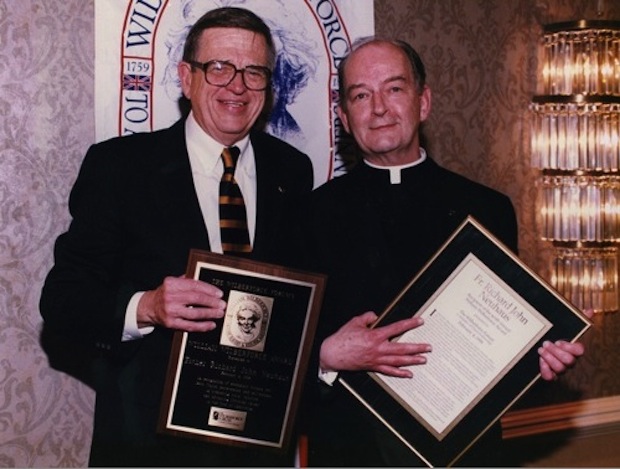
This problem is no less challenging for Roman Catholics than for neo-Calvinists since both are in the comprehensiveness business of showing how faith relates to EVERYthing a Christian does. Cathleen Kaveny took the comprehensiveness and catholicity of Rome in an arresting direction when she accused Richard John Neuhaus and the First Things crowd of partisanship and undermining the bonds of Roman Catholic unity:

Some conservative Catholics have blamed Pope Francis for sowing division among the members of the Body of Christ. But the charge is more properly lodged against one of the heroes of conservative Catholicism: the late Richard John Neuhaus.

It was Neuhaus, after all, who advanced the view that conservative Roman Catholics have more in common with orthodox Jews and Evangelical Protestants than they do with progressive members of their own religious communities. In fact, that view was an operational premise of First Things magazine under his leadership. This approach is based on a thoroughly distorted view of religious realities and commitments.

Does honoring Jesus as the Son of God count as a commonality? Like their conservative counterparts, progressive Roman Catholics acknowledge the divinity of Jesus Christ, and find the interpretive key to the Hebrew Bible in the New Testament. Orthodox Jews do not—indeed, must not—treat Jesus as the Messiah foretold in the Book of Isaiah. It would be blasphemous for them to do so.

Does living in the grace imparted by the sacraments count as a commonality? Both progressive and conservative Roman Catholics believe that God’s grace is channeled through the seven sacraments. Many Evangelical Protestants do not have the same view of grace or the sacraments; they often view the Eucharist as a memorial of a past event, not a way of being present with Christ here and now.

In trying to find common ground with evangelicals, then, Neuhaus was not truly Roman Catholic but actually Protestant:

Ultimately, Neuhaus’s focus was on nurturing these commonalities in the American political context—he was building a political movement. For a variety of partially overlapping reasons, conservative Roman Catholics, Evangelical Protestants, and orthodox Jews were inclined to vote Republican in political elections. Along with George Weigel and Robert George, Neuhaus coached Republican politicians in Catholic-speak to win national elections. . . . But here’s the irony of Neuhaus’s project: in treating theological belief and commitment as mere instruments of political will, Neuhaus’s view of religion resonated more with Feuerbach, Marx, and Leo Strauss than with the church fathers. In separating his own church of the politically pure from the hoi polloi of the body of Christ, his ecclesiology better reflects Protestant sectarianism than Roman Catholicism.

For the record, I too took issue with Evangelicals and Catholics Together for putting politics ahead of theology and for locating Christian unity not in ecclesiastical contexts but in parachurch groupings.

But Rusty Reno didn’t particularly care for Kaveny’s shot at Neuhaus. And so he tried to justify finding fellowship among religious people who were political liberals and then got mugged by reality:

many of the founding figures who played such a prominent role in First Things, as well as early readers like me, came to some shared conclusions. We became less and less impressed with the modern conceit that ours is a time of the unprecedented. We became more and more convinced that our traditions contained an inherited wisdom—a divine revelation—that provides greater insight into the human condition than any modern method, mentality, or revolution. Again, in the magazine’s early years, it was an exciting and invigorating to find others who were coming to the same post-liberal conclusions, whether they were Jewish, Catholic, or Protestant.

That is mainly true but does not represent the nature of Evangelicals and Catholics Together. Otherwise, ECT should have been called Evangelicals and Liberal Protestants and Roman Catholics and Mormons and Jews and Stanley Hauerwas Together. But at least Reno recognizes different layers of commonality:

When it comes to many things that are important to me, I have more in common with friends than with my brother. But my brother’s still my brother. It in no way compromises the truth of our fraternal bond for me to link arms with those with whom I have more in common politically, intellectually, or even theologically. The same goes for the sacramental bond that units us in Christ.

That is more or less a 2k point. But a 2ker would not call a magazine about religion and public life First Things. It’s not elegant but Penultimate Things or Proximate Things or Common Things would work better.

That left Michael Sean Winters to settle the debate and he did so (in neo-Calvinist-friendly ways) by taking issue with Reno’s separation of life into different spheres:

There may be “other dimensions” as Reno notes, but surely, for the Christian, those other dimensions need to be related to “what matters most.” It was this dualism between the Catholic faith and Catholic morality that stalked Neuhaus’s writings and continues to afflict the journal he founded. This dualism not only colored Neuhaus’ judgment, but it kept much of his otherwise enjoyable controversial writings at a fairly superficial level. It also led him to overlook the failings of his own team, both in politics and in religion: His defense of the Iraq War and of Fr. Maciel were stains on Neuhaus’ intellectual project that deserve attention and explanation by those who champion him.

. . . Reno, too, puts his sacramental beliefs in one silo, and his moralizing in another, and never the two need challenge each other. That is not how Catholics think when we are thinking at our best.

Apparently, 2k thinking is a no-no for Roman Catholics as much as it is for neo-Calvinists. Everything belongs to God. Or the papacy has universal jurisdiction (which is a topic for discussion in its own right). Which makes it hard to justify solidarity with people of a different faith.

But if you limit that solidarity to the church and find all sorts of room for cooperation outside the church, problem solved. Why does that solution seem so impious?

What’s Good for Interpreting the Constitution . . .

is good for interpreting the Bible:

Justice Scalia’s determination to take the law as it is earned him many enemies among our progressive elites. The criticism was and remains that Scalia’s textualism prevents the Constitution (and law more generally) from “growing” to meet the changing needs of the people and their government. Scalia was uncaring and a servant of injustice, we have been told, because he was not willing to use the law to do things its often privileged and corrupt authors did not intend it to do. The reprehensible hit piece sent out to faculty and students at Georgetown Law School by Professors Gary Peller and Louis Michael Seidman well illustrates the level of hatred aimed at Justice Scalia on account of his principled approach to law. It was wrong, according to these two professors, both of whom deny the legitimacy of our Constitution, for their law school to mark Justice Scalia’s passing with sympathy and respect because he was, on account of his judicial decisions, a bad man. The virtue progressive lawyers like Mr. Peller and Mr. Seidman demand of judges is quite clear. A good, virtuous judge is one who cares about the oppressed (defined by race, class, and gender), knows that law often is a tool of oppression, and sets himself the task of rewriting the law to make it a tool of justice by serving the interests of oppressed groups, as determined by progressive elites. In rejecting this hubristic model of the judge as savior, Justice Scalia earned endless calumnies, most especially the constant jibe that he was merely a tool of powerful bad actors.

The irony in these charges is thick, for it was precisely Justice Scalia’s refusal to go beyond the text of the Constitution or law that made his jurisprudence by far the most democratic and egalitarian, in the historical American sense, on the Supreme Court of his and perhaps any other time. The Supreme Court Justice who divines “emanations” from “penumbras” of various phrases and ideas in the Constitution and stitches them together into doctrines like the “right to privacy” is serving neither the law nor the people, but his own ideology.

Development of doctrine may allow interpreters of papal instruction to find coherence. But the similarities between development of dogma and a “living, breathing” Constitution are striking.

More Burke, Less Locke

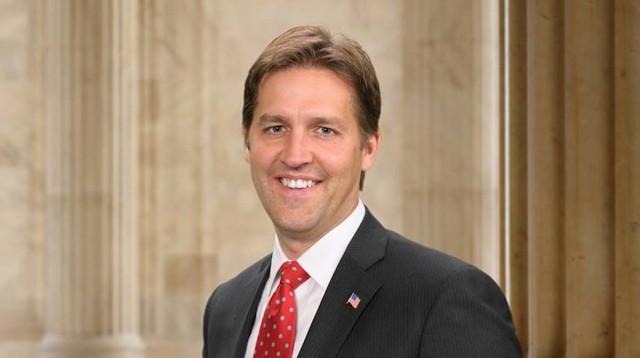
Ben Sasse addressed CPAC yesterday and Scott Clark has the video under the heading, “The Government Exists to Secure Natural Rights.”

I immediately wondered if this commits the federal government to granting amnesty to all the Mexicans living in America, legally or not. If everyone has rights naturally, and the U.S. government is committed to protecting those rights, how could it ever not protect the rights of anyone who winds up American soil?

Here‘s what Senator Sasse may have meant by that line:

Our founding moment is truly extraordinary. Our founders were making a claim about human dignity. Our founders were saying that everybody, everywhere—not just those who have been blessed to be born in this place—but everybody, everywhere is ordained with natural rights. Everyone everywhere is created in the image of God with natural rights, and government is just our shared project to secure those rights.

Again, everyone has rights by virtue of being human (sort of like the French Revolution’s Declaration of the Rights of Man — a universal, abstract ideal).

But another way of thinking about rights is to say they are protected by a constitutional arrangement and in order to receive such protection you need to be a member of a constitutional community. Here’s another statement from Senator Sasse:

People have been wrong about the nature of government and the nature of freedom, and we the people in America believe that our rights come to us via nature, and government is our project to secure them, so we the people give the government enumerated powers. We don’t ever wait for the government to give us an rights. We claim those by nature.

But what if the government has clearly enumerated powers and some of those mean that citizens enjoy the protection of that government. That protection is a form of liberty and rights. Citizens benefit from the government’s protection and the Constitution’s Bill of Rights. But non-citizens don’t. That seems elementary (but I’m only licensed to do history.)

What might Senator Sasse’s remarks have sounded like if he were a reader of American Conservative:

Sasse’s case for classical conservatism was actually a defense of classical liberalism. For the senator, America is an exceptional idea invented by the Founding and “ordained with natural rights”. This Lockean interpretation of the American Revolution is not how classical (or small-c) conservatives understand the Founding. Classical conservatives certainly believe in conserving the achievements of the Founding, but they also know America is not an idea. America is a culture and a nation composed of many regional and local communities. It is from these communities that a sense of self-government is developed and citizens who can underpin limited government are forged.

Sasse also described conservatism as a “set of policy preferences” directed towards the reduction of the size of government. Classical conservatism is not merely a checklist of anti-government policies, regardless of how virtuous those policies might be. It is a philosophical temperament which sees politics as the art of the possible, values prudential reform, and puts concrete institutions before abstract concepts.