The Problem with Cessationism

Cessationists apparently have the reputation of not believing in miracles after the apostolic age:

No issue has been more controversial among Protestants in the past 40 years than the charismatic gifts and the role of miracles in the post-apostolic age. The issue was controversial in previous eras of Protestant history, too, although theological lines were not usually drawn as hard and fast as they are between “cessationists” and “continuationists” today.

In the 1700s and 1800s, suspicion of claimed miracles was connected to anti-Catholicism. Protestant critics saw the Catholic tradition as riddled with fake claims of miracles. Ridiculing the fake miracle claims of Catholics (such as icons bleeding a liquid that turned out to be cherry juice) became a staple of Reformed polemics against the Catholic Church. So when seemingly miraculous events happened in Protestant churches, even sympathetic observers warned against the threat of bogus miracles.

Odd, but the cessationists I know all affirm the ongoing reality of miracles. How could you ever believe in people lost in sin becoming regenerate without resorting to the miraculous work of the Holy Spirit?

The real problem comes with the “gift” of speaking in tongues. Why do we need ongoing revelations from God if scripture is sufficient?

1. Although the light of nature, and the works of creation and providence do so far manifest the goodness, wisdom, and power of God, as to leave men unexcusable; yet are they not sufficient to give that knowledge of God, and of his will, which is necessary unto salvation. Therefore it pleased the Lord, at sundry times, and in divers manners, to reveal himself, and to declare that his will unto his church; and afterwards, for the better preserving and propagating of the truth, and for the more sure establishment and comfort of the church against the corruption of the flesh, and the malice of Satan and of the world, to commit the same wholly unto writing: which maketh the Holy Scripture to be most necessary; those former ways of God’s revealing his will unto his people being now ceased. (CofF 1.1 emphasis added)

6. The whole counsel of God concerning all things necessary for his own glory, man’s salvation, faith and life, is either expressly set down in Scripture, or by good and necessary consequence may be deduced from Scripture: unto which nothing at any time is to be added, whether by new revelations of the Spirit, or traditions of men. (CofF 1.6 emphasis added)

Continuationists who want to defend tongues are in the same predicament as Roman Catholics who defend the continuing infallible teaching of the magisterium and the authority of tradition. Does God’s word have all we need for salvation and godliness? Or do we need ongoing revelations for becoming right with God? If you make an infallible pope or a Spirit-filled Christian the arbiter of Christianity, you deny the sufficiency of Scripture.

Selah.

What’s a Plumber to Think?

In which category, flesh or Spirit, fall washers and gaskets?

5 For those who live according to the flesh set their minds on the things of the flesh, but those who live according to the Spirit set their minds on the things of the Spirit. 6 For to set the mind on the flesh is death, but to set the mind on the Spirit is life and peace. 7 For the mind that is set on the flesh is hostile to God, for it does not submit to God’s law; indeed, it cannot. 8 Those who are in the flesh cannot please God.

9 You, however, are not in the flesh but in the Spirit, if in fact the Spirit of God dwells in you. Anyone who does not have the Spirit of Christ does not belong to him. 10 But if Christ is in you, although the body is dead because of sin, the Spirit is life because of righteousness. 11 If the Spirit of him who raised Jesus from the dead dwells in you, he who raised Christ Jesus from the dead will also give life to your mortal bodies through his Spirit who dwells in you.

12 So then, brothers, we are debtors, not to the flesh, to live according to the flesh. 13 For if you live according to the flesh you will die, but if by the Spirit you put to death the deeds of the body, you will live. 14 For all who are led by the Spirit of God are sons of God. 15 For you did not receive the spirit of slavery to fall back into fear, but you have received the Spirit of adoption as sons, by whom we cry, “Abba! Father!” (Romans 8)

American Exceptionalism Perfectionist Style

Forget the meme that has Roman Catholics winning. The big winner of late is Charles Finney, that evangelist who insisted that Christians renounce all sin in their lives and taught a generation of Protestants that compromise with sin in politics was — wait for it — sin.

Evidence of the prevalence of such perfectionism comes in Theon Hill’s piece on Charlottesville. Surprising is his acknowledgement that black Civil Rights advocates were far from pure:

The practice of accommodating white supremacy is not unique to white America. People of color have often deployed accommodation strategically, hoping that it will lead to greater acceptance by whites. Booker T. Washington, in his famous Atlanta Exposition Address, embraced the logics of “separate but equal,” expecting blacks to experience upward mobility as they demonstrated their worth to white America. W. E. B. DuBois called on blacks to avoid racial activism during the First World War, believing that loyalty to the nation during this difficult moment would produce greater acceptance during the post-war period. Even my personal hero Dr. King hesitated to oppose racists in the Democratic Party in 1964, believing that accommodation would produce greater gains for blacks in the long term.

Isn’t that the nature of politics? Don’t you take certain gains while recognizing you don’t get everything? Since politics is about maintaining order and equity in a world that consists of sinners, and since you can’t eradicate sin in this life and don’t want to live in a society where government (who uses force legitimately) is looking into everything you do and think, maybe you live with a little compromise? Maybe you fight another day for another round of proximate goods.

Not so when you apply the standards of perfectionist Christianity:

Scripture and history repeatedly warn that accommodating sin never produces greater holiness.

That is certainly true for the believer and even the church — oh, by the way has anyone asked how pure the mainline churches are in their efforts to combat the alt-right? But monuments and social protests are not about personal righteousness. They are about what we share as people inhabiting the same national borders and government by the same civil authorities.

When did people ever start expecting a nation to be holy?

Oh, that’s right. Mr. Finney.

Even Neo-Calvinists Get 2K Religion Once in a While

In her review of Philip Gorski‘s American Covenant: A History of Civil Religion from the Puritans to the Present, Susan Wise Bauer concludes with a distinction between the earthly and the spiritual that clearly out the arteries (spiritually, of course) of an Old School Presbyterian’s heart:

But I also think the prophets and the New Testament writers would agree with me that giving up earthly power (and make no mistake, language is power) is only possible if you believe that earthly power is not the end of existence, that the death of something worldly, whether that earthly thing is influence, recognition, or even life itself, will lead to a supernatural resurrection brought about by a transcendent reality much greater than yourself.

What in the world does this do to every square inch redemption of all things earthly, created, cultural, and urban? Does Bauer mean to suggest that these things, like the grass, fade? And that only the life resurrected abides?

How did Jamie K.A. Smith let this get through? Is this the Neo-Calvinist of the broken clock?

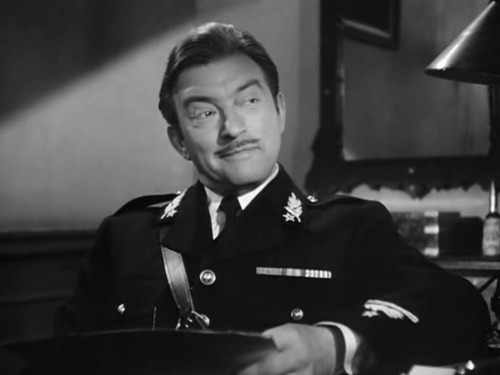
The Captain Renault GIF

How can you be shocked, shocked to find injustice going on in America after Ferguson (film noir anyone?)? And yet, people like Patricia McGuire of Trinity Washington University act as if the country has not been having a conversation about having a conversation about race for the past two plus years:

“We Americans study the history of tyranny and exclaim, ‘That’s terrible, but it would not happen here!’ as we congratulate ourselves on the robust state of our democracy. The experience of the last few months now exposes this once-confident boast as terribly naive and perhaps even dangerous as a new administration indulges in a remarkable torrent of false and misleading statements as a basis for policy and action,” she wrote. “The gravest lie we are grappling with at the present moment is the Trump Administration’s cruel and unreasonable war on immigrants — mostly people who are black and brown, and Muslim — Mexicans and refugees from central America, Syrian refugees, people from certain countries in the Middle East and Africa including Iran, Iraq, Sudan, Syria, Yemen, Libya and Somalia.”

Black lives mattered before Trump?

This is why we worry about those who use the present to turn history into morality plays. What history does best is teach students we’ve been here before, all is vanity. Only Whig historians believe in progress and then are surprised when their narratives let them down.

Catechesis or Seminary?

Imagine if this woman had simply relied on the means of covenant nurture to acquire a better understanding of God and salvation:

Is seminary absolutely necessary to get that foundation (or any of the other things I’ve mentioned)? No, not necessarily. Could a person learn all I learned without a seminary education? Probably. But it’s harder to do it on your own. There’s something to be said about surrounding yourself with trustworthy, godly professors who will guide you to a deeper faith in God and knowledge of his Word.

Well, there it is. That’s what I’d tell a friend if they asked whether I’m glad I went to seminary. I’d refill her coffee, double check the time to ensure we weren’t late for preschool pickup or whatever errands we were supposed to be doing, and if we still had an extra minute we’d discuss the ways seminary might be possible for her if she were interested.

No matter where God leads me from here, I’ll never regret the time I spent in seminary.

Makes me wonder if I would have had to go to seminary if my church had offered the kind of instruction that I was seeking. Did I really need Greek and Hebrew to understand what the Confession of Faith lays out so well?

Church Planters in the City Have it Rough

But is that because the city is so tough or because the folks who go into urban church planting actually believe the hype?

City people are fast paced. They adapt to change without giving too much thought to it and that’s why life becomes chaotic and out of control in the first place. When city people end up pausing to think about their overwhelming state, it’s usually too late. Ministry in the city requires a lot of reflection, prayer and, Scriptural meditation. It’s much easier to be in sync with the pace of the city than the pace of God’s heart for the city. . . .

Cities demand quality, often without compensation. Think of the talented 50 year old sax player in the subway. Get the point? Pastors in cities have to find a healthy way to deal with slow growth and even failure. Unless they do so, they will likely hit the bottle, the spoon, their wives and kids or, the x-rated sites. . . .

The city demands that you give a good reason for what you do and say. At the same time it’s always bargaining with you ideologically. It’s very hard not to compromise biblical doctrine in exchange for the approval of its inhabitants and even harder to find an honest, respectful, clear, and contextual way to communicate truth. . . .

Woody Allen would be embarrassed.

Would urban church planters have an easier time if they simply ministered to people rather than urban people? At a time when race, partisan politics, immigration, and sex balkanize people into their segregated affinity groups, do really need to add cities to the list of characteristics that isolate us from a common humanity (or nationality)? Whatever happened to neither Jew nor Greek, male nor female, slave nor free? But urban or suburban (don’t even think about rural) abideth.

Machen Day 2016: Before Jimmy and Bunk

My father, who died in 1915 at the age of eighty-eight, and my mother, who died in 1931 at the age of eighty-two, were both Christians; from them I learned what Christianity is and how it differs from certain modern substitutes. I also learned that Christian conviction can go hand in hand with a broad outlook upon life and with the pursuit of learning.

My father was a lawyer, whose practice had been one of the best in the State of Maryland. But the success which he attained at the bar did not serve in the slightest to make him narrow in his interests. All his life he was a tremendous reader, and reading to him was never a task. I suppose it never occurred to him to read merely from a sense of duty; he read because he loved to read. He would probably have been greatly amused if anyone had called him a “scholar”; yet his knowledge of Latin and Greek and English and French literature (to say nothing of Italian, which he took up for the fun of it when he was well over eighty and was thus in a period of life which in other men might be regarded as old age) would put our professional scholars to shame. . . .

He was a profoundly Christian man, who had read widely and meditated earnestly upon the really great things of our holy faith. His Christian experience was not of the emotional or pietistical type, but was a quiet stream whose waters ran deep. He did not adopt that “Touch not, taste not, handle not” attitude toward the good things or the wonders of God’s world which too often today causes earnest Christian people to consecrate to God only an impoverished man, but in his case true learning and true piety went hand in hand. Every Sunday morning and Sunday night, and on Wednesday night, he was in his place in church, and a similar faithfulness characterized all his service as an elder in the Presbyterian church. At that time the Protestant churches had not yet become political lobbies, and Presbyterian elders were chosen not because they were “outstanding me [or women] in the community,” but because they were men of God. I love to think of that old Presbyterian session in the Franklin Street Presbyterian Church of Baltimore. It is a refreshing memory in these days of ruthless and heartless machinery in the church. God grant that the memory may some day become actuality again and that the old Christian virtues may be revived! (J. Gresham Machen, “Christianity in Conflict,” Selected Shorter Writings, 548, 549)

All Roads Lead to Trump

Detroit native, Tim LaHaye, died on Monday at the age of 90. Did his Left Behind novel series prepare the way for Donald Trump? Here‘s one reason for thinking so:

“Left Behind” follows a group of Americans through the days after the Rapture — which occurs shortly after an Israeli botanist wins the Nobel Prize for devising a way to grow crops in the desert, thereby making Israel a self-sustained trading partner with its neighbors and bringing peace to the Middle East. In the series that follows, the Antichrist, a charismatic young Romanian leader named Nicolae Carpathia, works through the United Nations’ machinery to consolidate currency and erase national borders. Eventually all are brought together under the Mark of Loyalty, a biochip inserted into the hand or forehead that allows one to purchase food, and a tattoo — the Mark of the Beast.

“Left Behind” was well-timed. In 1995, with the Cold War ended, the USSR effectively dissolved and the Berlin Wall down — and well past the expiration date for “Late, Great Planet Earth’s” predictions about the 1980s — the average conservative evangelical in the pew was less worried about Russia and the bomb and more concerned about a twofold threat: apostasy and liberalizing trends in the church as well as the loss of national sovereignty through the United Nations.

Blogging is Essential to Being a Christian

That is a conclusion that someone could possible draw from a recent Pew Research Center poll on Christianity in the United States:

The survey shows a clear link between what people see as essential to their faith and their self-reported day-to-day behavior. Simply put, those who believe that behaving in a particular way or performing certain actions are key elements of their faith are much more likely to say they actually perform those actions on a regular basis.

For example, among Christians who say that working to help the poor is essential to what being Christian means to them, about six-in-ten say they donated time, money or goods to help the poor in the past week. By comparison, fewer Christians who do not see helping the poor as central to their religious identity say they worked to help the poor during the previous week (42%).

The same pattern is seen in the survey’s questions about interpersonal interactions, health and social consciousness. Relatively few Christians see living a healthy lifestyle, buying from companies that pay fair wages or protecting the environment as key elements of their faith. But those who do see these things as essential to what it means to be a Christian are more likely than others to say they live a healthy lifestyle (by exercising, for example), consider how a company treats its employees and the environment when making purchasing decisions, or attempt to recycle or reduce waste as much as possible.

Is this circularity (which rivals the motives of credibility) merely a problem of Protestant subjectivity? I don’t think so:

Three-quarters of Catholics say they look to their own conscience “a great deal” for guidance on difficult moral questions. Far fewer Catholics say they look a great deal to the Catholic Church’s teachings (21%), the Bible (15%) or the pope (11%) for guidance on difficult moral questions.

Perhaps most discouraging is how poorly Sabbath observance fares, a weekly activity that winds up ordering all the days so that ceasing from work is possible:

To help explore this question, the survey asked U.S. adults whether each of a series of 16 beliefs and behaviors is “essential,” “important but not essential,” or “not important” to what their religion means to them, personally.

Among Christians, believing in God tops the list, with fully 86% saying belief in God is “essential” to their Christian identity. In addition, roughly seven-in-ten Christians say being grateful for what they have (71%), forgiving those who have wronged them (69%) and always being honest (67%) are essential to being Christian. Far fewer say that attending religious services (35%), dressing modestly (26%), working to protect the environment (22%) or resting on the Sabbath (18%) are essential to what being Christian means to them, personally.

Hearing the Word of God read and preached in the public assembly of the saints? Forget about it.