Christendom Exceptionalism

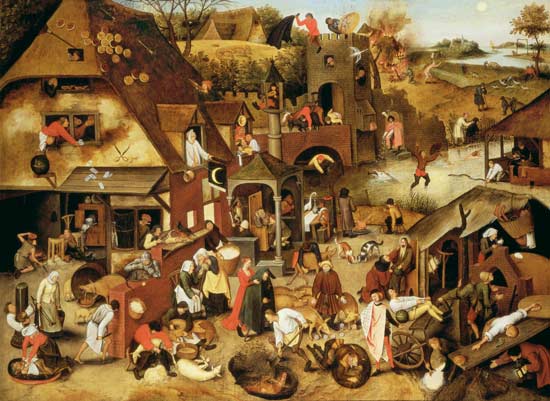
Not sure what Peter Leithart is working on, but recent posts on medieval and early modern Europe have shed new light on the claims that exalt Christendom and blame Protestantism for ushering in a disordered, licentious modernity.

Just how united was Christendom, you ask? Not much:

In a 1971 essay, H.G. Koenigsberger challenged the notion that the Reformation broke up a unified Europe. He criticizes historians and social scientists for assuming a norm of unity: “We have assumed that the theological and ecclesiastical unity of Catholic Christendom was its natural condition and that, in consequence, the Reformation was a dramatic break in this condition which ran counter to all previous Christian experience and which, in a sense, destroyed the natural order of things.”

Much of the essay presents an analysis of the kind of unity that existed in pre-Reformation Europe. Koenigsberger poses the question this way: “For the thousand years of the Middle Ages, Christendom and its institutions remained obstinately divided, and Christians remained distressingly prone to engage in deadly wars with each other. Why was it that only the Church survived as a unified institution?”

His first answer is sardonic: “it did not do so. Throughout the Middle Ages there existed Christian churches in Africa and Asia which were never in communion with Rome at all.”

The more elaborate answer answer is that “medieval unity, insofar as it existed, was a function of an economically poor society. The small surpluses of production of any given area would not be wanted in the adjoining area, which was probably producing the same commodities, but rather in much more distant areas. Medieval trade was, therefore, small in volume but covered large distances.”

Craft skills were specialized and scarce, and thus craftsmen had to be mobile: “Bell founding was a highly skilled and specialized craft. After a master founder had cast the three or four, or even six or eight, bells for the church of a small town, he would have to move on, for there would be no further work for him in this town nor, very likely, in the neighbouring towns. It was the same with all other skills, from the cathedral builder to the learned scholar, from the forger of fine weapons . . . . Different areas of Europe might advance in certain skills, as Flanders did in the weaving of fine cloth; but no single area of Europe could support all of the skills which European society required. Only the whole of Europe could do this.”

Cultural unity thus depended on a “thin crust of men highly skilled in the production of sophisticated commodities or in the performance of complex services. This upper crust was international in education, attitudes, and often, physical mobility; for this was the only way it could function.” Cultural unity depended on a low rate of entry into this upper crust. European unity was a unity of the “1%.”

Sounds like modern America. Substitute media elites, policy wonks, federal government workers, Ivy League professors, and Hollywood types for “thin crust of men highly skilled in the production of sophisticated commodities or in the performance of complex services” and you an American exceptionalist unity that rivals Christendom’s.

That means, the Reformation was not a break with the past but a fulfillment of medieval Europe:

Signs of centrifugal forces are evident throughout the centuries leading up to the Reformation – reforming movements within the church, sometimes breaking free into independent movements; rival papacies, with kings taking sides, anticipating the anti-papalism of their sixteenth-century Protestant counterparts. The conciliar movement tried to arrest this process but “the defeat of this movement, and the subsequent concentration of papal energies on Italian power politics made it virtually impossible for the Church to adapt itself to the changing conditions of European Society.”

Koenigsberger acknowledges that the Reformation broke the camel’s back, but sees it as the culmination of several centuries of mounting instability. He identifies two factors that made the sixteenth century decisive in this process: “the increasing political tension between the monarchies and the papacy over the question of the control of the institution of the Church and its personnel in the different countries of Europe; and the spread of the printing presses, which made the Bible available to the Christian laity and thus undermined the claim of the Church to act as the indispensable intermediary between God and man.”

Now if we reboot those arguments about the Reformation as the forerunner of 1776, we have lines of continuity between Roman Catholicism and Americanism.

The Whig historians will set us free!

In Christ There is no White, but Lots of Multi-culture

Trigger warning for those who oppose Lutherans (does that include Princeton Seminary these days?), I’m about to quote from a Lutheran pastor who thinks confessional Protestant churches face straw-man objections about how blinkered and ineffective they are:

We are not better than you. However, we do have the same struggles as you do. Namely, we struggle with sin. We have the same inclinations toward pride, jealousy, selfish ambition and self-aggrandizement that you do. We like things a certain way. We like our carpets certain colors. We like people to dress certain ways because those ways make us feel comfortable. We can be hypocritical, judgmental and prejudiced without cause. We are all of these things because we are sinners. No, dear culture, we are not better than you. But that is why we are here every Sunday. We do not seek to be confirmed in those things that divide us. We seek to be forgiven for the times when we do not act like Christ. And we are. We are forgiven and renewed by Christ, and that makes all the difference. You do not want us to judge you by your checkered-past of sins? Why would you judge us by ours?

The church is for sinners of whom we are the worst. The church is the place where God has ordained the forgiveness of sins to take place. The church exists to proclaim the Gospel. It exists to proclaim that you are a sinner, but you are a forgiven sinner when repentant. Why would you exclude yourself from that because you are surrounded by other sinners? Are you differentiating sins and making one sin worse than another? Judging, by chance? Hmmm. Interesting. Please forgive the snark, but this is the point that is made time and time again by the historical Christian Church. We are sinners and we are saints! We are forgiven only by the blood of Christ. The blood of Christ is for us. The blood of Christ is for you. We beg you, come–for your sake, not ours.

The church is bigger than you. This is the part that you might not like to hear, but it is the truth. The church is not about you, your preferences or your tastes. The church is about Jesus. It is about the Son of God who came down to earth in humility as part of His creation. It is about this same God-man who dies willingly on the cross bearing the sins of the whole world–bearing your sins. It is about Jesus who left your sins in the tomb and rose victorious to reign for you. It is about the victorious Christ who will come again, who will create a new heaven and a new earth, who will restore these lowly bodies to be like His glorious body by the power that allows Him to subdue all things to Himself. This is the church in which uncounted saints have had their uncounted sins forgiven. Uncounted souls have been saved through the waters of Holy Baptism, taught through countless hours of instruction, bowed at numerous altars and received the infinite body and blood of Jesus Christ for the forgiveness of sins and strength for their lives in Him. This church is the voice of ages of martyrs who have not recanted the faith that we make to appear so malleable. This church has a language, an order, a life that is bigger than you. It is a life that includes 90-year-old Uncle Bud and 9-day-old Stryker. It is a life that is big enough to include you also. So if you want to be part of this church, show some initiative. Learn the language. Learn the story of the church that spans all time and space in the promises and words of Jesus.

Some in the PCA, though, may deem this understanding of the church as “white normativity.” Duke Kwon explains:

White Normativity is defining ministry to certain communities and contexts with qualifiers— “ethnic ministry,” “urban ministry,” “international ministry,” or “outreach ministry”—while calling ministry to the majority culture simply, “Ministry.”

It’s savoring the doctrine of justification in Galatians—which we should do, yes—while overlooking the original context in which the Apostle points to cross-cultural fellowship as one of the preeminent fruits—and proofs—of our justification. It’s embedded in an ecclesiology that habitually warns against the dangers of emotionalism in worship, yet ignores entirely the spiritual dangers of joylessness. When was the last time you heard a workshop or read an article that warned against intellectualism in worship?

White Normativity is moral silence on social issues that are ancillary to white communities, but core concerns of black and brown communities. It’s dismissing as “political” what is in fact personal and pastoral and practical theological for brothers and sisters of color. White Normativity is desiring diversity without discomfort. It tries to add diversity without subtracting control. It’s the preservation of dominant culture authority in the name of theological purity. It’s what makes so many young seminarians of color that I’ve spoken to nervous about entering the PCA, as they all-too-often feel forced into a false choice between ethnic identity and theological fidelity.

Because what keeps folks of color out of our churches, friends, is not public racial hostility. And the greatest hindrance to racial harmony in our denomination is not crass bigotry. It’s our shared, institutional blindness to the exclusivity of a white normativity that is protected by plausible deniability.

Mr. Kwon thinks the church should follow Multi-cultural Normativity instead:

Multicultural Normativity is when the Church is a resurrection Banquet Hall more than a Lecture Hall—and, occasionally if you dare, maybe even a Dance Hall. Multicultural Normativity rejects “racial reconciliation” as a pursuit of interpersonal harmony unless it also seeks interracial equity and mutuality. Because it’s about inclusion, not just “diversity.” It’s placing men and women of color in positions of influence and leadership. It’s inviting Irwyn Ince to serve as chair of the Overtures Committee one day again, not because we’re debating racial reconciliation but simply because he’s a Bad Man! Because diversity is about who’s on the team, but inclusion is about who gets to play.

So I wonder, does Mr. Kwon think only white Protestants need to feel discomfort, or does it go both ways — that the banquet hall has to make room for the lecture hall also? Is Mr. Kwon willing to make room for the Gospel Coalition and fans of Tim Keller? Or has PCA church planting been captive to white normativity?

Bill Smith has been asking these questions. So far, the answers are only coming from folks that might fall in the category of white normativity.

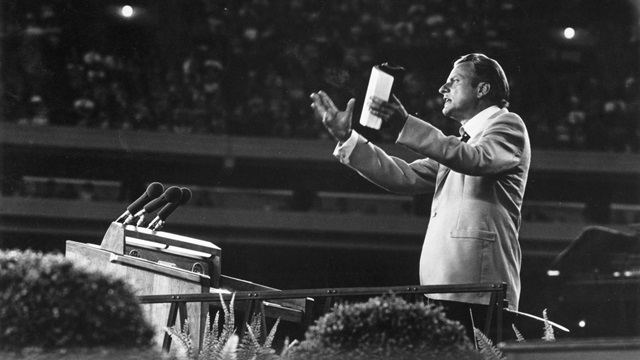
When You Think Billy Graham You don’t Think Lent

But such are the fortunes of evangelicalism that the people running the magazine that Billy Graham (trans-denominational) helped to found with Carl Henry (Baptist), and J. Howard Pew (anti-Communist Presbyterian) are fully comfortable with Anglicanism, and so have posted another article recommending Lent. In this case, telling points mount to show how poorly Lent fits with Christian piety:

heightened devotion is fruitful for a season, but cannot be sustained indefinitely. The Christian calendar offers a sustainable rhythm of which Lent is a part, and the fasting of Lent gives way to the feasting of Easter. Fasting and feasting are interconnected disciplines that teach us to love the King and his coming kingdom. In Lent, we learn to confess our sins, practice self-denial, and take on the humility of Christ. In Easter, we learn to rejoice, exult, and feast in Christ’s victory. As historian William Harmless explains, “In these two liturgical seasons Christians drank in, by turns, the ‘not yet’ and ‘already’ of New Testament eschatology.”

Repentance is fruitful for only part of the year? Moderation is something to observe but only for a time? Imagine if American Christians were moderate and humble the entire year. They wouldn’t binge or purge on American greatness or heinousness depending on which of their favorite presidential candidates was in the White House. Indeed, encouraging the idea that restraint and repentance are only for a while and not for all of life nurtures antinomianism: “I wouldn’t do this during Lent, but the other 325 days I will.”

If Lent is not supposed to lead to those thoughts (which I assume it’s not), then why not make Lenten practices year round? Because repentance and moderation can’t be “sustained indefinitely”? So people practicing Lent are Snowflake Christians? They don’t have the stomach for life-long dying to sin and living to Christ?

Aaron Damiani concedes that “Many Christians choose to keep or modify their Lenten disciplines for the rest of the year, as they have established helpful routines.” So now you have churches divided between full-time Lenten Christians, and ones who only observe Lent in late Winter and early Spring? Christians who truly sanctified and some who aren’t? Not only does this allow a culture of spiritual superiority to gain traction, but it also violates the rules of the liturgical calendar. Who sings Lenten hymns during Advent (oh, the hay that evangelicals make of tradition)?

Then there is the argument that Lent and the church calendar evoke the Jewish liturgical calendar (have you heard that Jesus fulfilled all of the law?):

It’s important to remember that the Christian liturgical calendar developed in part out of the rhythms of Jewish practice. The Old Testament indicates seasons of both heightened devotion and celebration, including Levitically led “sabbaths, new moons, and feast days” (1 Chron. 23:31) and “seasons of joy and gladness and cheerful feasts” (Zech. 8:19). Fasting and feasting were part of the “architecture of time,” in which Jesus participated as an observant Jew.

So what does Father Damiani do with Apostle Paul:

So let no one judge you in food or in drink, or regarding a festival or a new moon or sabbaths, which are a shadow of things to come, but the substance is of Christ. (Col 2:16-17)

Here‘s what Calvin did:

The reason why he frees Christians from the observance of them is, that they were shadows at a time when Christ was still, in a manner, absent. For he contrasts shadows with revelation, and absence with manifestation. Those, therefore, who still adhere to those shadows, act like one who should judge of a man’s appearance from his shadow, while in the mean time he had himself personally before his eyes. For Christ is now manifested to us, and hence we enjoy him as being present. The body, says he, is of Christ, that is, IN Christ. For the substance of those things which the ceremonies anciently prefigured is now presented before our eyes in Christ, inasmuch as he contains in himself everything that they marked out as future. Hence, the man that calls back the ceremonies into use, either buries the manifestation of Christ, or robs Christ of his excellence, and makes him in a manner void.

In other words, Lenten Christians are still holding on to a piety that clings to outward and physical attributes of unseen realities (heard of faith vs. sight?). They are incomplete Christians. They demand outward expressions of spiritual realities. They forget that Paul also wrote:

Jews demand signs and Greeks look for wisdom, but we preach Christ crucified: a stumbling block to Jews and foolishness to Gentiles, but to those whom God has called, both Jews and Greeks, Christ the power of God and the wisdom of God. For the foolishness of God is wiser than human wisdom, and the weakness of God is stronger than human strength. (1 Cor 1:22-25)

Oh by the way, Paul’s contrast between the visible and invisible, between the external and internal, is why the Confession of faith contrasts Old Testament and New Testament worship this way:

Under the gospel, when Christ, the substance, was exhibited, the ordinances in which this covenant is dispensed are the preaching of the Word, and the administration of the sacraments of baptism and the Lord’s Supper: which, though fewer in number, and administered with more simplicity, and less outward glory, yet, in them, it is held forth in more fullness, evidence and spiritual efficacy, to all nations, both Jews and Gentiles; and is called the new testament. There are not therefore two covenants of grace, differing in substance, but one and the same, under various dispensations. (7.6)

The comparison of Lent to the Old Testament is epic fail.

But remember what Calvin went on to say about Colossians 2. The rejection of the church calendar and other external ways of commemorating salvation doesn’t mean that Protestants throw out the sacraments:

Should any one ask, “What view, then, is to be taken of our sacraments? Do they not also represent Christ to us as absent?” I answer, that they differ widely from the ancient ceremonies. For as painters do not in the first draught bring out a likeness in vivid colors, and (eikonikos) expressively, but in the first instance draw rude and obscure lines with charcoal, so the representation of Christ under the law was unpolished, and was, as it were, a first sketch, but in our sacraments it is seen drawn out to the life. Paul, however, had something farther in view, for he contrasts the bare aspect of the shadow with the solidity of the body, and admonishes them, that it is the part of a madman to take hold of empty shadows, when it is in his power to handle the solid substance. Farther, while our sacraments represent Christ as absent as to view and distance of place, it is in such a manner as to testify that he has been once manifested, and they now also present him to us to be enjoyed. They are not, therefore, bare shadows, but on the contrary symbols of Christ’s presence, for they contain that Yea and Amen of all the promises of God, (2 Corinthians 1:20,) which has been once manifested to us in Christ.

I understand the appeal of Lent over the Anxious Bench. The followers of Billy Graham needed to graduate to something more meaningful, something more historical. How about the Reformation? How about the Bible? It replaces the altar call with the Lord’s Supper and gives us fifty-two Easters a year, fifty-two feast days with six days every week to prepare.

Remember When Being Nice Would Win the Day?

How a little reminder of 1929 clears the cobwebs.

Once upon a time, the Gospel Allies scored points against Reformed confessionalists by claiming the high ground of nice. Remember when Jared Wilson wrote this?

Cold-hearted rigidity is not limited to those of the Reformed persuasion, of course. You can find it in Christian churches and traditions and cultures of all kinds. In fact, to be fair, I have found that those most enthralled with the idea of gospel-wakefulness, those who seem most prone to champion the centrality of the gospel for life and ministry, happen to be of the Reformed persuasion. So there’s that. But gracelessness is never as big a disappointment, to me anyway, as when it’s found among those who call themselves Calvinists, because it’s such a big waste of Calvinism.

Or how about when Justin Taylor chimed in?

Angry Calvinists are not like unicorns, dreamed up in some fantasy. They really do exist. And the stereotype exists for a reason. I remember (with shame) answering a question during college from a girl who was crying about the doctrine of election and what it might mean for a relative and my response was to ask everyone in the room turn to Romans 9. Right text, but it was the wrong time.

This raises an important qualifier. The “angry” adjective might apply to some folks, but it can also obscure the problem. In the example above, I wasn’t angry with that girl. I wasn’t trying to be a jerk. But I failed to recognize what is “fitting” or necessary (cf. Eph. 4:29) in the moment. This is the sort of thing that tends to be “caught” rather than “taught” and can be difficult to explain. But there’s a way to be uncompromising with truth and to be winsome, humble, meek, wise, sensitive, gracious. There’s a way of “speaking the truth in love” (Eph. 4:15) such that our doctrines are “adorned” (Titus 2:10) and our words are “seasoned” with salt and grace (Col. 4:6). To repeat, the category of “anger” is often too broad and can miss the mark. As Kevin DeYoung pointed out to me, “Some Calvinists are angry, proud, belligerent people who find Calvinism to be a very good way to be angry, proud, and belligerent. Other Calvinists are immature—they don’t understand other people’s struggles, they haven’t been mellowed by life in a good way, they can only see arguments and not people. The two groups can be the same, but not always.”

So when Tim Keller advocated women’s subordination, he did so in precisely the categories that elicit New Calvinist religious affections (thanks to our southern correspondent):

We feel that there is a deep inconsistency in the phrase “evangelical feminism”. The feminists who are consistent recognize the Bible as a sexist book throughout. They reject it. The feminists who try to hold to complete Biblical authority have, really, an impossible balancing act to conduct. . . .

We know from experience that our position on women-in-ministry dissatisfies many people. Many friends from the traditional evangelical church find it far too “liberal” and “permissive”, while many other friends on the other side still feel it is oppressive. Our position is not totally unique. See J. Hurley’s book, Man and Women in Biblical Perspective or Susan Foh’s book, Women and the Word of God. They come close to where we are.

The fact remains that nearly everyone we meet is more “conservative” or else more “liberal” than we are. Thus we appeal to our friends to work with us on this. We do not to make this issue a cause of division, as we said above. We see no reason why friends with the same view of the Bible cannot work together, all the while influencing each other and refining one another’s viewpoint in order to become truly Biblical. Please be partners with us.

Balance, moderation, partnership — these were the calling cards of the New Calvinists. And for them, it was the Old Schoolers and Truly Reformed who were poorly positioned to represent Calvinism to the contemporary urban and global world. Some of us tried to explain that disagreement was not anger, and that standing in a specific tradition might cut down on “partnership.” We even thought that the medium of the World Wide Interweb thrived better on provocation than moderation. But for almost fifteen years the New Calvinists thought they had squared the circle, and Keller was proof positive at ground zero of global urban life in the United States.

What went wrong? One problem may have been living in a Gospel Coalition bubble and not engaging the concerns of “angry Calvinists.” But even more harmful was forgetting the antithesis and misreading the culture. Keller’s “success” in New York suggested (and sometimes actually asserted) that a new day had dawned for conservative evangelicalism. Modern Americans were truly willing to hear a kinder, gentler Protestantism. How could you deny that if the most secular and most urban place in the United States had received Keller the way New York City did? You certainly had to think that modern America was much more hospitable to faith if Keller was a best-selling author and the darling of religion journalists? Keller himself told lots of Presbyterians how the direction of the modern world was heading in a faith-friendly direction. I still remember the Power Point presentations I witnessed while on the faculty at WTS about the church in the city’s future.

What if while considering those trends predicted by economists and futurologists, New Calvinists had pondered the Bible more?

3 Above all, you must understand that in the last days scoffers will come, scoffing and following their own evil desires. 4 They will say, “Where is this ‘coming’ he promised? Ever since our ancestors died, everything goes on as it has since the beginning of creation.” 5 But they deliberately forget that long ago by God’s word the heavens came into being and the earth was formed out of water and by water. 6 By these waters also the world of that time was deluged and destroyed. 7 By the same word the present heavens and earth are reserved for fire, being kept for the day of judgment and destruction of the ungodly. (2 Peter 3)

That may tilt more Rod Dreher than Jamie Smith. But if you’re going to minister the word and teach in a seminary, doesn’t the apostle Peter count more than Peter Drucker?

Where Reformed Protestants and New Calvinists Part Ways

New Calvinists believe:

Behind every great man there’s a great woman. Like most maxims, it is generally true, even if not universally true.

Reformed Protestants know (thanks to Stan Evans):

Behind every great man is a surprised mother-in-law.

Postscript: Conscience, a mother-in-law who never leaves. (H. L. Mencken)

Perspective on Tim’s Toxic Teaching

W-w will not help you sort this out. Carol Howard Merritt cannot tell the difference between Tim Keller and Tim Bayly:

I know that people are angry that Tim Keller doesn’t believe in women in the pastorate. But, my friends, this goes much, much deeper than women not being able to be ordained as Pastors, Elders, and Deacons. Complementarianism means married women have no choice over their lives at all.

So as Princeton Theological Seminary celebrates Tim Keller’s theology, I will be mourning. As he presents his lecture and receives his $10,000 award, I will lament for my sisters who have been maligned and abused. So much of my ministry has been dedicated to aiding the victims of these poisonous beliefs. In these difficult days, when our president says that women’s genetalia is up for grabs by any man with power and influence, I hoped that my denomination would stand up for women, loud and clear. Instead we are honoring and celebrating a man who has championed toxic theology for decades.

God, help us.

Meanwhile, Justin Taylor can’t tell the difference between Old Life and Carol Howard Merritt.

What help would confessional Presbyterianism give? It could provide a standard for teaching that cuts through male headship, or women’s liberation, or macho heterosexuality as the bright lines of Christian identity.

And notice this. Tim Keller was riding the wave of progressivism that swept through America post-Bush II. The world was getting better, conversations about race were ongoing, the economy was sluggish but improving, tolerance was increasing, cities were becoming more the sites of church life, and Christian apologists were gaining a hearing in the outlets of the mainstream media. Christians really could make a difference. A moderate, New School Presbyterianism with ties to Baptistic Calvinists could recover the cooperative endeavors that fueled Carl Henry, Harold John Ockenga, and Billy Graham. These sensible and extremes-avoiding Protestants could fill the vacuum created by the mainline.

Except that mainstream world, as Merritt indicates, has its own orthodoxy. You can be sensible, moderate, hip — heck, you can even like The Wire and channel Machen — and not measure up.

Maybe it turns out that Keller reached more Christians to think that the skeptics were really friendly rather than reaching the skeptics. Maybe it turns out that New School Presbyterians have more in common with Old School Presbyterians. What if they acted like it?

Move Over Betsy De Vos

Is this another evangelical Plantinga about whom we need to know?

Adam Plantinga was interviewed recently in The Christian Century and addresses some tough issues. It’s worth reading the whole interview, but in case you don’t:

There’s a 90-10 rule in law enforcement: 90 percent of people are decent, 10 percent aren’t, and as a cop you deal with that 10 percent about 90 percent of the time.

All of this has a tendency to make you skeptical and disillusioned—to distort your worldview. It’s part of what’s known as compassion fatigue…. In its most damning strain, goodness starts to look something like weakness.

What the police must strive for is equality under the law. If that isn’t happening, attention must be paid. But in some people’s minds, every time a white police officer has a negative encounter with a black suspect, racism is clearly afoot. To be sure, racism is threaded through every institution in our country, from mortgage lending to how kids are disciplined in school.

But if a police controversy is about race only because some people arbitrarily decided to make it about race, the damage that can be done is much more than simply the Boy Who Cried Wolf syndrome. Accusations of racism are incendiary.

Some of these recent cases generate such a visceral reaction that they demand a response. The Walter Scott case in North Charleston, where the officer shot Scott while Scott was running away, looked to me like a straight-up assassination. The shooting of Terence Crutcher in Tulsa bears all the trappings of an officer tragically overreacting to a perceived threat.

The governor of Minnesota was quick to say that if Philandro Castile had been white, he wouldn’t have been shot by police. I’m not sure how fair that is, but it seemed to resonate with a lot of people as true. But if Michael Brown were a large white man going after Wilson’s gun after slugging him in the face, would Wilson have just brushed it off as the misguided antics of a fellow Caucasian? That doesn’t strike me as plausible.

So is this Plantinga any relation to THE evangelical Plantinga? Heck, yeah!

I came from a home that emphasized service. My father is a pastor and former president of Calvin Theological Seminary. My mother was a fourth-grade teacher in a Christian school. I was on the hunt for a real job—I wanted to kick down a door or two, protect folks who needed protecting, and go after violent felons. As an English major, I was also looking to do work where there would be some good stories. I believe I have found that.

Dutch and much (more than evangelical).

Is Lent for Obedience Boys?

The ying and yang of good works.

Ying:

Lent is the time that we embrace the discipline that is necessary for success in all aspects of life — study, work, fitness and financial management. There is no free lunch. Lent is when we do the hard work necessary to have Easter, like studying before an exam, or doing spring cleaning to keep the house in good order. We have to suffer first in order to rejoice later.

“In every culture, there are ancient stories and myths that teach that all of us, at times, have to sit in the ashes,” writes Father Ronald Rolheiser in a magnificent book of art and meditations, God for Us: Rediscovering the Meaning of Lent and Easter, edited by Gregory Pennoyer and Gregory Wolfe. “We all know, for example, the story of Cinderella. The name literally means the little girl (puella) who sits in the ashes (cinders). The moral of the story is clear: Before you get to go to the great feast, you must first spend some lonely time in the ashes, humbled, smudged, tending to duty, unglamorous, waiting.”

Yang:

God’s grace — the gift of his Son and his redemptive work — is not something we earn or achieve. It is entirely gratuitous.

The “gift” of salvation is not at all like the “transgression” of sin, as we read from St. Paul on the First Sunday of Lent. So the idea of Lent as a sort of necessary period of spiritual training before an athletic competition or artistic performance is not a fully Christian vision.

Ying:

It remains true, though, that even taking into account the gift of God’s grace, we do need spiritual discipline. That’s the second reason we look forward to Lent. We don’t earn our salvation, but we do have to work it out.

Discipline of our imagination, our appetites and our attachments are all necessary for growth in virtue. We all recognize God’s grace is not some magic that he works upon us as passive objects. We are genuine subjects, who must freely respond to God’s invitation. We don’t earn the invitation to the Wedding Feast of the Lamb, but if we accept it, we do have to make the effort to go to the feast and arrive wearing our wedding garments, lest we be found unworthy and cast out.

Yiang:

If there is a danger in thinking we earn salvation, there is also a danger that we simply presume on God’s mercy, treating it as something we are entitled to. Lent corrects that tendency.

Truth:

Question 1. What is thy only comfort in life and death?
Answer: That I with body and soul, both in life and death, am not my own, but belong unto my faithful Saviour Jesus Christ; who, with his precious blood, has fully satisfied for all my sins, and delivered me from all the power of the devil; and so preserves me that without the will of my heavenly Father, not a hair can fall from my head; yea, that all things must be subservient to my salvation, and therefore, by his Holy Spirit, He also assures me of eternal life, and makes me sincerely willing and ready, henceforth, to live unto him.

At Least It Makes You a Curmudgeon

Presbyterianism, that is.

Bill Smith a good on-line friend is kicking up a little dust of late against Reformed Protestantism or Presbyterianism and maybe a tad triumphal about his own communion (Reformed Episcopal Church) which, the last I checked, was where you still needed to kneel in order to receive grape juice – ba dop bop.

It’s time for pushback.

First, he starts with a legitimate complaint about Presbyterian worship and blames the regulative principle:

Across the PCA you can find strict regulative principle worship (few), traditional worship, contemporary worship, black worship, near charismatic worship, blues worship, revivalistic worship complete with the invitation system, gospel-driven worship, and all sorts of blended worship. You can find ministers leading worship in black Geneva gowns, suits with white shirts and ties, blazers and open collar shirts, polo shirts and sandals, khakis or jeans and sports shirts tucked in or out standing behind pulpits, sitting on stools, walking across and an empty stage. You can find pulpits, baptismal fonts, and communion tables prominently displayed, or entirely hidden. You can sing Psalms and historic hymns, gospel hymns, praise and worship songs, accompanied by nothing, organs, pianos, orchestras, acoustic guitars, and rock bands. Depending on your worship principles, preferences, and personality, you can find the worship in a PCA church comfortable, compatible, challenging, relevant, irrelevant, or offensive.

All of this is true. But you can’t fault the regulative principle which only identifies the elements (as opposed to circumstances and forms) of worship. Those are word, sacrament, prayer (song), and offering (never forget to collect the offering). The RPW does not guarantee uniformity in congregations. It should exclude silliness and frivolity. But if you have officers who are willing to tart worship up to make it relevant, convincing them of the RPW won’t solve anything.

Conversely, rule by one (episcopacy) is fairly effective in generating liturgical conformity. But then there’s Rome. Doh!

Second, he moves to the tragic death of Iain and the allegations swirling around it to argue that Presbyterian government doesn’t work very well. I actually wish Bill had not gone here. It’s still fresh and details are uncertain. But there he went. And his point is that harsh forms of discipline is what Presbyterians are good at:

it also set me thinking again, as I often have, about the way discipline of ministers was handled in my former connection. And it impresses me that it was handled in the way a particular kind of father might deal with his son. The son took the family car out on a Friday night without permission. The father becomes aware of what the son did because (1) the son confessed it, (2) someone who witnessed the son with the family car told the father, or (3) the father himself discovered it.

What does this particular type of father do? (1) He takes away the son’s keys and intends to return them (a) never or (b) after observing his son’s repentance for a long time. (2) He beats the hell out of the son. (3) He requires the son to confess his disobedience and avow his repentance at a council of the whole family.

Now the father may cry. He may even cry with the leaders of his church. He may pour out his heart to God about how he has gone wrong in the bringing up of his son. He may ask others to pray for him and his son. He may tell his son he loves him and that his heart is broken. Still, he takes the keys away forever or an indeterminate time. Still he beats the hell out of the kid. Still he requires the son to humiliate himself before his family.

Does Bill think that the threat of draconian measures were what drove pastor Campbell? Perhaps, but the analogy of a son taking out dad’s car without permission is not necessarily on the same order of a man who has taken vows to a wife and — wait for it — a church (can we get a little high church Reformed Episcopalianism here?). And what is Father Bill going to say to the wife of a man who has cheated on her or abused her? Has Bill Smith had to face down Valerie Hobbs?

Finally, Bill goes all in and defends Lent against its Reformed Protestant critics (“war”? On-line?). He notes that Banner of Truth once had to rearrange a conference because the Dutch Calvinist participants needed to hold Ascension services. He concludes:

Those who object to Ash Wednesday and Lent on principial grounds should recognize that that what they object to on principial grounds is the Christian year. For those who do not reject the Christian year, but allow for the observance of some parts of it, the issue of Lent is one of preference and discretion.

No problem. I’ve been arguing against the church calendar for years. The inter-advental liturgical calendar is 52 Sundays a year.

But at least, Bill still has a Presbyterian attitude.

Spiritual Discipline

Notice how devoting yourself to fasting and prayer winds up concentrating your mind on what to eat:

Here are some meatless Friday suggestions:

Cheese Quesadillas. In the unforgettable words of Napoleon Dynamite’s grandmother, “Just fix your self a dang QuesaDILLA.” Our family is all about the quesadilla on Friday. Cheap. Easy. Kids love them. Make big ones and use a pizza cutter to cut them up into slices for everybody. Add some sour cream and hot sauce for the parents, maybe some chips and home-made guacamole. You’ve got a great meal.

Nachos. A variation on quesadillas. My wife Joy gets cookie sheets out, covers them with chips and grated cheese and then puts them in the oven. Bring them out and put them in front of the kids and watch them disappear. Super cheap and kids love it. For adults, add sour cream, salsa, chives, guacamole, etc. You can also add refried beans – but make sure you get the kind without animal fat/lard since this would violate the Friday meatless rule.

Pizza. Cheese pizza for the kiddos. Margarita pizza for the parents. Perfect.

Grilled Cheese Sandwich and Tomato Soup. This is a nice simple meal and surprisingly our kids love it. You dip the grilled cheese in the soup. Comfort food. For parents, add some pesto to your grilled cheese sandwich. Also, adults like mixing up the cheeses – try different kinds.

Pasta and Marina. Fast. Easy. Children love. It costs next to nothing.

Fettuccine Alfredo. Another meatless meal that most people like. Very filling. Lots of energy.

Mac and Cheese. A good option for kids – especially when mom and dad are leaving on a date. Meatless. Inexpensive.

Vegetable Lasagna. This may not be a winner with the kids, but adults like it. It’s a lot of work to prepare, though.

Egg Salad Sandwich. My wife and I really like egg salad sandwiches with tomato and lettuce.

Tuna Salad Sandwich. Honestly, this can get old, but you change it up additions like cucumbers, olives, or even curry powder. You can get tuna sandwiches at Subway on Fridays.

Fish and Chips. My go to Friday meal, especially if at a restaurant.

Salmon. During the year, when we want a nice Friday meal, we go for salmon. Healthy. Lean. Not hard to prepare. I grill it on a cedar plank. Fantastic. This is a nice option if you have friends coming over for dinner on a Friday night, but don’t want to bore them with mac and cheese. You can also mix the grilled salmon with greens, fruits, and nuts for a beautiful salad.

Cheese Enchiladas and Chips and Salsa. This is the number one Marshall Friday meal. Joy makes it and everybody loves it. Very filling. Not very expensive. The hard part is heating all the corn tortillas in oil. It takes a little more time, but it’s worth it. My nine year old twin daughters made this meal one Friday night while my wife was away from start the finish (but I had to wash the dishes!).

Need to eat out on a Friday? My favorite option is a Bento Box lunch at a Sushi restaurant.

My least favorite Friday option? Well, the McFish Sandwich and frozen fish-sticks are my least favorite. The children like fish-sticks, but when I discover that they are for dinner, I inwardly groan. Nothing says “penance” like fish-sticks.

Imagine if you believed that conversion was a life-long process, not just 40 days a year:

Q 88. Of how many parts does the true conversion of man consist?
A: Of two parts; of the mortification of the old, and the quickening of the new man.

Q 89. What is the mortification of the old man?
A: It is a sincere sorrow of heart, that we have provoked God by our sins; and more and more to hate and flee from them.

Q 90. What is the quickening of the new man?
A: It is a sincere joy of heart in God, through Christ, and with love and delight to live according to the will of God in all good works.