Those Were the Days (again)

What a church with discipline (and even a little 2k) looks like:

[The] argument for Trump recalls an earlier episode in Catholicism and political theology, the condemnation of L’Action française (AF) by Pope Pius XI in 1927. AF was an anti-liberal political movement in early twentieth-century France. It was a monarchist and nationalist movement centering on the French literary figure Charles Maurras, who held that in order for France to become great again, she must exhibit a national, religious, and political unity that could only be achieved by sloughing off liberal republicanism and embracing “integral nationalism.”

Maurras himself had lost his Catholic faith and was an agnostic, but his “throne and altar” politics appealed to many Catholic clergy and laity. Maurras saw the Catholic Church as a French institution capable of uniting Frenchmen politically. The Church was basically an instrument for implementing Maurras’s cry of “la politique d’abord,” or “politics first!” (Compare this with Trump’s recent appeal to evangelical Christians.) Maurras was also politically anti-Semitic, for Judaism was not French and not a religion capable of uniting the French. Maurras later obtained the sixteenth seat in L’Academie française, the same seat occupied by Cardinal Dupanloup in the nineteenth century. He supported the Vichy regime and spent five years in prison after World War II for doing so. He died with little support, even though he had influenced an entire generation of French politicians and intellectuals, Charles de Gaulle among them.

In spite of Maurras’s anti-Semitism and because his movement promised restitution and renewed privilege for a beleaguered Church, many Catholics supported AF. The waves of the French Revolution had continued to break over the Church in France, with the most recent assault at the time being the 1905 Law of Separation, which finally separated the Church from the Republic, except that all Church property was placed under state ownership and under the management of government-supervised lay committees. To many French Catholics, the Law of Separation showed the futility of Leo XIII’s ralliement policy of trying to find a modus vivendi for French Catholics in the Third Republic’s secular democracy. Hence the swing to anti-liberal, monarchist, restorationist movements like AF, movements generally labeled “integralist.”

One of the Catholics supporting AF was Jacques Maritain, who had affiliated himself with AF on the advice of his spiritual director, Fr. Clérissac. Maritain hoped that he could temper the components of integral nationalism incompatible with Catholicism through his association with Maurras in their joint publication Revue Universelle, for which Maritain wrote for seven years.

The Vatican had contemplated a condemnation of AF for some time, and the Holy Office’s desire to place Maurras’s writings on the Index was checked only by the outbreak of World War I. But late in 1926 after hearing of more French Catholic youth joining AF, Pius XI prohibited Catholic membership in AF’s “school” and Catholic support for AF’s publications. In early 1927, the official condemnation and excommunications began, shocking many French Catholics. Two French bishops lost their sees for failing to comply with the condemnation, and the great ecclesiologist Billot lost his cardinal’s hat. Papal ralliement was here to stay, and any party spirit suffused with pagan attitudes was deemed incompatible with Catholic political involvement. The condemnations were a watershed moment for Maritain, who quickly began to reevaluate his political and social commitments in light of his ultimate commitment to the Catholic faith. His apology for the condemnation of AF, Primauté du spirituel (1927), set the trajectory for his most famous political works, Humanisme intégral (1936) and Man and the State (1951). These works later influenced the Fathers of Vatican II, including Pope Paul VI.

It is possible for popes to act even when they are not temporal princes.

The Vatican wanted Catholics to refuse an attractive but ultimately self-defeating choice in supporting AF, and today American Catholics face a similar sort of choice. Now Trump is dissimilar to Maurras in many ways. The latter was revered for his intellectual and literary ability and had coherent and firm philosophico-political commitments, while Trump has demonstrated a shocking ignorance of Christianity and malleable, opportunistic political positions. Although both in a sense promoted the “liberty of the Church,” Maurras did so through throne and altar restorationism while Trump does so through an appeal to religious liberty.

So what’s the lesson?

The lesson from the AF crisis bears mentioning today. The Church, both her teaching office and her living members, constantly must discern whether new means for political action are compatible with a genuine concern for the common good and the integrity of Catholics involved in politics.

Is such discernment the consequence of losing confidence in the bishops?

Who is going to save our Church? Do not look to the priests. Do not look to the bishops. It’s up to you, the laity, to remind our priests to be priests and our bishops to be bishops. Archbishop Fulton Sheen

But I thought episcopacy and apostolic succession was what made Protestantism look like such a poor alternative for western Christians.

Do Historians Do This?

Last night’s conversation at Presbycast about a lot of things Presbyterian, together with current research on Roman Catholic debates during the 1980s about the church and American identity, got me thinking about whether I, as a historian of J. Gresham Machen and the OPC get away with writing this kind of evaluation of the PCUSA. What follows is from Jay Dolan’s The American Catholic Experience (1985) [Dolan taught history for many years at Notre Dame]. Here’s his description of what happened in the United States after Vatican II:

Another change that transformed the religious world of Catholics was a new understanding of sin. The traditional concept of sin was grounded in a system of laws, some of which were rooted in Scripture or the natural law, while others were promulgated by the church. The new Catholic morality argued for a more personal, less legalistic, approach to sin. The virtue of love became primary, together with the individual conscience. The implications of this shift, publicized in both scholarly and popular works, was tremendous. Perhaps most dramatic was the decline in confession. A 1974 study found that only 17 percent of the Catholics surveyed went to confession monthly, compared to 37 percent in 1963. Soon form followed function, and reconciliation rooms, where priest and penitent could interact face to face, replaced the dark confessional box. Penitential services became popular, and on some occasions a public general absolution replaced private confessions. (434).

For those who say nothing changed after Vatican II, Dolan is a contrary voice and a recognized authority on Roman Catholicism in the United States to boot (not a blogger or apologist).

But that’s not the primary reason for unearthing this quote. The point is this: what if I wrote this about the PCUSA after the OPC’s formation? What if I asserted in a book published by a trade press (Doubleday) that the PCUSA had become liberal, that it changed its theology on sin and salvation, and that these departures from historic Presbyterian practices constituted a “new” Presbyterianism, or Protestantism for a “new age.”

Of course, while wearing my OPC hat, I think that about the PCUSA. But I can’t get away with that in the mainstream publishing world without running the risk of being ostracized from the profession as the Gary North of American historians. Call me a coward. But historians of American religion cannot make certain claims about communions everyone knows to be theologically accurate because they don’t want to admit that the fundamentalists had a point.

It could also be a function of 2k. What is acceptable for churchmen’s judgments is not so for professional historical scholarship. We don’t always succeed but we do try to keep theological judgments from informing historical analysis. Sometimes that’s artificial. But it’s also the case that professional academics is not the place to settle ecclesiastical conflicts.

Still, why do those academic calculations not apply to Jay Dolan, the history of Roman Catholicism in the United States, or Doubleday? Is it a function of academic seniority? Once you acquire tenure you can write whatever you want?

Or is it that what Dolan said is actually good history and that converts and apologists have yet to catch up with the church they’ve joined and celebrated?

Confused but Not Dazed

Father Dwight has counsel for discouraged Roman Catholics:

4. Regarding Pope Francis – Many conservative Catholics are troubled by Pope Francis. They think he is a textbook 1970s liberal. He’s not. Take time to understand his context and background from Argentina. Read this post to put things into perspective. Get to know the man and pray for him. It is ok to disagree with him and question his judgement. He’s not infallible all the time you know, but you can do so with an open heart and a desire to understand and be with him and learn from him. What’s the alternative? You set yourself up as the judge of the Holy Father? Hmmm. There’s not much mileage in that now is there?

Once upon a time the western church had councils because Rome had three popes.

Also, it’s a free country, right? So separated siblinghood is an alternative. But being Roman Catholic means you have to accept whatever the bishops do? Fr. Dwight might make sense in a pay-pray-obey environment. But the world of immigrant parishes is long gone. Root-root-root for the Fightin’ Irish.

5. Regarding Cafeteria Catholics – Are you maddened by so called “devout Catholics” who openly endorse same sex marriage, women priests and are “pro choice”? Join the club. They annoy me too. Are you also annoyed by the bishops and priests who take the same view? I’m with you. However, remember that the Catholic Church is universal. We’re not a sect where everyone agrees. We’re inclusive and that’s why we’re Catholic. The Church has always had dissidents, rebels and downright bad Catholics. Have you ever read the Old Testament or taken a close look at the twelve apostles? The saints and sinners are all in together. The weeds and the wheat, the goat and the sheep are mixed. Jesus will sort it out one day, and stop for a moment and ask yourself, are you a perfect saint yet? I’m not. I’m still learning and growing and repenting. So I guess we must offer the mercy (and benefit of the doubt) to others that we would wish to receive.

Isn’t the church supposed to stand for the truth? And if observers of Pope Francis need context to understand him and his unwillingness to do something about dissent and error in the church, has not Fr. Dwight entered the cafeteria of choosing what he wants to believe? Why does he get to have perspective on the church’s problems that Pope Francis doesn’t because of his Argentinian background?

6. Regarding You and the Church – I’ve heard some Catholics grumble that the church has let them down. But what did you expect of the church in the first place? The church is divine, but she is also human. The church is a work in progress, an ark of wounded warriors, a tribe of troubled pilgrims, a family of lost children looking and longing for home. When you see the church like this, instead of hoping that the church will be the instant answer to all your problems you will be more content. Our role in the church is to be faithful, prayerful, hard working and stable in our love for Christ and his people.

But Roman Catholicism was supposed to be an upgrade, better than Protestantism. Isn’t that why Fr. Dwight left fundamentalism for Anglicanism and then left Anglicanism for Rome? So shouldn’t the standards for the bearer of the truth, the only true church, be higher? If converts knew that Rome was going to be as incoherent and liberal as the PCUSA or the Church of England, why leave Tim Keller? Or is it that this is godly mess and Protestants only have ungodly messes (and of course, having ONE mess is better than having many).

7. Regarding Priorities – The main thing is to stay close to Jesus and Mary. How do you do this? The Catechism says we experience Christ in five specific ways: 1) in the Sacred Scriptures 2) in the person of the priest 3) in the person of the poor 4) in the fellowship of believers 5) in the Eucharist. I can guarantee you, if you make these five things your priorities, then you will have a solid, sure and secure relationship with Jesus Christ. These five meeting places of Christ assume that your life is bathed in prayer and that you have as your main priority being with Jesus and Mary in these ways. If you get this right the other worries fall away.

Jesus is good and having his Spirit is really good. Mary is good but she is not exactly going to save. But is Fr. Dwight suggesting we can have Mary or Jesus apart from the Bishop of Rome?

Lots of sorting to do. Sure would be nice to have a hierarchy to do this for the faithful.

Calvinism as an Upgrade

Once baptized, always a Roman Catholic:

Pope Benedict affirmed that Catholicism comes without an escape clause: Once a person is baptized or received into the Church, there is no getting out.

Of course rejecting ecclesiastical communion or the Church’s doctrine has consequences, among them the penalty of excommunication. But excommunication is a punishment, not a shunning. Disobedient or dishonest Catholics might face damnation for their choices, but they will go their deathbeds as members of our Church. One can be a Catholic and be pro-choice, but having rejected the truth and the Church’s communion, he had better be prepared to face his judgment.

The fact is that among the People of God are those who have rejected the grace God has given them. That our Church includes the reprobate, and the dogmatically impure, and that we ourselves sometimes fill out those categories. The unpleasant truth is that one can be Catholic, and still be damned.

The grace of baptism is no assurance against going to hell.

But the elect don’t go to hell.

So election and baptism do not vary in this life. In the life to come, election and baptism’s consequences vary considerably.

Beaver Cleaver Was Lost in His Trespasses and Sins

Trigger warning to self: you’ve engaged Carl Trueman critically before and it did not go well. So be careful, be very careful.

The reason for bringing up Dr. Trueman again, even if ever so gingerly, has to do with his recent evaluation of Rusty Reno’s new book about prospect for a Christian society. Trueman writes:

I simply am not convinced that change can be achieved on any significant scale. The causes of the modern malaise are complicated, and their solution must be equally elaborate. For example, as George Grant and David Schindler have shown, technology brings with it a different view of reality from that of traditional Christianity. This mindset is now deeply embedded in our world. The entertainment industry mediates much of what is taken for reality and grips the moral imagination of the masses. The globalized economy has transformed communities and community expectations in ways we have yet to fathom. To borrow that hackneyed but poetic phrase from Marx, all that is solid melts into air. Zygmunt Bauman’s argument, that we live in a time when even the most longstanding and reliable social structures are in permanent flux, seems to me compelling. It must be accounted for by any hope that depends upon the solidity of concepts or institutions from the past. How does one reform or recapture or rebuild that which has been robbed of solid existence?

I generally agree.

But where I push (not shove) back is with the idea that modernity alone has these problems. Ever since the fall, it seems to me, the possibilities of pursuing lives of holiness and passing on the faith have been hard. Just remember what Paul warned Timothy about the “last days”:

understand this, that in the last days there will come times of difficulty. 2 For people will be lovers of self, lovers of money, proud, arrogant, abusive, disobedient to their parents, ungrateful, unholy, 3 heartless, unappeasable, slanderous, without self-control, brutal, not loving good, 4 treacherous, reckless, swollen with conceit, lovers of pleasure rather than lovers of God, 5 having the appearance of godliness, but denying its power. Avoid such people. 6 For among them are those who creep into households and capture weak women, burdened with sins and led astray by various passions, 7 always learning and never able to arrive at a knowledge of the truth. (2 Tim 3:1-8)

Was Paul predicting a time when Marx, Freud, and Nietzsche would dominate understandings of human nature and the created order, or was he talking about life in the Roman Empire circa 60 AD? My understanding is that he was talking about life in the Mediterranean world then.

So why do Christians believe modernity is so much worse than any other time? Well, it sure seems that Roman Catholics have a certain nostalgia for the Christian society of medieval Europe, neo-Calvinists for the Christian society of the Kuyperian era of Dutch history, evangelicals in the U.S. for the First Pretty Good Awakening that of course led up to the Christian founding of the United States. Here Protestants want to recalculate critiques of modernity since Kuyper and George Whitefield both fall on the modern side of the divide between medieval and modern periods. In other words, Protestant critiques of modernity play into the hands of certain Roman Catholic apologetics (even if nostalgia for the flourishing of the Middle Ages seldom extends to the Crusades or the Inquisition).

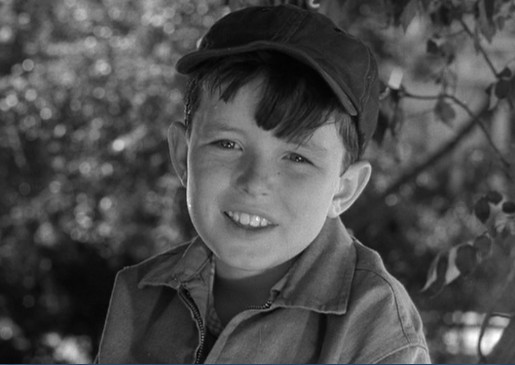
But surely anyone with eyes and ears has to admit that we are living in worse times than 1950s American when Ward and June Cleaver reared Wally and the Beave. I have eyes and ears. I will concede that the 2010s are worse than the 1950s, though I did live through 1968 and that was not a good time. But on a scale of fallen humanity, are modern or contemporary times really worse than what Noah lived through, or Lot, or Jeremiah, or our Lord himself? Doesn’t the fall mean we always live in desperate times?

The point here is not that people who believe in original sin should be relativists when it comes to assessing the way humans live together or proposing ways that are better for a common life together and for the proclamation of the gospel. But I think it is a mistake to cultivate the notion that human flourishing is possible whether by putting in place the right policies or institutions, or by thinking about the past a certain way. I know Dr. Trueman knows this. But it sounds like he thinks we are living through one of the worst times in human existence. No matter how pleasant and reassuring Beaver Cleaver’s America was, it was not the new heavens and new earth. When sin abounds, it’s not a good time. The Cleavers were certainly flourishing as we now count such living, but they were also drowning in sin (and never in church). Shouldn’t that perspective inform the way we view the West post-Foucault?

Preaching the Great Commission

Even Purgatory:

Today at my parish we had a missionary priest from India. I am happy to say that after years of disappointment, it was refreshing to finally here a missionary actually talking about bring people to Jesus. To talk about salvation. It was wonderful. And he wasn’t a traditional order priest or anything; he was just a Novus Ordo diocesan priest. But he preached about the Great Commission. About the necessity of bringing Christ to people. About baptism. About India’s great Christian traditions, both those begun by St. Thomas as well that brought by St. Francis Xavier and the 16th century Jesuits. He offered actual spiritual insights that were relevant.

I remember recently on one of my travels I heard a priest saying how he was preaching on Purgatory at this parish. And afterward a woman came up to him and said, “I never really thought about it, but I think that was the first sermon I heard on Purgatory in thirty years!” I think the same is true with the necessity of bringing the Gospel to pagans. Maybe intellectually Catholics know the Great Commission is out there, but it is so seldom preached about these days.

This is no surprise. Muslims worship the same God. Jews are no longer in need of conversion. Protestants are brethren. Orthodox are not to be expected to return to unity with Rome. Aberrosexuals are not to be made uncomfortable in any way. Pagans are able to find God in their own rituals and mythologies. Given all this, one wonders who is left that actually needs to hear the Gospel. Mafioso and arms dealers, according to Pope Francis; but they are a lost cause because the pope has already said they are going to Hell.

The point is, you can’t mentally affirm one thing but act in a manner contrary to it for forty years. You can’t affirm the Great Commission is still a mandate while acting as if there is no particular class of people who actually need Christ and His Church.

What hath salvation to do with conversion?

A Paradox Epistemology Won’t Solve

Once upon a time Andrew Sullivan edited The New Republic. Once before that time, Sullivan was a graduate student in political theory at Harvard. He was and still is a practicing Roman Catholic. He is also of English descent and gay. Those may be reasons why he spotted way back when he was a graduate student what many contemporary converts never seem to contemplate — namely, that being American and Roman Catholic are incompatible identities. The same goes for Reformed Protestants, though you’d never know about any tension between church and nation — unless the nation is blowing it — from the every-square-inchers, the neo-Confederates, or the God-and-country Calvinists who dominate mainline and sideline Presbyterian churches. But Roman Catholicism comes to the U.S. table with different bags and Sullivan understood why thirty years ago:

There was a moment on the pope’s recent visit to Chile that still lingers in the mind. Tear gas was fired into the crowd in Santiago, Rioting broke out within a stone’s throw of the altar. And John Paul II knelt to pray. Faces were turned toward him, looked up to him to take sides; and instead he proceeded to pray. The act was moving, but more important it was ambiguous. The pope’s presence alone was to measure the extent of his commitment.

Political explanations for the pope’s behavior—the advice of local bishops, his personal experience in Poland, the dangers of encouraging violence—have been offered, but they fail to capture the drama of what was really happening in Santiago. It would be better to ask why the pope was there at all. The answer is simple: the Second Vatican Council. That event, decades distant, contains the clue to the pope’s predicament. After over 20 years, the Council’s most enduring effect has been to have removed the possibility of a complete separation between the Church and the modern world
(a separation represented perhaps most clearly by the late 19th-century papacy). For the Vatican, a political engagement with the world, a compromising commitment, is in full swing. It was such an engagement that was articulated in Santiago, where the ironies implicit in living the apostolic life in the modern world were bluntly revealed.

The Second Vatican Council was aware of the risks of opening a dialogue with the modern world, though the text of its proceedings breathes an optimism now quaintly anachronistic. In its mass of documents issues were grasped with unnerving directness. Pope John XXIII’s opening address to the Council was the first papal document addressed not merely to the faithful, but to “all men of good will,” He reached out even to the Communist world, by drawing a distinction between the systems of belief that it represented and the men and structures that enforced these beliefs, “Besides,” he continued, “who can deny that those movements, insofar as they conform to the dictates of right reason and are interpreters of the lawful aspirations of the human person, contain elements that are positive and deserving of approval?”

More significant, though less noticed, was the peace that the address made with liberalism. As Reinhold Niebuhr pointed out at the time. It rather easily laid to rest the long-standing confrontation between natural rights and natural law, by conflating the two. John XXIII both asserted the necessity For “freedom” and attempted to make it compatible with the moral strictures with which natural law constrained us. Catholics had a natural right to freedom, but they were not entitled to use that right for any ends they chose. Catholics were not “free” to accumulate wealth without
limit, nor to exploit, nor to commit adultery, nor indeed to commit any sin. Yet the admonishing rhetoric deliberately suggested that they were still “free” in a modern and politically charged sense of that word. It was, it is, an explosive mix.

These overtures made sense within the historicism of the documents, especially Pacem in Terris. It talked of a “new order” in which “the conviction that all men are equal by reason of their natural dignity has been generally accepted.” This was an order as inevitable as it was largely unsubstantiated in the text. It presented an opportunity for the Church to assist in the creation of a universal common good by which nations could address one another. A notion of progress had entered the spirit of the Church, bound up with particular political structures and ideas. And yet at the same time the Church was to maintain an independence from them. In subsequent years that independence proved rather paradoxical. . . .

. . . it is argument, not assertion, that is needed for the discussion inaugurated by the Vatican Council. That discussion can no longer be wished away. And that discussion will go nowhere fast unless it acknowledges the contradictory nature of Catholicism in the modern world. This Weigel, the happy synthesizer, does not do. By declaring natural law to be compatible with America, by making the solution so comprehensive and so simple, by articulating a theory that will banish all the complexities, Weigel misses something essential in the fate of the modern Church: its uncertainty. History has not provided the Church with a comfortably Hegelian purpose by which everything has been, or will be, resolved. It has instead presented faith with a moral challenge, with a choice that includes both good and evil. Far from showing the inevitable triumph of natural law, modernity has
seen the destruction of even the concepts that make natural law thinkable again. Weigel’s confidence misses the depth of this crisis, and its consequence for Christianity. Modernity leaves Christians with a challenge to gamble. We do not know whether alliance or attack is the safest option. But we do know that escape, or a cozy coincidence of philosophical and political opposites, is no longer possible.

Weigel’s book represents just such an escape from the dilemma that Hanson’s book describes. The escape is certainly coherent; but its coherence is its flaw, since it transforms the risk of faith into a safe bet. In so doing, it obscures the essence of the Christian calling: to act in radical doubt, in the knowledge that any action, even the best intended, can be a manifestation of evil. This is the risk for the Catholic Church in world politics. It is this uncertainty that explains the anguished expression on John Paul’s face as he knelt to pray in Santiago. And it goes some way, at least, toward explaining the contemporary challenge, even in America, of the cross to which he turned.

How After Looked to Before

Rorate Caeli observes a curious aspect of Roman Catholic history from the 1960s. Even after Vatican II had opened the church to the modern world, Alfredo Cardinal Ottaviani, the last Secretary of the Holy Office (1959 – 1965) and Pro-Prefect of the Congregation for the Doctrine of the Faith from 1965 until January 1968 was around to try to curb such openness. Ottaviani was, as any fan of John Courtney Murray will recall, the person in the Vatican who pressured Murray to go silent during the 1950s for his efforts to justify the American founding on natural law grounds. Ottaviani (and his sources in the United States) heard Murray as just another version of Americanism, a heresy condemned in 1898 by Leo XIII. In other words, Ottaviani represented the pre-Vatican II order and he observed the post-Vatican II church. He didn’t see much continuity:

Since the recent successful conclusion of the Second Vatican Ecumenical Council, many wise Documents have been promulgated, both in doctrinal and disciplinary matters, in order to efficaciously promote the life of the Church. All of the people of God are bound by the grave duty to strive with all diligence to put into effect all that has been solemnly proposed or decreed, under the influence of the Holy Spirit, by the universal assembly of the bishops presided over by the Supreme Pontiff.

It is the right and duty of the Hierarchy to monitor, guide, and promote the movement of renewal begun by the Council, so that the conciliar Documents and Decrees are properly interpreted and implemented with the utmost fidelity to their merit and their spirit. This doctrine, in fact, must be defended by the bishops, since they, with Peter as their Head, have the duty to teach with authority. Many Pastors have admirably already begun to explain the relevance of the doctrine of the Council.

Nevertheless, it must be acknowledged with sorrow that unfortunate news has been reported from various areas about abuses regarding the interpretation of the conciliar doctrine that are taking hold, as well as some brazen opinions circulating here and there causing great disturbance among the faithful. The studies and efforts to investigate the truth more profoundly are praiseworthy, especially when distinguishing honestly between that which is central to the faith and that which is open to opinion. But some of the documents examined by this Sacred Congregation contain affirmations which easily go beyond the limits of hypothesis or simple opinion, appearing to raise certain questions regarding the dogmas and fundamentals of the faith.

It is worthwhile to draw attention to some examples of these opinions and errors that have arisen both from the reports of competent persons and in published writings.

1) First of all regarding Sacred Revelation itself: There are some, in fact, who appeal to Sacred Scripture while deliberately leaving aside Tradition. But they then restrict the role and the strength of biblical inspiration and its inerrancy, abandoning a just notion of the true value of the historical texts.

2) In regards to the doctrine of the faith, some affirm that dogmatic formulas are subject to historical evolution even to the point that their objective meaning is susceptible to change.

3) The ordinary Magisterium of the Church, particularly that of the Roman Pontiff, is sometimes neglected and diminished, until it is relegated almost to the sphere of a mere opinion.

4) Some almost refuse to acknowledge truth that is objective, absolute, stable, and immutable, submitting everything to a certain relativism, with the pretext that every truth necessarily follows an evolutionary rhythm according to conscience and history.

5) The venerated Person of Our Lord Jesus Christ is called into question when, in the elaboration of the doctrines of Christology, certain concepts are used to describe his nature and his person though they are difficult to reconcile with that which has been dogmatically defined. A certain Christological humanism is twisted such that Christ is reduced to the condition of an ordinary man who, at a certain point, acquired a consciousness of his divinity as Son of God. The virginal birth, miracles, and the resurrection itself are admitted only as concepts, reduced to a purely natural order.

6) Similarly in sacramental theology, some elements are either ignored or are not taken into account, especially with regard to the Eucharist. There are some who talk about the real presence of Christ under the species of bread and wine as a kind of exaggerated symbolism, as though, the power of transubstantiation does not change the bread and wine into the Body and Blood of Our Lord Jesus Christ, but simply invests them with a determined significance. There are those who, when considering the Mass, insist too much on the concept of agape love at the expense of the concept of Sacrifice.

7) Some would explain the Sacrament of Penance as a means of reconciliation with the Church, not expressing sufficiently the concept of reconciliation with God who has been offended. They affirm simply that in the celebration of this Sacrament it is not necessary to accuse oneself of sin, striving to express only the social function of reconciliation with the Church.

8) Some consider of little account the doctrine of the Council of Trent regarding original sin, or explain it in a way that at least obfuscates the original fault of Adam and the transmission of his sin.

9) The errors in the field of moral theology are no less trivial. Some, in fact, dare to reject the objective criteria of morality, while others do not acknowledge the natural law, preferring instead to advocate for the legitimacy of so-called situational ethics. Deleterious opinions are spread about morality and responsibility in the areas of sexuality and marriage.

10) In addition, it is necessary to comment about ecumenism. The Apostolic See praises, undoubtedly, those who promote initiatives, in the spirit of the conciliar Decree on Ecumenism, that foster charity toward our separated brothers and to draw them to unity in the Church. However, it is regrettable that some interpret the conciliar Decree in their own terms, proposing an ecumenical action that offends the truth about the unity of the faith and of the Church, fostering a pernicious irenicism [the error of creating a false unity among different Churches] and an indifferentism entirely alien to the mind of the Council.

These pernicious errors, scattered variously throughout the world, are recounted in this letter only in summary form for the local Ordinaries so that each one, according to his function and office, can strive to eradicate or hinder them.

This Sacred Dicastery fervently urges the same Ordinaries, gathered in their Episcopal Conferences, to take up this point of discussion and report back to the Holy See as appropriate, sending their own opinions before Christmas of this year.

The Ordinaries as well as those others who they reasonably choose to consult regarding this letter, are to keep it strictly confidential, since obvious reasons of prudence discourage its publication.

Rome, July 24, 1966.

Did Ottaviani succeed?

Signed only 7 months after the end of Vatican II … [Cum Oecumenicum Concilium] demonstrates the rapidity with which open heresy spread even more in the Church in the immediate aftermath of the Council. This is the last document from the Holy See to speak of heresies as “pernicious errors”, and one of the last to bluntly call upon the bishops to “eradicate” these.

By January 1968 Cardinal Ottaviani was gone; with his retirement the old fighting spirit of the Holy Office was irrevocably lost. The gentle and at times almost apologetic “notifications” of succeeding Prefects against individual heretics do not represent quite the same ethos; not without reason have they been ridiculed as mere “bad book reviews”.

Do converts care?

Those Were the Days (again)

When considering the development of doctrine, do not discount that winners make the final decision. Even legitimate councils that rescue the papacy can be found to be in discontinuity:

Once again, Christendom found itself split, but if the concilarist theologians had prevailed at the time of the Great Schism, in this phase the Pope was sustained by a great theologian: the Spanish Dominican, Juan de Torquemada (1388-1468) (not to be confused with the Inquisitor of the same name). Torquemada decorated by Eugene IV with the title Defensor fidei, is author of a Summa de Ecclesia, wherein he affirms with vigour the primacy of the Pope and his infallibilitas. In this work, he dissipates with great precision the ambiguities that had been created in the 14th century starting with the hypothesis of a heretic Pope. This case, according to the Spanish theologian, is concretely possible, but the solution to the problem should not be sought in any way in concilarism, which negates pontifical supremacy. The possibility of heresy in the Pope, does not compromise the dogma of infallibility, as even if he wanted to define a heresy ex cathedra, his office would be lost at that very same moment. (Pacifico Massi, Magistero infallibile del Papa nella teologia di Giovanni de Torquemada, Marietti, Torino 1957, pp. 117-122). Torquemada’s theses were developed the following century by one of his Italian confreres, Cardinal Cajetan.

The Council of Florence was very important as, on July 6th 1439, it promulgated the decree Laetentur Coeli et exultet terra, which brought the Eastern Schism to an end, but principally because it condemned concilarism definitively, by confirming the doctrine of the Pope’s supreme authority over the Church. On September 4th 1439, Eugene IV, defined solemnly: “We likewise define that the holy Apostolic See, and the Roman Pontiff, hold the primacy throughout the entire world; and that the Roman Pontiff himself is the successor of blessed Peter, the chief of the Apostles, and the true vicar of Christ, and that he is the head of the entire Church, and the father and teacher of all Christians; and that full power was given to him in blessed Peter by our Lord Jesus Christ, to feed, rule, and govern the universal Church, as is attested also in the acts of ecumenical councils and the holy canons.” (Denz-H, n. 1307).

In the letter, Etsi dubitemus, of April 21st 1441, Eugene IV condemned the heretics of Basel and the “diabolical founders” of the ‘conciliarism’ doctrine: Marsilius of Padua, Jean of Jandun and William of Ockham (Epistolae pontificiae ad Concilium Florentinum spectantes, Pontificio Istituto Orientale, Roma 1946, p. 28, 24-35), but towards Haec Sancta he held a hesitant stance, proposing what in modern terms might be defined as a “hermeneutic of continuity”. In the decree of September 4th 1439, Eugene IV states that the superiority of Councils over the Pope, asserted by the Basel Fathers on the basis of Haec Sancta, is “a bad interpretation given by the Basel Fathers themselves, which de facto is revealed as contrary to the genuine sense of the Sacred Scriptures, of the Holy Fathers, and of the Council of Constance itself.” (Decreto del 4 settembre 1439, in Conciliorum Oecumenicorum Decreta, EDB, Bologna 2002. p. 533). Eugenio IV himself, ratified the Council of Constance as a whole and in its decrees, excluded: “any prejudice to the rights, dignity and pre-eminence of the Apostolic See” as he writes to his legate on July 22nd 1446.

The hermeneutic of “continuity” thesis between Haec Sancta and the Tradition of the Church was soon abandoned. Haec Sancta is certainly the authentic act of a legitimate ecumenical Council, ratified by three Popes, but this is not enough to render binding on the doctrinal level a Magisterial document which is posed in contrast with the perennial teaching of the Church. Today we regard that only those documents, which do not damage the rights of the Papacy and do not contrast with the Tradition of the Church can be accepted from the Council of Constance. These documents do not include Haec Sancta, which is a formally heretical conciliar act.

Instead of scripture, tradition and magisterium, it should be beware the fine print.

If You Think Universities are Too Western, You’re Right

Students at Seattle University, a Jesuit institution, have successfully forced a controversial dean to resign. Jodi Kelly, dean of the university’s Matteo Ricci College, drew fire from students when she used the n-word in an email to a student. That the word was also the title of a book by an African-American author didn’t matter to students:

in a discussion with a student who wanted to better understand the experiences of members of minority groups, Kelly suggested Nigger, the autobiography of Dick Gregory, the civil rights activist. Among those who defended Kelly on her recommending the book by name was Gregory himself, who wrote an essay for Inside Higher Ed about the debate at Seattle.

Even as attention on the N-word receded, the debate about Kelly and the college she led only grew. Kelly’s critics and supporters agree that she is a proponent of a rigorous humanities curriculum — such as that offered by the college — built around the Western classics. To the protesting students, that was a big part of the problem.

But universities are supposed to be Western. It’s what they do:

Universities are one of the few institutions that are a direct contribution of medieval Latin Christendom to contemporary Western civilization. Being an export wherever else they are found, they are also unique to Western culture. To be sure, all cultures have had their intellectuals: those men and women whose task it has been to learn, to know, and to teach. But only in Latin Christendom were scholars — the company of masters and students — gathered together into the universitas whose entire purpose was to develop and disseminate knowledge in a continuous and systematic fashion with little regard for the consequences of their activities. When professors and students today study and write about universities, they are therefore engaged in more than group therapy in the midst of troubled times for what is now ambiguously called “higher education.” They are analyzing an essential element in the culture that has come to dominate the entire globe. (James M. Kittelson, “The Durability of the Universities of Old Europe”)

In other words, if you want to speak truth to power, don’t go to university. If you do, you join the system of oppression.