Depends On What You Mean by Religion

That is, if freedom of religion is under attack, don’t you have to define religion? Hunter Baker seems to have an expansive view of faith:

Big Business is a serious problem for religious liberty. Few people adequately understand that Big Business and Big Government go hand in hand. Corporations don’t like localism and various exemptions aimed at respecting rights of faith and conscience. They just want a monolith that they can understand and work with in a turnkey fashion. I have no interest in being the corporate candidate. The business executives of the world need to understand that when they undermine our liberty as people of faith, they are ultimately undermining liberty of all types, including economic liberty. I will fight for the soul of the party on this issue, just as many have bravely fought to keep the party pro-life.​

But what if religion is not everything I do, but certain practices and convictions I share with those in my communion? And here’s where I make a shameless self plug:

The difficulty here—and liberal society is by no means consistent about this—is that religion has shifted, in the American experience, from a corporate identity to a personal quest for meaning. Rather than faith being part of belonging to a religious institution and so including certain doctrinal convictions (belief in one God) and behavioral obligations (refraining from employment on Sunday), the courts’ understanding of religion leans heavily on notions of conscience (even Madison illustrates this). As such, religion is a deeply personal matter and the state should stay out of such private arenas.

Professor Bradley’s attempt to define religion very much follows in this trajectory, and she devotes several paragraphs to questions of conscience. The high stakes of individual conscience are not simply the products of the courts or the academy. Many Christians themselves also regard religion as a deeply personal matter. The revivals of the First Great Awakening during the 1740s promoted the importance of religious experience in ways that made church membership and corporate rites far less important for being truly religious. At the same time, the religious Right for the last three decades or so has taken a page from black, gay, and feminist political activists by arguing that faith is so comprehensive in its claims on the believer that he or she can never leave faith behind when entering the public square.

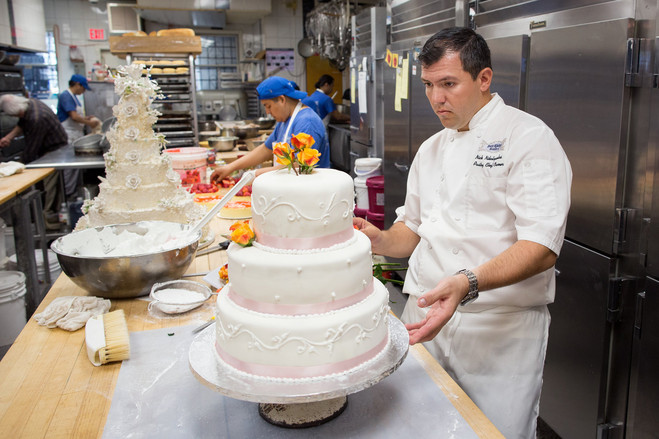
This notion of faith as deeply personal, rather than corporate or institutional, raises a great problem for liberal society. If faith informs everything I do, then paying taxes or baking a cake or sending my children to a public school may violate my conscience. And if a majority of the citizens have such sensitive consciences, conducting the affairs of government may become impossible. To be sure, the mainstream Progressive narrative of U.S. history includes instances where heroic stands for conscience based on faith—the Civil Rights movement—emerged as valuable contributions to a free society. By the same token, while many times religion coincided with the advancement of certain liberal goals, it has also motivated believers to protest existing norms and so has divided society along religious lines.

To illustrate the difference between religion personally conceived and corporately conceived, consider the membership vows required by my own denomination, the Orthodox Presbyterian Church. After being examined by a local congregation’s officers, a person needs to answer in the affirmative the following five questions:

Do you believe the Bible, consisting of the Old and New Testaments, to be the Word of God, and its doctrine of salvation to be the perfect and only true doctrine of salvation?
Do you believe in one living and true God, in whom eternally there are three distinct persons—God the Father, God the Son, and God the Holy Spirit—who are the same in being and equal in power and glory, and that Jesus Christ is God the Son, come in the flesh?
Do you confess that because of your sinfulness you abhor and humble yourself before God, that you repent of your sin, and that you trust for salvation not in yourself but in Jesus Christ alone?
Do you acknowledge Jesus Christ as your sovereign Lord, and do you promise that, in reliance on the grace of God, you will serve him with all that is in you, forsake the world, resist the devil, put to death your sinful deeds and desires, and lead a godly life?
Do you promise to participate faithfully in this church’s worship and service, to submit in the Lord to its government, and to heed its discipline, even in case you should be found delinquent in doctrine or life?

For this particular denomination, these are the chief parts of being a Christian. None of these questions pertains directly to business transactions, curricular matters, or medical procedures. Of course, the person who takes these vows might have firm convictions about how she should run her business, what school her children should attend, or what procedures hospitals should provide. Given that these other matters are incidental to requirements for institutional membership, our Orthodox Presbyterian should perhaps be less likely to invoke freedom of conscience if she ends up disagreeing with the decisions of local, state, or federal authorities about them. She might simply regard the friction that comes with a free and diverse society as the cost of doing business.

Part of the problem here may involve the old Burkean point about the value of mediating institutions. Those agencies of civil society that buffer persons from government can potentially pose challenges to the smooth operation of a state, but they also perform any number of services that add up to a society comprised of persons who place few, or at least fewer, demands on governmental agencies. Over the course of the 20th century, as the federal government’s power expanded, many institutions of civil society lost power even as the liberty of individuals increased. That process is no less evident in American religion, though the state’s hand in the loss of religious institutions’ power has not been as noticeable as it has in family life or educational or private associations.

Even so, the value of churches and synagogues in identifying and defining religion—as opposed to leaving it to individual conscience—may clear a path through the current debates that surround religious freedom and governmental protection of faith. If the state protected corporate expressions of religion more than personal ones, negotiating the interests of government and religion would likely be less litigious than it is now. To be sure, many Americans would object to legal or policy patterns that granted to pastors, priests, and rabbis greater authority in resolving matters of conscience. But without some mediating institution to inform and guide religious life, believers may be inclined to see religious liberty narrowly if only because they seemingly lack non-state institutions for resolving cases of conscience.

If the choice were between religious institutions or potentially outraged believers, the state might prefer to negotiate with churches and synagogues instead of with persons with easily offended consciences.
Lord, I Know Already, Help Me Do

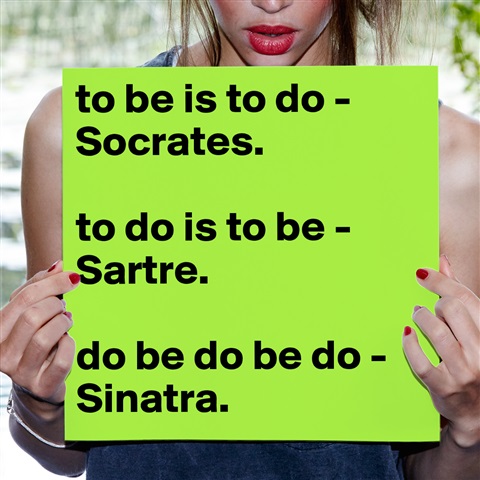
What is the purpose of preaching? Is it to increase knowledge or provoke akSHUN? Randy Nabors thinks the latter:

We don’t need more didactic moments that simply tickle the minds of those who thirst for more information; we need the forming of the heart though great sermons powerfully delivered. People need truth that shapes hearts into the obedience that comes through faith so people can be doers of the Word and not just hearers of it.

But what if the average Christian believer is someone who is prone to think either that sin, temptation, the devil, and the flesh have overwhelmed him the previous week? What sort of sermon does that person need? A call to obedience? Maybe. But can such a call make sense to someone who knows how sinful and weak he is? Might the person in the pew need to hear about God’s work in sanctification even if it is a tad didactic?

Or what about the average believer who lives life like a pilgrim, someone in exile, hardly in command of his affairs, but weak, frail, and in need of a reminder that God has saved him and controls all things?

In other words, Nabors seems to think of Christians as people who are in control of life and need simply to be hectored into living Christian lives. He doesn’t seem to allow that Christians come to church thinking that they believe, but are tempted to unbelief precisely when they take life and its duties into their own hands.

Higher Christian Living

Once a person converts to follow Jesus, he or she confronts a number of options for living at a higher spiritual pitch. For Protestants the options run the gamut from the second helping of grace that comes with Holy Spirit baptism to the comprehensive alertness that w-w Protestants promote. Often overlooked in the devotional plans that take you from Christianity 1.0 to Genuine Christianity 2.0 is the contribution of converts to Roman Catholicism.

Mark Shea shows the way:

I was raised Nothing-in-Particular (with a cloudy pagan regard for “the spiritual” and a deep disdain of “organized religion”). Then, at the age of 20, I had a sort of classic “born again” experience after an encounter with the living God revealed in Jesus Christ. Looking around me, I found that the people who had introduced me to Jesus were the non-denominational Evangelicals and charismatics on my dorm floor at the University of Washington. Therefore, putting two and two together, I concluded that this was the Christian community God had given me and that it was my task to learn from them, love them, and receive the love of God through them.

So learn from them I did. I became a member of this community (which eventually coalesced into a small church in North Seattle) and I learned the basics of the Christian faith-trust, prayer, love, good works, fellowship, discipleship, Scripture study-in this place. I regard this time with them as my personal “Old Testament”: that period of preparation for the full reception of Christ which was to come when I became a Catholic.

I think the “Old Testament” metaphor for my time as an Evangelical is apt because I don’t believe for a moment that it was an accident God introduced me to his Son through Evangelicalism any more than I believe it an accident that the whole history of Israel was the preparation for the Advent of Christ. Again and again, I found that things in my own Evangelical background anticipated the teaching of the Catholic Church and the Christ who is fully revealed there just as the teaching of the Old Testament anticipated the Incarnation, Death and Resurrection of Christ. So I am deeply grateful for my time as an Evangelical and regard the good things God gave me through that Tradition as very properly Catholic.

No mention here of the sins involved in belonging to a church not in fellowship with the Bishop of Rome or the mortal sin of disobeying the magisterium. Shea was a Christian, had gone from darkness to light, and had found Christ among Protestants.

Why on earth would Rome have ever anathematized Protestants or their teaching?

Enemies Scarier than ISIS?

Faith McDonnell thinks that the war (yet to be declared by the U.S. government) against ISIS is spiritual in nature and that Christians have a duty to wage war against such enemies:

First and foremost, the battle against ISIS is spiritual warfare. If the Enemy ever used any proxies for his mission to “kill, steal, and destroy,” it is the Islamic State. Though some remain in denial about the evil we face, and pray just “for peace,” the Biblical mandate for Christians (not governments, not militaries ) is to battle — not against flesh and blood — “but against principalities, against powers, against the rulers of the darkness of this world, against spiritual wickedness in high places.” (Eph 6: 12)

Maybe not.

When you read Calvin, who is no pope, on Ephesians 6, you gain the impression that Paul may have had his sights set on a foe bigger than Rome’s armies:

To impress them still more deeply with their danger, he points out the nature of the enemy, which he illustrates by a comparative statement, Not against flesh and blood. The meaning is, that our difficulties are far greater than if we had to fight with men. There we resist human strength, sword is opposed to sword, man contends with man, force is met by force, and skill by skill; but here the case is widely different. All amounts to this, that our enemies are such as no human power can withstand. By flesh and blood the apostle denotes men, who are so denominated in order to contrast them with spiritual assailants. This is no bodily struggle.

Let us remember this when the injurious treatment of others provokes us to revenge. Our natural disposition would lead us to direct all our exertions against the men themselves; but this foolish desire will be restrained by the consideration that the men who annoy us are nothing more than darts thrown by the hand of Satan. While we are employed in destroying those darts, we lay ourselves open to be wounded on all sides. To wrestle with flesh and blood will not only be useless, but highly pernicious. We must go straight to the enemy, who attacks and wounds us from his concealment, — who slays before he appears.

In fact, Calvin suggests that if we fight enemies like ISIS as if they are spiritual opponents, we lose sight of our genuine spiritual adversaries. And when that happens, our spiritual enemies defeat us.

It’s a topsy-turvy world out there in Christ’s spiritual kingdom.

Get Out of Jail Free

Jesus appears to think that his return will be comparatively sudden:

36 “But concerning that day and hour no one knows, not even the angels of heaven, nor the Son, but the Father only. 37 For as were the days of Noah, so will be the coming of the Son of Man. 38 For as in those days before the flood they were eating and drinking, marrying and giving in marriage, until the day when Noah entered the ark, 39 and they were unaware until the flood came and swept them all away, so will be the coming of the Son of Man. 40 Then two men will be in the field; one will be taken and one left. 41 Two women will be grinding at the mill; one will be taken and one left. 42 Therefore, stay awake, for you do not know on what day your Lord is coming. 43 But know this, that if the master of the house had known in what part of the night the thief was coming, he would have stayed awake and would not have let his house be broken into. 44 Therefore you also must be ready, for the Son of Man is coming at an hour you do not expect. (Matthew 24)

So what does this mean for those in Purgatory? Can Jesus actually let people out before they have made compensations for the temporal consequences of their sin? Will it be like the men in the field? One believer is released from Purgatory but another stays? Or does everyone get out because the return of Christ cancels all penalties for sin?

But if Christ’s return has the power to overturn the claims of Purgatory, imagine what the crucifixion and resurrection might do to both the temporal and spiritual consequences of sin.

How To Transformationalize the Secular

Have worship services not on Sunday but throughout the week. After all, if holding Mass desacralizes Sunday, having worship services during the week could sacralize Monday or Thursday or Tuesday or Saturday.

Father Z got me thinking:

Communion in the hand…
Blessings instead of Communion even by lay ministers…
Pianos…
Mass “facing the people”…

Saturday evening Masses as quasi-vigil Masses for Sunday is one of those poorly thought out decisions that, once implemented, has by now become so fixed in the Catholic psyche that they are as easy to roll back as the tide.

Granted: Saturday vigil Masses make attendance at Masses for Sunday Obligation possible for that small segment of society who are truly unable to attend Mass on Sunday morning. The question is, however, begged: why weren’t Sunday afternoon or evening Masses considered?

Sadly, the prevalence of Saturday evening Masses have had the effect, in many parishes, of eliminating the Saturday morning Mass, depriving the faithful of the celebration of numerous feasts, not too mention the regular commemoration of the Blessed Virgin on those Saturdays in Ordinary Time when the day is otherwise unencumbered.

There are now Catholics who, for no other reason than convenience, have not been to Holy Mass on Sunday morning for years.

This plays into our culture’s desacralization of Sunday, which is no longer the Lord’s Day, but merely a “day off.”

Olive Kitteridge and Larry David Are Popular for a Reason

Maybe the reason is that people who watch HBO are not sanctified.

But I do wonder why the Christian world seems to view niceness, friendliness, and optimism the way much of the network television audience does — as if people who are all the time happy, cooperative, and encouraging are the way we should really be.

Is it possible for Christians to like characters like — even find appealing — Olive Kitteridge, who shun pollyannaism, speak what’s on their mind, and mock human gullibility? Or is it possible for Christians to see in Larry David’s experience some of the real challenges that attend human interactions — such as an aversion to meet-and-greet chumminess, disdain for accommodating the in-laws wishes, calculation of the costs of going to the dentist’s home for a meal? The ideal believer in some parts of the Christian world is the one who is always giving, never sees mixed motives (or worse), and always wants everyone to be comfortable and happy blessed.

Of course, some Christians I know are incredibly positive and gracious in their disposition and interactions with others. I sometimes come away wondering what their secret is, wishing that I could find that part of my self. Just as often, I wonder what these folks are like when they get home to a private “safe” space. Do they then begin to unwind about the annoyance of my manners, the pretense of my bow tie, the folly of my claims? Keeping those thoughts to themselves does not make them hypocritical. Saying whatever is on your mind, being genuine or candid, can be just as unpleasant as the endlessly upbeat person. You have to know your audience if you are going to reveal some of your less than acceptable ideas or opinions.

Still, I have doubts about the humanity of a person who never entertains a critical or negative thought. Such a disposition is part and parcel of being fallen — you/we are inherently ornery. But it goes beyond sin and sanctity. Simply to observe and acknowledge the human condition, from the crabbiness of an Olive Kitteridge, to the immaturity of a Larry David, is to be human.

In which case, if Christians think that holiness leads to Mary Tyler Moore, does sanctification mean we become inhuman?

Without Sabbath Observance We Could Not Identify Christians

How do you spot a Christian? That may be easy compared to defining religion. Damon Linker had a go at religion recently:

Religion is any set of norms, practices, and beliefs that establishes a comprehensive way of life that is held out as the right or best way of life for those who adhere to it.

Noah Millman agreed but wanted to amend the definition:

. . . religion is a comprehensive set of normative practices that reflect or imply a set of beliefs about the nature of life and the right way to live it. Those beliefs may or may not be conscious, and may or may not be articulated and taught, in the way that the practices are.

I wonder why both Linker and Millman are so hung up on comprehensive. They don’t seem to understand a two-kingdom (read Augustinian) presentation of Christianity, one that recognizes some aspects of a believers life are religious, some are common or creational. It’s the hyphenation thing. But it’s especially a worry about “all of me” or comprehensive accounts of Christianity when in fact the Bible or bishops haven’t weighed in on everything and Christians have some liberty to figure it out themselves (rue the uncertainty).

In which case, the recent story about the decline of Sabbath observance may be a better indication of how to define religion and spot Christianity, as in Christians are people who take worship seriously and set aside a day for it. But that is changing in the South:

Signs are beginning to emerge suggesting that role of religion in the Bible Belt may be declining, at least to some degree.

The shift is increasingly apparent in local cafes and restaurants in towns across the South, particularly on Sundays. The sale of alcohol on Sundays has long been prohibited in many traditionally religious conservative communities. But recently, more and more of those communities are repealing so-called Blue Laws.

In Sylacauga, Alabama, a small town of just 12,700 people that hosts 78 churches, after-church lunch-goers are now bumping into craft beer drinking sports fans at local restaurants, following a September vote to do away with the Sunday exclusion. Similar initiatives are also underway in parts of Georgia and Mississippi.

A Pew Research Center survey showed 19 percent of Southerners do not identify with any organized religion, a 6 percent rise since 2007 and a number that more closely matches that of the rest of the country.

In another Pew study, 35 percent of Millennials surveyed self-identified as atheist or agnostic. The tendencies appear to be consistent across races.

“We’ve seen this sort of broader shift throughout the country as a whole with fewer people identifying as being part of the religious base,” Jessica Martinez, a senior researcher in religion and public life at Pew told the Associated Press. “In the South you see a pattern very similar to what we are seeing in other regions.”

Maybe sanctification of the Lord’s Day is something that “obedience boys” and Old Lifers could both get behind.

Inconsistency, Hypocrisy, and Clueless

Unless the Obedience Boys have figured out a way to make Wesleyan perfectionism a reality, all Christians struggle with the Lutheran paradox of being simultaneously a saint and a sinner (sorry to those professors of Christianity who need Vatican validation for sainthood). That paradox means that all Christians in their honest moments admit to struggling with and yield to sin. Which makes Christians inconsistent at least to outsiders. How can these people, the lament goes, who constantly prattle on about the moral law not see that they are immoral themselves? There’s a point in that somewhere, just as there is in stories about the guhzillions of pounds of CO2 that participants in the Climate Change Convention produced. But the impossibility of perfection in this life does not prevent either pastors or legislators from calling people to follow God’s law any more than the reality of political corruption prevents voters from voting for “good” candidates.

A measure of hypocrisy is part and parcel of the Christian life. Christians may be overly afflicted with temptations to promote sanctity all the while knowing that sanctification is a battle in which the believer always comes up short in a glass-completely-full-kind-of way.

But to go out of your way to oppose sinfulness in others while you yourself know you are guilty of the very sinfulness to which you object seems to be in a different category. 2k has regularly received opposition from those who think it leads to antinomianism, a disregard for God’s moral law. The reason runs something like this: if you can follow God’s law on Sunday but don’t need to the rest of the week, or if you strive to be holy as a Christian but not as a plumber, then you undermine the authority of God’s law in all areas of life.

But what happens if you are making that case against 2k at the very same time that you are knowingly violating God’s law? Is that hypocrisy? Or is it some other kind of disorder?

If, for instance, I were in the process of embezzling funds from an organization because finances on the home front were tight, wouldn’t it be foolish (aside from hypocritical) to become a champion of upholding the eighth commandment? Sure, I might still think others are sinful to steal, and if I’m an embezzling church officer I might would still vote to convict someone brought up on charges for stealing. But would I go out of my way in a public manner to identify stealing as a great form of wickedness? Would I write a series of blogposts about a sin I believe is responsible for destroying the church’s witness all the while I am guilty of that sin? Mightn’t I want instead to lay low? Wouldn’t I at least know that now — during this time of personal financial crisis — is not the occasion to stand atop the moral soapbox and point the finger?

We have a word for hypocrisy. What is the word for such lack of self-awareness? Clueless?

Hey Pastor Fosdick, The Fundamentalists Did Win

First it was smoking. I grew up in a fundamentalist home where smoking was off limits. I have also related the story of how devastated I was when I first saw Richie (later Dick) Allen smoking in the Phillies’ dugout. But now the world has turned into the Hart home (of my parents). Thankfully, the missus tolerates an occasional cigar indoors. But everywhere else in “the worldly world,” I can’t smoke (at least indoors). Not even women, who have absolute sovereignty over their bodies in the pro-choice world, may light up indoors. When will that barrier to human freedom topple?

Now it is language. The worldly worldlings are as worried about speech and its power to hurt as my fundamentalist fellow believers were about four-letter words and references to sex or body parts. The desire to make the world a tolerant and liberated place has now extended to Princeton University where students are objecting both to associations between the institution and its former president, Woodrow Wilson, but also to the word — wait for it — “master.” (Will Princeton stop granting “Masters” degrees?)

The group Black Justice League occupied the office of President Christopher L. Eisgruber at Princeton and offered a series of demands: that the university “acknowledge the racist legacy of Woodrow Wilson and how he impacted campus policy and culture,” and that all buildings and programs named for Wilson have their names changed. The students also demanded that a portrait of Wilson come down from a dining hall. Other demands include having “classes on the history of marginalized peoples” be added to distribution requirements, and that a “cultural space on campus” be “dedicated specifically to black students.”

Also on Wednesday, the masters of Princeton’s residential colleges decided to stop calling themselves masters and instead to use the term “head of the college.”

At protests at Yale University, minority students have said that the word “master” is associated with slavery in ways that make it an inappropriate title for a college official.

Princeton’s announcement of the change noted that the use of “master” in the sense of an academic leader predates American slavery and has nothing to do with it.

“Though we are aware that the term ‘master’ has a long history of use in universities (indeed since medieval times), it seems to me by now to be anachronistic and unfortunate for the positions we hold,” said a statement from Sandra Bermann, head of Whitman College, Cotsen Professor of the Humanities and professor of comparative literature. “We are glad to take on the designation as ‘head of the college’ that describes our role more aptly.”

My forebears would have put “head” in Margaret Gray’s “filth file” because of its phalic associations. But everyone knows that contemporary fundamentalists give a pass to sex.

Perhaps the oddest part of this story was the following comment:

“We owe nothing to people who are deeply flawed,” the essay says. “There is an impulsive reaction to want to ignore uncomfortable or questionable legacies. However, what does it say about our society if we continue to glorify legacies without acknowledging — and at the very least caring about — the continuous promotion of unrectified inequalities and injustices? … By not recognizing the importance of this discourse, the university is telling its marginalized community and the outside world that it values its bleached-clean version of history over the prolonged discomfort and alienation of students of color. This erasure is especially dangerous in the present context of state-sanctioned violence against black people that prolongs this genocide.”

Actually, everyone owes a debt to our deeply flawed first parents, which is what we call original sin. But today’s self-righteous never recognize their own flaws or the possibility that they may have them.

And forget about all that outrage over Islamist attacks on Charlie Hebdo for its iconoclastic and blasphemous covers. The self-righteous, whether believers or tolerantists, cannot abide sin in this world.

Wait, maybe Fosdick won after all.