Jamie Smith’s Bait and Switch

I was afraid that neo-Calvinism’s refusal to distinguish the sacred and secular would go here — that is, to a defense of civil religion. Jamie Smith’s latest editorial does just that.

Mind you, he is aware of the defective versions of civil religion, especially the one that has sent U.S. soldiers “to die face down in the muck of Vietnam” (thank you, Walter Sobchak):

civil religion is what we get when we divinize the civitas, when devotion to “the nation” trumps other allegiances and inspires a fervor and passion that is nothing short of religious. David Gelernter names this in his 2007 book, Americanism: The Fourth Great Western Religion. Walter McDougall’s more recent book The Tragedy of U.S. Foreign Policy, which Robert Joustra reviews in this issue, identifies the same problem in its subtitle: How America’s Civil Religion Betrayed the National Interest. In McDougall’s argument, civil religion carries the usual whiff of irrationality: the hard-nosed rationality of national interests is compromised because of vaunted values and misguided mythologies.

But Smith still thinks civil religion is salvageable.

The envisioned good of a diverse, pluralistic, yet civil society that liberal democracies hope for is not a generic vision. It has a particular history—rooted in Christianity—and demands particular virtues. In short, the very project of a well-functioning, pluralistic, liberal society depends on the formative power of tradition-specific, “illiberal,” non-democratic communities that can inculcate virtues of hope, respect for dignity, commitment to truth, and more. Families, synagogues, churches, mosques embed their members in a Story that makes such virtues “make sense.” These non-political spheres of society cultivate people who become the sorts of citizens who know how to be patient and forgiving precisely because they believe in something beyond the state.

See what he did there? Civil society in liberal democracies owes its existence to Christianity. In those societies synagogues, churches, and mosques embed citizens in “a Story.” They become patient and forgiving.

Christianity did that? Or was it the Enlightenment (which owes its existence in part to medieval and early modern Europe). Maybe by using the indefinite article in “a Story” you can get away with blurring churches, synagogues and mosques into one happy, fuzzy, gentle, and kind civil society. But that is certainly not the experience of most western societies where Christians ran things and established their churches.

Smith really pours it on when he leads the following cheer:

But one of the by-products of a healthy church forming citizens of kingdom come is that they are then sent into the earthly city with Christlike virtues that also contribute to the common good. We might miss this because it doesn’t primarily play itself out on a national scale; rather, it is enacted at the parish level, in a thousand different neighbourhoods. There we also find Christians, Jews, and Muslims collaborating for the sake of the vulnerable, the lonely, and the marginalized while also nourishing the virtue incubators we call families.

Well, in point of fact, when Christians go into public with a comprehensive w-w they have to be especially aware that they are not like Jews or Muslims. Pot down the w-w gauge and perhaps you have less conviction about being distinct from those people who do not profess Christ. But I don’t know how Smith gets the Chamber of Commerce view of Christianity’s civil nature from Christ’s own words:

Do not think that I have come to bring peace to the earth. I have not come to bring peace, but a sword. For I have come to set a man against his father, and a daughter against her mother, and a daughter-in-law against her mother-in-law. (Matt 10:34-35)

That explanation of the antithesis is what makes Abraham Kuyper’s pillarization of Dutch society so intriguing. The Netherlands was not the American melting pot (or even the Canadian multicultural stew). It was a series of religious subgroups that kept to themselves the way that states’ rights advocates in the United States thought about relations between local and federal government.

But if Christians want a seat at the table of a liberal international order that preserves democracy from autocracy, Smith does a pretty good impersonation of 1950s mainline Protestantism.

The World Is Turning Rod and Leaving Tim Behind

The piece on Rod Dreher and the Benedict Option in the New Yorker was remarkable on several levels. It was generally positive, respectful, and long. This was the case despite Dreher’s tendency to sound a tad hysterical about sexual irregularities and deviance. This quote by Andrew Sullivan, a gay man who has gone head to head with Rod over the years, was telling:

Sullivan has a long-standing disagreement with Dreher over same-sex marriage, but he believes that the religiously devout should be permitted their dissent. “There is simply no way for an orthodox Catholic to embrace same-sex marriage,” he said. “The attempt to conflate that with homophobia is a sign of the unthinking nature of some liberal responses to religion. I really don’t think that florists who don’t want to contaminate themselves with a gay wedding should in any way be compelled to do so. I think any gay person that wants them to do that is being an asshole, to be honest—an intolerant asshole. Rod forces you to understand what real pluralism is: actually accepting people with completely different world views than your own.”

In “The Benedict Option,” Dreher writes that “the angry vehemence with which many gay activists condemn Christianity” is the understandable result of a history of “rejection and hatred by the church.” Orthodox Christians need to acknowledge this history, he continues, and “repent of it.” He has assured his children that, if they are gay, he will still love them; he is almost—but not quite—apologetic about his views, which he presents as a theological obligation. He sees orthodox Christians as powerless against the forces of liquidly modern progressivism; on his blog, he argues that “the question is not really ‘What are you conservative Christians prepared to tolerate?’ but actually ‘What are LGBTs and progressive allies prepared to tolerate?’ ” He wants them to be magnanimous in victory; to refrain from pressing their advantage. Essentially, he says to progressives: You’ve won. You wouldn’t sue Orthodox Jews or observant Muslims. Please don’t sue us, either.

“What I really love about Rod is that, even as he’s insisting upon certain truths, he’s obviously completely conflicted,” Sullivan said. “And he’s a mess! I don’t think he’d disagree with that. But he’s a mess in the best possible way, because he hasn’t anesthetized himself. He’s honest about a lot of the questions that many liberal and conservative Christians aren’t really addressing.”

Notice that Dreher, who is outspokenly anti-gay marriage, did not receive the chorus of criticism that Tim Keller did at Princeton Seminary even from such mainstream organs and figures as the New Yorker and Andrew Sullivan.

To be sure, the PCUSA is not the New Yorker, but at a time when the magazine has identified President Trump and his supporters as an alien force in national life, a fair piece about Dreher is not what readers would have expected.

So why does Dreher receive more acclaim than Keller? The reason could be that the former promotes a thick (as he understands it) Christian identity, complete with communitarian obligations, while Keller stands for a Christianity that is chiefly reasonable and appeals to the mind. In other words, Dreher is appealing to a larger conception of Christianity that encompasses more of one’s identity than intellect while Keller is largely about defending the Apostles’ Creed (as he explained a while back in an interview at First Things) — or a Christian minimum. Rod is maximalist where Tim is a minimalist.

Naomi Schaeffer Riley picked up on this difference when she contrasted Dreher and Keller:

Keller sees an integral part of the church’s mission as being present in the big cities — no matter how culturally degraded they may seem. “Christians ought to be present and engaged everywhere that there are people. But across the world people are flocking to cities at the rate of millions per year.

“Christians don’t all need to live in cities, but they should at least be moving there in the same proportions as the people whom they want to serve.”

His approach may be falling out of favor among some more orthodox believers. Last month, the Wall Street Journal reported on a small but growing number of Christians who, “feeling besieged by secular society . . . are taking refuge” in small, often isolated communities away from negative cultural influences and surrounded by other believers.

This “Benedict Option” was named in honor of St. Benedict, who fled the moral degradation of Rome. It’s also the title of a new book by Rod Dreher, who, writing in Christianity Today, calls it a “strategic withdrawal” by “serious Christian Conservatives [who] could no longer live business-as-usual lives in America.”

Though Dreher doesn’t say Christians should all flee to isolated enclaves, those are where such withdrawal would be easiest.

Keller believes Christians in New York cannot retreat into homogeneity. They’ll be regularly faced with people who fervently disagree with them. Keller’s church is a multi-ethnic one and even if the believers have a similar religious outlook, they hail from a variety of different backgrounds.

That fear of homogeneity and retreat also explains, by the way, while Keller is somewhat uncomfortable with going all in on Presbyterianism (from his interview at First Things):

I don’t believe you can reach New York with the gospel if you only plant Presbyterian churches. There are all kinds of people who’ll never be Presbyterians. It just doesn’t appeal to them. Some people are going to be Pentecostals, some people are going to be Catholics. I mean, I know that sounds¯I’m not talking about that certain cultures reach certain people. It’s much more complicated than that. Even though there’s something to that. We all know that certain cultures seem to have more of an affinity toward a certain kind of Christian tradition than others, but I wouldn’t want to reduce it to that at all. I would just say that I only know that God seems to use all these kinds of churches to reach the whole breadth of humanity, and so that’s why we give money to start churches of other denominations, and give free training to it. And we’ve done about a hundred in the New York area, where we’ve helped people. It’s very important to us.

For Keller, apparently, Christianity resists taking overly specific and particular forms (think ecclesiology, liturgy, even creed). His ministry can transcend different cultures and expressions of Christianity. That comes up short against those Christians that Schaeffer identifies as wanting a more than “business-as-usual” faith.

But the Allies at Gospel Coalition back Keller over Dreher when they say they want both a Christianity that is meaty and one that is mainstream:

The Benedict Option is named for Benedict of Nursia, a 4th century monk who launched a monastic movement that preserved Western civilization. Today, writers like Rod Dreher enjoin Christian​s​ to take similar steps to “develop communities based on a shared sense of orthodoxy (right belief) and orthopraxy (right practice), for the sake of forming ourselves and the next generation in the Christian faith.”

The New York Times columnist Ross Douthat has called Redeemer Presbyterian Church in New York City, where Tim Keller serves as senior pastor, an effective example of the Benedict Option for our twenty-first century, post-Christian context. Like other TGC-inspired communities, Redeemer aims to blend countercultural biblical faithfulness with a Christ-exalting, city-embracing vision.

That dual commitment to faithfulness and cultural affirmation did work for the post-World War II world. It was precisely the vision of the Neo-Evangelicals who formed the National Association of Evangelicals, founded Christianity Today, and cheered and prayed for Billy Graham. It was and is a faith that harmonizes well with a nationalism confident of its role in the world, and generally progressive in its estimate of where history is going or at least who the good guys are in that narrative.

But at a time when that post-war internationalist order is under serious strain (think Brexit, Scottish Independence, Trumpian nationalism), the appeal of a rational, enlightened Christianity may have hit a wall. What Christians seem to understand is that they need a faith little more “deep-down diving and mud upbringing,” that can withstand a social order that is not congenial to their religious convictions. It is a faith that bears more resemblance to the politics of identity than to United Statesist Christianity. This faith does not go along but separates. It makes more claims on adherents than a faith that primarily relies on mental exercises demanded by w-w. It recognizes that the world is more hostile than previous generations supposed and that Christians need to be more intentional about their convictions.

Why someone living in New York City, the place that cultivated the boorish Donald Trump, doesn’t see that cities (from culture to economics) may be a problem for the practice of demanding Christianity is a real mystery.

Be Careful for What You Pine

If you want the world to be sacramental:

Living a sacramental worldview means, quite simply, viewing the world as sacrament. A redundant definition it might be, but often times the simplest explanations are the best. If we do truly believe that the Sacraments are moments in time where the invisible grace of God is made visible and tangible then seeing this same grace working constantly in and through our daily lives would only beg that we see the sacramental nature of daily life. This is not to say that every blade of grass is truly the transubstantiated body of Christ, but it does substantiate St. Ignatius’s charge to see God in all things.

You may wind up with the market as God:

In his most recent book, The Market as God, Harvey Cox argues that the market economy has become deified in our contemporary world. In formulating this argument, he identifies many parallels between the structures of Christianity and those of the capitalist economic system.

This IS White Normativity

Maybe not, but who can imagine that regeneration washes away the perspective that comes with being a white man? Joe Carter, for instance, wrote a series on Christian journalism for the gospel allies that contains this nugget:

Almost all news stories we encounter are devoid of context. They assume we understand the broader background and that we have followed the details from previous iterations of the story. But most of us tend to “catch up” on a news item only when we have to, when we realize that a particular current event item is not going away that we should probably develop a basic awareness and understanding of why it’s important.

My role as an explanatory journalist is to “make complicated things clear, quickly” by reinserting some of the missing context. Again, this doesn’t take any unique skill. I’m able to do this not because of my own specialized knowledge but merely because I have the time, willingness, and patience to dig through a backlog of material to put together a few key details that might be useful to a casual consumer of news.

What does race do to Carter’s perspective? If, as Thabiti Anyabwile and other African-American pastors tell us, that white Americans can never escape the blinkers that filter their perceptions of the news of a black young man shot by police, how are the non-white readers of Carter going to trust the context he supplies? Won’t his perspective reflect white-middle-class America with a helping of Christianity on the side?

Or maybe regeneration is supposed to supply a better perspective. But since Carter and Anyabwile are both regenerate, then why do they see some news matters differently? So much for Christian w-w. More like ethnic/racial-Christian w-w.

When Carter further explains the work of the Christian journalist, he summons help from Tim Keller:

“When the third, ‘eschatological’ element is left out,” Keller says, “Christians get the impression that nothing much about this world matters. Theoretically, grasping the full outline should make Christians interested in both evangelistic conversions as well as service to our neighbor and working for peace and justice in the world.”

This eschatological element motivates and frames the calling of the gospel-oriented journalist. The Christian journalist must constantly ask how, in the light of the gospel, we are to do God’s work of enlightening our neighbors with truth. Sometimes this means the work will have a definite and obvious gospel outcome (i.e., the article is explicitly biblical in the “Christian” genre). Other times it may mean that while the final product is indistinguishable from “secular” work (in the “common grace” sense), the journalistic process (the choosing of sources, the purpose for the writing, and so on) was guided by a commitment to the gospel.

This is where neo-Calvinist-like endeavors to claim every square inch break down. Journalism is properly a matter of providence, not redemption. Secular journalists, thanks to their creaturely capacities, have the ability to see and understand the real world in ways that escape Christians. Some of it may be IQ. Some of it may be more experience as a journalist and being skeptical about the claims that humans make. Regeneration doesn’t make someone a better journalist. One’s location in the created order — family, schooling, native ability, personal instincts — makes someone a better journalist.

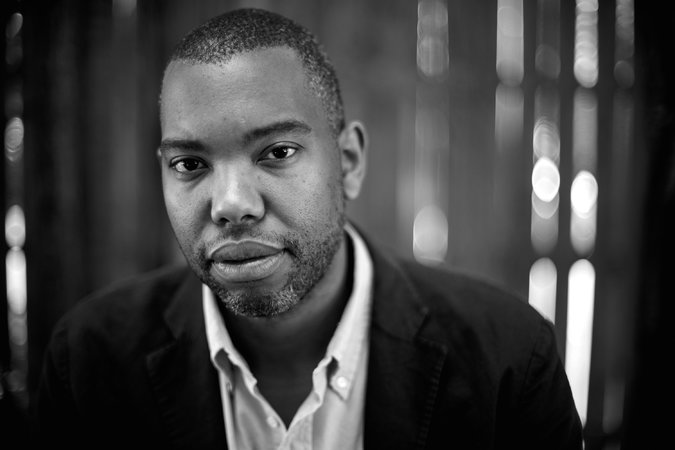
Just the same, if Carter and Keller want to claim that the gospel makes Christians more interested in peace and justice in the world, they need to use that argument the next time that an African-American pastor or activist claims that white Christians “don’t get it.” If getting the gospel is what really matters for seeing things whole, Joe Carter is just as good a source on race relations at Ta-Nehisi Coates.

Why Mencken Matters

He is a reminder that belief is not normal (to fallen human beings).

The reason for that aside is Regis Martin’s article about the stupidity of atheists (trigger warning for the w-w deniers):

…people do not arrive at atheism as a result of hours heuristically spent perusing the philosophical journals. That is because it is not a matter of the intelligence that compels one to choose disbelief, but a movement of the will. One would have to be pretty witless if, on the strength of a syllogism, one were to conclude that there is no God. An atheist can no more eliminate God’s existence by his refusal to believe than a blind man can by his inability to see expel the sunlight. “The essence of God does indeed lie beyond the scope of intelligence,” Fr. Murray freely concedes, “but his existence does not.” And not to know at least that much, “is to nullify oneself as a man, a creature of intelligence.” Because belief in God is, very simply, the bedrock truth upon which everything else depends. To think otherwise, he argues, amounts to “a miserably flat denouement to the great intellectual drama in whose opening scene Plato appeared with the astonishing announcement that launched the high action of philosophy—his insight that there is an order of transcendent reality, higher than the order of human intelligence and the measure of it, to which access is available to the mind of man.”

In which case, we should never trust an atheist or unbeliever with any sort of responsibility (and we should live in a Christendom because only God-affirmers have the bedrock for truth).

But what if faith is not natural? What if philosophical inquiry and logical deduction still don’t make a man or woman believe? What if, get this, Paul was right?

28 And since they did not see fit to acknowledge God, God gave them up to a debased mind to do what ought not to be done. 29 They were filled with all manner of unrighteousness, evil, covetousness, malice. They are full of envy, murder, strife, deceit, maliciousness. They are gossips, 30 slanderers, haters of God, insolent, haughty, boastful, inventors of evil, disobedient to parents, 31 foolish, faithless, heartless, ruthless. 32 Though they know God’s righteous decree that those who practice such things deserve to die, they not only do them but give approval to those who practice them. (Romans 1)

Imagine that: Reformed Protestants take atheists more seriously than Roman Catholics because of the doctrine of total depravity. If you start with the reality that all people are lost in their trespasses and sins, that their minds are “darkened” as a result, you set your expectations of unbelievers accordingly. But if you look at faith as the bedrock of understanding the world (think w-w), and you need to trust your neighbors not to do irrational things, then you are going to attribute belief in God to them (and meanwhile deny total depravity).

Mencken matters because he’s proof that unbelievers are smart, and that the Holy Spirit is more powerful than reason in giving people faith in Jesus Christ as their savior.

It’s Funny Because It’s True

That was Homer Simpson’s reaction to the video, “Football to the Groin” (as I recall). Good humor has a strong does of reality, that was the lesson implied in Homer’s quip. And Babylon Bee’s top ten books for 2016 also suggest that Old Life criticisms of the Protestant world have a strong resemblance to reality. These indicate that OL and BB share not a w-w but a wariness about evangelical hype and cliches:

1.) Whatever Tim Keller wrote, probably: Honestly, we didn’t read any Tim Keller books this year. But we’re sure that whatever he wrote was pretty good. So the number 1 book of the year is whatever he wrote. Pick your favorite and put it in this slot. Congratulations, Tim!

3.) The Purpose Driven Ferret — Rick Warren: While fans of the Purpose Driven series have hundreds of variants to choose from, Rick Warren may have outdone himself with this special edition of The Purpose Driven Life, written exclusively for the close cousin of the polecat. Your ferret will love learning how to fulfill its God-given purpose as Warren masterfully uses over 250 different translations of the Bible to drive home his point.

6.) Worldview: The Worldview: Worldview Edition — Al Mohler: Al Mohler is right in his wheelhouse when writing about worldviews, and his latest work, Worldview: The Worldview: Worldview Edition is an excellent guide to worldviews and the worldviews that view them in the world.

7.) Hyphenating To The Glory Of God — John Piper: Piper focuses with white-hot, laser-like intensity on, as he puts it, “the all-other-punctuation-mark-surpassing splendor” of the hyphen. Soul-stirring and paradigm-shattering, you should not miss this all-too-important, not-exactly-like-his-usual-books-but-still-vintage-John-Piper work.

9.) ? — Rob Bell: “I was thinking about what I wanted my new book to convey,” Bell said thoughtfully in a short YouTube video designed to promote the May release of New York Times bestseller ?. “And it suddenly hit me—I really have no idea. I mean, about anything.” This masterful work features thousands of question marks arranged on each page in no discernible order, as well as several chapters written in Sanskrit.

The lesson: the way to avoid ridicule is stop doing ridiculous stuff.

How the Mind Works

Consider two different takes on Russia’s involvement in the recent presidential election. The first from my friend and evangelical historian colleague, John Fea:

At the 2:45 mark in the video Smerconish wonders why Americans of all parties are not upset with the fact that Putin and Russia has influenced a presidential election. If Smerconish is correct, and I tend to think that he is, then “identity politics” (or, as Little puts it, just good old fashioned political partisanship) has now gotten in the way of the national security interests of all Americans, regardless of political party.

Yes, the Cold War is over. The Soviet Union has been gone for over 25 years. But if Putin represents some kind of revival of the Russian threat (as Mitt Romney correctly implied during his 2012 presidential run) then it looks are response to this threat will not follow the Cold War model of unified resistance. Whatever collective outrage we have had in the past about Russians trying to influence American life seems to have now been subordinated to party politics.

Then this from James Kunstler:

The New York Times especially worked the “Russia Hacks Election” story to a fare-the-well, saying in its Sunday edition:

The Central Intelligence Agency has concluded that Moscow put its thumb on the scale for Mr. Trump through the release of hacked Democratic emails, which provided fodder for many of the most pernicious false attacks on Mrs. Clinton on social media.

False attacks? What, that Hillary’s cronies put the DNC’s “thumb on the scale” against Bernie Sanders? That Donna Brazille gave Hillary debate questions beforehand? That as Secretary of State Hillary gave more face-time to foreign supplicants based on their contributions to the Clinton Foundation, and expedited arms deals for especially big givers? That she collected millions in speaking fees for sucking up to Too-Big-To-Fail bankers? That The Times and The WashPo and CNN reporters were taking direction from Hillary’s PR operatives?

Consider, too, how the Deep State “Russia Hacks Election” meme was ramped up to top volume coincidentally the week before the electoral college vote, as a last-ditch effort was launched by the old-line media, the diehard Hillary partisans, and a bunch of Hollywood celebrities, to persuade electoral college delegates to switch their votes to deprive Trump of his election victory.

President Obama did his bit to amplify the message by coloring Russian President Vladimir Putin as being behind the so-called hacking because “not much happens in Russia without, you know, Vladimir Putin,” just like not much happened in old Puritan New England without the involvement of Old Scratch. So now we have an up-to-date Devil figure to stir the paranoid imaginations of an already divided and perturbed public.

In John’s and my world, lots of exchanges go round about w-w, what difference faith makes for scholarship, and (John more than I) whether historians add value to discussions of contemporary events. Perhaps the question too often left out is what accounts for the trust that people put in large scale institutions — from the New York Times to the Central Intelligence Agency. I bet that Kunstler isn’t much impressed by powerful institutions. In fact, he seems to know as watchers of The Wire do that institutions and the individuals who work in them are prone to self-interest and corruption. I don’t want to put words in John’s mouth, but he does seem to share with many other academics a trust in the mainstream media.

Is that what history teaches us?

Christianity?

W-w thinking?

Maybe the world is divided between those who put their hopes in princes (depending on the party occupying the White House), and those who think that Progressives were wrong, that there is no “right side of history,” that it’s all “vanity under the sun.”

Not to be missed, though, in Kunstler’s post was this:

Hillary and her supporters have vehemently asserted that “seventeen intelligence agencies” agree with the assessment that Russia hacked the election. It might be greater news to the American people to hear that there actually are seventeen such agencies out there. Perhaps Mrs. Clinton or Mr. Obama might explain exactly what they are beyond the CIA, the FBI, the DIA, the NSA, and DHS. Personally, I feel less secure knowing that there are so many additional surveillance services sifting through everybody’s digital debris trail.

Exactly. Well, not exactly since I’m not sure what U.S. spies would actually do with my ordinary digital footprint. But 17 intelligence agencies. Where’s the academic left’s outrage over President Obama and Secretary Clinton’s compromise with the Bush Administration’s draconian surveillance state? Can we get an “amen” for original sin and power’s corruption?

Human Bodies Waste Away But Cities Abide (psshaw)

One of yesterday’s sermons has me thinking: when will the neo-Calvinists ever do justice to the physical-spiritual dualism that legitimately arises in Paul’s teaching?

For we know that if the tent that is our earthly home is destroyed, we have a building from God, a house not made with hands, eternal in the heavens. For in this tent we groan, longing to put on our heavenly dwelling, if indeed by putting it on we may not be found naked. For while we are still in this tent, we groan, being burdened—not that we would be unclothed, but that we would be further clothed, so that what is mortal may be swallowed up by life. He who has prepared us for this very thing is God, who has given us the Spirit as a guarantee.

So we are always of good courage. We know that while we are at home in the body we are away from the Lord, for we walk by faith, not by sight. Yes, we are of good courage, and we would rather be away from the body and at home with the Lord. So whether we are at home or away, we make it our aim to please him. For we must all appear before the judgment seat of Christ, so that each one may receive what is due for what he has done in the body, whether good or evil. (2 Corinthians 5:1-10 ESV)

You can’t simply point at “all things” passages and make Paul’s understanding of life in this world go away:

He is the image of the invisible God, the firstborn of all creation. For by him all things were created, in heaven and on earth, visible and invisible, whether thrones or dominions or rulers or authorities—all things were created through him and for him. And he is before all things, and in him all things hold together. And he is the head of the body, the church. He is the beginning, the firstborn from the dead, that in everything he might be preeminent. For in him all the fullness of God was pleased to dwell, and through him to reconcile to himself all things, whether on earth or in heaven, making peace by the blood of his cross. (Colossians 1:15-20 ESV)

You can affirm both. Christ is preeminent and we are not at home until we are with Christ. But to use the Lordship of Christ as the basis for transforming cities or redeeming movies and rejecting the dualism between fallen bodies and redeemed souls as fundamentalist is not Pauline. Heck, it’s not even Calvinist:

The wicked, too, groan, because they are not contented with their present condition; but afterwards an opposite disposition prevails, that is, a clinging to life, so that they view death with horror, and do not feel the long continuance of this mortal life to be a burden. The groaning of believers, on the other hand, arises from this — that they know, that they are here in a state of exile from their native land, and that they know, that they are here shut up in the body as in a prison. Hence they feel this life to be a burden, because in it they cannot enjoy true and perfect blessedness, because they cannot escape from the bondage of sin otherwise than by death, and hence they aspire to be elsewhere.

As, however, it is natural for all animals to desire existence, how can it be, that believers are willing to cease to exist? The Apostle solves this question, when he says, that believers do not desire death for the sake of losing any thing, but as having regard to a better life. At the same time, the words express more than this. For he admits, that we have naturally an aversion to the quitting of this life, considered in itself, as no one willingly allows himself to be striped of his garments. Afterwards, however, he adds, that the natural horror of death is overcome by confidence; 515 as an individual will, without any reluctance, throw away a coarse, dirty, threadbare, and, in one word, tattered garment, with the view of his being arrayed in an elegant, handsome, new, and durable one.

Farther, he explains the metaphor by saying — that what is mortal may be destroyed 516 by life. For as flesh and blood cannot inherit the kingdom of God, (1 Corinthians 15:50,) it is necessary, that what is corruptible in our nature should perish, in order that we may be thoroughly renewed, and restored to a state of perfection. On this account, our body is called a prison, in which we are confined.

Mencken Day 2016

After a visit to Charm City for Mencken festivities, the man remains the king of charm and truth (general revelation sense). What follows is from his coverage of the 1928 presidential election which witnessed the first Roman Catholic run for the White House on a major party ticket (that would be Al Smith):

I daresay the extent of the bigotry prevailing in America, as it has been revealed by the campaign, has astounded a great many Americans, and perhaps even made them doubt the testimony of their own eyes and ears. This surprise is not in itself surprising, for Americans of one class seldom know anything about Americans of other classes. What the average native yokel believes about the average city man is probably nine-tenths untrue, and what the average city man believes about the average yokel is almost as inaccurate.

A good part of this ignorance is probably due to the powerful effect of shibboleths. Every American is taught in school that all Americans are free, and so he goes on believing it his whole life — overlooking the plain fact that no Negro is really free in the South, and no miner in Pennsylvania, and no radical in any of the dozen great States. He hears of equality before the law, and he accepts it as a reality, though it exists nowhere, and there are Federal laws which formally repudiate it. In the same way he is taught that religious toleration prevails among us, and uncritically swallows the lie. No such thing really exists. No such thing has ever existed.

This campaign has amply demonstrated the fact. It has brought bigotry out into the open, and revealed its true proportions. It has shown that millions of Americans, far from being free and tolerant men, are the slaves of an ignorant, impudent and unconscionable clergy. It has dredged up theological ideas so preposterous that they would make an intelligent Zulu laugh, and has brought the proof that they are cherished by nearly half the whole population, and by at least four-fifths outside the cities. It has made it plain that this theology is not merely a harmless aberration of the misinformed, like spiritualism, chiropractic of Christian Science, but the foundation of a peculiar way of life, bellicose, domineering, brutal and malignant — in brief, the complete antithesis of any recognizable form of Christianity. And it has shown, finally, that this compound of superstition and hatred has enough steam behind it to make one of the candidates for the Presidency knuckle to it and turn it upon his opponent — basely to be sure, but probably wisely. (“The Eve of Armageddon,” Nov. 5, 1928)

I wonder if neo- and New Calvinists with all that w-w and earnestness and hope for a Christian society would have voted for the Democrat and Roman Catholic Smith. J. Gresham Machen, a life-long Democrat, did. Part of the reason was 2k.

Blogging is Essential to Being a Christian

That is a conclusion that someone could possible draw from a recent Pew Research Center poll on Christianity in the United States:

The survey shows a clear link between what people see as essential to their faith and their self-reported day-to-day behavior. Simply put, those who believe that behaving in a particular way or performing certain actions are key elements of their faith are much more likely to say they actually perform those actions on a regular basis.

For example, among Christians who say that working to help the poor is essential to what being Christian means to them, about six-in-ten say they donated time, money or goods to help the poor in the past week. By comparison, fewer Christians who do not see helping the poor as central to their religious identity say they worked to help the poor during the previous week (42%).

The same pattern is seen in the survey’s questions about interpersonal interactions, health and social consciousness. Relatively few Christians see living a healthy lifestyle, buying from companies that pay fair wages or protecting the environment as key elements of their faith. But those who do see these things as essential to what it means to be a Christian are more likely than others to say they live a healthy lifestyle (by exercising, for example), consider how a company treats its employees and the environment when making purchasing decisions, or attempt to recycle or reduce waste as much as possible.

Is this circularity (which rivals the motives of credibility) merely a problem of Protestant subjectivity? I don’t think so:

Three-quarters of Catholics say they look to their own conscience “a great deal” for guidance on difficult moral questions. Far fewer Catholics say they look a great deal to the Catholic Church’s teachings (21%), the Bible (15%) or the pope (11%) for guidance on difficult moral questions.

Perhaps most discouraging is how poorly Sabbath observance fares, a weekly activity that winds up ordering all the days so that ceasing from work is possible:

To help explore this question, the survey asked U.S. adults whether each of a series of 16 beliefs and behaviors is “essential,” “important but not essential,” or “not important” to what their religion means to them, personally.

Among Christians, believing in God tops the list, with fully 86% saying belief in God is “essential” to their Christian identity. In addition, roughly seven-in-ten Christians say being grateful for what they have (71%), forgiving those who have wronged them (69%) and always being honest (67%) are essential to being Christian. Far fewer say that attending religious services (35%), dressing modestly (26%), working to protect the environment (22%) or resting on the Sabbath (18%) are essential to what being Christian means to them, personally.

Hearing the Word of God read and preached in the public assembly of the saints? Forget about it.