America IS Great Again

Don’t worry about the news cycle or the outrage porn associated with it. David Harsanyi looks beyond the headlines:

Homicide rates, for example, have been falling to the point where in 2014 — the last year of FBI data offered — it was at 4.5 per 100,000 people, which is the lowest rate recorded since 1963, when it was at 4.6 per 100,000 people. We know there was a slight uptick in violent crime in 2015, probably making it the second lowest year for homicides in the past 50. . . .

Put it this way: In 1990, in New York City there were 2,245 homicides. In 2015, there were 355. In 1992, Los Angeles County had a record high of 2,589 homicides. There were 655 over the last 12 months. In 1992, Chicago saw 943 murders, or a rate of 34 murders per 100,000 citizens. Although it still owns a far higher murder rate than most major cities, in 2014 there were 432 murders and in 2015 488. Last year, Dallas saw a spike in murders, yet the 10.7 homicides per 100,000 residents was the city’s fourth-lowest total since police started keeping track in 1930. In Denver 95 people were murdered in 1992, 34 in 2014, and 50 (a nine-year high) in 2015.

As Harsanyi says, it’s not 1968. That year was scary. This year seems like the last two years. The Ferguson Effect seems to be trumping the Francis Effect.

When Bathrooms Were Safe Spaces

Driving cross country and using rest stop facilities made me aware once again that just because a bathroom is male or female is no guarantee of comfort. What if another patron is attracted to men and finds me(eeeeEEEE!) particularly handsome? What am I supposed to do?

In fact, a recent piece in Christianity Today by a gay Wheaton College alum confirms those the plausibility of these questions:

By far the worst aspect of my college experience was the dorm’s group bathroom. At the beginning of the year, most shower stalls had two curtains. One hung past the entrance to the water spout, and the other hung a few feet farther out, past a small bench where we could put clothes and a towel. As the year progressed, some of the curtains would rip and fall down. I always tried to use an area with both curtains intact, because I feared falling into sin. Afraid of homosexual thoughts, I felt that I could not form close connections to the other men on my floor. Such a compulsive paradigm isolated me further from people who would have wanted to help.

So, well before the rise of transgender self-consciousness and legislators quarreling over access to bathrooms, men and women, boys and girls, have been sharing facilities with people whose sexual orientations make them uncomfortable. Truth be told, I even shared a suite of rooms in Divinity Hall (at Harvard) with the man who led the Gay-Lesbian Caucus. And I turned out okay (right?).

If we can share bathrooms with gays and lesbians, can’t we do the same with trans?

Did Memorial Day Give Us the Confederate Flag?

What’s the difference between Memorial Day and Veterans Day? The straight answer is that the former commemorates soldiers who died in battle, the latter honors all soldiers (even Bowe Bergdahl?). The funny answer is we get Memorial Day off as part of a three-day weekend to kick-off summer. On Veterans day we work in preparation for Thanksgiving and the big holiday season (some call Advent).

The difficult answer is that Memorial Day started to remember soldiers who died in the Civil War, Veterans Day for troops in The Great (Pretty Good?) War. Now, just like with three-day weekends for Presidents, Labor, and Columbus, we lump all soldiers into holidays that originally referred to specific wars.

You have to wonder if this is the best way to remember veterans or deceased soldiers when you get one day for all of those soldiers. David Rieff has a new book out arguing that remembering the past can actually be harmful:

What I’m saying is, there are examples—not a few, but quite a number of examples—where remembering, far from leading to truth, justice, and reconciliation, has led to more war. Three obvious examples of that are the Balkans in the 1990s, where I was a correspondent; Northern Ireland, for 30 years and, some people would say, for 800 years; and the Middle East. And in all three of those cases it seems to me that invoking history, invoking the wounds of the past, the crimes of the past, the conflict of the past, has led to more bloodshed.

In the case of the United States, our memories of the past don’t necessarily lead to bloodshed, but they do make us uncomfortable. Memories of slavery and segregation put whites and blacks in awkward relations that leave persons with no experience of owning slaves or Jim Crow feeling the legacy of racism should all inform interactions between whites and black, from chance encounters on the subway to public school hiring practices.

But how much is our own government to blame for the way some southerners keep the memory of the Confederacy alive? Memorial Day originally was all about remembering the Civil War, with blacks, Yankees, and Southerners all vying to honor their side:

COLUMBUS, Ga. — Right on either side of Alabama, there are two places with the same name.

Like the one over in Mississippi, this Columbus was founded in the 1820s and sits just a few minutes from countryside in almost any way you drive.

Residents say it was here, in the years after the Civil War, that Memorial Day was born.

They say that in the other Columbus, too.

It does not take much for the historically curious in either town — like Richard Gardiner, a professor of teacher education at Columbus State University here — to explain why theirs is the true originator of a revered American holiday and why the other is well-meaning but simply misguided. . . .

Waterloo, N.Y., was designated the official birthplace of Memorial Day by presidential proclamation in 1966, and indeed, beginning in May 1866, Waterloo held an annual townwide commemoration.

But women in Boalsburg, Pa., which has a claim as the holiday’s birthplace, began decorating graves each year as early as October 1864. In and around Carbondale, Ill., according to the Jackson County Historical Society, there are two markers making such an assertion in two different cemeteries. James H. Ryan, a retired Army colonel, has descended into the Logan archives and come out with a strong case for the town where he lives, Petersburg, Va.

This — readers, please take note — is just a partial and by no means definitive list.

But the claims of the two Columbuses, eyeing each other across Alabama, are among the more nuanced and possibly the most intertwined.

Maybe the solution is Rieff’s distinction between memory and history:

History is really about the past. There’s the great English novelist L.P. Hartley, who wrote a book called The Go-Between. And the first line of that book is “The past is another country. They do things differently there.” History is about the difference between the past and the present. Memory is about using the past for the purposes of the present, or for some group in the present. History is critical history … Memory serves the present. History is the material out of which this collective memory is made. But collective memory, commemoration, is not history. If it is history, it’s so simplified and reduced to be, as I say, to be closer to myth than to history in any usable sense.

That distinction may explain why this Old Life historian gets the last Monday of May 2016 off from research to do yard work.


Roman Catholics and Calvinists Together

It may not be ecumenical, but Michael Sean Winters understands what some of us have been sayin‘:

What is it about bathrooms? Throughout the Jim Crow South, there were separate restrooms for blacks and whites. When I bring my dad, my uncle and my niece to Puerto Rico every winter, my niece claims the one bedroom with the private bathroom and the guys share the other one. Three hundred years ago, it was a mark of honor to be able to accompany the monarch as he took his toilette. Now, privacy seems most significant, and therefore the most easily endangered, when we discuss bathrooms.

Still, even I have been taken aback by the current “bathroom wars,” fought over the issue of whether or not transgender persons should use the bathroom that corresponds to their gender at the time of their birth or to the gender by which they now identify themselves.

I am surprised, first, that this issue has seemingly become the next frontier in the civilizational struggle for equality. I understand that the issue is of great concern to the sliver of the population that is transgender. A family I know has a child that just changed his gender, and the process, and the result of the process, has certainly not been without anxiety and stress. The fact that the legal struggle seems focused on schools, when all kids are going through puberty, seems especially designed to throw gasoline on the fire. My sense is that this issue has less to do with the people it ostensibly concerns and more with those who are professional culture warriors on both the left and the right.

It baffles me that the Obama White House has latched on to this issue as a key part of its legacy. The fact that his administration has done so does not evidence the breadth of concern for other human beings and their travails. No, it evidences the degree to which some on the left, especially those with power, glom on to whatever issue seems trendy and cool at the moment. As Thomas Frank points out in his new book Listen Liberals, the “creative classes” that dominate the liberal establishment are far more animated by the need to get someone an abortion than they are to get people a job. Furthermore, how is this a federal issue?

It also baffles me that conservative critics of any accommodations being made for transgender people use such false and inflammatory language to describe the situation, warning darkly that the Obama Administration rules would allow men to prey on your daughters in the bathroom. (What is to prevent predators from doing that now?) A transgender person who now identifies as female and desires to use the women’s bathroom is probably going to cause less of a stir in the ladies’ room than in the men’s room. Think of Caitlyn Jenner. The way she looks now, I can’t imagine feeling comfortable if she walked into the men’s room.

Jimmy and Freamon Never Had It This Good

Back then they needed a search warrant. Not now:

Shemar Taylor was charged with robbing a pizza delivery driver at gunpoint. The police got a warrant to search his home and arrested him after learning that the cell phone used to order the pizza was located in his house. How the police tracked down the location of that cell phone is what Taylor’s attorney wanted to know.

The Baltimore police detective called to the stand in Taylor’s trial was evasive. “There’s equipment we would use that I’m not going to discuss,” he said. When Judge Barry Williams ordered him to discuss it, he still refused, insisting that his department had signed a nondisclosure agreement with the FBI.

“You don’t have a nondisclosure agreement with the court,” replied the judge, threatening to hold the detective in contempt if he did not answer. And yet he refused again. In the end, rather than reveal the technology that had located Taylor’s cell phone to the court, prosecutors decided to withdraw the evidence, jeopardizing their case.

And don’t imagine that this courtroom scene was unique or even out of the ordinary these days. In fact, it was just one sign of a striking nationwide attempt to keep an invasive, constitutionally questionable technology from being scrutinized, whether by courts or communities.

The technology at issue is known as a “Stingray,” a brand name for what’s generically called a cell site simulator or IMSI catcher. By mimicking a cell phone tower, this device, developed for overseas battlefields, gets nearby cell phones to connect to it. It operates a bit like the children’s game Marco Polo. “Marco,” the cell-site simulator shouts out and every cell phone on that network in the vicinity replies, “Polo, and here’s my ID!”

Thanks to this call-and-response process, the Stingray knows both what cell phones are in the area and where they are. In other words, it gathers information not only about a specific suspect, but any bystanders in the area as well.

And they wouldn’t even need Pryzbylewski to break the code.

No peace, no justice.

Blogging is Essential to Being a Christian

That is a conclusion that someone could possible draw from a recent Pew Research Center poll on Christianity in the United States:

The survey shows a clear link between what people see as essential to their faith and their self-reported day-to-day behavior. Simply put, those who believe that behaving in a particular way or performing certain actions are key elements of their faith are much more likely to say they actually perform those actions on a regular basis.

For example, among Christians who say that working to help the poor is essential to what being Christian means to them, about six-in-ten say they donated time, money or goods to help the poor in the past week. By comparison, fewer Christians who do not see helping the poor as central to their religious identity say they worked to help the poor during the previous week (42%).

The same pattern is seen in the survey’s questions about interpersonal interactions, health and social consciousness. Relatively few Christians see living a healthy lifestyle, buying from companies that pay fair wages or protecting the environment as key elements of their faith. But those who do see these things as essential to what it means to be a Christian are more likely than others to say they live a healthy lifestyle (by exercising, for example), consider how a company treats its employees and the environment when making purchasing decisions, or attempt to recycle or reduce waste as much as possible.

Is this circularity (which rivals the motives of credibility) merely a problem of Protestant subjectivity? I don’t think so:

Three-quarters of Catholics say they look to their own conscience “a great deal” for guidance on difficult moral questions. Far fewer Catholics say they look a great deal to the Catholic Church’s teachings (21%), the Bible (15%) or the pope (11%) for guidance on difficult moral questions.

Perhaps most discouraging is how poorly Sabbath observance fares, a weekly activity that winds up ordering all the days so that ceasing from work is possible:

To help explore this question, the survey asked U.S. adults whether each of a series of 16 beliefs and behaviors is “essential,” “important but not essential,” or “not important” to what their religion means to them, personally.

Among Christians, believing in God tops the list, with fully 86% saying belief in God is “essential” to their Christian identity. In addition, roughly seven-in-ten Christians say being grateful for what they have (71%), forgiving those who have wronged them (69%) and always being honest (67%) are essential to being Christian. Far fewer say that attending religious services (35%), dressing modestly (26%), working to protect the environment (22%) or resting on the Sabbath (18%) are essential to what being Christian means to them, personally.

Hearing the Word of God read and preached in the public assembly of the saints? Forget about it.

Deadbeat Trapped Inside the Body of a Bill Payer

Explanations of corporate America’s support for LBGTQ(xyz) are almost as simplistic as laments about falling sky. Rod Dreher quotes this:

This social order of consumer-based options tends to forge a new conception of the human person as a sovereign individual who exercises control over his or her own life circumstances. Again, traditional social structures and arrangements are generally fixed in terms of key identity markers such as gender, sexual orientation, and religious affiliation. But globalized societies, because of the wide array of options, see this fixedness as restrictive. And so traditional morals and customs tend to give way to what we called lifestyle values. Lifestyle values operate according to a plurality of what sociologist Peter Berger defines as “life-worlds,” wherein each individual practices whatever belief system deemed most plausible by him or her. These belief systems include everything from religious identity to gender identity.

Thus, lifestyle values and identities are defined and determined by consumerist tendencies and norms. Commercial advertising is not merely central to economic growth, it is also of central influence to inventing the self through offering variant lifestyle features and choices. In the words of social theorist Anthony Giddens: “Market-governed freedom of individual choice becomes an enveloping framework of individual self-expression.”

I would therefore argue that the corporations promising to boycott states like North Carolina for their traditionalist politics are not so much for LGBT rights as they are against arbitrarily restricting lifestyle options, since such limitations are deemed inconsistent with a society comprised of consumer-based self-expression.

But what about people who work hard, buy stuff, and pay bills on time? Aren’t they better for the economy (global or local) than people who might find that after making a purchase they regard the credit card bill as merely a convention of arbitrarily chosen identities? If you ask me, corporations support gay rights and marriage for its p.r. value, which is to say, they don’t want to appear intolerant. Can’t say that analysis is all that profound either since the numbers show that heteros have more buying units than gays or those who transcend gender. This is nothing new. Remember the NFL penalizing Arizona (as host of the Super Bowl) for not making Martin Luther King Day a holiday.

But Rod buys it hook, line, and sinker:

Cavanaugh says that the free market is based on the definition of freedom as an absence of external constraints. The wider your choice, the freer the market. This is problematic from a Christian point of view, as well as from a virtue ethics point of view, because it is agnostic about the existence of good and evil. The free market, thus conceived, catechizes us into believing that there is no truth, only individual desire. But desires are unavoidably social, so the will to power in society belongs to those who maximize individual choice by tearing down any structure or belief system that denies the primacy of individual choice.

You mean my latest statement from Bank of American isn’t true? Woo hoo!

Doom and Gloom

First the gloom:

. . . the American experiment in limited government requires that the citizenry and those who hold public office honor certain moral virtues and respect the institutions that are crucial for a society to rightly function. Yet, we now find ourselves in a situation where the three leading candidates for president show little to no respect for such institutions in their articulations of public policy.

More:

The central principle of my decision is that Donald Trump is palpably unfit for the office of the President, and unworthy of the vote of anyone who dares think that the name of Christ still must have some salience for our public and political life. Since I posted my original essay on the matter, events have done nothing to dissuade me of this stance: if anything, they have further confirmed it.

Now some doom:

From elite critical theory in the lecture theaters of the Ivy Leagues to the rampant epidemic of pornography on so many computer screens, we live in world that seeks to detach and isolate the present from any accountability to past or future. Ours is the era of the sempiternal orgiast, the true hero of our time.

Is the reason for such despair an application of end-times standards to between-the-times times. Here‘s an example applied not to politics or culture but (Christian, mind you) books:

I find it difficult to read books by authors who have disgraced and disqualified themselves. Depending on the kind of immorality he displayed, I may even get rid of his books. We of all generations are so blessed by good books that I see little reason to even consider ones written by leaders who have made a trainwreck of their ministries. I can’t think of a single category of book that needs the work of a fallen author. There are other great books on leadership, other ones on marriage, on prayer and suffering and Christian living. I do not need to rely on the books of those who have justly been removed from ministry.

Imagine what does for someone who enjoys Mencken.

Lest readers let doom and gloom pave the way for a bummer weekend, here’s a reason for keeping hope alive:

White Christian traditionalists do not see Jews and Muslims as allies, Inazu said, and non-Christians and non-whites are not engaged in the cultural conflict, even if they agree with traditional morality. But they are not aligned with the liberal/left on these issues either, Inazu claimed. To be more successful, religious liberty efforts need to be made with many groups, with sensitivity to their outlook.

If white Protestants can figure out a way to look at society as less an extension of the church than as a shared space with people who aren’t white and Protestant, they might actually find political and cultural standards to hold them over until that great day.

Jen Makes Hats

But who the hades is Jen Hatmaker?

I confess. I study religion in the United States and had never heard of this Hatmaker person until she made “mainstream” news by affirming the LBGT community.

So?

This got me thinking once again about the networks, ecclesial affiliations, and sources of information available to American Christians. I wonder, for instance, how many members of NAPARC churches have heard of or follow Jen Hatmaker. Conversely, how many of Hatmaker’s followers and readers have ever heard of Dick Gaffin? What does it say about a group that they don’t know about the other group? And how might a group change if it knew about figures from the other? Would Jen Hatmaker’s readers leave her if they read Dick Gaffin on union with Christ? And if Orthodox Presbyterians read Jen Hatmaker, would they sing more worship songs accompanied by guitars?

We often hear in this age of the internet how the old gatekeepers (magazines and newspapers) have vanished and readers are left with Google searches to figure out what’s important. And yet, the case of Jen Hatmaker suggests a world of gates with keepers that don’t regularly come onto my reader. Apparently, Jonathan Merritt thought Hatmaker was sufficient newsworthy and he’s at one of the old gatekeepers, The Atlantic. Plus the editors at Christianity Today also know about Merritt and Hatmaker to feature the story in their updates. For some reason, they didn’t feature Old Life’s series on Nelson Kloosterman.

In which case, mainstreams, creeks, and banks still seem to exist. Every once in a while we receive a reminder that we are several ditches away from the creek that runs into the river.

On the other hand, does Jen Hatmaker know about Glenn Loury? Would she be less popular if she did? Perhaps, the evangelical mainstream is several miles away from conversations that are arguably more central to life in the U.S. than dipping into the Bible for tips about “relationships, work, stress, sexuality, and forgiveness.”

Sure, forgiveness is weighty. Not sure it should be paired with stress.

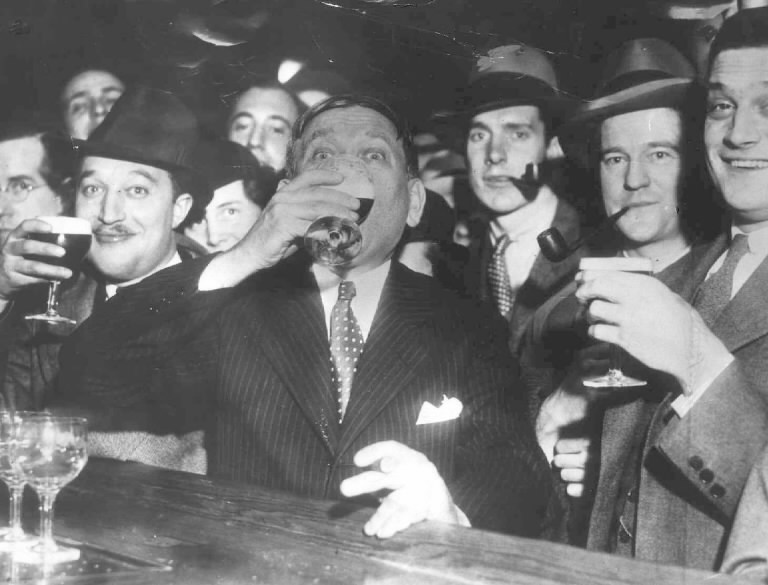
Kant, Mencken, and Locke Walk Into a Bar

And the politicians come out poorer:

Locke has first dibs:

In advocating tax dodging you forget the Social Contract. Is it decent for a citizen to evade his fair obligations to other citizens? Suppose everyone did as you recommend? What would become of the State?

That’s a problem for Kant to solve:

An interesting objection–if only because it proves that the corpse of the late Dr. Immanuel Kant is still dancing. But though it may thus dance, it is nevertheless indubitably dead—and with it the crazy doctrine of a universal moral law. There is, of course, no such thing. Nothing is ever moral for all men—at all events, not with equal horsepower—and by the same token nothing is ever immoral. It may be wrong for a rich man, with so much money that he doesn’t know what to do with it, to dodge his taxes, but it is certainly not wrong in the case of a man whose family must suffer if he pays them. An individual’s first and paramount duty is to himself and his second duty is to his children. Then, in order, come his duties to his wife, his parents, his friends. his brothers and sisters, his creditors, his nieces and nephews, his uncles and aunts, his cousins, his second cousins, his third cousins and so on. Finally come his duties to his enemies, his wife’s relatives and the community in general.

Mencken tries to get the last word:

If the Social Contract were really a free contract, made in cold blood by autonomous principals, then it would lay upon every man a plain duty to pay his taxes in full. But it is really nothing of the sort. On the contrary, it is a contract forced upon him without his leave, and one which he couldn’t evade if he would, and what is more, its terms are grossly unfair and extortionate. The State, in brief, is a professional swindler. Its incessant effort is to make every taxpayer pay $2 or $3 or even $10, for something worth but $1. Theoretically, it collects only enough money each year to pay the actual expenses of government—not a cent more. But actually it collects enough in addition to pay a handsome profit to thousands of men—men who are theoretically servants of the State, but in sober truth are private individuals engaged in the universal human business of getting as much money as possible for as little work as possible.

Certainly, it is no crime for a taxpayer to refuse to submit to this brigandage, and to oppose it with whatever means are at hand. The members of the so-called Government, it is obvious, enter the contest with all of the advantages on their side. Not only have they the police power of the State behind them, to enforce their extortionate demands, but they are also supported by the indifference and superstition of the vast majority of taxpayers, some or whom are too lazy or too ignorant to protect themselves, and others of whom think it would be wrong to try. Therefore, it is perfectly moral, in warring upon such unfair assaults, for the intelligent taxpayer to use devices which, in themselves, may be frowned upon by his private code. In brief, it is moral for him to meet brute force with guile, with chicanery, with downright mendacity—to lie like an anti-vivisectionist whenever the truth would expose him to indefensible and ruinous robbery.

Kant won’t let Mencken have it:

But hark! the corpse of old Immanuel rises to ask a question, to wit: What would happen if every taxpayer swore off most of his takes? How could the State exist? A silly question—like most of those asked (and answered) by that cadaver—for it must be obvious that the majority of taxpayers are so poisoned by moral ptomaines that they will never get the courage to save themselves. The average man is, and always will be, a born sucker. What with his stupidity on the one hand and his morality on the other, he is paralyzed from birth, and so he goes through life a chronic victim. The temptation to rob him is irresistible. Even his wife, his pastor and the policeman on the beat can’t keep their hands off him. He almost begs the world to take his money.

But Mencken persists:

But, supposing the question to be intelligible, it may be answered quickly. And here is the answer: If every taxpayer refused to pay more than, say, 50 per cent. of his taxes, the efficiency of government would not only suffer no diminution, but would probably be vastly augmented. Economy, which is now a mere abstraction, would then become a reality, a necessity. And in the business of cutting down expenses, thus suddenly made the chief concern of the State, nonessentials would go first. If, by any unyielding stupidity of the heads of the State, they didn’t go first—if essentials were thrown overboard to protect supernumeraries and grafters—then the people would rise against the Government and take things into their own hands, and for the first time in the history of the Republic the State would be run as honestly and as economically as the average coal yard, or newspaper, or building association.

The curse of our present scheme of government lies in the fact that it puts no limitation upon taxation. The men who run the State are able to rob us as they will. Naturally enough—since their one aim is to get all they can for themselves and their friends—they lay on all the traffic will bear. The present tax rate on realty in Baltimore, counting in direct and indirect taxes, is fully $3 on the $100—a rate wholly indecent and proposterous. In the absence of legislation reducing it to $1—which rate, if constantly maintained, would be ample to pay all the legitimate expenses of the government—it is the supreme duty of every self-respecting taxpayer to reduce his own bill himself, and in that endeavor he is justified in employing any means, however “immoral,” that may achieve the desired end. Every time he pays a cent more he hands over his good money to meet the costs of pediculine debauchery.

And Mencken wrote this before the states ratified the sixteenth amendment.