Two Kingdoms and Confessional Protestantism Look Pretty Good NOW

Stephen Prothero explains why evangelicals look even less reliable than they always have to those in confessional communions who take church governance seriously:

For decades, pundits have viewed white evangelicals as perhaps the most powerful voting block in American politics—the base of the Republican Party. Cohesive, well organized, and politically active, they crafted their identity around a shared belief in the Bible as the inspired word of God and a shared commitment to supplant the moral relativism of the insurgent 1960s cultural revolution with “traditional values.” It’s a bloc that’s persisted for decades. Today, roughly a quarter of all Americans identify as evangelicals, and white evangelicals make up the majority of Republican voters in many Southern primaries. In 2012, four out of five of them preferred Romney over Obama.

White evangelicals helped to send Ronald Reagan and George W. Bush to the White House, so courting them early and often has become perhaps the great art of running for office as a Republican. For decades, Republican politicians have gone on pilgrimage, Bible in hand, to Bob Jones University and Liberty University to court the Jesus vote. Even nominal churchgoers like Reagan have done what no European politician would ever do: pledge their prayerful allegiance to Christ. Along the way, they have repeatedly promised to restore school prayer or stop gay marriage or overturn Roe v. Wade.

What they have delivered, however, is defeat after defeat in the culture wars. Cultural conservatives failed to pass constitutional amendments on school prayer or abortion. They lost on Bill Clinton’s impeachment. They lost on pop culture, where movies and television shows today make the sort of entertainment decried by the Moral Majority look like It’s a Wonderful Life. And same-sex marriage is now the law of the land.

Scarred by these battles, some evangelicals have withdrawn from politics, pursuing what blogger Rod Dreher has referred to as the “Benedict Option,” which focuses on fostering local Christian communities rather than taking yet another whack at the lost cause of Christianizing the nation. Others have continued to try to bend the arc of American history toward biblical values. And some of them are now denouncing Trump as a wolf in sheep’s clothing—even as the larger flock appears poised to make him the Republican nominee.

The most outspoken of the no-Trumpers is Russell Moore, president of the Ethics and Religious Liberty Commission of the Southern Baptist Convention. Moore has repeatedly whacked Trump—a man whose “attitude toward women is that of a Bronze Age warlord”—as a reprobate unfit for the presidency. “The gospel is more important than politics,” he warns his fellow Bible believers. You can stump for Trump or be an evangelical, he says. But you cannot do both.

But Moore’s effort to keep evangelicalism pure, in a world of increasingly polluted politics, is a lost cause. Paradoxically, that effort has actually alienated him from the modern evangelical movement itself. Moore essentially admits this: in a recent op-ed, he announced that until voting habits change, he won’t even to refer to himself as an evangelical anymore. He lamented how so many of his coreligionists “have been too willing to look the other way when the word ‘evangelical’ has been co-opted by heretics and lunatics . . . as long as they were on the right side of the culture war.”

Prothero is right to see the inconsistency in evangelicalism.

What he misses is the inconsistency of academics who study evangelicals. For at least thirty years students of American religion have told us that the Assemblies of God and the Orthodox Presbyterian Church are — wait for it — evangelical. That’s like saying BMWs and Yugos are cars, as if the parts are interchangeable, as if they cost the same, as if the owners come from the same demographic, as if the same kinds of technology go into these automobiles.

In other words, not many of the smart people who study religion prepared Americans and even earthlings for what’s happening now. Some did.


The Bible Thumper in MmmmmeeeeeeEEEE

So it turns out that Tim Keller has recommended to his pastors in the Big Apple that they use a Canadian Roman Catholic philosopher as part of their preparation for reaching Manhattanites:

Dr. Keller of Redeemer Presbyterian has built his ministry very much on confronting the challenge. His books include “The Reason for God: Belief in an Age of Skepticism.” He periodically teaches an adult-ed class titled “Questioning Christianity” and sometimes holds question-and-answer sessions with attendees after Redeemer’s Sunday worship services.

His decision to open a branch of Redeemer on West 83rd Street in 2012 — the first new church built in the neighborhood in decades — was a brick-and-mortar way of meeting nonbelievers where they live. And he prepared his young ministers and staff members for the Upper West Side by studying together such books as the philosopher Charles Taylor’s “A Secular Age.”

Imagine how hard it would have been to plant a church in Ephesus. Imagine also if Paul had recommended Lucretius to Timothy:

Teach and urge these things. If anyone teaches a different doctrine and does not agree with the sound words of our Lord Jesus Christ and the teaching that accords with godliness, he is puffed up with conceit and understands nothing. He has an unhealthy craving for controversy and for quarrels about words, which produce envy, dissension, slander, evil suspicions, and constant friction among people who are depraved in mind and deprived of the truth, imagining that godliness is a means of gain. (1 Timothy 6:2-5 ESV)

As wise as 700-page tomes may be, sometimes you need to dance with the date that brought you. That goes double for Protestants who minister God’s word.

Locating Islam on the Map of the West

Sometimes Crux, though, registered a provocative take on Christianity in the West. In a piece on the Vatican’s diplomacy with Iran, Crux observed that Roman Catholicism is to the Christian world what Shia is to Islam:

Iranian writer Vali Nasr, author of the 2006 book “The Shia Revival,” argues that the divide between Sunni and Shia bears comparison to that between Protestants and Catholics, with Shia being the branch closer to Catholicism.

Among those points of contact are:

A strong emphasis on clerical authority

An approach to the Quran accenting both scripture and tradition

A deep mystical streak

Devotion to a holy family (in the case of Shiites, the blood relatives of Mohammad) and to saints (the Twelve Imams)

A theology of sacrifice and atonement through the death of Hussain, grandson of Mohammad and the first imam of Shia Islam

Belief in free will (as opposed to the Sunni doctrine of pre-destination)

Holy days, pilgrimages, and healing shrines

Intercessory prayer

Strongly emotional forms of popular devotion, especially the festival of Ashoura commemorating Hussain’s death

If only ISIS could find its inner Pope Francis:

Pope Francis apologized for Catholic mistreatment of other Christian traditions Monday, and called on Catholics to forgive followers of those traditions for any offenses of “today and in the past,” as a step toward deeper unity.

“As Bishop of Rome and Shepherd of the Catholic Church, I plead for mercy and forgiveness for non-evangelical behaviors by Catholics against Christians of other churches,” Francis said, referring to conduct not in keeping with the Gospel of Christ.

“We cannot undo what was done in the past, but we don’t want to allow the weight of past sins to pollute our relationships,” he said. “The mercy of God will renew our relations.”

Apologetics Catches Up with Journalism

The Boston Globe, perhaps to make up for its coverage of the Boston Archdiocese’s sex scandal, started Crux, a web-based publication devoted to reporting on all thing Roman Catholic. Now comes word that the Globe has pulled the plug on Crux.

Eighteen months is not a long time for any new venture to get firmly established. But the scariest part of the paper’s abandonment of Crux is that the vertical actually did get established, at least with readers. Allen said the section rallied roughly 1 million monthly readers, and those numbers “easily doubled” during big news events related to the pope, such as his recent trip to Mexico. Within the religion-journalism world, Crux quickly became a must-read, and Allen’s reporting is widely respected as some of the best-sourced in the business. The Globe could not have run a cleaner experiment in terms of testing market viability—as McGrory himself emphasized, the journalism was extremely high quality, but the dollars just weren’t there.

“It clearly is worrying for people who do this for a living to see a mainstream news organization like The Globe who launched a big project like this and then 18 months later backed out,” Allen said. Religion journalism is a notoriously tough sell for publishers, and the fact that the Globe would emphasize the editorial quality and importance of Crux while still choosing to shutter it suggests a fear of investing in topical coverage that isn’t directly appealing to advertisers. A spokesperson for the Globe maintained that the paper will continue its same level of coverage of the Church—this without Allen and the laid-off staffers, and with the editor of the vertical, Teresa Hanafin, being “redeployed [in] an exciting new position as an early morning writer for Bostonglobe.com,” as McGrory wrote in his memo. “I expect if The Globe had launched a vertical exclusively dedicated to coverage of the Patriots and Red Sox, we would not be here,” Allen said.

From the standpoint of religion journalism, the end of the Globe-supported version of Crux is a significant blow. A number of publications are solely dedicated to covering Catholicism, but the big differences between Crux and those organizations, Allen said, are independence and critical distance. Many outlets are expressly affiliated with the Church, and even independent publications such as The National Catholic Reporter have fairly close ties with Catholic institutions.

But I wonder. As much as I like to read Allen, he also massaged the papacy and the Vatican in much of what he wrote.

For instance, Allen applauded Pope Francis for showing a better way to be a culture warrior (read not to fight):

With regard to Italy’s Family Day, Francis used an address to judges of the main Vatican court on Friday to insist that “there can be no confusion between the family willed by God and any other type of union,” which was taken locally as a green light for resistance to the civil unions measure.

In the long run, a pope’s impact is measured not just by what he says or does, but also by which impulses in Catholicism rise or fall on his watch. Almost three years in, it does not seem that a drop-off in the Church’s commitment to what St. John Paul II called the “Gospel of Life” will be part of Francis’ legacy.

Perhaps the question is not whether Pope Francis will lead the Church away from its traditional positions, but whether he’s modeling a different way of making the argument.

It’s sometimes been said that the worst enemies of the anti-abortion movement can be the abortion opponents themselves, because they can seem shrill, angry, and judgmental, turning people off to the message because of the unattractiveness of the messengers.

Examples like this pile up.

Others have also wondered about Crux’s reporting on the church:

2016 March for Life. Allen writes “As to the March for Life, Francis didn’t offer any direct endorsement, but US leaders in the anti-abortion movement say they’re convinced he’s got their backs.” Sorry? This sentence says that Francis said and did nothing in regard to the March for Life, reporting only that some pro-lifers feel that the pope supports them. If it is anything, that sentence is not a claim about Francis, it’s a claim about pro-lifers.

Francis need not, of course, have attended the March for Life (no pope has); he need not have sent it a supportive message (though other popes have); he need not even mention the March for Life if he does not wish to. But, if he did not attend, did not greet, and did not even mention the March, how exactly is this series of non-actions evidence that the pope is ‘pioneering’ a new way to oppose abortion? If eisegesis is reading one’s opinions into another’s words, what is it when there literally are no words to read one’s opinions into, but a message is divined from them anyway? . . .

These remarks are not a criticism of Francis—there is no doubt whatsoever where he stands on the gravity of abortion and on the impossibility of ‘gay-marriage’ (even if his manner sometimes muffs his message) and he is not obligated to engage in any specific acts of opposition to either. But my remarks are a criticism of reporters who, with some proclivity these days, seem to offer the pope’s silence on various matters as evidence for what they think he means on various matters. May I suggest, instead, that silence is usually, pretty much, just silence.

Perhaps Allen was too deferential to his subjects and this undermined his relationship with the Globe. Or, perhaps the Globe wanted good public relations with the Boston Roman Catholic community and Crux failed.

The Problem with Universal Jurisdiction

Maureen Mullarky fears a resurgence of anti-Catholicism in response to Pope Francis’ discussions of economic and political matters:

As Francis’ insinuates himself into geopolitics and seeks to influence America’s immigration policies, Blanshard’s long-dormant question—Is this a foreign power?— begins to stir. Catholics themselves recoil from his will to inflate the episcopal jurisdiction of the Chair of Peter into an imperial mandate to determine secular agendas. Catholics and non-Catholics alike wince at the spectacle of Francis grinning delightedly with Iran’s President Rouhani. They shrink from his embrace of Raúl Castro, wonder at his regard for major figures of liberation theology, and resent his effort to undermine American authority over its own borders.

A solution to this would be a pastor who only ministers God’s word.

But the complications of universal jurisdiction become more complex. Imagine what a Roman pontiff will do with a Donald Trump presidency:

the Vatican is surely worried about the candidacy of Donald Trump. Vatican diplomats tend to be drawn from the same families, attend the same schools, and read the same magazines and newspapers, as their secular counterparts. It is no secret that the governments of Europe are appalled and frightened at the prospect of a Trump presidency, and that fright is surely shared at the Vatican. And, because opposition to immigrants is such a central part of Trump’s political rise, and concern for immigrants has been such a central focus of Pope Francis’ articulation of the Church’s social doctrine, it surely occurred to the Vatican leadership that an archbishop who has spent the last nine years in Mexico could be uniquely valuable at this point in time. As well, immigration is one issue on which the U.S. bishops are not only united, but on which they are totally in sync with the Vatican.

Again, the solution may be to worry less about worldly matters and attend more to the keys of the kingdom, the one not of this world.

But what if having all that power and having so much to say about the world’s affairs leads to pride?

Pope Francis, it seems to me, is described as a “humble” leader for a few reasons:

He rejects various aspects of papal ceremonial.
He moved out of the papal apartments.
He says things like bishops should “smell like their sheep.”
He emphasizes the “bishop of Rome” title.
He says he values decentralization and dialogue, has had a Synod and tweaked the Curial structures just a bit.

Perhaps.

But perhaps it is also fair to ask…

..knowing the role of the Pope, and understanding how easily misunderstood the role of the Pope is by most people today, is it a mark of humble leadership to allow your own words to become the dominant public face of Catholicism – on a daily basis?

So here’s the paradox. No, the contradiction: to brush away certain external expressions of papal authority while actually doubling down on the authority. Communicating in one way the supposed diminishing of the role while at the same time using the role to speak authoritatively to the entire world out of your own priorities on a daily basis.

If this isn’t clear, think of it this way: Change up the situation and imagine it happening in your workplace, your school or your parish with a new boss, principal or pastor.

What would you think then?

Here’s another comparison:

The Catholic Mass developed over time as an elaborate ritual in which the priest-celebrant was hidden behind a mysterious language, ceremony and vestments. It was, it was claimed, necessary to strip all of that so that the people could more directly encounter Christ. The end result is that all we have to look at now is the priest, and the “proper” celebration of Mass is completely dependent on his personal manner and how his style makes us feel.

One wonders if this is the best way to encourage humble leadership.

For all the reforms of Vatican II, the legacy of papal supremacy haunts even the least hierarchical of popes.

Even More Baffling than Evangelical Support for Trump

That would be Roman Catholic support for Trump. Korey Maas explains:

In heavily evangelical South Carolina, where a third of evangelicals voted for Trump, Monmouth had 42 percent of Catholics doing the same. Beaufort County, the only majority-Catholic county in the state, went to Trump with 30 percent of the Republican vote. Exit polls from much more Catholic Massachusetts placed Trump’s support from Catholics at an incredible 53 percent, four points higher than his support among evangelicals there.

Nor are state polls the only means by which to measure support for Trump. The comparative data national opinion polls have generated is equally revealing. Calculating the net favorability of candidates (by subtracting “very unfavorable” proportions from “very favorable”), the Barna Group finds Trump’s net favorability among evangelicals at -38. Not only was it twice as high among Catholics, at only -19, but Catholics viewed Trump more favorably than did any other religious category Barna denominated. When the same poll specifically asked respondents to choose a preferred candidate, evangelicals named Ted Cruz. Catholics? The unrepentant, pro-Planned Parenthood, adulterous strip club owner.

Trump’s favorability among Catholics is further confirmed by the Pew Research Center, which finds 54 percent of Catholic Republicans claiming he would, if elected, be a good or great president. Cruz (52 percent) and Rubio (51 percent) polled almost as well, but no candidate surpassed Trump. . . .

Still there’s more. Catholic support for Trump appears unhindered even after his recent and very public spat with the pope. Trump described as “disgraceful” Pope Francis’ assertion that “this man is not a Christian if he has said things like that.” The “things” in question were Trump’s proposed immigration policies, not least the building of a wall along the border with Mexico. Yet Monmouth pollster Patrick Murray notes that, contrary to the pope himself, a “whopping 76 percent of Catholic Republicans said they favored building a wall across the Mexican border and 61 percent specifically said they approved of Trump’s immigration plan.”

Partly prompting the bewilderment about evangelicals backing Trump has been the fact that prominent evangelical leaders—from Al Mohler and Russell Moore to James Dobson and Max Lucado—have publicly criticized him. None, though, is to evangelicalism what the pope is to Catholicism. For Catholic voters to defy the Democratic Party machine is remarkable enough; but to defy both party and pope? For Trump? For the unrepentant, pro-Planned Parenthood, adulterous strip club owner?

So much certainty, so much unity, so much authority, so little wisdom.

Depends On What You Mean by Religion

That is, if freedom of religion is under attack, don’t you have to define religion? Hunter Baker seems to have an expansive view of faith:

Big Business is a serious problem for religious liberty. Few people adequately understand that Big Business and Big Government go hand in hand. Corporations don’t like localism and various exemptions aimed at respecting rights of faith and conscience. They just want a monolith that they can understand and work with in a turnkey fashion. I have no interest in being the corporate candidate. The business executives of the world need to understand that when they undermine our liberty as people of faith, they are ultimately undermining liberty of all types, including economic liberty. I will fight for the soul of the party on this issue, just as many have bravely fought to keep the party pro-life.​

But what if religion is not everything I do, but certain practices and convictions I share with those in my communion? And here’s where I make a shameless self plug:

The difficulty here—and liberal society is by no means consistent about this—is that religion has shifted, in the American experience, from a corporate identity to a personal quest for meaning. Rather than faith being part of belonging to a religious institution and so including certain doctrinal convictions (belief in one God) and behavioral obligations (refraining from employment on Sunday), the courts’ understanding of religion leans heavily on notions of conscience (even Madison illustrates this). As such, religion is a deeply personal matter and the state should stay out of such private arenas.

Professor Bradley’s attempt to define religion very much follows in this trajectory, and she devotes several paragraphs to questions of conscience. The high stakes of individual conscience are not simply the products of the courts or the academy. Many Christians themselves also regard religion as a deeply personal matter. The revivals of the First Great Awakening during the 1740s promoted the importance of religious experience in ways that made church membership and corporate rites far less important for being truly religious. At the same time, the religious Right for the last three decades or so has taken a page from black, gay, and feminist political activists by arguing that faith is so comprehensive in its claims on the believer that he or she can never leave faith behind when entering the public square.

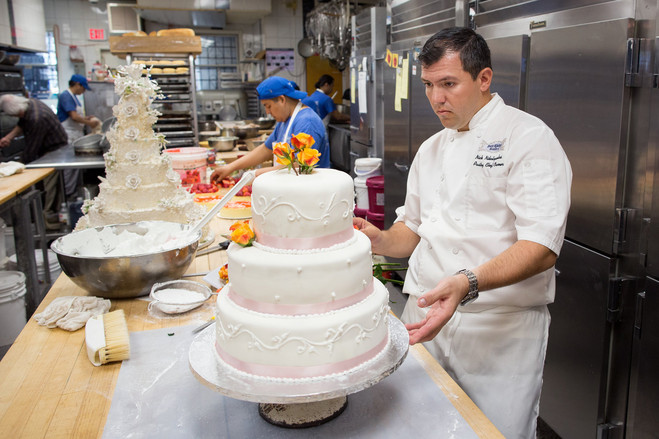
This notion of faith as deeply personal, rather than corporate or institutional, raises a great problem for liberal society. If faith informs everything I do, then paying taxes or baking a cake or sending my children to a public school may violate my conscience. And if a majority of the citizens have such sensitive consciences, conducting the affairs of government may become impossible. To be sure, the mainstream Progressive narrative of U.S. history includes instances where heroic stands for conscience based on faith—the Civil Rights movement—emerged as valuable contributions to a free society. By the same token, while many times religion coincided with the advancement of certain liberal goals, it has also motivated believers to protest existing norms and so has divided society along religious lines.

To illustrate the difference between religion personally conceived and corporately conceived, consider the membership vows required by my own denomination, the Orthodox Presbyterian Church. After being examined by a local congregation’s officers, a person needs to answer in the affirmative the following five questions:

Do you believe the Bible, consisting of the Old and New Testaments, to be the Word of God, and its doctrine of salvation to be the perfect and only true doctrine of salvation?
Do you believe in one living and true God, in whom eternally there are three distinct persons—God the Father, God the Son, and God the Holy Spirit—who are the same in being and equal in power and glory, and that Jesus Christ is God the Son, come in the flesh?
Do you confess that because of your sinfulness you abhor and humble yourself before God, that you repent of your sin, and that you trust for salvation not in yourself but in Jesus Christ alone?
Do you acknowledge Jesus Christ as your sovereign Lord, and do you promise that, in reliance on the grace of God, you will serve him with all that is in you, forsake the world, resist the devil, put to death your sinful deeds and desires, and lead a godly life?
Do you promise to participate faithfully in this church’s worship and service, to submit in the Lord to its government, and to heed its discipline, even in case you should be found delinquent in doctrine or life?

For this particular denomination, these are the chief parts of being a Christian. None of these questions pertains directly to business transactions, curricular matters, or medical procedures. Of course, the person who takes these vows might have firm convictions about how she should run her business, what school her children should attend, or what procedures hospitals should provide. Given that these other matters are incidental to requirements for institutional membership, our Orthodox Presbyterian should perhaps be less likely to invoke freedom of conscience if she ends up disagreeing with the decisions of local, state, or federal authorities about them. She might simply regard the friction that comes with a free and diverse society as the cost of doing business.

Part of the problem here may involve the old Burkean point about the value of mediating institutions. Those agencies of civil society that buffer persons from government can potentially pose challenges to the smooth operation of a state, but they also perform any number of services that add up to a society comprised of persons who place few, or at least fewer, demands on governmental agencies. Over the course of the 20th century, as the federal government’s power expanded, many institutions of civil society lost power even as the liberty of individuals increased. That process is no less evident in American religion, though the state’s hand in the loss of religious institutions’ power has not been as noticeable as it has in family life or educational or private associations.

Even so, the value of churches and synagogues in identifying and defining religion—as opposed to leaving it to individual conscience—may clear a path through the current debates that surround religious freedom and governmental protection of faith. If the state protected corporate expressions of religion more than personal ones, negotiating the interests of government and religion would likely be less litigious than it is now. To be sure, many Americans would object to legal or policy patterns that granted to pastors, priests, and rabbis greater authority in resolving matters of conscience. But without some mediating institution to inform and guide religious life, believers may be inclined to see religious liberty narrowly if only because they seemingly lack non-state institutions for resolving cases of conscience.

If the choice were between religious institutions or potentially outraged believers, the state might prefer to negotiate with churches and synagogues instead of with persons with easily offended consciences.

Communicants, Siblings, Friends, and Others

When you have a comprehensive view (w-w) of the world, when you think that your faith informs (or should) everything you do, hard are those distinctions that 2k so readily supplies, like — this is the church so Christian rules apply, this is not the church so freedom applies.

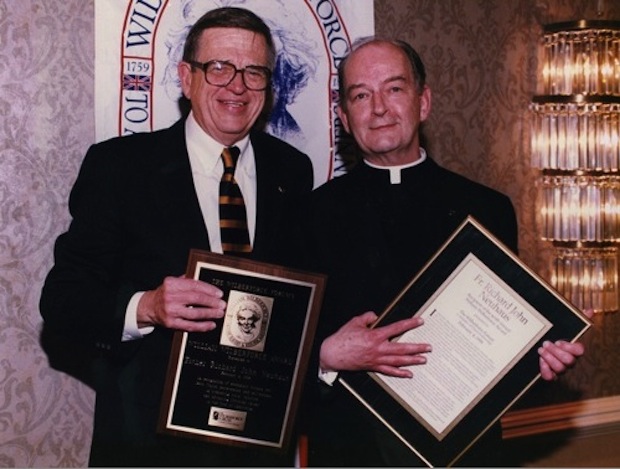
This problem is no less challenging for Roman Catholics than for neo-Calvinists since both are in the comprehensiveness business of showing how faith relates to EVERYthing a Christian does. Cathleen Kaveny took the comprehensiveness and catholicity of Rome in an arresting direction when she accused Richard John Neuhaus and the First Things crowd of partisanship and undermining the bonds of Roman Catholic unity:

Some conservative Catholics have blamed Pope Francis for sowing division among the members of the Body of Christ. But the charge is more properly lodged against one of the heroes of conservative Catholicism: the late Richard John Neuhaus.

It was Neuhaus, after all, who advanced the view that conservative Roman Catholics have more in common with orthodox Jews and Evangelical Protestants than they do with progressive members of their own religious communities. In fact, that view was an operational premise of First Things magazine under his leadership. This approach is based on a thoroughly distorted view of religious realities and commitments.

Does honoring Jesus as the Son of God count as a commonality? Like their conservative counterparts, progressive Roman Catholics acknowledge the divinity of Jesus Christ, and find the interpretive key to the Hebrew Bible in the New Testament. Orthodox Jews do not—indeed, must not—treat Jesus as the Messiah foretold in the Book of Isaiah. It would be blasphemous for them to do so.

Does living in the grace imparted by the sacraments count as a commonality? Both progressive and conservative Roman Catholics believe that God’s grace is channeled through the seven sacraments. Many Evangelical Protestants do not have the same view of grace or the sacraments; they often view the Eucharist as a memorial of a past event, not a way of being present with Christ here and now.

In trying to find common ground with evangelicals, then, Neuhaus was not truly Roman Catholic but actually Protestant:

Ultimately, Neuhaus’s focus was on nurturing these commonalities in the American political context—he was building a political movement. For a variety of partially overlapping reasons, conservative Roman Catholics, Evangelical Protestants, and orthodox Jews were inclined to vote Republican in political elections. Along with George Weigel and Robert George, Neuhaus coached Republican politicians in Catholic-speak to win national elections. . . . But here’s the irony of Neuhaus’s project: in treating theological belief and commitment as mere instruments of political will, Neuhaus’s view of religion resonated more with Feuerbach, Marx, and Leo Strauss than with the church fathers. In separating his own church of the politically pure from the hoi polloi of the body of Christ, his ecclesiology better reflects Protestant sectarianism than Roman Catholicism.

For the record, I too took issue with Evangelicals and Catholics Together for putting politics ahead of theology and for locating Christian unity not in ecclesiastical contexts but in parachurch groupings.

But Rusty Reno didn’t particularly care for Kaveny’s shot at Neuhaus. And so he tried to justify finding fellowship among religious people who were political liberals and then got mugged by reality:

many of the founding figures who played such a prominent role in First Things, as well as early readers like me, came to some shared conclusions. We became less and less impressed with the modern conceit that ours is a time of the unprecedented. We became more and more convinced that our traditions contained an inherited wisdom—a divine revelation—that provides greater insight into the human condition than any modern method, mentality, or revolution. Again, in the magazine’s early years, it was an exciting and invigorating to find others who were coming to the same post-liberal conclusions, whether they were Jewish, Catholic, or Protestant.

That is mainly true but does not represent the nature of Evangelicals and Catholics Together. Otherwise, ECT should have been called Evangelicals and Liberal Protestants and Roman Catholics and Mormons and Jews and Stanley Hauerwas Together. But at least Reno recognizes different layers of commonality:

When it comes to many things that are important to me, I have more in common with friends than with my brother. But my brother’s still my brother. It in no way compromises the truth of our fraternal bond for me to link arms with those with whom I have more in common politically, intellectually, or even theologically. The same goes for the sacramental bond that units us in Christ.

That is more or less a 2k point. But a 2ker would not call a magazine about religion and public life First Things. It’s not elegant but Penultimate Things or Proximate Things or Common Things would work better.

That left Michael Sean Winters to settle the debate and he did so (in neo-Calvinist-friendly ways) by taking issue with Reno’s separation of life into different spheres:

There may be “other dimensions” as Reno notes, but surely, for the Christian, those other dimensions need to be related to “what matters most.” It was this dualism between the Catholic faith and Catholic morality that stalked Neuhaus’s writings and continues to afflict the journal he founded. This dualism not only colored Neuhaus’ judgment, but it kept much of his otherwise enjoyable controversial writings at a fairly superficial level. It also led him to overlook the failings of his own team, both in politics and in religion: His defense of the Iraq War and of Fr. Maciel were stains on Neuhaus’ intellectual project that deserve attention and explanation by those who champion him.

. . . Reno, too, puts his sacramental beliefs in one silo, and his moralizing in another, and never the two need challenge each other. That is not how Catholics think when we are thinking at our best.

Apparently, 2k thinking is a no-no for Roman Catholics as much as it is for neo-Calvinists. Everything belongs to God. Or the papacy has universal jurisdiction (which is a topic for discussion in its own right). Which makes it hard to justify solidarity with people of a different faith.

But if you limit that solidarity to the church and find all sorts of room for cooperation outside the church, problem solved. Why does that solution seem so impious?

What’s Good for Interpreting the Constitution . . .

is good for interpreting the Bible:

Justice Scalia’s determination to take the law as it is earned him many enemies among our progressive elites. The criticism was and remains that Scalia’s textualism prevents the Constitution (and law more generally) from “growing” to meet the changing needs of the people and their government. Scalia was uncaring and a servant of injustice, we have been told, because he was not willing to use the law to do things its often privileged and corrupt authors did not intend it to do. The reprehensible hit piece sent out to faculty and students at Georgetown Law School by Professors Gary Peller and Louis Michael Seidman well illustrates the level of hatred aimed at Justice Scalia on account of his principled approach to law. It was wrong, according to these two professors, both of whom deny the legitimacy of our Constitution, for their law school to mark Justice Scalia’s passing with sympathy and respect because he was, on account of his judicial decisions, a bad man. The virtue progressive lawyers like Mr. Peller and Mr. Seidman demand of judges is quite clear. A good, virtuous judge is one who cares about the oppressed (defined by race, class, and gender), knows that law often is a tool of oppression, and sets himself the task of rewriting the law to make it a tool of justice by serving the interests of oppressed groups, as determined by progressive elites. In rejecting this hubristic model of the judge as savior, Justice Scalia earned endless calumnies, most especially the constant jibe that he was merely a tool of powerful bad actors.

The irony in these charges is thick, for it was precisely Justice Scalia’s refusal to go beyond the text of the Constitution or law that made his jurisprudence by far the most democratic and egalitarian, in the historical American sense, on the Supreme Court of his and perhaps any other time. The Supreme Court Justice who divines “emanations” from “penumbras” of various phrases and ideas in the Constitution and stitches them together into doctrines like the “right to privacy” is serving neither the law nor the people, but his own ideology.

Development of doctrine may allow interpreters of papal instruction to find coherence. But the similarities between development of dogma and a “living, breathing” Constitution are striking.

What Good Do Church Statements Do?

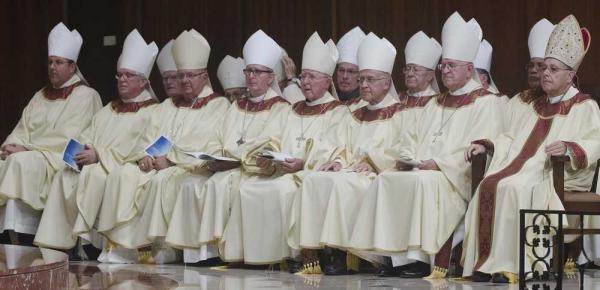
I noticed today at Cardinal Sean Patrick O’Malley’s blog a statement by the Massachusetts’s bishops on opiate abuse:

The abuse and misuse of opioids has become a national and local epidemic that has increasingly been felt in the Commonwealth of Massachusetts in recent years. On average, four people lose their lives each day in this state, due to illegal and legal drug overdoses. It is a disturbing trend that must be stopped. In this year of Divine Mercy in the Catholic Church, we, the four Bishops of Massachusetts join health care professionals, law enforcement, first responders, elected officials and countless others affected by this epidemic in calling for a comprehensive plan to address this growing crisis.

Given the scope of the problem, we feel some degree of urgency to find a solution to this public health and policy crisis that has reached dangerous levels. The lives negatively impacted by this disaster represent all economic, age, gender or racial categories. The impact is far reaching, leading to the eventual breakdown of families, friendships, neighborhoods and communities.

The solution to this tragic problem is not easy to define; it will be even more difficult to implement. The enormity of the problem, however, calls for an immediate and sweeping response. As that response is crafted, we must be mindful that on one hand, medical professionals must continue to care for their patients by prescribing these powerful drugs for long and short term pain management. On the other hand, overuse by the patient, along with access to vast quantities of opioids by unintended users, often leads to abuse, addiction and death. We exhort health care providers to demand improved education within their own professional groups about the appropriate indications, prescriptions and use of opioid medications.

We must offer help, support and comfort to those who have formed an addiction to prescription pain killers, as well as to those individuals who have formed an addiction to illegal drugs. While new legislation alone will not solve the opioid crisis in Massachusetts, it is a critical step that must be taken soon. We urge the Governor and the legislature to continue their work on this legislation and to provide the necessary resources, human and fiscal, to implement comprehensive education and treatment services to address and correct this ever-growing crisis.

We encourage our sisters and brothers who are suffering addiction or the addiction of loved ones to turn to their faith community for support, counsel and compassion, and we pray that those most affected will receive the physical, emotional and spiritual help that they need.

How different is something as unspecified as this call to action from the sorts of complaints that students have been bringing against university administrations, such as the Black Students Union at Johns Hopkins University?

1. We demand a public address to be held by the administration (including but not limited to President Ron Daniels, Provost Lieberman, Provost Shollenberger, and the Board of Trustees) to The Johns Hopkins community in which President Ron Daniels will announce an explicit plan of action detailing how the following demands will be instated.

2. We demand that The Johns Hopkins University creates and enforces mandatory cultural competency in the form of a semester long class requirement for undergraduate students as well as training for faculty and administration.

3. We demand that the Center for Africana Studies be recognized as a Department.

4. We demand an increase in the number of full-time Black faculty members, both in the Center for Africana Studies and throughout other departments within the institution. Moreover, we demands equal representation of self-identifying men, women, and non-binary Black individuals within these positions.

5. We call on The Johns Hopkins University Krieger School of Arts & Sciences to support the hiring of faculty concerned with the history, culture, and political position of peoples of African descent. Calls for diversifying faculty are important, but equally crucial is attracting faculty whose work creates a scholarly community dedicated to Africana studies.

6. We demand accountability for peers, faculty, and staff who target Black students both inside of and outside of the classroom. Attending to such situations must transition from a passive email sent to the student body, to an active stance taken against racial intolerance by the administration. Perpetrators that aim to make Black students uncomfortable or unsafe for racial reasons must complete additional diversity training and face impactful repercussions for their actions.

7. We demand a transparent five year plan from The Johns Hopkins University Office of Undergraduate Admissions regarding the welcoming of and retention of Black students. We demand black bodies be removed from diversity marketing campaigns until Hopkins addresses the low quality of life here that many Black students experience and the problems with retaining Black students all four undergraduate years and then takes the necessary steps to resolve them.

8. We demand more Black professors within the Women, Gender and Sexuality program to add a new dimension to the Department on intersectionality and inclusivity that is currently being neglected and ignored.

Actually, in most cases the students’ demands are much more specific than the bishops’ statement. If Massachusetts were a Roman Catholic state, the call by church officials to governmental officers to look into a certain matter might make sense. Or, if the bishops sent a memo to the administrators and public health officials at Roman Catholic hospitals and medical schools and asked for policy recommendations, they might have more to say even while not exactly ministering God’s word. But at the end of the day is a statement like this from the church anything more than an indication that bishops care? Didn’t church members already know that?