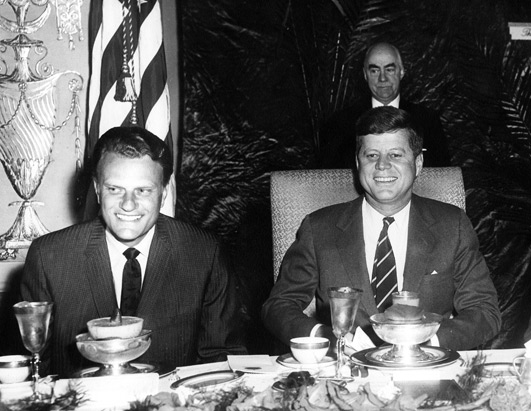
Mark Noll wrote The Scandal of the Evangelical Mind (1994) in the early 1990s but the recovery of a mind for evangelicals had been in the works for at least a couple decades. Prior to 1980, the study of American Protestantism followed the mainline denominations – from the colonists to the National Council of Churches. Of course, awakenings (18th century and 19th century) were part of the story but by 1950 Billy Graham’s revivals were clearly outside the Protestant mainstream.
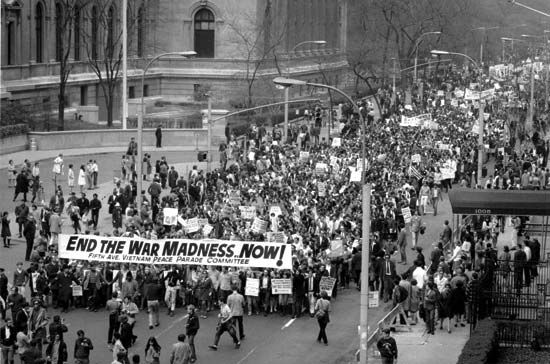
That consolidation of the mainline Protestant narrative took a beating during the 1960s when so much of the United States’ institutions changed thanks to race (Civil Rights), sex (feminism), and war (Vietnam). From 1965 to 1980, in the history of American religion, mainline Protestants needed to make way for the Black church, Roman Catholics, Jews, and other non-Christian groups. Bringing up the rear were evangelical Protestants who, with a burst of energy supplied by Jimmy Carter’s admission that he was a “born-again” Christian, the founding of the Moral Majority and the funneling of evangelicals into the Religious Right, evangelical history took off like a rocket (that actually worked).
At the forefront of this history was George Marsden whose 1980 book on fundamentalism (Fundamentalism and American Culture) coincidentally came out just when journalist, think tank scholars, and even college professors were trying to figure out where the Religious Right came from. Soon, Mark Noll and Nathan Hatch emerged as leading voices on American evangelicalism, though both worked more on the Founding and the early national period than the twentieth century. Noll’s Princeton and the Republic is still a model of historical scholarship. Hatch’s The Democratization of American Christianity was nominated for a Pulitzer Prize in history.
With those three scholars at the front of the parade, other evangelical historians began to weave evangelicalism into the history of the United States. Some historians thought the recovery of evangelicalism in the history of the United States went too far and tried to explain too much. Mainline Protestant historians began to push back and tried to recover the particular histories of the mainline denominations. But evangelicalism, which hardly anyone knew about in 1975 had by 1990 become one of the most widely researched topics in the study of American religious history.
Where did it lead? Did evangelicals themselves come to a clearer awareness of their American past? Did they come to appreciate the variety of figures that had the most influence in their day when almost no one was reading Jonathan Edwards – figures like Charles Finney, Hannah Whitehall Smith (The Christian’s Secret to a Happy Life), Dwight L. Moody, Charles Parham (of speaking in tongues fame, Josiah Strong (whose social gospel had Christian Nationalist over and undertones), J. Gresham Machen, William Jennings Bryan, Harold John Ockenga, Billy Graham, Carl Henry, or Kenneth Kantzer (who put Trinity Evangelical Divinity School on the map before it wasn’t anymore). Did they figure out the American story?
Recommendations for church libraries may not reveal everything, but they do suggest what parts of evangelical history interest today’s believers. Tim Challies compiled a 250-book list and in it were sections that dip into those figures and eras that indicate the eras, figures, and texts that deserve attention. Readers may not be surprised to learn that Puritans and other Protestants associated with awakenings are the most worthy of study.
In Challies’ “Classics” section – numbers 73 to 84 – were John Bunyan, Augustine (Confessions), C. S. Lewis twice (Mere Christianity and Screwtape Letters), J. C. Ryle twice (Holiness and Thoughts for Young Men), Richard Sibbes (Bruised Reed), Thomas Brooks (Precious Remedies Against Satan’s Devices), Jeremiah Burroughs (Rare Jewel of Christian Contentment), John Owen (Overcoming Sin and Temptation), John Calvin (A Little Book on the Christian Life), and Charles Spurgeon (All of Grace). By my reckoning, that list is heavily weighted to the sixteenth and seventeenth centuries. Those who want to hear from more contemporary authors are thanking the Lord for the writers with two initials in their name.
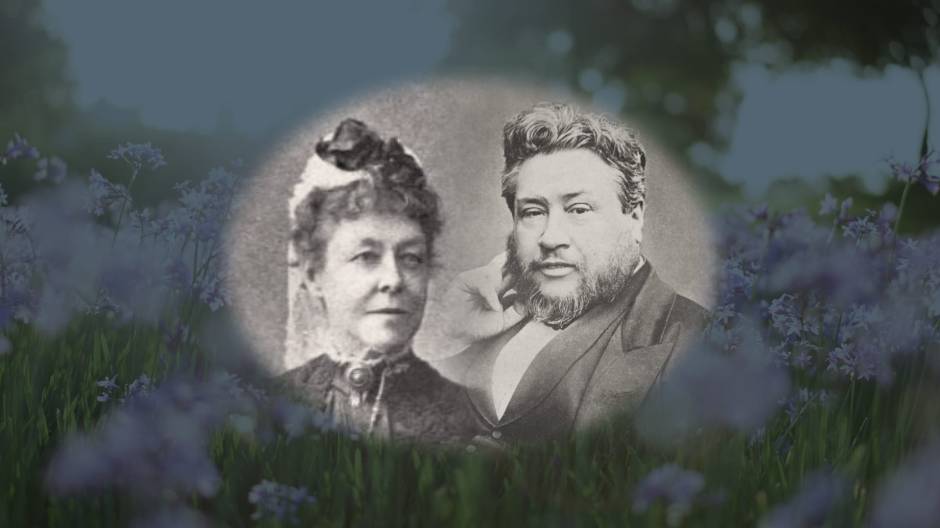
The section on biography (numbers 200 to 222) again leans heavily toward the Puritans, awakenings, and foreign missions (this does not include everyone): John Bunyan, John Calvin, Martin Luther, Jonathan Edwards, Charles Spurgeon, Spurgeon’s wife, Susie, George Whitefield, John Newton, William Tyndale, Hudson Taylor, Adoniram Judson, Amy Carmichael, Henry Martyn, John and Betty Stam, Corrie Ten Boom, Elisabeth Eliot, R. C. Sproul (the twentieth century seems to have cultivated the two-initial phenomenon), and Tim Keller.
The last section explicitly recommends texts on church history (numbers 224 to 230). Challies recommends four books that survey the past, two on the Reformation, one on the early church and the doctrine of Christ (Stephen Nichols, For Us and For Our Salvation), and one on the Puritans.
What these lists show is that the work of the evangelical historians, such as Noll, Marsden, and Hatch, did not make much of an impression on rank-and-file evangelicals, their pastors, or the seminaries that train those pastors. Evangelically motivated Protestants came into the POSTWAR!!! (World War II) period with regard for the Reformers, Puritans, and revivalists. The output of evangelical history by evangelical historians has not changed that historical proclivity.
George Marsden actually captured this tendency among evangelicals in his introduction to Evangelicalism and Modern America (1984)
For Marsden, evangelicalism broadly speaking meant that
many American evangelicals participate in a larger historical pattern, having substantial historical experiences in common. All reflect the sixteenth-century Reformation effort to get back to the pure Word of Scripture as the only ultimate authority and to confine salvation to a faith in Christ, unencumbered by presumptuous human authority. During the next centuries these emphases were renewed and modified in a variety of ways, often parallel or interconnected, by groups such as the Puritans, Pietists, Methodists, Baptists, nineteenth-century Restorationists, revivalists, black Christians, holiness groups, Pentecosals, and others.
In contrast, evangelicalism narrowly considered was
for many self-consciously, a community. In this respect evangelicalism is most like a denomination. It is a religious fellowship or coalition of which people feel a part. This sense of an informal evangelical community or coalition goes back to the international Pietism of the eighteenth century. . . . International revivalism, particularly that of Charles Finney in the first half of the century and Dwight L. Moody in the second, as well as efforts in world missions, especially helped foster a unity of purpose among evangelicals from a variety of denominations.
Of course, the history of evangelicals since 1800 has not been particularly inspirational or theologically stable. Even so, some might have expected the recovery of evangelical history by evangelical historians to have moved the favorite-period-of-church-history needle.