You Gotta Serve Somebody

Will it be the Bible or the magisterium? Massimo Faggioli worries that papal audacialists are turning into magisterial fundamentalists:

Now, four years into the pontificate of Francis, only the traditionalist wing still uses the hermeneutics of “continuity and reform” versus “discontinuity and rupture” in interpreting Vatican II; Francis has never used it. But the damage is done, and not just in Rome or in the Vatican. For while on one side there is the minimizing of the role of critical thinking about Church history, on the other there is the cultural turn to an emphasis on identity studies. Even at those universities where a historical-critical approach to Church institutions and magisterial texts persists, things tend to gravitate around “religious studies” instead of theology.

This poses a problem for history and religious studies as disciplines: trying to understand the past lives of Christians without a theological line of credit open toward the faith of those Christians limits the ability of the historians to understand the lives of those Christians. But it’s an even bigger problem for theology. The historical-critical method is facing some pushback today even when it comes to biblical studies, as seen recently in overblown reactions to what the new general of the Jesuits said about the interpretation of the Gospel a few weeks ago. Paradoxically it seems more acceptable in today’s Catholic Church to bring the historical-critical method to bear on Scripture than to documents of the magisterium; it’s become more acceptable to critique divinely inspired authors of Scripture than a pope writing on sexual morality. A creeping magisterial fundamentalism toward the encyclicals of this last century is part of the “biopolitical” problem of Catholicism. This is clearly visible in the debate over Amoris Laetitia. But it would also be worth exploring how naively and uncritically Leo XIII’s Rerum Novarum is sometimes used (or misused) in the U.S. church to make arguments about Catholic social teaching.

But with a reduced papacy, what separates Roman Catholicism from Anglicanism? And without the audacity of the papacy, how do you argue for Rome’s superiority to Geneva?

If Only Princeton Seminary had Read Sarah Posner on Tim Keller

They would have spared themselves a lot of grief (though one has to raise questions about Posner’s reasons for opining the way she does). Way back in 2009, the liberal journalist saw through the public relations success of New Calvinism’s favorite urban pastor/apologist:

Counterfeit Gods is an attractive, compact volume that a busy urbanite might tuck in his murse alongside his iPhone. It’s got a “there’s-an-app-for-that” sort of answer for the anxiety of contemporary city living. It’s a handy Jiminy Cricket to set you straight when you might be thinking of having sex with someone you’re not married to, contemplating a risky investment opportunity in the hopes of hitting the jackpot, or staying late at the office instead of having dinner with the family. While you’re at it, you might remind your spouse not to over-schedule the kids, because Jesus doesn’t like that, either.

Imagine: Wall Street casts its eyes upon Saint Timothy instead of Timothy Geithner! Dalton minus the uptight parents! A Manhattan nightlife free from casual sex! Coffee shops and bars purged of political ideology and discourse!

Such “counterfeit gods” ail the suburbs, too, but they are already saturated by big box mega-churches to counteract the false idols of Sam Walton-inspired strip malls and hyper-competitive Saturday morning soccer tournaments for six year-olds. Keller doesn’t bother with them. His schtick is to break into the untapped urban market for potential believers.

It’s hard to see, though, how New York’s wide swaths of spiritual diversity would take to Keller’s air of Christian superiority. For him, the Bible “comprises a single story, telling us how the human race got into its present condition, and how God through Jesus Christ has come and will come to put things right.” See? It’s that simple.

The focus isn’t eternal salvation, but rather remaking the cultural and political world. He offers a way of making sense of what Jerry Falwell-style fundamentalists might call the scourge of secular humanism. Instead of spiritual warfare against these satanic enemies, Keller asks his readers to confront them as biblical figures might have rejected false idols.

Thus, the hovering, over-protective mother might take lessons from Abraham: let God test your love for the children by letting them be free. The man who lusts for someone other than his wife might learn from Jacob’s misguided quest for the more beautiful Rachel. Jacob’s wife, Leah, provides cues for anyone looking for love and sex and transcendence in their romantic lives, rather than through God. The inevitable result of looking for everything in romantic love, Keller maintains, is “bitter disillusionment.”

One would think the Jacob-Leah story might yield some feminist deconstructions. But feminism, apparently, is also idolatry. Every such political ideology, Keller maintains, creates a sort of idolatry of its own. “An ideology,” he writes, “like an idol, is a limited, partial account of reality that is raised to the level of the final word on things.” Keller can’t see, somehow, that our body politic was designed to be secular, and that a religious prescription for its ills—itself portrayed as a final word—is one of the scourges that has, over the last four decades or so, led to the single-minded extremism he decries.

Keller is a favorite of flagship evangelical magazines like Christianity Today and World, but he receives glowing coverage in mainstream outlets as well. “While he hardly shrinks from difficult Christian truths,” observed a 2006 profile in the New York Times, “he sounds different from many of the shrill evangelical voices in the public sphere.” Keller, the piece went on, “shies away from the label evangelical, which is often used to describe theologically conservative Protestant Christians like him, because of the political and fundamentalist connotations that now come with it. He prefers the term orthodox instead, because he believes in the importance of personal conversion or being ‘born again,’ and the full authority of the Bible.”

This assertion—that biblical orthodoxy is somehow apolitical—was put to the test recently when Keller became one of over 100 original signatories to the Manhattan Declaration unveiled on November 20th. Billed as a statement of “religious conscience,” the Manhattan Declaration is something more, something unmistakably fundamentalist and quintessentially political, a regurgitation of the religious right’s assertion that sexual and gender rights are somehow a threat to good Christians’ religious liberty.

What Kind of Art Will American Greatness Leave Behind?

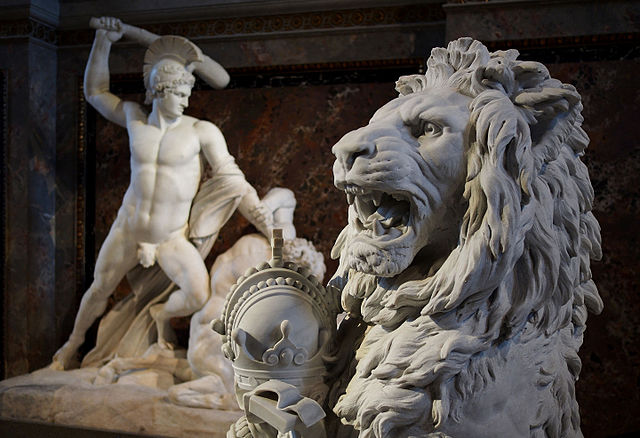
Talk about greatness after you watch The Great Museum, a documentary about The Kunsthistorisches Museum in Vienna:

The museum was the creation of Emperor Franz Joseph I of Austria-Hungary. Opened in 1891, the museum (a combination of two) holds the Habsburgs’ formidable art collection and makes many of the effects of the Holy Roman Emperor accessible to the general public. As much as the Protestant and republican in me wonders about that kind of wealth, concentration of power, and even accumulation of relics, it doesn’t take a high school diploma to understand that The Great Museum should be on my bucket list and should likely have been higher than the Louvre or London’s National Gallery. Say what you will about the Habsburgs, they acquired lots of stuff that people interested in history and art want to see.

(Although, I could not fight the impression that the art world, even as accessible as it is now compared to when it fenced in for only the aristocracy and friends to enjoy, has become one big commodity to be bought and sold. The documentary has one auction scene that took the missus and me back to The Red Violin, arguably the best historical treatment on film of the changing value of a musical instrument. Let’s just say, moderns know monetary value better than artistic achievement. I’ll confirm that by noticing that even though the Republic of Austria subsidizes the Great Museum with significant Euro’s, admission in 2013 to the Great Museum was almost 34 Euros — $37. Ouch!)

Meanwhile, back in the greatest nation on God’s green earth, the feds debate whether to cut funding for the National Endowment for the Arts. Stephen Limbaugh keeps it real when he warns about the NEA’s ideological outlook:

Be it the misuse of funds, waste, or deleterious governing philosophy, the National Endowment for the Arts has proven to be a recidivistic cultural butcher.

The NEA’s process for cultivating art is informed by standards set by universities and critical theorists. Those standards of what qualify as “acceptable” contemporary art seem to be any phenomena that offends an individual’s inherent aesthetic disposition. Preferential treatment is given to those works that 1) are able to evoke the most unpleasant reaction and 2) are created with the least amount of discernible purpose. This destructive artistic praxis is thoroughly documented, and there are few examples of NEA-backed art that does not adhere to it.

Be that as it may, so what? Even if the NEA retains their funding, will the artists they subsidize produce anything that will command attention in three centuries? Anything like Peter Brueghel’s Tower of Babel (the film’s closing image)? Can a top hat worn by President Wilson really compare with the Bratina of King Ladislaus IV of Poland?

I don’t think so.

Why I Wouldn’t Sign (if I were evangelical)

Would you sign this expression of empathy with people who are not citizens of the United States? Here is how it begins:

The United States has experienced a contentious election and post-election season marked by fear, polarization, and violence. The current political climate reveals longstanding national sins of racism, misogyny, nativism, and great economic disparity. As faculty members of Christian institutions of higher education who represent varying degrees of privilege and power (but who are not representing those institutions in this document), we, the undersigned, join our voices with those who are most vulnerable.

We affirm the dignity of every human being as created in God’s image (Gen. 1:27). We submit to the sovereignty of Christ who humbled himself unto death. As members of his body, we strive to consider others above ourselves (Phil. 2:2–8); to speak the truth in love (Eph. 4:15); to serve one another in humility (Matt. 20:26–28); and to honor and steward God’s good creation (Gen. 1:28). As one body, if one member suffers, all suffer (1 Cor. 12:26); if one weeps, the body laments with them (Rom. 12:15); even creation groans in bondage to decay (Rom. 8:19-23).

I wonder if these Christian faculty would be inclined to sign a man-made creed, say like the Westminster Confession or the Book of Concord? I thought evangelicals were supposed to be anti-creedal.

Oh well.

Here‘s why Chris Gehrz signed (even though he admits he hesitated):

Indeed, I think most Christians would affirm them, whatever their theological, political, or other differences. While hardly an exhaustive list of Christian beliefs, these convictions are nevertheless foundational to Christian faith, community, and mission. And, as the statement goes on to explain, such commitments need to be restated and acted upon in a time when there is “falsehood that seeks to undermine truth and any propaganda intended to obscure it,” when a “large portion of our communities is weeping” and there is genuine anxiety and fear among many of our neighbors.

A concern for truth is obviously important for academics, whatever their religious beliefs and doubts. Why our role as Christian educators would compel us to acknowledge “pain and woundedness” and then “entreat Christian communities to seek healing, reconciliation, and justice” may be less evident.

Here‘s why his colleague, Ray VanArragon (what a Dutch-American name), wouldn’t sign:

First, the petition is unduly expansive, covering a range of topics that include racism, economic disparity, the environment, and our lack of neighborliness. At the same time it does not offer any recommendations for concrete responsive action.

Second, it employs language that tends to put off people who live outside of academic circles. It speaks vaguely about “structural injustice” and “degrees of privilege and power,” without explaining what those terms mean. It slyly suggests that Christians ought to share the priorities of the political left – a suggestion reinforced by the fact that, expansive as it is, it makes no mention of abortion. Right-of-center Christians, even well-meaning ones, may be inclined to dismiss the petition as pompous, disingenuous, and one-sided.

Here’s why I’m not.

This statement:

The current political climate reveals longstanding national sins of racism, misogyny, nativism, and great economic disparity.

Does not go with this statement:

we affirm our deep resolve to pursue truth, to reason carefully, and to rely on sound evidence.

Outrage is easy. So is moral posturing. Thinking carefully so that you don’t exhibit moral overreach is a challenge. I’d have thought educators would know this.

Why Would Tim Keller Accept Princeton’s Invitation?

Owen Strachan is at a loss to explain why Princeton Seminary has decided to withdraw the Kuyper Prize from Tim Keller:

How odd that this fracas has happened at Princeton. Princeton Seminary is the ancestral home of Charles Hodge, B. B. Warfield, J. Gresham Machen. For a good long while, Princeton was one of the staunchest defenders of orthodoxy in all its gleaming brilliance, turning out thousands of Bible-loving, gospel-preaching pastors in days past. Princeton has long had ties to Abraham Kuyper, who delivered his famous “every square inch” Stone Lectures at the school in 1898. The Princeton-Kuyper-evangelical connection is alive and thriving at schools like Westminster Seminary, which produced sterling graduates like Harold John Ockenga.

Beyond thriving Westminster, as just one humble example, I will be teaching a July PhD seminar with my colleague John Mark Yeats at Midwestern Seminary on “Biblical Theology and Culture.” We will be discussing Kuyper’s Lectures on Calvinism. Baptists like me are thankful for our brother Abraham and his insights. Over 115 years later, the Kuyperian tree yet blooms, and on numerous campuses, the “Princeton Theology” yet lives.

But mark the irony: today, Kuyper could not receive his own award, as Michael Guyer noted. Nor could Hodge or Warfield or Machen—strong complementarians all—win such an honor, or perhaps even teach at the school they did so much to establish and strengthen.

Does Strachan not see the irony that Machen had to leave Princeton for Old Princeton’s theology to thrive? Doesn’t he understand the irony of the anti-Machen Princeton awarding (the pro-Machen?) Keller with a prize associated with the Calvinist orthodoxy of Abraham Kuyper?

Strachan interprets this episode as another indication of how deep the antithesis goes:

Don’t be confused: this world hates the gospel, hates God, and hates Christ (Romans 8:7). It calls faithful men and women of God to sit down and fall silent. But, in love for fellow sinners, we graciously refuse to do so. We will preach the whole counsel of God, including biblical sexual ethics, which glisten with divine craftmanship. We will rise to praise Tim Keller, a man who received a weighty charge from God, a man entrusted with much, a man who did not drop the baton.

That’s pretty arch for a defender of Keller since that world-hating-Christ meme has never been prominent in Keller’s we-can-redeeem-this approach to the big apple.

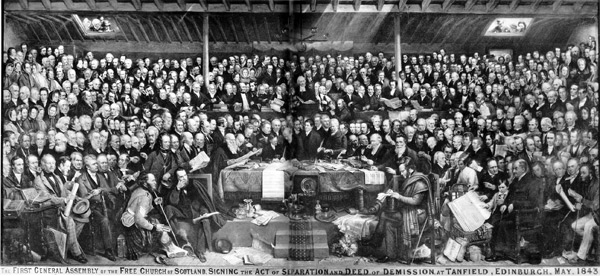
But if the world is all that, why would Keller recommend Gotham the way he does? And if the world hates Christ as Strachan says, why would Tim Keller not look at Princeton’s effort to award him as an indication that he may not have been as clear in his communication of Reformed orthodoxy? After all, when E. J. Young received an invitation merely to serve on Christianity Today‘s editorial board, he refused to identity institutionally with the church for whom Princeton Seminary is the theological flagship:

As you well know, Carl [Henry], there was in the Presbyterian Church a great controversy over modernism. That controversy was carried on by Dr. Machen in part. There were many who supported Dr. Machen in his opposition to unbelief. On the other hand there were many who did not support him. When matters came to a showdown and Dr. Machen was put from the church there were those who decided it would be better to remain within and to fight from within. . . . Since that time I have watched eagerly to see what would be done by those who remained in the church. They have done absolutely nothing. Not one voice has been raised so far as I know to get the church to acknowledge its error in 1936 and to invite back into its fold those who felt constrained to leave, or those who were put out of the church. . . . What has greatly troubled me has been the complete silence of the ministers in the church. They simply have not lived up to their ordination vows.

If Keller had been holding out for confessional Presbyterianism, Princeton never would have paid him attention. And if Princeton Seminary had ever checked Keller’s curriculum vitae, they’d have seen Westminster Seminary, the school founded by Machen, and wondered, “what were we thinking?”

If only the New Calvinists paid a little more attention to Old Calvinists, they might know that Calvinism is never sexy. As Mencken said for many mainstream media members, “Calvinism is but little removed in the cabinet of horrors from Cannibalism.” But instead, New Calvinists listened to Keller and thought, if he can make it in New York City, so can we.

Where Reformed Protestants and New Calvinists Part Ways

New Calvinists believe:

Behind every great man there’s a great woman. Like most maxims, it is generally true, even if not universally true.

Reformed Protestants know (thanks to Stan Evans):

Behind every great man is a surprised mother-in-law.

Postscript: Conscience, a mother-in-law who never leaves. (H. L. Mencken)

It Takes a Populist to Know a Populist

Boniface notices another wrinkle of papal audacity:

The poor of the world oppressed by corrupt elites. The downtrodden encouraged to rise up and take their destiny into their own hands. The great leader, the pope, urging them on and joining his voices with those of the oppressed. A call to translate the popular emotional anxiety and social angst of the poor into community action. Is this language not dripping with populist rhetoric? And this speech is just one example; these types of statements from Pope Francis are legion.

The point is not whether Pope Francis is correct or not. In much of this, he certainly is. The poor of Latin America are oppressed. There is an elitist global cabal that would like nothing more than the economic enslavement of the downtrodden. That’s not the issue. The issue is that Pope Francis’ appeal is absolutely, definitively, without a doubt populist in nature.

Pope Francis is fundamentally a populist. It’s so intrinsic to his worldview he doesn’t even realize it. He recognizes demagoguery and populist appeals in leaders whose agenda is in conflict with his own, but fails to identify populist rhetoric in his own appeals. Steeped in the neo-Marxian populism of Latin America, his brand of Argentine populism does not seem like populism to him – to him it’s just, well, it’s just the way leaders speak.

Again, this is not a critique of the pope’s ideas or his initiatives. But it does demonstrate that his assertion that “populism” is essentially evil is untenable, for he himself is a populist, and populism cannot be “evil” when used by one’s opponents but Christlike when done by the pope – and Pope Francis is the world’s most prominent populist.

1776 and 1861

Brexit is more or less hardwired into the American outlook. But somehow we fought a war that cost close to 700,000 lives to preserve not a federation but a union, not a republic but a nation. That’s what makes America great (many suppose).

But H. L. Mencken thought otherwise. He saw that the Brexit of 1776 also implied the Secexit of 1861:

But let us not forget that it is oratory, not logic; beauty, not sense. Think of the argument in it! Put it into the cold words of everyday! The doctrine is simply this: that the Union soldiers who died at Gettysburg sacrificed their lives to the cause of self-determination — “that government of the people, by the people, for the people,” should not perish from the earth. It is difficult to imagine anything more untrue. The Union soldiers in that battle actually fought against self-determination; it was the Confederates who fought for the right of their people to govern themselves. What was the practical effect of the battle of Gettysburg? What else than the destruction of the old sovereignty of the States, i. e., of the people of the States? The Confederates went into battle an absolutely free people; they came out with their freedom subject to the supervision and vote of the rest of the country—and for nearly twenty years that vote was so effective that they enjoyed scarcely any freedom at all. Am I the first American to note the fundamental nonsensicality of the Gettysburg address? If so, I plead my aesthetic joy in it in amelioration of the sacrilege. H. L. Mencken, “Five Men at Random” 1922

Sacrilege? If you think the U.S. is holy. If it’s just one more liberal society, on the order of Canada or Switzerland, you might agree with Mencken.