Why Not Address President Obama?

I’m with Chris Bodenner that Brandon Victor Dixon’s remarks to Vice President-elect Mike Pence after a performance of Hamilton was not all that disrespectful or edgy. Here’s part of the speech:

We have a message for you, sir. We hope that you will hear us out. And I encourage everybody to pull out your phones and tweet and post because this message needs to be spread far and wide, OK?

Vice President-elect Pence, we welcome you and we truly thank you for joining us here at Hamilton: An American Musical, we really do. We, sir, we are the diverse America who are alarmed and anxious that your new administration will not protect us — our planet, our children, our parents — or defend us and uphold our inalienable rights, sir. But we truly hope that this show has inspired you to uphold our American values and to work on behalf of all of us. All of us.

What does President Obama not need to hear in this advice? Should he have been governing in a way to keep BLM protests from happening, opponents of gay marriage from feeling marginalized, and Americans with pre-Affordable Care Act health insurance from having to lose benefits in their existing their plans? Of course, a president has to make choices and not all of the electorate will be happy. But why do the elites in the U.S. — Democrats in D.C., Hollywood, university faculty, and mainstream journalists — think that partisanship in politics only happens when Republicans get elected?

And I wonder what Dixon makes of President Obama acting in a statesmanlike manner in meeting and greeting President-elect Trump? Was the President properly empathizing with those Americans who not only refused to vote for Trump but view his supporters as deplorable?

Benjamin Corey Finds His Inner Thomas Jefferson

John Piper has his problems, but Corey’s objections to the retired pastor’s calculation of sin and punishment show he’s only been reading the Jefferson Bible, the one that cut out all the troubling bits:

Piper reminds me of something I’ve long believed: the Calvinist doctrine of God is far closer to Islam than Christianity. In a Christian doctrine of God, God is restrained in what he can do– for example, he cannot lie, he cannot deny himself, etc. However, Islamic theology, it is believed Allah can do “whatever he wills” which is the same position of Calvinism– God can do whatever God wants, and we have no right to question the morality of any of these actions.

But this isn’t the traditional position of Christianity, and this is where Calvinism steps outside of our tradition and becomes closer to other religions.

Piper’s answer, as he has done on other questions such as genocide of entire people groups, reveals a fundamental flaw in Calvinism: that an all-loving God perfectly revealed in the life and character of Jesus can be the author of acts that would be unspeakably evil if done by any other agent who possessed morality and a conscience.

Obviously, Corey has not read the Old Testament:

And Samuel said to Saul, “The LORD sent me to anoint you king over his people Israel; now therefore listen to the words of the LORD. Thus says the LORD of hosts, ‘I have noted what Amalek did to Israel in opposing them on the way when they came up out of Egypt. Now go and strike Amalek and devote to destruction all that they have. Do not spare them, but kill both man and woman, child and infant, ox and sheep, camel and donkey.’” (1 Samuel 15:1-3 ESV)

But maybe Corey is one of those New Testament Christians. So I wonder what he thinks when he reads Jesus saying this?

“Behold, I am sending you out as sheep in the midst of wolves, so be wise as serpents and innocent as doves. Beware of men, for they will deliver you over to courts and flog you in their synagogues, and you will be dragged before governors and kings for my sake, to bear witness before them and the Gentiles. When they deliver you over, do not be anxious how you are to speak or what you are to say, for what you are to say will be given to you in that hour. For it is not you who speak, but the Spirit of your Father speaking through you. Brother will deliver brother over to death, and the father his child, and children will rise against parents and have them put to death, and you will be hated by all for my name’s sake. But the one who endures to the end will be saved. . . .

“Do not think that I have come to bring peace to the earth. I have not come to bring peace, but a sword. For I have come to set a man against his father, and a daughter against her mother, and a daughter-in-law against her mother-in-law. And a person’s enemies will be those of his own household. Whoever loves father or mother more than me is not worthy of me, and whoever loves son or daughter more than me is not worthy of me. And whoever does not take his cross and follow me is not worthy of me. Whoever finds his life will lose it, and whoever loses his life for my sake will find it. (Matthew 10:16-22, 34-39 ESV)

Or does Corey think Jesus was John the Baptist for Mr. Rogers?

Rod Dreher noted recently the strange world of evangelical female celebrity and piety. In light Glennon Doyle Melton’s (whoever she is) decision to leave her husband of 14 years for a female soccer star, Dreher wondered what goes on among born-again women. According to the Chicago Tribune, Melton told her followers:

“My loves, here is the good news,” she writes. “You are allowed to think and feel WHATEVER YOU NEED OR WANT TO FEEL! … That is what I want to model now, because that is what I want for YOU: I want you to grow so comfortable in your own being, your own skin, your own knowing that you become more interested in your own joy and freedom and integrity than in what others think about you. That you remember that you only live once, that this is not a dress rehearsal and so you must BE who you are.”

To which Dreher responded:

You are allowed to think and feel WHATEVER YOU NEED OR WANT TO FEEL! What theological codswallop. And yet, this kind of thing is celebrated by a lot of younger Evangelicals. Not even an attempt to base this in theological convictions; only self-worship.

Is this a female thing, this approach to mass Christianity, or is it general to our Christian pop culture today? Asking seriously.

Rod, read Corey. It’s an evangelical thing. Evangelicalism: blow it up.

The Parachurch with the Mind of a Superpower

In 1922 G. K. Chesterton said of the United States it was a “nation with the soul of a church.” He was referring in part to the difficulty he had finding an adult beverage, Prohibition being the law of the land thanks to the support of both modernist and fundamentalist Protestants.

Seldom noticed is that American evangelicals think they are the center of world Christianity. Consider this report on what the recent presidential election says about evangelicalism:

Russell Moore, president of the Ethics and Religious Liberty Commission, of the Southern Baptist Convention, said the campaign reminded him of the Vietnam War in the way it divided families; he’d heard from spouses who couldn’t discuss it, or watch the news together anymore.

Not everyone sees a major split, though.

“There’s always been a minority of evangelicals that are more liberal in their political leanings,” said Liberty University President Jerry Falwell Jr., one of Trump’s earliest and most vocal evangelical supporters, “and it’ll always be that way, but it’s less divided than I’ve seen it in a long time.”

But Moore makes a distinction even among those who voted for Trump: There were “reluctant Trumpers,” who regarded the candidate as the lesser of two evils, believing he was more likely to appoint a Supreme Court justice who was pro-life than his opponent, Hillary Clinton.

Then there were “the people who have actively sought to normalize” Trump as the candidate of choice.

“For me, I think the bigger issue is with the political activist religious right establishment that, in many cases,actually waved away major moral problems,” he said, citing the Access Hollywood tape, in which the now president-elect talked about grabbing women by their genitals and forcibly kissing them.

Moore, who has been a vocal opponent of Trump, said that among those evangelicals who were “Never Trump,” or “reluctant Trump,” reconciliation is already underway. But he said those evangelical leaders who have “repurposed the gospel itself in order to defend a political candidate” reveal a problem bigger than a political election.

Falwell sees the divide in evangelicalism as being between its leaders.

“The evangelical rank and file closed in behind Donald Trump long before most of the leaders did,” he said, because those in the pews were “tired of business as usual” and excited by Trump’s choice of Mike Pence as running mate.

For the Rev. Sammy Rodriguez, president of the National Hispanic Christian Leadership Conference, the schism is between white evangelicals and African-American born-again Christians, and, as a result of the election it “just grew larger.”

The story links to reactions from historians (and other academics) who study evangelicalism and so you would think might be aware of different ways of evaluating born-again Protestantism, such as global Christianity:

History professor John Fea; authors Preston Yancey, D.L. Mayfield, and Skye Jethani; and author and activist Shane Claiborne all have distanced themselves from, if not abandoned, the label. While still identifying as evangelical, former Christianity Today editor Katelyn Beaty wrote she “can’t defend my people. I barely recognize them.”

Earlier this week, Fuller Theological Seminary issued a statement that was nothing short of remarkable for the influential evangelical institution.

“To whatever degree, and in whatever ways, Fuller Theological Seminary has contributed, or currently contributes, to the shame and abuse now associated with the word evangelical,” said the statement, signed by president Mark Labberton and president emeritus Richard Mouw, “we call ourselves, our board of trustees, our faculty, our staff, our students, our alumni, and our friends to repentance and transformation.”

Ever since Philip Jenkins wrote The Next Christendom, global Christianity has become “hot.” Scholars have been amazed at the growth of evangelicalism in Africa, South and Central America, and Asia for starters. Jenkins even argued that by 2050 Christianity in the global North (Europe and North America) would be in the rear view mirror of the churches in the global South.

But when it comes to politics, American evangelicals put the born-again in evangelical Protestantism. What do Canadian, British, Swiss, Nigerian, Australian, Costa Rican evangelicals think about Donald Trump? Did the election divide evangelicals outside the United States? I surely doubt it. But no one really knows because American journalists only follow the cues of American evangelicals.

So why do American evangelicals think that their religious identity hangs in the balance thanks to what happens in the nation’s electoral politics? (The short answer is that U.S. evangelicals, like their mainline predecessors are Christian nationalists and have trouble separating national from religious identity.) Especially when the evangelical academy is supposed to aware of the non-American church among the people of color around the world (and celebrates those Christians when the campaign season is over), all of a sudden the future of evangelicalism depends on white Protestants’ votes in U.S. elections? It’s hard to think of a faith more parochial, nationalist, and introverted.

And yet, somehow the people who voted for Trump are bigoted, intolerant, and mean nationalists.

Evangelicals need to get out more. They need to go to an Orthodox Presbyterian Church General Assembly and hear reports from fraternal delegates who minister in churches in places like Australia, New Zealand, Canada, Asia, Scotland, and Switzerland. If they did, maybe their understanding of the church would be more like the one that prevails in the OPC — a communion that transcends national boundaries but ministers in a low key way (if you aren’t all that impressed with word and sacrament) chiefly in a particular nation. As near as I can reckon, neither SCOTUS’s ruling on gay marriage nor the 2016 presidential election is threatening to divide our little, off the radar, church.

That proves once again the Old Life maxim: the higher your estimate of the nation, the weaker your ecclesiology (or vice versa).

With Friends Like These

Matt Tuininga qualifies and then insinuates:

we cannot simply take Calvin’s thought and apply it to our own time without substantial reflection. Calvin assumed the existence of Christendom. We inhabit a pluralistic society increasingly devoted to secular liberalism. There are self-proclaimed two kingdoms advocates today who would claim the two kingdoms distinction calls us to keep religion and politics entirely separate, as if they are hermetically sealed realms that have nothing to do with each other. Yet such is clearly a distortion of Calvin’s thought, which is decisively rooted in the New Testament’s rich distinction between the present age and the age to come.

Does he have Machen in mind?

In the second place, you cannot expect from a true Christian church any official pronouncements upon the political or social questions of the day, and you cannot expect cooperation with the state in anything involving the use of force. Important are the functions of the police, and members of the church, either individually or in such special associations as they may choose to form, should aid the police in every lawful way in the exercise of those functions. But the function of the church in its corporate capacity is of an entirely different kind. Its weapons against evil are spiritual, not carnal; and by becoming a political lobby, through the advocacy of political measures whether good or bad, the church is turning aside from its proper mission. . . .

To advance the conversation, why not comment on whether the deaconate should do medicine as Calvin recommended:

The fourth order of ecclesiastical government, namely, the deacons

There have always been two kinds of these in the early Church. One has to receive, distribute and care for the goods of the poor (i.e. daily alms as well as possessions, rents and pensions); the other has to tend and look after the sick and administer the allowances to the poor as is customary. [In order to avoid confusion], since we have officials and hospital staff, [one of the four officials of the said hospital should be responsible for the whole of its property and revenues and he should have an adequate salary in order to do his work properly.]

Concerning the hospital

Care should be taken to see that the general hospital is properly maintained. This applies to the sick, to old people no longer able to work, to widows, orphans, children and other poor people. These are to be kept apart and separate from others and to form their own community.

Care for the poor who are scattered throughout the city shall be the responsibility of the officials. In addition to the hospital for those visiting the city, which is to be kept up, separate arrangements are to be made for those who need special treatment. To this end a room must be set apart to act as a reception room for those that are sent there by the officials..

Further, both for the poor people in the hospital and for those in the city who have no means, there must be a good physician and surgeon provided at the city’s expense…

As for the plague hospital, it must be kept entirely separate.

Instead of looking at the theory (theology), why not look at the circumstances and sciences that have differentiated a host of life’s affairs so that the church and religion is one among many spheres of life? But Lordship of Christ folks think, like Gregory VII during the Investiture Controversy, that the direct pipeline of Christianity to God trumps most spheres so that Christians have authority in medicine, biology, history, and dog-catching by virtue of — what? — faith.

2kers want answers. Simply repeating inspiring calls to engage the world doesn’t give them.

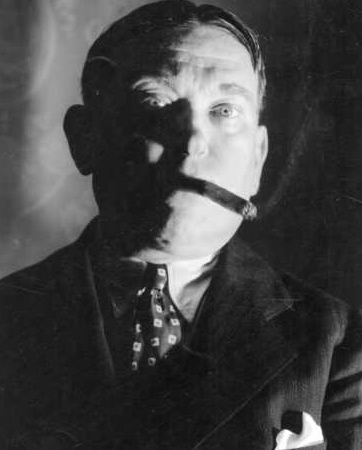
All About M(mmm)e(eeeeEEEEE)ncken

My editor made me do this.

Tonight I’ll be delivering a book talk on Damning Words: The Life and Religious Times of H. L. Mencken. The event starts at 7:30 and takes place in the Dow Center at Hillsdale College. Hillsdale County has an airport. If you plan to fly in for the event, call (517) 797-4833.

Here is how the book begins:

H. L. Mencken remains a man who needs no introduction to any American familiar with literary and social criticism during the first half of the twentieth century. A reporter for the Baltimore Sun, who covered most of the national political conventions for four decades, along with the Scopes Trial, and prize boxing matches to boot, Mencken became a literary critic for The Smart Set, eventually took over that magazine, and then went on to found another literary publication, The American Mercury. As editor, Mencken published the early work of Sherwood Anderson, Willa Cather, William Faulkner, F. Scott Fitzgerald, James Joyce, Eugene O’Neill, and Ezra Pound. Many of those same authors revered Mencken. Even Ernest Hemingway, a novelist for whom Mencken had little regard, paid deference to The American Mercury’s editor in The Sun Also Rises. To explain Robert Cohn’s inability to enjoy Hemingway blamed Mencken, who “hates Paris, I believe. So many young men get their likes and dislikes from Mencken.”

The author of more than fifty books – the first to write in English on George Bernard Shaw and on Friedrich Nietzsche – his topics ranged as wide as women and European night life. Mencken was also an amateur philologist whose American Language cataloged sometimes brilliantly the differences between British and American English. That overview hardly does justice to Mencken’s output and influence. According to the literary critic, Alfred Kazin, “If Mencken had never lived, it would have taken a whole army of assorted philosophers, monologists, editors, and patrons of the new writing to make up for him.” According to Edmund Wilson, long-time critic for The New Yorker and the New Republic, Mencken was “without question, since Poe, our greatest practicing literary journalist.” According to Terry Teachout, another critic and one of Mencken’s biographers, Wilson’s acknowledgment was “[i]f anything an understatement.”

Aside from the sheer volume of his writing, Mencken was remarkable for a prose style rarely executed before or since. In a review of one of his books, Walter Lippmann acknowledged that Mencken’s reputation for calling average people “cockroaches and lice” lapsed into “unjust tirades.” Even so, Mencken had attracted a large readership because “this Holy Terror from Baltimore is splendidly and exultantly and contagiously alive. He calls you a swine, and an imbecile, and he increases your will to live.” Joseph Wood Krutch, a writer for The Nation, wrote soon after Mencken’s death that the Baltimorean was the best prose writer in twentieth-century America, a man whose gift “was inimitable” and who used “as a genuine instrument of expression a vocabulary and a rhythm which in other hands stubbornly refused to yield anything but vulgarity.” More recently, Joseph Epstein wrote that much of Mencken’s appeal owed to his comedy and uplift. “Some writers . . . do lift one out of the gloom, and away from the valley of small and large woes,” Epstein explained. Mencken was one of them and one of the ways he did that, Epstein added, was by having “an appreciation for the reality of things.” “His animus against the [idealists] of the world is that, with their concepts and notions, they flattened out reality – and, in the act of doing so, not only got things wrong but made them less interesting than they are.” The collision of Mencken’s candor and Americans’ idealism was always riveting. To capture some of that amusement this book violates rules against learned in graduate school. This book includes many block quotations, the crutch of the young historian. The hope is that readers unfamiliar with Mencken will appreciate the appeal of his prose. Another reason for violating historical protocol is to stave off the boredom that afflicts authors when reading and proofing manuscripts. At least Mencken will keep this reader awake.

Selah.

Localism is Great (beats pretty good) as Long as Charles Taylor is Your Neighbor

Joshua Rothman has a thoughtful piece on Charles Taylor and ends on a surprisingly hopeful note considering the recent election and how fly-over country voted:

[Taylor] is in favor of localism and “subsidiarity”—the principle, cited by Alexis de Tocqueville and originating in Catholicism, that problems should be solved by people who are nearby. Perhaps, instead of questing for political meaning on Facebook and YouTube, we could begin finding it in projects located near to us. By that means, we could get a grip on our political selves, and be less inclined toward nihilism on the national scale. (It would help if there were less gerrymandering and money in politics, too.)

One imagines what this sort of rooted, meaningful democracy might look like. A political life centered on local schools, town governments, voluntary associations, and churches; a house in the woods with the television turned off. Inside, family members aren’t glued to their phones. They talk, over dinner, about politics, history, and faith, about national movements and local ones; they feel, all the time, that they’re doing something. It’s a pastoral vision, miles away from the media-driven election we’ve just concluded. But it’s not a fantasy.

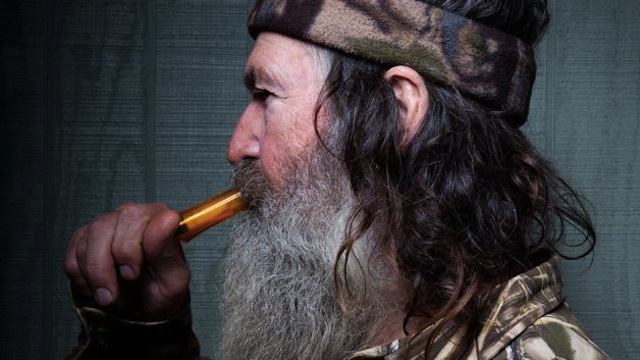
But what about Phil Robertson’s community? Not even the Gospel Allies are willing to countenance those parts of America:

That “cultural curtain” prevents Robertson from seeing the reality of the Jim Crow era, allowing him to look back in wistful fondness. Yet I think there is also a personal element that keeps the former “white trash” farmhand from seeing the segregation of his youth as it truly was.

Robertson makes it clear that he didn’t come to Christ until the late 1970s. During the 1960s he was abusing drugs and alcohol, cheating on his wife, and hiding out in the woods to prevent being arrested by the authorities. His former fellow farmworkers might look on the 1960s as an era when African Americans were gaining access to long-overdue civil rights. But for Robertson, that decade was a time of self-destruction and familial strife. Since then Robertson has turned his life over to God and become, to use his catchphrase, “Happy, happy, happy.” In his mind, godliness is equated with happiness.

That is why I believe that when Robertson looks back on his youth, what he sees is not African Americans suffering under the evil of segregation, but men and women who were godly, and thus obviously had what he has now: a happiness that transcends mortal woes. He seems to think that because they were godly, the exterior signs of happiness (singing, smiling, etc.) can be construed as a sign of their having inner peace, if not peace with the world. It’s a noble, if naïve, idealization of his neighbors.

Does that noble intent excuse his insensitive remarks about the segregated South? Not at all. Robertson is a public figure and when he gives interviews in the media, he must take responsibility for how his words are perceived. While I believe he was attempting to pay tribute to the African-American Christians who preceded him in the faith, he has inadvertently offended many of his African American brothers and sisters.

And so it looks like the Gospel Industrial Complex is a much on the side of President Obama and Hillary Clinton’s one-world order as they are part of an organizational enterprise that disdains denominational attachments (is Tim Keller Presbyterian?). Can anyone imagine an evangelical academic or preaching/teaching celebrity writing what Damon Linker did about universalistic cosmopolitanism and humanitarian liberalism?

any outlook that resists or rejects humanitarianism is an atavistic throwback to less morally pristine times, with the present always superior to the past and the imagined even-more-purely humanitarian future always better still.

Concerned about immigrants disregarding the nation’s borders, defying its laws, and changing its ethnic and linguistic character? Racist!

Worried that the historically Christian and (more recently) secular character of European civilization will be altered for the worse, not to mention that its citizens will be forced to endure increasing numbers of theologically motivated acts of terrorism, if millions of refugees from Muslim regions of the world are permitted to settle in the European Union? Islamophobe!

Fed up with the way EU bureaucracies disregard and override British sovereignty on a range of issues, including migration within the Eurozone? Xenophobe!

As far as humanitarian liberals are concerned, all immigrants should be welcomed (and perhaps given access to government benefits), whether or not they entered the country illegally, no matter what language they speak or ethnicity they belong to, and without regard for their religious or political commitments. All that matters — or should matter — is that they are human. To raise any other consideration is pure bigotry and simply unacceptable.

Earlier forms of liberalism were politically wiser than this — though the wisdom came less from a clearly delineated argument than from observation of human behavior and reading of human history. “Love of one’s own” had been recognized as a potent and permanent motive force in politics all the way back to the beginning of Western civilization, when Homer and Sophocles depicted it and Plato analyzed it. It simply never occurred to liberals prior to the mid-20th century that human beings might one day overcome particularistic forms of solidarity and attachment. They took it entirely for granted that individual rights and civic duties needed to be instantiated in particulars — by this people, in this place, with this distinctive history and these specific norms, habits, and traditions.

But now liberals have undergone a complete reversal, treating something once considered a given as something that must be extricated root and branch.

If people gave up their particular attachments easily, conceding their moral illegitimacy, that might be a sign that the humanitarian ideal is justified — that human history is indeed oriented toward a universalistic goal beyond nations and other forms of local solidarity. But experience tells us something else entirely. The more that forms of political, moral, economic, and legal universalism spread around the globe, the more they inspire a reaction in the name of the opposite ideals. The Western world is living through just such a reaction right now.

That means, of course, that Phil Robertson’s family, neighborhood, and church might harbor expressions that other people find objectionable. But since when did we think that people will always be easy to like and say things that make us feel happy? I guess the answer is — as long as we have been rearing children who go to college and expect to find nothing more challenging to their well being than cookies and milk (aside from the frat parties). Still, I wonder if those kids were accepted at every elite university to which they applied. If they received a rejection letter, did they burn the U.S. flag?

But We Don’t Want to Live in Lena Dunham’s World

We only want to watch it (sometimes).

That’s one thought that came to me when reading this (thanks to another of our southern correspondents):

During the eight years of the Obama administration, white evangelical Christians, who make up one-quarter of the U.S. population, felt that culture moving away from them. They watched gay marriage become the law of the land and Christians come under fire for saying they didn’t want to provide pizzas or cakes or photographs for those weddings. They heard college students demand “safe spaces” and “trigger warnings”; they heard “Black Lives Matter” and didn’t understand when they were demonized for responding “All Lives Matter.” Their president disparaged people like them who “cling to guns or religion,” and then said that religious employers should subsidize their workers’ birth control and anyone should use any bathroom they like.

But if evangelical Christians are like me, they watch a lot of television and should know that the rest of America doesn’t live as evangelical Christians do.

Even so, television is one thing, society is another.

And let’s think about what drove that whitelash. This kind of thing often happens when groups and identities feel under threat. We know this from history. And it mirrors developments in Europe, especially in the face of globalization and an influx of culturally-distinct immigrants.

Evangelicals and other Americans may have sensed that television shows were becoming the reality. When the President approves of rainbow lights on the White House after SCOTUS legalizes gay marriage, and then he sends letters that micromanage states’ bathroom policies, you begin to worry that you have entered Girls — get this — without your consent.

PCA Trumped

Or, how politics matters more than communion:

But a few predicted that this election could permanently damage attempts to create unity among evangelicals. “I spend most of my time in ministry talking and teaching about racial reconciliation,” said Jemar Tisby, the president of the Reformed African American Network, a “theologically traditional” coalition of black Christians and churches, as he described it. “The vast majority of white evangelicals with whom I interact are on board and want to see a more racially diversified and unified church. However, when that same constituency overwhelmingly supports Donald Trump, I feel like they haven’t understood any of my concerns as a racial minority and an African American.”

All the racial reconciliation that last year’s General Assembly allegedly accomplished was thin compared to a PCA minister or member’s status in the world of evangelicalism. Does the PCA now need to repent for its members who voted for Trump? Or can its pastors, theologians, and elders help members understand that belonging to the visible church — the kingdom of Jesus Christ, mind you — is so much more significant than what federal politicians do (or votes for them)?

Now more than ever, the PCA needs a healthy dose of the spirituality of the church. It needs to understand that the politics of this world are trifling compared to the realities of the world to come, and that the freedom a Christian enjoys in Christ has nothing to do with politics (just ask the peasants who used Luther’s gospel to advocate an egalitarian social order). But that doctrine is now in the rear view mirror.

It’s Only Politics

Matt Tuininga echoes the idea that politics is evidence of sanctification (integration of faith and life and all of that):

Will Republican evangelicals who see their sisters and brothers – their political opponents – wounded and beaten on the other side of the road and cross over to take up their need as their own, in the spirit of the good Samaritan? Will they stand with them in solidarity, pleading their cause as if it were their own? Will Democratic evangelicals who feel beaten and betrayed accept such an effort at reconciliation and love in a spirit of gospel hope? Will they stand in solidarity with their evangelical opponents, pleading their cause as if it were their own? Do we have the humility to recognize that our own political judgments might not reflect the whole picture, that they might even be wrong?

Bill Smith in his curmudeonly way says, no thanks:

Blacks and other minorities have experienced abuse. Blacks in particular can identify with Israel, an enslaved and abused minority in Egypt. Unfortunately white evangelical Christians have themselves been the abusers of African Americans or failed to speak up against their abuse. White evangelicals have aligned themselves with the Republican Party which has not been sympathetic with the concerns of minorities but rather has become a home of racists and nationalists. Lately, however, there has been progress as black and white Christians have worked toward racial reconciliation. But this election has exposed the reality that white evangelicals have not come so far as black evangelicals hoped. The black minority feel they have been betrayed by white evangelicals who voted for Trump.

. . . The perspective of these brothers is the same as that of Falwell, Kennedy, Criswell, and the Moral Majority. They were on God’s side, and God was on their side. Their champion was Ronald Reagan. The election of Reagan moved forward the cause of Christ and his kingdom.

These brothers believe that God is on their side and they on God’s. Their cause(s) is the cause of the kingdom of God. To them Trump was not just someone they disagreed with but the enemy of the kingdom of God. The 80% of white evangelicals who voted for Trump voted against the interests of the kingdom of God, betrayed their black brothers and sisters (who ask, “How could you?”), and proved themselves unreliable allies in the righteous causes highest on the list of black priorities.

All this was hogwash in the days of Falwell, and it’s all hogwash today. This is not about Christian theology or practice. It’s politics. That’s all it is. Just politics. The joy that the Moral Majority felt when Reagan triumphed was not righteous joy but political joy. The grief felt by these black brothers is not righteous grief but political grief. The reason most white evangelicals voted for Trump is that most white evangelicals are conservatives and Republicans. The reason these black evangelical brothers feel betrayed is because they are liberals and Democrats.

If only we could treat politics like plumbing. But no. Politics has to be a high and holy calling. What we are seeing is the result of all that every-square inch argument. And it’s not helpful for the nation or — get this — for the church. But it does allow evangelical academics to feel pious.

The 2K Temptation

Ed Stetzer seems unable to resist:

Evangelical is not a synonym for Republican.

It’s a definition of people who believe in values like the cross, the gospel, and sharing that news (euangelion) with others. That’s often described by the Bebbington Quadrilateral, which includes biblicism, crucicentrism (focused on the cross), conversionism (the people need to be born again), and activism (works that flow from new life).

I get the temptation to want to narrow what the term means because we feel little connection with others who also use it. But facts are our friends, and labels mean something specific, even if the parameters are broad. We can hold Evangelical beliefs and see some things—like politics—in different ways.

Yes, the vast majority of White Evangelicals decided that Donald Trump was a better choice. Evangelicals of color mostly made a different choice. There are complex reasons for each. It does not help to dismiss them, and I won’t.

But I will remind everyone that being an Evangelical is about the gospel, not about a lever in a voting booth.

But if evangelicals contented themselves with the gospel (as if that’s so hard except for the obedience boy lurking inside all of us), that would mean saying no to the cultural transformation (read Christian nationalism) temptation. Because evangelicals (and most Western Christians for that matter) have refused to give in to 2K, they (along with Ed Stetzer) need to confront their American selves:

The influence of political tactics is not confined to campaign dynamics. It affects how we are formed as people. Instead of our values influencing our politics, our political circumstances are shaping our values. As partisan citizens, we explain away the flaws of the candidate we support, and buy nearly any outlandish theory about the candidate we oppose. We even change what we believe to fit the moment.

C. S. Lewis understood the temptation to seek personal meaning in politics. His essay “Membership” is most instructive in this regard. “A sick society,” Lewis writes, “must think much about politics, as a sick man must think much about his digestion.” However, “if either comes to regard it as the natural food of the mind—if either forgets that we think of such things only in order to be able to think of something else—then what was undertaken for the sake of health has become itself a new and deadly disease.”

Our culture, and many people in our churches, are sick with that new and deadly disease. Politics is causing great spiritual harm in Americans lives, and a big reason for that is Americans are going to politics to have their spiritual needs met. This is the meaning of rising polarization and the cause of our zero-sum mentality. Politics does a poor job of meeting spiritual needs. But if it will get your vote, politicians will attempt to fill the spiritual void nonetheless.

When you grow up in the greatest nation on God’s green earth, believe with President Obama that you are on the right side of history, and have the rest of the world looking to your government (either to help or leave), it is hard to turn away from the power that Paul said Jews sought and be content with the cross.

For since, in the wisdom of God, the world did not know God through wisdom, it pleased God through the folly of what we preach to save those who believe. For Jews demand signs and Greeks seek wisdom, but we preach Christ crucified, a stumbling block to Jews and folly to Gentiles, but to those who are called, both Jews and Greeks, Christ the power of God and the wisdom of God. For the foolishness of God is wiser than men, and the weakness of God is stronger than men.

For consider your calling, brothers: not many of you were wise according to worldly standards, not many were powerful, not many were of noble birth. But God chose what is foolish in the world to shame the wise; God chose what is weak in the world to shame the strong; God chose what is low and despised in the world, even things that are not, to bring to nothing things that are, so that no human being might boast in the presence of God. (1 Corinthians 1:21-29 ESV)