Re-THINK!

Here‘s how comprehensive Christianity breeds Manichaeism (and paranoia) to boot:

In the meantime, we live in the midst of a cosmic struggle. As C. S. Lewis once said:

There is no neutral ground in the universe. Every square inch, every split second is claimed by God, and counterclaimed by Satan.

Thus every act of obedience—including political obedience—is a part of Christian mission, a bold declaration that we support God’s claim to the throne. And because the assault on that throne comes from every nook and cranny of creation, we must aim our redirective efforts at every nook and cranny as well.

Does Bruce Ashford really mean to implicate cats?

But consider where this notion that the assault on Christ’s reign comes from everywhere. Christians in the United States live with non-Christians. So how do comprehensive Christians live with Jews, Mormons, Roman Catholics, and Muslims? And wouldn’t such either-or language signal some kind of aggression to those who don’t trust Christ? In other words, doesn’t this use of the antithesis turn non-Christians into people “of Satan”? If Aryan science is bad, why not Christian culture?

That’s why those inspired by Abraham Kuyper need to take a page from Augustine:

This heavenly city, then, while it sojourns on earth, calls citizens out of all nations, and gathers together a society of pilgrims of all languages, not scrupling about diversities in the manners, laws, and institutions whereby earthly peace is secured and maintained, but recognizing that, however various these are, they all tend to one and the same end of earthly peace. It therefore is so far from rescinding and abolishing these diversities, that it even preserves and adopts them, so long only as no hindrance to the worship of the one supreme and true God is thus introduced. Even the heavenly city, therefore, while in its state of pilgrimage, avails itself of the peace of earth, and, so far as it can without injuring faith and godliness, desires and maintains a common agreement among men regarding the acquisition of the necessaries of life, and makes this earthly peace bear upon the peace of heaven…
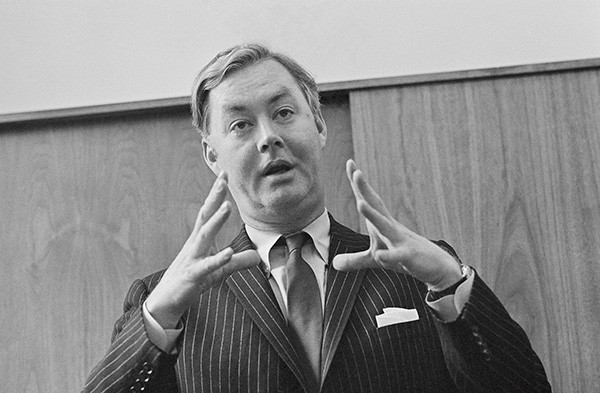
Why the Adjective “Christian” before Intellectual Might be Offputting

Michael Lind notices how odd intellectuals are and includes this observation:

The mere phrases “Aryan science” and “Jewish science” or “socialist scholarship” and “bourgeois scholarship” should send chills down the spine. Furthermore, many successful academics study, teach, and live in different countries in the course of their careers.

So why are Christians tone deaf to the consequences of modifying academic life with the adjective “Christian”? If Jewish science doesn’t make sense, will “Christian intellectual” make the medicine go down?

Alan Jacobs will not relent:

The notion that the intellectual resources of Christianity might be useful in reflecting on politics — or technology, or the arts, or engineering, or war, or climate change — and useful not only to Christians but to everyone — that’s a long-lost notion indeed. We generally assume that on any given issue of social import there might be a socialist take, or a feminist take, or a take rooted in the experience of a particular ethnic identity, that we’d benefit from hearing; but a Christian take? Not typically one of the options. There are no prominent Christian intellectuals addressing whatever happens to concern the body politic in a distinctively Christian way and for a general audience.

Jacobs assumes (along with comprensivalists like neo-Calvinists and anti-modern Roman Catholics) that Christianity has something distinct to say about modern society. The Bible is a pretty important piece of Christian reflection and its teachings about modern society seem to be minor. Jacobs also forgets that modernity is in part a reaction against Christians having too much to say for too long about politics, the arts, and war. All of a sudden moderns are supposed to forget 1100 years of western history?

The idea that Christians need to find a new way to find a seat at liberalism’s table is also anachronistic:

So it seems to me that Christians can either look for ways to get back to that table or accept their exile from it and make the best of the possibilities that exile affords. (Learning to be dissidents rather than intellectuals.) But the claim that Christians really are comfortably seated at liberalism’s table seems to be an unsustainable one.

The way to the table is the one that Jacobs and other academics have chosen — graduate school, advanced research, a Ph.D., and a teaching post. All along the way believing scholars need to negotiate the claims of science/academics and personal faith/divine revelation. To make it through to the Ph.D., land a job, and publish books with academic presses is to be prepared to sit at liberalism’s table. Gaining a seat requires a notable contribution.

I don’t think Jacobs means this, but he seems to imply that Christianity and intellectual life are so at odds that Christians really should not go to graduate school (which is why I have always thought that neo-Calvinism is theonomy lite). But the way to expertise, which is what generally counts for being an intellectual, is not through Christianity. The West tried that an moved on.

Jesus Didn’t Turn the Water into Coffee

Martyn Wendell Jones thinks coffee at church a good indication of communion of the saints:

My own church serves coffee and tea in the cafeteria of the high school building we’re renting after the service ends in the auditorium. I look around: everyone is talking, and almost everyone is drinking from paper cups swathed in napkins for insulation. The scene is one part French salon, one part daycare, and one part indoor picnic. At a glance, it is impossible to tell the specific role played by the coffee, although it clearly gives everyone a common reason for entering the room as well as something to do with their hands (a significant task, as any person on a first date will tell you).

“This coffee is amazing,” my wife tells me, and it’s at this moment that I realize I’m not sure I know what good coffee tastes like. I take another sip. It’s kind of sour and acidic.

“Mhmm,” I reply.

I ask my pastor later to expand on the church’s strategy re: coffee. What does it represent to him?

“Coffee is like a comfort blanket that young professionals carry around after the service, and it gives them courage to interact with one another,” Pastor Kyle replies. “For me, hospitality is guided by the principle that we welcome the stranger as we would welcome Christ. For me, coffee is the way I would welcome Christ.”

Jesus would not be disappointed here—at least not if he were a coffee guy.

But what about wine? Particularly, what about the beverage that accompanies true communion?

1. Our Lord Jesus, in the night wherein he was betrayed, instituted the sacrament of his body and blood, called the Lord’s Supper, to be observed in his church, unto the end of the world, for the perpetual remembrance of the sacrifice of himself in his death; the sealing all benefits thereof unto true believers, their spiritual nourishment and growth in him, their further engagement in and to all duties which they owe unto him; and, to be a bond and pledge of their communion with him, and with each other, as members of his mystical body. . . .

7. Worthy receivers, outwardly partaking of the visible elements, in this sacrament, do then also, inwardly by faith, really and indeed, yet not carnally and corporally but spiritually, receive, and feed upon, Christ crucified, and all benefits of his death: the body and blood of Christ being then, not corporally or carnally, in, with, or under the bread and wine; yet, as really, but spiritually, present to the faith of believers in that ordinance, as the elements themselves are to their outward senses. (Confession of Faith, 29)

How hipster is that? Imagine confessional Protestants outdoing Protestant urbanists. Doesn’t wine beat coffee any day of the week?

Has the Bible Become So Common that People Don’t Go to Church for It?

One of the questions I raised in my review of John Fea’s book on the American Bible Society was whether making the book so widely available, even more common than Wifi, has undermined its uniqueness:

What happens when you take something that is special and make it ubiquitous? In other words, to what degree did ABS operations render a holy book trivial? Hollywood, after all, lost its glamour when Americans could watch movies not only in palatial theaters but also on television in their living rooms. Perhaps, as well, this riddle is connected to the nationalistic dimensions of ABS history. By linking the Bible’s greatness to American exceptionalism, the American Bible Society was attempting to counter how ordinary the Bible would become through over-distribution.

The recent Pew survey on what people look for in going to church underscores this point. Do people go to church to understand God’s word — because it is in Scripture that he reveals himself — or are they looking for ways to be a better Christian that may or may not involve understanding Scripture? They may say that look for a church with good preaching, but the content of that preaching is not in view in the survey:

“Of the country’s largest religious traditions, evangelical Protestants are among the most likely to say they have looked for a new congregation,” Pew wrote. “For Catholics, this may reflect that choosing a new congregation (after a move, for example) can be as straightforward as determining which Catholic parish they reside in, removing the need for a more extensive search. Members of the historically black Protestant tradition move to new communities less often than other Protestants, which may be one reason they also are less likely to have ever looked for a new congregation.”

When evaluating a new church, top-quality sermons are the most important thing both evangelicals (94%) and historically black Protestants (92%) are looking for. They also want to feel welcomed by leaders (82%).

Evangelicals put slightly more emphasis than historically black Protestants in the style of worship services (80% vs. 76%) and location (69% vs. 62%).

Is that preaching or ministering God’s word or merely the pastor’s thought about religious matters in a sermon?

But if Glenn Paauw thinks Christians need to encounter bigger passages of Scripture than the McNuggets they generally read for personal edification, wouldn’t a worship service or two on Sunday with exposition of Scripture be a good place to start?

First of all, I mean it literally; we need to increase the size of our Bible readings. Start reading the words around your cherry-picked passages. Then you’re immediately confronted with context. If you’re reading in Philippians—“I can do all things through Christ who strengthens me”—then you’ll start reading about the situation that Paul was in when he wrote those words. You’ll get a better understanding about the kinds of things he may be able to do in this situation. You won’t take it as an absolute promise about any endeavor you can envision, like winning a football game. So read bigger passages. I’m a big fan of reading entire books of the Bible.

We have a diminished view of Scripture in another way, especially in the West. We see the story as this individualistic, go-to-heaven-when-I-die story instead of a restorative story about the renewal of all creation and my place within that larger narrative. That’s the bigger, glorious vision that the Scriptures give us.

Going to church for the word read and preached is a two-fer — worship your maker and hear his word.

Would Ron Sider Trust Richard Nixon?

Ron Sider comes out for Hillary over Trump and appeals to statesmanship:

Do we evangelical Christians trust Donald Trump to be a wise statesman leading the world to avoid conflict and war? The US president is the leader of the democratic world and the commander of the world’s largest military. A wise, thoughtful president who listens carefully to the best-informed advisers is essential if the United States and China are to avoid catastrophic conflict in the next decade or two.

Trump has absolutely no experience in foreign affairs or global diplomacy. He has repeatedly demonstrated arrogant, impulsive decision making. I can’t trust him to control the nuclear trigger. In August, 50 of the nation’s most senior Republican national security officials issued a public letter saying Trump “lacks the character, values, and experience” to be president, and added that Trump “would be the most reckless president in American history” and would “put at risk our country’s national security.”

I don’t understand why Richard Nixon doesn’t haunt anyone who thinks of backing Clinton. It’s not like paranoia and secrecy worked out that well for the Republican president. And now baby boomers have come to terms with Watergate?

Notice these parallels:

Not even Clinton’s harshest critics could claim that Servergate (or Chappaquadata, or whatever it may come to be called) constitutes a high crime or misdemeanor. But it does connote a reflexive wariness about her enemies – a wariness that sometimes seems to border on paranoia – that has long dogged Clinton, and that struck at least a few old Nixon hands as familiar.

“This is like the Nixon tapes, in a sense,” said Ken Khachigian, who was a young speechwriter on Nixon’s White House staff and is now a grizzled veteran of California’s Republican political wars. “Everybody wanted access. We resisted, and then they were eked out in death by a thousand cuts. Finally they were expropriated and now belong to the archives.”

And that doesn’t even capture the hi-jinks that went into Hillary’s recent physical collapse.

Which also is reminiscent of Nixon:

It was 1960, and Nixon was preparing for the nation’s first televised presidential debate. The debate became a case study in political image-making, with Kennedy looking healthy and vital while Nixon was waxen, sweaty and haggard.

“He was sick during the debate,” Scalettar said.

Only the doctor and Nixon’s advisers knew that Nixon was suffering from a serious infection — the result of a knee injury on a campaign trip to Greensboro, N.C. …

Nixon had a staph infection, which brought on septic (poisonous) arthritis. And he refused to take time off from the trail because he had promised to campaign in every state.

Scalettar wrote that the illness, Nixon’s failure to rest and recuperate normally, his loss of time due to illness and his appearance “seriously impaired his effectiveness as a campaigner.”

He’s convinced that Nixon’s medical secret contributed to his narrow loss to Kennedy — by slightly more than 100,000 votes — that November 56 years ago. Coming clean about how sick he was right before that debate may have severely altered the course of American history.

It doesn’t add up to support for Trump. But are Americans ready for another constitutional crisis?

Wouldn’t Cops Support Gun Laws?

Peter Moskos explains gun legislation is meaningless for cops:

So then we just delve into the gun control debate with all the usual and predictable sides and lack of progress. Cops see danger coming from a small subset of criminals with guns, and not guns in general. Remember: police officers and all their friends are (for the most part) legal responsible gun owners. Cops want laws to focus on criminals and crimes, rather than guns. Collectively, most cops are incredibly pro-gun and equate the 2nd Amendment with freedom (just as you and I might do with the 1st Amendment). Inasmuch as gun laws are seen to infringe their rights while doing nothing to prevent criminals from shooting each other and shooting cops, cops aren’t going to support it.

Consider this: there are (almost) no shootings in Chicago or New York or Baltimore that involves a legally possessed handgun. We’ve already “controlled” these guns and made them illegal. So what would passing *more* restrictive gun laws do to stop this violence? Are we going to double-dog-dare make them illegal? They’re already illegal. We don’t prioritize the laws we do have.

How can we take guns out of the hands of criminals? (Or get criminals to use them less?) That’s the $64,000 question. Most gun-control laws are close to irrelevant here. Perhaps the only way to get guns out of the hands of criminals is to confiscate guns with strong gun control, Australian style. Many people, myself included, like this idea. But the majority of Americans and the current Supreme Court would not agree.

The basic ideological divide is that liberals see guns as the problem and conservatives see criminals as the problem. And nobody on either side has a good plan to keep guns out of the hands of criminals.

There are three-hundred million guns in America; ten-million guns are manufactured every year! And yet only about 10,000 of these gun are used to murder somebody (plus suicides, of course). How many millions of guns would we have to confiscate before we prevented a single gun homicide? And how would we go about doing this?

Most proposed gun-control is pretty useless in actually preventing crime (as opposed to preventing a small number of gun sales.) And gun people see this as an ideological battle on gun-owners, so they won’t give in (even on so-called “common-sense” issues). The political reality is that there’s no way right now we could enact gun control so restrictive it would actually do any substantial good.

Sovereign Grace Ministries is not Neo-Calvinist

Someone needs to issue a correction:

While sex abuse scandals in the Roman Catholic Church made headlines in the early 2000s and were the focus of the critically-acclaimed film Spotlight, Evangelical Protestants have had their own share of child sex abuse allegations. In 2013, Sovereign Grace Ministries (SGM), a network of about 80 evangelical Neo-Calvinist churches headquartered in Louisville, Kentucky, faced a an amended class action civil lawsuit filed by 11 plaintiffs alleging church leaders of covering up child sex abuse crimes through the 1980s and 90s, and requesting about $50 million dollars in damages against SGM (a judge dismissed nine of the eleven plaintiffs based on an expired statute of limitations, and the other two on a question of jurisdiction).

New Calvinism is not Neo-Calvinism. It’s easy to tell the difference. New Calvinists don’t use Queen Wilhelmina Mints during the preaching of the word.

Apples and Oranges

Bryan and the Jasons hang another scalp. But notice how anachronistic this conversion narrative is:

In American religion, the Evangelical community and the Presbyterian tradition specifically, there were various things happening that gave me pause to reflect. Several Reformed ministers and theologians I respected were dragged through the mud of the printing press and declared openly to be heretics by self-appointed theological judges. The blogosphere was a landmine of gossip and slander. These accusations brought to the forefront the problem of Biblical interpretation and the sufficiency of Scripture. One man’s heretic was another’s saint. I became angry and worried. The political climate didn’t help my moorings. The nation in general; conservatives and liberals in my own Reformed tradition were at each others’ throats. The Presbyterian world was fracturing into more splits as controversy after controversy began to wreck the Reformed world. Jesus had promised that the gates of hell would not prevail against the Church (Matt. 16:18) and it seemed like He was failing.

To complicate matters further, I learned of Dr. Frank Beckwith’s resignation from the Evangelical Theological Society to return to Rome and the “resignation” of Dr. Bruce Waltke from a prominent Reformed seminary over interpretations of Genesis. Jesus had promised that the Holy Spirit would lead us into all Truth (John 16:13), so how did all these splits in the Christian world occur, now numbering well over 20,000 (some estimate over 35,000)? How did I know where the “Church” was to be found? By the time I resigned from my presbytery in 2012, there were 48 splits, each claiming Calvin as their founder. One writer observed 22 different issues that keep Reformed Christians out of each others’ pews. As of this writing, views of theistic evolution, homosexual unions, female deacons, charismatic gifts, exclusive psalmody (in worship), liturgy, music styles, etc., only add to the problems and all using the same Bible.

The Sweater Unravels

I returned to my studies of Church history and started at the beginning: the apostolic fathers and Church fathers – both east and west and the development of the canon of Scripture. I was shocked by the letters of St. Ignatius of Antioch; though I had read them 20 years before, I never read them with Reformed glasses. There was nothing in those letters that sounded at all Presbyterian! In AD 95, why was Clement of Rome bypassing the authority of the Apostle John to settle a matter of discipline in the Church at Corinth, claiming the authority of Rome to be that of God? The more I studied the more I felt drawn but kept saying “This can’t be right.” So, I sought the wisdom of friends and mentors alike to help steer me through these troubled waters but on whose authority should I accept their observations or interpretations correct?

In 2010, my daughter and I attended the confirmation of a friend. I remember being impressed with the amount of Scripture heard during the Mass. I had been working on liturgical studies, so I was shocked at how similar the mass was to the Reformed liturgy at my parish.

In the middle of 2011, I read John Henry Newman’s “Development of Doctrine” and G.K. Chesterton’s works on his conversion. They both were Anglican converts to Catholicism and I wanted to know why. In the process, I learned of C.S. Lewis’ devotion to Mary, belief in purgatory and his habit of praying the Rosary, but yet, he never became Catholic.

So this fellow looks at contemporary Protestantism and compares that to the ancient church or to Anglo-Catholics. Where are David L. Schindler, George Weigel, Richard McBrien, Hans Urs Von Balthasar, Pope Francis, Joe Biden, John Courtney Murray, William F. Buckley Jr., Brent Bozell, the troubling debates over admitting divorced Roman Catholics to communion?

It’s like saying you still are an evangelical because of John Calvin and Jonathan Edwards. It’s like being an evangelical with a bishop in Italy.

Roman Catholic 2k

David Schindler and Peter Leithart would likely disapprove:

If a Catholic makes a speech or writes an article attacking the principles and the methods of say, the Lutherans, that act would not necessarily stir up religious strife dangerous to the public peace. But if a Catholic seeks to penalize a Lutheran because of his Lutheranism through political or legal discriminations; still more, if he seeks the support of others in an organized manner to accomplish those ends, then he is attacking religious liberty in the social, or political sphere, which is the common meeting place of all Americans as citizens. . . .

I know that the dictionary definitions of bigotry are to the general effect that it is “an obstinate and intolerant attachment to a cause or creed.” But unless obstinate and intolerant attachment to a cause or creed becomes active opposition to some other cause or creed it is non-existent so far as the general peace of society is concerned. I may be obstinate and intolerant in my private and personal attachment to the Catholic Church (of which I am a member), yet if I invariably treat with my agnostic, and Protestant, and Jewish, and atheist neighbors, in all that concerns our common relations in society — in business, politic, and all cooperative matters — without reference or relation to their beliefs or behavior in religious matters, while I may be potentially a bigot, certainly I do not, so to speak, commit bigotry. If all of us so behave, there can be no bigotry in action. But notoriously, all of us do not so behave, although such behavior is the practical ideal of the nation of the United States of America. (Michael Williams, The Shadow of the Pope, 1932)

So when Roman Catholics or Neo-Calvinists call for “all of me” comprehensive Christianity, do they destroy any possibility of a common realm shared by all sorts of believers and non-believers? And do these “all of me” Christians believe that if I am getting along with people who do have the same “all” in “all of their identity” I am guilty of bad faith?

At the Other End of the Spectrum — Evangelicals and Liberals Cooperative

Tracey McKenzie links to sensible comments from Amy Black about a Christian citizen’s duty in the context of partisan politics:

When we do choose to respond, we can critique issue positions, individual candidates, and even the system itself with a proper sense of humility. When debates are framed in terms of personal gains or losses, we can reorient the discussion toward broader questions of political justice, asking what biblical values are at stake and what paths are most likely to serve the common good.

We can offer a quieter, less emotionally-charged counterpoint, presenting our arguments with respect and care. We can also take time to learn about political controversies before commenting on them, checking details with multiple sources and considering a range of viewpoints. Most importantly, we should commit the election, our political system, and all those participating in it to prayer.

Voter dissatisfaction has been growing for decades, and the underlying problems that have led to such anger will not be easily solved. But we can chart a different path in how we respond, modeling humbler and more informed political communication.

I’m all for learning about matters before commenting. Common good? That’s good too. And prayer is always what Jesus would do.

But I don’t know what the Bible has to do with it. Yes, on some moral matters that government oversees, biblical teaching comes into view. But Scripture never saysthat what the policy should be or what the law should say.

As much as I appreciate Black’s effort to calm Christians down, she still sounds like she thinks Christianity is a norm for public life. And if that is so, how does she avoid going whole hog with Leithart or Schindler?