Forgiving a Scapegoat?

Alan Noble raised the bar pretty high — as high as church membership mind you — when he explained why evangelicals should be never Trump:

In response to these profound violations of human decency, he scoffs, changes the subject, denies he even said it, or doubles down. As he has said, he does not ask God for forgiveness, because he doesn’t believe he needs it.

That insight into Trump’s perception of his own soul should tell evangelicals all they need to know about him as a leader. Any man who is so unaware of his own depravity that he cannot recognize his need for forgiveness is incapable of justly leading any country. There simply is no way around this fact for evangelicals.

Has anyone asked Hillary Clinton of her need for forgiveness? At least, Noble should give equal time to both candidates. He might also want to consider the constitutional qualifications for holding the office of POTUS. No religious tests. So does Noble understand how much he sounds like a Jerry Falwell (Sr.)?

At least Roman Catholics are less driven by piety than by policy. Here are the items to worry about in a Clinton presidency (via her appointments to SCOTUS):

Religious Liberty: In the highly-publicized case of Burwell v. Hobby Lobby, the Supreme Court ruled that closely held for-profit companies like Hobby Lobby could be exempt from laws that violate its religious beliefs, in this case Obamacare’s contraception mandate. This was an enormous win for religious liberty, but it was only decided by a slim 5-4 margin. With a liberal majority, you can expect the Court to rule against companies like Hobby Lobby or non-profits like Little Sisters of the Poor. Religious corporations and organizations around the country would be forced to chose between violating their consciences or paying penalties that would likely put them out of business. If liberals have their way, say goodbye to many religious retailers, charities, bookstores, hospitals, medical centers, and so on.

Transgender Bathrooms: Thirteen states are currently suing the Obama administration over its directive to public schools mandating that transgender students be able to use the bathrooms and locker rooms of their choice without having to prove their gender identity. Perhaps no issue more directly impacts the lives of our children than this. A liberal Supreme Court will undoubtedly uphold the Obama administration’s rule and force states to comply. The consequences will be catastrophic. Don’t be so naive as to think boys won’t abuse these policies and force their way into female bathrooms and locker rooms. Parents and teachers won’t be able to stop them. And aside from sexual misconduct and assault, this policy could mean the end of men’s and women’s competitive athletics as we know it.

Second Amendment: Without a doubt, the Second Amendment would become a primary target of a liberal Supreme Court. In recent years, two landmark decisions protecting an individual’s right to own and bear arms – Heller v. District of Columbia and McDonald v. City of Chicago – were each decided by just one vote. (Are you noticing the 5-4 trend yet?) Given the opportunity, a liberal Court wouldn’t hesitate to overturn those decisions. We got a glimpse of this in June, when the notoriously liberal Ninth Circuit Court of Appeals ruled that the Second Amendment does not permit the public to carry concealed firearms. A liberal Supreme Court would certainly uphold this ruling and continue to hack away at the rest of the Second Amendment.

Abortion: It was an activist, liberal Supreme Court in 1973 that decided Roe v. Wade and legalized abortion. A liberal Supreme Court in 2017 will only reinforce and protect that decision. It will likely strike down majority-supported, common sense abortion laws that have been passed in the states, like late term and partial birth abortion restrictions and pain-capable legislation. Just this June, the Supreme Court invalidated the Texas law requiring basic health standards for abortion facilities, a law passed to prevent another Kermit Gosnell house of horrors from occurring.

But the best perspective on Trump and Clinton may come from those without a faith-based dog in the hunt:

But Trump is a monster! Yes, but given the right circumstance, so are you. His ugliness is simply more apparent than that of other managers of the state’s sacred violence. Let’s be frank here: though his speech is scarily vulgar, the violence he promises is already occurring.

Think his call to deport illegally undocumented workers is fascist? The Obama administration, garbed as it is with the shimmering rhetoric of victimhood, has already deported over 2,500,000 human beings—23 percent more than Bush.

How about his pledge to torture suspected terrorists? Clinton-Bush-Obama beat him to it. They just don’t talk about it like he does. And let’s not limit it to foreigners; Obama didn’t bat an eye as elderly tax protester Irwin Schiff died of cancer chained to a prison bed far away from his family for breaking the sacred taboo against being too stingy in sharing his resources with the collective.

How about the time Trump promised to target terrorists’ families? Obama, the great defender of Islam, already trumped that when he murdered people like U.S. citizen Anwar al-Awlaki’s 16-year-old son Abdulrahman, who hadn’t seen his father for two years. This teen and his friends were blown apart by the Nobel prize winner while having a campfire dinner, apparently for the sinful dreams of his father.

Actually, a faith-based perspective makes sense of Never Trump. He’s our Scapegoat:

In today’s Christ-haunted West, we no longer have complete unanimity in our identification of common enemies, but we still seek it in the sub-factions we continually form. Yet Donald Trump’s faction is not going to prevail in any lasting way: his sacred dogma is built on “Winners.” His brand is a throwback to Nietzsche, who was himself a kind of throwback to a still older “golden age,” a time when pagan religion celebrated history’s winners, who were deemed right because of their might.

Trump even viscerally looks the part of the old scapegoat kings who would be ceremonially paraded before being sacrificed: he is often mocked for having small hands and goofy orange hair; he eats profane food like McDonald’s; he loves gaudy decoration in an age of “shabby chic”; he calls himself a winner in a culture where people must offer faux humility to gain status. Trump, who has repeatedly said that were he not her father he would be dating his daughter, is even accused of breaking the age-old taboo against incestual lust.

In the ancient cultic world of our past pagan order, hierarchies of kings, priests, and elites often killed or excluded the odd, weak, infirm, disabled, ethnic minority, or child based on the cultural fact that they were intrinsically inferior and thus deserving of a worse lot in life. But since the crucifixion meme began dominating the West, our modern cultures are increasingly self-critical and haunted by victims. Jesus robbed us of our blindness to the unjust order of “might makes right,” but he didn’t create an alternative ideology to deny us choice. We still have to choose, to a person, to model forgiveness and nonviolence as we seek to heal the victims most vulnerable to exploitation. But we’re stubborn in doing this work, and so we try to create cathartic peace and order through scapegoating—this time in the name of victims.

Mitt ’16

Trigger warning: what follows is a post on a series with lots of profanity and — get this — lots of prayer. If you want to contemplate the disparity between profaning and praising God’s name, see what Curmudgeon has to say.

Like Curmudgeon, I agree that Last Chance U. is a terrific series. It even evokes aspects of — watch out — The Wire since it explores the way college sports functions in African-American boys’ lives and possibly offers a way out of the hood.

The series is so good that the missus did a little research on the director, Greg Whiteley, which took us to his 2014 documentary about Mitt Romney, with the title (of all things) Mitt.

Some think that if this movie had come out during the campaign, Romney might have won. Since the movie ends with the 2012 election returns and Romney’s concession, it’s hard to imagine how the movie might have come out during the campaign. But the movie does humanize Romney in ways that once again raise questions about media coverage of the contest and the mileage anti-GOP folks obtained from Mitt’s 47% remark.

The movie also makes you wish Romney were running now. He seems so much more impressive than either Trump or Clinton. No one has any trouble reminding you what a buffoon the Republican candidate is. Just listen to a ward leader in Philadelphia:

I am writing this letter primarily to the Republicans and Independents of the Ninth Ward (Chestnut Hill and a little bit of Mount Airy). Normally I write to Democratic voters to motivate them to get out and vote in the election. But in this unusual election cycle I think it is important that we talk.

The issue, of course, is Donald Trump. He is a candidate unlike any other that we have seen and, frankly, someone who deeply concerns me and I suspect also concerns many of you. In brief, he is not fit to be President. I say this after a few months of appalling behavior that reveals much about his character.

It is not a question of slips of the tongue or being politically correct. Rather his behavior reveals much about him. These statements show he is not fit and should not be President / Commander in Chief. From the sexist insults of Megan Kelly and many other women, to ridiculing a disabled New York Times reporter, to calling out the Mexican American federal judge as unfit to judge him, to attacking the gold star parents of Captain Kahn, he has revealed his character.

So you vote for Hillary and look the other way when someone asks about character? Where on the spectrum of bad character does a candidate become acceptable, even fit for office? Hillary’s at the good spot on the bad character spectrum? And was this Democratic official standing by Hillary’s man when the president seemed to reveal a few flaws of his own? Now some people know what it feels like to be Jerry Falwell.

Of course, Mitt may overdo Romney’s character. Maybe he’s not that wholesome and easy going. Maybe his family is not so pleasant when the camera is off. Maybe the candidate praying with his family on their knees — in Christ’s name, no less — was phony.

But if Trump could be this year’s candidate, why not Romney? At one point Romney says he is everything the Republican Party is not — he’s northern, rich, and Mormon while the party is southern, populist, and evangelical. Well, what is Donald Trump? Southern? Populist? Christian?

What he is is anti-elite and anti-PC. J.D. Vance explained it to Terry Gross (via Rod Dreher):

… so my dad is a Trump supporter, and I love my dad, and I always say, Dad, you know, Trump is not going to actually make any of these problems better. And he says, well, that’s probably true, but at least he’s talking about them and nobody else is and at least he’s not Mitt Romney. At least he’s not George W. Bush. He’s at least trying to talk about these problems.

Romney was far more regular than the press or his campaign made him seem. But he was too much part of the establishment — though not enough to get the blessing of the mainstream media — (Harvard, governor of Massachusetts) to attract “poor white trash.”

That’s too bad.

What If Muhammad Ali Ran for President?

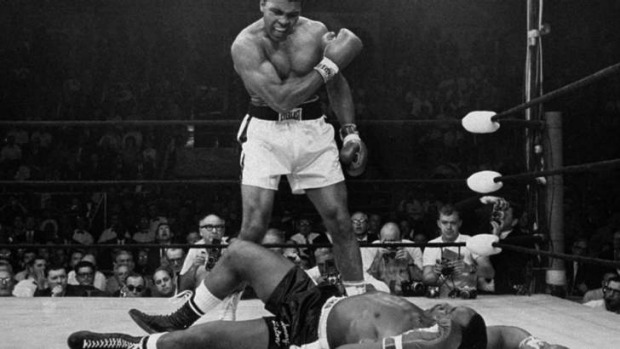
As I listen to journalists and sports-talk radio hosts talk about the greatest fighter of all time, I keep thinking I understand the appeal of Donald Trump.

Just look at some of these juicy quotes:

Clay was 18: bounding, fearless, leading with his mouth.

“I’m not only a fighter. I’m a poet; I’m a prophet; I’m the resurrector; I’m the savior of the boxing world. If it wasn’t for me, the game would be dead,” he said.

Young Clay made boxing an art form. He was an original, a heavyweight who didn’t move around the ring — he danced. He’d thrill the crowd with his quick scissor-step shuffle. On defense, he’d slip and slide, Dundee said, and then flick that jab.

“He had a jab that was like a snake,” he said.

Float like a butterfly, sting like a bee; rumble, young man, rumble. Boxing reporters never had so much fun.

So Ali, though seemingly a good guy on numerous fronts, was a tad egotistical. Did that cost him with the media?

And then he could be pretty divisive:

After the Liston fight, Ali revealed he was a member of the black separatist movement Nation of Islam. He wanted to be called Muhammad Ali, a name he said was given to him by the group’s leader, Elijah Muhammad.

“That’s my original name; that’s a black man name,” Ali said. “Cassius Clay was my slave name. I’m no longer a slave.”

Muhammad, the Nation of Islam leader, preached that integration and intermarriage were wrong and that white people were devils. It was an idea Ali defended in a 1971 TV interview.

“I’m gonna look at two or three white people who’re trying to do right and don’t see the other million trying to kill me? I’m not that big of a fool, and I’m not going to deny it,” he said. “I believe everything he [Muhammad] teach, and if the white people of a country are not the devil, then they should prove they’re not the devil.”

Ali became a polarizing figure in America.

Again, did that cost Ali his reputation?

So I wander as I wonder.

Blame Trump on Sunday School

Stay with me.

It looks like evangelicals who go to church don’t support Donald Trump:

Across all the states, the March 15 elections showed that, on average, a super-majority of 60 percent of evangelicals voted for someone other than Trump. Furthermore, there continues to be strong evidence that the more religious a voter is, the less likely they are to support Donald Trump. For example, in Missouri exit polls, which tracked church attendance, Trump performed much worse than Ted Cruz. Of those who attend religious services “more than once a week,” Cruz garnered 56 percent of the vote, outpacing Trump by a full 26 percentage points. Among those who attend religious services once a week, Cruz earned 50 percent of the vote, which was a full 17 points above Trump.

In contrast, with those who only attend services “a few” times a year, Trump won 48 percent of the vote to Cruz’s 29 percent. If Missouri’s numbers are indicative of voters in other states, then Trump does much worse among those who actually take their faith seriously enough to attend religious services consistently.

So, who is responsible for nurturing evangelicals who don’t go to church (and vote for Trump)? Sunday school is.

Church leaders sensed that Boomer parents wanted the one hour break from their kids—that they wanted to focus on their own spiritual life for an hour away from the distraction of their children. And, again, we assumed, reasonably so, that worship targeted to adult boomers would not be all that engaging for kids. So dynamic Sunday school programs were created to engage the kids at their level in their language while their parents were in worship. In fact, some churches didn’t (and don’t) allow kids into big people worship at all.

The result: Many of these innovated congregations had a positive, significant impact on the lives of disenfranchised Boomers and their kids. Many saw their congregations and their children’s ministries grow exponentially. The evangelism imperative to reconnect with Boomers seemed to work.

But there was (and is) one huge unintended consequence: We have raised the largest unchurched generation in the history of our country.

Admittedly, there are many reasons why each generation in our culture is increasingly distanced from the church. Some have to do with societal shifts that have nothing to do with the church. Some have to do with the inability of the church to articulate the Gospel in compelling ways.

But perhaps one of the reasons has to do with the Sunday School shift…as we shifted kids out of the main worship experience, en-culturated them in their own program, and robbed them of any touch points with the rest of the body of Christ. Another way of saying it: by segregating our kids out of worship, we never assimilated them into the life of the congregation. They had no touch points. They had no experience. They had no connection with the main worship service—its liturgy, its music, its space, its environment, and its adults. It was a foreign place to them. And so…once they finished with the kids/or youth program, they left the church.

In other words, parents who forced their kids to sit through boring church services and eat broccoli at Sunday dinner reared people who vote — wait for it — for Ted Cruz.

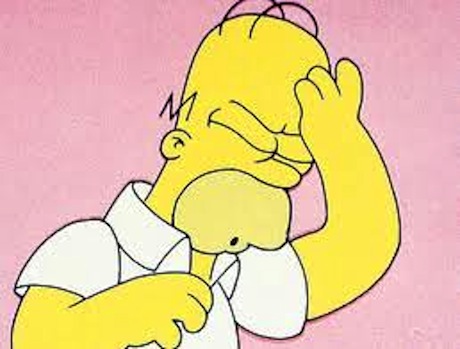
Doh!

From Goldwater to Trump

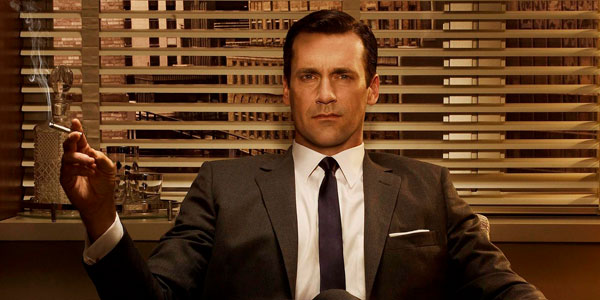
John Fea found an old LBJ ad that shows moderate Republican discomfort over ideological conservatives like Barry Goldwater, the 1964 Republican presidential nominee. If Don Draper had worked for the Democrats, this is how it would have looked:

Drawing parallels between Trump and Goldwater are somewhat overdone since the Arizona Senator had a distinguished record of public service and even vowed to support Nixon in 1960 to the dismay of political conservatives. But the parallels do contain an element of truth in the sense that since the 1950s conservatives (and I count myself as one) have stressed ideological purity over political pragmatism. Maybe it’s the effect of turning 39, or maybe it’s the Trump phenomenon, but compromise for the sake of not blowing things up looks a lot more appealing these days than fidelity to “the movement.”

And here’s the kicker for Roman Catholics reading, some of the most articulate and intellectually rigorous supporters of Goldwater were Roman Catholics like Brent Bozell and William F. Buckley, Jr. (the latter of whom during the 1964 campaign had to distance himself from Robert Welch, the leader of the John Birch Society). In fact, Brent Bozell was the man who put Barry Goldwater’s political convictions into words — The Conscience of a Conservative (as I understand it, the book was entirely Bozell’s effort — see below).

All of this to say, Trump may be much more the fruit of the conservative movement and its anti-establishment ways than conservatives are wont to admit.

Postscript: a little background on Goldwater, Bozell and the conservative conscience:

Goldwater and Bozell were incongruous collaborators: The easygoing Westerner and the intense Midwesterner; the college dropout and the Yale law graduate; the Jewish Episcopalian and the Roman Catholic convert; the principled politician and the activist intellectual (Bozell had run for public office in Mary-land). But they shared a Jeffersonian conviction that that government is best which governs least. They looked to the Constitution as their political North Star. And they were agreed that communism was a clear and present danger.

Goldwater gave his final approval of the manuscript in late December, and Clarence B. Manion, the moderator of a highly popular weekly radio program “The Manion Forum” and the former dean of the Notre Dame Law School, undertook the publication and promotion of a book he was convinced would “cause a sensation.” Indeed it did. Before The Conscience of a Conservative appeared, Barry Goldwater was an attractive but controversial senator from a small Western state who was at best a long-shot vice presidential possibility. After the publication of The Conscience of a Conservative, Goldwater became the political heir to Robert Taft, the hope of disgruntled Republicans, partyless Independents, and despairing Democrats, and the spokesman of a new national political movement—conservatism.

What had Goldwater—and Bozell—wrought? The Conscience of a Conservative was an original work of politics and philosophy, a vision of the nation and the world as it should be, not a compromise with the world as it was. It was a fusion of the three major strains of conservatism in 1960—traditional conservatism, classical liberalism or libertarianism, and anti-communism. It was a book by a conservative for conservatives at a time when conservatives were beginning to realize the potential of their political power.

Trumpsformational

One of the advantages of falling behind on reading is that the distance of several months adds the perspective of Monday morning’s quarterback to what at least in a magazine looked relatively reliable. For instance, while reading the October 2015 issue of First Things yesterday, I saw a review of Robert Putnam’s Our Kids: The American Dream in Crisis (Simon & Schuster) which sounded not nearly so smart now that we’ve had seven months of Donald Trump:

Well-designed policies supposedly can make up for the family’s collapse and set young people on the right course. Putnam recommends beefed-up tax credits, monetary transfers, benefits programs, better-trained and better-paid teachers, vocational education and apprenticeships, community college aid, widely available preschools, and free after-school sports programs. These lavishly funded initiatives will enable teachers and bureaucrats to substitute for parents from birth to adulthood, returning us to a previous idyll of mobility and equality. There is nothing really new here, and Putnam’s exposition seems half-hearted, as if he doesn’t really believe this laundry list will do the trick, even with renewed effort and much more money.

There’s also a call for a massive mentoring program for lower-class children, with the well-educated acting as surrogate parents and advisors on a wide scale. The goal is to socialize poor children to upper-class norms, thereby equipping them to attend and get through college. ­Putnam’s mentoring idea is a ­variant of the pet elite project of college-for-all, which looks to education as the force of salvation and rescues working-­class children by transforming them into upper-class kids.

This pie-in-the-sky dream reflects the deep logic of our post-1960s world, which offers the good life to the knowledge class, but lacks any approved or positive vision for others. On this view, careerism, “creativity,” ­consumerism, lifestyle cultivation, expressive ­individualism, and sexual adventure are fulfilling and prestigious, while civility, duty, ordinary work, and ­fealty to conventional social roles are exploitative and oppressive. ­Given this outlook, college for all makes perfect sense and anything else looks unjust.

In fact, the project is unrealistic and thus ultimately pernicious. Not everyone is able to join the knowledge elite, nor does everyone want to. Our society will always need basic low-skilled labor, from serving meals to caring for dependents to cleaning toilets. The working class cannot be phased out or made to disappear. Economic improvement for workers is an important goal, although difficult to achieve. But it cannot be enough. What is needed is a viable and vibrant culture that maintains the meaning of working-class life and recognizes its dignity. On this, ­Putnam has virtually nothing to say and little to offer.

Except that now, as opposed to last summer when this review was likely written, it turns out that Donald Trump is the one responding to the division between American elites and workers in an electorally successful way. Instead of a culture what the disenfranchised want is a reality show candidate. Did the Trump campaign actually read Putnam?

In that same issue, Russell Moore wrote a spokesmanish piece that put its foot squarely down on the conviction that evangelicals would not be cowed by same-sex marriage:

…the Evangelical cave-in on sexual ethics is just not going to happen. There is no evidence for it, and no push among Evangelicals to start it. In order to understand this, one has to know two things about Evangelicals. One, Evangelical Protestants are “catholic” in their connection to the broader, global Body of Christ and to two millennia of creedal teaching; and two, Evangelicals are defined by distinctive markers of doctrine and practice. The factors that make Evangelicals the same as all other Christians, as well as the distinctive doctrines and practices that set us apart, both work against an Evangelical accommodation to the sexual revolution.

And then came Donald Trump who apparently has shown that evangelicals (at least some of them), are far more interested in economic than social issues, thus making attractive a candidate who will if elected likely not do a thing to oppose same sex marriage. Could it be that evangelical spokesmen don’t really speak for evangelicals, that evangelical is too crude a religious identity to be useful for social analysis, that evangelicals are not all their cracked up to be (as in conservative)? Michelle Boorstein thinks so:

The divisions have led to a range of viewpoints about what is happening in American evangelicalism and whether the splits will endure after the fall election. Some, like Galli, see a new breakdown based on attitudes towards race and ethnicity. Others see an intensifying split between those who prioritize personal morality and those who emphasize free markets and capitalism as a route to power and freedom. Some frame the split as Christian pragmatists vs. Christian idealists.

“There was in the past a very large camp of evangelicals who were primarily interested in electing the most Christian kind of candidate. And then over time bigger doses of pragmatism set in,” said DeMoss, who was a top advisor to Mitt Romney’s two campaigns. “Evangelicals got splintered between the religious litmus test folks and the pragmatists.”

The Trump phenomenon has some leading evangelicals looking more closely at their label. Russell Moore, a Southern Baptist leader, wrote last month that he is so disgusted with being lumped in with Trump supporters that “at least until this crazy campaign year is over, I choose just to say that I’m a gospel Christian” instead of an evangelical.

Some pollsters say “evangelicals” have been way over-counted – or seen as a huge block — because the definition is so hazy. As a result, they say, practicing Christians who reflect traditional evangelical beliefs like the necessity of a born-again experience and a requirement to evangelize are being lumped in with people who are more nominally connected to Christian practice.

Perhaps the most lasting lesson of Donald Trump’s appeal to evangelicals is that no one has transformationalized the religious landscape the way the leading Republican presidential candidate has. If the comprehensive Christian crowd really wants to transform society — from neo-Calvinists and Kellerites to Roman Catholics and those nostalgic for Christendom — they may want to take a page from Donald Trump.

Trump is What Conservatives Do (or have done since 1950)

Maybe Trump’s 45 minutes of fame (he certainly has more than the rest of us) are coming to an end. But I continue to be surprised by the woe-is-me-conservatism that accompanies his candidacy and appeal (and I am not going to vote for him — there). He is an insurgent, he is a populist, he is undignified, he’s a threat to the GOP establishment.

So was William F. Buckley, Jr. (and he was a traditionalist Roman Catholic).

First Rod Dreher’s hand-wringing:

What Trump has shown, and is showing every day, is how out of touch Conservatism, Inc., is with the people for whom it purports to speak. They haven’t had a chance to vote for someone like him in a long, long time because, as I’ve said, the GOP and Conservatism, Inc., gatekeepers kept them down. The conservative Christians who have gone to Washington and gotten invited to be in the inner Republican power circles? You think those professional Christians really speak for the people back home anymore?

Me, I’m in a weird and extremely unrepresentative place, politically and ideologically. I am mostly a cosmopolitan in my tastes, but I live by choice in deep Red America, and am a traditionalist by conviction. What Sean Trende says about the Republican and conservative elites living inside a cosmopolitan bubble is true — and the people who give money to the GOP and to the think-tank archipelago are Business Conservatives who, as we now know post-Indiana RFRA, regard we traditionalists are the problem.

Second, Michael Brendan Dougherty on the problem with the editors of National Review repudiating Donald Trump:

You could call it a freak out on the right.

National Review, the flagship journal of the conservative movement, published a surprisingly defensive symposium, asserting the continued relevance of conservative ideas against an election-year populist challenger, who promised to fight for American jobs and sovereignty. “The old guard threw everything they had at him, and their diminished power is now exposed,” wrote David Brooks. This crude challenger to the party’s status quo had to be stopped.

That was eight years ago. And it was Mike Huckabee, whose advisor Ed Rollins declared the Reagan coalition dead. The challenge was sufficiently contained, then. But it was the first time that I noticed that the anti-establishment kick reflex that the conservative movement had installed in its Frankenstein-coalition of voters had turned around and began kicking them.

Donald Trump and his coalition of voters kick a lot harder than Mike Huckabee. And so we have another symposium, now exclusively anti-Trump. But this time around, even movement-bred stalwarts are wondering if Ed Rollins had a point. Maybe the coalition is dead.

There’s something faintly comical about everyone in the Republican party shouting, “I’m not the establishment. That guy is.” The conservative movement long ago defeated the East Coast establishment of the party. It was a total rout; the last semi-moderate New England Republicans were defeated a decade ago. And yet, conservatives still insist that they are fighting some powerful establishment within the Republican Party.

The irony is that National Review’s founding editor, Buckley, had a lot to do with defeating the East Coast Establishment GOP. Garry Wills knows the score:

Joe Scarborough, in a recent book, The Right Path: From Ike to Reagan, How Republicans Once Mastered Politics—and Can Again, claims that moderate conservatism is the real Republican orthodoxy, interrupted at times by “extremists” like Goldwater or the Tea Party.3 He suggests Dwight Eisenhower as the best model for Republicans to imitate. Yet Scarborough is also an admirer of Buckley, and his thesis does not explain—as Dionne’s thesis does—why Buckley despised Eisenhower. Eisenhower, as the first Republican elected president after the New Deal era of Roosevelt and Truman, was obliged in Buckley’s eyes to dismantle the New Deal programs, or at least to begin the dismantling. Buckley resembled the people today who think the first task of a Republican president succeeding Obama will be to repeal or take apart the Affordable Care Act.

Eisenhower, instead, adhered to the “Modern Republicanism” expounded by the law professor Arthur Larson, which accepted the New Deal as a part of American life. Eisenhower said, “Should any political party attempt to abolish social security, unemployment insurance, and eliminate labor laws and farm programs, you would not hear of that party again in our political history.” It was to oppose that form of Republicanism that Buckley founded National Review in 1955, with a program statement that declared: “Middle-of-the-Road, qua Middle-of-the-Road is politically, intellectually, and morally repugnant.”

Buckley hated Eisenhower’s foreign policy as much as his domestic one. He said, “Eisenhower was above all a man unguided and hence unhampered by principle. Eisenhower undermines the Western resolution to stand up and defend what is ours.” When Russia put down the 1956 uprising in Hungary and Eisenhower did not intervene, National Review called for people to sign the Hungary Pledge—to have no dealings with iron curtain products or exchanges (Buckley’s wife had to give up Russian caviar).

Admittedly, Buckley did not, like Robert Welch (founder of the John Birch Society), think Eisenhower was a secret Communist (as many Republicans now think Obama is a secret Muslim). Buckley thought that Eisenhower had no greater purpose than his own success: “It has been the dominating ambition of Eisenhower’s Modern Republicanism to govern in such a fashion as to more or less please more or less everybody.”

The sense of betrayal by one’s own is a continuing theme in the Republican Party (a Fox News poll in September 2015 found that 62 percent of Republicans feel “betrayed” by their own party’s officeholders). The charges against Eisenhower were repeated against Nixon, who brought Kissingerian “détente” into his dealing with Russia and renewed diplomatic ties to China. On the domestic front, he imposed wage and price controls and sponsored the welfare schemes of Daniel Patrick Moynihan. Buckley joined the effort to “primary” Nixon in 1972 by running John Ashbrook against him. Buckley campaigned for Ashbrook in New Hampshire, but he succumbed to pleas from Spiro Agnew (before his disgrace) and Henry Kissinger (a new friend of his) that he endorse Nixon for the general election.

Any American with conservative instincts should in the presence of Donald Trump act like we’ve been here before.