How to Tell the Difference between Turkey and the U.S.

You don’t read about President Erdogan in the pages of Washington Post, New York Times, or New Yorker:

As Turkey heads toward a constitutional referendum designed to grant its leader Recep Tayyip Erdoğan even greater powers, the polls predict a neck-and-neck race.

That doesn’t mean their chances are equal. While the April vote is likely to be free, whether it will be fair — given rising repression of political dissent and the ongoing state of emergency — is another question.

Take the case of İrfan Değirmenci, a well-known news anchor for Kanal D, who explained his opposition to the proposed changes in a series of tweets earlier this month. “No to the one who views scientists, artists, writers, cartoonists, students, workers, farmers, miners, journalists and all who do not obey as the enemy,” he wrote.

He was promptly fired.

Değirmenci’s dismissal has heightened fears among No campaigners that those who oppose the new constitution will be subject to threats and intimidation ahead of the referendum on April 16.

“A lot of people are risking their careers and their future by openly and publicly campaigning for No,” said İlhan Tanir, a Turkish columnist and analyst based in Washington. “There is nothing fair about this.”

Government supporters face no such risk: While Kanal D claimed Değirmenci had been let go for violating the media group’s neutrality rule, Yes supporters have been free to air their views in the pages of Hürriyet, which belongs to the same group.

Hurriyet itself — a newspaper that positions itself as neutral — has muted critical voices: Its editors last week scrapped an interview with Orhan Pamuk, in which the Nobel Prize-winning Turkish novelist explained his reasons for voting No.

So why do elite journalists cover the Trump administration as if we’re living in the television series, Man in the High Castle. Perhaps because they believe in American innocence as much as Jerry Falwell, Jr.

What’s the Difference between a Pro-Refugee Evangelical (Tim Keller) and a Democrat (Dianne Feinstein)?

Short answer: neither quotes the Bible.

Notice for instance the parallels among the National Association of Evangelicals, Ed Stetzer, Evangelical leaders (among them Tim Keller), and the Democrats.

The NAE:

“Christians and churches have been welcoming refugees for 2,000 years, and evangelicals are committed to continue this biblical mission. Thousands of U.S. evangelicals and their churches have welcomed hundreds of thousands of refugees over the past 40 years through World Relief and other federally approved resettlement agencies. We don’t want to stop now,” NAE President Leith Anderson said.

The Trump administration’s plans to make severe cuts to the admission of refugees are alarming. We call on President Trump to declare his support for the continuation of the U.S. refugee resettlement program, which is critical at a time when the world faces a significant refugee crisis.

Ed Stetzer:

Scott Arbeiter, president of World Relief, says it this way: “The decision to restrict all entry of refugees and other immigrants … contradicts the American tradition of welcoming families who come to the United States to start their lives again in safety and dignity. The American people — most of whom can trace their own families’ stories through a similar immigrant journey in search of freedom — are a hospitable people.”

He’s right. But, it’s not just because we are Americans. It’s because we are Christians.

God’s people should be the first ones to open their arms to refugees. We should welcome them and do what Christians, in your church and mine, have been doing a long time — showing and sharing the love of Jesus with them.

Tim Keller et al:

As Christians, we have a historic call expressed over two thousand years, to serve the suffering. We cannot abandon this call now. We live in a dangerous world and affirm the crucial role of government in protecting us from harm and in setting the terms on refugee admissions. However, compassion and security can coexist, as they have for decades. For the persecuted and suffering, every day matters; every delay is a crushing blow to hope.

Since the inception of the refugee resettlement program, thousands of local churches throughout the country have played a role in welcoming refugees of all religious backgrounds. Ministries to newly arrived refugees are ready, and desire to receive many thousands more people than would be allowed under the new executive order.

The Democratic Party (according to Damon Linker):

Many liberals argue that refugees are among the most vulnerable people on Earth and so must be welcomed with open arms. That forcing undocumented immigrants to leave the country is gratuitously cruel, violates their rights, and so justifies municipalities flouting federal law by turning themselves into “sanctuary cities.” That banning entry to refugees or immigrants not yet within the United States can violate their due process rights under the U.S. Constitution. And that the desire to restrict immigration is invariably an expression of xenophobia, racism, and other forms of irrational animus and so morally (and perhaps constitutionally) indefensible.

All of these claims are, at bottom, expressions of a fundamentally anti-political humanitarian ideology that is unlikely to fare well in the next presidential election. Democrats desperately need to confront the vulnerabilities of this position and stake out a more defensible and pragmatic one if they hope to push back against Trump’s populist-nationalist message in upcoming years.

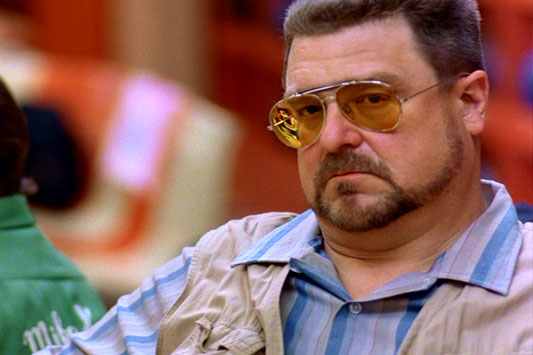
Of course, evangelicals don’t need to worry about running for election (though the likes of Russell Moore does need to worry about ministry dollars going somewhere other than the Southern Baptist cooperative program). But evangelicals who live in the United States may want to think (with help from Linker) about how to love their actual neighbors who live within U.S. borders (Walter didn’t see his buddies die face down in ‘Nam for open borders):

Many Americans believe that their constitution presumes or appeals to certain timeless, universal moral truths that apply to all human beings. But the U.S. Constitution itself — like the constitutions, fundamental laws, and commonly affirmed norms and rules of all political communities — is nonetheless instantiated in a particular place, rooted in a particular tradition. It also pertains and applies only to people who are members of the political community known as the United States of America.

Those who are members of this community are known as American citizens. They get a say in what laws get passed and how they get enforced. Those who are not members of this community — who are not citizens — don’t get such a say. The community is perfectly within its rights to decide which and how many of these outsiders will be allowed to visit the country, how long they will be allowed to stay, when they will need to go, and how many, if any, will be permitted to join the community permanently by becoming citizens.

This is one of the most elemental acts of politics: the community deciding who to admit and on what terms. To treat this act as somehow morally illegitimate is to treat politics as such as morally illegitimate.

In other words, evangelicals think like 1kers, as if the U.S. is a Christian community. Imagine welcoming non-Christians into fellowship in a Christian congregation. What sense does that make? So why should citizens of the United States act as if they are the United Nations of the World. As Linker says, it’s a complicated question how Americans decide what to do with outsiders:

Note that nothing I’ve said tells us anything about how many immigrants or refugees the political community of the United States should welcome at any given moment of history, or what criteria should be used to make this determination. I generally favor liberal immigration policies; many Trump voters take a very different view. The point, as Josh Barro recently argued in an important column, is that the policy debate needs to be made in terms of the good of the political community as a whole and in its parts, not in terms of abstract, extra-political moral duties owed to prospective newcomers. A political community exists in large part to benefit itself — to advance the common good of its citizens. There’s nothing shameful in that. It’s to a considerable extent what politics is.

And don’t forget, if godless Democrats and progressive evangelicals agree that Jesus is on the side of refugees, w-w has failed.

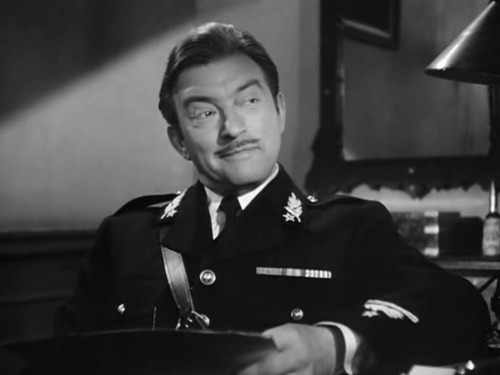
The Captain Renault GIF

How can you be shocked, shocked to find injustice going on in America after Ferguson (film noir anyone?)? And yet, people like Patricia McGuire of Trinity Washington University act as if the country has not been having a conversation about having a conversation about race for the past two plus years:

“We Americans study the history of tyranny and exclaim, ‘That’s terrible, but it would not happen here!’ as we congratulate ourselves on the robust state of our democracy. The experience of the last few months now exposes this once-confident boast as terribly naive and perhaps even dangerous as a new administration indulges in a remarkable torrent of false and misleading statements as a basis for policy and action,” she wrote. “The gravest lie we are grappling with at the present moment is the Trump Administration’s cruel and unreasonable war on immigrants — mostly people who are black and brown, and Muslim — Mexicans and refugees from central America, Syrian refugees, people from certain countries in the Middle East and Africa including Iran, Iraq, Sudan, Syria, Yemen, Libya and Somalia.”

Black lives mattered before Trump?

This is why we worry about those who use the present to turn history into morality plays. What history does best is teach students we’ve been here before, all is vanity. Only Whig historians believe in progress and then are surprised when their narratives let them down.

But We Already Have Ethics Experts

Several weeks ago while listening to NPR I heard a phrase I had not encountered before — ethics experts. These were people with expertise to comment on the conflict of interests surrounding the newly elected President Trump (as if the press needs to hind behind such expertise). This is part of the story in particular:

We are continuing our coverage of the Trump administration’s executive orders implementing a permanent ban on those coming from Syria and a temporary ban of citizens coming from six additional Muslim-majority countries – Iran, Iraq, Libya, Somalia, Yemen and Sudan.

Now, one aspect of the new policy that has drawn notice are countries that are not on the list, including Saudi Arabia, Egypt and the United Arab Emirates. And those are the countries of origin of a number of people who carried out terrorist attacks in the U.S. starting with September 11, 2001. Those countries also happen to be places where President Trump and his family have business interests.

That’s one reason ethics experts continue to raise questions about how President Trump is addressing potential conflicts or even the appearance of them.

I also noticed that one of the experts to which the reporters turned was — wait for it — formerly in the Obama administration:

One of them, for example, spoke with NPR. That’s Norm Eisen. He’s a former ethics adviser to President Obama, and he’s a fellow now at Brookings Institution. He says that it looks to him like Trump was singling out countries that did not pay him tribute. That was his words.

If Rush Limbaugh brought on ethics experts to comment on Nancy Pelosi, would anyone inside the editorial offices of NPR think such expertise credible?

But we are surrounded now by ethical expertise (though it seems to be fairly easy to come by — a general rather than expert sense).

But ethics experts say the broader conflict between the White House and Nordstrom is more worrisome, raising questions about whether the United States is entering a new environment in which presidents use government to steer money to their inner circles.

Here’s another:

Outside ethics experts say Trump’s conflicts-of-interest plan does almost nothing to clear up problems that could arise during his presidency. Walter Shaub, the director of the Office of Government Ethics, called the plan “meaningless.” Norm Eisen, who served as an ethics attorney under President Obama, told Mother Jones that Trump’s plan “falls short in every respect.”

And yet, just six months ago, according to a Google word search, ethics experts were not so easy to come by (even in the midst of all the allegations swirling around both the Clinton and Trump campaigns). One story wondered about ethical food:

Andrew Chignell, a philosophy professor at Cornell University who teaches an ethics in eating course each spring, had a change of heart when he embraced a vegan diet five years ago. But he still identifies as more of a flexitarian when he’s been invited to someone’s home for a meal.

Another commented on the ethics of a judge:

A controversial Nashville judge who retroactively signed orders committing dozens of people to mental health institutions violated ethics rules by doing so, according to a judicial expert’s opinion.

Another link led to the defense of such a thing as an ethics expert:

Within my sub-genre of philosophy – practical ethics – the suspicion of public engagement has a more specific cause. It’s often asserted that moral philosophers can’t claim expertize in ethics in the same way a chemist, for example, can be an expert on a molecule.

That’s a concern that puzzles me. Certainly there’s some evidence – from the UC Riverside philosopher Eric Schwitzgebel – that those who write about and teach courses in ethics are no more ethical than anybody else. And it’s true that specializing and so commanding authority in trichloro-2-methyl-2-propanol is disanalogous in various ways to being an authority in some corner of practical ethics – not least in how this expertize can be tested.

Still, I want to defend the expertize of moral philosophers, to maintain that their views in their chosen field merit respect and at least a degree of deference.

But now, after the Trump victory, ethics experts are easy to find.

So when John Fea says that times such as these call for the special work of historians, I’m left wondering what ethical work is left to do once every journalist and editor and academic and Hollywood celebrity has already taken a number to condemn Trump again:

Historians must remind us, in this age of Donald Trump, that we as a nation have not always lived up to our highest ideals. Their work can remind us that we have failed in the past and encourage us, perhaps this time around, to follow our better angels.

But most importantly, historians offer ways of thinking about the world that we desperately need right now. History teachers challenge students to make evidence-based arguments. They spend time showing students how to write footnotes and cite sources correctly because they do not want them to speak or write in public without research to support their conclusions. They counter “fake news” with facts.

In this regard they teach the nation’s young people how not to be like Donald Trump.

Is the argument for not living like Trump based on evidence or on ethics? Were historians worried about Trump before becoming president? Did they condemn billionaires, real estate developers, adulterers, divorcees, outer borough New Yorkers? Now, when some of the coarser aspects of American society attach themselves to the presidency — as if for the first time — we need historians to teach us how not to be like Trump?

I get it. My friend John finds Donald Trump repellent. (Is that ethical for a Christian who is called to love his enemy? Think Jesus and Zacchaeus.) But again, why gussy it up in the aura of academic expertise? Speak truth to power as a citizen. Do it as a Christian. But as a historian do remember that ethics is a different academic discipline that seldom leaves history as an unfamiliar territory. Moral indignation renders the past something to be condemned for not meeting now’s standards.

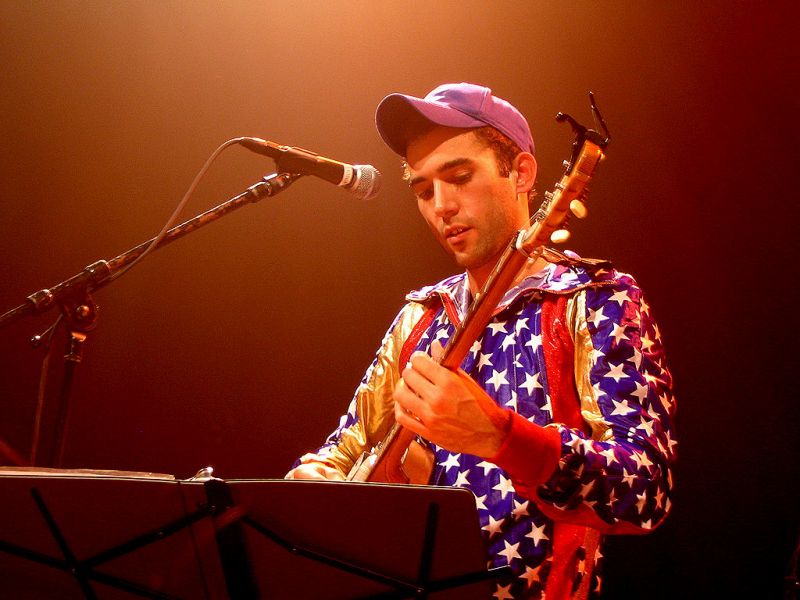
Looks Like Trump is Sufjan’s Choice for POTUS

Mark Tooley reports that Sufjan Stevens opposes Christian nationalism:

Musician Sufjan Stevens blogged last week about politics and faith, decrying the parochialism of American Christianity while unconsciously offering his own brand of uniquely American impatient individualism.

The blog was republished in The Washington Post online, headlined “Stop repeating the heresy of declaring the United States a ‘Christian nation.’”

“You cannot pledge allegiance to a nation state and its flag and the name of God, for God has no political boundary,” according to Stevens. “God is love, period. God is universal, nameless, faceless, and with no allegiance to anything other than love.” He added: “A ‘Christian Nation’ is absolutely heretical. Christ did not come into this world to become a modifier. Look what happened to the Holy Roman Empire.”

That’s why President Trump’s failure to use religion to sacralize national purpose must be an encouragement to all who reject arguments that make American a Christian nation. John Fea notes that POTUS may be a blessing for mainline Protestants who edit Christian Century:

Theologians have long been wary or dismissive of civil religion, noting that it often functions as a rival religion to authentic faith—it’s a brand of Christian heresy. Civil religion borrows Christian themes but celebrates the stories and martyrs of the nation rather than the church and treats the nation rather than the church as the vehicle of God’s purposes. As such, especially in times of war, American civil religion has been an invitation to hubris and self-righteousness; it can cloak mundane self-interest in religious garb.

Yet because civil religion claims a transcendent purpose for the nation, it has also offered a basis for judging the nation’s failures and spurring it to reform. Because the nation has claimed high ideals for itself, it has invited a moral critique. It was in that tradition that Martin Luther King Jr. blended biblical ethics with democratic principles to condemn racial segregation as a betrayal of the nation’s creed of equality for all. It is in that tradition that protesters took to the streets in recent weeks to insist that the United States fulfill its promise to be a beacon of freedom to refugees from all lands and religions.

Christians have no ultimate stake in the survival of American civil religion. Its demise under Trump could conceivably encourage the church to claim and assert its distinct identity apart from the rhetoric of American politics. Yet insofar as the demise of American civil religion spells the contraction of moral imagination and the loss of a horizon of moral judgment and aspiration, it is hardly a development that Christians can cheer. The collapse of a Chris­tian heresy can lead to things that are far worse.

Just like the broken clock that is right two times each day, every Christian is going to have a 2k moment sometime in her life.

Does POTUS Define US?

Of course, not. The federal government has two other branches and the United States is way more than its government. McDonalds? Hollywood? Caitlyn? Harvard? The military? Heck, we don’t even pledge allegiance to the White House.

But what’s true for a nation is not true for a church like Roman Catholicism. There the papacy does define Roman Catholicism. And Ross Douthat explains why investing all that power and identity in a single office is a mistake, or why Pope Francis is more of a threat than President Trump:

Friendly media coverage casts the pontiff as a man of the center, an ecclesiastical equivalent of Angela Merkel or Barack Obama or David Cameron, menaced by authoritarians to his right. But he is no such thing, and not only because his politics are much more radical and apocalyptic than any Western technocrat. In the context of the papacy, in his style as a ruler of the church, Francis is flagrantly Trumpian: a shatterer of norms, a disregarder of traditions, an insult-heavy rhetorician, a pontiff impatient with the strictures of church law and inclined to govern by decree when existing rules and structures resist his will.

His admirers believe that all these aggressive moves, from his high-stakes push to change church discipline on remarriage and divorce to his recent annexation of the Knights of Malta, are justified by the ossification of the church and the need for rapid change. Which is to say, they regard the unhappiness of Vatican bureaucrats, the doubts of theologians, the confusion of bishops and the despair of canon lawyers the way Trump supporters regard the anxiety of D.C. insiders and policy experts and journalists — as a sign that their hero’s moves are working, that he’s finally draining the Roman swamp.

Meanwhile the church’s institutionalists are divided along roughly the same lines as mainstream politicians in the face of Trump’s ascent.

There is a faction that has thrown in with Francis completely, some out of theological conviction, some out of opportunism, some out of simple loyalty to the papal office. (The analogy would be to the mix of populists, opportunists and institutionalists who smoothed Trump’s progress to the Republican nomination.)

There is a group that is simply silent or deeply cautious — note how few of the world’s bishops have taken any position on the controversy over divorce and remarriage — in the hopes that things will simply return to normal without their having to put anything at risk. (The analogy would be to most Republican elected officials, and a few red-state Democrats as well.)

There is a group that is relatively open in criticism of the pope’s agenda but also unwilling to cross the line into norm-smashing of its own. (The analogy would be to the American center-right and center-left, from John McCain to Hillary Clinton.)

This last group’s sheer diversity is one reason the Bannon-versus-Francis theory fails. The ranks of papal skeptics are filled with Africans and Latin Americans as well as North Americans and Europeans, with prelates and theologians and laypeople of diverse economic and political perspectives. Most are not traditionalists like Burke; they are simply conservatives, comfortable with the Pope John Paul II model of Catholicism, with its fusion of the traditional and modern, its attempt to maintain doctrinal conservatism while embracing the Second Vatican Council’s reforms.

But because this larger group is cautious, its members have been overshadowed by the more forthright, combative and, yes, reactionary Cardinal Burke, whose interventions might as well come with the hashtag #TheResistance.

Which places him in the same position, relative to Francis, that a Bernie Sanders occupies relative to Trump — or that Jeremy Corbyn occupies relative to Brexit. He’s a figure from the fringe whose ideas gain influence because the other fringe is suddenly in power; a reactionary critic of a radical pope just as Sanders or Corbyn are radical critics of a suddenly empowered spirit of reaction.

So the story of Catholicism right now has less to do with reaction alone and more to do with what happens generally when an institution’s center doesn’t hold.

You don’t hear Bryan and the Jasons saying much about church politics. It’s like reading the Federalist Papers and ignoring the 2016 presidential campaign. And yet, ideas do have consequences and the theory of chief and infallible interpreter of the faith is not simply an idea. It is a way of life. At least the federalists left behind a Constitution. What enumerated powers did papal supremacists leave behind?

Islam’s Problem Has Nothing to do with Islam

I second John’s question and raise him a question. What am I missing about Islam that has so many people acting like Muslims are like United Methodists? I don’t mean to imply that all Muslims are terrorists any more than all Methodists follow John Wesley. But for Never Trumpers to argue about Islamophobia as if fears of Muslims are irrational — precisely forty years into various forms of Islamic terrorism, and while ISIS has been a major source of news coverage — is well nigh extraordinary.

Did anyone remember, for instance, when Graeme Wood wrote a piece not in the American Spectator but in Atlantic Monthly about ISIS’ Islamic convictions?

The most-articulate spokesmen for that position are the Islamic State’s officials and supporters themselves. They refer derisively to “moderns.” In conversation, they insist that they will not—cannot—waver from governing precepts that were embedded in Islam by the Prophet Muhammad and his earliest followers. They often speak in codes and allusions that sound odd or old-fashioned to non-Muslims, but refer to specific traditions and texts of early Islam.

Now if you want to distance the Muslim Brotherhood from terrorism, fine. But that doesn’t get you the faculty of Harvard University:

It’s fine to think that the Muslim Brotherhood is bad, terrible, authoritarian, or illiberal (in my book on the Egyptian and Jordanian Brotherhoods from the 1980s till today, I highlight the group’s illiberal nature at length). Eric Trager, who I have disagreed with quite strongly on matters relating to the Brotherhood, has called it more akin to a “hate group.” But even he has written against designation. The Brotherhood’s badness, one way or the other, has no bearing on whether or not it is a terrorist organization. Being a terrorist organization involves, among other things, ordering your members to commit terrorist attacks, something no one argues the Egyptian Muslim Brotherhood is doing.

Even promotional copy for events featuring two of the most western friendly and thoughtful interpreters of Islam, Mustafa Akyol and Shadi Hamid, notice that Muslim societies are not places where Washington Post editors send their children for university:

Predominantly Muslim societies suffer from low levels of political, economic, and civil liberties. Authoritarian political regimes, rigid social structures, and radical religious movements that suppress human liberty in the name of God loom large in the Muslim world. Is this liberty deficit due to a “dark age” of Islam, which can be overcome with reform and a different religious interpretation? Can Islam make its peace with liberal democracy, as Christianity and other religions did after their own illiberal ages? Or is there something different about Islam, making it inherently incompatible with a secular government and a free society? Mustafa Akyol, a longtime defender of “Islamic liberalism,” is optimistic. Shadi Hamid is more pessimistic, arguing that Islam is “exceptional,” in the sense of being essentially resistant to liberalism.

Maybe you want to claim that it’s all a matter of interpretation — some truth there — but that still leaves you having to distinguish better from worse versions of Islam according western liberal standards, which in and of itself means Islam is not United Methodism.

For that reason, it’s a little rich when Michael Schulson writes as if the problems of perception that surround Islam are really the constructions of President Trump and his advisers:

It is difficult to think of a definition of religion that does not include Islam — an ancient tradition with practitioners who believe in one God, pray and try to live their lives in accordance with a scripture.

So why has this particular canard taken off?

Wajahat Ali, a writer, attorney, and the lead author of “Fear, Inc.,” a report on American Islamophobia, traces the idea’s recent surge to anti-Islam activists David Yerushalmi and Frank Gaffney. In 2010, Gaffney’s Center for Security Policy published a report, “Shariah: The Threat to America,” arguing that Muslim religious law, or sharia, was actually a dangerous political ideology that a cabal of Muslims hoped to impose on the United States.

“Though it certainly has spiritual elements, it would be a mistake to think of shariah as a ‘religious’ code in the Western sense,” the report argued. It also suggested banning “immigration of those who adhere to shariah … as was previously done with adherents to the seditious ideology of communism.”

“They misdefine sharia in a way which is not recognizable to any practicing Muslim,” Ali said. But the idea was influential. By the summer of 2011, more than two dozen states were considering anti-sharia legislation. More recently, Gaffney reportedly advised Trump’s transition team.

For many Americans, confusion about religious law, political ideology and sharia may reflect a distinctly Christian, and especially Protestant, way of thinking about the nature of religion.

“It’s hard to talk about this sometimes because there is no equivalent of sharia in the Christian tradition,” said Shadi Hamid, a senior fellow at the Brookings Institution and the author of “Islamic Exceptionalism: How the Struggle Over Islam Is Reshaping the World.” “Even when you’re talking to well-intentioned, well-meaning people who really want to understand, explaining sharia is very challenging because there’s nothing in Christianity that’s quite like it.”

Actually, Christianity does have its equivalent. The mainstream media has called them theocons and Damon Linker, who wrote a book by that title, copped the plea:

Bannon and the intellectuals Neuhaus regularly published in First Things share the conviction that, at a fundamental level, the United States is a Christian nation — not just in the sense that an overwhelming majority of Americans describe themselves as Christians, but also in the sense that the country’s highest ideals and convictions (above all, about individual rights and innate human dignity) derive from a Catholic-Christian inheritance the vitality of which must be actively fostered and promoted by the culture. The two groups also tend to view the threat posed by Islamic terrorism in terms of a civilizational clash between Islam and the Judeo-Christian West (or “Christendom”).

But that’s where the continuities end.

At their best, the original theocons followed a tradition of Christian political reflection that insisted on placing the nation under the guidance and judgment of a transcendent God (and his extra-political Church) that stands apart from all this-worldly communities. That was in fact the theme of Neuhaus’ final book, published shortly after his death from cancer in early 2009.

Bannon, by contrast, tends to treat religious affiliation wholly as a function of ethno-national identity: “We” in the West must affirm our Christian identity or we will be overrun by dangerous outsiders (Islamists) who will impose a different identity upon us. In this respect, Bannon’s position is closer to Eastern Orthodoxy (and Russian Orthodoxy in particular), with its sanctioning of an official ethno-national church that mediates between individual believers and the Godhead.

Yet, to Linker’s credit, he can tell the difference between a good theocon and a fear-inspiring one, unlike many social justice types who think the campus of Princeton University is just like Ferguson, Missouri. I do wonder, though, if he remembers how his editors at Doubleday trumped up his book?

Do you believe the Catholic Church should be actively intervening in American politics on the side of the Republican Party?

Do you believe the federal government should be channeling billions of tax dollars a year to churches and other religious organizations?

Do you believe a microscopic clump of cells in a petri dish possesses the same rights that you possess?

Do you believe a doctor who performs abortions — and a woman who chooses to have an abortion — should be arrested and charged with murder?

Do you believe the public schools should actively teach children to doubt the scientific theory of evolution?

Do you believe legally available contraception is producing a “culture of death” in the United States?

Do you believe that the United States should be a Christian nation?

Do you fear Christians because you don’t fear Muslims?

No reason to fear Islam, no not one. Just think professional boxing and the NBA:

Can we imagine an America without Muhammad Ali, who was born Cassius Clay in Louisville and gained national fame when he won a gold medal at the Rome Olympics in 1960 as a light heavyweight boxer? In 1964, Clay defeated Sonny Liston, becoming the world heavyweight boxing champion. A few years earlier, Clay had gone to Nation of Islam meetings. There, he met Malcolm X, who as a friend and advisor was part of Clay’s entourage for the Liston fight. Clay made his conversion public after the fight, and was renamed by Nation of Islam leader Elijah Muhammad as Muhammad Ali.

When he was reclassified as eligible for induction into the draft for the Vietnam War, Ali refused on the grounds of his new Muslim religious beliefs. Famously, reflecting on the racism he had experienced in America, Ali said, “I ain’t got no quarrel with them Viet Cong—no Viet Cong ever called me ni**er.” His conscientious objector status was rooted in the teachings of the Nation of Islam, as Elijah Muhammad had earlier been jailed for his refusal to enter the draft in the Second World War.

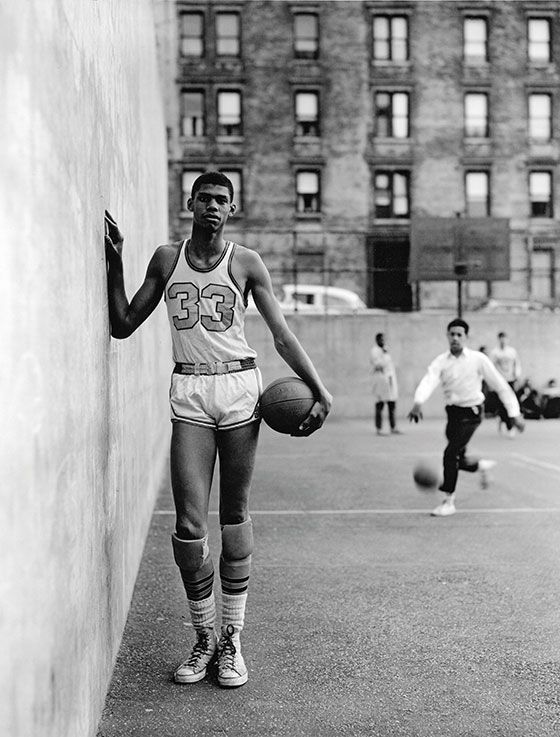
. . . Or think of my other great hero, another American Muslim, Kareem Abdul-Jabbar. The greatest basketball coach ever, the late John R. Wooden, thought that Kareem was the greatest basketball player ever. In his three years of eligibility under Coach Wooden at UCLA, Kareem was three-time player of the year, three-time finals MVP, and three-time NCAA champion. In other words, he had three perfect seasons while he earned his degree. He lost the same number of games at UCLA—two—that he did in high school.

Kareem converted to Islam in 1971, and excelled in the pros just as much as he did in college or high school. All in all, he won six NBA championships and six NBA MVP awards, was a nineteen-time all-star, and remains the NBA’s all-time leading scorer. Combine that pro record with his three NCAA championships, and I don’t know how you can make the case for anyone else as the greatest basketball player of all time.


Why History Matters

Journalists and historians can — we get it — perform moral outrage well. Consider the Times on Stephen Bannon:

[T]he defining moment for Mr. Bannon came Saturday night in the form of an executive order giving the rumpled right-wing agitator a full seat on the “principals committee” of the National Security Council — while downgrading the roles of the chairman of the Joint Chiefs of Staff and the director of national intelligence, who will now attend only when the council is considering issues in their direct areas of responsibilities. It is a startling elevation of a political adviser, to a status alongside the secretaries of state and defense, and over the president’s top military and intelligence advisers.

The quotation comes from John Haines piece on Bannon’s appointment to the NSC in historical perspective:

While Mr. Bannon has sardonically compared himself to “Thomas Cromwell in the court of the Tudors” (perhaps choosing to ignore how that role ended), his national security brief might better analogize to Nelson Rockefeller. As noted earlier, he succeeded C.D. Jackson as Special Assistant to the President for Cold War Planning in the Eisenhower administration. Mr. Rockefeller’s appointment was memorialized in a March 1955 memorandum to President Eisenhower from Rowland Hughes, the director of the Bureau of the Budget (later renames the “Office of Management and Budget”):

b.The appointment of Mr. Nelson Rockefeller as Special Assistant to the President to provide leadership on your behalf in the development of increased understanding and cooperation among all peoples and in reviewing and developing methods and programs by which the various departments and agencies of the Government may effectively contribute to such cooperation and understanding.

c.The assignment to a Special Committee chaired by Mr. Rockefeller of responsibility for coordinating the implementation of the policies contained in NSC 5505/110 and NSC 5502/1.

Mr. Rockefeller assumed a direct role in national security and intelligence operations when President Eisenhower named him chair of the Planning Coordination Group (PCG), which was subordinate to the NSC’s Operations Coordinating Board (OCB). The OCB was established by a September 1953 executive order “to provide for the integrated implementation of national security policies by the several agencies.”[26] According to a letter to Director of Central Intelligence Allen Dulles, “At the time of the issuance of the Executive Order creating the OCB the President designated his Special Assistant for Cold War Planning as his representative on the OCB.”

President Eisenhower authorized the PCG in a 10 March 1955 letter to Mr. Rockefeller. He directed that the PCG was to be advised “in advance of major covert programs initiated by the Central Intelligence Agency;” and furthermore, that the PCG “should be the normal channel for giving policy approval for such programs as well as for securing coordination of support therefor among the Departments of State and Defense and the Central Intelligence Agency.” The two referenced NSC reports — NSC 5505/1 (“Exploitation of Soviet and European Satellite Vulnerabilities”) and NSC 5502/1 (“U.S. Policy Toward Russian Anti-Soviet Political Activities) — are January 1955 directives for an “active political warfare strategy” against the Soviet Union.

Mr. Rockefeller’s brief was defined in a March 1955 NSC memorandum that discussed “The Foreign Information Program and Psychological Warfare Planning.” Declaring “the principle that propaganda in both peace and war is a continuing mechanism of national policy directed toward the achievement of national aims,” the NSC charged Mr. Rockefeller to conduct:

[A] high level review of the existing arrangements in the light of NSC 59/1 and NSC 127/1 should be undertaken with a view to preparing appropriate recommendations for consideration by the National Security Council. Such a review should be undertaken with a full understanding of the existing arrangements and current plans and programs in this field, as well as the status of planning for the possibility of limited or general war.

The NSC further directed that “responsibility for making such a review and recommendations [was] assigned to Mr. Nelson Rockefeller as Special Assistant to the President:”

[T]o provide leadership in the development of increased understanding and cooperation among all peoples and in reviewing and developing methods and programs by which the various departments and agencies of the Government may effectively contribute to such cooperation and understanding. In this assignment Mr. Rockefeller should be provided with such advice and assistance as he requires from the Bureau of the Budget, the Office of Defense Mobilization and the Operations Coordinating Board as well as the responsible operating departments and agencies.

Never let real historical details get in the way of surreal moral outrage. Do notice that Bannon is not as well dressed or coiffed as the Ivy League’s own, Rockefeller.

Choose Ye This Day

Donald Trump elicits the inner fundamentalist in all Americans. A recent expression is a drive-by blog post at Commonweal on Senator Ben Sasse:

Well, that didn’t take long. Ben Sasse, Nebraska’s energetic, open-minded, publically engaged Republican senator has been Trumpified.

Citizens expected him, as an outspoken and popular #NeverTrump-er who was relatively uncorrupted by power, to be part of the intraparty resistance to the new president’s ethos, tactics, and character traits. Surely he would have respect for the norms of the Constitution and engage his critics with reason, not mockery. This is, after all, a senator who gives encomia to the Constitution on Twitter and casually banters with his constituents and naysayers about politics and college football.

Sasse was at least critical of last week’s executive order. But this week, with the Supreme Court nomination of Neil Gorsuch, he has showed how quickly the new executive’s behavior can be imitated.

Last night and this morning, Sasse gleefully mocked both protestors and Sen. Minority Leader Schumer.

So the idea is that Sasse should have been sympathetic to protesters and not to President Trump’s nominee for SCOTUS. A sitting senator is supposed to choose unhinged American citizens — and it’s not like we haven’t seen many of such moralists the past 6 years — over the leader of the free world (for now).

And for Mr. Peppard to act as if the protesters to Neil Gorsuch’s nomination are not risible but serious is almost as risible as the recent spate of convulsions over President Trump:

just as worrisome, the fact that he publicly mocked peaceful protestors — which he did again on radio this morning — is an eerie warning that he’s been Trumpified. The new president has shown that he loves to “punch down,” something the old Sen. Sasse would not have done. But executives have a way of modeling behavior that those seeking advancement find difficult not to emulate.

Mocking in juvenile manner (pussy parade anyone?) the duly elected executive of the federal government is not worrisome? And you wonder why Trump is POTUS.

Not even with the Holy Ghost Can They Help Themselves

Scott Culpepper (via John Fea) lets Christian academics know they are spay-shill:

Christian scholars are indeed a subversive influence. Critics are right in labeling us a subversive influence if what they mean is that we subvert the subordination of facts to falsehoods calculated to sway popular opinion, the substitution of shallow shibboleths for deeper reflection, and the sacrifice of principle on the profane altar of political expediency. And there will be a greater need for us to keep on subverting these things with all the energy we can muster in the age of Trump.

The times call for renewed conviction, creativity and courage on the part of Christian scholars. The masses may not know they need us, but they need us. The endorsement of popular influence as a virtue in the framing of our American republic was predicated on the hope that education and character formation would equip people to exercise their rights intelligently. No one is better prepared than Christian scholars and the institutions they serve to provide this kind of education infused with serious attention to character formation.

In a time when forces abound that pressure Christian scholars to adopt a posture of compliance to fit in, we need more than ever to stand up and stand out unapologetically. All clouds pass in time. When they do, a new generation will build on either the ruins or the foundations of the past. That generation sits in our classrooms today. We have the opportunity to model something very different from what they are seeing on the national stage in both church and state. May Christian scholars in the age of Trump have the courage to give the masses what benefits them rather than what has been mandated in their name.

I’d be a lot more impressed with such a call if it included challenging the New York Times, Washington Post, New Yorker, and elite professors at really rich universities. But since all of these institutions are already in full-phase opposition to Trump, how does an argument like this not simply show someone to be jumping on the bandwagon — and, oh by the way — not one of the 81%. Isn’t it the job of Christian intellectuals to be subversive across the board?

I’d be even more impressed if Christian scholars had hyperventilated about drone strikes that kill civilians (one of them American).