A seminar at the University of Notre Dame over the weekend reminded me of thoughts that went into Still Protesting and my objections to the conversion stories of evangelicals becoming Roman Catholic a decade or so ago. The seminar itself was about a new book about the Claretians (official name: Congregation of Missionaries Sons of the Immaculate Heart of the Blessed Virgin Mary), an order started in mid-19th-century Spain that evolved into an order that evangelized and ministered to Hispanics and Latinos in North America. The gathering of academics also occurred on a campus that Christian Smith, one of the greatest sociologists of religion in the United States, had left roughly nine months earlier.
The reason for connecting a seminar on one of the many religious orders that dot the Roman Catholic landscape and Christian Smith’s departure from Notre Dame is a suspicion that many Protestant converts to Rome do not know what they are getting into. Aside from the twists and turns of the development of doctrine and debates about continuity and discontinuity in the wake of Vatican II (not to mention whether the Eastern or Western churches have a better claim to antiquity), the Roman Catholic Church is a kaleidescope of institutions, many of which with a high degree of autonomy, with the papacy as the tube holding the mirrors, colored fillers, and eyepiece together. Of course, gaining recognition from the Vatican requires some conformity among religious and priests within a specific order. But in the case of the Claretians, they developed their own materials, their own forms of devotion, moved from place to place (sometimes to be banned by the local bishop), and developed a distinct set of allegiances among Spanish-speaking Roman Catholics in Mexico, Texas, and later Chicago that ran in grooves distinct from “the” teaching of the Vatican, or the national parishes (that ministered, for instance, to Poles, Italians, Germans), and other religious orders.
Aside from the institutional configuration of the Claretians’ work — how did the superior coordinate with local bishops or the various agencies of the Vatican? — I had questions about the degree to which the order cultivated a generic Roman Catholic piety or an alternative that nurtured a high degree of attachment to the Claretians specifically. In other words, if a Latino-American wound up moving from a Claretian parish to a place that only had diocesan clergy, would he or she find a home? Or would the Claretian-formed Roman Catholic feel at odds with other Roman Catholics?
These questions are ones that apply to Protestants perhaps as much as Roman Catholics. If someone grows up Baptist, will he make an easy transition to Lutheranism if he moves to a town where (as if) there are no Baptist congregations? And what about the Presbyterian church planter who tries to establish a congregation in a town that already has Methodist, Baptist, Lutheran, and Anglican congregations? Who coordinates among the Protestant communions to decide whether the Presbyterian is allowed to start another Protestant congregation? American Protestants have no umbrella institutional authority to make such calls. Roman Catholics do. It is the papacy.
But here’s the kicker, without the Roman pontiff, Roman Catholicism is as diverse and as entrepreneurial as Protestantism. That may seem like a big difference, as if Rome has a kind of authority that Protestants lack. But often it seems that the pope acts more like a back stop than an actual potentate executing real power over Roman Catholic ministries. Roman Catholics can choose to operate a host of orders and ministries and they can develop all sorts of different kinds of piety and forms of devotion. The one thing that keeps them “united” are the international offices housed in Vatican City.
Maybe that makes Rome superior to Protestantism, but in the welter of modern society with its religious freedoms, the papacy hardly stacks up to be a weight against individualism, relativism, and creative destruction. Rome’s unity is on paper or fills aspirations. It hardly generates a disciplined, uniform, constraining church.
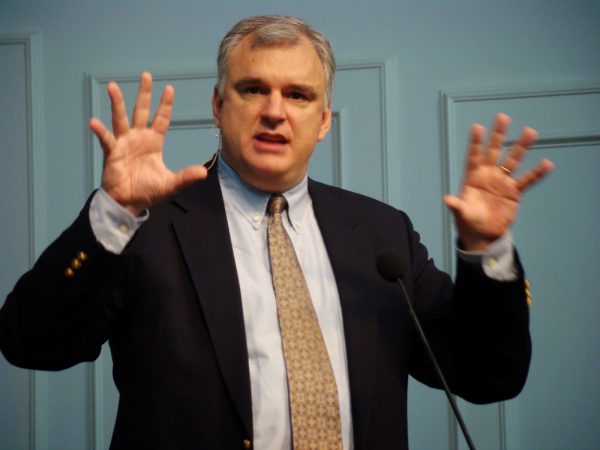
This is where Christian Smith’s departure from Notre Dame deserves mention. He has himself had a long track record of leaving parts of his background loudly. His break with his own academic discipline of sociology and its “sacred project” was as courageous as it was smart:
Sociology’s sacred project champions emancipation, autonomy, equality, justice, inclusion, diversity, open-mindedness, progress, tolerance, and cosmopolitanism. But, whether or not it helps achieve those in the outside world, within sociology itself, and in higher education broadly, in the end that sacred project actually tends to produce sectarian narrowness, exclusion, uniformity, silencing, self-censorship, lack of debate, the negative sanctioning of nonconformists, and the debilitation of rigorous thought. In short, it reproduces in its own image that which it opposes and seeks to transform in the world beyond.
This critique did not mean he stopped teaching sociology or writing. It did, though, signal his own repudiation of his guild’s orthodoxy.
What he did with sociology, he also applied to his own evangelical Protestant faith. In two books, Smith explained why he left Protestantism for Rome. One was The Bible Made Impossible: Why Biblicism Is Not a Truly Evangelical Reading of Scripture (2011). In the other, How To Go From Being A Good Evangelical To A Committed Catholic In Ninety-Five Difficult Steps (2011), Smith walked through and deconstructed Protestant objections to Roman Catholicism, such as a wooden and literalistic hermeneutic:
For Protestants, the words are the truth. That is why one must get them exactly right. For Catholics, by contrast, words formulate expressions of truth. There is not in Catholicism, a literal, exact univocal correspondence or identity between words and truth. Much of truth, especially truth that directly concerns God, is in Catholicism a mystery. Ultimately the truth is God. And God is not words.
That objection, in some ways, makes his departure from Notre Dame surprising. Smith’s reason for leaving (and retiring with a bang!) has the earmarks of a Protestant expecting a Roman Catholic institution to adhere to the words it professes. Instead of words, Smith faulted Notre Dame for neglecting books (which is adjacent to Protestant logocentrism):
A Catholic university is Catholic only insofar as its scholars, however diverse their frameworks and methods, maintain a serious engagement with the Catholic intellectual tradition. The central and animating question should be: What do the Catholic tradition and the many scholarly disciplines have to say to one another?
Smith judged that Notre Dame talked a good game but did not carry out its academic mission in light of Rome’s intellectual tradition (which would likely be a set of authors, texts, and theological themes).
It’s not just that the university hasn’t reached its potential, it’s that it hasn’t seriously tried. Sustained engagement with the Catholic intellectual tradition happens in pockets, but leaders avoid the institutional efforts that would make this engagement consistent and integrated.
What might such efforts look like? . . . Notre Dame should advance its Catholic mission by means of standards and programs that involve truth-in-advertising, judicious hiring, incentives for faculty to learn about the Catholic intellectual tradition, and accountability for the expectation that faculty contribute to the Catholic mission.
Smith was clearly not expecting a university to have the same kind of uniformity as the church. He was not advocating for hiring only Roman Catholics (otherwise Notre Dame would not have hired him before his conversion). He had hoped that Notre Dame’s faculty would teach or conduct their scholarship in light of the Roman Catholic intellectual tradition even if they did not themselves belong to the church. But if Smith had this kind of standard for a university, imagine what he must have found when he encountered the variety of Roman Catholic options within the church itself, from its clergy to the laity, from the German bishops to the folk piety of the faithful in Central America.
An irony of Smith’s departure from Notre Dame is that his reason for leaving has on it the fingerprints of his education as an undergraduate at Gordon College. When he graduated from the evangelical college on Boston’s North Shore, Gordon had almost three decades of practice with integrating faith and learning. Whether it came from the inspiration of Neo-Calvinists at Calvin College or emerged more organically among evangelical faculty in philosophy who tried to implement a curriculum in which students thought about the arts and sciences from a Christian perspective, Smith’s undergraduate education undoubtedly planted the seeds of conducting the work of a Christian college or university in ways that reinforced Christian conviction among professors, students, and maybe even student-athletes (at least before Name, Image, and Likeness).
As it turns out, the integration of faith and learning is a lot harder to do than either Gordon faculty or Notre Dame administrators imagined. Academic subjects may line up with Christian truths only some of the time (the history of the Civil War does not automatically reinforce the Great Commission or Presbyterian polity). Christian faculty themselves may apply Christian teaching differently (the Good Samaritan supports open borders but Pauline teaching on the magistrate leads to defending ICE).
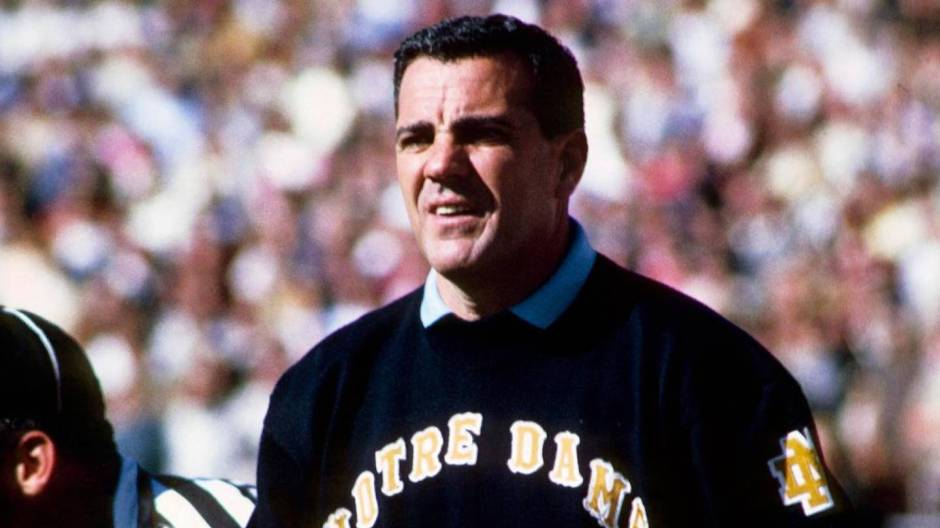
You might have thought a sociologist would have been alert to the diversity of the Roman Catholic Church and to differences among university faculty even at a confessional institution. A sociologist might have also detected that like the Claretians, Notre Dame has its own piety, one broad enough to include the reflections of Alisdair MacIntyre and the strategy of Knute Rockne.