Roman Catholicism is the Biggest Christian Tent of All

A seminar at the University of Notre Dame over the weekend reminded me of thoughts that went into Still Protesting and my objections to the conversion stories of evangelicals becoming Roman Catholic a decade or so ago. The seminar itself was about a new book about the Claretians (official name: Congregation of Missionaries Sons of the Immaculate Heart of the Blessed Virgin Mary), an order started in mid-19th-century Spain that evolved into an order that evangelized and ministered to Hispanics and Latinos in North America. The gathering of academics also occurred on a campus that Christian Smith, one of the greatest sociologists of religion in the United States, had left roughly nine months earlier.

The reason for connecting a seminar on one of the many religious orders that dot the Roman Catholic landscape and Christian Smith’s departure from Notre Dame is a suspicion that many Protestant converts to Rome do not know what they are getting into. Aside from the twists and turns of the development of doctrine and debates about continuity and discontinuity in the wake of Vatican II (not to mention whether the Eastern or Western churches have a better claim to antiquity), the Roman Catholic Church is a kaleidescope of institutions, many of which with a high degree of autonomy, with the papacy as the tube holding the mirrors, colored fillers, and eyepiece together. Of course, gaining recognition from the Vatican requires some conformity among religious and priests within a specific order. But in the case of the Claretians, they developed their own materials, their own forms of devotion, moved from place to place (sometimes to be banned by the local bishop), and developed a distinct set of allegiances among Spanish-speaking Roman Catholics in Mexico, Texas, and later Chicago that ran in grooves distinct from “the” teaching of the Vatican, or the national parishes (that ministered, for instance, to Poles, Italians, Germans), and other religious orders.

Aside from the institutional configuration of the Claretians’ work — how did the superior coordinate with local bishops or the various agencies of the Vatican? — I had questions about the degree to which the order cultivated a generic Roman Catholic piety or an alternative that nurtured a high degree of attachment to the Claretians specifically. In other words, if a Latino-American wound up moving from a Claretian parish to a place that only had diocesan clergy, would he or she find a home? Or would the Claretian-formed Roman Catholic feel at odds with other Roman Catholics?

These questions are ones that apply to Protestants perhaps as much as Roman Catholics. If someone grows up Baptist, will he make an easy transition to Lutheranism if he moves to a town where (as if) there are no Baptist congregations? And what about the Presbyterian church planter who tries to establish a congregation in a town that already has Methodist, Baptist, Lutheran, and Anglican congregations? Who coordinates among the Protestant communions to decide whether the Presbyterian is allowed to start another Protestant congregation? American Protestants have no umbrella institutional authority to make such calls. Roman Catholics do. It is the papacy.

But here’s the kicker, without the Roman pontiff, Roman Catholicism is as diverse and as entrepreneurial as Protestantism. That may seem like a big difference, as if Rome has a kind of authority that Protestants lack. But often it seems that the pope acts more like a back stop than an actual potentate executing real power over Roman Catholic ministries. Roman Catholics can choose to operate a host of orders and ministries and they can develop all sorts of different kinds of piety and forms of devotion. The one thing that keeps them “united” are the international offices housed in Vatican City.

Maybe that makes Rome superior to Protestantism, but in the welter of modern society with its religious freedoms, the papacy hardly stacks up to be a weight against individualism, relativism, and creative destruction. Rome’s unity is on paper or fills aspirations. It hardly generates a disciplined, uniform, constraining church.

This is where Christian Smith’s departure from Notre Dame deserves mention. He has himself had a long track record of leaving parts of his background loudly. His break with his own academic discipline of sociology and its “sacred project” was as courageous as it was smart:

Sociology’s sacred project champions emancipation, autonomy, equality, justice, inclusion, diversity, open-mindedness, progress, tolerance, and cosmopolitanism. But, whether or not it helps achieve those in the outside world, within sociology itself, and in higher education broadly, in the end that sacred project actually tends to produce sectarian narrowness, exclusion, uniformity, silencing, self-censorship, lack of debate, the negative sanctioning of nonconformists, and the debilitation of rigorous thought. In short, it reproduces in its own image that which it opposes and seeks to transform in the world beyond.

This critique did not mean he stopped teaching sociology or writing. It did, though, signal his own repudiation of his guild’s orthodoxy.

What he did with sociology, he also applied to his own evangelical Protestant faith. In two books, Smith explained why he left Protestantism for Rome. One was The Bible Made Impossible: Why Biblicism Is Not a Truly Evangelical Reading of Scripture (2011). In the other, How To Go From Being A Good Evangelical To A Committed Catholic In Ninety-Five Difficult Steps (2011), Smith walked through and deconstructed Protestant objections to Roman Catholicism, such as a wooden and literalistic hermeneutic:

For Protestants, the words are the truth. That is why one must get them exactly right. For Catholics, by contrast, words formulate expressions of truth. There is not in Catholicism, a literal, exact univocal correspondence or identity between words and truth. Much of truth, especially truth that directly concerns God, is in Catholicism a mystery. Ultimately the truth is God. And God is not words.

That objection, in some ways, makes his departure from Notre Dame surprising. Smith’s reason for leaving (and retiring with a bang!) has the earmarks of a Protestant expecting a Roman Catholic institution to adhere to the words it professes. Instead of words, Smith faulted Notre Dame for neglecting books (which is adjacent to Protestant logocentrism):

A Catholic university is Catholic only insofar as its scholars, however diverse their frameworks and methods, maintain a serious engagement with the Catholic intellectual tradition. The central and animating question should be: What do the Catholic tradition and the many scholarly disciplines have to say to one another?

Smith judged that Notre Dame talked a good game but did not carry out its academic mission in light of Rome’s intellectual tradition (which would likely be a set of authors, texts, and theological themes).

It’s not just that the university hasn’t reached its potential, it’s that it hasn’t seriously tried. Sustained engagement with the Catholic intellectual tradition happens in pockets, but leaders avoid the institutional efforts that would make this engagement consistent and integrated.

What might such efforts look like? . . . Notre Dame should advance its Catholic mission by means of standards and programs that involve truth-in-advertising, judicious hiring, incentives for faculty to learn about the Catholic intellectual tradition, and accountability for the expectation that faculty contribute to the Catholic mission. 

Smith was clearly not expecting a university to have the same kind of uniformity as the church. He was not advocating for hiring only Roman Catholics (otherwise Notre Dame would not have hired him before his conversion). He had hoped that Notre Dame’s faculty would teach or conduct their scholarship in light of the Roman Catholic intellectual tradition even if they did not themselves belong to the church. But if Smith had this kind of standard for a university, imagine what he must have found when he encountered the variety of Roman Catholic options within the church itself, from its clergy to the laity, from the German bishops to the folk piety of the faithful in Central America.

An irony of Smith’s departure from Notre Dame is that his reason for leaving has on it the fingerprints of his education as an undergraduate at Gordon College. When he graduated from the evangelical college on Boston’s North Shore, Gordon had almost three decades of practice with integrating faith and learning. Whether it came from the inspiration of Neo-Calvinists at Calvin College or emerged more organically among evangelical faculty in philosophy who tried to implement a curriculum in which students thought about the arts and sciences from a Christian perspective, Smith’s undergraduate education undoubtedly planted the seeds of conducting the work of a Christian college or university in ways that reinforced Christian conviction among professors, students, and maybe even student-athletes (at least before Name, Image, and Likeness).

As it turns out, the integration of faith and learning is a lot harder to do than either Gordon faculty or Notre Dame administrators imagined. Academic subjects may line up with Christian truths only some of the time (the history of the Civil War does not automatically reinforce the Great Commission or Presbyterian polity). Christian faculty themselves may apply Christian teaching differently (the Good Samaritan supports open borders but Pauline teaching on the magistrate leads to defending ICE).

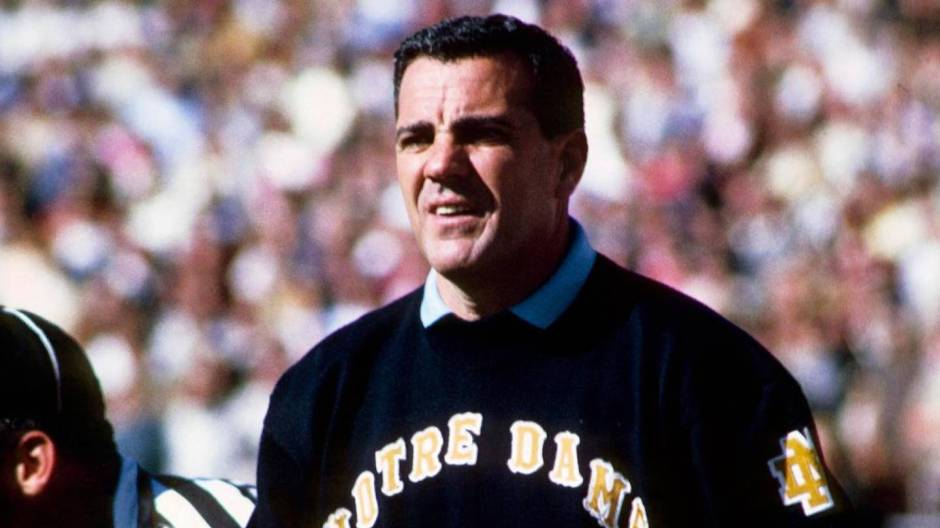
You might have thought a sociologist would have been alert to the diversity of the Roman Catholic Church and to differences among university faculty even at a confessional institution. A sociologist might have also detected that like the Claretians, Notre Dame has its own piety, one broad enough to include the reflections of Alisdair MacIntyre and the strategy of Knute Rockne.
Rules for Who Gets In Are Complicated

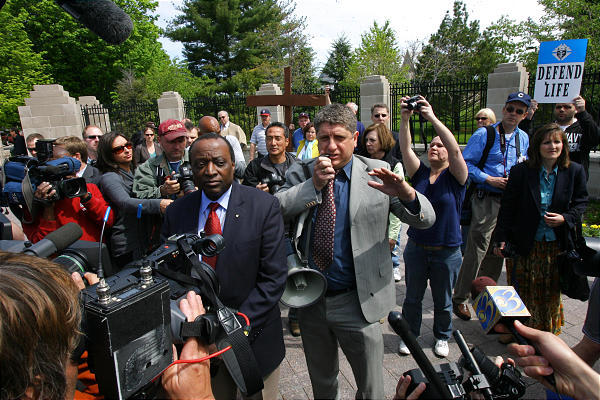
Imagine if the U.S. government used for immigration policy Notre Dame’s reasons for not inviting President Trump:

The decision by the University of Notre Dame to invite Vice President Mike Pence to be this year’s graduation speaker and recipient of an honorary degree was surely not made lightly. The last six presidents have all been invited to the school’s commencement exercises, so the decision to invite someone other than President Donald Trump represents a change from the norm. And that is precisely why it was the correct decision.

The first thing to remember about the decision is that it affects not only the Indiana university’s standing, but the actual students whose families and friends will be gathering that day. There were some protests eight years ago, when newly inaugurated President Barack Obama attended the commencement exercises, but those protests were mostly on the internet and at the margins. The day itself was not ruined for the graduates.

Can anyone really think that Trump’s presence would not elicit a different kind of protest? Is it not likely that the protests would be so vociferous and widespread that the day would be marred for the students who should be the focus of the day?

I am sure that consideration weighed heavily on the decision-making process, which is not to say Notre Dame is likely to award a heckler’s veto to anyone. It is a mere acknowledgement that a man for whom a central campaign theme was the demonization of other people elicits a kind of visceral response, not because some people are too politically correct or thin-skinned, but because that visceral response is what Trump was after. He stoked the flames and cannot now wonder that people recoiled from the prospect of being burned.

Lots can go wrong if you invite POTUS. Nothing can go wrong with open borders?

But don’t forget welcoming the stranger.

Welcome the stranger.

Trump is strange.

Welcome Trump.

Which Call?

The University of Notre Dame’s Center for the Study of Religion and Society hosted a conference on polarization in the Roman Catholic Church in the United States. Those who want to see the plenary session round table may go here.

I haven’t watched this yet, but again the message that mainstream Roman Catholic institutions communicate are very different from the ones that folks like Bryan and the Jasons put forward. For instance, the folks at Notre Dame recognize diversity in the church. Bryan and the Jasons only see unity as the “real” condition of their communion. What is troubling is that Bryan and the Jasons never mention to their audience that events like Notre Dame’s exist, or that the communion to which they call people is not exactly what Called to Communion portrays. (Note that Called to Communion has the reforms of Vatican 2 on its list of topics but no links to those subjects. Hmmm.)

Commonweal mentioned the conference and brought up an older proposal for Roman Catholic unity. It was another call, this time Called to be Catholic. Here‘s part of that call:

Will the Catholic Church in the United States enter the new millennium as a church of promise, augmented by the faith of rising generations and able to be a leavening force in our culture? Or will it become a church on the defensive, torn by dissension and weakened in its core structures? The outcome, we believe, depends on whether American Catholicism can confront an array of challenges with honesty and imagination and whether the church can reverse the polarization that inhibits discussion and cripples leadership. American Catholics must reconstitute the conditions for addressing our differences constructively – a common ground centered on faith in Jesus, marked by accountability to the living Catholic tradition, and ruled by a renewed spirit of civility, dialogue, generosity, and broad and serious consultation.

It is widely admitted that the Catholic Church in the United States has entered a time of peril. Many of its leaders, both clerical and lay, feel under siege and increasingly polarized. Many of its faithful, particularly its young people, feel disenfranchised, confused about their beliefs, and increasingly adrift. Many of its institutions feel uncertain of their identity and increasingly fearful about their future.

Those are hard words to pronounce to a church that, despite many obstacles, continues to grow in numbers, continues to welcome and assist the poor and the stranger, and continues to foster extraordinary examples of Christian faith and witness to the Gospel. The landscape of American Catholicism is dotted with vital communities of worship and service, with new initiatives, and with older, deeply rooted endeavors that are kept alive by the hard labor and daily sacrifices of millions of Catholics. In the face of powerful centrifugal forces, many Catholic leaders have worked to build consensus and cooperation.

We hesitate to say anything that might discourage them or add to the fingerpointing and demoralization that, in too many cases, already burden these exemplary efforts. But this discordant and disheartened atmosphere is itself one of the realities which cannot be ignored. For three decades the church has been divided by different responses to the Second Vatican Council and to the tumultuous years that followed it. By no means were these tensions always unfruitful; in many cases they were virtually unavoidable.

But even as conditions have changed, party lines have hardened. A mood of suspicion and acrimony hangs over many of those most active in the church’s life; at moments it even seems to have infiltrated the ranks of the bishops. One consequence is that many of us are refusing to acknowledge disquieting realities, perhaps fearing that they may reflect poorly on our past efforts or arm our critics within the church. Candid discussion is inhibited. Across the whole spectrum of views within the church, proposals are subject to ideological litmus tests. Ideas, journals, and leaders are pressed to align themselves with preexisting camps, and are viewed warily when they depart from those expectations.

There is nothing wrong in itself with the prospect that different visions should contend within American Catholicism. That has long been part of the church’s experience in this nation, and indeed differences of opinion are essential to the process of attaining the truth. But the way that struggle is currently proceeding, the entire church may lose. It is now three decades after Vatican II. Social and cultural circumstances have changed.

The church possesses a wealth of post-conciliar experience to assess and translate into lessons for the future. There is undiminished hunger for authentic faith, spiritual experience, and moral guidance, but many of the traditional supports for distinct religious identities–or for the institutions that convey them–have disappeared.

Meanwhile, positions of leadership in the ministries of the church are passing to those with little exposure, for better or worse, to the sharply defined institutional Catholicism of earlier decades. Still younger Catholics, many with absolutely no experience of that pre-conciliar Catholicism, come to the church with new questions and few of the old answers.

The church’s capacity to respond to these changed conditions may be stymied if constructive debate is supplanted by bickering, disparagement, and stalemate. Rather than forging a consensus that can harness and direct the church’s energies, contending viewpoints are in danger of canceling one another out. Bishops risk being perceived as members of different camps rather than as pastors of the whole church.

Unless we examine our situation with fresh eyes, open minds and changed hearts, within a few decades a vital Catholic legacy may be squandered, to the loss of both the church and the nation.

Not much there about motives of credibility, papal audacity, Thomas Aquinas, or John Henry Newman.

So which is it? Is it Called to Communion or Called to be Catholic? You can only chalk up such questions to Protestant perversity for so long before you finally admit a problem. Or you change your theme to Called to Denial.

Religious Life at Notre Dame

While Jason and the Callers are admiring the early church fathers, here is an observation on their contemporary brothers and sisters from Mark Noll in a review of George Weigel’s, Evangelical Catholicism:

It is mostly inconsequential, but perhaps also of some interest to record how I have read this book against the background of experience at Notre Dame. From that experience I would conclude that there are indeed some Catholics committed to deep church reform who already practice something like Weigel’s evangelical Catholicism. But it also seems obvious that such Catholics make up only one part of a church that in its U.S. expression includes many other Catholics eager to promote their respective visions of reform. This rainbow of reformers includes Garry Wills Catholics, G. K. Chesterton Catholics, Robert Barron Catholics, Joe Biden Catholics, Dorothy Day Catholics, Sandra Schneider Catholics, Opus Dei Catholics, Oscar Romero Catholics, and many more. As someone who has read several works by John Paul II and Benedict XVI with real appreciation, I hope very much that they have set the church on a path that it will follow, but then I wonder why in some conversations at Notre Dame, I as the non-Catholic seem to have the most positive things to say about these two popes.

One of the great privileges of being at Notre Dame has been to witness what can only be called Roman Catholic Christianity at its best, marked by profound understanding of fundamental Trinitarian theology, strong commitment to the Christology of Nicea and Chalcedon, expert deployment of philosophy in service to theology, deep personal piety, and dedicated Christian commitment to a wide range of social reforms. Examples of what to all appearances look like admirable personal religion supported by admirable family, parish, and social religion also abound.

Yet Notre Dame is also a place where a broad array of often incompatible ideals are proposed for Catholic reform, where cafeteria religion seems pervasive for what Catholics choose to do or believe, where students participate in dormitory masses and standard college dissipations with equal fervour, and where no one seems too concerned about vast stretches of nominal Catholic adherence.