Trigger warning to self: you’ve engaged Carl Trueman critically before and it did not go well. So be careful, be very careful.
The reason for bringing up Dr. Trueman again, even if ever so gingerly, has to do with his recent evaluation of Rusty Reno’s new book about prospect for a Christian society. Trueman writes:
I simply am not convinced that change can be achieved on any significant scale. The causes of the modern malaise are complicated, and their solution must be equally elaborate. For example, as George Grant and David Schindler have shown, technology brings with it a different view of reality from that of traditional Christianity. This mindset is now deeply embedded in our world. The entertainment industry mediates much of what is taken for reality and grips the moral imagination of the masses. The globalized economy has transformed communities and community expectations in ways we have yet to fathom. To borrow that hackneyed but poetic phrase from Marx, all that is solid melts into air. Zygmunt Bauman’s argument, that we live in a time when even the most longstanding and reliable social structures are in permanent flux, seems to me compelling. It must be accounted for by any hope that depends upon the solidity of concepts or institutions from the past. How does one reform or recapture or rebuild that which has been robbed of solid existence?
I generally agree.
But where I push (not shove) back is with the idea that modernity alone has these problems. Ever since the fall, it seems to me, the possibilities of pursuing lives of holiness and passing on the faith have been hard. Just remember what Paul warned Timothy about the “last days”:
understand this, that in the last days there will come times of difficulty. 2 For people will be lovers of self, lovers of money, proud, arrogant, abusive, disobedient to their parents, ungrateful, unholy, 3 heartless, unappeasable, slanderous, without self-control, brutal, not loving good, 4 treacherous, reckless, swollen with conceit, lovers of pleasure rather than lovers of God, 5 having the appearance of godliness, but denying its power. Avoid such people. 6 For among them are those who creep into households and capture weak women, burdened with sins and led astray by various passions, 7 always learning and never able to arrive at a knowledge of the truth. (2 Tim 3:1-8)
Was Paul predicting a time when Marx, Freud, and Nietzsche would dominate understandings of human nature and the created order, or was he talking about life in the Roman Empire circa 60 AD? My understanding is that he was talking about life in the Mediterranean world then.
So why do Christians believe modernity is so much worse than any other time? Well, it sure seems that Roman Catholics have a certain nostalgia for the Christian society of medieval Europe, neo-Calvinists for the Christian society of the Kuyperian era of Dutch history, evangelicals in the U.S. for the First Pretty Good Awakening that of course led up to the Christian founding of the United States. Here Protestants want to recalculate critiques of modernity since Kuyper and George Whitefield both fall on the modern side of the divide between medieval and modern periods. In other words, Protestant critiques of modernity play into the hands of certain Roman Catholic apologetics (even if nostalgia for the flourishing of the Middle Ages seldom extends to the Crusades or the Inquisition).
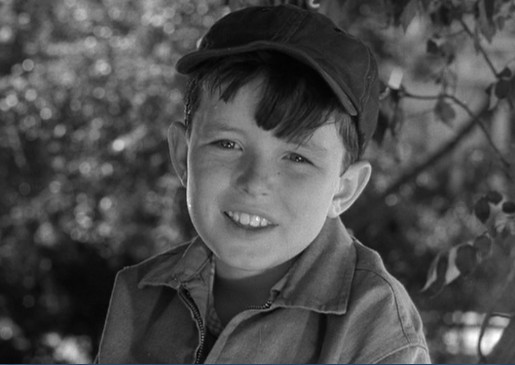
But surely anyone with eyes and ears has to admit that we are living in worse times than 1950s American when Ward and June Cleaver reared Wally and the Beave. I have eyes and ears. I will concede that the 2010s are worse than the 1950s, though I did live through 1968 and that was not a good time. But on a scale of fallen humanity, are modern or contemporary times really worse than what Noah lived through, or Lot, or Jeremiah, or our Lord himself? Doesn’t the fall mean we always live in desperate times?
The point here is not that people who believe in original sin should be relativists when it comes to assessing the way humans live together or proposing ways that are better for a common life together and for the proclamation of the gospel. But I think it is a mistake to cultivate the notion that human flourishing is possible whether by putting in place the right policies or institutions, or by thinking about the past a certain way. I know Dr. Trueman knows this. But it sounds like he thinks we are living through one of the worst times in human existence. No matter how pleasant and reassuring Beaver Cleaver’s America was, it was not the new heavens and new earth. When sin abounds, it’s not a good time. The Cleavers were certainly flourishing as we now count such living, but they were also drowning in sin (and never in church). Shouldn’t that perspective inform the way we view the West post-Foucault?








 Old Life