Instead of a Shrug, Concern

James Schall has a concern about Pope Francis’ apparently intentional ambiguity:

The “concern” is not so much to “prod” the good Holy Father into answering his mail. Others have tried this approach and failed. Rather it is to articulate the core “concern” that many normal people have about their Church under Pope Francis’ leadership. The Argentine pope certainly attracts crowds and generous media attention. He is seen kissing little babies, waving, smiling, and talking earnestly with almost anyone from scientists to politicians to mullahs and rabbis. We all recall his visit with the late Fidel Castro.

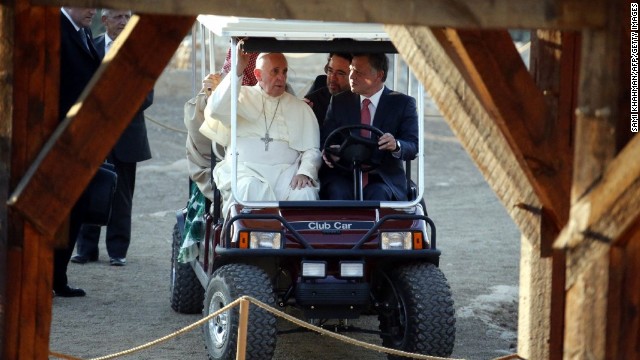
Pope Bergoglio has been on some twenty travels out of Italy and all over the known world. He dutifully attends to papal liturgical, diplomatic, bureaucratic, and ceremonial functions. At almost eighty, he seems full of energy and zest. He appears in public to enjoy being the pope. He even gets annoyed. He is human. The people he seems to like the least are practicing Catholics and the poor ecclesial bureaucrats who have to do all the thankless grunt jobs in the Church. He certainly has a good press. The crowds at papal audiences seem down, while observers do not yet detect any remarkable “Francis effect” in increased vocations, conversions, or Mass attendance.

But none of these issues seems to be what most concerns people. We are used to maintain that the principle of contradiction binds us to the truth of things. Catholicism is a religion that takes mind seriously. Revelation and reason do not contradict each other. These affirmations about reason and revelation indicate a certain confidence in our Catholicism. When spelled out, what the faith teaches makes sense in all areas. We can articulate what we are talking about without claiming that we grasp absolutely everything about the mystery of being. In fact, we claim that we do not understand everything in all its intelligibility. We do not confuse ourselves with the gods.

What we can figure out by ourselves makes sense also. We hold that what was revealed by Christ still holds and was intended to do so over time. Among these teachings and practices that were revealed was that of the consistency over time of the content of revelation.

Given Roman Catholicism’s understanding of reason and revelation, why put all of your eggs in the papacy basket? Schall’s understanding of Christian truth is one that Protestants share (mainly). His papalism does not follow in practice or theory:

In this tradition, the Jesuit theologians, Francisco Suarez and Robert Bellarmine, at least considered the problem of a hypothetical pope who did not affirm what had been explicitly handed down. In general, they held that a pope who might enunciate any heretical position would cease ipso facto to be pope. But this was an opinion. The one or two instances in the history of the Church, when a given pope did state something dubious, were usually considered, on examination, to be merely private opinions or not taught infallibly. So the consistency record over time is pretty impressive from that angle.

In this light, the “concern” that exists today is whether the promise to Peter that what Christ did and held would be kept alive in its fullness. The Church thus must avoid contradicting itself; that is, teaching one thing in one generation or area and its opposite in another. We are not concerned here with equivocation or impreciseness. If some pope did cross this line, we can at least suspect that he would not admit it or see the point. If he had the issue pointed out to him and saw its import, he would simply acknowledge what is the truth and be done with it. Otherwise, a drawn-out struggle would follow to decide who is right.

In other words, if reason and revelation are such (relatively) reliable guides, why then glom the bishop of Rome on top of such reliability? Does Father Schall really need the papacy’s help to tell what’s true or to be faithful to the truth? Or is the pope like the English monarchy, something you trot out when you need pomp and ceremony?

Own that great pretty good intellectual tradition.

That Was Then

Here‘s why the church excommunicated Luther almost five centuries ago:

1. Separation of justification from sanctification.
2. Extrinsic, forensic, imputed justification.
3. Fiduciary faith.
4. Private judgment over against ecclesial infallibility.
5. Rejection of seven deuterocanonical books.
6. Denial of venial sin.
7. Denial of merit.
8. Sola Scriptura and radically private judgment: “if we are all priests . . . why should we not also have the power to test and judge what is right or wrong in matters of faith?”
9. Denial that the pope has the right to call a council.
10. Only justified men can do good works.
11. Denial of the sacrament of ordination.
12. Denial of exclusively priestly absolution. Anyone in the Christian community can grant absolution.
13. God has not instituted the office of bishop.
14. God has not instituted the office of the papacy.
15. Priests have no special, indelible character.
16. Temporal authorities have power over the Church; even bishops and popes: “The pope should have no authority over the emperor”.
17. Vows of celibacy are wrong and should be abolished.
18. Denial of papal infallibility.
19. Unrighteous priests or popes lose their authority.
20. The keys of the kingdom were not just given to Peter.
21. Private judgment of every individual to determine matters of faith.
22. Denial that the pope has the right to confirm a council.
23. Denial that the Church has the right to demand celibacy of certain callings.
24. God has not instituted the vocation of monk
25. Feast days should be abolished.
26. Fasts should be strictly optional.
27. Canonization of saints is thoroughly corrupt and should stop.
28. Confirmation is not a sacrament.
29. Indulgences should be abolished.
30. Dispensations should be abolished.
31. Philosophy (Aristotle as prime example) is an unsavory, detrimental influence on Christianity.
32. Transubstantiation is “a monstrous idea.”
33. The Church cannot institute sacraments.
34. Denial that the Mass is a good work.
35. Denial that the Mass is a true sacrifice.
36. Denial of the sacramental notion of ex opere operato.
37. Denial that penance is a sacrament.
38. Assertion that the Catholic Church had “completely abolished” the practice of penance.
39. Claim that the Church had abolished faith as an aspect of penance.
40. Denial of apostolic succession.
41. Any layman who can should call a general council.
42. Penitential works are worthless.
43. The seven sacraments lack any biblical proof.
44. Marriage is not a sacrament.
45. Annulments are a senseless concept and the Church has no right to grant them.
46. Whether divorce is allowable is an open question.
47. Divorced persons should be allowed to remarry.
48. Jesus allowed divorce when one partner committed adultery.
49. The priest’s daily office is “vain repetition.”
50. Extreme unction is not a sacrament (the only two sacraments are baptism and the Eucharist).

What about now?

If Lutheran teachings and practices don’t result in excommunication today, it likely has something to do with situations like this:

“Life is full of ambiguity”, Cardinal Cupich said, but the “important thing is to bring an attitude of discernment to a situation.” He then referred to a “wonderful article” by Professor Rocco Buttiglione in L’Osservatore Romano some months ago, “who situated historically that document in terms of the ongoing development of the teaching of the Church.” (Professor Buttiglione’s essay has since been refuted).

He ended by saying “there are enough voices out there in which the Holy Father doesn’t have to in any way have to defend a teaching document of the Church. It’s up to those who have doubts and questions to have conversion in their lives.”

Controversial passages never passed

But defenders of the Dubia argue that Cardinal Cupich’s comment that the controversial propositions in question were “voted on by two-thirds of the bishops” is especially problematic.

It is often forgotten, they point out, that despite the strenuous efforts by the Synod secretariat and others to manipulate and jostle the synod fathers into accepting the most controversial propositions (allegations detailed in my book The Rigging of a Vatican Synod?), none of the three most controversial propositions managed to obtain a two-thirds majority during the first, Extraordinary Synod on the Family, in October 2014.

One of them was a proposition relating to the “Kasper proposal” of admitting the divorced and remarried to holy Communion after a period of penitence. That failed to pass, and only a proposition calling for “careful reflection and respectful accompaniment” of remarried divorcees made it through.

Under such circumstances, they would normally therefore have been rejected.

In spite of this, the Pope controversially broke with custom, which he can do, and authoritatively insisted that all three rejected proposition be kept in the document, thereby enabling them to be carried over into the working document for the Ordinary Synod on the Family the following year.

Not to worry, the more ambiguity, the more it’s the church Christ founded. If only the consequences for souls dependent on faithful ministers of the gospel and reliable expositors of sacred mysteries were so ambiguous.

The Worse, the Better

It’s an odd argument, but in the Pope Francis era it seems to be more prevalent. It runs something like this:

He’s a lousy husband, angry, selfish, a slob, and abusive, but that makes him the husband God gave me all the more.

He’s a terrible employee — late for meetings, lies to customers, refuses to adhere to company policies, but he’s the co-worker God gave me.

He’s an awful king — he suspended habeus corpus, requires citizens to hostile to hostile and uncivil soldiers, forces us to pay taxes without giving us a voice in tax policy — but he’s the king God gave us.

And so, when it comes to the church, the fact that an institution so bad has existed so long is proof that it is the institution Christ founded.

For instance:

In the satirical writings, dialogues, of the 14th c. Italian author Boccaccio there is story about a Jew who has to go to Rome for something. The local Bishop has been trying to get the Jew to convert the Christianity. Knowing the Jew was about to see the Church at its worst in Rome, the corruption and moral turpitude of many of the clerics and religious, even Popes like the Borgias, the Bishop despaired that the Jew would ever covert on his return. However, once returned from his trip, the Jew went to the Bishop and said, “I’m ready to convert now!” The Bishop, flabbergasted, replied, “You went to Rome and you saw how horrid things were there… and you still want to join this Church?” “Yes”, said the Jew. “I figure that with so many wicked and corrupt people hard at work trying to destroy the Church, it shouldn’t have lasted 14 years, much less 14 centuries. It has to be of divine origin!”

Or again:

It was exhilarating, that moment when it hit me: “I’m going to become Catholic.” But as I experienced more of the modern church, and began RCIA, Patrick Coffin’s greeting to converts, “Come on in! It’s a mess,” started to make sense.

So did the words of Hilaire Belloc, which no longer seemed merely witty:

The Catholic Church is an institution I am bound to hold divine but for unbelievers a proof of its divinity might be found in the fact that no merely human institution conducted with such knavish imbecility would have lasted a fortnight.

Even more:

Worrying about the daily confusion and sorrow Pope Francis introduces into our lives can impede us from working on our first priority—which is living our Catholic life in Christ as fully as we possibly can. With only exceedingly rare exceptions, we are in no position to offer correction to the Holy Father. Therefore, it will do us little good to engage in endless arguments over what is wrong, whose fault it is, and how the problems posed by the current papacy might be resolved. And not only will this do us no good, but it can be a significant source of scandal to others, most of whom will have little or no awareness of the issues at stake.

I’d like to suggest that it is time to turn the corner on Pope Francis. Most of us have no cards to play in the game of improving the papacy. But we do have our own callings, our own God-given talents, our own opportunities to engage in the spiritual and corporal works of mercy, to teach the truth and to foster the good. When we can use something Pope Francis has said or done in our own Catholic service, then we should—all the better! But when we cannot take our inspiration from Pope Francis, we can still reference Our Lord and the Church He founded. We do not need to come up against Francis and grind to a halt. That’s what I mean about turning the corner.

I do not presume to know papal theory well, but am aware that reservations about papal authority were much more substantial in the Middle Ages than they are in the post-Vatican I church where infallibility is now dogma. In fact, important medieval philosophers like Marsilius of Padua and William of Ockham (does that make me Darryl of Hart?) made arguments against the tyranny of the papacy that would seem to be relevant for Roman Catholics today.

But the apologetic that the deficiencies of the church only prove its necessity and durability defy Thomistic logic no matter how tight the syllogisms are under Bryan and the Jasons Kangol cap.

Here’s why: if the church is deficient, how do you then know that its truth claims are not also deficient?

Because the reality remains: She is the bride of Christ, and the Truth is found nowhere but in Her. Conversion to the one true faith remains the greatest, most life-altering decision a person can make—even if things are a bit of a mess.

In point of fact, the truth about conditions in the church come almost entirely from sources external to the magisterium, which sort of pokes a hole in those audacious (warning, Bryan Cross has removed the article about Papal Audacity) claims about the magisterium’s infallible protection of the truth.

Protestantism as Trump

While Pope Francis is commemorating Martin Luther in Sweden, Karl Keating is doing what apologists do — deriding Protestantism:

We commemorate December 7, the “day that will live in infamy,” because it was the prelude to a long and costly war. Again, there was heroism, but we wish that heroism had never needed to be called up.

We commemorate Bastille Day and the October Revolution not because what came from them, the French Revolution and the Russian Revolution, were good but precisely because they were evil, and we want to remember that evil so that it won’t return in another guise. . . .

I see nothing to celebrate in the Protestant Reformation. It was the greatest disaster the West suffered over the last millennium. It brought theological confusion, political turmoil, and decades of war. The religious wars of the sixteenth and seventeenth centuries killed about three percent of the world’s population, the same proportion that died in World War II. The religious wars would not have occurred had the Reformation not occurred.

But unlike the critics of Trump, Keating acknowledges that the other candidate has problems:

Much was wrong in the Catholic Church of the late fifteenth and early sixteenth centuries. Personal morality was lax (though not matching today’s laxity), and corruption was widespread among the clergy and was particularly scandalous the higher one’s gaze went up the hierarchical ladder. One should keep in mind, though, that, however bad things were in the decades before Luther took out his hammer, they had been worse in the tenth century. If there were a few “bad popes” in Luther’s era, there were worse popes, and more of them, five or six centuries earlier.

The Church of the tenth century desperately needed reform, not revolution, though it might have fallen into the latter if reform hadn’t come about. But reform did come about, and the Church not only soldiered on but prospered. The result was the High Middle Ages, the era in which Catholic principles most effectively (but still inadequately) undergirded Western society.

By the turn of the 1500s a once-again-complacent Christendom was in trouble. It again needed reform, but what it got was the Reformation.

What Keating doesn’t answer is whether his communion ever experienced reform, or if his very different interpretation of the Reformation compared to Pope Francis is another indication that calls for reform, like the poor, are always with us.

Papal Golf

The president of Catholic University of America seems to have taken too many meals at Outback — no rules, just right (no hell, just purgatory?):

What I really love about Pope Francis and the message that he’s trying to get across is that we’re Catholics, we belong to the Church, and we believe what the Church teaches because Jesus came to redeem us and show us His mercy.

The message to others isn’t, “Gosh, you ought to be Catholic because you should follow this or that set of rules.” The message is, “Good news: you’re redeemed. Here’s what a life lived in response to that truth looks like.”

Imagine you’re speaking to someone from Finland who has grown up north of the Arctic Circle, and had never seen a golf course and had no idea what golf was. You’re trying to explain to this person why you love golf and how important it is.

One way of doing it is saying while you’re in the tee box, you don’t want to hit it outside the white stakes because that’s out of bounds and the penalty is a stroke and distance, and you don’t want to go past the red stakes because those are lateral hazards and there’s a stroke penalty. And you don’t want to get in the sand trap because, while that doesn’t cost you a stroke, it’s hard to get out of.

You’d rather say, “Here’s the deal: you see that hole down there-we’re going down this short grass here and we’re putting it in the hole in the least number of strokes, and we’re going to have a nice visit while we do it.”

It’s not that there aren’t rules for golf-no out of bounds, no lateral hazards, no sand traps-it’s that focusing on avoiding sin is not the message that brings people to love Jesus.
Pope Francis is exactly right-the bull’s-eye of the Catholic message of the gospel is, “Jesus loves you.” Your life is messed up? We’ve got some good news for you. That’s what I love about Francis. There is nothing in any of that that doesn’t appeal to all of us. . . .

That’s not to say there aren’t out of bounds or rules or anything, which he’s stipulated, but because he’s so inviting, people are willing to take a first listen. Some in the media on the left would like to take from that the lesson that the Catholic Church has abandoned all the rules about lateral hazards and sand traps, and some on the right take the same mistaken view. And of course Pope Francis makes clear that’s not what he’s saying.

But when it comes to discerning a difference between the church and the world, no problem. The U.S. bishops are doing nothing different from the ACLU (I kid not):

When we invite someone to be a commencement speaker, the university is saying something. That’s why the American Catholic bishops say that Catholic universities shouldn’t give honors, platforms, and awards to people whose view is at odds with the views of the Catholic Church.

What they are saying literally is that universities like us shouldn’t endorse people like that. We should not say “Yay, Barack Obama, you support enshrining the ‘right’ to kill the unborn.” We shouldn’t give him honorary degrees or hold him up to our students as our example.

On the other hand, I would be perfectly happy to invite President Obama to Catholic University, even to talk about abortion if he wanted to. What better place than to have a conversation with the President about an issue that is important to Catholics and others? We’re just not going to give him a prize for taking a position that we condemn.

So, this notion isn’t at all inconsistent with notions of academic freedom on campus. It follows the standard kind of distinction that other universities follow.

Here’s a parallel example. Every year we see the ACLU bashing, say Montana State, for inviting some preacher to say an invocation before the commencement. The First Amendment rule about that is that public universities should not endorse religious positions, therefore, the preacher is welcome to come on campus to talk or to say prayers but they can’t make him the commencement speaker.

The ACLU doesn’t come in behind the bishops on their position, but they are saying the same thing.

Speechless.

Nothing Could Possibly Go Wrong

Didn’t the Reformation start with objections to the cash nexus between grace and financial contributions? So how much did the Council of Trent reform ecclesiastical abuses in the light of recent announcements about new criteria for becoming a saint?

To approve a miracle, at least 5 out of the 7 members of the body of medical experts within the congregation must approve, or 4 out of 6, depending on the size of the group, as opposed to a simple majority.

In case a miracle report is rejected on the first go-around, it may only be reexamined a total of three times.

In order to reexamine a miracle claim, new members must be named to the consulting body.

The president of the consulting body may only be confirmed to one additional five-year term after the original mandate expires.

While in the past payments to experts could be made in person by cash or check, now the experts must be paid exclusively through a bank transfer.

I don’t know about you, but my impression of the miraculous is that if part of a group of believers thinks an unusual event was not miraculous, then it probably was not. Generally speaking, the works of God are pretty straight forward to those with eyes of faith (questions about ongoing miracles notwithstanding). And do we really need science to tell validate a miracle? Isn’t faith sufficient?

But the kicker is the financial aspect to these policy changes:

In his book “Merchants in the Temple,” Italian journalist Gianluigi Nuzzi charged the congregation was among the most reluctant Vatican offices to cooperate with new transparency measures imposed as part of Francis’s project of Vatican reform, and asserted that the average cost of a sainthood cause was about $550,000.

U.S. Catholic officials traditionally have used $250,000 as a benchmark for the cost of a cause from the initial investigation on a diocesan level, to a canonization Mass in St. Peter’s Square at the Vatican, though that cost can increase depending in part of how many people take part in the canonization ceremony and the logistics of organizing the event.

In March, Pope Francis had already approved a new set of financial procedures for the congregation, outlining procedures for handling contributions and specifying which authorities are charged with overseeing the flow of money.

Also notice that even though the path to sainthood has become more — let’s say — complicated, those already saints stay saints:

The new rules are not retroactive, and hence they do not invalidate any beatifications or canonizations performed under earlier procedures.

Fulton Sheen’s advocates are no doubt disappointed.

For any apologist out there, this is the sort of thing that makes no sense to a Protestant (and is truly audacious). We do concede that sainthood can be bought. The price that Jesus paid with his precious blood is worth more than all the silver and gold you can put in a Vatican bank safe. So yes, there is a payment for sanctity. But it is entirely beyond the economic calculations of this world.

One might think that after five hundred years, Roman Catholic bishops might have learned that lesson.

Obedience Girl

Wesleyans aren’t the only ones to promote perfectionism:

Following Jesus is a serious task, and, at the same time, one filled with joy; it takes a certain daring and courage to recognize the divine Master in the poorest of the poor and those who are cast aside, and to give oneself in their service. In order to do so, volunteers, who out of love of Jesus serve the poor and the needy, do not expect any thanks or recompense; rather they renounce all this because they have discovered true love. And each one of us can say: “Just as the Lord has come to meet me and has stooped down to my level in my hour of need, so too do I go to meet him, bending low before those who have lost faith or who live as though God did not exist, before young people without values or ideals, before families in crisis, before the ill and the imprisoned, before refugees and immigrants, before the weak and defenceless in body and spirit, before abandoned children, before the elderly who are on their own. Wherever someone is reaching out, asking for a helping hand in order to get up, this is where our presence – and the presence of the Church which sustains and offers hope – must be”. And I do this, keeping alive the memory of those times when the Lord’s hand reached out to me when I was in need.

Mother Teresa, in all aspects of her life, was a generous dispenser of divine mercy, making herself available for everyone through her welcome and defence of human life, those unborn and those abandoned and discarded. She was committed to defending life, ceaselessly proclaiming that “the unborn are the weakest, the smallest, the most vulnerable”. She bowed down before those who were spent, left to die on the side of the road, seeing in them their God-given dignity; she made her voice heard before the powers of this world, so that they might recognize their guilt for the crime – the crimes! – of poverty they created. For Mother Teresa, mercy was the “salt” which gave flavour to her work, it was the “light” which shone in the darkness of the many who no longer had tears to shed for their poverty and suffering.

But did she trust Jesus as her savior from sin?

And Here I Thought W-w Was Hard

Turns out, obedience is harder:

In the first place, it seems that Gahl does not consider adequately the role of conscience. Is it sufficient that the confessor enunciates a principle such that it can be assumed that the conscience has been sufficiently enlightened? Perhaps not. Cardinal Newman made an illuminating distinction between a merely notional assent and a real assent of the conscience. It is possible that the penitent does not understand or does not accept the confessor’s admonition and refuses to promise that, in the same situation, he will not act once again in the same manner. The conscience will be enlightened only in the moment in which it has given real assent. What should be done if the penitent does not give real assent to the confessor’s admonition?

Pity the potato farmer who needed to find Denzinger‘s entry on notional assent.

Confused but Not Dazed

Father Dwight has counsel for discouraged Roman Catholics:

4. Regarding Pope Francis – Many conservative Catholics are troubled by Pope Francis. They think he is a textbook 1970s liberal. He’s not. Take time to understand his context and background from Argentina. Read this post to put things into perspective. Get to know the man and pray for him. It is ok to disagree with him and question his judgement. He’s not infallible all the time you know, but you can do so with an open heart and a desire to understand and be with him and learn from him. What’s the alternative? You set yourself up as the judge of the Holy Father? Hmmm. There’s not much mileage in that now is there?

Once upon a time the western church had councils because Rome had three popes.

Also, it’s a free country, right? So separated siblinghood is an alternative. But being Roman Catholic means you have to accept whatever the bishops do? Fr. Dwight might make sense in a pay-pray-obey environment. But the world of immigrant parishes is long gone. Root-root-root for the Fightin’ Irish.

5. Regarding Cafeteria Catholics – Are you maddened by so called “devout Catholics” who openly endorse same sex marriage, women priests and are “pro choice”? Join the club. They annoy me too. Are you also annoyed by the bishops and priests who take the same view? I’m with you. However, remember that the Catholic Church is universal. We’re not a sect where everyone agrees. We’re inclusive and that’s why we’re Catholic. The Church has always had dissidents, rebels and downright bad Catholics. Have you ever read the Old Testament or taken a close look at the twelve apostles? The saints and sinners are all in together. The weeds and the wheat, the goat and the sheep are mixed. Jesus will sort it out one day, and stop for a moment and ask yourself, are you a perfect saint yet? I’m not. I’m still learning and growing and repenting. So I guess we must offer the mercy (and benefit of the doubt) to others that we would wish to receive.

Isn’t the church supposed to stand for the truth? And if observers of Pope Francis need context to understand him and his unwillingness to do something about dissent and error in the church, has not Fr. Dwight entered the cafeteria of choosing what he wants to believe? Why does he get to have perspective on the church’s problems that Pope Francis doesn’t because of his Argentinian background?

6. Regarding You and the Church – I’ve heard some Catholics grumble that the church has let them down. But what did you expect of the church in the first place? The church is divine, but she is also human. The church is a work in progress, an ark of wounded warriors, a tribe of troubled pilgrims, a family of lost children looking and longing for home. When you see the church like this, instead of hoping that the church will be the instant answer to all your problems you will be more content. Our role in the church is to be faithful, prayerful, hard working and stable in our love for Christ and his people.

But Roman Catholicism was supposed to be an upgrade, better than Protestantism. Isn’t that why Fr. Dwight left fundamentalism for Anglicanism and then left Anglicanism for Rome? So shouldn’t the standards for the bearer of the truth, the only true church, be higher? If converts knew that Rome was going to be as incoherent and liberal as the PCUSA or the Church of England, why leave Tim Keller? Or is it that this is godly mess and Protestants only have ungodly messes (and of course, having ONE mess is better than having many).

7. Regarding Priorities – The main thing is to stay close to Jesus and Mary. How do you do this? The Catechism says we experience Christ in five specific ways: 1) in the Sacred Scriptures 2) in the person of the priest 3) in the person of the poor 4) in the fellowship of believers 5) in the Eucharist. I can guarantee you, if you make these five things your priorities, then you will have a solid, sure and secure relationship with Jesus Christ. These five meeting places of Christ assume that your life is bathed in prayer and that you have as your main priority being with Jesus and Mary in these ways. If you get this right the other worries fall away.

Jesus is good and having his Spirit is really good. Mary is good but she is not exactly going to save. But is Fr. Dwight suggesting we can have Mary or Jesus apart from the Bishop of Rome?

Lots of sorting to do. Sure would be nice to have a hierarchy to do this for the faithful.

Make It Stop

Yet another press release on evangelicals who have found a home that is sweet and located in Rome. And once again, the great appeal is authority (papal, infallible, audacious?):

What I came to realize is that little progress will be made on the major issues (or many secondary issues) of theology until one settles the issue of religious authority. That single concern is related to numerous key facets of the Christian faith, the most impactful of which were the canon of Scripture and its orthodox interpretation.

The canon of Scripture (the books included in the Bible) is a huge issue for anyone who considers the Bible to be the Word of God and the authority for one’s faith. If one thinks the early Church went astray somehow, it becomes a very difficult problem because the biblical collection itself was not settled until centuries after the apostles died. If the Church was in error by then, how can the “Bible-Only Christian” be sure he really has the inspired Word of God? And if the Church was kept from error while it determined the canon, why was it not likewise kept from error during the councils and creeds it produced at the same time? As I looked at the major alternate theories of canonization, I discovered the historical truth that the Church is ultimately the standard.

This was also the case with doctrine. It is well known that there is rampant disagreement among the various sects, denominations, and cults of Christianity—but where is the line drawn? Christians often speak of “orthodoxy,” “heresy,” “essentials,” and “fundamentals”—but by what authority are these words defined, and doctrines labelled? For the Christian who denies that the Church is the standard, there seemed to be no non-circular means of doing so.

I’ve asked before and no one answered. So I’ll ask again. With all that authority, how do you explain the bad stuff? What about Marquette University? What are the bishops doing? Pope Francis? The converts?

Working in my Marquette office one afternoon in the spring of 2010, I heard unusual sounds coming from the normally quiet lawns outside my window. I was surprised to see a modest assembly of students and professors preparing to march in protest. Against what? Minutes later, an email arrived informing me that the university’s then-president, Robert Wild, S.J., had voided a contract extended to Jodi O’Brien to join us as Dean of the College of Arts and Sciences. Though the contract had already been signed, Fr. Wild—perhaps under external pressure—decided that O’Brien, a partnered lesbian whose research included queer studies, was not an appropriate choice to represent our mission and identity.

Although an ordinary person with a passing knowledge of the moral teachings of the Catholic Church would think such a decision obvious, the department chairs in the college soon gathered and voted almost unanimously to censure Wild’s decision. The press, meanwhile, demanded an explanation. On the ­defensive, the university allegedly paid a considerable sum in order to break the contract. Officials were soon exercising themselves to demonstrate their concern for equitable treatment of gays and lesbians. The university would initiate projects, courses, conferences, and the like to explore issues of sex and gender! The clear implication was that change would come, though slowly. Marquette would get with the sexual-liberation program so that something like the O’Brien affair would never happen again.

Since 2010, the campaign for sexual diversity at Marquette has advanced rapidly. Last year, the university announced the expansion of the former Gender and Sexuality Resource Center (established in the wake of the O’Brien dustup) into two new initiatives: a Center for Gender and Sexualities Studies and an LGBTQ Resource Center. How much funding has been increased has not been disclosed. We also now have an Office of Institutional Diversity and Inclusion, which offers faculty and staff awards for excellence in, yes, “diversity and inclusion.” Again, how much this will cost hasn’t been revealed. We do know, however, that funds have been promised to support the development of new courses that advance the cause. A faculty fellows program in diversity is also in the works.

The whole article is worth reading, but this paragraph is particularly telling:

For the last two generations, American Catholic ­theology departments have been at the forefront of a campaign of dissent against Catholic sexual morality. This campaign has often been led by Jesuits and Jesuit universities. Unlike attempts to attract more minority students, or programs to empower students from disadvantaged backgrounds—efforts in full accord with Catholic social teaching—this campaign of dissent has sometimes been underhanded, even dishonest. It has also been ruthless, working hard to suppress and punish any who speak up for the Church’s teaching. The way Marquette has adopted and promoted the mishmash of LGBTQ ideology over the last few years is consistent with that tradition of dissent.

So why don’t the converts ever include these developments in their touting of Rome’s authority and certainty? Are they unaware?

Whatever the reason, the Marquette situation may explain Rachel Lu’s counsel (which doesn’t say much about the hierarchy that is supposed to keep everything neat and orthodox):

In that spirit, try not to pay too much attention to Church politics. Catholic politics is, well, politics. Unless your profession requires it, you probably don’t need to obsess about it, and there are much more edifying ways to immerse yourself in the faith. But whatever you do, don’t trust journalists to educate you about Catholicism.