Is Piper Reading Coates?

John Piper tells us never to give up in the pursuit of improved race relations:

No lesson in the pursuit of racial and ethnic diversity and harmony has been more forceful than the lesson that it is easy to get so wounded and so tired that you decide to quit. This is true of every race and every ethnicity in whatever struggle they face. The most hopeless temptation is to give up—to say that there are other important things to work on (which is true), and I will let someone else worry about racial issues.

The main reason for the temptation to quit pursuing is that whatever strategy you try, you will be criticized by somebody. You didn’t say the right thing, or you didn’t say it in the right way, or you should have said it a long time ago, or you shouldn’t say anything but get off your backside and do something, or, or, or. Just when you think you have made your best effort to do something healing, someone will point out the flaw in it. And when you try to talk about doing better, there are few things more maddening than to be told, “You just don’t get it.” Oh, how our back gets up, and we feel the power of self-pity rising in our hearts and want to say, “Okay, I’ve tried. I’ve done my best. See you later.” And there ends our foray into racial harmony.

My plea is: never quit. Change. Step back. Get another strategy. Start over. But never quit.

While Piper thinks there’s hope, Ta-Nehisi Coates doesn’t (as summarized by Thomas Chatterton Williams):

It’s not just black kids in tough neighbourhoods who are hapless automatons. In Coates’s view, no one has agency. The young black shooter doesn’t have to think too hard about what he might do because ‘the galaxy was playing with loaded dice.’ What’s alarming, though no doubt comforting to his white readership, is that in this analysis whites aren’t individual actors either. When an irritable white woman leaving an Upper West Side cinema pushes the young, ‘dawdling’ Samori and impatiently screams, ‘Come on!’ Coates, who is a tall, imposingly built man, erupts:

There was the reaction of any parent when a stranger lays a hand on the body of his or her child. And there was my own insecurity in my ability to protect your black body … I was only aware that someone had invoked their right over the body of my son. I turned and spoke to this woman, and my words were hot with all of the moment and all of my history. She shrunk back, shocked. A white man standing nearby spoke up in her defence. I experienced this as his attempt to rescue the damsel from the beast. He had made no such attempt on behalf of my son. And he was now supported by other white people in the assembling crowd. The man came closer. He grew louder. I pushed him away. He said: ‘I could have you arrested!’ I did not care. I told him this, and the desire to do much more was hot in my throat.

Coates sees this woman not as a morally fallible person with her own neuroses, but as a force of nature, she is ‘the comet’ in his scheme. It doesn’t occur to him that she may not be an avatar of white supremacy but just a nasty person who would have been as likely to push a blonde child or a Chinese one. Coates doesn’t realise that his disproportionate reaction – ‘my words were hot with all of the moment and all of my history’ – is bound to be seen as objectionable to those ‘standing nearby’. And it doesn’t strike him that as long as black people have to be handled with infantilising care – for fear of dredging up barely submerged ancestral pain – we’ll never be equal or free.

Whom do you believe? The white pastor or the black author? The earnest New Calvinist or the recipient of the MacArthur genius award? (Odd how Coates sounds far more deterministic than the Calvinist pastor? But just because it’s depressing doesn’t mean it’s false.)

What History is Supposed To Do (which is different from blogging)

More thoughts today on the outlook that historical knowledge cultivates.

First comes the pietist version — the past as pointer to what’s true and right:

In the introduction the authors offer five reasons to study church history: 1) It continues to record the history of God’s faithful dealings with his people and it records Christ’s ongoing work in the world. 2) We are told by God to remember what he has done and to make it known to those who follow us. 3) Church history “helps to illuminate and clarify what we believe” and in that way allows us to evaluate our beliefs and practices against historic teaching. 4) It safeguards against error by showing us how Christians have already responded to false teaching. 5) And finally it gives us heroes and mentors to imitate as we live the Christian life. In this way it promotes spiritual growth and maturation.

History as a means of grace? I’m not sure.

Second, history as perplexity:

… we developed an approach we call the “five C’s of historical thinking.” The concepts of change over time, causality, context, complexity, and contingency, we believe, together describe the shared foundations of our discipline. They stand at the heart of the questions historians seek to answer, the arguments we make, and the debates in which we engage. . . .

One of the most successful exercises we have developed for conveying complexity in all of these dimensions is a mock debate on Cherokee Removal. Two features of the exercise account for the richness and depth of understanding that it imparts on students. First, the debate involves multiple parties; the Treaty and Anti-Treaty Parties, Cherokee women, John Marshall, Andrew Jackson, northern missionaries, the State of Georgia, and white settlers each offer a different perspective on the issue. Second, students develop their understanding of their respective positions using the primary sources collected in Cherokee Removal: A Brief History with Documents by Theda Perdue and Michael Green.7 While it can be difficult to assess what students learn from such exercises, we have noted anecdotally that, following the exercise, students seem much less comfortable referring to “American” or “Indian” positions as monolithic identities.

Third, history as empathy:

I hope that the young adults who study history with me find themselves cultivating five interrelated values: comfort with complexity, humility, curiosity, hospitality, and empathy. I don’t think Donald Trump is unusual among Oval Office aspirants in his utter lack of humility (here’s a conservative critique of him on that point), his disinterest in learning (see his recent comments on his reading habits), or his impatience with complication and nuance. But if I’m going to tell my students that historical study exists to a significant extent to help them be more hospitable and empathetic to those of a different culture, ethnicity, religion, ideology, etc., I can hardly stay silent about a candidate who has demonized immigrants and Muslims.

So I think the open letter’s authors are right to characterize the Trump candidacy as an attack not only on the “constructive, evidence-based argumentation” we try to practice in our profession, but on “our values, and the communities we serve.”

What is striking is how even professional historians can make history be what they want it to be.

But why is it that professional historians don’t recognize that the way they frame the historical enterprise winds up making not a scholarly but a political point. If the aim of history is to empathize with others (among other things), where have historians been about developments in Turkey or the real complexity of issues that inform the current discussion of police and crime in the United States? (For some academics, there’s not much complexity about cops shooting people.) I’m sorry, but to be so outspoken about a guy like Trump just doesn’t take all that much insight or courage. Most people who work outside history departments know he is egotistical, bombastic, clownish, and a jumble of assertions and passions. Even supporters see that. Are students so desperate?

Or is it that historians want to present as being on the “right” side?

The thing is, the responsibilities necessary to be president are not the same as the virtues that historical study cultivates. In the case of empathy, a president does need to be empathetic. But that’s not all. Just think back to episode 2, season 4 of West Wing where President Bartlet approves the assassination of a Qumar state official suspected of terrorism. Sometimes prudence trumps empathy. And that’s something that history actually teaches. Or it should. (Why should Aaron Sorkin get all the good lessons?)

To John Fea’s credit, he excerpts Jonathan Zimmerman’s reasons for not signing the letter:

I won’t join Historians Against Trump, which indulges in some of the same polarized, overheated rhetoric used by Trump himself. In a statement released on July 11, the new group warned that Trump’s candidacy represents “an attack on our profession, our values, and the communities we serve.” But that claim is itself a repudiation of our professional values, which enjoin us to understand diverse communities instead of dismissing them as warped or deluded.

I speak, of course, of the millions of people who have cast ballots for Donald Trump. According to the signatories of the statement, there’s only one historically grounded opinion on Trump: their own. By that definition, then, Trump supporters are uninformed. When he accepts the Republican nomination this week, the historians’ statement concludes, the party will have succumbed to “snake oil.”

Of course, there are plenty of ignoramuses and bigots in the Trump camp. But surely there are reasoned, knowledgeable people who back him.

The “lessons of history” — to quote the historians’ manifesto — can be read in different way, by equally informed people. And it strains credulity to imagine that all Trump supporters have had the wool pulled over their eyes.

One consolation in all this: it’s not only Reformed Protestants or social conservatives who traffic in outrage.

Move Over David Barton, Make Room for Eric Mataxas

Donald Trump has struck a nerve. Why even I had a hard time not thinking of the presumptive GOP presidential nominee when last week reviewing a book about nineteenth-century Protestantism in the U.S.

Trump is the nearest reason I can fathom for the pronounced attention Eric Mataxas has received from two prominent evangelical historians. Because Metaxas endorsed Trump, because evangelicals seem to be moving their support increasingly to Trump, and because evangelical historians identify with evangelicalism but evangelicals not as much, some professors may feel the need to create distance between their public persona and the larger evangelical feng shui.

Now it turns out that one of those historians has joined other historians in signing a letter opposing Trump’s candidacy. That same historian, John Fea (don’t mean to pick on you today, big fella), wonders about the intellectual chops of Metaxas when he writes that Metaxas’ book is “an intellectual mess” that demonstrates the ongoing validity of Mark Noll’s lament about the scandal of the evangelical mind.

What about the intellectual coherence of the historians who oppose Trump? They start this way:

Today, we are faced with a moral test. As historians, we recognize both the ominous precedents for Donald J. Trump’s candidacy and the exceptional challenge it poses to civil society. Historians of different specialties, eras and regions understand the enduring appeal of demagogues, the promise and peril of populism, and the political uses of bigotry and scapegoating. Historians understand the impact these phenomena have upon society’s most vulnerable and upon a nation’s conscience. The lessons of history compel us to speak out against a movement rooted in fear and authoritarianism. The lessons of history compel us to speak out against Trump.

Do these historians really want to invoke morality when it is evangelicals and the social conservatives who regularly complain about America’s moral decline? Invoke morality selectively? Like when it’s about professional duties but not about what happens sex happens. And is the work of historical understanding really a moral enterprise? Did we somehow go back to the days of the academic Protestant establishment when Jews and people of color were scarce on university and college campuses? Those were times when professors sometimes talked about morality.

But let morality go. What about the intellectual prowess that historians bring to assess Trump? What part of the past do these historians draw upon to show the dangers of populism (or even fascism)? I read the letter and I don’t see any — ANY!!! — historical references. Believe it or not, it’s all about Trump:

Donald Trump’s record of speeches, policies and social media is an archive of know-nothingism and blinding self-regard. Donald Trump’s presidential campaign is a campaign of violence: violence against individuals and groups; against memory and accountability; against historical analysis and fact.

The Trump candidacy is an attack on our profession, our values, and the communities we serve. No less than his sham “Trump University,” Donald Trump’s contempt for constructive, evidence-based argumentation mocks the ideals of the academy, whether in the sciences or the liberal arts. Academia is far from the only profession endangered by Trumpism. Donald Trump bullies and suppresses the press, and seeks to weaken First Amendment protections as President. Trump singles out journalists for attack and mocks physical disabilities. Both the judiciary and individualjudges face public threats from Trump. Non-white, non-male professionals and civil servants are irredeemably compromised in Donald Trump’s eyes.Judges are disqualified from service because of their ethnicity; women Presidential candidates succeed only because of their gender; the President of the United States is under suspicion as illegitimate and alien because of his skin color and heritage.

Those are all fair points. But it doesn’t take a Ph.D. or tenured job in history to notice those defects in Trump’s candidacy. So what gives? Why is Trump so much inside so many’s heads?

To John Fea’s credit, he tries to explain why he signed:

I signed this document because I believe that historians, as historical thinkers, have a LOT to offer when it comes to critiquing political candidates. The emphasis in the letter on evidence-based arguments, the respect for the dignity of all humanity, the importance of context, the uses of the past in political discourse, the commitment to a civil society (rooted, presumably, in the kind of empathy that historical thinking brings), and the very fact that making America great AGAIN is ultimately a statement about the past. Trump runs roughshod over all these things.

But all the letter says about context and evidence is to say that historians affirm that stuff and they do so in a not so self-deprecating way:

We interrogate and take responsibility for our sources and ground our arguments in context and evidence.

And if historians are so good at context, where have they been on the context for relations between blacks and police? It’s not like cop shootings and cops being shot has not been in the news.

Like I say, Trump changes everything (and I’m still not voting for him).

Cop In the Hood

Glenn Loury had Peter Moskos on this week to talk about police shootings. Moskos is an unlikely person in the United States — a Harvard grad who worked on the Baltimore police force and now teaches sociology at the John Jay College of Criminal Justice.

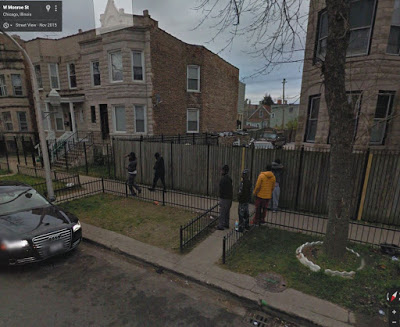
What is particularly valuable about Moskos’ perspective is that he knows the beats that cops work. That doesn’t excuse bad policing. It does mean he knows more about the context of police work than the ACLU or Black Lives Matter. Consider, for instance, his defense of enforcing the law against Chicago youth in a rough part of town:

But the ACLU is wrong. Dead wrong. Look, if you want to argue that these young men shouldn’t be stopped at all, fine. You agree with the ACLU (and don’t live on that block or hear the gunshots). And the ACLU is right in criticizing police who stop people for the sake of making a stop.

As a cop you don’t (or shouldn’t) harass everybody walking down the block. You harass these guys on this block. And by “harass” I mean, within the law and constitution, make it little less fun for them to hang out in public and sell drugs. Yes, you as a cop give these guys a hard time. Is that fair? Yes. Because there have been six shootings on this block this year. Is it racist? No. Because these guys are the problem.

If you’re a cop, you need to ask a bunch of questions 1) how do you do knowing these guy are slinging and shooting? 2) Should you stop these guys? 3) Are they committing a crime? 4) Are they a Broken Window? 5) What legal basis do you have to stop and frisk those guys?

[The answers are 1) get out of your damn car and talk to them, or at watch them disperse at your presence, 2) yes, 3) no, and 4) yes. 5) very little at first, but you can build it, ask for a consent search, or conduct a Terry Frisk.]

You pull up to them. See what they do. You can crack down on this group by enforcing Broken Windows quality-of-life crimes. You get to know who they are. You can use your discretion and ticket them for something — drinking, smoking joints, jaywalking, littering, truancy, spitting — whatever it takes. You can arrest them when they can’t provide ID (they can’t, trust me). You can harass these criminals legally and within the bounds of the constitution. This is what police are supposed to do. It’s how homicides are prevented. It’s how some kids stay out of gangs. But if cops do their job, then we, society, need to support police officers against inevitable accusations of harassment, racism, and even discourteous behavior in their confrontations with these criminals.

As a cop you will not win the war drugs, but as long as drugs are illegal you need to fight the fight against pubic drug dealing. But we’re telling cops not to do this. In Chicago cops are listening. And so are the criminals.

So maybe America isn’t so great (for reasons other than Michelle Higgins gives).

I Would Like to Know What It’s Like to Write for the New York Times

We hear a lot these days about how poorly certain Americans understand their neighbors, especially when it comes to racial differences.

But if I can’t understand the experience of a person of color, am I any better equipped to understand a great grandchild of Irish immigrants who worked as domestic help in Boston?

And why not reverse the direction? Can people of color understand mmmmeeeEEEEE? Do they know what it felt like to put on a wool uniform with the junior high marching band to perform in the July 4th parade, to receive a B+ on a paper for Reformation history at Temple, to be rejected for a Luce post-doctoral fellowship, to experience the retirement of Mike Schmidt? Some might say that these experiences are insignificant compared to those of other people? That is a fair point. But it also raises a question about whether we only care about the experiences of others when they die. Which is another fair point. Death does put a point on experience. But how often do memorial services capture the entire experience of a deceased’s life. We remember the person as a great guy or gal and stay quiet about the blemishes.

When it comes to black men who get pulled over by police and die, should Michael Eric Dyson, a professor at Georgetown and op-ed writer for the Times, be able to say that his experience is akin to that of Alton Sterling or Philando Castile? I have a hard time understanding how a man with Dyson’s experience can think that his is similar to men who live in very different circumstances. According to Dyson:

At birth, you are given a pair of binoculars that see black life from a distance, never with the texture of intimacy. Those binoculars are privilege; they are status, regardless of your class. In fact the greatest privilege that exists is for white folk to get stopped by a cop and not end up dead when the encounter is over.

Perhaps Mr. Dyson did not receive his privilege (elite university professor and writer for the nation’s premier newspaper) at birth, but that status surely puts him at several removes from Castile and Sterling and many other African-American men who live in our nation’s cities. It is also several removes from white Americans, even those with advanced degrees and who teach for a living.

The problem with framing race relations along the lines of what each of us experience, and that some can never know the experience of another, is that it leaves no hope or way out. Mr. Dyson will never know my experience and I will never know his.

But if you want to talk about law enforcement policies that lead to the mass incarceration of blacks, municipal governments’ failure to recruit and train people who will be good cops, or the lack of independent oversight of law enforcement officials (like even Jim Comey), that’s a conversation we can have. But one that always informs me how I cannot know what you’ve experienced is going to be a conversation stopper.

Someone Isn’t Listening

While Pope Francis suggests that Christians need to apologize to non-heteros, Steven Jonathan Rummelsburg href=”http://www.catholicstand.com/talk-lgbtq-supporters/”>offers tips on how to talk to people in the LBGTQ community:

Admittedly, there seem to be many possible positions on the issues swirling around gender and sexual morality. Those in and of the world would contend that there are as many positions as people, but this is absurd. As it adheres with the first principle of all reality, there are only two possibilities; either one possesses a correct understanding of the LGBTQ agenda or one does not. Those who embrace a false notion of the issues asserted by the agenda appear to have many different positions, however, they are unified by their error.

Both misguided groups to the left and the right of the properly formed Catholic mistakenly believe that a personal opinion qualifies as a proper position on an issue. This is simply a nod to the Dictatorship of Relativism and has no bearing on objective reality. Before a true dialogue can begin, let the truth-seeker know that there are ever only be two possibilities for any position: either one understands reality rightly, or one does not. Our opinions are meaningless unless they correspond to the principles of truth and reality. Ironically, even the ideologue who claims that every opinion is “valid” will disagree with Catholic Truth, thus contradicting his own claim. However, the ideologue never lets self-referential incoherence get in the way of his narrative.

That’ll work.

Has Mr. Rummelsburg been taking philosophy from Bryan Cross?

And just imagine trying that approach the next time someone tells you we need to have a conversation about race relations in the United States.

How Far Will Racial Reconciliation Go?

Michelle Higgins and her father want it to go far:

Perhaps we evangelicals are silent – some refusal to acknowledge the whole identities of LGBTQ+ people – because we are bigoted terrorists too.
Our propaganda: circulating a petition to boycott Target. Our victims: image-bearers whose souls conditions are neither revealed to or controlled by us. We live as if faith gives us the right to direct people’s bodies. This is not faith-filled living. It is oppression.
And much like the realization breaking upon us in the current political climate: this is not evangelicalism. At all.

Evangelicals are a diverse group, thankfully some of our circles include the LGBTQ+ family. Many of us are showing up in solidarity with queer communities around the world, grateful for the invitation to grieve together. But many others in our evangelical family walk a dangerous path of passing judgment before showing compassion. If we readily proclaim that LGBTQ+ people are sacred image-bearers, we must also confess and dismantle our participation in the long history of hatred that has them scared. It is easy to express sympathy for our fellow humans. But we are called to a greater task: to confess that the lives of our gay, lesbian, queer, and trans friends are sacred. We must be willing to say that the lives of queer people of color matter to God.

What if Muslims are people of color?

May Institutions Confess Sins of Persons?

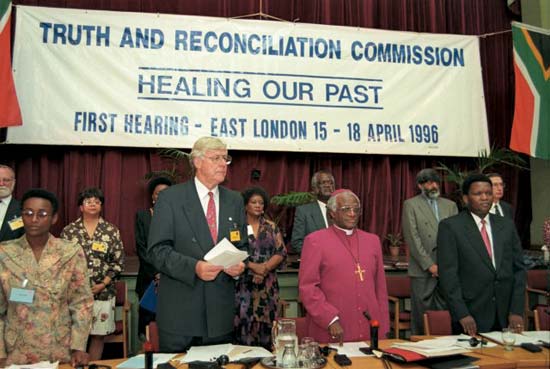
The overture to the PCA General Assembly on racism continues to intrigue if only because this is conceivably a problem just as much for the OPC as for our sister denomination. After all, J. Gresham Machen was no integrationist but held a view of blacks (typical at the time) that anyone today would consider not simply micro but macroracist. So I wonder if the PCA adopts the following overture, will it also petition the OPC to repent for Machen’s sins (for starters):

Therefore be it resolved, that the 44th General Assembly of the Presbyterian Church in America does recognize, confess, condemn and repent of corporate and historical sins, including those committed during the Civil Rights era, and continuing racial sins of ourselves and our fathers such as the segregation of worshipers by race; the exclusion of persons from Church membership on the basis of race; the exclusion of churches, or elders, from membership in the Presbyteries on the basis of race; the teaching that the Bible sanctions racial segregation and discourages inter-racial marriage; the participation in and defense of white supremacist organizations; and the failure to live out the gospel imperative that “love does no wrong to a neighbor” (Romans 13:10) . . .

One of the arguments made in defense of overtures like this one is that as the continuation of the Presbyterian Church US, the PCA is institutionally in continuity with the views on race that afflicted its southern Presbyterian forebears:

why should we confess for the sins of a church that we were not a part of? Frankly, I do not really understand this objection. The PCA is a continuing denomination; we claim to continue the PCUS. We must publicly confess and repent for sins of those whom we share a covenantal relationship with. God holds our covenant community responsible for our actions, even our sins, collectively. That’s how God works. We must confess for our failures as a church during the Civil Rights Movement and wherever we’ve sinned.

If you peel back the onion layers of institutional/covenantal ties, where do you stop? Why for instance do the overtures not include slavery since the PCUS and the PCUSA both had church members that owned slaves?

In fact, when it comes to institutional continuity, one could argue that PCA is good since the PCUS adopted measures to condemn segregation and approve integration. In his book on the origins of the PCA, Sean Lucas observes:

In 1954, the PCUS General Assembly adopted a report that affirmed “that enforced segregation of the races is discrimination which is out of harmony with Christian theology and ethics” and that urged southern Presbyterian colleges, campgrounds, and churches to be open to all, regardless of race. (For A Continuing Church, 121)

Of course, resolutions like this prompted conservatives in the PCUS who also eventually led in forming the PCA, to oppose the centralization of church power and ecumenism. Some of the opposition also came from sessions and presbyteries. But as for institutional succession, PCA officers could regard themselves as standing in line with the PCUS’s disapproval of racism and segregation.

In fact, throughout Sean Lucas’ five-part series on race and the roots of the PCA, the overwhelming examples of questionable views about race come not from the institutional church but from persons or periodicals. Here is how Lucas describes G. Aiken Taylor:

He told Nelson Bell, “I don’t like agitation on the social question from either side. I am not an integrationist, neither am I a segregationist. My position on this issue is that a view point of whatever kind should not be made the criterion for determining the place or the worth of a man…or a church paper.” In reply, Bell assured him that there was a range of opinions on segregation among the board of directors for the magazine and that he would not be required to hold to a particular party line. That said, the older man also counseled him not to push his more moderate racial views either: “I feel you would be utterly foolish to come to the Journal as editor and make race an issue–certainly at this juncture. There are so many more important things which need to be faced.” As it would happen, Taylor’s position on race, as evidenced in his writing and editorial practice, would largely harmonize with Bell’s own racial views: downplaying forced segregation, dismayed by outside agitators who stirred up the racial issue, and concerned not to let racial politics divert attention from the largely doctrinal and social issues of the day.

Sometimes presbyteries might weigh in but in one case the condemnation concerned rioting not integration:

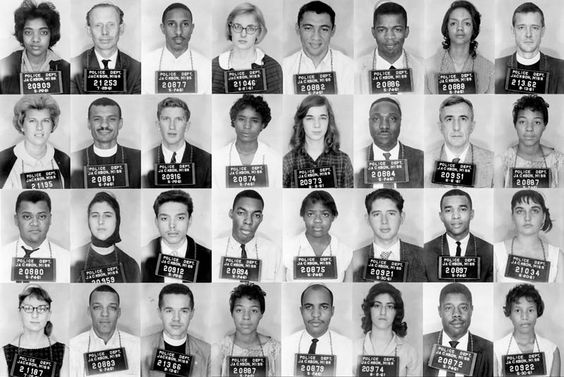
In 1961, East Alabama Presbytery declared itself against the mob violence that engulfed the Freedom Riders in Birmingham and Montgomery: “We express our deep regret and emphatic disapproval of mob violence for whatever cause.”

Even then, only four years later the PCUS took action that would seem to give its Presbyterian successor cover from charges of racism:

When the 1965 PCUS General Assembly endorsed a range of Civil Rights activities, including peaceful demonstrations and sit-ins, over sixty commissioners filed a dissent. Nelson Bell presented it to the assembly, arguing that “some of the methods sanctioned in the document are ‘contrary to or go beyond the jurisdiction of the Church.'” Even if the church desired to support “worthy goals” like racial justice, Aiken Taylor noted, that did not mean that it could do so through “radical measures” or “extremism or vindictiveness.” Later in 1965, Bell worried again that peaceful demonstrations were a small step from civil disobedience and “the step from civil disobedience to riots and violence is even shorter.” Willfully breaking laws, even for a worthy goal, is wrong: “No nation should permit injustice and discrimination to be a part of its accepted way of life. But no nation can survive which placidly allows people to make of themselves prosecutors, jurors, and executioners–and this applies to all citizens.” Means do not justify the end: breaking the law, whether to support segregation or integration, was never right.

Yet, interesting to see is that opposition to General Assembly resolve was not premised on race but on the value of civil disobedience. Yet, when church bodies did engage in explicit forms of racial bigotry, the response of the PCUS and many conservatives (who went into the PCA) was to object:

Second Presbyterian Church, Memphis, Tennessee, drew national attention for its refusal to admit mixed-race groups to corporate worship services. One of several Memphis churches targeted in early 1964 by the local chapter of the National Association for the Advancement of Colored People (NAACP) for its “kneel-ins,” Second Church reacted the most negatively. The groups were refused admittance and church officers patrolled the narthex and the front of the church looking for those who would seek to “integrate” the services. The Second Church kneel-ins drew media attention not only because of their racial component, but also because the congregation was scheduled to host the PCUS General Assembly in 1965. As a result, several presbyteries and synods, along with the liberal Presbyterian Outlook, protested allowing the Memphis church to host the assembly; by February 1965, the assembly’s moderator, Felix Gear, a former pastor of Second Church, made the decision to move the coming meeting to the denomination’s assembly grounds in Montreat.

Lucas’ conclusion may be correct that the founding fathers of the PCA sinned, though his book and series show a lot more complications than simply the yes-no question of white supremacy (or not). But the theological question of institutional responsibility for personal sins is a theological question begged rather than answered. Lucas invokes the example of Daniel confessing Israel’s sins:

But his confession is strange–because he doesn’t confess his own private sins, but the sins of Israel and Judah that led to the judgment of the exile: “We have sinned and done wrong and acted wickedly and rebelled, turning aside from your commandments and rules. We have not listed to your servants the prophets, who spoke in you r name to our kings, our princes, and our fathers, and to all the people of the land. To you, O Lord, belongs righteousness, but us open shame” (Dan 9:5-7).

This wasn’t simply lip synching or going through the motions. Rather, Daniel recognized his own covenantal complicity in what his fathers and forefathers had done and in bringing about the exile. And he confessed those sins and repented: “We have sinned, we have done wickedly” (Dan 9:15).

By that same exegesis, isn’t the PCA righteous for the way its parent body, the PCUS, condemned racism and segregation?

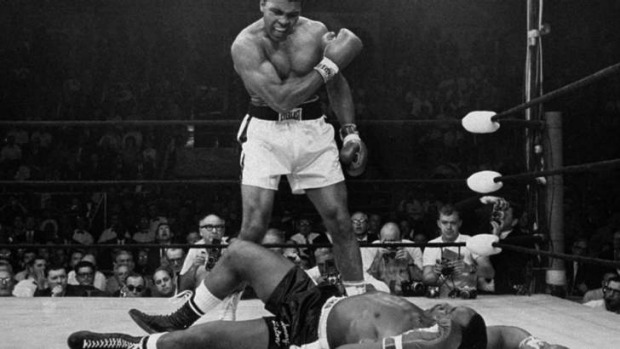
What If Muhammad Ali Ran for President?

As I listen to journalists and sports-talk radio hosts talk about the greatest fighter of all time, I keep thinking I understand the appeal of Donald Trump.

Just look at some of these juicy quotes:

Clay was 18: bounding, fearless, leading with his mouth.

“I’m not only a fighter. I’m a poet; I’m a prophet; I’m the resurrector; I’m the savior of the boxing world. If it wasn’t for me, the game would be dead,” he said.

Young Clay made boxing an art form. He was an original, a heavyweight who didn’t move around the ring — he danced. He’d thrill the crowd with his quick scissor-step shuffle. On defense, he’d slip and slide, Dundee said, and then flick that jab.

“He had a jab that was like a snake,” he said.

Float like a butterfly, sting like a bee; rumble, young man, rumble. Boxing reporters never had so much fun.

So Ali, though seemingly a good guy on numerous fronts, was a tad egotistical. Did that cost him with the media?

And then he could be pretty divisive:

After the Liston fight, Ali revealed he was a member of the black separatist movement Nation of Islam. He wanted to be called Muhammad Ali, a name he said was given to him by the group’s leader, Elijah Muhammad.

“That’s my original name; that’s a black man name,” Ali said. “Cassius Clay was my slave name. I’m no longer a slave.”

Muhammad, the Nation of Islam leader, preached that integration and intermarriage were wrong and that white people were devils. It was an idea Ali defended in a 1971 TV interview.

“I’m gonna look at two or three white people who’re trying to do right and don’t see the other million trying to kill me? I’m not that big of a fool, and I’m not going to deny it,” he said. “I believe everything he [Muhammad] teach, and if the white people of a country are not the devil, then they should prove they’re not the devil.”

Ali became a polarizing figure in America.

Again, did that cost Ali his reputation?

So I wander as I wonder.

What’s To Prevent the Nationality of the Church?

I have already wondered where the PCA’s corporate confession of the sin of racism will lead. Sean Lucas’ article on the spirituality of the church in the freshly e-minted theological journal, Reformed Faith and Practice, makes me wonder more.

One of the takeaways of Lucas’ article is the fair point that Southern Presbyterian ministers and assemblies used the spirituality of the church to avoid speaking out about Jim Crow or even to defend white supremacy. Lucas makes that point stick when he observes the way that Presbyterians ignored the spirituality of the church when it came to alcohol or evolution:

And southern Presbyterians had a difficult time knowing where the line was between spiritual and secular realms. One example of this was the church’s long-standing support and advocacy of abstinence from alcohol. From 1862 on, the southern Presbyterian General Assembly repeatedly advocated teetotalism, reprobated the sale of beverage alcohol, and urged people to “use all legitimate means for its banishment from the land.” Finally, in 1914, as the political process began that would produce the Volstead Act, the General Assembly declared, “We are in hearty favor of National Constitutional Prohibition, and will do all properly within our power to secure the adoption of an amendment to the Constitution forever prohibiting the sale, manufacture for sale, transportation for sale, importation for sale, and exportation for sale of intoxicating liquors for beverage purposes in the United States.” Notably, there was no hue and cry in the Presbyterian papers by conservatives about this action as a violation of the spiritual mission of the church.[11]

Another example of blurring the lines between the so-called spiritual and secular realms occurred in the 1920s over the teaching of evolution in the public schools. In North Carolina, the key leaders who opposed evolution both in the public schools and at the University of North Carolina were Presbyterian ministers, Albert Sidney Johnson and William P. McCorkle. In 1925, the Synod of North Carolina adopted resolutions that called for “a closer supervision to prevent teaching anything [in the public schools]…[that contradicted] Christian truths as revealed in the Word of God.” They also “demanded the removal of teachers found guilty of teaching evolution ‘as a fact.’” Again, beyond the rightness or wrongness of the action, the main point here is that the spirituality of the church doctrine did not prevent these Presbyterians from intermeddling in civil affairs outside the “spiritual” realm of the church.[12]

But does inconsistency really invalidate the principle? Political conservatives argue for U.S. independence in foreign affairs and then turn around and support a big military and wars of intervention in the Middle East. So we forget the policy and just send more troops to Syria? Or do you perhaps think about reaffirming the wisdom of the policy in the face of the inconsistency and ask for practice to reflect doctrine?

The problem is that Lucas is not merely calling for the PCA to be consistent. He wants the church to bring transformational grace to the world:

. . . the way forward for all of us will be our common commitment to what the church as church should be and should be doing. Central to that life together will be the ministry of the Word, the administration of the sacraments, and prayer. And as we use these effectual means of our salvation, what we will find is that the grace that comes to us through them will transform us. It will drive us out into our world to share the Good News of Jesus, but also to live that transforming Gospel in tangible ways, as we love justice and mercy, as we extend ourselves in risky ways into the lives of our neighbors. This Gospel will not leave us alone and cannot leave us the same. After all, King Jesus is making his world new now through you and me—his grace transforms everything.

That sounds pretty good, as if the world will be better when we stop erecting boundaries that cut “off the ‘spiritual’ from the rest of life.” But surely, Lucas recognizes the value of making distinctions between the civil and ecclesiastical realms. I mean, would he want the PCA to affirm a motion that called for the United States to make Christianity the official religion? Or would he want the PCA to endorse a roster of political candidates — Clinton over Trump? Or how about the PCA being salt and light with the State Department and opening diplomatic talks with North Korea? Does the ministry of the word, administration of baptism and the Lord’s Supper, or church discipline give the PCA leverage to apply its spiritual insights to the secular and temporal affairs of U.S. politics? Why stop with national borders? Why not Europe? Why not the world? I can’t believe Lucas favors that kind of mission creep. But from the Baylys in the Rust Belt to Tim Keller in NYC, many in the PCA want the communion to be transformational. Is race really the way to do this?

This is an odd development since the point of the spirituality of the church seems evident to many who are not even Machen groupies. Paul Helm once again contrasts favorably two-kingdom theology to the medieval one-kingdom approach among those nostalgic for Christendom:

The current focus on the Two Kingdoms has been on secular society and the fact that it is distinct from the church. That’s freedom, we rightly think, to be free from such things as the obligation to transform culture in the name of Christ. But actually it is only one side of freedom. Christian freedom has not only to do what we are commanded to do or to abstain from doing by the government of the day, but also from what some church or sect, or social group or cultural mood, may try to require of us, or do require of us, that would be sinful. Not permitted by the Word of God, but forbidden by it.

Meanwhile, Carl Trueman comes out for the Benedict Option precisely because of the inherent problems of ecclesiastical overreach:

Maybe the Benedict Option and my own proposed Calvary Option are really two ways of saying the same thing—that the church needs to be the church and Christians need first and foremost to be Christians before they engage the civic sphere. Maybe our current problem is therefore not that society is secularizing but rather the opposite—that the American church is finally being forced to desecularize. This will be painful. It will involve hard choices. It will involve increasingly obvious differences between the church and the world.

I doubt either Helm or Trueman would disapprove of efforts to acknowledge the racism that sometimes lurked among the proponents of the spirituality of the church. But does that acknowledgment necessarily involve abandoning a distinction between the kingdom of grace and the civil kingdom, between grace and the world, between redemption and external justice?

Why you can’t apologize for racism (in other ways) and continue to support the spirituality of the church is beyond me.