What Brett Kavanaugh Could Learn from the Holy Father

The asymmetry between the press’ coverage of the Roman Catholic church’s scandal and the allegations against Brett Kavanaugh are remarkable. Whistle-blowers in the church receive a level of scrutiny that the judge’s accusers do not.

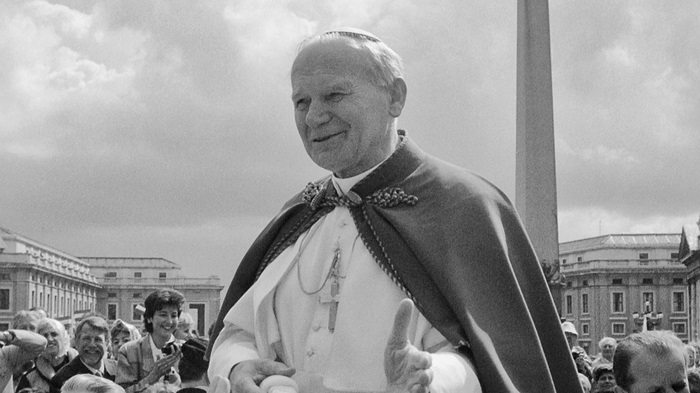
But not to worry. If the press is as favorably inclined to Pope Francis as it seems, the Vicar of Christ may have just supplied one of his flock with the rationale he needs to defend himself tomorrow:

I take the Pennsylvania report, for example, and we see that the first 70 years there were so many priests that fell into this corruption, then in more recent times it has diminished, because the Church noticed that it needed to fight it in another way. In the old times these things were covered up, they even covered them up at home, when the uncle was molesting the niece, when the dad was molesting his sons, they covered it up because it was a very big disgrace… it was the way of thinking in previous times or of the past time. It is a principle that helps me to interpret history a lot.

A historic event is interpreted with the hermeneutic of the time period in which it took place, not as a hermeneutic of today passed on. For example, the example of indigenous people, that there were so many injustices, so much brutality, but it cannot be interpreted with the hermeneutic of today [now] that we have another conscience. A last example, the death penalty. The Vatican, when it was a State, a pontifical State, had the death penalty. In the end the state decapitations were 1870 more or less, a guy, [sic] but then the moral conscience grew, it is true that always there were loopholes and there were hidden death sentences. You are old, you are an inconvenience, I do not give you the medicine, it went so… it is a condemnation to social death. And about today… I believe with this I have responded.

Boys were boys at Georgetown Prep, and priests were priests in Pennsylvania.

Actually, in the case of Kavanaugh, Francis’ point has merit since movies like Animal House indicate what American society could bear back then about young men’s antics.

But can the pope really be serious that priests’ abuse of children or adolescents was part of the church’s outlook before 2002? Was it even acceptable for men called to celibacy to have sex, consensual or not?

Pope Francis may have said more than even Rod Dreher thinks.

If It Is Not a Gospel Issue, What about Gospelly?

The Gospel Allies are not helping to clarify what is and what is not a gospel issue. Their brand is slipping away.

Kevin DeYoung comes the closest to adding clarity when he writes:

“gospel issue” should not be shorthand for “you must be passionate about all the same things I’m passionate about.” Nor should it be synonymous with notions of “building the kingdom” or “transforming the culture.” By the same token, preachers must be careful lest they allow CNN and Fox News, not to mention Twitter and Facebook, to set the agenda for their weekly pulpit ministry. If pastors in our day let cultural concerns crowd out the preaching of new birth, repentance, and justification by faith alone, it wouldn’t be the first time in the church’s history that the “gospel” became more social than gospel.

But then he the North Carolina pastor taketh away with this:

And yet, “gospel issue” need not mean any of these things. If “gospel issue” means “a necessary concern of those who have been saved by the gospel” or “one aspect of what it means to keep in step with the gospel” or “realities without which you may not be truly believing the gospel,” then social justice is certainly a gospel issue. When biblically defined, social justice is part and parcel of loving our neighbor as ourselves. It’s part of keeping the second table of the Decalogue. It’s part of doing the good works God has prepared in advance for us to walk in (Eph. 2:10).

So there is the gospel issue of preaching the new birth and justification by faith alone, which leads to the gospel issue of good works that are the fruit of saving faith, and those good works or the third use of the law bring social justice into view or the views of social justice warriors into view.

In a similar way (as Justin Taylor observes), D. A. Carson says something good:

For some Christian observers, cessationism is a gospel issue. In their perception, the charismatic movement is characteristically afflicted by one brand or another of health, wealth, and prosperity gospel that distances itself from the gospel of the cross: this makes the matter a gospel issue. Some forms of the charismatic movement so construct a two-stage view of spiritual wholeness, the second stage attested by one or more particular spiritual gifts, that the nature of what Jesus achieved on the cross is in jeopardy. Others, it is argued, adopt a view of revelation that jeopardizes the exclusive, final authority of Scripture, and this threatens the gospel that the Scripture heralds. But other Christian observers, fully aware of these dangers and no less concerned to avoid them, nevertheless remain convinced that at least some charismatics manage to display their gifts without succumbing to any of these errors, while self-consciously holding to the same gospel that the observers hold. In other words, for them the charismatic movement (or, from the obverse direction, cessationism) is not necessarily a gospel issue. They want to avoid building legalistic fences around their positions. Once again, it is difficult not to see that personal experiences and sustained habits of assessment have entered into one’s judgments. Determining whether X is a gospel issue is often more than a narrowly exegetical exercise.

To put the same matter another way, another sort of example might be introduced. We have seen how the doctrine of penal, substitutionary atonement is usefully considered a gospel issue provided (a) that we have adopted a robust definition of the gospel, such that (b) to disown that facet of the cross-work of Christ necessarily diminishes or threatens the gospel. But I have not heard anyone recently suggest that the exemplary function of the cross is a gospel issue, even though Peter unambiguously insists that Jesus died leaving us an example that we should follow in his steps. This is as much a gospel issue as is penal, substitutionary atonement, even though it is not treated in that way today, precisely because it is not one of the controverted points. In other words, the things that we debate as to whether they are gospel issues reflect the hot topics, and especially the denials or errors, of our age. That is one of the reasons why I mentioned the filioque clause and the eternal generation of the Son at the head of this editorial: at one point, they were very much considered gospel issues. The second of these two is currently making something of a comeback—but certainly if we are careless about them, our carelessness suggests how our own theological foci have shifted with time and demonstrates once again that discussions of the sort “X is a gospel issue” commonly address the errors and dangers of a particular age. This is not necessarily a bad thing; it is in any case an inevitable thing. But it should be recognized for what it is.

In other words, the nature of salvation is at stake either explicitly or implicitly in debates about the work of the Holy Spirit and the work of Christ on the cross.

Then Carson raises matters of politics and social relations to the level of “gospelly”:

Certainly the majority of Christians in America today would happily aver that good race relations are a gospel issue. They might point out that God’s saving purpose is to draw to himself, through the cross, men and women from every tongue and tribe and people and nation; that the church is one new humanity, made up of Jew and Gentile; that Paul tells Philemon to treat his slave Onesimus as his brother, as the apostle himself; that this trajectory starts at creation, with all men and women being made in the image of God, and finds its anticipation in the promise to Abraham that in his seed all the nations of the earth will be blessed. Moreover, the salvation secured by Christ in the gospel is more comprehensive than justification alone: it brings repentance, wholeness, love for brothers and sisters in the Christian community.

But the sad fact remains that not all Christians have always viewed race relations within the church as a gospel issue.

More worrying, survey after survey has shown that in America today, even among those with a robust grasp of the gospel, black Christians and white Christians do not view these matters exactly the same way. Even where both sides agree, on biblical grounds, that this is a gospel issue, black Christians are far more likely to see that this is a crucial gospel issue, an issue of huge importance, one that is often ignored, while white Christians are more likely to imagine that racial issues have so largely been resolved that it is a distraction to keep bringing them up.

Carson seemed to recognized that doctrinal matters are properly theological and concern the way that man becomes right with God. But then he gives ground an allows that questions surrounding social relations, and specifically societies that are comprised not simply of Christians but of non-Christians, are “gospelly.” He does not seem to consider why should non-Christians ever consent to be governed by the “gospel issues” defined by Christians. And whatever happened to allowing those with expertise in public policy, law, governance, and electoral politics set the debates about race relations and laws about bigotry rather than thinking any Christian whose read a book by Keller or Carson think he is competent to pontificate about laws governing hatred or prejudice (which is kind of complicated in a society where freedom of thought is a long and cherished ideal).

And then, a golden oldie from Thabiti Anyabwile on how a matter of policy becomes “gospelly.” After the federal grand jury’s determination not to indict Ferguson police offer Darren Wilson for the shooting of Michael Brown, Anyabwile told readers (I am assuming they are Christian because of that “gospelly” thing) that they have three options:

We may turn the television and turn our heads and continue the unusual business of business as usual. . . .

Or, we may declare the matter resolved and proclaim from the burning rooftops, “The system worked.” . . . Our civic ideals require we remain involved in an open, honest discussion about what worked and what didn’t so that what we cherish isn’t slowly eroded by our inattention. That inattention is no option for the righteous, either.

The only course forward for all of us is that active engagement that applies and seeks to live up to our highest ideals. The debate about what constitutes “justice” is part of the process. The review of our systems and the amendment of laws is part of our highest ideals. The righteous must work to keep the foundations from being destroyed. They must walk by faith and they must do the good deeds that lead to life.

Notice the move back and forth between we “the righteous” and “civic ideals.” I assume and have heard Anyabwile enough to know that he believes a person is only righteous because of faith in Christ imputes that righteousness to the Christian. So why mix a theological category with a political one — righteous with civil? This is not clear, but it does in lean in a Social Gospelly direction. The mixing of civil and theological categories becomes even more intermingly:

There is no way people of good conscience or people of Christian faith can look at the events in Ferguson and conclude there’s nothing left for us to do or nothing that can be done. No, both pure religion and good citizenship require we not settle for what’s happened in the shooting of Michael Brown and the aftermath of the grand jury’s decision. The Ferguson grand jury has given us our marching orders. They have ordered us to march for a more just system of policing and the protection of all life. We are obligated–if we love Christ or love this country–to find a way forward to justice, a way suitable to the dictates of our individual consciences and the word of God.

If the United States is a Christian country, maybe this sort of co-mingling of theology and law works. But we are not in Christian America anymore.

If you listen to Anyabwile’s comments about the recent Statement on Social Justice and the Gospel, you hear him complain about the failure of the statement to define terms like “social justice,” “intersectionality,” Marxism, and the like. It doesn’t seem particularly fair or just to be prissy about words when after four years you are not any more clear about the gospel and social justice than John MacArthur.


Selective 2k

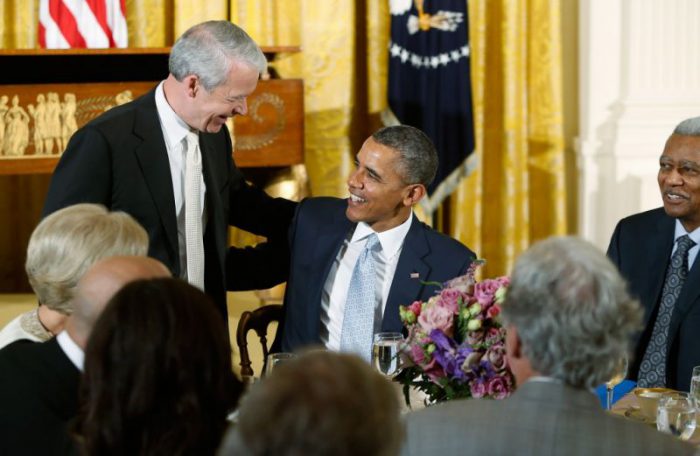
Readers may remember an exchange between John Fea and me about religion and politics from last summer. In the course of that exchange, Fea quoted favorably from President Obama’s welcome to Pope Francis:

You call on all of us, Catholic and non-Catholic alike, to put the “least of these” at the center of our concern. You remind us that in the eyes of God our measure as individuals, and as societies, is not determined by wealth or power or station or celebrity, but by how well we hew to Scripture’s call to lift up the poor and the marginalized, to stand up for justice and against inequality, and to ensure that every human being is able to live in dignity – because we are all made in the image of God.

You remind us that “the Lord’s most powerful message” is mercy. That means welcoming the stranger with empathy and a truly open heart – from the refugee who flees war torn lands, to the immigrant who leaves home in search of a better life. It means showing compassion and love for the marginalized and the outcast, those who have suffered, and those who seek redemption.

This is a blatant effort to use Christianity for political ends. Because Fea found it agreeable to his own understanding of government, he wrote that if such views made him a Christian nationalist, “then call me a Christian nationalist.”

But when Mike Horton wrote critically about the hobby horse of Fea, the so-called “court evangelicals,” Fea liked the kind of 2k that had originally led me to call him a Christian nationalist. According to Horton:

Liberal and conservative, Catholic and Protestant, have courted political power and happily allowed themselves to be used by it. This always happens when the church confuses the kingdom of Christ with the kingdoms of this present age. Jesus came not to jump-start the theocracy in Israel, much less to be the founding father of any other nation. Even during his ministry, two disciples—James and John—wanted to call down judgment on a village that rejected their message, but “Jesus turned to them and rebuked them” (Luke 9:54–55). He is not a mascot for a voting bloc but the savior of the world. He came to forgive sins and bring everlasting life, to die and rise again so that through faith in him we too can share in his new creation.

Sorry, but President Obama was confusing the kingdom of Christ with the United States when he welcomed the pope. John Fea apparently suffers from the same confusion when approving Obama and then approving Horton.

It’s hard keeping selectivity straight.

Win a Free Book

Anyone who can guess the author of the following article will receive a copy of On Being Reformed:

Putting the X Back in Xmas

How to make “Jesus the Reason for the Season” – that is the dilemma facing evangelical Protestants. Some, the socially militant ones, insist that Christmas is a holiday by divine right and fight for the public nativity scene in town square, hoping to hide its otherwise nakedness. The evangelistic evangelicals (perhaps a redundancy) hope to use the holiday to reach the lost, taking advantage of banners, plays, or even worship to proclaim the gospel to those nominal Christians who go to church during the holy month of December. But rarely have evangelicals owned up to the commercial nature of modern Christmas celebrations and their part in its commodification. In his recent book, Selling God, R. Laurence Moore shows how the evangelical Presbyterian, John Wanamaker, transformed his downtown Philadelphia department store into a church during Christmas, complete with the largest pipe organ in the world (!!), programs of Christmas carols, and other Christian symbols. According to Leigh Eric Schmidt, whose Consumer Rites parallels Moore’s book on religious consumerism, the nativity scene in Wanamaker’s Grand Court “remained the center-piece” of the store’s Christmas Cathedral, “often spotlighted with a beam of light that looked as if it had come shining down from the heavens.” According to Schmidt, the interplay between the divine gift of God’s only begotten son and the gifts exchanged at Christmas energized Wanamaker’s displays. “Christmas gifts provided a tangible vehicle for connecting with the sacred drama.”

THE PROBLEM WITH ALL evangelical approaches to Christmas, from the crassly commercial to the devoutly evangelistic, is that of begging the question. Is Christ’s birth really about “Christmas cheer,” whether the secular variety of spiked eggnog, jingle bells, and jolly Saint Nick, or the seemingly more dignified joy that comes from gratitude to God for sending his Son to redeem the lost? In other words, should the incarnation make us glad or humble? Any answer to this question should, of course, keep in mind the less sentimental aspects of Christ’s birth, the manger in the stable and Herod’s slaughter of the innocents.

A better reason for Christmas gloom comes from the Bible’s teaching about the humiliation of the second person of the Trinity in the incarnation. Children reared on the Westminster Shorter Catechism are taught to conceive of Christ’s earthly ministry under the rubric of his humiliation, as distinct from his exaltation. Question 27 reads, “Wherein did Christ’s humiliation consist?” Answer: “Christ’s humiliation consisted in his being born, and that in a low condition, made under the law, undergoing the miseries of this life, the wrath of God, and the cursed death of the cross; in being buried, and continuing under the power of death for a time.” What is important to notice is that the birth and death of Christ, and everything in between, compose a single act of God in which he humbled himself by being subject to his own creation in the most humiliating fashion. So what is said about the incarnation applies similarly to the crucifixion, the former being initial, and the latter the culmination of Christ’s suffering.

SINCE BIRTH AND BURIAL ARE part of Christ’s humiliation, they should nurture a similar response from us as Paul says in Phillipians 2. Unfortunately the piety of Christmas is insensitive to this teaching as revealed by the spirit and traditions of the holiday. So instead of celebrating the birth of Christ at Christmas, the church should look to a more appropriate form of celebration – the regular receiving of the Lord’s Supper, It is the proper alternative to Christmas cheer, consumerism and yuletide indulgence.

INSTEAD OF LINKING THE incarnation to fictional tales about Santa and his elves, the Lord’s Supper unites Christ to real events in the history of Israel, filled with redemptive significance, like the Passover. And rather than forcing new and irrelevant significance on to the narrative to achieve a new market-centered gospel of trade and consumption, the Lord’s Supper explains the true significance of Christ’s coming, namely, to be the sacrifice for the propitiation of God’s wrath. Moreover, the Lord’s Supper produces a reverence and solemnity appropriate for something as awful as the incarnation. Instead of this being a time of gorging and giggling, the Supper’s small portions nurture self-examination, repentance, and faith. One last thing – an important one for Presbyterians and Reformed – the Lord’s Supper is biblically prescribed whereas Christmas is not. As J. Gresham Machen wrote,

the Bible makes no definite provision for the commemoration of the birth of Jesus, but provides the most definite and solemn way for the commemoration of his death. . . . Indeed that commemoration of the death of Christ was definitely provided for by Jesus himself. “This cup is the New Testament in my blood,” said Jesus: “this do ye, as oft as ye drink it, in remembrance of me.” In those words of institution of the Lord’s Supper, Jesus carefully provided that His church should commemorate His death.

Evangelicals used to cry, “Back to Jesus.” Maybe its time they did by taking up the cross and giving up the manger.

Protestant Nationalism

With all the attacks on and outrage over white nationalism and white theology, a historical perspective on the origins of nationalism might be instructive. This is from Philip S. Gorski’s The Disciplinary Revolution: Calvinism and the Rise of the State in Early Modern Europe (2003):

Confessionalization contributed to the development of Western nationalism in at least two ways: (1) by bringing cultural and political boundaries into closer alignment with one another; and (2) by supplying a discourse through which national distinctiveness could be articulated — and at least partly reconciled with Christian universalism. Like most agrarian societies, medieval Europe possessed an elite, high culture (literate and Latinate) that spanned political boundaries and a crazy quilt of popular cultures (oral and vernacular) that were confined to particular regions. Insofar as confessionalization stimulated the development of mass vernacular cultures that were neither local nor fully European, it helped to create the cultural homogeneities that nationalism would later mythologize and extol. . . . Of course, students of the subject have long argued that nationalism is a secular ideology that first emerges during the French Revolution. But recent work by early modernists has show this view to be untenable. However one defines it — qua movements, discourse, or category — nationalism can be found in the early modern period. While there were secular forms of nationalist discourse, grounded in narratives of cultural and political distinctiveness, the most common type of nationalist discourse in the early modern period was a religious one, which drew on the Exodus story, and on the notion of chosenness more generally. (163)

And Yet, Protestantism is Still Rodney Dangerfield

For all of Jonathan V. Last’s important observations about the seriousness of the current crisis in Roman Catholicism, Protestantism still gets no respect. Here are the possible outcomes of the contemporary scandal:

Some conservative Catholics, such as Princeton’s Robert P. George, have suggested that Francis ought to resign—especially if the Viganò letter is corroborated. This is an attractive idea and would align with the cause of justice. Anyone in the church hierarchy who knew, or should have known, about specific abusers in their midst should, at the least, be removed from any position of responsibility. They simply cannot be trusted. If you were to extend this view all the way to the bishop of Rome, there is a certain cleanliness to its logic—a sense that maybe the church could make a clean break and begin to make things right anew.

But it might be a cure worse than the disease.

In the last 600 years, only one pope has abdicated: Benedict XVI, the man who immediately preceded Francis. Two abdications in a millennium are an aberration. But two abdications in a row would have the practical effect of breaking the modern papacy. From here forward, all popes would be expected to resign their office rather than die in harness.

This expectation of resignation would, in turn, create incentives for the pope’s theological adversaries to fight and wound him, in the not-unreasonable hope that if they could make him unpopular, he could be shuffled out of the palace and they could try their luck with a new pontiff. Before you know it, you’d have polling data and opposition research and the papacy would become an expressly political office. No Catholic should yearn for this outcome.

The second option is capitulation. Catholics could shrug and give up. They could let Cardinal Wuerl live his best life and then slink off to a graceful retirement; they could make peace with Cardinal Cupich’s view that the church exists, first and foremost, to deal with global warming, or the minimum wage, or whatever else is trending on Vox.com. They could toe the dirt and accept sacramental same-sex marriages, even if it destroys the theology of the body. After all, times change. Religions change. And if you really trust in the Lord, then no change could come to His church without its being the will of the Father.

The third option is schism. There has been loose talk about schism since the early days of Francis’s pontificate. The conversation became less whimsical at the time of the synod and the dubia. It will become deadly serious if Viganò’s accusations are corroborated and Francis shelters in place. Even so, it remains one of those low-probability, extinction-level events that every Catholic should pray does not come to pass.

The fourth option is resistance. We are only at the current moment because the forces that conspired to elevate Francis refused, for decades, to leave the church, even though their desires were at odds with its teachings.

Finding Jesus in the ministry of Protestant churches is not an option.

No Christianity outside the Roman Catholic Church (Vatican II, the joint statement on justification with Lutherans, and Evangelicals and Catholics Together notwithstanding).

Audacity Gives, Audacity Takes Away

While Bryan and the Jasons are still mulling over the merits of conversion, others are wondering about the state of affairs in the Roman Catholic hierarchy. Jonathan V. Last, at the Weekly Standard, lays out the problems of leaning hard on papal audacity (notice that the link is now dead and the article at Called to Communion has been removed):

The Catholic church is unlike any other earthly institution. It is strictly hierarchical, with its ultimate power derived from the son of God. The head of the church—the successor of Peter—is elected to a lifetime appointment by his peers, and his authority over them is total. He can allow them to carry on sexual affairs in broad daylight, as Francis did with Father Krzysztof Charamsa, a priest who worked for years in the Vatican curia while living openly with his gay lover. Or he can drive them from the church, as Francis did with Father Charamsa after the priest made his situation public in the Italian media in 2015. He can make either of these choices—or any choice in between—for any reason he likes. Or none at all. Such is the supreme power of the vicar of Christ.

Yet the pope’s immediate subordinates—the cardinals and bishops—function like feudal lords in their own right. The bishop can preach in contravention of the teachings of the church, as Cardinal Walter Kasper does on the subject of marriage and infidelity. He can forbid the offering of both species of the Eucharist, as Bishop Michael Burbidge does in Northern Virginia. He can punish and reward priests under his care either because of merit or caprice—because the deacons and priests all swear a vow of obedience to the bishop (or cardinal) himself.

All of which is the long way of saying that there is no mechanism for a man such as Donald Wuerl to be dealt with by his peers. The bishop of Madison can fulminate against Wuerl all he wants to, as Bishop Robert Morlino did in late August. His fellow bishops have no power over him. The only man Wuerl is accountable to is the pope. And the structure of the church has no remedy when a pope is foolish or wicked.

In the weeks after the Viganò letter was published, Francis preached a homily in which he declared, “with people lacking good will, with people who only seek scandal, who seek only division, who seek only destruction” the best response is “silence” and “prayer.” If this sounds like Francis believes the real villains in this mess are Archbishop Viganò and people who want to know what the bishops knew, and when they knew it, well, yes.

In another homily on September 11, Francis went further, saying that not only was Viganò the real villain, but the bishops were the real victims: They were being persecuted by the devil: “In these times, it seems like the Great Accuser has been unchained and is attacking bishops,” Francis preached. And Satan “tries to uncover the sins, so they are visible in order to scandalize the people.” (The Father of Lies—as he is referred to in the Bible—has not traditionally been regarded as the revealer of sins in Catholic thought, but this pope has never been known for having a supple mind.) Francis then offered counsel for his poor, suffering brother bishops: “The Great Accuser, as he himself says to God in the first chapter of the Book of Job, ‘roams the earth looking for someone to accuse.’ A bishop’s strength against the Great Accuser is prayer.”

Roman Catholicism lives and dies with the pope, the cardinals, and the bishops. If Roman Catholics want to claim that their faith represents the truth, the Gospel, Jesus, or the Mass, they don’t have any of those Christian goods without the mediation of the hierarchy.

That is why this is a crisis on the order of 1517. And what did we learn last year during the 500th anniversary of the Reformation? Did anyone notice that the reformers reformed church government so that the ministry of word and sacrament was no longer under control of the Vatican?

Last thinks schism is possible. Only in 2018 are people beginning to understand (only implicitly) what was at stake in 1517.

Fear’s Double Standard

A prominent theme in John Fea’s book, Believe Me, is that fear drives evangelical politics. The word “white” should go before evangelical because Fea also contrasts white and black evangelicals’ politics. He writes:

Even the most cursory reading of the Old and New Testament reveals that, ultimately, Christians have nothing to fear. Scripture reminds us that we already have a strong protector in times of need. . . . In the Gospel of Luke, Jesus says, “Fear not, little flock, for it is your Father Good pleasure to give you the kingdoms.”

But of course, evangelicals did not believe this when the voted for Donald Trump:

While many of Trump’s evangelical opponents said that they could not tell their children or grandchildren that they voted for such a moral monster, other evangelicals were saying exactly the same thing about voting for Hillary Clinton. On Election Day, long-held fears or threats whose specter had been stoked for decades simply could not be overcome.

Recently, Mike Horton echoed Fea when he wrote under the title, “What Are Evangelicals Afraid of Losing?”:

In a Monday meeting with evangelical leaders at the White House, President Trump reportedly warned of violence against conservative Christians if the GOP loses in November. Evangelicals, he said, were “one election away from losing everything.”

As evangelicals, we would do well to correct the president on this point. If an election can cause us to lose everything, what is it exactly that we have in the first place?

What I don’t understand is why the evangelical voters for Trump, why their fears are a sign of infidelity. We have heard a lot about how evangelicals fear the Trump administration’s immigrant policy, the Southern Baptist Convention’s pastors’ treatment of women and sexual abuse, and the racial bias of police and related shootings.

Someone could argue that these fears about the plight of immigrants, women, and African-Americans are legitimate fears while the socio-economic concerns that motivated evangelicals to vote for Trump were illegitimate.

That may be, but that would also undermine the point that Christians should not be afraid, unless it is that white Christians don’t need to fear but Christian people of color do. Either way, a Christian no matter what his or her race or ethnicity is supposed to trust a sovereign God. If Psalm 23 is true, “Even though I walk through the valley of the shadow of death, I will fear no evil,” then it is true for all people who trust God.

Mencken Day 2018

From Happy Days:

I was on the fattish side as an infant, with a scow-lie beam and noticeable jowls. Dr. C. L. Buddenbohn, who fetched me into sentience at 9 p.m., precisely, of Sunday, September 12, 1880, apparently made a good (though, as I hear, somewhat rough) job of it, despite the fact that his surviving bill, dated October 2, shows that all he charged “to one confinement” was ten dollars. The science of infant feeding in those days, was as rudimentary as bacteriology or social justice, but there can be no doubt that I got plenty of calories and vitamins, and probably even an overdose. There is a photograph of me at eighteen months which looks like the pictures the milk companies print in the rotogravure sections of the Sunday papers, whooping up the zeal of their cows. If cannibalism had not been abolished in Maryland some years before my birth I’d have butchered beautifully.

Lutherans, Reformed, Baptists Apart

The following is an excerpt from my contribution to On Being Reformed: Debates over a Theological Identity. Here is how Amazon dot com describes the book:

This book provides a focus for future discussion in one of the most important debates within historical theology within the protestant tradition – the debate about the definition of a category of analysis that operates over five centuries of religious faith and practice and in a globalising religion. In March 2009, TIME magazine listed ‘the new Calvinism’ as being among the ‘ten ideas shaping the world.’ In response to this revitalisation of reformation thought, R. Scott Clark and D. G. Hart have proposed a definition of ‘Reformed’ that excludes many of the theologians who have done most to promote this driver of global religious change. In this book, the Clark-Hart proposal becomes the focus of a debate. Matthew Bingham, Chris Caughey, and Crawford Gribben suggest a broader and (they argue) more historically responsible definition for ‘Reformed,’ as Hart and Scott respond to their arguments.

Without further delay, one of the points that came to me in the exchange:

In both the case of Clark and myself, present-day concerns about Christian fellowship and communion inform assessments of the past, not the sort of integration of faith and historical learning that usually transpires in Conference of Faith and History circles where ecclesiology and creeds become barriers to scholars hoping to find fraternity warmed by religion. Pan-denominational efforts like Banner of Truth, ACE, or TGC need a Calvinism that includes Baptists, especially after the resurgence of predestinarian theology in the Southern Baptist Convention, the largest Protestant communion in the United States. If Calvinism is narrow and strictly ecclesial, these parachurch organizations lose a potentially big audience for their enterprise. At the same time, confessional historians reveal their own biases as churchmen who use denominational boundaries to inform their reading of the past. The logic is fairly simple: if the United Reformed Churches do not allow Baptist pastors into the pulpit or behind the Lord’s Table, the history of Reformed Protestantism should reflect a similar understanding. Why exclude Baptists from Reformed ministry today but include them in the history of Reformed Protestantism? A scholarly move that is at odds with ecclesiastical practice makes no sense.

Even Lumping Has Its Limits

The six-hundred-pound gorilla in the historiography of Baptists and Reformed Protestantism is Lutheranism. Here the roles reverse, with predestinarian Baptists rarely including Lutherans in their recovery of historic Protestantism and confessional Reformed historians admiring Lutherans for their self-conscious ecclesial and creedal identity. Gribben, Caughey, and Bingham do not mention Lutherans, which makes sense because seventeenth-century English Protestantism showed no signs of a Lutheran influence. Clark and I, in contrast, regard Lutherans as confessionalists who are clearly not Reformed but who take their confessions, practice, and ministry seriously enough to regard broad evangelicalism and its parachurch aspects as solvents of a Protestant communion’s integrity. Consequently, Clark and I have little trouble recognizing and are willing to live with the reality that Lutherans cannot affirm the Westminster Standards or the Three Forms of Unity. For Gribben, Caughey, and Bingham, however, Lutherans are a mystery. According to their logic, if the London Confession is down stream from Westminster, then why not also argue that Westminster is an extension of Heidelberg, which leads back to Augsburg, which leaves Baptists an extension of the same theological movement that Martin Luther started? Instead of talking about Reformed Baptists, why not Lutheran Baptists? Furthermore, if parachurch predestinarians who refuse to baptize babies can claim that John Piper can affirm ninety-five percent of the Westminster Standards, one might also wonder how much of the Augsburg Confession the Minneapolis minister would dispute. Chances are that Piper could not affirm roughly four of the twenty-eight articles (on the sacraments and holy days), which makes him by one measure eighty-six percent Lutheran. Yet, Baptists of a predestinarian bent want to be included not among the Lutherans but Reformed Protestants.

One explanation might be that Luther was too earthy. His piety is much more off-putting than the earnest, worn-on-the-sleeve pursuit of holiness that typified the Puritans. Another factor is cultural. In the English-speaking Protestant world, Baptists and Presbyterians share a common history and culture that makes similarities easier to conceive than thinking of German Protestants, who have no stake in the British monarchy, the English ecclesiastical establishment and the dissenters it created, or American independence, as fellow believers. German and English Protestants have distinct histories and that makes Lutheranism seem foreign to most Anglo-American Protestants while Calvinism feels familiar, part of the religious landscape, for English-speaking Protestants.

In the end, though, the question is not historical or cultural but one of authority, namely, who decides whether Baptists are part of Reformed Protestantism? Do historians and parachurch leaders or is the decision the task of church officers? Of course, a royal commission of federal agency charged with categorizing Protestant groups could readily solve the dispute but those days are long behind. So the duty of policing Reformed Protestantism’s boundaries has to fall to non-governmental agencies.

This has bearings on both the Theological Dark Web and the Ecclesiastical Dark Web: Luther is too dark for evangelicals and Baptists, communions are too complicated.