If God Laughs, Why Can’t I?

1 Why do the nations rage
and the peoples plot in vain?
2 The kings of the earth set themselves,
and the rulers take counsel together,
against the Lord and against his Anointed, saying,
3 “Let us burst their bonds apart
and cast away their cords from us.”
4 He who sits in the heavens laughs;
the Lord holds them in derision.
5 Then he will speak to them in his wrath,
and terrify them in his fury, saying,
6 “As for me, I have set my King
on Zion, my holy hill.” (Ps. 2)

P. J. O’Rourke helps me laugh. He has long alerted me (along with H. L. Mencken) to the pretensions and folly of uplifters, politicians, and do-gooders.

But when the world needs fixing, some find O’Rourke less funny:

That Mr. O’Rourke’s talents lay in finding and exposing hypocrisy and self-serving fantasy rather than making constructive arguments or proposals was no bar to enjoying his work. Nor was the fact that his was a libertarian rather than a conservative viewpoint. The drugs, the booze, and the womanizing pretty clearly indicated his cultural viewpoint and limitations. Still, for those like me who were young and stupid, he seemed a kind of swashbuckling privateer, taking down the enemy’s ships in a manner often fun to watch, if less than ennobling to anyone concerned. There was an immature “cool” to P.J. O’Rourke, the self-described “Republican Party Reptile,” which even his too often lazy approach to book-writing and his childish antics seemed not to erase.

Then some of us grew up. We began to recognize that Mr. O’Rourke’s ridicule was doing nothing to embarrass let alone stymie its targets, who lack any capacity for serious examination of conscience for the simple reason that they have assigned their consciences to the abstract principles of their ideology. In addition, we—especially those of us who were conservative from the start, but also those who simply grew into it—began to lead lives that left little room for childish antics. We found good women to marry, had children, and began raising them. Having begun the lives for which we are intended, we also soon recognized that the antics, entertainments, and even the politics of the college student are inappropriate for enjoyment or use in the home, even as they lack the power or even intent to protect that home.

Bruce Frohnen might have a point if he also pointed out that our politicians and policy analysts also think and talk a lot like children. That is, they continue to act and talk and look for votes and solicit funding on the basis of telling taxpayers and foundations and government officials that they can truly change the world.

But if the world can’t be changed, if sin and misery are par for this earthly course, then we need all the more those pundits who cut through the thin veneer of civilization and notice how pretentious are many of the fig leaves we use to cover our feeble and frail estate. Even better are those opinion writers who apply their skepticism to themselves, as O’Rourke does:

I thought there was a Republican Establishment who was supposed to keep things like Trump or, for that matter, Cruz from happening, and then I realized, no, they’re all dead. I’m the Republican Establishment now.

The More Things Change

The more apologists say they don’t.

Odd is the way that Protestants who notice changes in Roman Catholic life hear that they don’t have the correct paradigm for understanding the past. Odder still is that Roman Catholics who are in fellowship with the Bishop of Rome (and so have the right paradigm) don’t deny but notice changes:

Still, the Church of Pius was vastly different and I do not think there is any denying it. Great theologians, who would later play a key role at the Council, men like Henri de Lubac and John Courtney Murray, were silenced. Giovanni Battista Montini was exiled to Milan for his “liberalism”, and not given a red hat, but he would go on to become the greatest pontiff of the twentieth century. Pius’ obsession with communism muted his voice in denouncing the fascism of Italy and Germany and he was one of the few modern pontiffs not to issue an encyclical on social teaching. Even the visuals were vastly different: Compare this video of Pius’ coronation with a typical Pope Francis Mass.

Perhaps most importantly for the forthcoming discussion, there were obvious doctrinal developments, even changes, in the 74 years between 1939 and 2013. In 1939, the Assumption of the Virgin Mary was a theological opinion, not an officially proclaimed dogma of the Church. There were no “Fortnights for Freedom” because the Church still officially condemned religious liberty. And, while the Church taught that marriage must be open to procreation, she did not yet teach that every conjugal act must be open to procreation.

If you were to count back 74 years from 1939, you would see a vastly different Church. In 1865, the papal states, though considerably shrunken in 1860, were still in existence and the pope was the sovereign of all Rome, living in the Quirinal, not the Vatican. The Syllabus of Errors, condemning all things modern, was only one year old. On May 16th of 1865, Pope Pius IX appointed the convert Henry Edward Manning as the Archbishop of Westminster, and Manning would play a key role in the development of Catholic social teaching. He also kept a fellow Anglican convert, John Henry Newman, under a cloud of suspicion. The Kulturkampf, with its persecution of the Church in Germany, and the First Vatican Council, with its definition of papal infallibility,were still a few years in the future. In France, the Church flourished with spiritual energy and Marian visitations. Six years prior, Charles Darwin had published his book Origin of the Species which was the challenge all religions in profound ways yet, drawing on her intellectual resources, it was the Catholic Church that fared better than most at integrating his seminal work on evolution with the biblical account of creation. That intellectual work had to wait until Pius IX went to his eternal reward.

In the United States, of course, the Civil War came to an end that year. The war had broken the nation’s three largest Protestant churches – the Baptists, Methodists and Presbyterians – into northern and southern branches, but the Catholic Church and the Episcopal Church remained united. Bishop Patrick Lynch of Charleston, South Carolina, had conducted a diplomatic mission to Rome on behalf of the confederacy the year before and, in 1865, he was refused permission to return until his northern confreres secured a presidential pardon. Planning was underway for the Second Plenary Council of Baltimore. Canon law was still undeveloped in the United States and, so, there were no pastors with canonical rights, and the selection of bishops was still a complicated process beginning with the priests of a diocese and the suffragans of the ecclesiastical province both drawing up ternas of candidates for submission to Propaganda Fide. Yes, the Church in the U.S. was still governed through that congregation because we were considered mission territory.

Jump back another 74 years, to 1791, and we see a Church that was virtually prostrate. The popes had been forced to suppress the Society of Jesus, which had been the most stalwart support for papal authority, seventeen years prior. Pope Pius VI had gone to Vienna nine years earlier to cope with the spread of enlightenment ideas, sponsored by the Emperor Joseph II, but the trip had been a failure. And, of course, in France, the Assembly in 1791 mandated that all clergy take an oath to the Civil Constitution on the Clergy, adopted the previous year, provoking a schism that would last more than ten years and which laid the groundwork for the violence against the clergy that would commence in earnest in 1792 and last through the “Terror,” culminating with the suppression of the peasants in the Vendee. In the United States, on the other hand, our new, first bishop, John Carroll, was undertaking his first full year in office and, already, moving to help the Church engage the culture and avoid a sectarianism that he rightly feared would harm the Church in the U.S.

When you add that papal teaching (not dogma but infallible) comes precisely out of these changing contexts, you do wonder what the converts see who think they have escaped the fluidity and diversity of — yuck — Protestantism.

Confessing Sin One Church Officer at a Time

The following from Pastor Jonathan Inman (PCA) is a call for his communion to confess its sin of racism by the book — that is, by the Book of Church Order. (Pastor Inman originally submitted this to By Faith magazine but the editors decided against its publication.)

GA Commissioners: Please Lead by Example

To my Fellow Commissioners to the 44th General Assembly of Presbyterian Church in America,

Brothers,

Among the various items of business we have before us this summer, several presbyteries have requested the General Assembly confess and repent of sins past and present. Further, we are being asked to encourage our member congregations and presbyteries to do the same in their local communities. I am writing to urge all who support these overtures, and especially those presbyters who plan to be in Mobile in June, to lead others by example in confessing and repenting of your sin as individuals before your courts of original jurisdiction in keeping with the provisions of BCO 38-1.

I agreed with last year’s momentous decision to refer the matter to this year’s Assembly. A year later, it’s not as though the issues giving rise to this initiative have gone away or abated, and the opportunity for folks to think through the issues and consider how best to address them is welcome. But now it is time to act.

By “act” I don’t mean wordsmithing by committee, perfecting language few will read and fewer still will take as pious advice. Nor do I mean huffing and puffing at microphone 6, bewailing our own or others’ failings, or castigating – if only by implication – those who disagree with us. Nor do I mean we should do much more than we did last year – that is, refer the matter – except in a different direction, with more determined purpose, and with a more realistic expectation of effectual results.

I would like for this year’s Assembly to answer all the related overtures by sending them back to the courts from which they originated to be dealt with according to our rules of discipline. Fully a third of our BCO is devoted to how our courts should deal with our members’ sin, and one section in particular, BCO 38-1, spells out how our courts should receive confessions of sin. I do not begrudge anyone’s earnest attempts to deal honestly and graciously with the sins of God’s people. I am calling upon the officers of the PCA to do so in a fashion to which we’ve all agreed.

If you think you have sinned, and not just a little, or in some ordinary fashion, but in an especially heinous sort of way, then 38-1 is totally the way to go. Serious sins, public sins, sins perpetrated by officers of the church – if ever there were occasion for serious, public and official confession and judgment, wouldn’t this be it? And all without the rigmarole of process!

Leaders in the church who believe they have so sinned – whether covenantally or generationally, jointly or severally – should lead by example by formally confessing their sins before their sessions and presbyteries, and asking for judgment to be rendered. Failure to do so suggests a lack of seriousness, either in their estimate of their sin, or their commitment to their ordination engagements.

No need to wait for the Assembly to give you permission; you’ve already agreed to this when you were ordained. There’s plenty of time between now and GA to get the ball rolling. And if you come to Mobile prepared, having discharged your conscience in conformity to the provisions of our constitution, it is reasonable for you to expect that others who share your concerns will have done the same.

Would you like the entire denomination to deal seriously with the substance of the issues presented in these overtures? Then have our elders, teaching and ruling, humble themselves to confess and seek discipline for their acknowledged sin before their brethren to whom they have promised submission. Have their sessions and presbyteries determine what is a full statement of the facts, render judgment, and mete out any censures. Far from superfluous procedures, these basic responsibilities executed by the courts would provide the blueprint for precisely the sort of appropriate responses on the part of the presbyteries and congregations called for by the overtures.

Whether you are for or against this or that sentiment in this or that version of these overtures, the best way forward would be for living men to lead the way, exemplifying how very concerned we are for Christ’s honor and our neighbors’ well-being.

And yet, if you personally vote to support some version of these overtures at this year’s assembly in Mobile, and if I see you next summer in Greensboro and you somehow haven’t yet invoked 38-1 for yourself, I might be willing to meet you at a lunch counter downtown and let you try to explain why you didn’t.

Two Kingdoms and Confessional Protestantism Look Pretty Good NOW

Stephen Prothero explains why evangelicals look even less reliable than they always have to those in confessional communions who take church governance seriously:

For decades, pundits have viewed white evangelicals as perhaps the most powerful voting block in American politics—the base of the Republican Party. Cohesive, well organized, and politically active, they crafted their identity around a shared belief in the Bible as the inspired word of God and a shared commitment to supplant the moral relativism of the insurgent 1960s cultural revolution with “traditional values.” It’s a bloc that’s persisted for decades. Today, roughly a quarter of all Americans identify as evangelicals, and white evangelicals make up the majority of Republican voters in many Southern primaries. In 2012, four out of five of them preferred Romney over Obama.

White evangelicals helped to send Ronald Reagan and George W. Bush to the White House, so courting them early and often has become perhaps the great art of running for office as a Republican. For decades, Republican politicians have gone on pilgrimage, Bible in hand, to Bob Jones University and Liberty University to court the Jesus vote. Even nominal churchgoers like Reagan have done what no European politician would ever do: pledge their prayerful allegiance to Christ. Along the way, they have repeatedly promised to restore school prayer or stop gay marriage or overturn Roe v. Wade.

What they have delivered, however, is defeat after defeat in the culture wars. Cultural conservatives failed to pass constitutional amendments on school prayer or abortion. They lost on Bill Clinton’s impeachment. They lost on pop culture, where movies and television shows today make the sort of entertainment decried by the Moral Majority look like It’s a Wonderful Life. And same-sex marriage is now the law of the land.

Scarred by these battles, some evangelicals have withdrawn from politics, pursuing what blogger Rod Dreher has referred to as the “Benedict Option,” which focuses on fostering local Christian communities rather than taking yet another whack at the lost cause of Christianizing the nation. Others have continued to try to bend the arc of American history toward biblical values. And some of them are now denouncing Trump as a wolf in sheep’s clothing—even as the larger flock appears poised to make him the Republican nominee.

The most outspoken of the no-Trumpers is Russell Moore, president of the Ethics and Religious Liberty Commission of the Southern Baptist Convention. Moore has repeatedly whacked Trump—a man whose “attitude toward women is that of a Bronze Age warlord”—as a reprobate unfit for the presidency. “The gospel is more important than politics,” he warns his fellow Bible believers. You can stump for Trump or be an evangelical, he says. But you cannot do both.

But Moore’s effort to keep evangelicalism pure, in a world of increasingly polluted politics, is a lost cause. Paradoxically, that effort has actually alienated him from the modern evangelical movement itself. Moore essentially admits this: in a recent op-ed, he announced that until voting habits change, he won’t even to refer to himself as an evangelical anymore. He lamented how so many of his coreligionists “have been too willing to look the other way when the word ‘evangelical’ has been co-opted by heretics and lunatics . . . as long as they were on the right side of the culture war.”

Prothero is right to see the inconsistency in evangelicalism.

What he misses is the inconsistency of academics who study evangelicals. For at least thirty years students of American religion have told us that the Assemblies of God and the Orthodox Presbyterian Church are — wait for it — evangelical. That’s like saying BMWs and Yugos are cars, as if the parts are interchangeable, as if they cost the same, as if the owners come from the same demographic, as if the same kinds of technology go into these automobiles.

In other words, not many of the smart people who study religion prepared Americans and even earthlings for what’s happening now. Some did.

The Bible Thumper in MmmmmeeeeeeEEEE

So it turns out that Tim Keller has recommended to his pastors in the Big Apple that they use a Canadian Roman Catholic philosopher as part of their preparation for reaching Manhattanites:

Dr. Keller of Redeemer Presbyterian has built his ministry very much on confronting the challenge. His books include “The Reason for God: Belief in an Age of Skepticism.” He periodically teaches an adult-ed class titled “Questioning Christianity” and sometimes holds question-and-answer sessions with attendees after Redeemer’s Sunday worship services.

His decision to open a branch of Redeemer on West 83rd Street in 2012 — the first new church built in the neighborhood in decades — was a brick-and-mortar way of meeting nonbelievers where they live. And he prepared his young ministers and staff members for the Upper West Side by studying together such books as the philosopher Charles Taylor’s “A Secular Age.”

Imagine how hard it would have been to plant a church in Ephesus. Imagine also if Paul had recommended Lucretius to Timothy:

Teach and urge these things. If anyone teaches a different doctrine and does not agree with the sound words of our Lord Jesus Christ and the teaching that accords with godliness, he is puffed up with conceit and understands nothing. He has an unhealthy craving for controversy and for quarrels about words, which produce envy, dissension, slander, evil suspicions, and constant friction among people who are depraved in mind and deprived of the truth, imagining that godliness is a means of gain. (1 Timothy 6:2-5 ESV)

As wise as 700-page tomes may be, sometimes you need to dance with the date that brought you. That goes double for Protestants who minister God’s word.

Locating Islam on the Map of the West

Sometimes Crux, though, registered a provocative take on Christianity in the West. In a piece on the Vatican’s diplomacy with Iran, Crux observed that Roman Catholicism is to the Christian world what Shia is to Islam:

Iranian writer Vali Nasr, author of the 2006 book “The Shia Revival,” argues that the divide between Sunni and Shia bears comparison to that between Protestants and Catholics, with Shia being the branch closer to Catholicism.

Among those points of contact are:

A strong emphasis on clerical authority

An approach to the Quran accenting both scripture and tradition

A deep mystical streak

Devotion to a holy family (in the case of Shiites, the blood relatives of Mohammad) and to saints (the Twelve Imams)

A theology of sacrifice and atonement through the death of Hussain, grandson of Mohammad and the first imam of Shia Islam

Belief in free will (as opposed to the Sunni doctrine of pre-destination)

Holy days, pilgrimages, and healing shrines

Intercessory prayer

Strongly emotional forms of popular devotion, especially the festival of Ashoura commemorating Hussain’s death

If only ISIS could find its inner Pope Francis:

Pope Francis apologized for Catholic mistreatment of other Christian traditions Monday, and called on Catholics to forgive followers of those traditions for any offenses of “today and in the past,” as a step toward deeper unity.

“As Bishop of Rome and Shepherd of the Catholic Church, I plead for mercy and forgiveness for non-evangelical behaviors by Catholics against Christians of other churches,” Francis said, referring to conduct not in keeping with the Gospel of Christ.

“We cannot undo what was done in the past, but we don’t want to allow the weight of past sins to pollute our relationships,” he said. “The mercy of God will renew our relations.”

Apologetics Catches Up with Journalism

The Boston Globe, perhaps to make up for its coverage of the Boston Archdiocese’s sex scandal, started Crux, a web-based publication devoted to reporting on all thing Roman Catholic. Now comes word that the Globe has pulled the plug on Crux.

Eighteen months is not a long time for any new venture to get firmly established. But the scariest part of the paper’s abandonment of Crux is that the vertical actually did get established, at least with readers. Allen said the section rallied roughly 1 million monthly readers, and those numbers “easily doubled” during big news events related to the pope, such as his recent trip to Mexico. Within the religion-journalism world, Crux quickly became a must-read, and Allen’s reporting is widely respected as some of the best-sourced in the business. The Globe could not have run a cleaner experiment in terms of testing market viability—as McGrory himself emphasized, the journalism was extremely high quality, but the dollars just weren’t there.

“It clearly is worrying for people who do this for a living to see a mainstream news organization like The Globe who launched a big project like this and then 18 months later backed out,” Allen said. Religion journalism is a notoriously tough sell for publishers, and the fact that the Globe would emphasize the editorial quality and importance of Crux while still choosing to shutter it suggests a fear of investing in topical coverage that isn’t directly appealing to advertisers. A spokesperson for the Globe maintained that the paper will continue its same level of coverage of the Church—this without Allen and the laid-off staffers, and with the editor of the vertical, Teresa Hanafin, being “redeployed [in] an exciting new position as an early morning writer for Bostonglobe.com,” as McGrory wrote in his memo. “I expect if The Globe had launched a vertical exclusively dedicated to coverage of the Patriots and Red Sox, we would not be here,” Allen said.

From the standpoint of religion journalism, the end of the Globe-supported version of Crux is a significant blow. A number of publications are solely dedicated to covering Catholicism, but the big differences between Crux and those organizations, Allen said, are independence and critical distance. Many outlets are expressly affiliated with the Church, and even independent publications such as The National Catholic Reporter have fairly close ties with Catholic institutions.

But I wonder. As much as I like to read Allen, he also massaged the papacy and the Vatican in much of what he wrote.

For instance, Allen applauded Pope Francis for showing a better way to be a culture warrior (read not to fight):

With regard to Italy’s Family Day, Francis used an address to judges of the main Vatican court on Friday to insist that “there can be no confusion between the family willed by God and any other type of union,” which was taken locally as a green light for resistance to the civil unions measure.

In the long run, a pope’s impact is measured not just by what he says or does, but also by which impulses in Catholicism rise or fall on his watch. Almost three years in, it does not seem that a drop-off in the Church’s commitment to what St. John Paul II called the “Gospel of Life” will be part of Francis’ legacy.

Perhaps the question is not whether Pope Francis will lead the Church away from its traditional positions, but whether he’s modeling a different way of making the argument.

It’s sometimes been said that the worst enemies of the anti-abortion movement can be the abortion opponents themselves, because they can seem shrill, angry, and judgmental, turning people off to the message because of the unattractiveness of the messengers.

Examples like this pile up.

Others have also wondered about Crux’s reporting on the church:

2016 March for Life. Allen writes “As to the March for Life, Francis didn’t offer any direct endorsement, but US leaders in the anti-abortion movement say they’re convinced he’s got their backs.” Sorry? This sentence says that Francis said and did nothing in regard to the March for Life, reporting only that some pro-lifers feel that the pope supports them. If it is anything, that sentence is not a claim about Francis, it’s a claim about pro-lifers.

Francis need not, of course, have attended the March for Life (no pope has); he need not have sent it a supportive message (though other popes have); he need not even mention the March for Life if he does not wish to. But, if he did not attend, did not greet, and did not even mention the March, how exactly is this series of non-actions evidence that the pope is ‘pioneering’ a new way to oppose abortion? If eisegesis is reading one’s opinions into another’s words, what is it when there literally are no words to read one’s opinions into, but a message is divined from them anyway? . . .

These remarks are not a criticism of Francis—there is no doubt whatsoever where he stands on the gravity of abortion and on the impossibility of ‘gay-marriage’ (even if his manner sometimes muffs his message) and he is not obligated to engage in any specific acts of opposition to either. But my remarks are a criticism of reporters who, with some proclivity these days, seem to offer the pope’s silence on various matters as evidence for what they think he means on various matters. May I suggest, instead, that silence is usually, pretty much, just silence.

Perhaps Allen was too deferential to his subjects and this undermined his relationship with the Globe. Or, perhaps the Globe wanted good public relations with the Boston Roman Catholic community and Crux failed.

The Problem with Universal Jurisdiction

Maureen Mullarky fears a resurgence of anti-Catholicism in response to Pope Francis’ discussions of economic and political matters:

As Francis’ insinuates himself into geopolitics and seeks to influence America’s immigration policies, Blanshard’s long-dormant question—Is this a foreign power?— begins to stir. Catholics themselves recoil from his will to inflate the episcopal jurisdiction of the Chair of Peter into an imperial mandate to determine secular agendas. Catholics and non-Catholics alike wince at the spectacle of Francis grinning delightedly with Iran’s President Rouhani. They shrink from his embrace of Raúl Castro, wonder at his regard for major figures of liberation theology, and resent his effort to undermine American authority over its own borders.

A solution to this would be a pastor who only ministers God’s word.

But the complications of universal jurisdiction become more complex. Imagine what a Roman pontiff will do with a Donald Trump presidency:

the Vatican is surely worried about the candidacy of Donald Trump. Vatican diplomats tend to be drawn from the same families, attend the same schools, and read the same magazines and newspapers, as their secular counterparts. It is no secret that the governments of Europe are appalled and frightened at the prospect of a Trump presidency, and that fright is surely shared at the Vatican. And, because opposition to immigrants is such a central part of Trump’s political rise, and concern for immigrants has been such a central focus of Pope Francis’ articulation of the Church’s social doctrine, it surely occurred to the Vatican leadership that an archbishop who has spent the last nine years in Mexico could be uniquely valuable at this point in time. As well, immigration is one issue on which the U.S. bishops are not only united, but on which they are totally in sync with the Vatican.

Again, the solution may be to worry less about worldly matters and attend more to the keys of the kingdom, the one not of this world.

But what if having all that power and having so much to say about the world’s affairs leads to pride?

Pope Francis, it seems to me, is described as a “humble” leader for a few reasons:

He rejects various aspects of papal ceremonial.
He moved out of the papal apartments.
He says things like bishops should “smell like their sheep.”
He emphasizes the “bishop of Rome” title.
He says he values decentralization and dialogue, has had a Synod and tweaked the Curial structures just a bit.

Perhaps.

But perhaps it is also fair to ask…

..knowing the role of the Pope, and understanding how easily misunderstood the role of the Pope is by most people today, is it a mark of humble leadership to allow your own words to become the dominant public face of Catholicism – on a daily basis?

So here’s the paradox. No, the contradiction: to brush away certain external expressions of papal authority while actually doubling down on the authority. Communicating in one way the supposed diminishing of the role while at the same time using the role to speak authoritatively to the entire world out of your own priorities on a daily basis.

If this isn’t clear, think of it this way: Change up the situation and imagine it happening in your workplace, your school or your parish with a new boss, principal or pastor.

What would you think then?

Here’s another comparison:

The Catholic Mass developed over time as an elaborate ritual in which the priest-celebrant was hidden behind a mysterious language, ceremony and vestments. It was, it was claimed, necessary to strip all of that so that the people could more directly encounter Christ. The end result is that all we have to look at now is the priest, and the “proper” celebration of Mass is completely dependent on his personal manner and how his style makes us feel.

One wonders if this is the best way to encourage humble leadership.

For all the reforms of Vatican II, the legacy of papal supremacy haunts even the least hierarchical of popes.

Even More Baffling than Evangelical Support for Trump

That would be Roman Catholic support for Trump. Korey Maas explains:

In heavily evangelical South Carolina, where a third of evangelicals voted for Trump, Monmouth had 42 percent of Catholics doing the same. Beaufort County, the only majority-Catholic county in the state, went to Trump with 30 percent of the Republican vote. Exit polls from much more Catholic Massachusetts placed Trump’s support from Catholics at an incredible 53 percent, four points higher than his support among evangelicals there.

Nor are state polls the only means by which to measure support for Trump. The comparative data national opinion polls have generated is equally revealing. Calculating the net favorability of candidates (by subtracting “very unfavorable” proportions from “very favorable”), the Barna Group finds Trump’s net favorability among evangelicals at -38. Not only was it twice as high among Catholics, at only -19, but Catholics viewed Trump more favorably than did any other religious category Barna denominated. When the same poll specifically asked respondents to choose a preferred candidate, evangelicals named Ted Cruz. Catholics? The unrepentant, pro-Planned Parenthood, adulterous strip club owner.

Trump’s favorability among Catholics is further confirmed by the Pew Research Center, which finds 54 percent of Catholic Republicans claiming he would, if elected, be a good or great president. Cruz (52 percent) and Rubio (51 percent) polled almost as well, but no candidate surpassed Trump. . . .

Still there’s more. Catholic support for Trump appears unhindered even after his recent and very public spat with the pope. Trump described as “disgraceful” Pope Francis’ assertion that “this man is not a Christian if he has said things like that.” The “things” in question were Trump’s proposed immigration policies, not least the building of a wall along the border with Mexico. Yet Monmouth pollster Patrick Murray notes that, contrary to the pope himself, a “whopping 76 percent of Catholic Republicans said they favored building a wall across the Mexican border and 61 percent specifically said they approved of Trump’s immigration plan.”

Partly prompting the bewilderment about evangelicals backing Trump has been the fact that prominent evangelical leaders—from Al Mohler and Russell Moore to James Dobson and Max Lucado—have publicly criticized him. None, though, is to evangelicalism what the pope is to Catholicism. For Catholic voters to defy the Democratic Party machine is remarkable enough; but to defy both party and pope? For Trump? For the unrepentant, pro-Planned Parenthood, adulterous strip club owner?

So much certainty, so much unity, so much authority, so little wisdom.

Depends On What You Mean by Religion

That is, if freedom of religion is under attack, don’t you have to define religion? Hunter Baker seems to have an expansive view of faith:

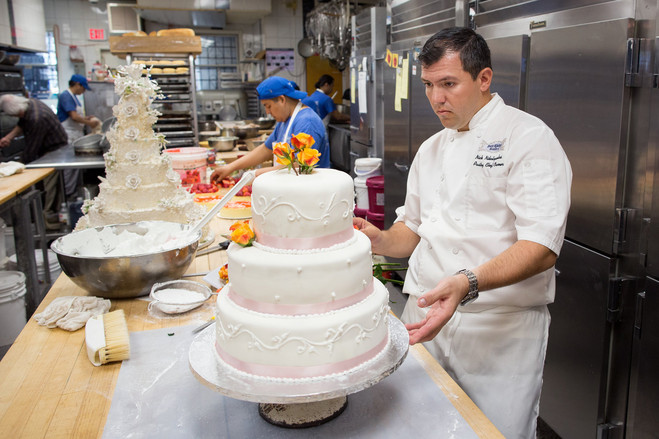
Big Business is a serious problem for religious liberty. Few people adequately understand that Big Business and Big Government go hand in hand. Corporations don’t like localism and various exemptions aimed at respecting rights of faith and conscience. They just want a monolith that they can understand and work with in a turnkey fashion. I have no interest in being the corporate candidate. The business executives of the world need to understand that when they undermine our liberty as people of faith, they are ultimately undermining liberty of all types, including economic liberty. I will fight for the soul of the party on this issue, just as many have bravely fought to keep the party pro-life.​

But what if religion is not everything I do, but certain practices and convictions I share with those in my communion? And here’s where I make a shameless self plug:

The difficulty here—and liberal society is by no means consistent about this—is that religion has shifted, in the American experience, from a corporate identity to a personal quest for meaning. Rather than faith being part of belonging to a religious institution and so including certain doctrinal convictions (belief in one God) and behavioral obligations (refraining from employment on Sunday), the courts’ understanding of religion leans heavily on notions of conscience (even Madison illustrates this). As such, religion is a deeply personal matter and the state should stay out of such private arenas.

Professor Bradley’s attempt to define religion very much follows in this trajectory, and she devotes several paragraphs to questions of conscience. The high stakes of individual conscience are not simply the products of the courts or the academy. Many Christians themselves also regard religion as a deeply personal matter. The revivals of the First Great Awakening during the 1740s promoted the importance of religious experience in ways that made church membership and corporate rites far less important for being truly religious. At the same time, the religious Right for the last three decades or so has taken a page from black, gay, and feminist political activists by arguing that faith is so comprehensive in its claims on the believer that he or she can never leave faith behind when entering the public square.

This notion of faith as deeply personal, rather than corporate or institutional, raises a great problem for liberal society. If faith informs everything I do, then paying taxes or baking a cake or sending my children to a public school may violate my conscience. And if a majority of the citizens have such sensitive consciences, conducting the affairs of government may become impossible. To be sure, the mainstream Progressive narrative of U.S. history includes instances where heroic stands for conscience based on faith—the Civil Rights movement—emerged as valuable contributions to a free society. By the same token, while many times religion coincided with the advancement of certain liberal goals, it has also motivated believers to protest existing norms and so has divided society along religious lines.

To illustrate the difference between religion personally conceived and corporately conceived, consider the membership vows required by my own denomination, the Orthodox Presbyterian Church. After being examined by a local congregation’s officers, a person needs to answer in the affirmative the following five questions:

Do you believe the Bible, consisting of the Old and New Testaments, to be the Word of God, and its doctrine of salvation to be the perfect and only true doctrine of salvation?
Do you believe in one living and true God, in whom eternally there are three distinct persons—God the Father, God the Son, and God the Holy Spirit—who are the same in being and equal in power and glory, and that Jesus Christ is God the Son, come in the flesh?
Do you confess that because of your sinfulness you abhor and humble yourself before God, that you repent of your sin, and that you trust for salvation not in yourself but in Jesus Christ alone?
Do you acknowledge Jesus Christ as your sovereign Lord, and do you promise that, in reliance on the grace of God, you will serve him with all that is in you, forsake the world, resist the devil, put to death your sinful deeds and desires, and lead a godly life?
Do you promise to participate faithfully in this church’s worship and service, to submit in the Lord to its government, and to heed its discipline, even in case you should be found delinquent in doctrine or life?

For this particular denomination, these are the chief parts of being a Christian. None of these questions pertains directly to business transactions, curricular matters, or medical procedures. Of course, the person who takes these vows might have firm convictions about how she should run her business, what school her children should attend, or what procedures hospitals should provide. Given that these other matters are incidental to requirements for institutional membership, our Orthodox Presbyterian should perhaps be less likely to invoke freedom of conscience if she ends up disagreeing with the decisions of local, state, or federal authorities about them. She might simply regard the friction that comes with a free and diverse society as the cost of doing business.

Part of the problem here may involve the old Burkean point about the value of mediating institutions. Those agencies of civil society that buffer persons from government can potentially pose challenges to the smooth operation of a state, but they also perform any number of services that add up to a society comprised of persons who place few, or at least fewer, demands on governmental agencies. Over the course of the 20th century, as the federal government’s power expanded, many institutions of civil society lost power even as the liberty of individuals increased. That process is no less evident in American religion, though the state’s hand in the loss of religious institutions’ power has not been as noticeable as it has in family life or educational or private associations.

Even so, the value of churches and synagogues in identifying and defining religion—as opposed to leaving it to individual conscience—may clear a path through the current debates that surround religious freedom and governmental protection of faith. If the state protected corporate expressions of religion more than personal ones, negotiating the interests of government and religion would likely be less litigious than it is now. To be sure, many Americans would object to legal or policy patterns that granted to pastors, priests, and rabbis greater authority in resolving matters of conscience. But without some mediating institution to inform and guide religious life, believers may be inclined to see religious liberty narrowly if only because they seemingly lack non-state institutions for resolving cases of conscience.

If the choice were between religious institutions or potentially outraged believers, the state might prefer to negotiate with churches and synagogues instead of with persons with easily offended consciences.