Not Exceptional, But Not Abysmal

David French thinks American conservatives have a race problem (but, of course, he is not one of those conservatives):

In powerful right-wing populist circles—talk radio, Fox prime time, etc.—the absolute last thing you can argue is that right-wing populism has a race problem. The last thing you can say is that the big white populist tent includes too many racists, and is cozy with too many racists. No sir. The last thing you can say is that some of the anti-immigrant rhetoric is motivated by racial animus against Latino immigrants. Nope. Can’t say that. Then you’re being politically correct. You’re giving in to the left.

Is it a problem for the populist right that an immense right-wing platform like Breitbart engaged in race-baiting with a “black crime” tag and its flattering coverage of the alt-right? Is it a problem that the head of Breitbart, Steve Bannon, told a reporter that he wanted to make the site the “platform” for the alt-right? Is it a problem that Tucker Carlson declares the threat of white supremacy a “hoax,” accuses immigrants of littering too much based on his fishing trips to the Potomac, and invites an actual alt-right congressional candidate on his show to discuss a moratorium on immigration? This candidate is a man who declared that white Americans were “being replaced by third world peasants who share neither their ethnicity nor their culture.”

I understand the word ethnocentrism doesn’t carry the force of the epithet racism, but why is opposition to Mexican-American immigrants racist? Doesn’t that cheapen the racial divide between descendants of African slaves and European-Americans? But I digress.

Imagine what French would write about politics in Northern Ireland where a candidate refused to condemn a terrorist act:

Sinn Fein’s North Belfast General Election candidate John Finucane has refused to condemn the IRA’s attempted assassination of DUP deputy leader Nigel Dodds.

In December 1996, an RUC officer was injured when IRA gunmen opened fire on police officers guarding Mr Dodds when he was visiting his seriously ill son at the Royal Children’s Hospital in west Belfast.

Gunmen fired four shots at officers in a hospital corridor as children were being treated close by. One bullet struck an officer in the foot, while another hit an empty incubator in the intensive care unit.

Incumbent North Belfast candidate Nigel Dodds is running against John Finucane for the Westminster seat, in what is expected to be one of the closest contests of election.

Speaking to the New Statesman, Mr Finucane, whose father Pat was murdered by the UDA in 1989, was asked if he would condemn 1996 IRA attack.

He said: “I have an issue with selective condemnation. I think it cheapens our past. I think it is a barrier to reconciliation… I know that the pain of the Troubles visited everybody, regardless of where they came from. I want that to be dealt with.”

That is a serious problem if representatives of established parties cannot condemn non-state acts of violence against members of the opposing political party. It might be like a former POTUS praising a paramilitary leader the way Teddy Roosevelt spoke favorably of John Brown in his famous speech, The New Nationalism:

Now, with this second period of our history the name of John Brown will forever be associated; and Kansas was the theatre upon which the first act of the second of our great national life dramas was played. It was the result of the struggle in Kansas which determined that our country should be in deed as well as in name devoted to both union and freedom; that the great experiment of democratic government on a national scale should succeed and not fail.

The United States is not as close to that kind of violence as Northern Ireland is. Sure, we are only four decades from the last of the Weather Underground’s violence against police and twenty-five years from Timothy McVeigh’s bomb. Some even think violence be in the United States’ future.

But we have not had political parties that were arms of terrorist organizations. Shouldn’t David French know the difference between being in denial about violence and opposition to immigration?


Moderate Presbyterians, Irish or American

Seeing the looks on Ben Preston and Craig Lynn’s faces last week while recording a session on J. Gresham Machen, I worried not only that American indelicacy had run up against Irish sensitivities, but also that the Orthodox Presbyterian habit of being opinionated had offended the moderate sense of the Presbyterian Church of Ireland ministers.

As it happens, while waiting for a meeting with staff at Union College (Ireland’s equivalent of Princeton Theological Seminary), I found a copy of the Presbyterian Herald, the Irish equivalent of New Horizons. I read an article about church attendance that I am not sure could have been published in the OPC’s magazine. The author wrote this:

Christian ought to be encouraging of and encouraged by para-church organisations which seek to spread the gospel. Being committed to such enterprises, however, before the local church is idolatry, for God will not share the glory of his church with another (Isaiah 42:8).

Shazam!

Membership of and support for para-church organisations, whether mission agencies, evangelicist bands or cultural/religious institutions must all come after commitment to the local church and never before.

Imagine what American Protestantism would look like if The Gospel Coalition adopted that set of priorities.

Doing Politics as a Presbyterian Has Always been Rough

From Michael Winship’s Hot Protestants (on the Presbyterian predicament after regicide and at the beginning of Oliver Cromwell’s government):

Some Presbyterians . . . focused their hope for reformation on their beheaded king’s nineteen-yer-old son Charles, in exile in the Netherlands. It was true that young Charles was a carousing, womanizing, anti-puritan, but to Presbyterians viewing him through rose-tinted glasses, all that this ungodliness meant was that their uncrowned but lawful sovereign was in the hands of evil counselors, like his father Charles I, his grandfather James I, and Elizabeth I had been. It was these counselors who kept him from recognizing puritanism’s truth. Presbyterians regarded themselves as bound by the Solemn League and Covenant to try to separate their prince from these wicked influences and get him into the safe hands of the covenanted Scots. More realistic Presbyterians recognized that this sow’s ear of a teenaged reprobate could not be transformed into a godly silk purse and that to think otherwise was in itself ungodly. The Scots, meanwhile, were horrified at the execution of their monarch Charles I by an army of English lawless heretics. The Scottish government immediately recognized this son as Charles II, king of Great Britain, Ireland, and France. But the Scots told him they would let him return to his kingdom of Scotland only on one heavy condition: Charles would have to sear to the Solemn League and Covenant. (141)

Makes President Trump look like a piece of cake.

What Was Jesus Thinking?

You might have thought that Jesus was not exactly interested in social justice when you read Luke’s account of Christ’s interaction with the Capernaum centurion:

After he had finished all his sayings in the hearing of the people, he entered Capernaum. 2 Now a centurion had a servant who was sick and at the point of death, who was highly valued by him. 3 When the centurion heard about Jesus, he sent to him elders of the Jews, asking him to come and heal his servant. 4 And when they came to Jesus, they pleaded with him earnestly, saying, “He is worthy to have you do this for him, 5 for he loves our nation, and he is the one who built us our synagogue.” 6 And Jesus went with them. When he was not far from the house, the centurion sent friends, saying to him, “Lord, do not trouble yourself, for I am not worthy to have you come under my roof. 7 Therefore I did not presume to come to you. But say the word, and let my servant be healed. 8 For I too am a man set under authority, with soldiers under me: and I say to one, ‘Go,’ and he goes; and to another, ‘Come,’ and he comes; and to my servant, ‘Do this,’ and he does it.” 9 When Jesus heard these things, he marveled at him, and turning to the crowd that followed him, said, “I tell you, not even in Israel have I found such faith.” 10 And when those who had been sent returned to the house, they found the servant well. (Luke 7)

Sure, the officer’s faith was impressive, but doesn’t it sound like the centurion was a guy, sort of like a modern business man, who approached life transactionally. He gets things done merely by saying the word. Surely, Jesus is that kind of leader, one who simply barks an order and underlings jump.

And what about those orders? Jesus did not seem to object to the hierarchy in the Roman military, or that a centurion could own slaves. And let’s not forget that often the Roman military was nasty and harsh, and that was partly responsible for its success. Then there’s imperialism, a system of oppression by today’s standards if there ever was one. Yet, Jesus overlooked those blemishes, recognized the authenticity of the centurion’s faith, and healed his slave.

On the other hand, what if the centurion had a same-sex relationship with the slave?

When the identity of the slave in the Gospel narrative of “The Healing of the Centurion’s Slave” is studied through historical-critical research, the written and earlier oral traditions of the story indicate that the miraculous act is true to the historical Jesus. Also, by exploring the slave’s identity as a slave, same-sex love interest, and military recruit—and the 1st century C.E. implications thereof—the author concludes that the historical Jesus understood the sexual relationship between the centurion and his slave, and healed the latter based on the faith of the former. Jesus never spoke negatively about homosexuality and never offered sociological or theological discourse pertaining thereto.

(When was the last time you saw “thereto” in a defense of homosexuality?)

Maybe Jesus really was woke.

Is This how Mormons Celebrate Thanksgiving?

It is a long way to go in Raising Arizona to arrive at the closing “dream of the future,” but if you are pressed for a movies with an obscure reference to our national holiday, the Coen brothers’ second production may hit the spot:


Did Meredith Kline Believe in Paedo-Communion?

Steven Wedgeworth characterizes the first period of Federal Vision’s development this way:

The first stage worth discussing actually goes back to Westminster Theological Seminary in the 1970s. While the seminary had been founded as something of a continuing “old school” Presbyterian institution, the influence of Cornelius Van Til took it in a unique direction. John Murray and Meredith Kline also made interesting but often idiosyncratic theological contributions, and by the 1960s, Norman Shepherd, Richard Gaffin, Jay Adams, and John Frame added their own distinctives to the mix. The 1970s were a time of considerable controversy for WTS, mostly due to the Norman Shepherd controversy, but there was also a desire on the part of some of the leadership to make WTS more open to a broader and more evangelical landscape. This caused its own, rather different controversy, and certain critics claimed that the school’s legacy had been “sold out.”

Reading the literature coming out of WTS during the 1970s and 1980s, there arises the impression that various subgroups within the WTS were, at least unofficially, competing for the identity and vision of the school. Biblical Theology was certainly the dominant interest, but even here, there were opposing emphases. One writer has summarized the most prominent division between a “union with Christ” emphasis and a “Law and Gospel” emphasis.

It was during this time that many of the older FV thinkers attended seminary. Some attended WTS and were directly shaped by this era. Others attended elsewhere but paid attention to the controversies and read the literature. Most conservative Presbyterian and Reformed thinkers had looked to WTS as a guide during this time in the 20th century.

Another significant theological issue that came from this same background was the Christian Reconstruction movement, especially the Tyler branch. Christian Reconstructionism (very similar to “Theonomy”) refers to the idea that Christians ought to implement the Old Testament Scriptures and the Mosaic law code today, as much as possible. This movement began with the work of R J Rushdoony in 1960s, but the Tyler branch of Reconstructionism came to prominence in the early 1980s. They made key modifications to this project and put a new emphasis on ecclesiology, including the sacraments and the liturgy. The Tyler branch also broadened its vision from merely the Westminster Seminary legacy to include a certain sort of Continental Calvinism (pulling from the 16th cent. contributions of Martin Bucer, the 19th cent. German American Mercersburg Theology, and 20th cent. Dutch theologians like Klaas Schilder) and a contemporary liturgical renewal project inspired by Dom Gregory Dix and Alexander Schmemann (Mercersburg would also apply here). The most significant FV personality associated with Tyler Reconstruction stage is James B. Jordan, but Peter Leithart also shared some of this history. A few other names appear in this stage of the FV conversation but not in later ones, notably Peter Lillback and George Grant.

It is interesting to point out that Douglas Wilson did not share this same heritage. While he was certainly aware of these men and their writings, his own history comes from a broader Evangelical world. In fact, Douglas Wilson did not consider himself to be theologically Reformed until the late 1980s. He once wrote a booklet critique of the Tyler Branch of Christian Reconstructionism.

This pre-FV period history did not emphasize justification issues (other than in summaries of the older Shepherd controversy), nor did it argue that covenant theology needed to be significantly modified or reinterpreted. Instead, the men of this period claimed that their covenant theology was that of the Calvinistic or Reformed tradition, and they opposed it to the Baptistic or Evangelical theology of 20th cent. North America. The chief interests at this time were seeing families as covenantal units, showing the significance of paedobaptism for covenant theology and ecclesiology, and asserting an aggressive Christian social and political presence. Peadocommunion was already present among some of these men, though it was seen as a point of intramural disagreement. They also did reserve the right to part ways with the Reformation tradition, but this was always framed as a matter of incidental disagreement within their larger commitment to that legacy. James Jordan was also beginning to articulate his particular typological hermeneutics, a continuation and advancement of the redemptive-historical biblical theology taught by WTS. This period of FV development can be understood as starting during the late 1970s, and it reaches a definite transition point around 1990, when the Tyler church joined the Reformed Episcopal Church, James Jordan moved from Tyler, TX to Niceville, FL, and the Reconstruction movement began to fade in prominence.

This is the way I’ve seen other Federal Visionists or former Federal Visionists do historical theology. Because a diversity of voices were in the debates about the Westminster Confession of Faith, so today we should expect to see the same kind of breadth of views about different doctrines. In the same way, Federal Vision sprang from a diversity of voices at Westminster Seminary.

It raises a few questions. Is this why Federal Vision advocates were never very impressed with Machen? Wedgeworth’s history suggests that Federal Vision came from new directions at Westminster that took the school away from Machen’s vision.

Second, why did more people who aligned with Federal Vision go to Covenant or RTS Jackson than Westminster?

Third, does Meredith Kline belong to this history since the biggest critics of Federal Vision owed a great debt to Kline’s understanding of the Old Testament, covenant theology, and the relationship of cult to culture?

The Wrong Question

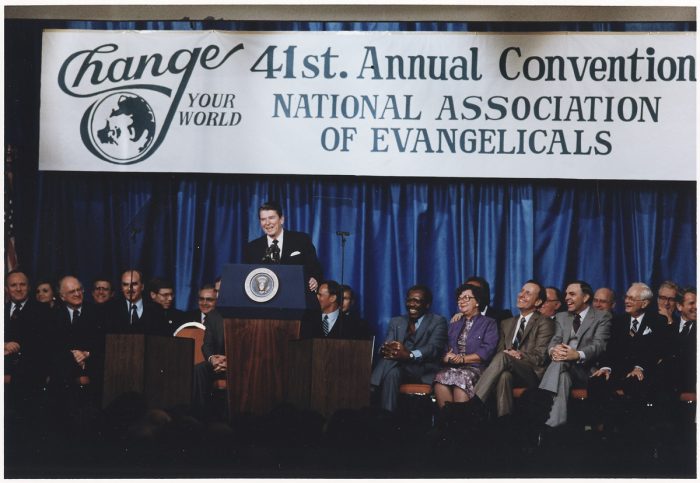
In his review of Thomas Kidd’s new book, Who Is an Evangelical, Samuel James begins with this anecdote:

Many years ago I was sitting in the basement of my Southern Baptist church in Louisville, Kentucky, when a friend asked: “Do you think it’s a sin to vote for John Kerry?” This was 2004, and conversation was littered with talk of the upcoming contest between Kerry and President George W. Bush. I thought for a minute, then said no, I didn’t necessarily believe that. But it never occurred to me to think of the question as strange. The congruence between believing in Jesus Christ and voting Republican was as natural in my mind as the inspiration of Scripture. Only much later would I realize just how novel that kind of thinking truly is among we who call ourselves evangelicals.

Roberts seems to think that asking about the sinfulness of a ballot choice is fine. The problem is identifying evangelical fortunes with the Republican Party.

What if both are wrong? I mean, why on earth (as opposed to heaven) would anyone conceivably think that a vote for a Democratic candidate is sinful? Why, that is, if the person asking had any sense of Ecclesiastes, Paul, and Augustine, texts and authors that indicate politics is intrinscially a temporal, earthly, dirty affair because it happens post-Eden. To expect politics to correlate with redemptive purpose is to border on utopianism or immanentizing the eschaton. What is rich, for evangelicals at least, is that questions about sinful voting rarely extend to the visible church, which is locus of Christ’s kingdom this side of glory. Why not ask if it is sinful to think Beth Moore should be president of the Southern Baptist Convention?

And so, the better way that Roberts hopes for in the end is one where evangelicals are not so predictably Republican:

Nevertheless, Who Is an Evangelical? is a hopeful book, demonstrating that the word “evangelical” is rooted not in our present culture wars but in our past gospel commitments. The solution is to look backward, to break the tyranny of the now and remind ourselves of a way more ancient, more holy, more biblical, and more evangelical.

In politics? Hello. That older evangelical way (at least in the United States) had some role in apotheosizing George Washington as the father of the country and turning Abraham Lincoln (a Republican, remember) into a Christian martyr.

Roberts’ (and Kidd’s) critique of political evangelicalism is simple. Trump is a despicable person who puts the fall in fallen. If evangelicals remain loyal, it’s because they are so politically partisan. Their political partisanship blinds them to Trump’s wickedness (as if evangelicals have ever been known for subscribing to National Review). That analysis is both moralistic and pseudo-psychological. If evangelicals wanted to vote for the Democratic candidate, were they facing a clearly moral and holy choice? And what if evangelicals were not merely tribal in their attachment to Republicans but also felt alienated from the corridors of elite institutions where people associated evangelicals with clinging to God and guns or were worse, belonging to a basket of deplorables (without the loaves and fishes). In fact, the divide between elites and non-elites likely has a lot to do with Brexit and Trump. But some evangelicals who work in the academy and publishing world, and aspire for inclusion in those same sectors within the secular world, do not seem to understand the elite-populist divide.

This post overdoes it, but it also captures some of the reality of life among Protestants who want to be evangelical:

The 2016 election and the years that followed have revealed this truth: that the composition of the current “respectable” evangelical leadership does not derive its legitimacy from the evangelical many but from the few. They are a self-legitimizing, self-perpetuating, and self-anointed elite—unaccountable to and disconnected from those whom they are to serve and represent. In other words, as to form, they are no different than the elite of broader American society; and, materially, they are increasingly similar in political sentiment.

I might qualify “self-anointed” and refrain from attributing motives. But 2016 did reveal a significant gap between those people who observers thought were evangelical leaders and spoke for the movement and the ordinary whites who voted for Trump. To be so completely out of touch with the eighty-one percent does raise all sorts of questions about whether you have your finger on the pulse of the movement so you can actually represent it to reporters and scholars. Whether traveling in evangelical academic circles, Washington think-tanks, or on-line fraternities necessarily isolates you from the rank-and-file is a question without an obvious answer. But given the way modern life works especially for people who don’t work with their hands or in the service sector, it’s hard to imagine that evangelical professionals would be immune from elitism.

Then again, they could ask whether it’s sinful to think that your professional office or rank make your theological or political judgments more valuable than those of the average pastor or church member. Expertise does yield insights. So does the communion of the saints.

Taking Every Fluid Ounce Captive

Churches have specific associations with bodies of water. This Lutheran Church Missouri Synod writer claims the Mississippi (but I wonder if Mark Twain would let him not to mention what Lutherans in Germany might think about rivers in the United States):

A lot of evangelicals are swimming these days. They’re slipping on their metaphorical fins and masks and churning their way across bodies of water to emerge on the other shore as members of a different faith community. Those that move from evangelicalism to Roman Catholicism are said to swim the Tiber; those that become Orthodox swim the Bosporus.

Reasons for their aquatic activities vary. Some like the art and architecture associated with the ancient faiths. Some like the ceremonial aspects–the liturgies, the veneration of icons, the Eucharist. Some like the history that oozes from Catholicism and Orthodoxy, a history that travels through great saints of yesteryear–through Augustine, Ambrose, Chrysostom, and Gregory of Nazianzus–but goes largely forgotten in contemporary evangelicalism. . . .

But evangelicals interested in “swimming” to a different tradition should consider traversing a body of water much closer to home: the Mississippi River, on which is located St. Louis, Missouri, and the headquarters of the premier conservative Lutheran church body in America, the Lutheran Church-Missouri Synod.

This raises at least one question: what body of water should Presbyterians identify with for their denominational affiliation?

American Presbyterians would likely claim the Delaware River since the first presbytery and General Assembly met in Philadelphia. But the Chesapeake might also apply since some of the earliest congregations settled by Ulster Presbyterians were in Maryland.

European Presbyterians, if the look to Geneva, probably invoke Lake Geneva.

The Scots likely think about the Firth of Forth (I was thinking it was a Fifth) given the estuary’s proximity to Edinburgh.

The Irish? They may have the hardest time attracting converts if crossing the North Sea is necessary for being a Presbyterian in Northern Ireland. I’m not sure swimming the Belfast Lough is any less challenging.

Number 11: Don’t Read One Corinthians

Dwight Longenecker tries to walk Roman Catholic converts back from overly high expectations for the Roman Catholic Church in the manner of Joe Carter (where Carter produces 9 points, Father Dwight adds a tenth). That is a tad rich given the way some conversion stories go. But at least Longenecker acknowledges that Protestants who become Roman Catholic are in for a rough ride.

At the same time, he perpetuates a series of caricatures about Protestantism that again reinforce the point that no matter how bad Rome is, Protestant churches are worse:

Protestant congregations don’t really get together along doctrinal lines. They get together along socio-economic lines. The good, upper middle class white folks who go to the local Presbyterian church are all from the professional, affluent class. The working class folks who go to the Assembly of God live in the same lower income bracket. This is why they have warm fellowship.

Hasn’t Longenecker been reading Redeemer City to City Newsletter?

Or this:

Protestants are used to unity within their congregation. This is because Protestant churches are sects. They’ve split away from others for some doctrinal or moral teaching. Therefore there is an underlying unity of viewpoint. When this is combined with the socio economic factor that unity is a powerful and attractive force.

And Father Dwight just happened to go from Bob Jones and Anglicanism to Roman Catholicism for matters other than doctrine or morality? The music?

He does also say some revealing things about Roman Catholics that make you wonder what the difference is between them and mainline Protestants:

People blame “the church” for poor catechesis, and that is no doubt a problem, but the other half of the problem is that now we have a slew of excellent materials, resources, speakers, study course, books, videos, conferences and programs to catechize, encourage and assist, but the vast bulk of Catholics simply stay away. They can’t be bothered. If they practice the faith at all it looks like the Democratic party at prayer. Step around them and work with the people who do want to know more and love the faith.

But the most striking point in Longenecker’s list is the one about discipline or reform:

The really big problem for converts to the Catholic faith is to come to grips with the fact that in the Catholic Church the sinners and saints are all tumbled in together. The glorious church may be without spot or wrinkle in the final reckoning, but here and now, in human terms, it is spotty and wrinkled. It is dirty and soiled with sin. The heretics and the faithful sit side by side. The biggest problem many converts face is that the Catholic Church is soiled with sin. We want to purify the church. We want to weed the garden. We want to get rid of the rot. We want to clean the ship, patch the leaks and sail on with confidence and strength. The servants in the story of the wheat and tares wanted to do the same thing. Check out Matthew 13:24-30. Jesus says the wheat and tares grow together in the same field. The enemy has planted the weeds among the wheat. Live with it. God will sort it out in the end. That tension is uncomfortable.

Why do we want to sort out the weeds from the wheat? Because we long for the certainty and security of belonging to a pure religious sect. It’s human nature to want to belong to a group that is pure and has all the right answers and has everything all neat and tidy and in place. But that’s simply not the nature of Christ’s kingdom. That’s not the nature of reality.

So on Rome goes with whiskey priests, mafia dons, and even lecherous cardinals. What can you do? You certainly can’t play judgment day.

But there is church action somewhere between should-shrugging and bowdlerizing the saints (and the Vatican does not seem to be bashful about revealing the saints). This is actually a recurring theme in conversations with Roman Catholics about the waywardness that afflicts the communion (from renegade nuns to Roman Catholic universities that are hardly Wyoming Catholic College). Interlocutors repeatedly tell me that to hold church members to moral standards, with threats of discipline is Puritan or fundamentalist.

Is is Puritan or fundamentalist to punish a child for not coming home on time? Is it Puritan or fundamentalist to require spouses to be faithful to each other? Is it Puritan or fundamentalist for Roman Catholic politicians to use the church’s social teaching in pursuit of the “common good” or “human flourishing”?

Roman Catholics do lots of things to try to prod sinful humans to behave. They seem to think that society would work better if people actually followed church teaching.

But when it comes to priests and bishops’ sinfulness, Father Dwight says there’s nothing you can do because of the way wheat grows (he ignores what you do with dead branches on fruit trees)?

Such passivity would appear to be at odds with Paul’s instructions in the fifth chapter of his first letter to the church at Corinth.

9 I wrote to you in my letter not to associate with sexually immoral people— 10 not at all meaning the sexually immoral of this world, or the greedy and swindlers, or idolaters, since then you would need to go out of the world. 11 But now I am writing to you not to associate with anyone who bears the name of brother if he is guilty of sexual immorality or greed, or is an idolater, reviler, drunkard, or swindler—not even to eat with such a one. 12 For what have I to do with judging outsiders? Is it not those inside the church whom you are to judge? 13 God judges those outside. “Purge the evil person from among you.”

Imagine a church that did not associate with sexually immoral people. So Pauline. So fundamentalist.

The Logic of Comfort

The folks who like to draw attention to obedience in the Christian life do not seem to consider the source of believer’s comfort. Consider the following:

Since the Bible doesn’t restrict the word “gospel” to a very precise meaning, we shouldn’t either. This is not to say that we can’t use the gospel in its narrow sense and distinguish between the gospel (what Jesus has done) and our response to the gospel (what we need to do). To do so is to distinguish between redemption accomplished and redemption applied, and that is a very helpful and necessary distinction. The point is that we shouldn’t oppose or separate them. The Bible binds them together and includes both under the term “gospel.”

Paul summarized the gospel he preached in terms of the death and resurrection of Christ (1 Cor. 15:1-5). But that is not all there is to the gospel, or even to the work of Christ. A summary of the gospel is just that—a summary—and it shouldn’t be set in direct opposition to its broader definition or fuller explanation.

There are some rather large problems that may arise when people limit the meaning of the gospel to its narrow sense. One potential problem is the unjust accusation of legalism or of mixing law and gospel. It is not necessarily legalistic to use phrases such as “living the gospel,” “obeying the gospel,” or “the conditions of the gospel.” But if you see what we do as only “law” and what Christ has done as only “gospel” then you will likely interpret the broad but biblical use of the term “gospel” as legalistic. Another potential problem is the minimization or outright denial of the conditions of the gospel, which is what the puritans called antinomianism.

If you confessed, however, the Heidelberg Catechism, what would its first answer do to efforts to make the gospel something you obey?

Q. What is your only comfort in life and death?

A. That I am not my own, but belong with body and soul, both in life and in death, to my faithful Saviour Jesus Christ. He has fully paid for all my sins with his precious blood, and has set me free from all the power of the devil. He also preserves me in such a way that without the will of my heavenly Father not a hair can fall from my head; indeed, all things must work together
for my salvation. Therefore, by his Holy Spirit he also assures me of eternal life and makes me heartily willing and ready from now on to live for him.

It’s not as if that assertion lacks good works. But the Holy Spirit is the one to produce good works. Obedience inevitably springs from a true faith that receives and rests on Christ. To speak of the gospel requiring good works places the burden on believers who thought they had comfort.

That may explain why in Paul’s short summary (too short for some) of the gospel in 1 Cor 15:1-5, he goes on to talk about the comfort that believers take from Christ’s finished work:

14 And if Christ has not been raised, then our preaching is in vain and your faith is in vain. 15 We are even found to be misrepresenting God, because we testified about God that he raised Christ, whom he did not raise if it is true that the dead are not raised. 16 For if the dead are not raised, not even Christ has been raised. 17 And if Christ has not been raised, your faith is futile and you are still in your sins. 18 Then those also who have fallen asleep in Christ have perished. 19 If in Christ we have hope in this life only, we are of all people most to be pitied.

So glad Paul did not write, “if Christ has not been raised, your obedience is futile and your good works don’t count for anything.”