When Did Philadelphia Turn into San Diego?

I was in the nation’s original capital yesterday and saw this at 22nd and Walnut:

It replaces this:

Which makes me think this has a point:

Meanwhile, in Philadelphia, a generous tax abatement program—combined with flawed preservation policies—changed the landscape of Center City and its surrounding neighborhoods. During the past decade, the city experienced a demolition bonanza. In neighborhoods of historic housing like Powelton Village, developers “have discovered they can make a tidy sum simply by replacing one of these old houses with a stucco-clad apartment building and then cramming it with students,” observed the Philadelphia Inquirer’s architecture critic, Inga Saffron.

Preservationists have protested how Philadelphia’s demolition permits are approved. In the past year, two historic structures were razed for projects that never materialized. Currently, the preservation fight is focused on Center City’s Jeweler’s Row, a charming set of commercial properties on a block laid out in 1799. The historic storefronts, slated for demolition, would be replaced by a massive condo tower. Ill-advised demolition projects continue throughout Philadelphia, its future depending on an influx, however temporary, of millennials and students.

Why does it take regulative-principle toting confessional Presbyterians, not urban hipster pastors, to notice?

What’s Next, Women Bishops?

The Vatican is apparently pleasantly disposed to the decision of the Reformed Churches (the modernist and always modernizing ones) to sign on to the Lutheran-Roman Catholic Joint Declaration on the Doctrine of Justification:

The Vatican’s Pontifical Council for Promoting Christian Unity has released a note regarding the association of the Reformed Churches to the Joint Declaration on the Doctrine of Justification (JDDJ), calling the occasion an “important milestone”.

The Joint Declaration was signed between the Catholic Church and the Lutheran World Federation in 1999, with the World Methodist Council adopting the document in 2006.

On Wednesday, 5 July 2017 the World Communion of Reformed Churches becomes the fourth party to associate itself to the doctrine on Justification as accepted by Catholics, Lutherans, and Methodists.

“One of the crucial issues of dissent between the Reformers and the authorities of the Catholic Church in the sixteenth century is thus being diffused and overcome, making further growth in spiritual and ecclesial communion between the Protestant and Catholic Churches possible,” the note states.

An ecumenical prayer service held in Wittenberg, Germany by the Communion of Reformed Churches, along with representation by the Vatican and other signatories, marks their association with the Joint Declaration.

The Vatican is represented by Bishop Brian Farrell, Secretary of the Pontifical Council for Promoting Christian Unity, and Fr. Avelino Gonzalez, an official of the Western Section of the same dicastery.

Though a milestone in ecumenical relations and “the full, visible unity of Christians”, the note says the event is “not yet the end of the road but a significant stage on the way.”

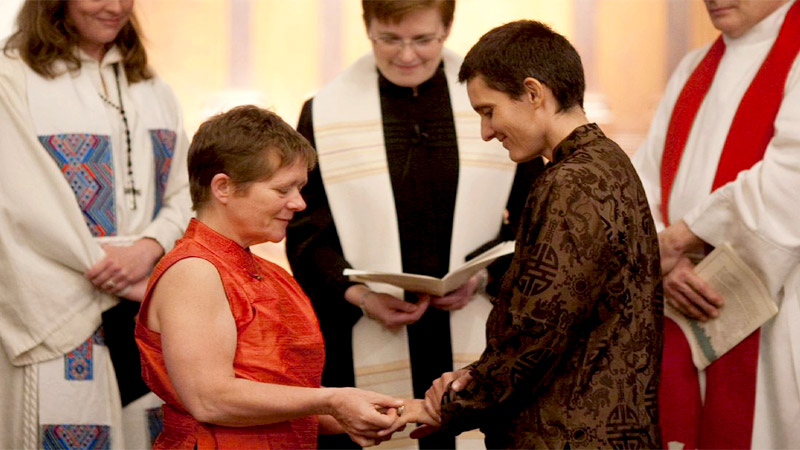
So will the Vatican help modernist Lutherans, Methodists, and Reformed Protestants overcome their errors of ordaining women and celebrating gay marriages? Or are such matters merely ecclesiastical preferences, like using port instead of a red blend?

Whatever the answer, ecumenism only happens when churches become indifferent to doctrine. Of course, doctrine doesn’t change. Churches don’t have to. You just stop enforcing orthodoxy.

Are Bryan and the Jasons really that gullible?

How to Love America

Noah Millman proposes this (while meditating on G. K. Chesterton):

People feel an attachment, and a willingness to fight to protect, their homes, and their communities. That can take noble and ignoble forms — sometimes fighting to defend your community means committing injustice (as, for example, if you band together with your neighbors to prevent someone from a disfavored ethnic group from moving to the neighborhood). But the feeling is rooted in a direct experience, not an abstract attachment.

For any political community larger than a city, though, that attachment necessarily becomes abstract. So you need to teach your children why they should care about that larger community, be proud of it, and treat it as constituent of their identity.

Chesterton famously quipped that the sentiment, “my country, right or wrong” is like the sentiment, “my mother, drunk or sober.” But the thing about the latter is that she is your mother whether she’s drunk or sober — it’s just that your obligations change based on her condition. If she’s drunk, you won’t let her drive — instead, you’ll make sure she gets home safely.

The question, then, is how you teach your children to see their country as, in some sense, like a mother when their relationship is necessarily abstract rather than directly felt. A love of country based on the lie that your mother is never drunk will be too brittle to survive any kind of honest encounter with reality. But it seems to me equally problematic to say that you should love your country because it is on-balance a good one. Does anyone say about their mother that they love them because on-balance they are sober?

While Millman stresses the particular (a people, a place, a way of life — think baseball), Kevin DeYoung goes abstract and is thankful for the “idea” of America:

The United States of America began with the conviction that a nation should be founded upon truth. Not simply values or preferences, but upon truths. Self-evident truths that were true, are true, and will remain true no matter the time, the place, or the culture.

And central among these truths is the belief that all men are created equal. No one possesses more intrinsic worth for being born rich or poor, male or female, artisan or aristocracy. Of course, this truth, as much as any, unmasks our history of hypocrisy, for 3/5 of a person is an eternity from equality. But truth is still true. We all come into the world with the same rights and the same dignity–whether “gated community” in the world’s estimation or “trailer trash.”

These unalienable rights, we must note, are not granted by the Declaration of Independence. Our rights do not depend upon government for their existence. They are not owing to the largesse of the state or the beneficence of any institution. The rights of man are the gifts of God. The Creator endows; the state exists to protect. These unalienable rights can be suppressed or denied. But they cannot be annulled. We possess them–no matter what kings or parliaments say or presidents and congress decree–by virtue of being created in the image of our Creator.

Oh, by the way, if all humans have these rights irrespective of government, then how is that the basis for founding a nation? Didn’t this way of thinking lead in France to Napoleon’s wars to teach Europe liberty good and hard?

The thing is, if you stress ideas you wind up with a creedal nation, one that you tend to treat like a church, with people divided into the camps of orthodox and heretics, saints and pagans. Protestants suffer from this affliction and it shows in the recent anti-liberalism of Peter Leithart and Jake Meador.

Leithart took Matt Tuininga to task for turning Calvin into a liberal. Leithart added an objection to liberalism that fits with the nation-as-idea mentality:

Virtually none of liberalism’s theological critics objects to these forms and procedures as such. Their complaint isn’t against representative government or voting or freedom of speech and association. No one advocates a fusion of Church and state.

Rather, they claim that such a formal, procedural description masks the basic thrust of liberalism. Liberalism’s stated aim is to construct a society without substantive commitments, leaving everyone free to choose whatever his or her or hir own may be. Liberalism’s common good is to protect society from adopting any single vision of the common good. That’s a deviation from classical and traditional Christian politics (including Calvin’s), which sought to orchestrate common life toward a common end—the cultivation of virtue or the glory of God. In fact—and this is the other side of the critique—liberal societies do have substantive commitments. The liberal state pretends to be a referee, but beneath the striped shirt it wears the jersey of the home team. Under the cover of neutrality, liberal order embodies, encourages, and sometimes enforces an anthropology, ecclesiology, and vision of the good society that is often starkly at odds with Christian faith. Tuininga never confronts that line of analysis.

Since the U.S. is a liberal nation, it’s its liberal order becomes its an orthodoxy. But I thought the liberalism of the founders was not to form a society. They already had one — a people, a place, and a way of life. What they wanted was a liberal government, one that would not take sides in religion and other matters. If the U.S began to replace a liberal government with a liberal society, you could blame the centralizing and bureaucratizing effects of a national government that needed to organize the economy, schools, and industry to fight world wars, even cold ones. It really helps when the churches jump on the bandwagon and tell American officials the government is making the nation great.

Jake Meador thinks that the current spate of intolerance that liberals direct toward Christians is a function of liberalism itself:

If the move that western Christians attempt to make in response to all these challenges is to simply rebuild liberalism, then whatever victories we win will be short term. Liberalism is the soil from which the current regime has grown. It’s emphasis on individual autonomy and self-definition and the illegitimacy of unchosen authorities is precisely how we ended up where we are today.

So, two points: First, trying to Make Liberalism Great Again is probably no more realistic than trying to return America to the 1950s. In both cases, the order in question was the unique product of historical circumstances that our own era does not share. Thus any attempt to recreate said order is doomed to fail. Second, we need better language and concepts to make our case to both those within our church communities and those outside the church. Liberalism is not the way forward. It is the way toward further and deeper darkness. If we start thinking about common goods, shared life, and the neighborly arts, then we may be onto something. But all of these things, of course, assume a sort of communitarian sensibility that has always had a hard time reconciling itself to the deeply democratic, egalitarian nature of American Christianity. Therefore, whatever our project ends up being, it figures to be a long-term thing.

Meador should likely include Protestantism as the soil out of which liberal progressivism grew. Protestants were intolerant of Roman Catholics and other outsiders. Remember the threat that parochial schools posed to public ones and the way that American governments insisted no parochial school receive a whiff of public funding (still in the balance in SCOTUS’s recent Trinity Lutheran v. Comer decision). He has a point about “common goods, shared life, and the neighborly arts.” I wish he had included baseball and drip coffee makers. But why these way-of-life matters are at odds with liberalism baffles me.

A truly liberal government, like the one the founders hoped for, was one with a fairly small footprint within the broader American society. Government, in other words, is not society. Communities and people groups have existed within the terms set by the founders for better or worse for the better part of two centuries.

The challenge for the U.S. on this holiday of independence is to figure out how to separate the nation from the government, so that officials do somethings, people and communities do other, and we have a national identity that does not revolve around an idea like liberty and justice for all, and the military campaigns that justify such abstract convictions.

To paraphrase Meador, Americanism or the liberal international order that the U.S. has maintained in its capacity as leader of the free world is not the way forward, at least for building attachments to the nation. We still need less national government, more attachments to people, places, and the ways of life that emerge from them.

Franklin and the French

When Ben Franklin made Philadelphia great:

In 1776 Franklin was the most potent weapon the United States possessed in its struggle with the greatest power on earth. Lord Rockingham observed at the time that the British ministers would publicly play down Franklin’s mission to France, but “inwardly they will tremble at it.” The British government had good reason to tremble. Franklin was eventually able not only to bring the French monarchy into the war against Britain on behalf of the new republic of the United States but also to sustain the alliance for almost a half-dozen years. Without his presence in Paris throughout that tumultuous time, the French would never have been as supportive of the American Revolution as they were. And without that French support, the War for Independence might never have been won. (Gordon Wood, The Americanization of Ben Franklin, 171)

Social Justice according to Peter Berger

What Richard Mouw heard (not sure he learned) from the sociologist who died last week:

In an informal group discussion at Hartford Seminary, back in the ’70s, we were discussing social activism, and I made this comment: “Every Christian,” I said, “is called actively to work for justice and peace in the world.” Peter repied, “Really, Richard? You really mean that?” I assured him that I did. Then he told me about an elderly aunt, who lived in a retirement home. Every morning, he said, she struggled to work up the courage to go to the cafeteria for lunch. She had a problem with bladder control, Peter said, and she was afraid of embarrassing herself in the lunch line. Each day she prayed to the Lord to give her courage, and then she would go down to the cafeteria. For her, he said, the most radical act of faith for her each day was to summon up the courage to go to lunch. “Now, Richard, what do you want to tell her about her obligation also actively to work for justice and peace in the world?” Peter Berger taught me an unforgettable lesson with that story.

Is the lesson that the elderly get a pass from joining the social justice warrior ranks? Or that social justice isn’t what social justice warriors think it is?

Theology of Glory

Lutherans can read the times through the lens of the theology of the cross:

But it’s an entirely different question whether churches should be participating in state-run programs like that one — when they consider their own self-interest.

Secularists worry that when federal or state money goes to churches, to support either charities or efforts like the one at stake in Trinity Lutheran Church of Columbia v. Comer, the state is in effect promoting religion. But there’s growing evidence that the influence goes the other way: State support causes churches to become more secular, and generally to weaken.

In short, believers should be wary of the freedom the Court has just affirmed.

Evangelicals don’t:

In their decision on the Trinity Lutheran case the Court answered these questions, ruling that the government can’t discriminate against religious organizations and exclude them from receiving a generally available public benefit simply because they are religious.

“The Court’s decision is good for kids and good for religious liberty,” says Hannah Smith, senior counsel at Becket Law, a non-profit religious liberty law firm that filed a friend-of-the-court brief on the school’s behalf. “Trinity Lutheran was simply asking that the government play fair, treat churches equally, and help the preschool make its playground safer for children. Today’s decision does just that.”

Neither do Roman Catholics:

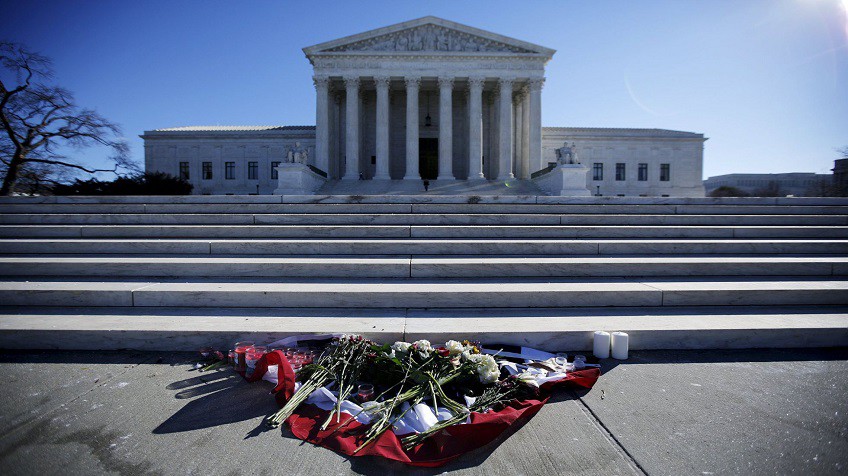
Most court watchers expected the Court (with Gorsuch now on the bench) to side with the religious school on a narrow 5-4 ruling. But, the Supreme Court decided 7-2 in favor of Trinity Lutheran!

Experts agree the decision could pave the way for upholding the constitutionality of other state programs (like school vouchers) where religious groups provide a service for the public benefit.

Chief Justice John Roberts writing for the majority stated: “The exclusion of Trinity Lutheran from a public benefit for which it is otherwise qualified, solely because it is a church, is odious to our Constitution.”

NOTEWORTHY: Justice Neil Gorsuch actually wrote his own opinion in the case (joined by Justice Thomas). And the newest Justice noted that the First Amendment “guarantees the free exercise of religion, not just the right to inward belief (or status)” (emphasis his).

We at CatholicVote have been making precisely this point for years. Religious exercise isn’t just about privately holding a religious belief or attending religious services. You may recall President Obama tried to quarantine our constitutional rights by defining this broad freedom as merely the “right to worship”.

Haven’t these people heard that appearances are deceptive, that praying in public, fasting, or giving alms may not be all they seem to be.

Isn’t the Point of Social Media to Attract Followers?

So why is it that some tweeters choose to block followers? If you want to have a private conversation on social media I believe we still have email, discussion list-serves, and even password protected blogs. But if you are in the business of trying to enlighten as many as possible about how unjust U.S. society is, why do you cut off someone from hearing what you tweet and link?

I mean, not even Johnny Eric Williams was all that careful about his social media profile (Greg and those like consider this a trigger warning):

Williams’s case has attracted the interest of academic freedom and free speech advocates, partly because the sociologist is among a number of other scholars who have been physically threatened or harassed online in recent months for their public comments. Most of those comments concerned race in some way.

Williams last week shared an article from Medium called “Let Them Fucking Die.” The piece argues that “indifference to their well-being is the only thing that terrifies” bigots, and so people of color should “Let. Them. Fucking. Die” if they’re ever in peril. The Medium piece linked to another Fusion piece about Republican Representative Steve Scalise, who was shot earlier this month in Alexandria, Va. It says Scalise has previously opposed extending protections to LGBTQ people and reportedly once spoke at a meeting of white supremacists, while one of the black law enforcement officers who rescued him is a married lesbian.

In sharing the Medium piece, Williams used the “Let them fucking die” comment as a hashtag, and wrote that it is “past time for the racially oppressed to do what people who believe themselves to be ‘white’ will not do, put end to the vectors of their destructive mythology of whiteness and their white supremacy system.”

That post and a similar one prompted critical reports on conservative websites suggesting Williams was advocating violence against white people.

“Less than one week after a gunman opened fire on more than a dozen Republican members of Congress on a Virginia baseball field, a Connecticut college professor said that first responders to the shooting should have ‘let them die’ because they are white,” The Blaze reported, for example.

Williams has since apologized for his remarks and said he was not advocating violence against whites, only drawing attention to systemic racism.

Maybe this is a case where you want to block those who may disagree. But what fun is it to be provocative with those already #provake?

The Amazing Holy Spirit – He Goes Wherever You Do

Does word-and-sacrament ministry (or Sunday worship) have a shelf life? Put differently, do you go to church to have your spiritual batteries recharged? If so, will the charge last for an entire week? Or do we need a mid-week service to revive our spiritual energy?

This may be one reason for spiritual retreats or mid-week Bible studies. It may even explain the reason some people have daily quiet times. You never want to be too far away from the spiritual outlet.

This is not simply an evangelical Protestant problem. Turns out the mechanical calculations of the Mass’s effects also turn up among those loyal to the Bishop of Rome:

How long does the fullness of the sacramental presence last? To assert that it perdures for life would be to deny that the Holy Eucharist is our daily bread, and would be inconsistent with our nature as finite, mutable mortals. If one Holy Communion sufficed for life, our time of trial would be an anticipation of Heaven, when our souls will be so transformed, so glorified in the rapturous consciousness of their eternal union with God, as to be invulnerable to change.

At the moment of Holy Communion, we have a very definite sense of the complete possession of Christ — a calm, heavenly absorption of His divine life quickens our souls. But if this condition continued, it would not accord with our spiritual development, which, because we are finite beings, is gradual; and the Holy Eucharist would not be the pledge of eternal life.

Does union with Christ in the Mass totally transform the believer? It better not since humans can’t handle a full blast of grace (or one that makes purgatory unnecessary). It needs to be partial, even daily, if it is going to sanctify the ordinary work a Christian does:

Even if we are not vividly conscious of the presence of our Divine Guest during the performance of our daily duties, it will influence us both interiorly and exteriorly, sanctifying the most trifling commonplace of our unobtrusive lives. It will urge us to imitate His eucharistic life, cost what it may, for the spirit of Christ will sustain us, and His light will not only illumine our own souls, but will also enlighten those “sitting in the darkness and shadow of death.”

Maybe it’s just mmmmeeeeEEEE, but the Protestant doctrine of vocation sure looks a lot less complicated and a whole lot more compelling. By the Holy Spirit Christians offer up sacrifices to God through the duties they perform as part of God’s providential care for his creation. By the Holy Spirit, Christians are priests. By the Spirit, they perform a small imitation of the priestly responsibilities that God gave to Adam in garden when work was synonymous with worship.

No need for a pit stop at the parish before going to the office. Family worship will do.

First Princeton, Now Yale

The PCA keeps coming up short (the OPC is not even on radar).

Remember Craig Barnes, president of Princeton Theological Seminary? Here was how he stood in opposition to the PCA at the time that women objected to Tim Keller receiving the Kuyper Prize:

Our seminary embraces full inclusion for ordained leadership of the church. We clearly stand in prophetic opposition to the PCA and many other Christian denominations that do not extend the full exercise of Spirit filled gifts for women or those of various sexual orientations. We know that many have been hurt by being excluded from ministry, and we have worked hard to be an affirming place of preparation for service to the church.

I wonder which prophets Dr. Barnes goes to to oppose the PCA. But at least it’s an ethos.

Now comes a Yale Divinity School graduate and PCUSA pastor who puts the differences between the PCUSA and PCA this way:

I am a Presbyterian (PCUSA) pastor who has family members who attend PCA (Presbyterian Church of America) churches. The best (and simplest) way to differentiate between the two is that the PCA asserts that the Bible is inerrant, or without error. The PCUSA believes that the Bible is authoritative, or guided by God, but actually written by human beings, influenced by their culture, time, and limited knowledge of the world.

You might not notice this while visiting either churches, except that the PCA, because of their stance on the Bible, read Paul’s writings that prohibit women from participating in the leadership of worship as what God intended. So you will not see a female pastor (like myself) at a PCA church, or indeed, any women ruling elders (the governing body within each congregation).

The order of worship for both denominations is essentially the same; both are part of the Reformed movement. However, the preaching will likely be quite different, with a PCUSA pastor emphasizing the broad love of God for all of God’s people, and a PCA pastor leaning more towards evangelism and conversion.

No mention of the alt-right, Confederate Monuments, or even LBGT. Maybe the lesson is that resolutions are overrated.

Whatever It Is, I’m Against It

Why does so much confusion surround the so-called Alt-Right while so many people are absolutely certain they oppose it? The Southern Baptist Convention seemed to set the standard for establishing indignant distance from the Alt-Right and its associations with white supremacy. At the same time, pretty much no one knows what the Alt-Right is. If the SBC had thrown Charles Murray, the co-author of The Bell Curve, into its resolution, I doubt anyone would have cared. Who is Charles Murray? Not sure. Must be a white supremacist because those kids at Middlebury College know what’s what.

Here is Joe Carter’s attempt to define the Alt-Right even after the fact of the resolution — reporting catches up to voting:

The alt-right—short for “alternative right”—is an umbrella term for a host of disparate nationalist and populist groups associated with the white identity cause/movement. The term brings together white supremacists (e.g., neo-Nazis), religious racialists (e.g., Kinists), neo-pagans (e.g., Heathenry), internet trolls (e.g., 4chan’s /pol/), and others enamored with white identity and racialism.

The Southern Poverty Law Center gives a somewhat broader definition (that could actually include Joe Carter and me at times):

The Alternative Right, commonly known as the Alt-Right, is a set of far-right ideologies, groups and individuals whose core belief is that “white identity” is under attack by multicultural forces using “political correctness” and “social justice” to undermine white people and “their” civilization. Characterized by heavy use of social media and online memes, Alt-Righters eschew “establishment” conservatism, skew young, and embrace white ethno-nationalism as a fundamental value.

At the Alt-Right website, the defining component of the movement seems to be a race-based defense of Western civilization. One question in these race obsessed times — and can anyone remember this goes back to the election of Barack Obama and didn’t just start with the 2016 election? — is if you defend cultural goods of the West like smart phones, rule by law, or tennis are you guilty of the sins of the Alt-Right? Or if you look favorably on the United States, which people of European descent have dominated for good and ill, are you also tainted?

But a bigger question is what a white man is to do. The comments at Joe Carter’s piece suggest that even the fans of John Piper and Tim Keller are not willing to support the SBC’s resolution even while they do not identify with the Alt-Right:

The SBC did us a huge disservice by not defining the Alt Right. The more familiar one becomes with their bigotry, the more disgusting their venom. I think, however, there is a danger in all of this. Since we have left the Alt Right as an ambiguous term, we have set ourselves up for witch hunts. For instance, If I believe in a strong national defense, and in protecting our borders, am I to be branded with this label, and thereby made notorious? If I call myself a “Proud American”, then I am, by definition, a nationalist. Will that term soon become, “white-nationalist” with the passage of time? As the author points out, the “Alt Right” has far more in common with progressivism, than with true conservatism. I would welcome a clarification to the resolution. One which helps us all understand the dangers of this deceptive movement, but which does not leave those Christians who lean left, with the misunderstanding that Conservatives are hateful, or bigoted. That would seem to me to be the exact kind of Xenophobia we just denounced.

One of the reasons for such criticism is that Carter leaves the average white person in a dilemma. One the one hand, identifying as white is a sin:

White supremacy, white nationalism, and white identity are not all the same thing, but they are all equally repugnant….

At the core of the alt-right movement is idolatry—the idol of “whiteness.” In building their identity on shared genetic traits the alt-right divides humanity and leads people away from the only source of true identity: Jesus Christ.

If that is true, that even recognizing myself as white as opposed to Christian is a form of idolatry, what am I supposed to do if I am a Southern Baptist and read calls like this?

White leadership must be vigilant in yielding the floor to black voices, black language, and black tone on this issue in particular, regardless of perceptions or consequences. Right is right and it often takes authentic voices and types of expression to rightly convey it. Jesus said that if you enter a banquet do not seat yourself at the head of the table but at the foot. It is time for white leadership in the SBC to sit at the foot of the table and learn from their African American brothers and sisters how to rightly oppose racial injustice in this country. Including allowing for language and tone that may at times be uncomfortable.

Do I get to ignore this because I say I’m not white but a Christian? Or do I have to look around the room at skin color and come clean that I am white and so need to take a back seat to people of color? At that point, have I not committed the sin of idolatry by identifying as white? Something along the lines of doubly damned comes to mind.

Not to mention that whites and blacks talking about race often ignores Asians and Latinos. Do whites and blacks also sometimes need to sit at the feet of Native Americans or Korean-Americans? At this point, have we really heeded Paul that in Christ there is not Jew nor Greek? Or aren’t we simply a little late to the aggrieved minority party that Democrats have been holding since 1965?

Doesn’t the right side of history have an expiration date?