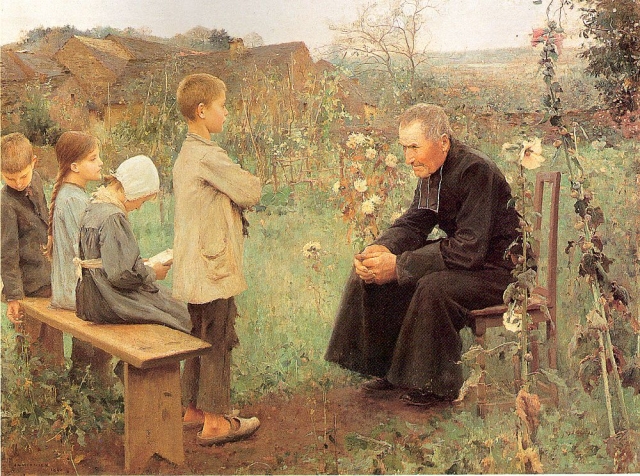
Just In Time for the 500th Anniversary of the Reformation

A papal crackdown:

For most of us, who are not Knights of Malta, the resignation of the group’s grand master will have little immediate impact. But the unprecedented papal intervention into the affairs of that venerable body fits into a pattern that should, at this point, worry all faithful Catholics. Under Pope Francis, the Vatican is systematically silencing, eliminating, and replacing critics of the Pope’s views.

During the reigns of Popes John Paul II and Benedict XVI, “progressive” Catholics frequently complained about a crackdown on theological dissent. On the rare occasions when the Congregation for the Doctrine of the Faith issued a warning about a wayward theologian’s published works, there were anguished warnings about a reign of terror at the Vatican. Now a crackdown really is occurring—instigated by the Pontiff who famously asked, “Who am I to judge?” And the objects of the current crackdown are not theologians who question established doctrines, but Catholics who uphold the traditional teachings of the Church.

The first and most prominent victim of the purge was Cardinal Raymond Burke, who was exiled from the Roman Curia soon after Pope Francis took office, and given a mostly ceremonial post as patron of the Knights of Malta. It is ironic—and perhaps not coincidental—that the latest incident involves his new charge.

As much as I admire and sympathize with conservative Roman Catholics (like Ross Douthat and the author of this piece, Phil Lawler), can such folks really complain about papal supremacy? Isn’t this what rule by one is supposed to look like (and why Americans love to talk about checks and balances)? In fact, as long as Rome depends on the Bishop of Rome to support its claims of superiority — unity, authority, antiquity — can devout Roman Catholics really object to popes who use their authority to enforce unity?

The Shelf Life of 2k — Part Three

This is the third in the four-part interview David Strain did with mmmmmeeeeeEEEEE. We finally get to 2k:

1. Would you briefly state the doctrine of the Two Kingdoms (2K) for us?

I should have a handier definition than I do. I guess I would describe it this way.The church is the kingdom of the Lord Jesus Christ (WCF 25.2) outside of which there is no ordinary possibility of salvation. Communicant and non-communicant church members are part of that kingdom, the kingdom of grace (which is different from the kingdom of Satan and which is playing a part in hastening the kingdom of glory – the Shorter Catechism speaks of these three kingdoms, Satan’s, grace, and glory in explaining the second petition of the Lord’s prayer.

The kingdom of the civil realm has its own rules and sovereignty, and has criteria for membership that vary in places and across time.

The kingdom of grace operates according to the doctrine of forgiveness. The church is to minister the message of forgiveness of sins that comes through trusting in Christ and repentance from sin. The state operates according to standards of justice and is supposed, no matter how imperfectly, to punish wrongdoing.

Confusing forgiveness and justice is a huge example of category confusion. Granted, the forgiveness the church administers is premised on the justice that Christ underwent in suffering for the penalty of sin. And granted the magistrate’s ideals of justice are a type of the eschatological justice that will be administered on the Last Day.

In other words, you can’t understand the church or the state apart from God’s righteous standards, that is, his law.

But the church is involved in the work of reconciling God and man through Christ. The state has no direct role in that project of reconciliation. It may create and sustain an environment in which the church can minister. But the aim of the state is fundamentally different from that of the church. I recommend J. Gresham Machen’s essay, “The Responsibility of the Church in the New Age,” as a brilliant elaboration of this argument. It can be found either in his Selected Shorter Writings or as the appendix of Hart and Muether, Fighting the Good Fight: A Brief History of the OPC.

2. If you were to summarize the central points of debate between Kuyperians and Two Kingdoms advocates what would you say were the major areas of contention?

One major source if misunderstanding is the Lordship of Christ. 2k people want to distinguish Christ’s redemptive kingship (the church) from his creational and providential lordship (the state and the family). Kuyperians often hear 2kers as denying Christ’s lordship over “every square inch.” We don’t deny this at all. Christ is lord over all things. But we do distinguish, as Calvin and Ursinus do, for instance, between different aspects of Christ’s lordship. Confessing Christ as savior and lord (which happens in the church) is a different proposition from submitting to Christ’s rule through the work of magistrates and parents. You don’t need to confess Christ to submit to your dad. You should submit to a parent whether you are a Christian or not. And non-Christians do submit no matter how imperfectly. Plus, it’s not as if Christians are better submitters to parents and the state than non-Christians are.

A second point of tension concerns the creation mandate. Most Kuyperians appeal to Gen. 1 and argue that it is still in effect and guides the cultural endeavors of believers. 2kers tend to look at the creation mandate through the lens of the fall, and see that mandate as now being seriously altered because of sin. This means that cult (faith) and culture (secular endeavors) are now in a paradoxical relationship. In other words, you cannot chart the coming of Christ’s kingdom by looking for “progress” in cultural life. (Actually, Christians will likely disagree on what counts as progress. Does is mean a Republican in the White House, does it mean universal health care, does it mean literacy, does it mean lots of family farms and healthy local economies?) Connecting the effects of “good” culture to signs of the kingdom is a sure recipe, from a 2k perspective, for a social gospel and liberal Christianity. Kuyperians seem to be a lot less worried about this recipe because they are less willing to admit a paradoxical relationship between cult and culture.<

3. In 2K thought, Christians are citizens of both kingdoms simultaneously, right? We belong to both the kingdom of creation and the kingdom of redemption. What are the duties incumbent upon Christian citizens of the Kingdom of creation?

It depends. The early church did not have citizenship in the earthly kingdom. Paul was unusual in this regard. Christians in the United States, for instance, are members of both kingdoms. As citizens in the republic, Christians have various obligations and responsibilities, many of which will depend on their vocations. Some may actually run for and hold public office. Others might believe the state is so corrupt or has erred so far from its founding principles that they will have less to do with politics and legislation. I think one of the important contributions of the 2k perspective is to recognize Christian liberty in the realm of politics. This is a particularly attractive position at a time when the Religious Right has implied a one-size-fits-all approach to national politics, as if there is one Christian position on a host of public policy, economic, and cultural programs.

4. Whenever I’ve spoken about the Two Kingdoms I have generally been met with concern that I am advocating passivity among Christians when it comes to their involvement in civic society, or that I think the church should withdraw into some kind of religious ghetto and let the world rot. How would you respond?

First, I think it is important to acknowledge that the world is rotting and that various efforts to help humans flourish will not prevail over the rotting effects of sin. I mean, even Lazarus died after Christ raised him from the dead. I do wonder if the transformers actually see that eliminating poverty, hunger and war will not conquer the legacy of sin and its consequences which will be apparent to all people at the Last Day.

Second, human flourishing is a good thing. It is better to have lower crime rates than not. Christians working for lower crime rates is a good thing, and it depends on their vocation whether they will be actively engaged in crime prevention. After all, not everyone is called to be a cop, a district attorney, a judge, or a warden.

But the church as church, as the institution responsible for administering forgiveness through word and sacrament, is not called to reduce crime. The church actually has a much more important work to do, which is to worry about the criminals who will be facing the ultimate judge on the Judgment Day.

Inability to see the difference between eternal and temporal crimes is another case of missing what is important to the gospel and the church. If people want to the church to be engaged in civil society, I wonder if they have overestimated the importance of earthly affairs. I cannot understand how the work of the church needs to be made “relevant” by engaging in works of cultural renewal or crime prevention. If the church is ministering word and sacrament, she is doing the most important work one can imagine. If she doesn’t do it, who will? (Again, the Machen essay mentioned above is hugely effective in making this case.

5. I’ve never met a theonomist who was not also a postmillenialist (though such may exist out there someplace). Postmillenialism seems to be the only consistent eschatology for someone with a ‘transformationalist’ vision of the church’s mission. Would you say there was a similar connection between eschatology and 2K thinking? Is amillenialism a necessary implicate of 2K ideas?

Amillennialism is an acquired taste, though a form of it has been present in the church since Augustine’s arguments about the differences between the city of God and the city of man. But to recognize that God’s kingdom advances even when affairs in this world are going to hell in a handbasket (such as the fall of the Roman Empire) is crucial to understanding the work of the church and the kingdom of the Lord Jesus Christ.

Postscript (as of January 26, 2017): I have renounced the phrase “human flourishing.” What was I thinking?

Catechesis or Seminary?

Imagine if this woman had simply relied on the means of covenant nurture to acquire a better understanding of God and salvation:

Is seminary absolutely necessary to get that foundation (or any of the other things I’ve mentioned)? No, not necessarily. Could a person learn all I learned without a seminary education? Probably. But it’s harder to do it on your own. There’s something to be said about surrounding yourself with trustworthy, godly professors who will guide you to a deeper faith in God and knowledge of his Word.

Well, there it is. That’s what I’d tell a friend if they asked whether I’m glad I went to seminary. I’d refill her coffee, double check the time to ensure we weren’t late for preschool pickup or whatever errands we were supposed to be doing, and if we still had an extra minute we’d discuss the ways seminary might be possible for her if she were interested.

No matter where God leads me from here, I’ll never regret the time I spent in seminary.

Makes me wonder if I would have had to go to seminary if my church had offered the kind of instruction that I was seeking. Did I really need Greek and Hebrew to understand what the Confession of Faith lays out so well?

See Tim Give Away the Covenant

If you are in the business of baptizing children, catechizing those same kids, encouraging parents to nurture their children, and if on top of all that you believe that God uses families (at least in a significant way) to build his church, I’m not sure how you can write this:

In China, Africa, and many other places in the world, Christianity is growing rapidly as those societies are modernizing. Then, as people come to Europe and the United States from Africa, Latin America, and Asia, they plant new churches or strengthen other ones that are growing and reaching those cities. Why? Because, while religion that’s inherited will decline in the modern age, religion that’s chosen will not. The growing Christian churches are evangelical and Pentecostal, and they emphasize the biblical call to “choose for yourselves this day whom you will serve” (Josh. 24:15) and the biblical teaching that we stand or fall on our own faith, not the choices of our family or community (Ezek. 18). These churches teach that vicarious, formal religion isn’t enough; there must be a radical, inward conversion (Deut. 30:6; Jer. 9:25; Rom. 2:29). Christianity that foregrounds these important biblical concepts and lifts up heart-changing personal faith can reach many contemporary people—and it can reach cities.

Why would a Presbyterian minister write this since he has subscribed teachings like these?

2. Marriage was ordained for the mutual help of husband and wife, for the increase of mankind with legitimate issue, and of the church with an holy seed; and for preventing of uncleanness. (Confession of Faith, 24)

2. The visible church, which is also catholic or universal under the gospel (not confined to one nation, as before under the law), consists of all those throughout the world that profess the true religion; and of their children: and is the kingdom of the Lord Jesus Christ, the house and family of God, out of which there is no ordinary possibility of salvation. (Confession of Faith, 25)

Just because you believe that infant baptism, catechesis, and covenant nurture is the way God ordained to advance the kingdom of grace does not mean you don’t evangelize or do missions. But don’t you at least have to tip the cap to the tradition in which you minister? Aren’t you as a Presbyterian supposed to believe in covenant children who, like Isaac, grew up never having known a day that you did not trust Jesus?

But if you read Richard Lovelace more than John Williamson Nevin — who is a lot hipper and accessible to urbanists than Hodge or Warfield — I guess you forget what happens to covenant children who try to convert:

I had come to college, a boy of strongly pious dispositions and exemplary religious habits, never doubting but that I was in some way a Christian, though it had not come with me yet (unfortunately) to what is called a public profession of religion. But now one of the first lessons inculcated on me indirectly by this unchurchly system, was that all this must pass for nothing, and that I must learn to look upon myself as an outcast from the family and kingdom of God, before I could come to be in either in the right way. Such, especially, was the instruction I came under, when a ‘revival of religion,’ as it was called, made its appearance among us, and brought all to a practical point. . . .

It was based throughout on the principle, that regeneration and conversion lay outside of the Church, had nothing to do with baptism and Christian education, required rather a looking away from all this as more a bar than a help to the process, and were to be sought only in the way of magical illapse or stroke from the Spirit of God;. . . An intense subjectivity, in one word — which is something always impotent and poor — took the place of a proper contemplation of the grand and glorious objectivities of the Christian life, in which all the true power of the Gospel at last lies. My own ‘experience’ in this way, at the time here under consideration, was not wholesome, but very morbid rather and weak.

Alas, where was mother, the Church, at the very time I most needed her fostering arms? Where was she, I mean, with her true sacramental sympathy and care? How much better it had been for me, if I had only been properly drawn forth from myself by some right soul-communication with the mysteries of the old Christian Creed. (My Own Life, 1870)

Not even with the Holy Ghost Can They Help Themselves

Scott Culpepper (via John Fea) lets Christian academics know they are spay-shill:

Christian scholars are indeed a subversive influence. Critics are right in labeling us a subversive influence if what they mean is that we subvert the subordination of facts to falsehoods calculated to sway popular opinion, the substitution of shallow shibboleths for deeper reflection, and the sacrifice of principle on the profane altar of political expediency. And there will be a greater need for us to keep on subverting these things with all the energy we can muster in the age of Trump.

The times call for renewed conviction, creativity and courage on the part of Christian scholars. The masses may not know they need us, but they need us. The endorsement of popular influence as a virtue in the framing of our American republic was predicated on the hope that education and character formation would equip people to exercise their rights intelligently. No one is better prepared than Christian scholars and the institutions they serve to provide this kind of education infused with serious attention to character formation.

In a time when forces abound that pressure Christian scholars to adopt a posture of compliance to fit in, we need more than ever to stand up and stand out unapologetically. All clouds pass in time. When they do, a new generation will build on either the ruins or the foundations of the past. That generation sits in our classrooms today. We have the opportunity to model something very different from what they are seeing on the national stage in both church and state. May Christian scholars in the age of Trump have the courage to give the masses what benefits them rather than what has been mandated in their name.

I’d be a lot more impressed with such a call if it included challenging the New York Times, Washington Post, New Yorker, and elite professors at really rich universities. But since all of these institutions are already in full-phase opposition to Trump, how does an argument like this not simply show someone to be jumping on the bandwagon — and, oh by the way — not one of the 81%. Isn’t it the job of Christian intellectuals to be subversive across the board?

I’d be even more impressed if Christian scholars had hyperventilated about drone strikes that kill civilians (one of them American).

The Shelf Life of 2k — Part Two

This is part two of the interview David Strain conducted with mmmmeeeeeEEEEE:

Here’s the second installment. There’s more to come. Enjoy…..

1. Is there a connection between 19th century revival/revivalism and the kind of socio-political agendas often advocated by both the Christian Right and Left today?

Definitely. Many evangelicals and Reformed do not understand that the kind of evangelical activism they now promote or perform was first part of the Second Great Awakening – the bad one. Not only was Finney interested in converting people, but he also wanted a righteous and just society. Evangelicals responded by forming a ton of voluntary societies that did in many respects transform American society (if you were not a member of the Whig or Republican parties, you may not have appreciated all of these reforms.)

So the Second no-so-great Awakening drove a wedge between Protestants, those with a high view of the church (Episcopalians, Lutherans, and some Old School Presbyterians) and those with a low view of the church and a high view of America. The ethno-cultural school of political historians has produced a body of literature on these ecclesial differences, and this work has actually informed my own writing on confessional Protestantism. The term “confessional” itself comes from political history and it stands for high church Protestants who are less concerned about social and political matters compared to the eternal realities of the gospel.

One other historical reference worthy of comment here is that the Second not-so-great Awakening was really the soil from which the Social Gospel sprung. I sometimes wonder why today’s “conservative” evangelicals are so willing to repeat the efforts and arguments that “liberal” Protestants were making a hundred years ago. Also, if you look at the books written by leaders of the religious right, people like Falwell and Ralph Reed, you see the Second not-so-great Awakening cited as a model or inspiration for contemporary political activism.

As the kids used to say, “What’s up with that?”

2. Should the church tell people how to vote for specific candidates, based on issues like abortion or gay marriage?

Definitely not. The church may and should speak to all the laws of the Decalogue, including the sixth and the seventh. Why the first four don’t receive more attention is anyone’s guess – could it be that social activism makes matters like worship and the Sabbath less important? But beyond explaining what God’s word requires, the church needs to let members apply them in their lives according to the callings and consciences. I mean, would anyone want the church to tell members never to eat meat offered to idols? It looks to me that if Christian liberty applies to the affects of idolatry, it also applies to electoral politics and the legislators voted into office.

3. Does the church have a prophetic voice, challenging sin wherever it finds it, even in politics and culture?

It depends what you mean. Expounding and teaching God’s word does involve challenging sin, obviously. But what people often mean is they want the church to apply the truths of the word to specific circumstances. I actually think this stems from a desire for the church to be relevant, to be doing something important. If the church is the place where the kingdom of grace is advancing, I don’t see why cleaning up pockets of cultural crime in the United States is more relevant than that. So people need to see how amazing the work of the church is, and how trivial, ephemeral, and fading the affairs of politics and culture are in comparison. But even so, the church has a prophetic voice simply by proclaiming the whole counsel of God. I wonder if people who say the church needs to be a prophetic voice actually appreciate that a minister standing in the pulpit each Sunday is representing the prophetic office of Christ.

4. Is there a place for para-church agencies and what are the boundaries of legitimate para-church work?

There has to be a place for the parachurch because the church can’t run everything. So everything that is not the church is parachurch.

The real question is parachurch agencies that engage in religious work. I don’t think a hard rule exists here except in those areas of evangelism and missions, work that the church is to oversee directly. But when it comes to educational endeavors, publishing, flexibility is in order

5. How do you respond to those who believe that the work of the church is to ‘transform society’ or to ‘bring in the Kingdom’?

First, I say that the coming of the kingdom is not evident in transforming society. As I’ve said, the church through word, sacrament, and discipline, is advancing the kingdom of grace, which is hastening the kingdom of glory (I’m using the language of the Shorter Catechism here). And because the church is not called to transform society – she already has enough on her plate – then she is not called to transform society. Individual Christians in their vocations are called to a host of tasks that do, I guess, contribute to social transformation. (I don’t like that language because it has a progressive political valence that I oppose for political and cultural reasons – both libertarian and localist and at times agrarian.) But the church doesn’t transform society nor should she as an institution (in distinction from her members’ callings).

This doesn’t mean that some of the aspects of social transformation, such as government, policy, and legislation are unimportant or “worldly.” They are worldly but in the good sense of the created order and the way that God superintends this world. Society is a good thing and Christians as citizens or in other capacities should be dutiful in their obligations to neighbors and magistrates. But social transformation is not where the kingdom of Christ happens.

6. If cultural transformation isn’t the church’s work, what is?

The work of the church is word, sacrament, prayer, discipline, catechesis, diaconal care and fellowship. It is not sexy and it does not generally attract headlines. But these are God’s ordained means for building his kingdom.

The Shelf Life of 2k — Part One

In 2009, David Strain, then a PCA pastor in Columbus, Mississippi, did a four-part interview with me about 2k and the spirituality of the church. These links are dead but they do prove that I’m not making this up. And through the wonders of the interweb, you can retrieve old web pages (and you wonder what the NSA can do).

Here is the first of the interviews. Pastor Strain tries to situate 2k in the vicissitudes of Presbyterianism in the U.S.

2 Kingdoms ideas and the complex of doctrinal issues that accompany them have been creating a bit of a stir of late. Among those with whom I am in contact much of the debate is generated by misunderstanding. So what else is new, I hear you cry.

Well, to help us (or help me at least) work through some of the areas of potential misunderstanding Dr. Darryl Hart has graciously agreed to answer a few questions.

Just to ease us in, today we begin with a few general comments on common features of the contemporary evangelical landscape….

1. Darryl, would you comment on the distinction that is often made in conservative reformed circles between revival and revivalism? Is it a helpful distinction?

I am inclined to think it is a distinction without a difference. It has been a way to try to distinguish the good First (Really) Great Awakening from the Second (bad) Great Awakening. I will take Edwards over Finney any day. So the theology of the First GA may have been better. But typically the assessment of Edwards and Whitefield does not go a lot farther than the 5 points of Calvinism. But what about preaching the “terrors of the law” to apparent believers? What kind of theology leads to that? And what about the frankly bizarre conversion experiences of even Presbyterian revivalists like the Tennents? And what about Whitefield’s pulpit antics (well documented in Stout’s biography)? When you look more closely at the First GA you are getting a lot more than that for which you bargained. And then there is the problem of conversion and the way that a dramatic experience became the norm for detecting regeneration and effectual calling. So in the end, I’m not inclined to think revivalism was all that hot.

2. What is an Old Side Presbyterian, and do you qualify?

An Old Side Presbyterian was a guy who opposed revivalism because revivalists were not as concerned about subscription as Old Siders were, and was opposed to the way that some New Siders completely disregarded church polity and the authority of synod and presbyteries. So if to be an Old Sider is to favor subscription to the Standards, believe in the real authority of the church, and to be suspicious of subjective religious experience, I am one.

3. Do Old Siders believe in evangelism?

Old Siders do believe in evangelism. They believe that preaching is an ordinance that convicts and converts sinners. Old Siders believe in preaching. This isn’t quite a syllogism, but you get the point. Now, because of the influence of revivalism – just as conversion has taken on a different meaning from the Reformation, so has evangelism. For many revival-friendly Protestants, evangelism is what every Christian does. My “witnessing” is apparently no different or worse than God’s appointed means (let’s not forget Romans 10) for drawing his people to himself. But if there is still room in the universe for churchly evangelism, then I believe in evangelism.

4. Do individual believers have a responsibility to engage in evangelism?

Not to be coy, but some do and some don’t. All believers should be able to give a defense of their faith, but I do not assume that this is the same as witnessing or giving one’s testimony. Having had to go door-to-door as a kid for evangelistic purposes I may be overreacting. But I also think that the way that evangelism is often advocated leads to Christians who are constantly on the make, looking for a way to close the deal. In other words, they don’t seem to take other people as people; non-believers are persons to be converted and then the evangelist moves on to the next non-Christian.

You see this very well illustrated in the movie, The Big Kahuna (which has lots of bad language so believers whose consciences cannot bear such words should beware). It is an amazingly sympathetic view of a born-again Christian who feels compelled to witness on the job. Not only does the movie show that sometimes this approach makes Christians look like one-dimensional people, but it also says important things about vocation. If we serve God in our work, then we don’t need to make it really religious by using it to evangelize.

So some people may be called to evangelize, others are not (some do not even have the gifts for personal evangelism). The guys who are definitely called to evangelize are preachers.

Why Neo-Calvinists Are Like Feminists

Damon Linker comments on the folly of ideological purity in a democracy:

In a democracy, successful political movements go broad. They are ecumenical, seeking to bring as many people as possible into an inclusive coalition, because that’s how elections are won and mandates are forged, and because they understand that politics involves compromise and building bridges of partial agreement and commonality with those who disagree on some important issues but not on others. (Pro-life feminists tell Green that they’ve been inspired to attend the march by “cultural misogyny, the state of education and health care, and a desire for their own daughters to be able to lead.”)

Sects (whether political or religious) have different priorities — like upholding ideological purity, enforcing conformity to official doctrine, policing the boundaries of acceptable opinion, and excommunicating those who fail to toe the party line. They prefer losing to compromising their principles.

So why do neo-Calvinist treat 2kers like they are not Reformed? Remember Lutheran?

And since when is neo-Calvinism the way to approach society and politics? If you think you have the “real” w-w, the one that is True Truth, the one that is orthodoxy in the church, how exactly does that build a political consensus? At least Abraham Kuyper didn’t approach church life or politics that way.

Constructing Neo-Calvinism

How do you go from the Puritans who had laws on the books for the execution of disobedient and recalcitrant male adolescents and who refused to let Presbyterians set up shop in Massachusetts, to Calvinism as the glue that makes Americans think the U.S.A. is exceptional?

Damon Linker explained way back on the 500th anniversary of Calvin’s birthday:

Early in the eighteenth century, the vision of America as a new Israel specially chosen by God to perform a divine mission was primarily limited to the Puritan and post-Puritan elite of New England. But by the middle of the century, the more modest views of providence that until that time had dominated throughout the mid-Atlantic and Southern colonies had been supplanted by the stringent Calvinism of Massachusetts and Connecticut. America was New Englandized. According to historian John F. Berens, the motor behind this extraordinary transformation was the Great Awakening of the 1740s, which helped to spread theological concepts throughout the colonies. In the electrifying sermons of George Whitefield, Jonathan Edwards, Gilbert Tennent, Samuel Davies, and many other preachers, colonists from New York to South Carolina encountered for the first time the potent providential ideas that had previously transfixed the minds of the Puritan settlers of New England.

Not that these ideas were identical to the ones that originally inspired John Winthrop, Cotton Mather, and other seventeenth-century writers. On the contrary, American providential thinking evolved dramatically as it circulated throughout the colonies. As Berens notes, the French and Indian War (1754-1763), which followed immediately on the heels of the Great Awakening, contributed decisively to the transformation. For the first time, Americans began to define themselves in contrast to a vision of tyranny — namely, the (political and religious) absolutism of Catholic France. Unlike France, they concluded, the American colonies were a bastion of political and religious freedom. This freedom had been won, moreover, with the help of God’s providence, which would continue to protect the colonies in times of danger, provided the colonists proved themselves worthy of it by maintaining their divinely favored civil and religious institutions. In Berens’s words, by 1763 — a full thirteen years before the signing of the Declaration of Independence and the outbreak of war with Great Britain over the supposedly tyrannical usurpations of King George III — the “ever-increasing intercolonial conviction that America was the New Israel” had come to mean that the colonies “had been assigned a providential mission somehow connected to the advancement of civil and religious freedom.”

Through the Revolutionary War, the years surrounding the ratification of the federal Constitution, and the early national period, pastors and presidents repeatedly praised the “great design of providence” that had led to the creation of a country dedicated to protecting and preserving political and religious liberty. Call it the consolidation of America’s Calvinist consensus. What were once the rather extreme theological convictions dominating a handful of rustic outposts on the edge of a wholly undeveloped continent were now the unifying and motivating ideology of a rapidly expanding and industrializing nation. Whatever difficulties the new nation faced — from the traumas of the War of 1812 to the gradual escalation of regional hostilities that ultimately issued in the Civil War — Americans remained remarkably confident that God was committed to the survival and success of its experiment in free government and would continue to intervene providentially in its affairs to ensure that outcome.

Lo and behold, Americans were on the ground floor of turning Calvin into a political theologian of national greatness, but the French also beat the Dutch to the punch, as Bruce Gordon explains in his biography of Calvin’s Institutes. Emile Doumergue’s biography first published in 1899 included this:

Far from being a man who seeks retirement or turns from the world and from the present life, the Calvinist is one who takes possession of the world; who more than any other, dominates the world; who makes use of it for all his needs; he is the man of commerce, of industry, of all inventions and all progress, even material.

(Did someone say, “stay thirsty, my friend”?)

What Hath W-w Wrought?

One of our southern correspondents sent us this, which must be causing some embarrassment to Grand Rapidian neo-Calvinists:

After graduating from high school in 1975, Betsy [DeVos] enrolled at Calvin College, her mother’s alma mater. Calvin’s mission, as stated in the 1975–1976 course catalog, was “to prepare students to live productive lives of faith to the glory of God in contemporary society—not merely lives that have a place for religion … but lives which in every part, in every manifestation, in their very essence, are Christian.”

Once w-w is out of the bottle, gate keepers can’t control the gate. W-w can go Left or Right. The neo-Calvinist with the most money decides seemingly:

The DeVos family is Dutch, thoroughly so. All four of Richard DeVos’ grandparents emigrated from the Netherlands, and today, the family continues to observe the tenets of the Christian Reformed Church, a Calvinist denomination. Calvinism believes in predestination—that God has decided whether our souls are saved before we are born—and emphasizes an “inner worldly asceticism” in its practitioners. Historically, in avoiding ostentatious displays of wealth, Calvinist Protestants have instead turned their economic gains into savings and investments. One of the bedrock texts of sociology, Max Weber’s 1905 Protestant Work Ethic and the Spirit of Capitalism, is expressly about the links between Calvinism and economic success. (“In the place of the humble sinners to whom Luther promises grace if they trust themselves to God in penitent faith,” Weber wrote, “are bred those self-confident saints whom we can rediscover in the hard Puritan merchants of the heroic age of capitalism.”)

In this, Dick and Betsy DeVos’ familial roots serve as an object example. Dick is the eldest son of Richard DeVos, who co-founded Amway in 1959, and grew it from a meager soap factory into a multinational colossus with $9.5 billion in annual sales, enlisting his children to manage and expand the company. Betsy hails from a dynasty of her own. In 1965, her father, Edgar Prince, founded a small manufacturing company that came to be worth more than $1 billion on the strength of Prince’s automotive innovations, which include the pull-down sun visor with a built-in light-up vanity mirror.

Not to mention, that Christian day schools become a threat to public schools (the CRC beats the RCA):

In the 1960s and ’70s, Ed and Elsa Prince advanced God’s Kingdom from the end of a cul-de-sac just a few miles from Lake Michigan. There, they taught their four children—Elisabeth (Betsy), Eileen, Emilie and Erik—a deeply religious, conservative, free-market view of the world, emphasizing the importance of self-reliance and sending them to private schools that would reinforce the values they celebrated at home, small-government conservatism chief among them. . . .

In 2001, Betsy DeVos spoke at “The Gathering,” an annual meeting of some of America’s wealthiest Christians. There, she told her fellow believers about the animating force behind her education-reform campaigning, referencing the biblical battlefield where the Israelites fought the Philistines: “It goes back to what I mentioned, the concept of really being active in the Shephelah of our culture—to impact our culture in ways that are not the traditional funding-the-Christian-organization route, but that really may have greater Kingdom gain in the long run by changing the way we approach things—in this case, the system of education in the country.”

Dick DeVos, on stage with his wife, echoed her sentiments with a lament of his own. “The church—which ought to be, in our view, far more central to the life of the community—has been displaced by the public school,” Dick DeVos said. “We just can think of no better way to rebuild our families and our communities than to have that circle of church and school and family much more tightly focused and built on a consistent worldview.”

I understand that Right neo-Calvinists find private schools reassuring, the antithesis and all. But Left neo-Calvinists don’t have the stomach for such partisanship.

Will the real neo-Calvinism stand up? Calvin and the CRC or their daughter, Betsy DeVos? Faced with that choice, the spirituality of the church looks pretty appealing.