Move Over David Barton, Make Room for Eric Mataxas

Donald Trump has struck a nerve. Why even I had a hard time not thinking of the presumptive GOP presidential nominee when last week reviewing a book about nineteenth-century Protestantism in the U.S.

Trump is the nearest reason I can fathom for the pronounced attention Eric Mataxas has received from two prominent evangelical historians. Because Metaxas endorsed Trump, because evangelicals seem to be moving their support increasingly to Trump, and because evangelical historians identify with evangelicalism but evangelicals not as much, some professors may feel the need to create distance between their public persona and the larger evangelical feng shui.

Now it turns out that one of those historians has joined other historians in signing a letter opposing Trump’s candidacy. That same historian, John Fea (don’t mean to pick on you today, big fella), wonders about the intellectual chops of Metaxas when he writes that Metaxas’ book is “an intellectual mess” that demonstrates the ongoing validity of Mark Noll’s lament about the scandal of the evangelical mind.

What about the intellectual coherence of the historians who oppose Trump? They start this way:

Today, we are faced with a moral test. As historians, we recognize both the ominous precedents for Donald J. Trump’s candidacy and the exceptional challenge it poses to civil society. Historians of different specialties, eras and regions understand the enduring appeal of demagogues, the promise and peril of populism, and the political uses of bigotry and scapegoating. Historians understand the impact these phenomena have upon society’s most vulnerable and upon a nation’s conscience. The lessons of history compel us to speak out against a movement rooted in fear and authoritarianism. The lessons of history compel us to speak out against Trump.

Do these historians really want to invoke morality when it is evangelicals and the social conservatives who regularly complain about America’s moral decline? Invoke morality selectively? Like when it’s about professional duties but not about what happens sex happens. And is the work of historical understanding really a moral enterprise? Did we somehow go back to the days of the academic Protestant establishment when Jews and people of color were scarce on university and college campuses? Those were times when professors sometimes talked about morality.

But let morality go. What about the intellectual prowess that historians bring to assess Trump? What part of the past do these historians draw upon to show the dangers of populism (or even fascism)? I read the letter and I don’t see any — ANY!!! — historical references. Believe it or not, it’s all about Trump:

Donald Trump’s record of speeches, policies and social media is an archive of know-nothingism and blinding self-regard. Donald Trump’s presidential campaign is a campaign of violence: violence against individuals and groups; against memory and accountability; against historical analysis and fact.

The Trump candidacy is an attack on our profession, our values, and the communities we serve. No less than his sham “Trump University,” Donald Trump’s contempt for constructive, evidence-based argumentation mocks the ideals of the academy, whether in the sciences or the liberal arts. Academia is far from the only profession endangered by Trumpism. Donald Trump bullies and suppresses the press, and seeks to weaken First Amendment protections as President. Trump singles out journalists for attack and mocks physical disabilities. Both the judiciary and individualjudges face public threats from Trump. Non-white, non-male professionals and civil servants are irredeemably compromised in Donald Trump’s eyes.Judges are disqualified from service because of their ethnicity; women Presidential candidates succeed only because of their gender; the President of the United States is under suspicion as illegitimate and alien because of his skin color and heritage.

Those are all fair points. But it doesn’t take a Ph.D. or tenured job in history to notice those defects in Trump’s candidacy. So what gives? Why is Trump so much inside so many’s heads?

To John Fea’s credit, he tries to explain why he signed:

I signed this document because I believe that historians, as historical thinkers, have a LOT to offer when it comes to critiquing political candidates. The emphasis in the letter on evidence-based arguments, the respect for the dignity of all humanity, the importance of context, the uses of the past in political discourse, the commitment to a civil society (rooted, presumably, in the kind of empathy that historical thinking brings), and the very fact that making America great AGAIN is ultimately a statement about the past. Trump runs roughshod over all these things.

But all the letter says about context and evidence is to say that historians affirm that stuff and they do so in a not so self-deprecating way:

We interrogate and take responsibility for our sources and ground our arguments in context and evidence.

And if historians are so good at context, where have they been on the context for relations between blacks and police? It’s not like cop shootings and cops being shot has not been in the news.

Like I say, Trump changes everything (and I’m still not voting for him).
The Original Evangelicals aren’t Evangelical?!?

Just noticed this in John Fea’s odds making for the evangelical vote this November:

Some evangelicals continue to oppose Trump and have not made it clear what they will do in November. I am thinking here of Nebraska Senator Ben Sasse (if you can call a Missouri-Synod Lutheran an “evangelical”) and Southern Baptist leader Russell Moore. Perhaps some of these folks are praying that something might happen in Cleveland next week that leads the GOP to pick another candidate. Others might be praying that an independent candidate will arise at this late date. These are long shots, but let’s remember that evangelicals believe in miracles.

Now, regulars at Old Life know that Ben Sasse, despite having grown up in the Missouri Synod, is actually a Reformed Protestant — even an elder in the United Reformed Churches I believe. That may be too much insider 2k baseball for John Fea. But there it is.

The main point pertains to John’s parenthetical remark about whether we can call Lutherans “evangelical.” For starters, the original Protestants, the followers of Martin Luther, were and still are known as evangelical. So don’t Lutherans have the copyright on being evangelical?

A related concern is if a good historian has enough sense to wonder about classifying a Lutheran as evangelical, why are the same historians so ready to put put Presbyterians in the same round hole as Pentecostals and Wesleyans? I mean, if you have the slightest hesitation about Lutherans, shouldn’t you also wonder about Protestants who didn’t like Billy Graham (for his pro-choice theology)?

Cop In the Hood

Glenn Loury had Peter Moskos on this week to talk about police shootings. Moskos is an unlikely person in the United States — a Harvard grad who worked on the Baltimore police force and now teaches sociology at the John Jay College of Criminal Justice.

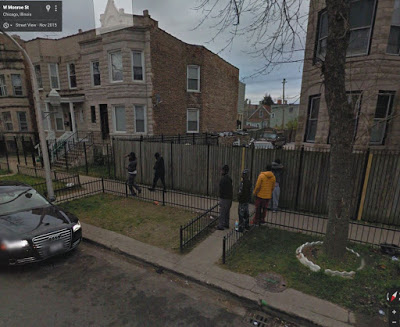
What is particularly valuable about Moskos’ perspective is that he knows the beats that cops work. That doesn’t excuse bad policing. It does mean he knows more about the context of police work than the ACLU or Black Lives Matter. Consider, for instance, his defense of enforcing the law against Chicago youth in a rough part of town:

But the ACLU is wrong. Dead wrong. Look, if you want to argue that these young men shouldn’t be stopped at all, fine. You agree with the ACLU (and don’t live on that block or hear the gunshots). And the ACLU is right in criticizing police who stop people for the sake of making a stop.

As a cop you don’t (or shouldn’t) harass everybody walking down the block. You harass these guys on this block. And by “harass” I mean, within the law and constitution, make it little less fun for them to hang out in public and sell drugs. Yes, you as a cop give these guys a hard time. Is that fair? Yes. Because there have been six shootings on this block this year. Is it racist? No. Because these guys are the problem.

If you’re a cop, you need to ask a bunch of questions 1) how do you do knowing these guy are slinging and shooting? 2) Should you stop these guys? 3) Are they committing a crime? 4) Are they a Broken Window? 5) What legal basis do you have to stop and frisk those guys?

[The answers are 1) get out of your damn car and talk to them, or at watch them disperse at your presence, 2) yes, 3) no, and 4) yes. 5) very little at first, but you can build it, ask for a consent search, or conduct a Terry Frisk.]

You pull up to them. See what they do. You can crack down on this group by enforcing Broken Windows quality-of-life crimes. You get to know who they are. You can use your discretion and ticket them for something — drinking, smoking joints, jaywalking, littering, truancy, spitting — whatever it takes. You can arrest them when they can’t provide ID (they can’t, trust me). You can harass these criminals legally and within the bounds of the constitution. This is what police are supposed to do. It’s how homicides are prevented. It’s how some kids stay out of gangs. But if cops do their job, then we, society, need to support police officers against inevitable accusations of harassment, racism, and even discourteous behavior in their confrontations with these criminals.

As a cop you will not win the war drugs, but as long as drugs are illegal you need to fight the fight against pubic drug dealing. But we’re telling cops not to do this. In Chicago cops are listening. And so are the criminals.

So maybe America isn’t so great (for reasons other than Michelle Higgins gives).

America IS Great Again

Don’t worry about the news cycle or the outrage porn associated with it. David Harsanyi looks beyond the headlines:

Homicide rates, for example, have been falling to the point where in 2014 — the last year of FBI data offered — it was at 4.5 per 100,000 people, which is the lowest rate recorded since 1963, when it was at 4.6 per 100,000 people. We know there was a slight uptick in violent crime in 2015, probably making it the second lowest year for homicides in the past 50. . . .

Put it this way: In 1990, in New York City there were 2,245 homicides. In 2015, there were 355. In 1992, Los Angeles County had a record high of 2,589 homicides. There were 655 over the last 12 months. In 1992, Chicago saw 943 murders, or a rate of 34 murders per 100,000 citizens. Although it still owns a far higher murder rate than most major cities, in 2014 there were 432 murders and in 2015 488. Last year, Dallas saw a spike in murders, yet the 10.7 homicides per 100,000 residents was the city’s fourth-lowest total since police started keeping track in 1930. In Denver 95 people were murdered in 1992, 34 in 2014, and 50 (a nine-year high) in 2015.

As Harsanyi says, it’s not 1968. That year was scary. This year seems like the last two years. The Ferguson Effect seems to be trumping the Francis Effect.

I Would Like to Know What It’s Like to Write for the New York Times

We hear a lot these days about how poorly certain Americans understand their neighbors, especially when it comes to racial differences.

But if I can’t understand the experience of a person of color, am I any better equipped to understand a great grandchild of Irish immigrants who worked as domestic help in Boston?

And why not reverse the direction? Can people of color understand mmmmeeeEEEEE? Do they know what it felt like to put on a wool uniform with the junior high marching band to perform in the July 4th parade, to receive a B+ on a paper for Reformation history at Temple, to be rejected for a Luce post-doctoral fellowship, to experience the retirement of Mike Schmidt? Some might say that these experiences are insignificant compared to those of other people? That is a fair point. But it also raises a question about whether we only care about the experiences of others when they die. Which is another fair point. Death does put a point on experience. But how often do memorial services capture the entire experience of a deceased’s life. We remember the person as a great guy or gal and stay quiet about the blemishes.

When it comes to black men who get pulled over by police and die, should Michael Eric Dyson, a professor at Georgetown and op-ed writer for the Times, be able to say that his experience is akin to that of Alton Sterling or Philando Castile? I have a hard time understanding how a man with Dyson’s experience can think that his is similar to men who live in very different circumstances. According to Dyson:

At birth, you are given a pair of binoculars that see black life from a distance, never with the texture of intimacy. Those binoculars are privilege; they are status, regardless of your class. In fact the greatest privilege that exists is for white folk to get stopped by a cop and not end up dead when the encounter is over.

Perhaps Mr. Dyson did not receive his privilege (elite university professor and writer for the nation’s premier newspaper) at birth, but that status surely puts him at several removes from Castile and Sterling and many other African-American men who live in our nation’s cities. It is also several removes from white Americans, even those with advanced degrees and who teach for a living.

The problem with framing race relations along the lines of what each of us experience, and that some can never know the experience of another, is that it leaves no hope or way out. Mr. Dyson will never know my experience and I will never know his.

But if you want to talk about law enforcement policies that lead to the mass incarceration of blacks, municipal governments’ failure to recruit and train people who will be good cops, or the lack of independent oversight of law enforcement officials (like even Jim Comey), that’s a conversation we can have. But one that always informs me how I cannot know what you’ve experienced is going to be a conversation stopper.

Prexit

State sovereignty goes hand in hand with ecclesiastical sovereignty, or it sure looks like it.

Michael Lind explains the phenomenon of Trump and what it means for Democrats and Republicans:

The culture war and partisan realignment are over; the policy realignment and “border war” — a clash between nationalists, mostly on the right, and multicultural globalists, mostly on the left — have just begun.

***

For the nationalists, the most important dividing line is that between American citizens and everyone else—symbolized by Trump’s proposal for a Mexican border wall. On the right, American nationalism is tainted by strains of white racial and religious nationalism and nativism, reinforced by Trump’s incendiary language about Mexicans and his proposed temporary ban on Muslims entering the U.S.

But while there is overlap between nationalists and racists, the two are not the same thing. The most extreme white nationalists don’t advocate nationalism as a governing philosophy in our multiracial country; they hope to withdraw from American life and create a white homeland within the nation-state. Nationalism is different than white nationalism, and a populist American nationalism untainted by vestiges of racial bigotry might have transracial appeal, like versions of national populism in Latin America.

The rise of populist nationalism on the right is paralleled by the rise of multicultural globalism on the center-left.

For multicultural globalists, national boundaries are increasingly obsolete and perhaps even immoral. According to the emerging progressive orthodoxy, the identities that count are subnational (race, gender, orientation) and supranational (citizenship of the world). While not necessarily representative of Democratic voters, progressive pundits and journalists increasingly speak a dialect of ethical cosmopolitanism or globalism — the idea that it is unjust to discriminate in favor of one’s fellow nationals against citizens of foreign countries.

Now watch (thanks to our W. Michigan correspondent) how church affairs line up with temporal politics, with ecumenists (globalists) on the left opposing the constraints of denominationalists (nationalists) on the right:

Many who witnessed the continuing denominational imprisonment of the Lord’s body and blood experienced ecumenical agony. The late Emilio Castro, the WCC general secretary who hired me, was a Methodist pastor who yearned for eucharistic sharing. He would say, “I’m not even asking the Catholics (or Orthodox) to recognize the validity of the Lord’s Supper that we Methodists celebrate. I’m simply asking them to accept that I see the body and blood of Jesus Christ fully present in their Eucharist.”

In spring 1994 I sat in a restaurant with Castro and his longtime Orthodox friend and WCC colleague Ion Bria, a priest in the Romanian Orthodox Church. The two lifted their wine glasses and said to each other with tears in their eyes, “Someday, before we die, we shall be able to share the body and blood together, with our churches’ blessings.” But they never did. Nor, if they were still living, could they do so today.

So I returned to ecclesiastical disobedience. That became more complicated once I was elected general secretary of the Reformed Church in America. When I assumed that post, I didn’t know all that would be demanded of me as general secretary, but I knew I couldn’t go forward without retreating. I knew I needed regular times away, with a spiritual director, and the nourishment of Christ’s body and blood. A Carmelite retreat center near my home in New Jersey provided all this.

As a church official, I wanted more than ever to show absolute respect for my Catholic hosts. But their invitation to receive at the table was unambiguous. On my retreat days, I’d often be invited to read one of the scriptures at their eucharistic service.

Indifference to church polity and theology like this is why confessional Protestants exited from the modern ecumenical movement.

Arguably the most astounding aspect of contemporary ecumenical discussions is that the leader of the only true church is also apparently indifferent to ecclesiastical laws:

This tension in how we understand the Eucharist is one that, remarkably, Pope Francis himself has acknowledged. Last November he met with a Lutheran congregation in Rome and responded to one member, Anke de Bernardinis, who is married to a Catholic and who asked what it would take for them to receive the Eucharist together. The pope’s spontaneous ten-minute answer was revealing, unprecedented, and even stunning.

Francis said, “I ask myself the question. To share the Lord’s banquet: is it the goal of the path, or is it a viaticum (food or provision accompanying one on a journey) for walking together?” He posed that question rather than give the doctrinal response—that she could either become Catholic or continue to pray with her husband over the pain of a divided church.

Pope Francis went on to focus on baptism. “I ask myself. But don’t we have the same baptism? If we have the same baptism, shouldn’t we be walking together?” Then he went further. “The supper? There are questions that only if one is sincere with one’s self and the little theological light that one has, must be responded to on one’s own. See for yourself. This is my body. This is my blood. Do this in remembrance of me—this is a viaticum that helps us to journey on.”

And Francis didn’t stop there, going on to address the classic dividing line over the meaning of Christ’s “real presence.” The pope recalled a Protestant pastor and friend who told him, “We believe that the Lord is present there.” So he said to the Lutheran woman, “You believe that the Lord is present. And what’s the difference? There are explanations and interpretations, but life is bigger than explanations and interpretations.”

Having noted the trademark tension between official policy and actual practice, Pope Francis concluded by saying he would not “dare to give permission to do this” but then repeated, “One Lord, one faith, one baptism. Talk to the Lord, and then go forward. And I wouldn’t dare—I don’t dare say anything more.”

In ecumenism, as in diplomacy, ambiguity can be a helpful tool, allowing room for movement on issues where formal agreement is not yet possible. Pope Francis opened the door more than a crack.

When Will Bryan and the Jasons Notice?

Papal power cannot even control what happens closest to home (think subsidiarity):

In short, the motu proprio released on Saturday is another blow to the cause of transparency and accountability at the Vatican. As veteran Vatican-watcher John Allen observed, it is a victory for the “old guard”—the entrenched bureaucracy that blocks any significant change in the way the Roman Curia do business.

Just to make things clear, Cardinal Pell’s office is not having its wings clipped because of financial scandals. (“Pope reins in Vatican’s finance minister after scandal,” read one widely circulated headline, getting the story completely upside-down.) The Secretariat for the Economy was created because of the scandals. The money-laundering charges, the massive cost overruns, the no-bid contracts, the undervalued assets, the leaked confidential information, the undocumented expenses—all these took place before Cardinal Pell set up his new shop in 2014. The Secretariat helped bring these problems to light, set up procedures to guard against them, and in some cases took over the responsibilities that other offices had proven unable to handle cleanly.

Now the main work of financial management, which had temporarily been handled by the Secretariat, will return to the purview of the Administration of the Patrimony of the Apostolic See (APSA). This is the agency responsible for much of the trouble that Cardinal Pell discovered in Vatican financial management. Remember Msgr. Nunzio Scarano: the infamous “Msgr. €500” who was arrested in 2013 and now faces several different criminal charges for financial misconduct? He worked for years at APSA, rising to be the head of the accounting department—the accounting department—without causing his superiors to question how he was amassing a personal fortune on his modest salary. APSA is one of the major reasons why the Secretariat for the Economy was needed: part of the problem, not the solution.

Nor can papal authority insureensure faithful teaching:

A group of Catholic academics and pastors has submitted an appeal to Cardinal Angelo Sodano, Dean of the College of Cardinals in Rome, requesting that the Cardinals and Eastern Catholic Patriarchs petition His Holiness, Pope Francis, to repudiate a list of erroneous propositions that can be drawn from a natural reading of the post-synodal Apostolic Exhortation Amoris laetitia. During the coming weeks this submission will be sent in various languages to every one of the Cardinals and Patriarchs, of whom there are 218 living at present.

Describing the exhortation as containing “a number of statements that can be understood in a sense that is contrary to Catholic faith and morals,” the signatories submitted, along with their appeal, a documented list of applicable theological censures specifying “the nature and degree of the errors that could be attributed to Amoris laetitia.”

Among the 45 signatories are Catholic prelates, scholars, professors, authors, and clergy from various pontifical universities, seminaries, colleges, theological institutes, religious orders, and dioceses around the world. They have asked the College of Cardinals, in their capacity as the Pope’s official advisers, to approach the Holy Father with a request that he repudiate “the errors listed in the document in a definitive and final manner, and to authoritatively state that Amoris laetitia does not require any of them to be believed or considered as possibly true.”

“We are not accusing the pope of heresy,” said a spokesman for the authors, “but we consider that numerous propositions in Amoris laetitia can be construed as heretical upon a natural reading of the text. Additional statements would fall under other established theological censures, such as scandalous, erroneous in faith, and ambiguous, among others.”

While the world turns, Bryan still debates Tim Challies.

Does the Tie that Binds Extend to Old Life?

I wondered after reading this:

Jevon is a Pastoral Resident and Church Planting Intern at Independent Presbyterian Church in Memphis, Tennessee. What that means is that Jevon is a Bible-believing Christian who has devoted his life to serving Jesus Christ vocationally within the same denomination that we’re a part of. Jevon and I have a whole lot in common. Though we’ve never met personally, I can say with a great deal of confidence that our fellowship would be sweet.

But there is one observable difference: Jevon is black, and I am white. Because of the color of his skin, Jevon faces fears that I don’t face. That fact alone is profoundly disturbing to me, and it should be disturbing to all Christians. For at the foundation of Christianity is the belief that ALL men and women (no qualifications) are made in the image of God and deserve the dignity and treatment consistent with that reality.

I too like to think (all about mmmmeeeeEEEE) that I am a Bible-believing Christian who serves Christ and who has fellowship with Pastor Shurden through ecumenical ties between the OPC and PCA. And yet I wonder if the sweet, sweet fellowship that he assumes he has with Jevon Washington also includes confessional, spirituality-of-the-church Presbyterians like moi.

Or in this post-Ferguson era does Pastor Shurden feel more affinity with Michelle Higgins than with Chortles Weekly? If the basis for fellowship among Presbyterians is biblical teaching summarized in the Confession of Faith, then creed matters more than blood. After all, it takes more than being human to belong to a Presbyterian communion (though being human is pretty good).

Someone Isn’t Listening

While Pope Francis suggests that Christians need to apologize to non-heteros, Steven Jonathan Rummelsburg href=”http://www.catholicstand.com/talk-lgbtq-supporters/”>offers tips on how to talk to people in the LBGTQ community:

Admittedly, there seem to be many possible positions on the issues swirling around gender and sexual morality. Those in and of the world would contend that there are as many positions as people, but this is absurd. As it adheres with the first principle of all reality, there are only two possibilities; either one possesses a correct understanding of the LGBTQ agenda or one does not. Those who embrace a false notion of the issues asserted by the agenda appear to have many different positions, however, they are unified by their error.

Both misguided groups to the left and the right of the properly formed Catholic mistakenly believe that a personal opinion qualifies as a proper position on an issue. This is simply a nod to the Dictatorship of Relativism and has no bearing on objective reality. Before a true dialogue can begin, let the truth-seeker know that there are ever only be two possibilities for any position: either one understands reality rightly, or one does not. Our opinions are meaningless unless they correspond to the principles of truth and reality. Ironically, even the ideologue who claims that every opinion is “valid” will disagree with Catholic Truth, thus contradicting his own claim. However, the ideologue never lets self-referential incoherence get in the way of his narrative.

That’ll work.

Has Mr. Rummelsburg been taking philosophy from Bryan Cross?

And just imagine trying that approach the next time someone tells you we need to have a conversation about race relations in the United States.

Ecclesiastical Upgrade

Kathy Schiffer summarizes the most recent batch of reflections by evangelical converts to Rome. Here are the main reasons:

The contributors to Evangelical Exodus were influenced by diverse factors, notably the biblical canon, Christian orthodoxy, and the two concerns most frequently cited by Protestants: sola scriptura (all truth can be found in the Scriptures) and sola fide (man is saved by faith alone). Doug also named Beauty as one of the factors which led him and his fellow seminarians to a new appreciation for the Catholic Church. “In Protestantism,” Doug said, “there’s a tendency to dismiss any reason other than the intellectual. But as human beings, we’re both physical and spiritual creatures. In the Catholic Church, he found, intellect and reason are respected; but the Catholic Church is also more beautiful and more historical. There is an attractive package which draws the spirit, combining art and music and beauty, a long history, and tradition, with solid intellectual arguments.”

When Martin Luther broke with the church, he feared for his soul. He worried about his sins. He needed an alien righteousness to cover his transgressions which haunted him everywhere he went.

Why do Protestants who go to Rome never seem to sense the spiritual angst that motivated Luther? They’ve gone to a church that teaches if you die in mortal sin you risk going to hell. They now are in a communion where mortal and venial sins are numerous and the prospects of purgatory are real. But these “converted” folks seem to operate with the assumption that they were already “saved” as a Protestant but now have found a better version of Christianity, like going from Windows 8 to Windows 10, from Bill Hybels to John Paul II.

Give Protestants credit. We worry about salvation. We learned that worry from the church in Rome. Where did that worry go on the other side of the Tiber? It seemed to get lost in the efforts to preserve Christendom, the papal states, the West, and to win the culture wars.