Maybe This is what b, sd Had in Mind (trigger warning for Keller aficionados)

)And for contributors to Sasse 2020.)

Rod Dreher re-posted parts of an Aaron Renn post about urban/hipster Protestantism.

First, Renn’s categories:

Ben Sasse is a conservative exemplar of what I term “neutral world” Christianity. In my framework, there are three worlds we’ve seen in my lifetime related to the status of Christianity and traditional Christian norms in society.

1 Positive World (Pre-1994). To be seen as a religious person and one who exemplifies traditional Christian norms is a social positive. Christianity is a status enhancer. In some cases failure to embrace those norms hurt you.
2 Neutral World (1994-2014). Christianity is seen as a socially neutral attribute. It no longer had dominant status in society, but to be seen as a religious person is not a knock either. It’s more like a personal affectation or hobby. Traditional norms of behavior retain residual force.
3 Negative World (2014-). In this world, being a Christian is a social negative, especially in high status positions. Christianity in many ways as seen as undermining the social good. Traditional norms are expressly repudiated.

To illustrate the differences, consider these three incidents:

1 Positive World: In 1987 the Miami Herald reported that Sen. Gary Hart had been having an affair, and cavorting with the woman in question on his yacht. He was forced to drop out of the presidential race as a result.
2 Neutral World: In 1998 the Drudge Report broke the story that Bill Clinton had been having an affair with intern Monica Lewinksy, including sex acts in the Oval Office. Bill Clinton was badly damaged by the scandal but survived it as the Democratic Party rallied around him and public decided his private behavior was not relevant to the job.
3 Negative World: In 2016 Donald Trump, a many whose entire persona (sexual antics, excess consumption, boastfulness, etc.) is antithetical to traditional Christianity, is elected president. The Access Hollywood tape, for example, had no effect on voter decisions about him.

Even for those who hate Christianity, the rise of Trump, something only possible in a post-Christian world, should give them pause to consider.

Tim Keller’s ministry is the consummate neutral world Christianity:

The neutral world church is very different in a number of ways. It has traditionally been much more apolitical (though many of its practitioners lean left). It’s also much more heavily urban and global city focused. It tries to avoid highlighting areas where Christianity is in conflict with the world. Instead of being antagonistic towards the culture, it is explicitly positive towards culture. In fact, you could sum up much of the model under the heading “cultural engagement.” They want to meet the culture on its own terms, and reach people as participants in a pluralistic public square. They want to be in the mainstream media, not just Christian media or their own platforms. Many of their ministries have been backed by big money donors. These are many of the people who denounced Trump to no effect during the election. In effect, they represent a version of Christianity taking its cues from the secular elite consensus.

Which means that some political topics are okay, some aren’t:

The average neutral world Christian leader – and that’s a lot of the high profile ones other than the remaining religious righters, ones who have a more dominant role than ever thanks to the internet – talks obsessively about two topics today: refugees (immigrants) and racism. They combine that with angry, militant anti-Trump politics. These are not just expounded as internal to the church (e.g., helping the actual refugee family on your block), but explicitly in a social reform register (changing legacy culture and government policy).

I’m not going to argue that they are wrong are those points. But it’s notable how selective these folks were in picking topics to talk about. They seem to have landed on causes where they are 100% in agreement with the elite secular consensus. . . .

I won’t speculate on their motives, but it’s very clear that neutral world leaders have a lot to lose. Unlike Jerry Falwell, who never had secular cachet and lived in the sticks, these guys enjoy artisanal cheese, microbrews, and pour over coffees in Brooklyn. They’ve had bylines in the New York Times and Washington Post. They get prime speaking gigs at the Q conference and elsewhere. A number of them have big donors to worry about. And if all of a sudden they lost the ability to engage with the culture they explicitly affirmed as valuable, it would a painful blow. For example, to accept Dreher’s Benedict Option argument they’d have to admit that the entire foundation of their current way of doing business no longer works. Not many people are interested in hearing that.

The neutral world Christians – and again that seems to be much of Evangelical leadership today – are in a tough spot when it comes to adjusting to the negative world. The move from positive to neutral world brought an increase in mainstream social status (think Tim Keller vs. Pat Robertson), but the move to a negative world will involve a loss of status. Let’s be honest, that’s not palatable to most. Hence we see a shift hard to the left and into very public synchronization with secular pieties. That’s not everybody in Evangelical leadership, but it’s a lot of them. Many of those who haven’t are older and long time political conservatives without a next generation of followers who think like them. (Political conservatism is also dying, incidentally).

And lo and behold, The Gospel Coalition is smack dab in Neutral World Christianity:

I was speaking with one pastor who is a national council member of the Gospel Coalition. He’s a classic neutral worlder who strongly disapproves of Trump. But he notes that the Millennials in his congregation are in effect Biblically illiterate and have a definition of God’s justice that is taken from secular leftist politics. They did not, for example, see anything at all problematic about Hillary Clinton and her views. A generation or so from now when these people are the leaders, they won’t be people keeping unpopular positions to themselves. They won’t have any unpopular positions to hide. They will be completely assimilated to the world. Only their ethics will no longer be Hillary’s, but the new fashion du jour.

Renn’s recommendation is not necessarily the Benedict Option but the Fighting-the-Good-Fight Option:

The template is Paul, who was one tough hombre. Paul was a Jewish blueblood on the fast track to high council membership who threw it all way to endure beatings, imprisonment, etc. (One of the underappreciated virtues of Paul is just how physically and mentally tough that guy was). He said he counted it all as loss for the surpassing worth of knowing Christ. He also someone who could say, “I have not shunned to declare unto you the whole counsel of God.”

Even the author of the Benedict Option, Dreher, sees merit in Paul as the model for ministry:

Paul did not focus his struggle on the world, but within the church itself. Aside from seeking converts, he doesn’t advise his followers to engage the culture, get politically active, or anything like that. Nor did he instruct his followers to run away from the world. Rather, he focused on building up the church in holiness, and exhorting believers in the new faith to overcome the world in themselves.

That seems a lot like the confessional Reformed Protestant model. It’s very personal, familial, congregational, and local, perhaps even too local for the advocates of localism.
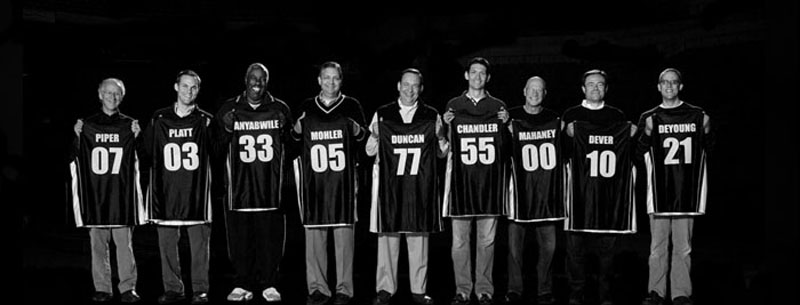
What if Celebrity Pastors Were as Honest as Ta-Nehisi Coates?

Coates’ take down of Kanye West is receiving push back, but it has this very perceptive section on notoriety:

In the summer of 2015, I published a book, and in so doing, became the unlikely recipient of a mere fraction of the kind of celebrity Kanye West enjoys. It was small literary fame, not the kind of fame that accompanies Grammys and Oscars, and there may not have been a worse candidate for it. I was the second-youngest of seven children. My life had been inconsequential, if slightly amusing. I had never stood out for any particular reason, save my height, and even that was wasted on a lack of skills on the basketball court. But I learned to use this ordinariness to my advantage. I was a journalist. There was something soft and unthreatening about me that made people want to talk. And I had a capacity for disappearing into events and thus, in that way, reporting out a scene. At home, I built myself around ordinary things—family, friends, and community. I might never be a celebrated writer. But I was a good father, a good partner, a decent friend.

Fame expletive with all of that. I would show up to do my job, to report, and become, if not the scene, then part of it. I would take my wife out to lunch to discuss some weighty matter in our lives, and come home, only to learn that the couple next to us had covertly taken a photo and tweeted it out. The family dream of buying a home, finally achieved, became newsworthy. My kid’s Instagram account was scoured for relevant quotes. And when I moved to excise myself, to restrict access, this would only extend the story.

It was the oddest thing. I felt myself to be the same as I had always been, but everything around me was warping. My sense of myself as part of a community of black writers disintegrated before me. Writers, whom I loved, who had been mentors, claimed tokenism and betrayal. Writers, whom I knew personally, whom I felt to be comrades in struggle, took to Facebook and Twitter to announce my latest heresy. No one enjoys criticism, but by then I had taken my share. What was new was criticism that I felt to originate as much in what I had written, as how it had been received. One of my best friends, who worked in radio, came up with the idea of a funny self-deprecating segment about me and my weird snobbery. But when it aired, the piece was mostly concerned with this newfound fame, how it had changed me, and how it all left him feeling a type of way. I was unprepared. The work of writing had always been, for me, the work of enduring failure. It had never occurred to me that one would, too, have to work to endure success.

The incentives toward a grand ego were ever present. I was asked to speak on matters which my work evidenced no knowledge of. I was invited to do a speaking tour via private jet. I was asked to direct a music video. I began to understand how and why famous writers falter, because writing is hard and there are “writers” who only do that work because they have to. But it was now clear there was another way—a life of lectures, visiting-writer gigs, galas, prize committees. There were dark expectations. I remember going with a friend to visit an older black writer, an elder statesman. He sized me up and the first thing he said to me was, “You must be getting all the vulgarity now.”

What I felt, in all of this, was a profound sense of social isolation. I would walk into a room, knowing that some facsimile of me, some mix of interviews, book clubs, and private assessment, had preceded me. The loss of friends, of comrades, of community, was gut-wrenching. I grew skeptical and distant. I avoided group dinners. In conversation, I sized everyone up, convinced that they were trying to extract something from me. And this is where the paranoia began, because the vast majority of people were kind and normal. But I never knew when that would fail to be the case.

This has to be the experience of pastors who have attained fame and regularly speak on conference circuits. This is also a set of psychological bags that cannot period be good period for pastoral ministry period. How do you separate awareness of how you appear, sound, and come across when you preach merely to a congregation? But how much more is such a sensitivity when you are someone so recognizable?

Celebrity is a burden that some have to carry. It is also an attribute that any serious pastor who wants to get out of the way and let the Word and Spirit do their gracious work should avoid like Donald Trump.

What Would a Woke Christian Do (WWWCD)?

Is it just I, or do the times when Jesus ministered seem very different from ours?

5 When Jesus had entered Capernaum, a centurion came to him, asking for help. 6 “Lord,” he said, “my servant lies at home paralyzed, suffering terribly.”

7Jesus said to him, “Shall I come and heal him?”

8 The centurion replied, “Lord, I do not deserve to have you come under my roof. But just say the word, and my servant will be healed. 9 For I myself am a man under authority, with soldiers under me. I tell this one, ‘Go,’ and he goes; and that one, ‘Come,’ and he comes. I say to my servant, ‘Do this,’ and he does it.”

10 When Jesus heard this, he was amazed and said to those following him, “Truly I tell you, I have not found anyone in Israel with such great faith. 11 I say to you that many will come from the east and the west, and will take their places at the feast with Abraham, Isaac and Jacob in the kingdom of heaven. 12 But the subjects of the kingdom will be thrown outside, into the darkness, where there will be weeping and gnashing of teeth.”

13 Then Jesus said to the centurion, “Go! Let it be done just as you believed it would.” And his servant was healed at that moment.

Jesus Heals Many

14 When Jesus came into Peter’s house, he saw Peter’s mother-in-law lying in bed with a fever. 15 He touched her hand and the fever left her, and she got up and began to wait on him. (Matthew 8)

First, we have a centurion with a servant who boasts that he has authority to boss people around. Does that put Jesus off? No. Instead, he marvels at the centurion’s faith.

Would a social justice warrior be so insensitive to the power relationships, the intersectionality, that pervaded Roman society and that assumed a high ranking military official should have servants and bark orders at them?

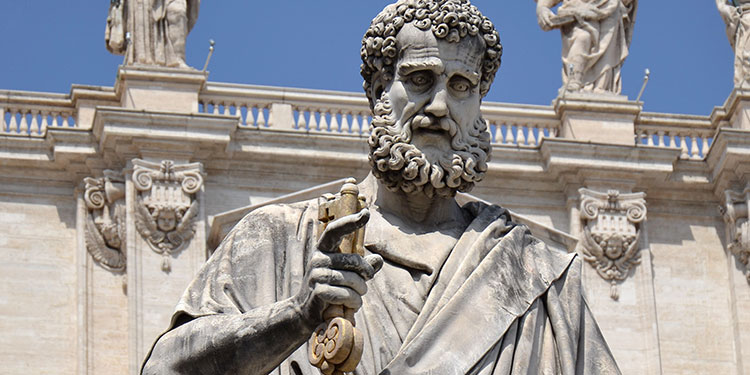
Or how about Peter’s mother-in-law (leaving aside that the first pope was married)? Yes, it’s a genuine act of kindness for Jesus to heal the woman without being asked. But what’s up with Peter’s mother-in-law feeling the need to wait on Jesus as soon as she recovered? Why not tell Peter, who later had to learn to feed sheep, to feed his Lord?

Or maybe our standards of equality, justice, politeness, and social rank are not the Lord’s.

When Philadelphia Wins, It’s Not a Theology of Glory

Anyone want to think back to the Phillies’ starting line up in 2008 when they won the World Series? The starting pitchers were be Cole Hamels, Brett Myers, Jamie Moyer, and Joe Blanton. Yes, they won with that rotation. They did not yet have Roy Halladay, Cliff Lee, or Roy Oswalt, everyone’s dream rotation from the 2011 season when the Fightin’s lost to the Cardinals in the first round of playoffs (and have been looking in from the outside ever since).

So now what happens when the Eagles finally break through to championship status in the much hyped Super Bowl era? Did their franchise quarterback, the fittingly praised and highly regarded, Carson Wentz, shepherd them to the promised land? No, it was Nick Foles, the Joe Blanton of NFL quarterbacks. (Mind you, I was pulling hard for Foles if only because he is as dull as his opponents have been relentless in pointing it out.)

This means that Philadelphia general managers should not try to stack their rosters with the best and most gifted. It means they need to roll the dice, say their prayers, hope for good karma. In Philadelphia, talent does not win. Lighting in a bottle — Ben Franklin might be proud — does.

And just to add to this Calvinistically dark take on Philadelphia sports — what if last night was the closest that Carson Wentz comes to a Super Bowl victory? In Philadelphia, going to championship games is hardly automatic. Wentz could have a wonderful career and take the Eagles to the playoffs many years. But winning in the big game could always elude him as it did Donovan McNabb and his coach, Andy Reid.

If that’s the case, then the best quarterback the Eagles will ever have is no. 9, Nick Foles. Wentz may go to the Hall of Fame and McNabb and Randall Cunnhingham may have more impressive careers. But Foles is the guy who won the big game for the Birds.

That is poignant.

Fussy Certainty

The interview with Brad Gregory about his latest book on Martin Luther revealed a fundamental difference between Roman Catholics and magisterial Protestants. Around the twenty-minute mark, Gregory starts to challenge Luther’s quest for certainty of salvation in ways that would make you think the Notre Dame professor had been reading Scott Clark’s, Recovering the Reformed Confession. According to Gregory, Luther was on an illegitimate quest for certainty or freedom from doubt, especially considering all the ways (acts of devotion) the church had for helping Christians along the path of salvation.

But here’s the thing, Luther wanted to know that he could stand before the judgment seat of God as a righteous man. The best Rome could do was get Luther to purgatory. He had no assurance he would go to heaven (this was a time when all Roman Catholics worried about sin and damnation). And so, the idea that a sinner could be righteous through faith, having Christ’s righteousness imputed to them, was not part of some illegitimate quest for certainty. It was what every single person should want who knows God is holy and humans are sinful. Who will stand on that great day? Not how do I get through this life so that I can endure millennia of purging my remaining sin?

Which leaves us with two rival certainties. On the one hand, Roman Catholics have the certainty that comes through trust in the church:

the Catholic Church enjoys some Divine guarantees, but they are not numerous. Christ promised to be with the Church to the end of time, and that the gates of hell would not prevail against her. This means essentially that the Holy Spirit will not permit the Church’s Divine constitution to be lost (such as the disappearance of the Catholic hierarchy), that the fullness of all the means of salvation will always be available in the Church, that the Church’s sacraments will always be powerful sources of grace, that the Church’s Magisterial teachings will be completely free from error, and that the Church will remain the mystical body of Christ under the headship of Our Lord Himself, as represented here on earth by His Vicar, the successor of Peter.

A Roman Catholic knows that the institutional church won’t fail even if he or she doesn’t have assurance about the eternal destiny of their body and soul.

On the other hand, Protestants who affirm justification by faith, have certainty that their sins are and will be forgiven thanks to the work of Christ. Here is how Luther put it in his commentary on Galatians (excerpted here):

This I say, to confute that pernicious doctrine of the sophisters and monks, which taught that no man can certainly know (although his life be never so upright and blameless) whether he be in the favor of God or no. And this sentence, commonly received, was a special principle and article of faith in the whole Papacy, whereby they utterly defaced the doctrine of faith, tormented men’s consciences, banished Christ out of the Church, darkened and denied all the benefits and gifts of the Holy Ghost, abolished the true worship of God, set up idolatry, contempt of God, and blasphemy against God in men’s hearts. For he that doubteth of the will of God towards him, and hath no assurance that he is in grace, cannot believe that he hath remission of sins, that God careth for him, and that he can be saved.

Augustine saith very well and godly, that every man seeth most certainly his own faith, if he have faith. This do they deny. God forbid (say they) that I should assure myself that I am under grace, that I am holy, and that I have the Holy Ghost, yea, although I live godly, and do all works. Ye which are young, and are not infected with this pernicious opinion (whereupon the whole kingdom of the Pope is grounded), take heed and fly from it, as from a most horrible plague. We that are old men have been trained up in this error even from our youth, and have been so nusled therein, that it hath taken deep root in our hearts. Therefore it is to us no less labor to unlearn and forget the same, than to learn and lay hold upon true faith. But we must be assured and out of doubt that we are under grace, that we please God for Christ’s sake, and that we have the Holy Ghost. ‘For if any man have not the spirit of Christ, the same is none of his’ (Romans 8:9).

I don’t know why anyone would choose to lose Luther’s version of certainty to gain Gregory’s confidence in an institution that has not always been so worthy of trust.

What Did Joseph Know?

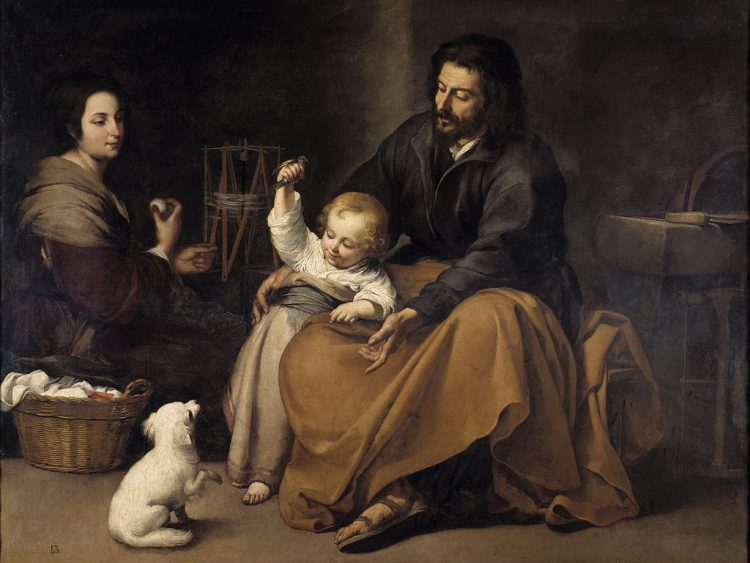
A sermon series on Matthew has prompted all sorts of thoughts about the holy family, among them what kind of man Joseph was who would not have sexual relations with his wife (if she really was perpetually a virgin). If Mary was holy, wasn’t Joseph at least remarkable for living celibate even while a married man? (And if sex is not sinful in marriage, and Mary was already sinless, would sex with Joseph have really compromised her righteous standing?)

Here’s the kicker, though. Matthew writes at the end of chapter 1:

24 When Joseph woke from sleep, he did as the angel of the Lord commanded him: he took his wife, 25 but knew her not until she had given birth to a son. And he called his name Jesus.

These verses require modesty. On the one hand, according to John Calvin:

Let us rest satisfied with this, that no just and well-grounded inference can be drawn from these words of the Evangelist, as to what took place after the birth of Christ. He is called first-born; but it is for the sole purpose of informing us that he was born of a virgin. It is said that Joseph knew her not till she had brought forth her first-born son: but this is limited to that very time. What took place afterwards, the historian does not inform us. Such is well known to have been the practice of the inspired writers. Certainly, no man will ever raise a question on this subject, except from curiosity; and no man will obstinately keep up the argument, except from an extreme fondness for disputation.

(Perhaps this post errs on the side of “fondness for disputation.”)

On the other hand, just because the text doesn’t say Joseph did “know” Mary after Jesus’ birth, it doesn’t give grounds for Mary’s perpetual virginity. On Luke 1:34 Calvin writes:

The conjecture which some have drawn from these words [“How shall this be, since I know not a man?”], that she had formed a vow of perpetual virginity, is unfounded and altogether absurd. She would, in that case, have committed treachery by allowing herself to be united to a husband, and would have poured contempt on the holy covenant of marriage; which could not have been done without mockery of God. Although the Papists have exercised barbarous tyranny on this subject, yet they have never proceeded so far as to allow the wife to form a vow of continence at her own pleasure. Besides, it is an idle and unfounded supposition that a monastic life existed among the Jews.

So you take from this immaculate conception and perpetual virginity of Mary? That’s a stretch.

But if you can whack Donald Trump by referring to Joseph as Jesus’ father — even though Matthew goes to great lengths in the genealogy to connect Jesus to the Davidic line through Joseph — then it’s fine for impartial journalists to embrace “orthodoxy.”

A Song Unfit for A Time Such as This

“Baby it’s cold outside” is not simply an appropriate description of Michigan right now but also a song that should be abandoned (and some have attributed it to the Christmas season) in these sexually charged times:

I really can’t stay – Baby it’s cold outside
I’ve got to go away – Baby it’s cold outside
This evening has been – Been hoping that you’d drop in
So very nice – I’ll hold your hands, they’re just like ice

My mother will start to worry – Beautiful, what’s your hurry
My father will be pacing the floor – Listen to the fireplace roar
So really I’d better scurry – Beautiful, please don’t hurry
Well Maybe just a half a drink more – Put some records on while I pour

The neighbors might think – Baby, it’s bad out there
Say, what’s in this drink – No cabs to be had out there
I wish I knew how – Your eyes are like starlight now
To break this spell – I’ll take your hat, your hair looks swell

I ought to say no, no, no, sir – Mind if I move a little closer
At least I’m gonna say that I tried – What’s the sense in hurting my pride
I really can’t stay – Baby don’t hold out
Ahh, but it’s cold outside

Marya Hannum observed two years ago that many had concluded that this was a date-rape song:

It’s that most wonderful time of the year. City storefronts are aglow with snowflakes and fairy lights, stockings have been hung by chimneys with care, and on the Internet debates over the holiday hit, Baby It’s Cold Outside, rage on.

In the past four years, this last seems to have morphed into a holiday tradition in its own right. In true Christmas spirit, The Daily Beast didn’t even wait until Thanksgiving to publish a listicle covering “Everyone’s Favorite Date-Rape Holiday Classic.”

Meanwhile, Urban Dictionary now lists the song under the heading “Christmas Date Rape Song.” Recently, it was given a “feminist makeover” in the clever, if not quite as catchy, YouTube video “Baby, It’s Consent Inside.”

Is all this controversy over a catchy classic really warranted?

Upon first listen, maybe. The tune was penned in the 1940s by Frank Loesser — writer of Guys and Dolls — to be performed as a duet with his wife at Los Angeles parties. Its predatory nature is apparent from the original notes, which label the male’s part as “wolf” and the female’s as “mouse.”

Hannum also explained that some feminists defended the song:

As feminist blog Persephone Magazine noted in 2010, the song’s historical context matters. At the time they were written, an unmarried woman staying the night at her beau’s was cause for scandal. It’s this fear we see reflected in the lyrics, more than any aversion on the part of the woman to staying the night.

She never expresses any personal distaste at the idea,e rather pointing out that her “sister will be suspicious,” her “maiden aunt’s mind is vicious.” Really, then, we are hearing a battle between his entreaties and her reputation.

In this light, the song could be read as an advocacy for women’s sexual liberation rather than a tune about date rape.

How times change.

I Didn’t Think Kevin Spacey was an Orthodox Presbyterian

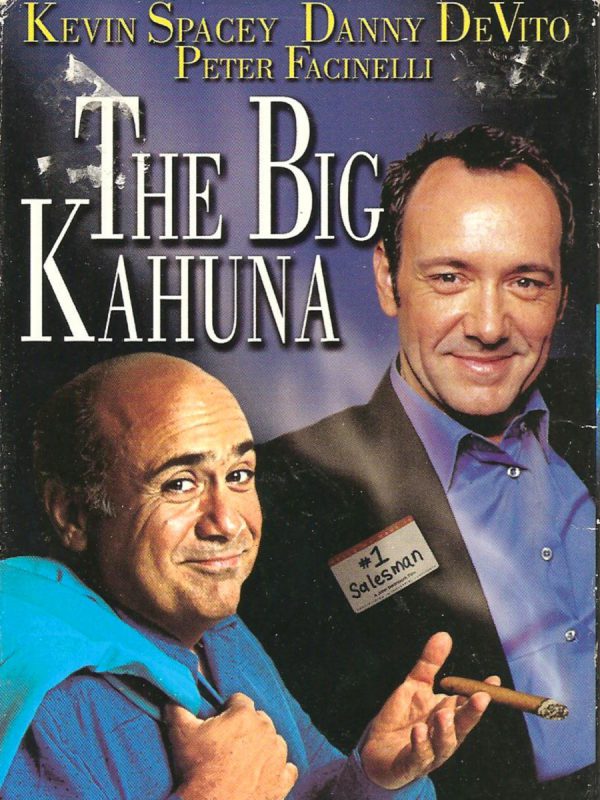
Despite what we now know about the actor, I remain a big fan of The Big Kahuna, a movie I even recommended as one of Hollywood’s better renderings of evangelicalism. (Trigger warning: language is vulgar in places.) Spacey starred in and produced the movie. Am I in danger of my publisher removing all copies of That Old-Time Religion in Modern America because of the way the book opens?

The Big Kahuna may not have been a box office hit, but the 1999 movie starring Kevin Spacey and Danny DeVito offered a surprisingly candid glimpse of the way many Americans have come to regard the subject of this book, twentieth-century evangelicalism in the United States. The film features three men who work for a firm that produces industrial lubricants and are assigned to host a cocktail party at a hotel in Wichita, Kansas, during a convention for industry-related vendors and producers. Two of the characters are from the sales division, experienced salesmen for whom the task of pitching the company’s product has nurtured a degree of cynicism and weariness. The third is a young, bright and somewhat naive evangelical Protestant who works in the research division. Their chief task on this particular evening is to make contact with the owner of Indiana’s largest manufacturing company, the “big Kahuna,” whose contract could salvage the salesmen’s declining careers.

Of course, Kevin Spacey is not the only one vulnerable. But we have no better sign of how Harry Emerson Fosdick lost and fundamentalists won than the way that mainstream institutions are employing standards that would have made my fundamentalist Baptist congregation think they were living in a Christian nation. Back then, as I have remarked before, I was under the impression that anyone I should esteem as a hero should also be a Christian. And with that logic, I turned my favorite athlete, Richie Allen, 3rd-baseman for the Phillies (and rookie of the year in 1964), into a born-again Christian, only to be crushed when a television camera showed him smoking a cigarette during a game.

Has our culture really come to that, the moral calculus of an eight-year-old dispsenationalist Baptist?

Of course, Peter Leithart tries to put a better spin on it:

But is private morality so easily distinguished from public ethics? Can we trust someone who lies, bullies, and manipulates to cover up the embarrassment of private sin? Doesn’t such a person prove himself a liar? Hasn’t he proven that he lacks the basic public virtue of justice?

Leithart is writing with politicians in mind, but the same point applies to artistic expressions? Should I sit with an author, director, or musician for anywhere between 30 minutes and two weeks who may be performing acts in private that would prove distasteful in public?

But here’s the other side that few of the new morality police seem to consider: why are good works whether performed in private or public any sort of guarantee of admirable character? If good works are filthy rags, if people do good works for noble and ignoble reasons, and if someone is unregenerate, how trustworthy are they (especially by our current Wesleyan standards)? According to the Confession of Faith:

Works done by unregenerate men, although for the matter of them they may be things which God commands; and of good use both to themselves and others: yet, because they proceed not from an heart purified by faith; nor are done in a right manner, according to the Word; nor to a right end, the glory of God, they are therefore sinful, and cannot please God, or make a man meet to receive grace from God: and yet, their neglect of them is more sinful and displeasing unto God. (16.7)

I get it that sexual abuse is bad. But let’s not fool ourselves about any actor or politician. The doctrine of total depravity teaches that behind that image of virtue and decency lurks a heart that is desperately wicked. Who can know it? Agents, spouses, interns, anyone who sees the public figure off camera.

If Daniel Could Serve a Pagan King, Why Can’t Old School Presbyterians vote for Bill Clinton?

Kevin DeYoung offers some perspective for Alabama voters (though he never mentions Roy Moore):

9. Am I casting my vote for someone who will damage the reputation of Christ and may harm the cause of Christ in the world? While it is often good to vote for other Christians, we have to consider how someone conducts himself in public as a representative of Christian convictions, ethics, and character.

10. Am I willing to consider that thoughtful Christians may answer some of these questions differently than I would? I certainly have my opinions about how these questions might apply in specific instances, but more than a particular vote, I want to encourage Christians to think critically and strategically about their civic participation. There is more to consider than majorities for our side and defeat for theirs.

I am glad he follows point 9 with point 10 because Daniel, the prophet, would have had a hard time answering the ninth question. Not only could Daniel not vote, but he served a King who worshiped and served false gods. Sure, Daniel resisted the king in some ways, but he also excelled in pagan learning (and so distinguished himself for public service):

17 As for these four youths, God gave them learning and skill in all literature and wisdom, and Daniel had understanding in all visions and dreams. 18 At the end of the time, when the king had commanded that they should be brought in, the chief of the eunuchs brought them in before Nebuchadnezzar. 19 And the king spoke with them, and among all of them none was found like Daniel, Hananiah, Mishael, and Azariah. Therefore they stood before the king. 20 And in every matter of wisdom and understanding about which the king inquired of them, he found them ten times better than all the magicians and enchanters that were in all his kingdom.

If not obeying the first table of the law is a big deal — and we’re not simply talking about images of Christ — how could a faithful believer excel in pagan literature and wisdom (which by Neo-Calvinist standards had to be worse than public schools) and then also serve a king whose cult involved idolatry?

I get it, Daniel did eventually disobey, which is music to the socially righteous warriors ears (thanks to one of our Southern correspondents):

We might hide our motives or blanket them in a veil we call authority or expertise. We will always become like the things we worship. Daniel writes about three men who stood in bold ambivalence to the foolishness of a conqueror king, because he was not their true king. They knew who they worshipped, and the more they lived like Him the closer they came to His presence.

Resist!

But that perspective on Daniel entirely misses the prophet’s assimilation to a regime tainted throughout by blasphemy and idolatry. Again, if 1789 affected all of European society, imagine the intersectionality of Babylonian gods and society. What did Daniel do? He cooperated as much as possible.

Don’t resist!

Honor (even the pagan megalomaniac)!

13 Be subject for the Lord’s sake to every human institution, whether it be to the emperor as supreme, 14 or to governors as sent by him to punish those who do evil and to praise those who do good. 15 For this is the will of God, that by doing good you should put to silence the ignorance of foolish people. 16 Live as people who are free, not using your freedom as a cover-up for evil, but living as servants of God. 17 Honor everyone. Love the brotherhood. Fear God. Honor the emperor.

In which case, the lesson is that as long as a Christian does not worship the senator, create statues of him for worship, pray to the senator, hand out the senator’s voting guide on Sunday, still honors his parents while working or voting for the senator, is not the senator’s hit-man, doesn’t lust after the senator’s wife, doesn’t embezzle for the senator, doesn’t lie to or for the senator, and doesn’t envy the senator, or his wife, or servants, or property, the a Christian can vote for the senator.

But if you want to be a pietist about it and consider primarily what a vote says (all) about you, then chances are you have the makings for being an Anabaptist.

That’s An Awfully Low Threshold

Tim Challies identifies the marks of a false teacher, including this one:

Third, false teachers teach their own wisdom rather than God’s wisdom. False teachers always teach their own foolishness instead of divine wisdom. This means then, that the ultimate source of their teaching is their own minds. It’s their own hearts, it’s their own sinful desires. Listen to what God said through the prophet Jeremiah. He said, “The prophets are prophesying lies in my name. I did not send them, nor did I commend them or speak to them. They are prophesying to you a lying vision, worthless divination, and the deceit of their own minds.” That was true in Jeremiah’s day, it’s just as true in our day.

Imagine what that does for pastors who Tweet (or even elders).