The Gastronomicity of the Church

Where the BenOp meets episcopal flourishing:

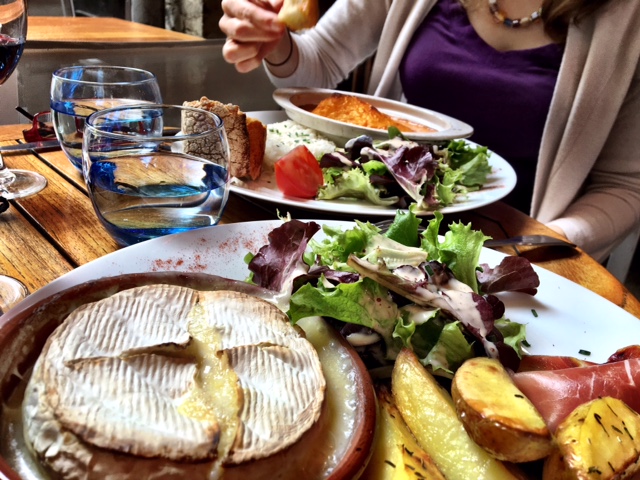
Regardless of our religious backgrounds or belief systems, we tend to take note not only of what the pope says and does, but what he wears, what kind of -mobile he’s driven around in — and what he eats. Thus “The Vatican Cookbook,” published in April by the Sophia Institute in Nashua, N.H., which has the compelling subtitle of “500 Years of Classic Recipes, Papal Tributes and Exclusive Images of Life and Art at the Vatican.” But this is as much a practical cookbook as it is a coffee-table book for the devout. There are more than 80 recipes, including favorites of the current pope, as well as his two most recent predecessors. Thus, there are dishes from Argentina (Pope Francis), Bavaria (Pope Benedict XVI) and Poland (Pope John Paul II).

So: pierogi and dulce de leche, homey recipes for Christmas cookies and minestrone, and bistro favorites such as a Parisian beefsteak and chocolate amaretto cake. Threaded through these recipes are glossy photographs of patron saints, the Pietà, the pasta stations, and sections devoted to the recent popes and the Pontifical Swiss Guard, the uniformed men who pledge to serve and protect the pope and who “present” the cookbook (today, we’re told, there are 110 of them). The book was written not by the Polish nuns who do the majority of cooking at the Vatican, but by David Geisser (a former chef who published two cookbooks before joining the guard), Erwin Niederberger and Daniel Anrig, all current or former members of the guard. There are a few “table prayers” here, but they’re included at the end, after a section devoted to “basic recipes” that includes pasta dough, pizza dough, polenta — and truffle risotto. Because, in Vatican City, truffle risotto is a basic recipe. In other words, it’s all kind of lovely, whether your devotion extends to God or to tiramisu, or maybe to both.

Thanks for Nothing, Confederates

If you guys had merely held a referendum on secession instead of shooting guns, we might find Christian support for a U Sexit strategy comparable to British believers’ support for Brexit (via Chris Gerhz):

Practising Christians are the most likely among faith communities in England to support the Eurosceptic ‘Brexit’ position.

Muslims, meanwile, are the most Europhile of all the religious groups, a new survey has found.

The findings came in the new Populus Hope Not Hate survey which throws light for the first time on what different religious groups feel about the EU referendum in June.

“All the questions suggest that professing Christians are currently more likely than average to take up Eurosceptic positions, with Muslims the most Europhile,” reports religious researcher Clive Field.

Terry Teachout explains why U Sexit may be necessary (thanks to Rod):

In a totally polarized political environment, persuasion is no longer possible: we believe what we believe, and nothing matters but class and power. We are well on the way to becoming a land of jerking knees.

Never before have I felt so strongly that Americans are talking past instead of to one another. It is, I fear, our future and our fate—which is why I have come to believe that I will live to see Red and Blue America negotiate a “soft disunion.” No, there won’t be a second civil war. I can’t imagine the citizens of Blue America waging a shooting war over much of anything, least of all continued union with people whom they disdain. (Red America is a different story.) But the gap that separates the two Americas has grown so deep and wide that I find it increasingly difficult to imagine their caring to function as a single nation for very much longer. If I’m right, then I expect that they will ultimately find a more or less polite way to stop doing so.

Isn’t polarization what happens when we place personal over national identity? But just try issuing yourself a passport that will get you past customs. Not even calling the church an embassy will work:

Leeman descends from global height in his Preface to mountain-top height in his Introduction. And here, one gets a sense of his concerns. “A fundamental assumption of…many democratic Westerners, is that local churches are one more voluntary organization.” (21) In contrast, claims Leeman, “The church is a kind of embassy, only it represents a kingdom of even greater political consequence to the nations and their governors. And this embassy represents a kingdom not from across geographic space but from across eschatological time.” (22)

Isn’t that treasonous?

Every Member Ministry Means No Christian Soldiers

Only a few neo-Confederates and Covenanters may disagree, but most Reformed Protestants assume that men ordained to the ministry of the word may not serve in capacities that involve the use of the physical sword (police, military, and even civil magistrate). The logic goes something like this:

Civil magistrates may not assume to themselves the administration of the Word and sacraments; or the power of the keys of the kingdom of heaven; or, in the least, interfere in matters of faith. (Confession of Faith, 23.3)

One could well suppose that if magistrates (who hold the civil sword) can’t have the keys of the kingdom, those who do have the power of the keys shall not assume the power of the civil magistrate. That fits with what the Form of Government says about ecclesiastical power:

All church power is wholly moral or spiritual. No church officers or judicatories possess any civil jurisdiction; they may not inflict any civil penalties nor may they seek the aid of the civil power in the exercise of their jurisdiction further than may be necessary for civil protection and security.(3.4)

So imagine what happens to this delicate balance between civil and ecclesiastical power when all of a sudden every Christian is a minister. How could we ever allow a minister to fight in a war, to operate under the authority of the Department of Defense, to bring criminals to justice?

Pope Francis may have the solution — to turn Christianity into a pacifist religion by opposing capital punishment and abandoning just war theory.

If Christians may not serve as soldiers or as executioners, then we need to revise assertions like this:

Public life is not just about politics but all the areas of human activity — thefamily, the workplace, shops and restaurants, leisure and the arts. It is the specific role of lay people to sanctify each and every environment of the world.

Sometimes “every” and “all” make you wish for dualism.

When Bathrooms Were Safe Spaces

Driving cross country and using rest stop facilities made me aware once again that just because a bathroom is male or female is no guarantee of comfort. What if another patron is attracted to men and finds me(eeeeEEEE!) particularly handsome? What am I supposed to do?

In fact, a recent piece in Christianity Today by a gay Wheaton College alum confirms those the plausibility of these questions:

By far the worst aspect of my college experience was the dorm’s group bathroom. At the beginning of the year, most shower stalls had two curtains. One hung past the entrance to the water spout, and the other hung a few feet farther out, past a small bench where we could put clothes and a towel. As the year progressed, some of the curtains would rip and fall down. I always tried to use an area with both curtains intact, because I feared falling into sin. Afraid of homosexual thoughts, I felt that I could not form close connections to the other men on my floor. Such a compulsive paradigm isolated me further from people who would have wanted to help.

So, well before the rise of transgender self-consciousness and legislators quarreling over access to bathrooms, men and women, boys and girls, have been sharing facilities with people whose sexual orientations make them uncomfortable. Truth be told, I even shared a suite of rooms in Divinity Hall (at Harvard) with the man who led the Gay-Lesbian Caucus. And I turned out okay (right?).

If we can share bathrooms with gays and lesbians, can’t we do the same with trans?

Predictable?

From our southern correspondent comes confirmation of an earlier prediction:

That –

The Assembly form a study committee on the issue of women serving in the ministry of the church (RAO 9-1; 9-3). The Assembly authorizes the Moderator to appoint the study committee. The study committee should be made up of competent men and women representing the diversity of opinions within the PCA (RAO 9-1; Robert’s Rules of Order [11th edition], §13, pp. 174-175, §50, pp.495- 496, §50, pp. 497-498 §56, p. 579]).

The committee should give particular attention to the issues of:

The biblical basis, theology, history, nature, and authority of ordination;

The biblical nature and function of the office of deacon;

Clarification on the ordination or commissioning of deacons/deaconesses;

Should the findings of the study committee warrant BCO changes, the study committee will propose such changes for the General Assembly to consider.

The committee will have a budget of $15,000 that is funded by designated donations to the AC from churches and individuals (RAO 9-2).

A Pastoral Letter to be proposed by the ad interim study committee and approved by the General Assembly be sent to all churches, encouraging them to (1) promote the practice of women in ministry, (2) appoint women to serve alongside elders and deacons in the pastoral work of the church, and (3) hire women on church staff in appropriate ministries.

Grounds: The Cooperative Ministries Committee may not make recommendations directly to the General Assembly but must do so through an appropriate committee or agency (RAO 7-3 c; 7-6). The CMC has had a subcommittee on the role of women and has sent several recommendations to the AC (including a proposal for a study committee on the issue women serving in the church) and CDM to bring to the Assembly.

The former moderator of the PCA GA, Michael Ross, likely approves of this proposal:

The third reason is close to Ross’ heart, since it relates to the theme for this General Assembly, “Generations in Community.” A champion of church revitalization, he recognizes understandable tension and unrest within the PCA – as with most denominations – between older and younger generations.

“In biblical terms 40 years is a generation, and it’s normal to hear younger people saying, ‘This isn’t 1972 anymore,’” he explained. “As moderator, it’s important to have the ear of both the older and younger groups, so everybody has a voice and can be well-heard.”

Past General Assemblies have dealt with a variety of controversial issues, and although Ross does not expect “any landmines this year … there are always overtures that come up.” As for the PCA as a whole, Ross commented, “I tend to be optimistic about where we are and where we’re headed.”

When he entered the pastorate, the PCA was “either all-white suburbanites or in little towns. Now we’re coast-to-coast, much more ethnically diverse, and there is a strong PCA presence in large urban areas.

“Our seminary and college are doing well, as is the women’s ministry. The women and men in the PCA work together very well, which is not typical of many denominations. But we also are in a time of transition. It’s time for change, and change is always scary.”

But as I asked before, isn’t racism different from egalitarianism?

To be clear, racism is arguably different from excluding women from church office. Furthermore, the consequences of racism have been far more consequential than barring women from special ecclesiastical office (though I know some feminists disagree). But the question is whether the PCA’s condemnation of racism leaves wiggle room for distinguishing racial equality from equality of the sexes. (Have we all forgotten the CRC‘s arguments for ordaining women?)

In fact, the power of egalitarianism is so strong you have to wonder if the PCA will have the wits in a decade to avoid repenting not merely for tolerating financial inequality among its members but even advocating it. After all, once you start down the road of equality, doesn’t history suggest your brake fluid runs dry?

See?

Evidence of Calvinism’s superiority to Lutheranism:

Although it is very capitalist, Switzerland boasts many of the advantages that socialist Scandinavian states are supposed to claim exclusively. Switzerland’s unemployment rate is just 4.5 percent, which is one of the lowest rates in the world. The country’s poverty rate is similarly low (XLS). Those who immigrate to Switzerland have an average employment rate of 76 percent, which is much higher than the European average of 62 percent.

Furthermore, the Swiss educational system is ranked third in the world by the OECD. Only Korea and Japan are ranked higher, which means Switzerland’s educational system is the best in the Western world. Many claim this distinction belongs to Finland, but Finnish schools are in fact ranked 10/37 in math and 4/37 in reading.

Additionally, income inequality and debt are both quite low in Switzerland. This reality persists although Switzerland’s wealthy have the lowest tax burden in the world; the richest decile in the country pays only 20.9 percent of the country’s taxes. Remarkably, even though the tax burden on the wealthy is minimal, Switzerland’s national debt as a percentage of its gross domestic product is lower than Finland’s, Sweden’s, and Denmark’s.

Switzerland is the closest to “paradise” of any European country, yet it remains one of the most capitalist economies on Earth. Its success is a powerful antidote to socialist claims about the benefits of progressive taxation, and all but destroys the assumption that Scandinavia as a bastion of socialism shows that only collectivism can produce success.

This is a test of the Emergency Paleo-Calvinist System. If this had been an actual case of boosterism, you would have been instructed to read Ecclesiastes. This concludes this test of the Emergency Paleo-Calvinist System.

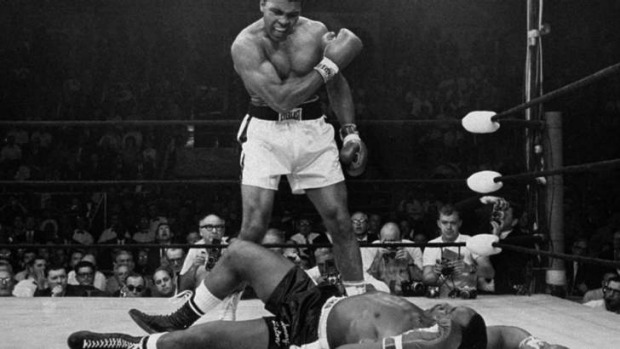
What If Muhammad Ali Ran for President?

As I listen to journalists and sports-talk radio hosts talk about the greatest fighter of all time, I keep thinking I understand the appeal of Donald Trump.

Just look at some of these juicy quotes:

Clay was 18: bounding, fearless, leading with his mouth.

“I’m not only a fighter. I’m a poet; I’m a prophet; I’m the resurrector; I’m the savior of the boxing world. If it wasn’t for me, the game would be dead,” he said.

Young Clay made boxing an art form. He was an original, a heavyweight who didn’t move around the ring — he danced. He’d thrill the crowd with his quick scissor-step shuffle. On defense, he’d slip and slide, Dundee said, and then flick that jab.

“He had a jab that was like a snake,” he said.

Float like a butterfly, sting like a bee; rumble, young man, rumble. Boxing reporters never had so much fun.

So Ali, though seemingly a good guy on numerous fronts, was a tad egotistical. Did that cost him with the media?

And then he could be pretty divisive:

After the Liston fight, Ali revealed he was a member of the black separatist movement Nation of Islam. He wanted to be called Muhammad Ali, a name he said was given to him by the group’s leader, Elijah Muhammad.

“That’s my original name; that’s a black man name,” Ali said. “Cassius Clay was my slave name. I’m no longer a slave.”

Muhammad, the Nation of Islam leader, preached that integration and intermarriage were wrong and that white people were devils. It was an idea Ali defended in a 1971 TV interview.

“I’m gonna look at two or three white people who’re trying to do right and don’t see the other million trying to kill me? I’m not that big of a fool, and I’m not going to deny it,” he said. “I believe everything he [Muhammad] teach, and if the white people of a country are not the devil, then they should prove they’re not the devil.”

Ali became a polarizing figure in America.

Again, did that cost Ali his reputation?

So I wander as I wonder.

A Gospel for the King Penguin

This is how providence works. The same morning that I finish an article by Jonathan Franzen on his trip to Antarctica (and birding), I finish an interview that Ken Myers did with Norman Wirzba. The latter is trying to help Christians think wholistically about creation and has written a book about (in part) about the language we use. If we call the world out there “creation” instead of “nature,” will we think about it differently, more in relation to the creator? And then, what happens if we remember that Jesus is not merely savior but also creator? Doesn’t that invite thinking of Jesus as savior of creation? At one point, Wirzba even spoke of a gospel for non-human creatures.

That’s when the jaws clenched and the pace (of the constitutional) quickened. I understand the appeal of thinking about creation in broader terms so that Christians might care about the environment. Heck, I’ve read and still admire Wendell Berry and believe that I should try to live in a way that shows some respect for the created order. But that prevents me from venerating or sacralizing it, the classic way that pietists try to make something more important or permanent than it really is. If we can turn a cause into something holy or sacred or redemptive, then we must support it. If it is great instead of merely good, then not to support it is wrong, wicked, undesirable.

Here’s where Franzen came in as the conversation partner Myers and Wirzba need to have. The birds he adores, king penguins, survive by eating krill:

Krill are pinkie-size, pinkie-colored crustaceans. Estimating the total amount of them in the Antarctic is difficult, but a frequently cited figure, five hundred million metric tons, could make the species the world’s largest repository of animal biomass. Unfortunately for penguins, many countries consider krill good eating, both for humans (the taste is said to be acquirable) and especially for farm fish and livestock. Currently, the total reported annual take of krill is less than half a million tons, with Norway leading the list of harvesters. China, however, has announced its intention to increase its harvest to as much as two million tons a year, and has begun building the ships needed to do it. As the chairman of China’s National Agricultural Development Group has explained, “Krill provides very good quality protein that can be processed into food and medicine. The Antarctic is a treasure house for all human beings, and China should go there and share.”

So what would Wirzba propose as the gospel for krill? How does Jesus or his followers “save” krill?

One way that Franzen suggests is by humans being less fertile (which poses a few problems for Christians — Roman and Protestant — who believe the chief function of marriage is reproduction):

It’s true that the most effective single action that most human beings can take, not only to combat climate change but to preserve a world of biodiversity, is to not have children. It may also be true that nothing can stop the logic of human priority: if people want meat and there are krill for the taking, krill will be taken. It may even be true that penguins, in their resemblance to children, offer the most promising bridge to a better way of thinking about species endangered by the human logic: They, too, are our children. They, too, deserve our care.

And yet to imagine a world without young people is to imagine living on a Lindblad ship forever. My godmother had had a life like that, after her only child was killed. I remember the half-mad smile with which she once confided to me the dollar value of her Wedgwood china. But Fran had been nutty even before Gail died; she’d been obsessed with a biological replica of herself. Life is precarious, and you can crush it by holding on too tightly, or you can love it the way my godfather did. Walt lost his daughter, his war buddies, his wife, and my mother, but he never stopped improvising. I see him at a piano in South Florida, flashing his big smile while he banged out old show tunes and the widows at his complex danced. Even in a world of dying, new loves continue to be born.

The article makes perfect sense of the references to Franzen’s uncle here, a person who left the author enough money to splurge on a cruise to the South Pole and endure a long trip with very few young people (as the slide show on the last night of the cruise revealed).

The article also makes sense of a tragic dimension to creation that Wirzba’s inspiration neglects altogether. What if Darwin was right? What if nature is red in tooth and claw? And what if God created and sustained the world to run that way, not in a theistic evolution way, but in a way where critters survive on other critters? Even in a vegetarian world, plants die, humans cut down trees for warmth, and carnivores still eat critters. A gospel of creation does not fix that fundamental problem of survival. Granted, I’ve not read Wirzba’s books (reviews are here and here). But once again I am struck by the way people in the name of Christ blur fundamental distinctions (ecclesiastical-civil, sacred-secular, human-natural, redemption-creation) seemingly to transcend the very creatureliness they recommend.

Did Memorial Day Give Us the Confederate Flag?

What’s the difference between Memorial Day and Veterans Day? The straight answer is that the former commemorates soldiers who died in battle, the latter honors all soldiers (even Bowe Bergdahl?). The funny answer is we get Memorial Day off as part of a three-day weekend to kick-off summer. On Veterans day we work in preparation for Thanksgiving and the big holiday season (some call Advent).

The difficult answer is that Memorial Day started to remember soldiers who died in the Civil War, Veterans Day for troops in The Great (Pretty Good?) War. Now, just like with three-day weekends for Presidents, Labor, and Columbus, we lump all soldiers into holidays that originally referred to specific wars.

You have to wonder if this is the best way to remember veterans or deceased soldiers when you get one day for all of those soldiers. David Rieff has a new book out arguing that remembering the past can actually be harmful:

What I’m saying is, there are examples—not a few, but quite a number of examples—where remembering, far from leading to truth, justice, and reconciliation, has led to more war. Three obvious examples of that are the Balkans in the 1990s, where I was a correspondent; Northern Ireland, for 30 years and, some people would say, for 800 years; and the Middle East. And in all three of those cases it seems to me that invoking history, invoking the wounds of the past, the crimes of the past, the conflict of the past, has led to more bloodshed.

In the case of the United States, our memories of the past don’t necessarily lead to bloodshed, but they do make us uncomfortable. Memories of slavery and segregation put whites and blacks in awkward relations that leave persons with no experience of owning slaves or Jim Crow feeling the legacy of racism should all inform interactions between whites and black, from chance encounters on the subway to public school hiring practices.

But how much is our own government to blame for the way some southerners keep the memory of the Confederacy alive? Memorial Day originally was all about remembering the Civil War, with blacks, Yankees, and Southerners all vying to honor their side:

COLUMBUS, Ga. — Right on either side of Alabama, there are two places with the same name.

Like the one over in Mississippi, this Columbus was founded in the 1820s and sits just a few minutes from countryside in almost any way you drive.

Residents say it was here, in the years after the Civil War, that Memorial Day was born.

They say that in the other Columbus, too.

It does not take much for the historically curious in either town — like Richard Gardiner, a professor of teacher education at Columbus State University here — to explain why theirs is the true originator of a revered American holiday and why the other is well-meaning but simply misguided. . . .

Waterloo, N.Y., was designated the official birthplace of Memorial Day by presidential proclamation in 1966, and indeed, beginning in May 1866, Waterloo held an annual townwide commemoration.

But women in Boalsburg, Pa., which has a claim as the holiday’s birthplace, began decorating graves each year as early as October 1864. In and around Carbondale, Ill., according to the Jackson County Historical Society, there are two markers making such an assertion in two different cemeteries. James H. Ryan, a retired Army colonel, has descended into the Logan archives and come out with a strong case for the town where he lives, Petersburg, Va.

This — readers, please take note — is just a partial and by no means definitive list.

But the claims of the two Columbuses, eyeing each other across Alabama, are among the more nuanced and possibly the most intertwined.

Maybe the solution is Rieff’s distinction between memory and history:

History is really about the past. There’s the great English novelist L.P. Hartley, who wrote a book called The Go-Between. And the first line of that book is “The past is another country. They do things differently there.” History is about the difference between the past and the present. Memory is about using the past for the purposes of the present, or for some group in the present. History is critical history … Memory serves the present. History is the material out of which this collective memory is made. But collective memory, commemoration, is not history. If it is history, it’s so simplified and reduced to be, as I say, to be closer to myth than to history in any usable sense.

That distinction may explain why this Old Life historian gets the last Monday of May 2016 off from research to do yard work.

Is Conservatism Liberal?

For political conservatives, the answer is “sort of” since movement conservatives since the 1950s have generally understood themselves as classical liberals — in favor of markets, representative government, and constitutional separation of powers (including church and state). Modern political liberalism (i.e. New Deal) saw problems of economic inequality, the nature of large-scale war, and foreign diplomacy that classical liberalism could not answer beyond standing up and yelling “stop.” So modern liberals tried to update classical liberalism and ever since we have the leading wedge dividing red and blue states.

But when it comes to theology, how do conservatives fare? Richard Weaver is the fellow who will ever be associated with the conservative conviction, “ideas have consequences,” a phrase that the University of Chicago Press applied to Weaver’s 1948 book which in turn became a classic for intellectual or traditionalist conservatives (which overlaps with movement conservatism at least in the figure of William F. Buckley, Jr. and his circle). According to a recent post, Weaver was a believer in the ancient virtue of “piety”:

… the Christian ideal and Plato­nism produced in Weaver’s conservatism the final key concept of piety, which Weaver described as “one of the oldest and deepest human attitudes.” “I would define piety,” he wrote, “as an attitude of rever­ence or acceptance toward some overruling order or some deeply founded institution which the mere individual is not to tamper with.” Or to put the proposition somewhat differently: “Piety comes to us as a warning voice that we must think as mortals, that it is not for us either to know all or to con­trol all. It is a recognition of our own limitations and a cheerful acceptance of the contingency of nature, which gives us the protective virtue of humility.”

The source of his piety (other than Plato) was the fall (a version of it):

As Weaver explained, “The recovery [of a sense of piety] has brought a satisfaction which cannot be matched, as far as my ex­perience goes, by anything that liberalism and scientism have to offer.” Weaver con­tended there was a “structure of reality” called creation. Man was not the Creator; he was not self-produced. Man is the crea­ture; therefore, he is limited in his poten­tial. Confronted with choices between evil and good, man frequently chooses evil with its accompanying anguish, and this condi­tion is compounded by that ever-present matter of tragedy. In view of these impos­ing realities, would not wisdom and prudence dictate that man ought to be modest, restrained, and humble—in a word, pious? Should he not stand in reverence and awe before this miracle called life?

To compare this sense of limitation and reverence and awe for finite existence to the Shorter Catechism may be unfair. But why wouldn’t the question of this human tragedy lead to a sense of despair, like the string of questions that explain the significance of human sinfulness:

Q. 17. Into what estate did the fall bring mankind?
A. The fall brought mankind into an estate of sin and misery.

Q. 18. Wherein consists the sinfulness of that estate whereinto man fell?
A. The sinfulness of that estate whereinto man fell consists in the guilt of Adam’s first sin, the want of original righteousness, and the corruption of his whole nature, which is commonly called original sin; together with all actual transgressions which proceed from it.

Q. 19. What is the misery of that estate whereinto man fell?
A. All mankind by their fall lost communion with God, are under his wrath and curse, and so made liable to all miseries in this life, to death itself, and to the pains of hell forever.

Q. 20. Did God leave all mankind to perish in the estate of sin and misery?
A. God having, out of his mere good pleasure, from all eternity, elected some to everlasting life, did enter into a covenant of grace, to deliver them out of the estate of sin and misery, and to bring them into an estate of salvation by a redeemer.

Not to be misunderstood. Any conservative or Christian it seems to (all about) me should welcome a recognition by another human being that we are not gods, that we can’t control the world, and that it is a conceit of monumental calamity to think that humans have any power to remedy or redeem our circumstances. But for conservatives to call this awareness “piety” is to invite all sorts of confusion about the real piety that looks at sin as abhorrent and hopes for a miraculous intervention to save sinners by the only true God.

If conservatives want to be the true friends of religion who mock secularists for dismissing faith, they will need to own religion. It can’t simply be a wave of the hand at “higher things” or faith-based humanism. It needs to be the real deal. And that could well involve choosing between Plato and Moses, between Richard Weaver and Fulton Sheen, or between Whitaker Chambers and Cornelius Van Til.