Roman Catholic 2k

David Schindler and Peter Leithart would likely disapprove:

If a Catholic makes a speech or writes an article attacking the principles and the methods of say, the Lutherans, that act would not necessarily stir up religious strife dangerous to the public peace. But if a Catholic seeks to penalize a Lutheran because of his Lutheranism through political or legal discriminations; still more, if he seeks the support of others in an organized manner to accomplish those ends, then he is attacking religious liberty in the social, or political sphere, which is the common meeting place of all Americans as citizens. . . .

I know that the dictionary definitions of bigotry are to the general effect that it is “an obstinate and intolerant attachment to a cause or creed.” But unless obstinate and intolerant attachment to a cause or creed becomes active opposition to some other cause or creed it is non-existent so far as the general peace of society is concerned. I may be obstinate and intolerant in my private and personal attachment to the Catholic Church (of which I am a member), yet if I invariably treat with my agnostic, and Protestant, and Jewish, and atheist neighbors, in all that concerns our common relations in society — in business, politic, and all cooperative matters — without reference or relation to their beliefs or behavior in religious matters, while I may be potentially a bigot, certainly I do not, so to speak, commit bigotry. If all of us so behave, there can be no bigotry in action. But notoriously, all of us do not so behave, although such behavior is the practical ideal of the nation of the United States of America. (Michael Williams, The Shadow of the Pope, 1932)

So when Roman Catholics or Neo-Calvinists call for “all of me” comprehensive Christianity, do they destroy any possibility of a common realm shared by all sorts of believers and non-believers? And do these “all of me” Christians believe that if I am getting along with people who do have the same “all” in “all of their identity” I am guilty of bad faith?

Forgiving a Scapegoat?

Alan Noble raised the bar pretty high — as high as church membership mind you — when he explained why evangelicals should be never Trump:

In response to these profound violations of human decency, he scoffs, changes the subject, denies he even said it, or doubles down. As he has said, he does not ask God for forgiveness, because he doesn’t believe he needs it.

That insight into Trump’s perception of his own soul should tell evangelicals all they need to know about him as a leader. Any man who is so unaware of his own depravity that he cannot recognize his need for forgiveness is incapable of justly leading any country. There simply is no way around this fact for evangelicals.

Has anyone asked Hillary Clinton of her need for forgiveness? At least, Noble should give equal time to both candidates. He might also want to consider the constitutional qualifications for holding the office of POTUS. No religious tests. So does Noble understand how much he sounds like a Jerry Falwell (Sr.)?

At least Roman Catholics are less driven by piety than by policy. Here are the items to worry about in a Clinton presidency (via her appointments to SCOTUS):

Religious Liberty: In the highly-publicized case of Burwell v. Hobby Lobby, the Supreme Court ruled that closely held for-profit companies like Hobby Lobby could be exempt from laws that violate its religious beliefs, in this case Obamacare’s contraception mandate. This was an enormous win for religious liberty, but it was only decided by a slim 5-4 margin. With a liberal majority, you can expect the Court to rule against companies like Hobby Lobby or non-profits like Little Sisters of the Poor. Religious corporations and organizations around the country would be forced to chose between violating their consciences or paying penalties that would likely put them out of business. If liberals have their way, say goodbye to many religious retailers, charities, bookstores, hospitals, medical centers, and so on.

Transgender Bathrooms: Thirteen states are currently suing the Obama administration over its directive to public schools mandating that transgender students be able to use the bathrooms and locker rooms of their choice without having to prove their gender identity. Perhaps no issue more directly impacts the lives of our children than this. A liberal Supreme Court will undoubtedly uphold the Obama administration’s rule and force states to comply. The consequences will be catastrophic. Don’t be so naive as to think boys won’t abuse these policies and force their way into female bathrooms and locker rooms. Parents and teachers won’t be able to stop them. And aside from sexual misconduct and assault, this policy could mean the end of men’s and women’s competitive athletics as we know it.

Second Amendment: Without a doubt, the Second Amendment would become a primary target of a liberal Supreme Court. In recent years, two landmark decisions protecting an individual’s right to own and bear arms – Heller v. District of Columbia and McDonald v. City of Chicago – were each decided by just one vote. (Are you noticing the 5-4 trend yet?) Given the opportunity, a liberal Court wouldn’t hesitate to overturn those decisions. We got a glimpse of this in June, when the notoriously liberal Ninth Circuit Court of Appeals ruled that the Second Amendment does not permit the public to carry concealed firearms. A liberal Supreme Court would certainly uphold this ruling and continue to hack away at the rest of the Second Amendment.

Abortion: It was an activist, liberal Supreme Court in 1973 that decided Roe v. Wade and legalized abortion. A liberal Supreme Court in 2017 will only reinforce and protect that decision. It will likely strike down majority-supported, common sense abortion laws that have been passed in the states, like late term and partial birth abortion restrictions and pain-capable legislation. Just this June, the Supreme Court invalidated the Texas law requiring basic health standards for abortion facilities, a law passed to prevent another Kermit Gosnell house of horrors from occurring.

But the best perspective on Trump and Clinton may come from those without a faith-based dog in the hunt:

But Trump is a monster! Yes, but given the right circumstance, so are you. His ugliness is simply more apparent than that of other managers of the state’s sacred violence. Let’s be frank here: though his speech is scarily vulgar, the violence he promises is already occurring.

Think his call to deport illegally undocumented workers is fascist? The Obama administration, garbed as it is with the shimmering rhetoric of victimhood, has already deported over 2,500,000 human beings—23 percent more than Bush.

How about his pledge to torture suspected terrorists? Clinton-Bush-Obama beat him to it. They just don’t talk about it like he does. And let’s not limit it to foreigners; Obama didn’t bat an eye as elderly tax protester Irwin Schiff died of cancer chained to a prison bed far away from his family for breaking the sacred taboo against being too stingy in sharing his resources with the collective.

How about the time Trump promised to target terrorists’ families? Obama, the great defender of Islam, already trumped that when he murdered people like U.S. citizen Anwar al-Awlaki’s 16-year-old son Abdulrahman, who hadn’t seen his father for two years. This teen and his friends were blown apart by the Nobel prize winner while having a campfire dinner, apparently for the sinful dreams of his father.

Actually, a faith-based perspective makes sense of Never Trump. He’s our Scapegoat:

In today’s Christ-haunted West, we no longer have complete unanimity in our identification of common enemies, but we still seek it in the sub-factions we continually form. Yet Donald Trump’s faction is not going to prevail in any lasting way: his sacred dogma is built on “Winners.” His brand is a throwback to Nietzsche, who was himself a kind of throwback to a still older “golden age,” a time when pagan religion celebrated history’s winners, who were deemed right because of their might.

Trump even viscerally looks the part of the old scapegoat kings who would be ceremonially paraded before being sacrificed: he is often mocked for having small hands and goofy orange hair; he eats profane food like McDonald’s; he loves gaudy decoration in an age of “shabby chic”; he calls himself a winner in a culture where people must offer faux humility to gain status. Trump, who has repeatedly said that were he not her father he would be dating his daughter, is even accused of breaking the age-old taboo against incestual lust.

In the ancient cultic world of our past pagan order, hierarchies of kings, priests, and elites often killed or excluded the odd, weak, infirm, disabled, ethnic minority, or child based on the cultural fact that they were intrinsically inferior and thus deserving of a worse lot in life. But since the crucifixion meme began dominating the West, our modern cultures are increasingly self-critical and haunted by victims. Jesus robbed us of our blindness to the unjust order of “might makes right,” but he didn’t create an alternative ideology to deny us choice. We still have to choose, to a person, to model forgiveness and nonviolence as we seek to heal the victims most vulnerable to exploitation. But we’re stubborn in doing this work, and so we try to create cathartic peace and order through scapegoating—this time in the name of victims.

Integration and Separatism

I’m behind on podcasts at Reformed Forum and Proto-Protestant nudged me to listen to Camden Bucey’s discussion with Alan Strange about the spirituality of the church. I was not surprised to learn that Alan (and Camden) have concerns about aspects of the spirituality of the church as articulated by contemporary 2k folks like David VanDrunen, John Muether, and mmmmmeeeeeeEEEEE. I was surprised, though, to hear the word “integration” used as much as Alan voiced it during the hour-long recording. Alan wants to affirm the spirituality of the church and on this we agree — the church can’t take a stand on say the War between the States. But he also wants some measure of integration between the church’s witness and civil authority and seems to think that the Scottish Presbyterians are a good model of such engagement.

I am not sure that I would put my disagreements as starkly as Proto-Protestant does:

His final appeal to Acts 17 struck me as patronising and pedantic if not silly. Of course we preach the Word. Does any Two Kingdom adherent deny that? We call all men to repent. That’s a far cry from arguing for the Sacralisation of culture and the state, let alone taking covenant law and ‘integrating’ it with the temporal non-holy order. There is no Biblical precedent for his view in either the Old or New Testaments and he assumes categories completely outside anything found in the Apostolic writings. Instead what he suggests is that natural fallen man can be compelled to ‘keep’ God’s commandments and work together with the Spirit to build the Kingdom of God on Earth in the form of institutions and culture.

Calvin’s comments on the state are wrong. He misinterprets Romans 13 let alone Christ’s words concerning Caesar in Matthew 22. The state is not holy or redemptive. It is temporary and yet serves a ‘ministerial’ purpose. That’s true with Assyria, Persia and in the New Testament context, the Roman Empire under Nero. The Reformed tradition got this desperately wrong and sadly their view has become the Evangelical standard.

It is a caricature to suggest that 2k folks don’t think the church can preach about abortion or same-sex marriage. The Bible forbids the taking of innocent life and has no grounds for marriage between two men or two women. But just because the church preaches against idolatry doesn’t mean that the OPC, for instance, opposes Roman Catholics or Muslims living and worshiping in the United States. Morality is one thing. Civil legislation and public policy are another. And if Hodge was correct that the Presbyterian Church could not back the federal government during the beginning of the Civil War (as Gardiner Spring proposed) even if the Bible requires subjection to the powers that be, is it really that far to go to say that the church cannot endorse a politician or legislative initiative even though the church affirms the morality for which said politician might stand?

But here’s the aspect of this discussion that caught my ear. What does it mean for the church to be integrated with the state? At first, I thought of the Roman Catholic position on integralism. Here’s how one Roman Catholic blogger describes it:

Contrary to popular belief, Catholic integralism—or what I shall refer to simply as “integralism” for the duration of this essay—is not first and foremost a political program. For the integral understanding of Christianity begins first with the supernatural society established by our Lord and Savior Jesus Christ, namely the Corpus Mysticum, the Holy Catholic Church, which transcends the temporal sphere and has for its end the salvation of souls. By carrying out its mission in the world, the Catholic Church possesses indirect power over the temporal sphere which is exercised for the good of souls. This indirect power in no way sullies the Church’s divine mission nor dilutes it by way of overextension since the civil authority retains at all times direct power over temporal matters.

Of course, Alan does not endorse this or even Erastianism. But integration is too close to integralism for that word to work for Protestants (in my book).

As matters now stand, churches in the United States are related (integrated?) to the civil government but obviously not in the way that the Church of Scotland is to the United Kingdom. The latter is likely somewhere in the constitutional provisions for religion in the realm. In the United States churches relate to the federal and state governments as tax exempt institutions. That means that churches don’t pay taxes and that contributions to churches can be deducted by individual tax payers. That’s not a recognition of Jesus Christ as Lord. It means the OPC is no better or worse than Rotary (another 501c3 organization). But it is a relationship between church and state at which Christians should not sneeze.

And mind you, the church and Christians in the U.S. fair better than Christians during the Roman Empire. What kind of integration to Paul or Peter experience? Did they have a tax-exempt status?

If we want more overt forms of integration, though, what might that involve? If the United States is going to give legal preferences to Christians, does that include Protestants and Roman Catholics, Calvinists and Arminians, Lutherans and Wesleyans? It’s not a foolish question since even the venerable Puritans (who did believe in the spirituality of the church) wouldn’t let Baptists or Lutherans in Massachusetts Bay. Then again, if we want religious freedom for believers (as many seem to since gay marriage went on-line), then where does the good form of religion to free stop and become the bad kind of faith? In other words, isn’t the system we have for church state relations the best we can do without an established religion/church?

But let’s complicate the idea of integration even more. Churches are integrated in the federal government through the military chaplaincy program. But boy oh boy does that look like a disagreeable relationship. In the Armed Services, Orthodox Presbyterian chaplains minister God’s word cheek-by-jowl with female Lutherans and male Wiccans. Of course, if that sounds provocative, it should. If Orthodox Presbyterians insisted on being separate from modernist Presbyterians in the PCUSA, and if those same OP’s remained separate from Arminians in the National Association of Evangelicals, why wouldn’t Orthodox Presbyterians be comfortable now with separatism rather than integration? I mean, if you have the stomach for being separate from other Protestants, surely you can fathom separation (rather than integration) from the federal authorities.

I understand that Alan Strange wants to prevent Presbyterians from being Anabaptists. But 2kers are not separate from the government because civil authority is a corruption of Jesus’ rule. 2kers advocate separation of church and state because politics is only good but not holy. Magistrates maintain public order. They don’t minister salvation. The one is good. The other is great.


Fishermen Need Not Apply

Does the path to sanctification (or virtue) really lie in a liberal education?

Liberal education, according to Blessed Cardinal Newman, is primarily formation of the mind enabling it to seek, know, and contemplate truth, which is the good of the intellect and which prepares us to know fully and love fully the One who is the truth. But I do not think education of the mind is sufficient. Just as a specialist education in one field or skill should not come before a generalist and integrative education in the principles and mindset of all fields, education of the mind alone or as foremost is imbalanced, and can lead to extreme deformations in the soul, such as hyper intellectualism, an inability to act decisively, and a lack of emotional intelligence and integration. In addition to the mind, there must also be an education of the body in endurance and long-suffering, the imagination in beauty, and the will in the good. All this is to say that a proper education is an education of the whole person, but the person is neither his intellect, his will, his imagination, his memory, nor his body. He is, rather, his heart. And the heart is what WCC educates best.

Why is the heart so important? In a word, God. God makes His presence known in our hearts, and we see God with our heart, not our eyes, and not even our intellects. But the synthesis of all our powers at the very core of our being. The heart is supernaturally educated by grace, the sacraments, the life of Christian charity, and the teachings of the Catholic Church, but the heart needs a robust natural education in order for the supernatural formation to take root and bear fruit. How can the heart be educated? Only by a “curriculum of the heart,” one that forms and perfects all our powers in different disciplines: humanities, the moral imagination; the fine arts, the aesthetic sense; the outdoors, the will, the senses, and our character; math and science, our powers of observation and interpretation; philosophy, our critical and questioning powers, our dialectical mind; and theology, our contemplative essence.

Imagine if Peter and Paul had had to go to college before attending seminary with their Lord. Jesus would be dead and they’d be rising seniors.

Or maybe, just maybe, word, sacrament, and prayer work independently of philosophy and literature. Nothing wrong with education and in Protestant circles, literacy was pretty important for participating in the worship service — hymn singing and all. But education will not save us. If we know that in politics, why not (Christian) religion?

Confused but Not Dazed

Father Dwight has counsel for discouraged Roman Catholics:

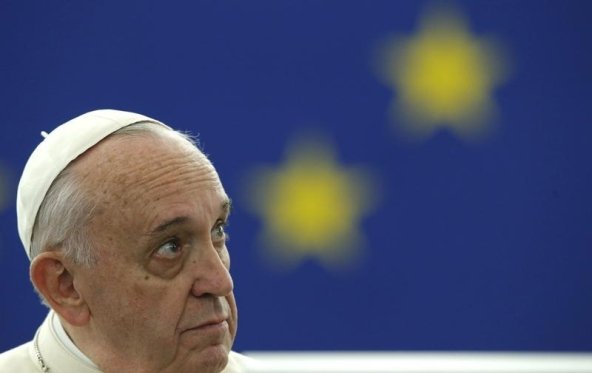
4. Regarding Pope Francis – Many conservative Catholics are troubled by Pope Francis. They think he is a textbook 1970s liberal. He’s not. Take time to understand his context and background from Argentina. Read this post to put things into perspective. Get to know the man and pray for him. It is ok to disagree with him and question his judgement. He’s not infallible all the time you know, but you can do so with an open heart and a desire to understand and be with him and learn from him. What’s the alternative? You set yourself up as the judge of the Holy Father? Hmmm. There’s not much mileage in that now is there?

Once upon a time the western church had councils because Rome had three popes.

Also, it’s a free country, right? So separated siblinghood is an alternative. But being Roman Catholic means you have to accept whatever the bishops do? Fr. Dwight might make sense in a pay-pray-obey environment. But the world of immigrant parishes is long gone. Root-root-root for the Fightin’ Irish.

5. Regarding Cafeteria Catholics – Are you maddened by so called “devout Catholics” who openly endorse same sex marriage, women priests and are “pro choice”? Join the club. They annoy me too. Are you also annoyed by the bishops and priests who take the same view? I’m with you. However, remember that the Catholic Church is universal. We’re not a sect where everyone agrees. We’re inclusive and that’s why we’re Catholic. The Church has always had dissidents, rebels and downright bad Catholics. Have you ever read the Old Testament or taken a close look at the twelve apostles? The saints and sinners are all in together. The weeds and the wheat, the goat and the sheep are mixed. Jesus will sort it out one day, and stop for a moment and ask yourself, are you a perfect saint yet? I’m not. I’m still learning and growing and repenting. So I guess we must offer the mercy (and benefit of the doubt) to others that we would wish to receive.

Isn’t the church supposed to stand for the truth? And if observers of Pope Francis need context to understand him and his unwillingness to do something about dissent and error in the church, has not Fr. Dwight entered the cafeteria of choosing what he wants to believe? Why does he get to have perspective on the church’s problems that Pope Francis doesn’t because of his Argentinian background?

6. Regarding You and the Church – I’ve heard some Catholics grumble that the church has let them down. But what did you expect of the church in the first place? The church is divine, but she is also human. The church is a work in progress, an ark of wounded warriors, a tribe of troubled pilgrims, a family of lost children looking and longing for home. When you see the church like this, instead of hoping that the church will be the instant answer to all your problems you will be more content. Our role in the church is to be faithful, prayerful, hard working and stable in our love for Christ and his people.

But Roman Catholicism was supposed to be an upgrade, better than Protestantism. Isn’t that why Fr. Dwight left fundamentalism for Anglicanism and then left Anglicanism for Rome? So shouldn’t the standards for the bearer of the truth, the only true church, be higher? If converts knew that Rome was going to be as incoherent and liberal as the PCUSA or the Church of England, why leave Tim Keller? Or is it that this is godly mess and Protestants only have ungodly messes (and of course, having ONE mess is better than having many).

7. Regarding Priorities – The main thing is to stay close to Jesus and Mary. How do you do this? The Catechism says we experience Christ in five specific ways: 1) in the Sacred Scriptures 2) in the person of the priest 3) in the person of the poor 4) in the fellowship of believers 5) in the Eucharist. I can guarantee you, if you make these five things your priorities, then you will have a solid, sure and secure relationship with Jesus Christ. These five meeting places of Christ assume that your life is bathed in prayer and that you have as your main priority being with Jesus and Mary in these ways. If you get this right the other worries fall away.

Jesus is good and having his Spirit is really good. Mary is good but she is not exactly going to save. But is Fr. Dwight suggesting we can have Mary or Jesus apart from the Bishop of Rome?

Lots of sorting to do. Sure would be nice to have a hierarchy to do this for the faithful.

Beaver Cleaver Was Lost in His Trespasses and Sins

Trigger warning to self: you’ve engaged Carl Trueman critically before and it did not go well. So be careful, be very careful.

The reason for bringing up Dr. Trueman again, even if ever so gingerly, has to do with his recent evaluation of Rusty Reno’s new book about prospect for a Christian society. Trueman writes:

I simply am not convinced that change can be achieved on any significant scale. The causes of the modern malaise are complicated, and their solution must be equally elaborate. For example, as George Grant and David Schindler have shown, technology brings with it a different view of reality from that of traditional Christianity. This mindset is now deeply embedded in our world. The entertainment industry mediates much of what is taken for reality and grips the moral imagination of the masses. The globalized economy has transformed communities and community expectations in ways we have yet to fathom. To borrow that hackneyed but poetic phrase from Marx, all that is solid melts into air. Zygmunt Bauman’s argument, that we live in a time when even the most longstanding and reliable social structures are in permanent flux, seems to me compelling. It must be accounted for by any hope that depends upon the solidity of concepts or institutions from the past. How does one reform or recapture or rebuild that which has been robbed of solid existence?

I generally agree.

But where I push (not shove) back is with the idea that modernity alone has these problems. Ever since the fall, it seems to me, the possibilities of pursuing lives of holiness and passing on the faith have been hard. Just remember what Paul warned Timothy about the “last days”:

understand this, that in the last days there will come times of difficulty. 2 For people will be lovers of self, lovers of money, proud, arrogant, abusive, disobedient to their parents, ungrateful, unholy, 3 heartless, unappeasable, slanderous, without self-control, brutal, not loving good, 4 treacherous, reckless, swollen with conceit, lovers of pleasure rather than lovers of God, 5 having the appearance of godliness, but denying its power. Avoid such people. 6 For among them are those who creep into households and capture weak women, burdened with sins and led astray by various passions, 7 always learning and never able to arrive at a knowledge of the truth. (2 Tim 3:1-8)

Was Paul predicting a time when Marx, Freud, and Nietzsche would dominate understandings of human nature and the created order, or was he talking about life in the Roman Empire circa 60 AD? My understanding is that he was talking about life in the Mediterranean world then.

So why do Christians believe modernity is so much worse than any other time? Well, it sure seems that Roman Catholics have a certain nostalgia for the Christian society of medieval Europe, neo-Calvinists for the Christian society of the Kuyperian era of Dutch history, evangelicals in the U.S. for the First Pretty Good Awakening that of course led up to the Christian founding of the United States. Here Protestants want to recalculate critiques of modernity since Kuyper and George Whitefield both fall on the modern side of the divide between medieval and modern periods. In other words, Protestant critiques of modernity play into the hands of certain Roman Catholic apologetics (even if nostalgia for the flourishing of the Middle Ages seldom extends to the Crusades or the Inquisition).

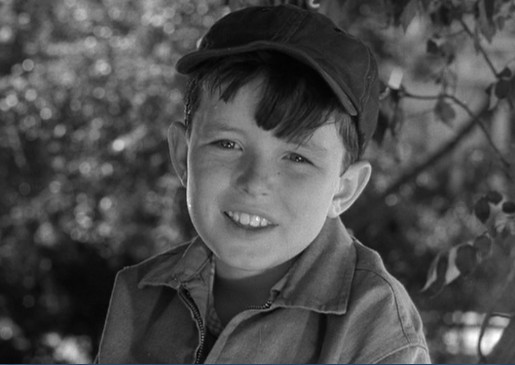
But surely anyone with eyes and ears has to admit that we are living in worse times than 1950s American when Ward and June Cleaver reared Wally and the Beave. I have eyes and ears. I will concede that the 2010s are worse than the 1950s, though I did live through 1968 and that was not a good time. But on a scale of fallen humanity, are modern or contemporary times really worse than what Noah lived through, or Lot, or Jeremiah, or our Lord himself? Doesn’t the fall mean we always live in desperate times?

The point here is not that people who believe in original sin should be relativists when it comes to assessing the way humans live together or proposing ways that are better for a common life together and for the proclamation of the gospel. But I think it is a mistake to cultivate the notion that human flourishing is possible whether by putting in place the right policies or institutions, or by thinking about the past a certain way. I know Dr. Trueman knows this. But it sounds like he thinks we are living through one of the worst times in human existence. No matter how pleasant and reassuring Beaver Cleaver’s America was, it was not the new heavens and new earth. When sin abounds, it’s not a good time. The Cleavers were certainly flourishing as we now count such living, but they were also drowning in sin (and never in church). Shouldn’t that perspective inform the way we view the West post-Foucault?

If You Think Universities are Too Western, You’re Right

Students at Seattle University, a Jesuit institution, have successfully forced a controversial dean to resign. Jodi Kelly, dean of the university’s Matteo Ricci College, drew fire from students when she used the n-word in an email to a student. That the word was also the title of a book by an African-American author didn’t matter to students:

in a discussion with a student who wanted to better understand the experiences of members of minority groups, Kelly suggested Nigger, the autobiography of Dick Gregory, the civil rights activist. Among those who defended Kelly on her recommending the book by name was Gregory himself, who wrote an essay for Inside Higher Ed about the debate at Seattle.

Even as attention on the N-word receded, the debate about Kelly and the college she led only grew. Kelly’s critics and supporters agree that she is a proponent of a rigorous humanities curriculum — such as that offered by the college — built around the Western classics. To the protesting students, that was a big part of the problem.

But universities are supposed to be Western. It’s what they do:

Universities are one of the few institutions that are a direct contribution of medieval Latin Christendom to contemporary Western civilization. Being an export wherever else they are found, they are also unique to Western culture. To be sure, all cultures have had their intellectuals: those men and women whose task it has been to learn, to know, and to teach. But only in Latin Christendom were scholars — the company of masters and students — gathered together into the universitas whose entire purpose was to develop and disseminate knowledge in a continuous and systematic fashion with little regard for the consequences of their activities. When professors and students today study and write about universities, they are therefore engaged in more than group therapy in the midst of troubled times for what is now ambiguously called “higher education.” They are analyzing an essential element in the culture that has come to dominate the entire globe. (James M. Kittelson, “The Durability of the Universities of Old Europe”)

In other words, if you want to speak truth to power, don’t go to university. If you do, you join the system of oppression.

What Must I Do To Be Married?

It used to be that Hebrews were the forerunners of the church. Just look at what Jesus says to his disciples on the road to Emmaus. Turns out Bible readers were wrong. It was the Stoics who prepared the way for Christianity:

The Stoics actually lived lives full of joy, peace, and meaning. Though bereft of God’s divine revelation in the Old and New Covenants, they stretched their God-given powers of reason to the limit, reaching many of the same conclusions that Christians came to regarding life, liberty, and love. . . .

How close were they to divine truth? Musonius Rufus is considered one of the first pro-life philosophers. He praised large families, extolled fidelity in marriage, argued against abortion and contraception, and connected the purpose of marriage to procreation and the unitive value between husband and wife. Quite astounding for someone who was born a few decades before Jesus Christ.

The Stoic philosophers were not interested in pie-in-the-sky theorizing. Rather, they focused on eminently practical topics like: should a child obey his parents? How should we dress ourselves? What is the meaning of pain and hardship? Must we learn what is good and follow it?

Nor were they interested in sin, damnation, sacrifice or expiation.

Kevin Devin Rose left Protestantism for this?

Punching Above His Weight

Another example of draping yourself in Calvin’s mantle on women but not on heretics:

This misquote actually drives directly at the heart — directly at the heart — of the current discussion of sexuality. When the dust settles on the Trinitarian debates, even if that time is years away, the church will still have to work out her theology of sexuality. In the Reformed world, Calvin’s own view will be one that carries weight.

And, Calvin thought sex meant something in civil society.

Serious Reformed men who differ from this view should be honest that their views are innovations explicitly rejected by our fathers in the faith.

What if our fathers in the faith put us at odds with the Founding Fathers? This weekend is a good time to consider.

A related consideration is recognizing it may be time to walk on our own in civil society and not rely on those Protestants who still held out for Constantinianism. Medieval Europe is not the standard for Christian reflection about civil society. The Bible is. And it’s hard to find Peter or Paul invoking Moses to correct Nero.

(And don’t even go to Calvin’s views on the Trinity. Nothing to see there.)

The Theology of Brexit

Massimo Faggioli reminds that Vatican II and the European Union are part of the same cultural moment:

The simultaneity of the Dublin conference and Brexit made me think about the tight relationship between development of Catholic theology (especially ecclesiology) in the 20th century and the development of Catholicism from multinational to truly internationalist/globalist. Catholic support for the European project after World War II (from Pius XII to the most important politicians of the Christian-Democratic parties governing Europe after 1945) was part of the transition from the nationalist, romantic roots of the theological ressourcement between the mid-19th century and the 1920s and ’30s. At Vatican II, Catholic theology internationalized what had been born as expressions of national movements during the previous century (adoption of the vernacular; the new role of national bishops’ conferences; anti- Curia sentiment; anti-capitalist, anti-democratic, and anti-liberal Catholic social movements, etc.). The internationalist quality of Pacem in terris and Gaudium et spes was a turning point in doctrine concerning the state and government in Catholic theology, and also a response to the most powerful internationalism of the second half of the century, Communism. At Vatican II, Catholicism became an advocate of globalization, which John XXIII had called in the opening speech of the council in 1962 “a new order of human relations.”

The ties between Vatican II and the EU are even closer in the minds of traditionalist Roman Catholics:

Brexit can be seen as a subset of the debate on Vatican II and the post-Vatican II period, at least among Catholics. It’s no secret that Catholics and the Catholic bishops of Britain were deeply divided over Brexit, and that for many conservative Catholics in Britain opposition to the EU and to Vatican II has similar roots. Traditionalist Catholics who today reject “the new order”—in terms of economic and social exclusion, as well as of the dominance of what Francis in Laudato si’ called “the technocratic paradigm”—tend to put Vatican II and the EU together in one category of internationalization and globalization; they choose a traditional, pre-global church and a nation-state (even though this fallback on the nation-state is for them theologically not unproblematic) as opposed to the larger framework of a globalized ecclesial context and a European political union. It is an opposition to a much more complex world, politically and theologically, and to the modern, globalized attitudes toward vulnerable life, marriage, family, subsidiarity, immigration, war, and peace. It is an opposition that puts back into question the Catholic perception of political power, and in particular the church’s perception of the sovereignty of the nation-state and of international/supranational institutions.

Meanwhile, Damon Linker notices aspects of Angela Merkel’s responsibility for the circumstances that led to Brexit that could also be applied to Pope Francis, perhaps the post-Vatican II pope that most embodies Vatican II:

Angela Merkel is the real catalyst behind the outcome of the UK referendum. Not only did the German chancellor insist on admitting well over a million refugees and migrants from the Greater Middle East into the heart of Europe. Supporters of the policy have also made it clear on numerous occasions that they consider racism and xenophobia to be the only possible grounds for opposing her stand.

From the standpoint of progressivism, this makes perfect sense. An open-door policy toward refugees and migrants fleeing unrest in the Levant and North Africa is obviously the only morally acceptable option. It shouldn’t matter whether those immigrants are Muslims, or if they’re Syrians or Libyans, skilled or unskilled, poor or middle class, literate or illiterate, eager to assimilate or convinced of the need to resist it, looking for freedom and pluralism or hoping to build an enclave of Sharia law within the West. And there’s certainly no reason to suspect that any of them might turn toward terrorism, now or a generation from now. They’re just placeless people — human beings in need of aid, comfort, and charity. That’s all that should matter.

Except that many millions of citizens in EU member countries don’t see it this way. It does matter to them, just as it also matters to them whether Turkey is eventually invited to join the union, and they don’t appreciate having their concerns about the ethnic, religious, linguistic, and economic character of their political communities dismissed as moral pathologies.

Nor do they care to have their religious institutions circumscribed by remote bishops and cardinals. Pre- or post-Vatican II, subsidiarity matters.