
Ecclesiastical Networkionalism

If you think about Congregationalists, Baptists, Methodists, Presbyterians, and Episcopalians as the church equivalent of PanAm Airlines and Sears & Robuck, you may have a point. Denominations have been in decline numerically for some time just like the blue chip businesses of the 1950s. Some of that is a function of the mainline’s problem with message — are they a church, an NGO, or a wing of the Democratic Party? Some of it is a function of conservatives perhaps being too zealous about what makes their denomination distinct — the OPC is the denomination Jesus founded!! But much of it comes from not understanding the point of being connected to other congregations and using those ties to organize larger ministry endeavors (e.g., evangelism, missions, education, ecumenism). A pastor in a small town may find that the congregation in which he ministers is sufficient to carry out its work, and that denominational expectations and funding is a restriction.

At the same time, the work of independent congregations has to be difficult. Where do you find trained pastors if yours retires? What about pension funds for pastors? What about supporting foreign missionaries? If someone proposes a joint-worship service among local churches, how does an independent church decide whether to participate? Denominational committees help with a lot of the activity that goes beyond a congregation. In other words, a local congregation has trouble functioning as its own denomination. This is especially true when it comes to planting churches. From where do you acquire the funds to support a like-minded ministry until it is self-sustaining?

Networks appear to be the current remedy. These are the new sources of venture capital (apparently) for church start ups. It seems to be a case of financing the church the way entrepreneurs find patrons for businesses in Silicon Valley.

Apostles Church (three separate congregations) in New York City seems to be an example of the new world of ecclesiastical entrepreneurship. One of its pastors, John Starke, used to write for The Gospel Coalition, and since these churches are in New York City, Ground Zero of urban ministry for urban ministries, you might think Apostles might be a partner with both the Gospel Coalition and Redeemer City-to-City. As it turns out two of the three Apostles’ congregations do show up as partners. But not with Apostles Downtown. That raises a question of how much the three Apostles congregations are in full partnership with each other. But since they are urban and in NYC, it seems odd that Redeemer is not a partner.

Instead, the churches have ties to these networks:

Send North America: Our strategy is simple and straightforward. We believe that the Church is God’s plan—you are God’s plan—to reach North America and the nations with the hope of the gospel.

As a part of the Southern Baptist Convention, the North American Mission Board is here to help local churches send the hope of the gospel across North America in two primary ways: compassion ministry and church planting.

Hope For New York: Our vision is a New York City in which all people experience spiritual, social, and economic flourishing through the demonstration of Christ’s love.

Our mission is to mobilize volunteer and financial resources to support non-profit organizations serving the poor and marginalized in New York City.

Sojourn Network: …by offering the pastors in our network a strong vision of planting, growing, and multiplying healthy churches and by providing them with thorough leadership assessment, funding for new churches and staff, coaching, training, renewal, and resources, we can best steward their gifts for the benefit and renewal of their local congregations.

Since 2011, our aim at Sojourn Network has been to provide the care and support necessary for our pastors to lead their churches with strength and joy – and to finish ministry well.

Of course, other networks have been around for a while. Willow Creek is now long in the tooth and struggles, I imagine, after revelations about its founder, Bill Hybels and guru, Gilbert Bilzikian. Acts 29 is also about as old as Redeemer NYC and its founder, Mark Driscoll, has had Trumpian moments.

But if someone wanted to plant a church, the prospects never appear to have been better. Lots of energy, money, and people are starting churches and finding funding outside the denominations, whether small or large. But what gives these networks an identity? Can you substitute Sojourn for Methodist, Acts 29 for Episcopalian, Redeemer City-to-City for Presbyterian? As tired or as broad as the older denominational names have become, they have direct reference to a specific historical moment and a distinct set of ideas and practices. What is a network other than a mechanism for funding churches and consoling psychologically damaged church planters?

Tim Keller once said of churches that:

promote cooperation between individuals and the kind of associational life that is necessary for human happiness and social success. Without informal shared trust, things are more litigious and combative. Life is much better when neighbors pull for each other, help each other, collaborate together. But this kind of “social capital” is very difficult to generate through public policy. Governments cannot duplicate the effect of religion as a source of shared values.

Well, don’t denominations create associations where networks create websites and podcasts? So why start a network when you are in a denomination? And why start a church planting network when you are in a denomination that has an agency devoted to church planting — called, Home Missions?

Yuval Levin recently wrote about the decline in institutional life in the United States. Some of this owes to businesses or political parties or churches where executives or officers abuse power and betray trust. But Levin adds a wrinkle. It is those people who use institutions to advance their para-institutional endeavors:

What stands out about our era in particular is a distinct kind of institutional dereliction — a failure even to attempt to form trustworthy people, and a tendency to think of institutions not as molds of character and behavior but as platforms for performance and prominence.

In one arena after another, we find people who should be insiders formed by institutions acting like outsiders performing on institutions. Many members of Congress now use their positions not to advance legislation but to express and act out the frustrations of their core constituencies. Rather than work through the institution, they use it as a stage to elevate themselves, raise their profiles and perform for the cameras in the reality show of our unceasing culture war.

President Trump clearly does the same thing. Rather than embodying the presidency and acting from within it, he sees it as the latest, highest stage for his lifelong one-man show. And he frequently uses it as he used some of the stages he commanded before he was elected: to complain about the government, as if he were not its chief executive.

The pattern is rampant in the professional world. Check in on Twitter right now, and you’ll find countless journalists, for instance, leveraging the hard-earned reputations of the institutions they work for to build their personal brands outside of those institutions’ structures of editing and verification — leaving the public unsure of just why professional reporters should be trusted. The same too often happens in the sciences, in law and in other professions meant to offer expertise.

Or consider the academy, which is valued for its emphasis on the pursuit of truth through learning and teaching but which now too often serves as a stage for political morality plays enacted precisely by abjuring both. Look at many prominent establishments of American religion and you’ll find institutions intended to change hearts and save souls frequently used instead as yet more stages for livid political theater — not so much forming those within as giving them an outlet.

Artists and athletes often behave this way too, using reputations earned within institutional frameworks as platforms for building a profile outside them. When he was inducted into the National Baseball Hall of Fame, the former Chicago Cubs second baseman Ryne Sandberg implored fellow players to remember “that learning how to bunt and hit-and-run and turning two is more important than knowing where to find the little red light on the dugout camera.” When vital institutions across American life fail to produce people who remember that, they become much harder to trust.

I cannot prove it but I have a pretty good sense that this is what is happening with networks in relation to denominations. We see pastors and denominational leaders working outside denominational structures in networks. They use their denominational standing to generate interest in an activity and alliance outside the denomination. This is not simply a function of the parachurch sort of replicating what the church does in forms of preaching- and teaching-like activities. This is supplying funding for congregational startups that could very well be part of a denomination’s church-planting effort.

Denominations are by no means above criticism. But how do you start a network even while you belong to a denomination? If the federal government had any regulatory power over religion, this would be high on the list of investigations.


And You Thought Presbyterian Polity Is Onerous

So many alliances and networks, so little church discipline:

The roots of the Sojourn Network go back to the early 2000s, where Sojourn was invited to join Acts 29, a diverse global family of church-planting churches. Mike Cosper and other members of Sojourn participated in boot camps and events, using this experience of brotherhood and curiosity to influence the development of the Sojourn Network.

With extreme diversity consisting of multi-city and multi-campus churches to conservative Presbyterian churches, Acts 29 was dealing with a lot of tension due to the different views on what it means to be a church and a real community. In efforts to relieve the tension, Acts 29 began the transition from regional affiliated networks to infinity affiliated networks.

Soon realizing that Sojourn was the only network who chose to make the change to an infinity network, Acts 29 inspired them to go out and start something new. It was an exciting time for everyone to see new networks growing and moving forward in new directions.

Wanting to put more resources to the church planting mission, Mike Cosper and Daniel Montgomery set out to find a leader with a passion to coach and mentor church planters. The ideal candidate had to be devoted to the local ministry while pioneering the network simultaneously. Finally, they discovered Brian Howard, a member of Acts 29 and a church planter in Southern California looking spend more time on church planting and working with planters.

After joining Sojourn, Brian not only served as a pastor, but he helped launch the East campus and the J Town campus, evolving the network’s vision. Dave Owens first joined the Sojourn Network in 2011 as Brian’s administrative assistant. Though his experience as an assistant was humbling and transforming, Dave knew his passion lied with planting churches and helping other planters.

Defining the vision
With several leadership transitions redefining the network’s mission, the Sojourn board of directors wanted to focus on crafting lasting values and a vision for the future.

Many church planters believe a network can only be a head or hands network, meaning the focus is either to take time to ensure beliefs are lined up or to just get it done. The Sojourn Network questioned this status quo and wanted to bring both soul and a healthy posture back to ministry. With this value, Sojourn became known as the place where church planters came to be healthy, quickly shifting the network’s grand visions of planting thousands of churches to simply helping church planters recover from spiritual warfare and disillusionment. Mike recognized many church planters were burnt out, working as both a pastor and a planter. Sojourn realized this was not a sustainable or healthy path. Knowing Sojourn would take a few years to take off, the members focused on holistic renewal to prepare church planters for multiplication, growth and outward energy, driving passion for church planting.

At this time, Sojourn started to look inward for inspiration to develop the vision and values. Sojourn ran the 930 art center, a diverse, artistic place from wood carving to videography to skateboarding. This culture around art, music and literature helped the network realize the ultimate goal is transforming communities and lives.

As God continued to send creative and artistic people to Sojourn, the network understood their culture flows from creative contextualization coupled with health and wholeness. Praying for the lord to lead the way, Sojourn found themselves defining a vision based on sustainable, healthy growth.

This may be the most challenging paragraph:

With extreme diversity consisting of multi-city and multi-campus churches to conservative Presbyterian churches, Acts 29 was dealing with a lot of tension due to the different views on what it means to be a church and a real community. In efforts to relieve the tension, Acts 29 began the transition from regional affiliated networks to infinity affiliated networks.

What is an affiliated network as opposed to an allied network?

What is an infinity network as opposed to a finite network?

What is wrong with Redeemer NYC that it has not solved the “extreme diversity consisting of multi-city and multi-campus churches to conservative Presbyterian churches”?

Acts 29?

Ordinary Posts from 2019 (and before)

A sampling:

You Don’t Have to Untuck Your Shirt (partially) to Follow the OPC

The Missional Church in Free Fall?

Presbyterian Sex

Transforming New York City was Always Going to be a Slog

When the PCA Might Actually Want to Follow the Southern Baptists

Those were the days.

Moderate Presbyterians, Irish or American

Seeing the looks on Ben Preston and Craig Lynn’s faces last week while recording a session on J. Gresham Machen, I worried not only that American indelicacy had run up against Irish sensitivities, but also that the Orthodox Presbyterian habit of being opinionated had offended the moderate sense of the Presbyterian Church of Ireland ministers.

As it happens, while waiting for a meeting with staff at Union College (Ireland’s equivalent of Princeton Theological Seminary), I found a copy of the Presbyterian Herald, the Irish equivalent of New Horizons. I read an article about church attendance that I am not sure could have been published in the OPC’s magazine. The author wrote this:

Christian ought to be encouraging of and encouraged by para-church organisations which seek to spread the gospel. Being committed to such enterprises, however, before the local church is idolatry, for God will not share the glory of his church with another (Isaiah 42:8).

Shazam!

Membership of and support for para-church organisations, whether mission agencies, evangelicist bands or cultural/religious institutions must all come after commitment to the local church and never before.

Imagine what American Protestantism would look like if The Gospel Coalition adopted that set of priorities.

Taking Every Fluid Ounce Captive

Churches have specific associations with bodies of water. This Lutheran Church Missouri Synod writer claims the Mississippi (but I wonder if Mark Twain would let him not to mention what Lutherans in Germany might think about rivers in the United States):

A lot of evangelicals are swimming these days. They’re slipping on their metaphorical fins and masks and churning their way across bodies of water to emerge on the other shore as members of a different faith community. Those that move from evangelicalism to Roman Catholicism are said to swim the Tiber; those that become Orthodox swim the Bosporus.

Reasons for their aquatic activities vary. Some like the art and architecture associated with the ancient faiths. Some like the ceremonial aspects–the liturgies, the veneration of icons, the Eucharist. Some like the history that oozes from Catholicism and Orthodoxy, a history that travels through great saints of yesteryear–through Augustine, Ambrose, Chrysostom, and Gregory of Nazianzus–but goes largely forgotten in contemporary evangelicalism. . . .

But evangelicals interested in “swimming” to a different tradition should consider traversing a body of water much closer to home: the Mississippi River, on which is located St. Louis, Missouri, and the headquarters of the premier conservative Lutheran church body in America, the Lutheran Church-Missouri Synod.

This raises at least one question: what body of water should Presbyterians identify with for their denominational affiliation?

American Presbyterians would likely claim the Delaware River since the first presbytery and General Assembly met in Philadelphia. But the Chesapeake might also apply since some of the earliest congregations settled by Ulster Presbyterians were in Maryland.

European Presbyterians, if the look to Geneva, probably invoke Lake Geneva.

The Scots likely think about the Firth of Forth (I was thinking it was a Fifth) given the estuary’s proximity to Edinburgh.

The Irish? They may have the hardest time attracting converts if crossing the North Sea is necessary for being a Presbyterian in Northern Ireland. I’m not sure swimming the Belfast Lough is any less challenging.

Still Protestanting

Heck, we were even kicking and bellyaching back in Rome’s post-Vatican II glory days (from the forum, “We Protest,” a series of reflections on the legacy of John Paul II in the October, 2005 issue of the Nicotine Theological Journal):

The Pastor with the Funny Hat

With the passing of John Paul II Protestants might be able to breathe a sigh of relief. For at least fifteen years, the papacy, through John Paul’s skillful handling of his responsibilities, has emerged as arguably the most prominent voice opposing the sins of modernity. As the veteran evangelical apologist, Norman Geisler, put it, John Paul stood up to the three main foes of evangelicalism, namely, “relativism, pluralism, and naturalism.” The best evidence of this opposition was the pope’s defense of the culture of life, which in the words of Southern Baptist theologian, Timothy George, “provided a moral impetus that [evangelicals] didn’t have internally within our community.” The papacy’s understanding of the sacredness of human life, its teaching on sexual ethics, in addition to any number of other declarations or encyclicals affirming the absolute truth of Christianity, made Roman Catholicism an attractive option for young (and sometimes old) Protestants in search of a church that would stand up for the truth, for what Francis Schaeffer used to call “true truth.” While mainline Protestant denominations descended farther into the abyss of moral relativism thanks to their fear of giving offense, and while evangelicals floundered about trying to find hipper ways to super-size their churches, John Paul II was a popular figure, seemingly approachable like the affectionate grandfather, who also refused to equivocate on some of the most important fronts of the culture war.

At his death, several pundits and journalists assessed the way in which John Paul II changed the face of Christianity around the world, improved the health of Roman Catholicism in the United States, and fundamentally altered the relations between Protestants and Roman Catholics, at least in America. Seldom mentioned is how little the Vatican changed during the deceased pope’s tenure and how much the surrounding situation did, thus significantly altering perceptions of the pope and his accomplishments. Back in 1979 during the pope’s first visit to the United States, evangelicals were still worked up about the doctrine of biblical inerrancy, even having the Roman Catholic conservative, William F. Buckley, give the opening address at one of the assemblies of the International Council on Biblical Inerrancy. The Bible was then thought to be the bulwark against relativism, materialism, and atheism, and its cultural significance was such that a prominent conservative spokesman, even from the wrong church, could offer encouraging words to conservative evangelicals.

But in the quarter of a century since then, the Bible seems to have run out of gas for Protestants as an authoritative guide to truth. Instead, the imposing voice of one person in a high-profile office (which happens to be in Vatican City) appears to be more effective in countering the drift of secularism and relativism. After all, the Bible’s truth can be fairly relative depending on the eye of the beholder. Much harder is it for one person to equivocate. This has always been the dilemma of Protestantism – its tendency to speak in multiple and conflicting voices compared to the relative unity of the papacy (some of us still remember church history lectures on the difficulties of Avignon and Rome). Before, Protestants would band together in either the National Association of Evangelicals or the National Council of Churches to try to achieve clarity. Today, the conservative ones seem to be willing to rely on the extraordinary ability and connections of the bishop of Rome.

Yet, for all of John Paul II”s gifted use of his bully pulpit, was he opposing secularism and relativism any more than my local Orthodox Presbyterian pastor? My minister has been no less clear over the course of his ten-year (and still counting) tenure in denouncing relativism and secularism. Nor was he any less forthright in condemning sexual immodesty or immorality. In fact, if anyone in our congregation had slept around or received (or performed) an abortion, discipline would definitely have followed. My pastor may not have had Continental philosophy informing his sermons or speeches at session, presbytery, or General Assembly meetings, but this may have made him even more accessible and clear than John Paul II.

Equally important to consider is whether the pope’s courage in opposing relativism, secularism and sexual license was any more effective than my pastor’s. To be sure, the local Orthodox Presbyterian minister never attracts the front pages of the New York, London, Paris, Rome or even Glenside, Pa. dailies. But that may be a blessing. It may also be a lesson that the much vaunted Roman Catholic doctrine of subsidiarity teaches. That idea says that authorities of higher rank should not do what is necessary for lesser authorities to perform. This is partly an argument, for instance, against a federal welfare system that is inefficient, impersonal, and creates a culture of dependence by either upending the work of local charities and government social programs, or by taking over duties that families and individuals themselves should perform.

The doctrine of subsidiarity, likewise, should warn against becoming dependent on the worldwide, highly orchestrated statements of one church official when what is needed is the week-in-week-out teaching and counsel of local pastors who minister to their flocks. Indeed, it is ironic to this Protestant that many young evangelicals convert to Rome because of the pope’s moral stature and careful reflection and yet find themselves in parishes and dioceses where the application of his moral teaching is very often lacking. Without wanting to beat a proud denominational breast, it does seem probable that any number of small, insignificant and seemingly sectarian denominations like the OPC or the Presbyterian Church in America or the Lutheran Church Missouri Synod or the Reformed Episcopal Church (to try to be ecumenical) are more disciplined in their sexual practices than American Roman Catholics despite those Protestant denominations’ meager public statements or formal teachings. This is not to say that John Paul II’s encyclicals are without merit – far from it. But the point stands that an encyclical is only as effective as the willingness of the local priest or bishop to apply such truth.

Golfers have a saying that you drive for show and putt for dough, which is the duffer’s way of saying that the church universal may be great on paper but is only as faithful as the local church. John Paul II used his powers as the head of the Roman Catholic church to raise the visibility of the universal church’s power and wisdom. Seldom noticed is the unintended consequence of making local clergy, church members and even Protestants dependent on a universal voice when what is most needed is the fidelity of local clergy and church members. The Protestant Reformation was partly a reaction by local churches against religious dependence on Rome. If only evangelicals were more concerned about their ecclesiological heritage and the difficult responsibilities it includes than they seem to be in seeking encouragement and affirmation from a pastor who is as far removed from their churches as Tiger Woods’ drives are from mine.

Interpreting the Hebrew Bible at Harvard Divinity School

Word of Walter Kim’s appointment as the president of the National Association of Evangelicals could have an upside if Dr. Kim studied with Harvard’s Jon Levenson. The pastor at Trinity PCA in Charlottesville completed a Ph.D. in Near Eastern Languages and Civilizations at Harvard, which would put him in the vicinity of Levenson, the Albert A. List Professor of Jewish Studies at Harvard, is one of the foremost voices in the study of Hebrew Scriptures. Heck, even Pete Enns studied with Levenson.

The positive influence from Levinson on Kim could be interpreting the Old Testament and not letting it become a proof text for social justice. Consider the following:

Liberation theology has long had a problem with Jewish particularism. Consider the liberationists’ penchant for interpreting the poor and oppressed as the beneficiaries of one of their favorite biblical events, the Exodus. That the God of Israel is especially concerned with the vulnerable and eager to protect them is exceedingly easy to document from the many biblical passages that enjoin Israel to show special solicitude for the sojourner, the widow, the orphan, the poor, and the (landless) Levite and that depict God as their special protector. Nor is it out of bounds to argue that such concern plays a role in the biblical account of the Exodus.

The problem is that what links the beneficiaries of God’s intervention in the Exodus is something very different: descent from a common ancestor. Those delivered from Pharaoh and his regime are the descendants of Abraham, Isaac, and Jacob, and it is explicitly God’s memory of his covenant with the patriarchs that galvanizes him into action in Egypt. Had the motivation instead been concern for the poor and oppressed, the story would have taken a very different shape. Not just Israel but all the slaves of Egypt would have been freed, and slavery, explicitly allowed in biblical law (including the possibility of lifetime enslavement in the case of foreign bondsmen), would have been abolished.

When the poor and oppressed replace the people Israel as the beneficiaries of the Exodus, an idea, or social norm, has replaced a flesh-and-blood people. It then becomes possible for any group that can be made to fit into that idea or to benefit from that social norm to be the new Jews. This is the replacement theology secularized, or supersessionism without the church—and it swiftly opens the door for the old anti-Judaism to reappear in a post-Christian culture—not in the mouths of theocratic reactionaries but in those of free-thinking progressives.

Imagine what that kind rigor would do to one of Kim’s colleagues’ handling of seeking the welfare of the city.

An End Run

Imagine you are a Reformedish Protestant around the time of George W. Bush’s election. You have entered the world of Reformed Protestantism by way of the biblical theology (which leaned Federal) of Peter Leithart and James Jordan, you agree with a number of Doug Wilson’s critiques of modern America, and you became acquainted with the West and the Great Books again through Wilson’s Recovering the Lost Tools of Learning. Say you want a Reformed or Presbyterian church with a narrative that inspires, that connects with the sort of intellectual creativity that Leithart displays, that shows little of the wear and tear that afflicts most denominations in the United States whether sideline or mainline, and that connects with the larger history of the West, from Plato to Erasmus.

Where do you turn?

The OPC is too small and too theologically sectarian. The PCA suffers from similar problems among the TRs (Truly Reformed) and is blithely naive about modernity and urbanity on its progressive side. The ARP and the CRC are too ethnic and suffer from a measure of parochialism within their Scottish and Dutch traditions respectively. The same goes for the RPCNA which is even smaller than the OPC. The CREC might work but in 2000 that communion is only two years old, not the strongest case for a church with roots.

To your credit, you were enough of a Protestant not to find Roman Catholicism as a viable alternative.

What then? Why not turn to Elizabethan Anglicanism, like this?

The early English church, despite all the misconstruals of it by Anglo-Catholics, was Protestant and Reformed. The history of the 19th Anglo-Catholic attempt to deny this is a painful one for those who prize integrity of inquiry. The work of Peter Nockles and the more recent, and excellent, work of Jean-Louis Quantin, have shown how wrongheaded that 19th century orgy of wishful thinking really was. But this was proved back in the 19th c itself by Nathaniel Dimock, regarding sacramental theology, and regarding ecclesiology, by the American Bishop Charles McIlwaine, in his Roman, Oxford, and Anglican Divinity Compared.

The English Church of Elizabeth, James, and Charles is, in some ways, a model of importance for own time. Reformed churches, their common mind constricted by familiarity only with Scots and English Presbyterianism, miss the riches of Reformed thought available in Richard Hooker, or Richard Field, or Lancelot Andrewes (just as they miss the riches available in the thought of German and French Reformed). Anglo-Catholic attempts to prove that the established church was somehow not really Protestant are attempts to deprive modern Protestants of useful heritage.

What is important to notice about this way of being Reformed is that it allowed you to occupy the catholic and moderate middle while also regarding the regulative principle as too Puritan and biblicist (and sectarian) and two-kingdom theology as a betrayal of the godly monarch (which allegedly made the English church tick until those rowdy Presbyterians and Puritans conspired to take down Charles I).

What is also striking about this line of argument about the American church scene at the beginning of the 21st century was that it was precisely the way priests and bishops who were part of the Anglican establishment saw Christianity in England:

The great innovation of Elizabeth’s reign was what we might term the internalization of anti-sectarian rhetoric, as anti-puritanism. In Edward’s reign that language had been used to associate the English church with the foreign reformed churches in the common defence of an emergent reformed orthodoxy. Now it was introjected, to precisely opposite effect, into the conduct of intra-Protestant debates between defenders of the ecclesiastical status quo and proponents of various styles and modes of further reformation. The central figure here was John Whitgift who, in an extended exchange with the leading presbyterian ideologue of the day, Thomas Cartwright, deployed the Edwardian version of the two extremes used to define the via media of the English church, popery and Anabaptism, to exclude, as he hoped, the likes of Cartwright and his ilk, from the charmed circle of English Protestant respectability. True to the spirit of his Edwardian forebears, Whitgift sought to assimilate Cartwright and his associates both to popery and to Anabaptism, using what he took to be their ultra-scripturalism and populism to associate them with the latter and what he took to be their clericalist opposition to the Royal Supremacy to associate them with the former.

Ostensibly a form of religious polemic, Whitgift’s anti-puritanism was also inherently political. It dealt with issues of governance and jurisdiction and stressed heavily the extent of direct royal authority over ecclesiastical affairs. In so doing it encoded within itself a set of (intensely monarchical) political values, defined against what he took to be the ‘popularity’ inscribed within presbyterian theory and puritan political practice. By popularity Whitgift mean a commitment to theories of government in which the role of the people was expanded. But he also used the term to refer to the political methods used by the supporters of the discipline to put their case to a variety of more or less popular publics through the pulpit and the press, and through the the circulation of manuscripts and of rumours and a variety of petitioning campaigns, some of them aimed at the parliament rather than at the prince. (Peter Lake, “Post-Reformation Politics, or On Not Looking for the Long-Term Causes of the English Civil War,” 28)

When Machen, Witherspoon, and Knox won’t do, turn to Whitgift and Hooker? In the United States, a country that made its name by rejecting Royal Supremacy?

It is an intellectually energetic way to find an alternative to American politics and the Reformed and Presbyterian churches that have persisted in the United States. But it is as arbitrary as thinking that the debates surrounding foreign missions and church government of Machen’s time are the terms by which Presbyterians in Australia ought to operate.

Presbyterian Sex

Decency and order come to mind but I am not sure you want to create a bumper sticker about how Presbyterians have sex.

Reading Emily Suzanne Johnson’s new book, This is Our Message: Women’s Leadership in the New Christian Right (Oxford University Press), took me to quotations from Marabel Morgan’s Total Woman and Tim and Beverly LaHaye’s Act of Marriage. Morgan wrote in 1973:

For super sex tonight, respond eagerly to your husband’s advances. Don’t just endure. . . . He may enjoy making love even when you’re a limp dishrag, but if you’re eager, and love to make love, watch out! If you seduce him, there will be no words to describe his joy. Loving you will become sheer ecstasy. (75)

That’s not very graphic, but it’s way more explicit than anything that H. L. Mencken printed and that subsequently landed him in a Boston jail under the charge of publishing obscenity.

But the LaHayes discussed the subject in ways that likely forced parents to hide their book, Act of Marriage (1976), from adolescent boys:

The husband who would be a good lover will not advance too quickly but will learn to enjoy loveplay. He will not only wait until his wife is well-lubricated, but reserve his entrance until her inner lips are engorged with blood and swollen at least twice their normal size.

Yowza!

Morgan was some kind of fundamentalist, a graduate from Florida Bible College. The LaHayes were Southern Baptists (Tim is deceased, Beverly is still alive). That kind of discussion of sexual intimacy is not what I learned was fitting in the Baptist fundamentalist home and congregation in which I grew up.

Meanwhile, Tim and Kathy Keller arguably discussed briefly and more openly than I would care to do their sexual history, but the theme is restraint:

Kathy and I were virgins when we were married. Even in our day, that may have been a minority experience, but that meant that on our wedding night we were not in any position to try to entice or impress one another. All we were trying to do was to tenderly express with our bodies the oneness we had first begun feeling as friends and which had then grown stronger and deeper as we fell in love. Frankly, that night I was clumsy and awkward and fell asleep anxious and discouraged. Sex was frustrating at first. It was the frustration of an artist who has in his head a picture or a story but lacks the skills to express it. (Meaning of Marriage, 79-80)

That is still TMI for my own comfort. But it is a very different picture of sexual intimacy than what the fundamentalist Morgan and Baptist LaHayes presented.

Which raises the question: if you can be a Presbyterian in the bedroom, why not in worship?

Big Oil, Little Oil, Big Presbyterians, Tiny Presbyterians

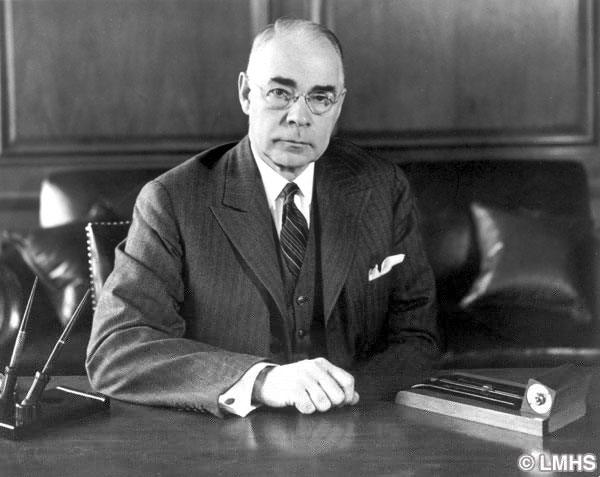
Darren Dochuk’s new book, Anointed with Oil: How Christianity and Crude Made Modern America, continues his study of American Protestantism’s financial profile. A very simple way of putting his findings is to say that John D. Rockefeller’s Standard Oil financed mainline Protestant organizations and J. Howard Pew (and other small oilmen) sustained evangelical Protestantism. In his own words:

By the late 1940s, Howard was not only bitter about major oil’s global expansion at the cost of U.S. domestic production (and with Washington’s privileging of that trend), but also about how the Rockefellers were reshaping society with their mammoth charity. John D. Rockefeller Jr., and his sons were, by now, heading a multifaceted foundation that sought to provide humanitarianism and economic development on an international scale. In Pew’s mind, it was the Rockefellers’ brand of ecumenical, interdenominational and internationalist (“monopolistic”) Protestantism, and its prioritizing of science and structural reform over personal matters of the soul that was responsible for the nation’s secular slide. Determined to offset the Rockefellers’ modernistic gospel, in 1948 Pew helped his siblings incorporate the Pew Memorial Trust to “help meet human needs” through support of “education, social services, religion, health care and medical research,” then christened his own, the J. Howard Pew Freedom Trust, whose charge was even bolder: “to acquaint the American people with the values of a free market, the dangers of inflation, the paralyzing effects of government controls on the lives and activities of people” and “promote the recognition of the interdependence of Christianity and freedom.”

That stance in opposition to Protestant modernism and ecumenism prompted Pew to be a major backer of the neo-evangelicals (later just plain evangelicals) at institutions like Fuller, Christianity Today, Billy Graham (Inc.), and Gordon-Conwell:

the Pews rigorously protected personal liberty in theological terms. Howard continued that tradition in the Cold War years. While serving as chair of the National Lay Committee in the National Council of Churches, he agitated against the “collectivist” drift in Presbyterianism and America’s Protestant mainline.

He found another way to push back by funding pastors, seminaries and lobbies associated with “new evangelicalism,” the loosely coordinated movement that would lay the groundwork for the religious right. In one respect, new evangelicals sought simply to continue a fight against liberal “modernist” trends in American Protestantism and society that self-identified “fundamentalists” had waged in the previous half century. Thanks to the unmatched financial support of independent oilmen Lyman and Milton Stewart, the brother tandem at the helm of Union Oil Company of California (whose own hatred of the Rockefellers knew no bounds), fundamentalists had proved highly successful at constructing an alternative infrastructure of churches, missionary agencies and schools that resisted progressivism’s pull. Yet new evangelicals, unlike fundamentalists, wanted to engage rather than recoil from mainstream society—they sought to redeem it rather than run from it. The number of institutions within the new evangelical orb that would benefit from Pew’s millions would be spectacularly large, including illustrious representatives such as Christianity Today, the National Association of Evangelicals and evangelist Billy Graham. Graham and his friends were known to lean on the “big boys” of southwestern oil for financing, among them the superrich Sid Richardson and Hugh Roy Cullen. But J. Howard Pew was the biggest backer among them.

The thing is, confessional Protestants fell between the cracks of categories like liberal and evangelical Protestants, but also sometimes drew fire from oilmen like Pew. (Machen actually preached at the union congregation in Seal Harbor, Maine, at the invitation of John D. Rockefeller, Jr., the place where the Machens and Rockefellers worshiped while on vacation.)

When the OPC began, its original name was the Presbyterian Church of America (not to be confused with “in America”). That was a bridge too far (aside from the Independent Board for Presbyterian Foreign Missions) for mainline Presbyterians. In 1935 while J. Gresham Machen and other board members belonged to the PCUSA, opposition to conservatives could use ecclesiastical courts. But once Machen was convicted of breaking church law and excommunicated, the only recourse to stop his efforts was the civil courts. And so, the PCUSA brought a civil suit against the new Presbyterian communion and asked the judge to force the new communion to change its name. Here was part of the PCUSA’s reasoning (humor warning):

It is impracticable and impossible for the plaintiff church to recover in damages what it has suffered and is likely to suffer from the aforesaid acts done and threatened to be done by and on behalf of the defendant church. The plaintiff church is powerless to prevent the resulting injury to its property and enterprises, or to avoid the resulting loss in donations and financial support which may be diverted from it, which injuries are immediate, continuous and irreparable, and incapable of computation or estimate. (Bill of Complaint, reprinted in Presbyterian Guardian, Sept. 12, 1936)

To put readers’ laughter in perspective, here are some figures to keep in mind for comparison between the PCUSA and the original OPC:

At its first General Assembly the [OPC] counted only thirty-four ministers, with roughly thirty congregations and 5,000 members. Funds were so scarce that the minutes of the first five General Assemblies do not even include financial reports. No doubt the ministers themselves bore most of the expenses of the denomination and its proceedings, with help from congregations. The only mention of finances at the third General Assembly, for example in 1937, was in connection with the costs for printing the minutes and agenda, and the budget of the Committee on Home Missions and Church Extension. Printing costs were $137 and the receipts from churches and ministers were only $122, leaving a deficit of $15. Because the Committee on Home Missions was the only agency with a real budget, the delegates passed along the rest of the bill to Home Missions. But that committee was not exactly flush. Their expenses for the first year came to just short of $13,000, with receipts totaling a little more than $13,000. In fact, the Committee on Home Missions’ budget was the OPC’s denominational budget. In addition to picking up the expenses of printing the General Assembly’s minutes, the Committee also footed the bill for renting the hall where the Assembly met. Thus, by the end of its first year the OPC’s total assets, if the balance of the Committee on Home Missions’ bank account is any indication, were $221.54.

In contrast, the PCUSA’s wealth and stature were truly staggering. In their complaint against the OPC the officers of the mainline denomination listed their resources to show how much they had to lose if a new church came along with a similar name. The PCUSA had close to 9,000 congregations, with just under 2 million church members, and 9,800 ministers. The church had approximately 1,600 home missionaries with an annual budget of $2.5 million and trust funds totaling just over $33 million. The PCUSA’s efforts in foreign missions were also large. They counted 1,300 missionaries with an annual budget of $2.9 million and trust funds totaling a little more than $18 million.

The [OPC] did not even send out their first foreign missionaries until 1938 and then could only manage support for eight, a number figure that included wives. (DGH, “Why the OPC: The History behind the Name)

What does this have to do with big oil or J. Howard Pew? The first two names on the Bill of Complaint were:

THE PRESBYTERIAN CHURCH IN THE UNITED STATES OF AMERICA By (Sgd) HENRY B. MASTER, Moderator

TRUSTEES OF THE GENERAL ASSEMBLY OF THE PRESBYTERIAN CHURCH IN THE UNITED STATES OF AMERICA By (Sgd) J. HOWARD Pew, President.

This does not mean that Pew was aiming for Machen and the OPC. He likely signed this complaint as part of his responsibilities as an elder in the PCUSA.

But, the man who funded so much of the neo-evangelical world, the friend of so-called conservative Protestants, was right there in the legal proceedings against other conservative Protestants, the ones who were the most Presbyterian of all the Protestants (minus the Covenanters, and Associate Reformed). And one reason that Pew might have favored Graham et al and not had much regard for Machen was the the latter’s understanding of the mission of the church was not going to abet the political and economic policies that Pew wanted the federal government to pursue. Graham and the neo-evangelicals, sorry Mark Galli, wanted to be evangelicalism for the nation. That earned them Pew’s support.